Vue normale

  • ✇Euromaidan Press
  • 28 tanks in single day: July was Russia’s deadliest month for personnel and its worst for vehicle losses
    Ukraine wrecked more Russian vehicles in July than in any month of the war. Ukraine's Defense Forces destroyed and disabled 13,998 units of automotive equipment, the most for the entire war, Ukraine's Defense Ministry reported on 12 August. The record fits a month of intensifying attrition against Russian logistics and air defense. In July, the Defense Forces continued methodical work to weaken Russia's air-defense capabilities and logistics, and the vehicle figure, the
     

28 tanks in single day: July was Russia’s deadliest month for personnel and its worst for vehicle losses

12 août 2026 à 10:53

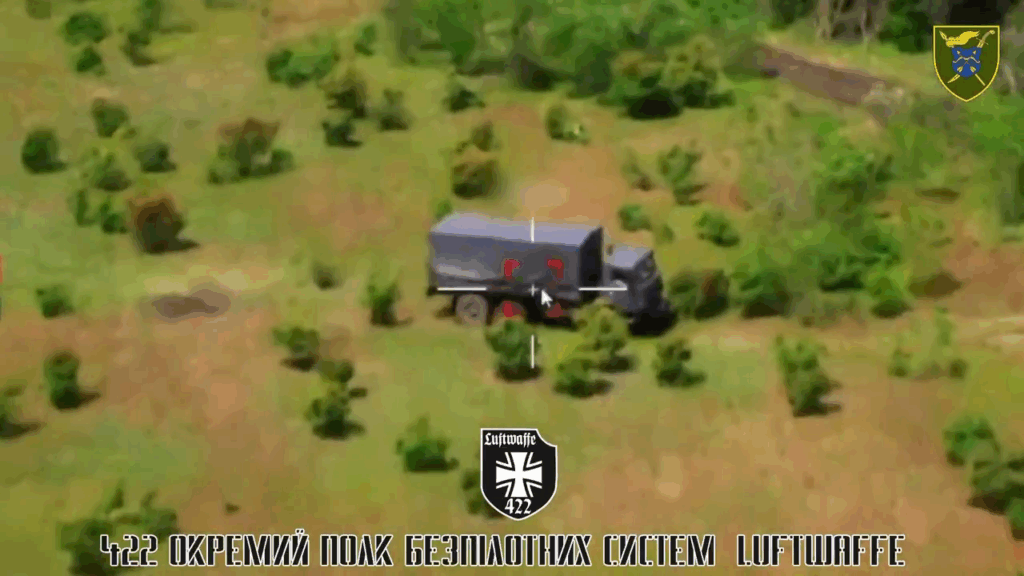
A Russian truck under drone attack near Chernihivka.

Ukraine wrecked more Russian vehicles in July than in any month of the war. Ukraine's Defense Forces destroyed and disabled 13,998 units of automotive equipment, the most for the entire war, Ukraine's Defense Ministry reported on 12 August.

The record fits a month of intensifying attrition against Russian logistics and air defense. In July, the Defense Forces continued methodical work to weaken Russia's air-defense capabilities and logistics, and the vehicle figure, the war's highest, reflects a campaign hitting the trucks that move Russian ammunition, fuel, and troops to the front.

The vehicle losses target Russian logistics

The record vehicle toll strikes at how Russia sustains its offensive. Trucks and transport vehicles are the arteries that carry ammunition, fuel, and supplies to Russian forces, and destroying nearly 14,000 in a month, largely with drones, degrades the logistics that keep the assaults moving.

The figure marks a scale of vehicle destruction not seen before. That the highest monthly total of the war came in July matches the wider picture of that month, which was also Russia's deadliest for personnel in 2026, as Ukraine's drones reached deeper and hit more.

Air defense and armor were hit hard too

Ukraine also struck at the systems that protect Russian forces. Ukrainian troops hit 68 units of Russian air defense systems in July, chipping away at the shield that guards Russian positions and rear areas.

Armor losses were also heavy. Ukraine destroyed and disabled 162 tanks, including 28 in a single day on 22 July, along with 204 armored combat vehicles and 2,016 artillery systems.

The count is Ukraine's own

The figures are Ukraine's tally and cannot be independently verified. The Defense Ministry reports Russian losses without detailing Ukraine's own.

Meanwhile, July was Ukraine’s deadliest month for civilians since 2022 due to Russia's ballistic missile attacks and lack of Patriot interceptors from allies.
  • ✇Euromaidan Press
  • Ukraine’s first domestically built CBRN scout vehicle just replaced Soviet jeep with no armor at all
    Ukraine is retiring a Soviet chemical-scout vehicle in favor of one it built itself. Ukraine's National Guard has received the first Ukrainian radiation and chemical reconnaissance vehicles on the armored Tisa chassis, replacing the outdated Soviet UAZ-469RKh, National Guard commander Oleksandr Pivnenko announced. The vehicle is a step in Ukraine's shift from Soviet legacy equipment to its own modern designs. Developed to National Guard specifications for current battle
     

Ukraine’s first domestically built CBRN scout vehicle just replaced Soviet jeep with no armor at all

12 août 2026 à 00:45

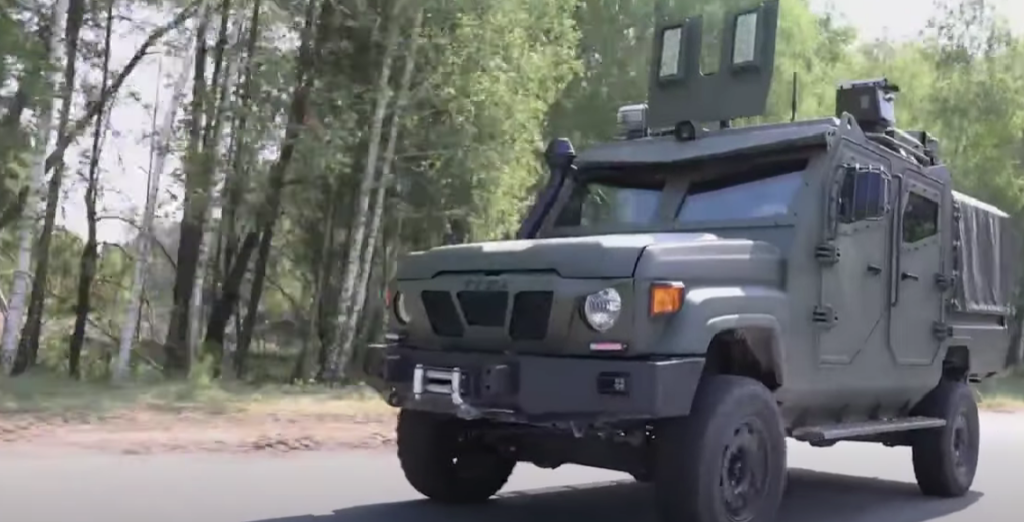
The first Ukrainian radiation and chemical reconnaissance vehicles on the armored Tisa chassis. Source: Pivnenko

Ukraine is retiring a Soviet chemical-scout vehicle in favor of one it built itself. Ukraine's National Guard has received the first Ukrainian radiation and chemical reconnaissance vehicles on the armored Tisa chassis, replacing the outdated Soviet UAZ-469RKh, National Guard commander Oleksandr Pivnenko announced.

The vehicle is a step in Ukraine's shift from Soviet legacy equipment to its own modern designs. Developed to National Guard specifications for current battlefield conditions, the armored scout allows crews to survey and monitor contaminated zones without leaving the protected vehicle.

What the vehicle does

The vehicle carries radiation and chemical reconnaissance instruments, an automated system for collecting and processing information, a weather station, modern communications, and satellite navigation, all of which enable real-time data collection and transmission to assess a situation and make decisions faster.

The mission is early warning of invisible threats. The task of chemical, biological, radiological, and nuclear (CBRN) units is to detect radiation, chemical, and biological threats in time, determine the extent of contamination, and quickly pass the information to command.

"The safety of soldiers, the completion of combat tasks, and the protection of the civilian population depend on the speed and accuracy of this work," Pivnenko said.

The armored base is the upgrade

The Tisa chassis is what sets the new vehicle apart from its Soviet predecessor. The light-armored Tisa is built on the Toyota Land Cruiser 79 platform and meets the NATO STANAG 4569 protection standard, providing ballistic and mine protection that the open-topped UAZ never offered.

The vehicle is equipped for hard conditions. It carries night-vision systems and air ventilation and filtration systems, letting the crew work in contaminated or dangerous environments while staying protected. The filtration matters especially for a CBRN vehicle: it lets the crew operate inside a sealed, over-pressured cabin in exactly the toxic zones the vehicle is sent to scout.

An Electric Motorcycle Revolution

11 août 2026 à 13:47
With gas prices high, people in developing countries are lining up to buy battery-powered bikes. We took a spin around Lahore, Pakistan, on a small-but-mighty one.

© Asim Hafeez for The New York Times

Chico Harlan, back, on a new Vlektra electric motorcycle with its owner, Abdul Rafay, in Lahore, Pakistan.
  • ✇Euromaidan Press
  • A slice of Estonia’s new EU billions will buy drones—for Ukraine, not itself
    Estonia will use part of a new European Union loan to arm Ukraine with drones, drawing on a loan worth up to €2.34 billion, according to ERR. The loan will also rebuild its own air defense and ammunition stocks, and all of it must be spent by 2030. As Moscow continues its all-out war in Ukraine, the EU's northeast is rearming fast, bracing for a Russia that regional military chiefs expect to be combat-ready again within two years. What the loan buys Estonia signed the f
     

A slice of Estonia’s new EU billions will buy drones—for Ukraine, not itself

6 août 2026 à 05:36

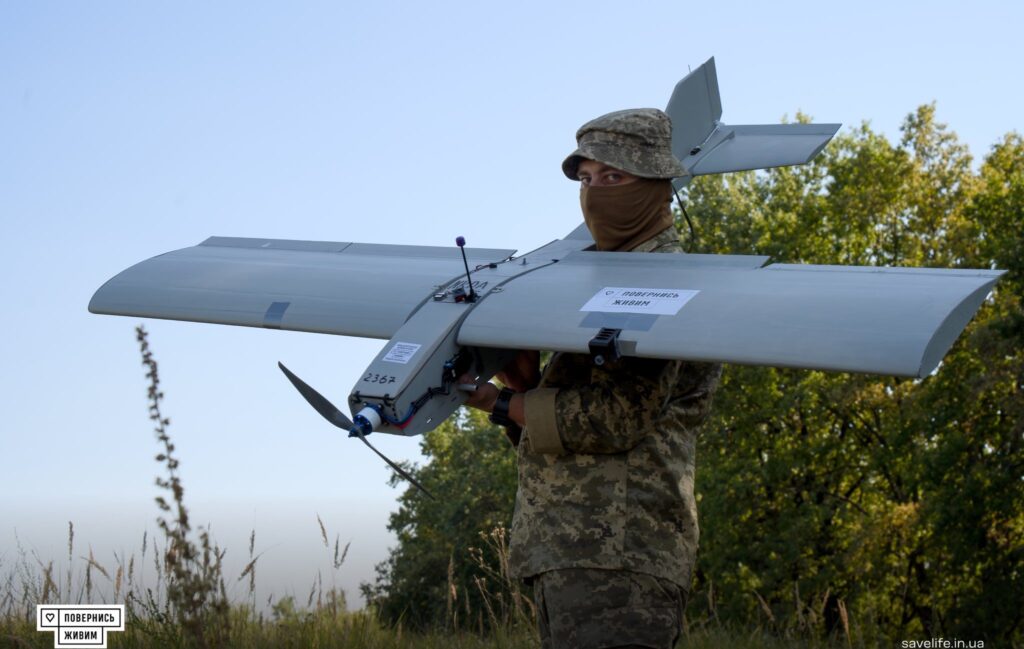
A Ukrainian service member holds a Darts attack drone, which has a reported range of 40-60 kilometers. Russian military sources say that these are among the Ukrainian drones that mount a directional antenna that can dynamically maintain connection with a signal repeater. (Photo: Come Back Alive Foundation)

Estonia will use part of a new European Union loan to arm Ukraine with drones, drawing on a loan worth up to €2.34 billionaccording to ERR. The loan will also rebuild its own air defense and ammunition stocks, and all of it must be spent by 2030.

As Moscow continues its all-out war in Ukraine, the EU's northeast is rearming fast, bracing for a Russia that regional military chiefs expect to be combat-ready again within two years.

What the loan buys

Estonia signed the financing deal with the European Commission under SAFE (Security Action for Europe), a €150 billion EU program that raises money jointly on the markets and lends it to member states on cheap terms to fast-track defense spending, its finance ministry said.

A share of Estonia's up-to-€2.34 billion will go to Ukraine as drones. The rest strengthens air defense, buys military vehicles, and refills artillery shells and other ammunition. The credit runs 45 years, and every purchase and delivery must be finished by 2030. Estonia filed its final application in November 2025.

baltic- states
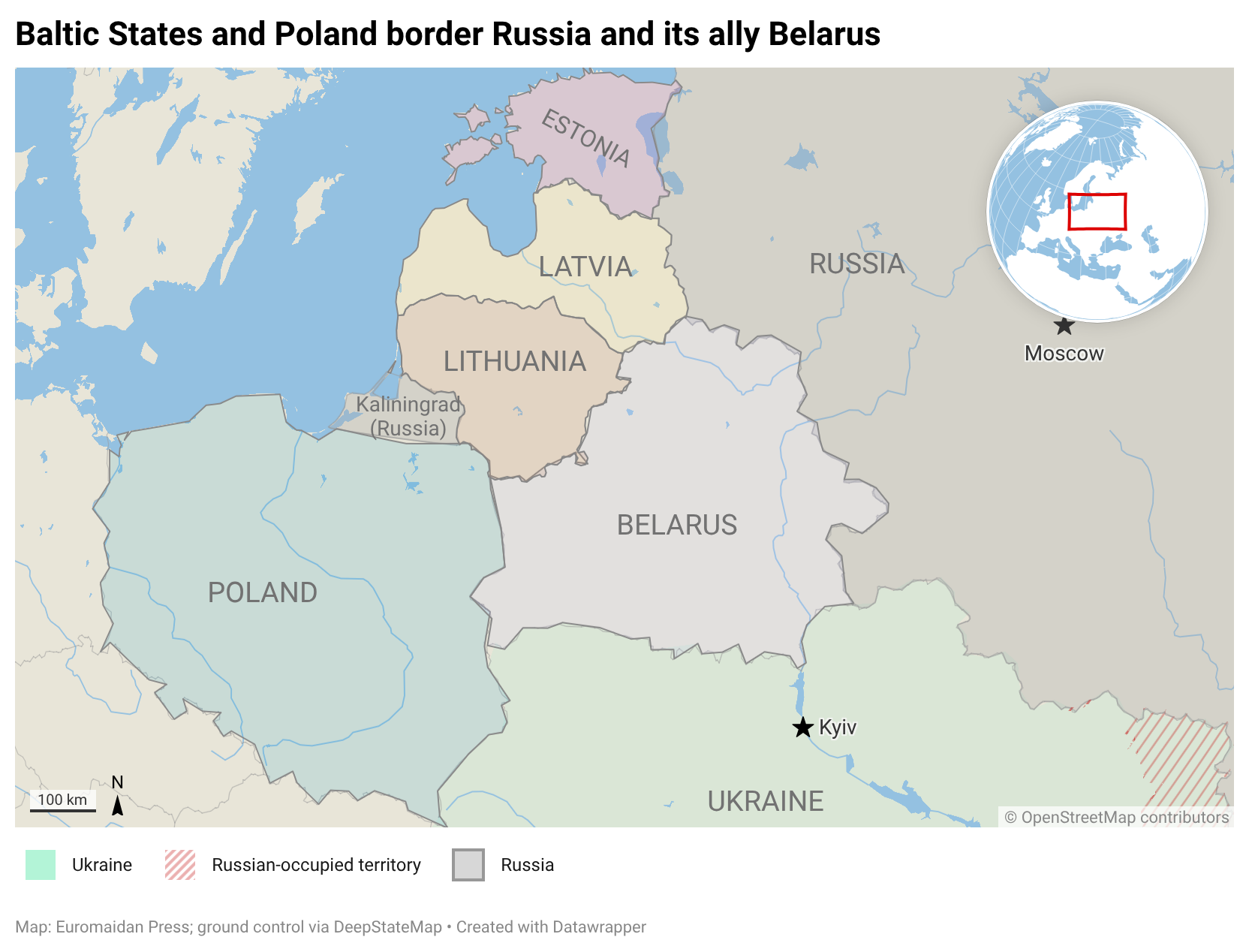
The Baltic region. Map: Euromaidan Press

Why the loan helps

Borrowing through SAFE lets Estonia raise money on better terms than it could alone, because the EU issues debt at lower rates. The bloc raises the money jointly and splits it among members. Estonia will hold defense spending above 5% of GDP, and the loan eases the strain that puts on its budget.

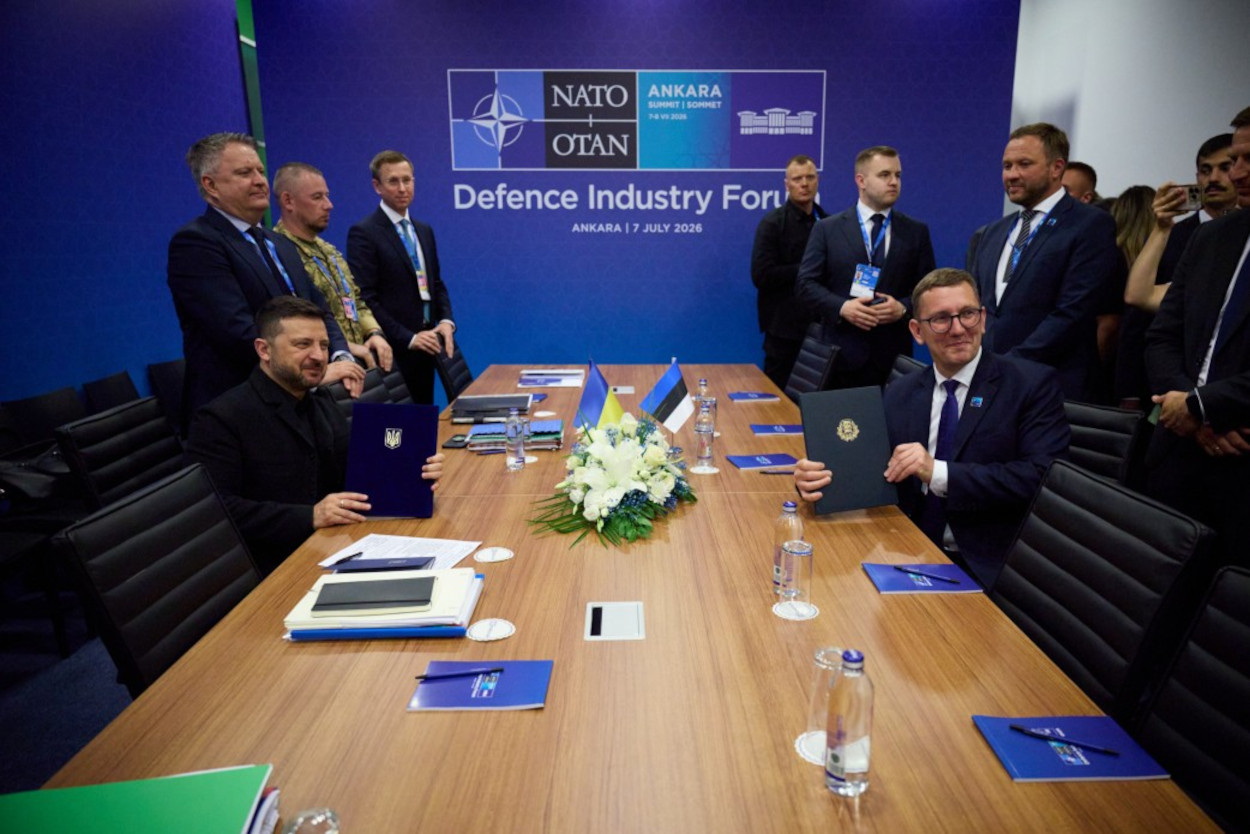
Ukrainian President Volodymyr Zelenskyy and Estonian Prime Minister Kristen Michal on the sidelines of the NATO summit in Ankara, 7 July 2026. Photo: Ukrainian President's Office
Explore further

“Ukraine is becoming a security provider for Europe”: Ukraine signs Drone Deals with Estonia, the Netherlands, and Denmark as Europe taps Kyiv’s battlefield-tested weapons technology

Estonia, a NATO and EU state of about 1.3 million people, shares a 294-kilometer border with Russia and treats Moscow's war on Ukraine as a direct threat to its own security. It has studied that war closely for years and is now racing to rebuild its air defenses and ammunition stocks.

Kadri Peters, a deputy secretary general at Estonia's Defense Ministry, said the fast-changing security situation in Europe demands stronger, quicker defense from the whole alliance. She said large-scale purchases ahead will directly affect Estonia's security and the wider region.

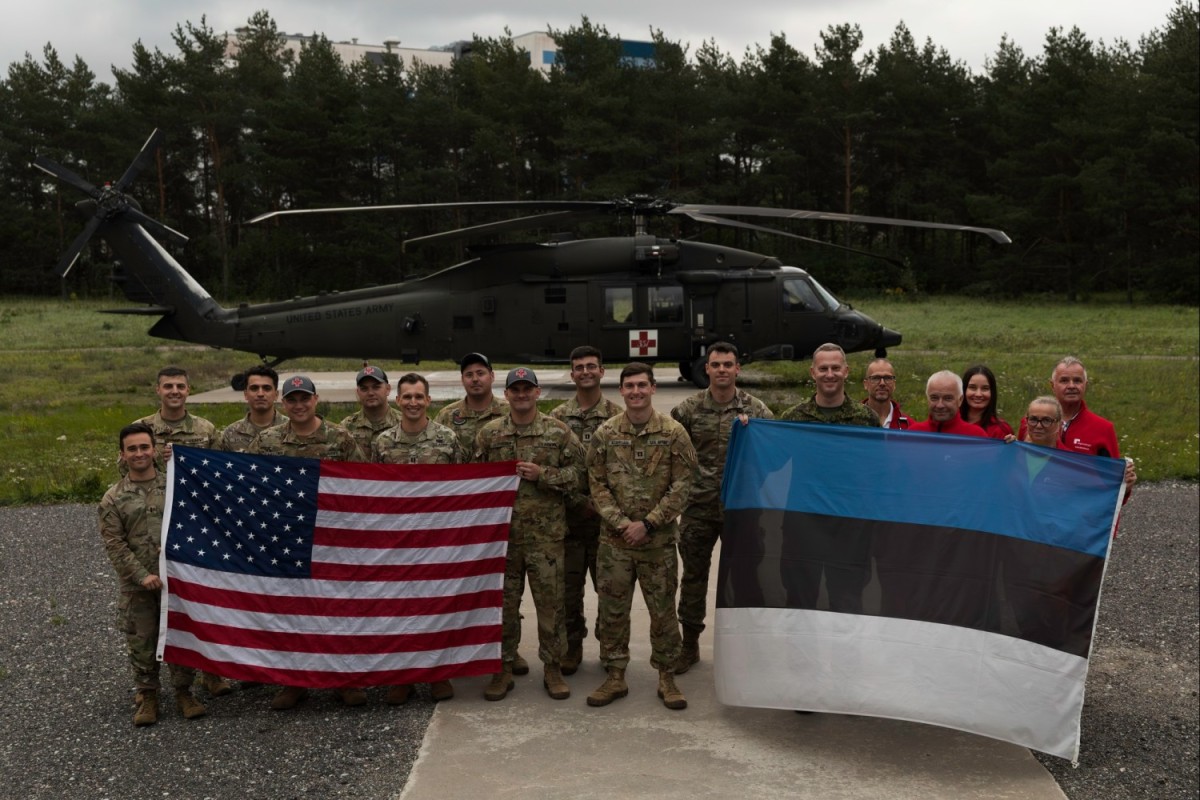
soldiers left summer rotation estonia doesn't know how many coming back—or when · post army task force knighthawk 3rd combat aviation brigade 101st airborne division north medical centre staff during
Explore further

US soldiers left for a “summer rotation.” Estonia doesn’t know how many are coming back—or when

In July, Estonia and the United States agreed to resume weapons deliveries in the coming months, after a pause tied to the war in Iran, with long-range ATACMS ballistic missiles the exception. In May, Washington had warned European allies of long delays as it drained its own stocks, mainly of HIMARS rocket ammunition and NASAMS air-defense missiles. The same shortages hit Ukraine the hardest: it currently struggles to shoot down Russian ballistic missiles for lack of US-made PAC-3 interceptors.

Estonia has been backing Kyiv since the beginning of Russia's full-scale invasion in 2022. It co-leads an IT coalition that has funneled over €1.4 billion into Ukraine's drone programs, and has moved to tap Kyiv's battlefield-tested drone technology for its own forces.

❌