Vue normale

  • ✇Euromaidan Press
  • Russia lowered its 2030 electronics-independence target from 80% to 59%

    Russia has lowered its benchmark for technological independence. A revised government target now requires domestic hardware to make up 58.7% of state technology projects by 2030—down from the 80% Moscow had long promised—a reduction proposed by Russia’s own Ministry of Industry and Trade and set by a decree signed in July 2026 by Prime Minister Mikhail Mishustin. Funding collapsed as deadlines slipped The scale of the retreat was laid out by Ukraine’s Foreign Intelli
     

Russia lowered its 2030 electronics-independence target from 80% to 59%

31 juillet 2026 à 10:11

russian irtysh server processor

Russia has lowered its benchmark for technological independence. A revised government target now requires domestic hardware to make up 58.7% of state technology projects by 2030—down from the 80% Moscow had long promised—a reduction proposed by Russia’s own Ministry of Industry and Trade and set by a decree signed in July 2026 by Prime Minister Mikhail Mishustin.

Funding collapsed as deadlines slipped

The scale of the retreat was laid out by Ukraine’s Foreign Intelligence Service, which called the downgrade a capitulation to reality. Funding for the flagship state program collapsed roughly fivefold, from $338.4 million in 2024 to $62.6 million in 2026, and the broader electronics-engineering development program faces a $422.7 million shortfall for 2026–2028, the service said.

Several microelectronics-equipment projects were canceled outright, and deadlines for domestic processors and modems have slipped to 2032. The “Irtysh” processor Moscow presented as a homegrown design for critical infrastructure is, by the service’s account, effectively a copy of China’s Loongson chip, and the Kurchatov Institute missed its deadline to build replacements for Intel, Marvell, Broadcom, and Integrated Device Technology parts.

Russian specialists themselves say localizing more than 60% is impossible without domestic production of chips at 28 nanometers and below, which sanctions and the loss of Western tooling put out of reach.

The GRU buys abroad what Russia cannot make

What Russia cannot build, it increasingly smuggles. Estonia’s Foreign Intelligence Service reported in February 2026 that Russian military intelligence—the GRU—takes an active role in acquiring sanctioned dual-use goods, running import-export front companies to route Western and Asian components home.

One such firm, Moscow-registered Neptun Ko, is directed by an identified GRU officer, Aleksandr Matrossov, and moved more than €500,000 ($540,000) worth of critical semiconductors to Russia’s defense industry through a Chinese intermediary in the first year of the full-scale war, the Estonian service found.

yevgeniy pluzhnik in kuala lumpur
Explore further

Russian businessman runs Hong Kong pipeline feeding European electronics to Kremlin’s weapons labs

Every chip Russia’s factories cannot make is one it must source abroad, through the third-country sanctions loopholes that still route Western components into Russian missiles and drones—which is where the practical fight over Russia’s electronics now lies, whatever share Moscow prints as its goal for 2030.

  • ✇Euromaidan Press
  • Individuals now drive nearly half of Ukraine’s bankruptcy cases
    Nearly half of the bankruptcy cases now moving through Ukraine’s commercial courts—45% of over 6,107—involve individuals and sole proprietors rather than companies, the Ministry of Justice reported on 30 July. Individuals could not legally file for bankruptcy in Ukraine until 2019.Ukraine’s bankruptcy law is being rebuilt around the European Union’s “second chance” principle: that an honest debtor, company or individual, should get a supervised route back to solvency. Kyiv
     

Individuals now drive nearly half of Ukraine’s bankruptcy cases

31 juillet 2026 à 09:13

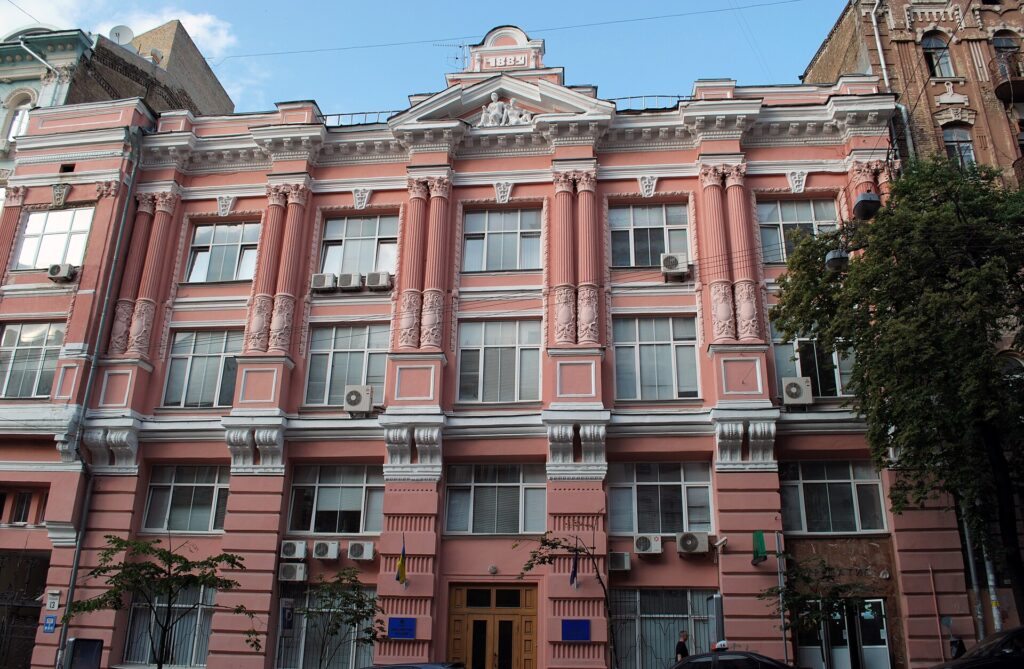
ukraine’s ministry of justice building in kyiv

Nearly half of the bankruptcy cases now moving through Ukraine’s commercial courts—45% of over 6,107—involve individuals and sole proprietors rather than companies, the Ministry of Justice reported on 30 July. Individuals could not legally file for bankruptcy in Ukraine until 2019.

Ukraine’s bankruptcy law is being rebuilt around the European Union’s “second chance” principle: that an honest debtor, company or individual, should get a supervised route back to solvency. Kyiv is introducing that framework—out-of-court settlement, preventive restructuring—as an EU accession commitment, even as the war continues.

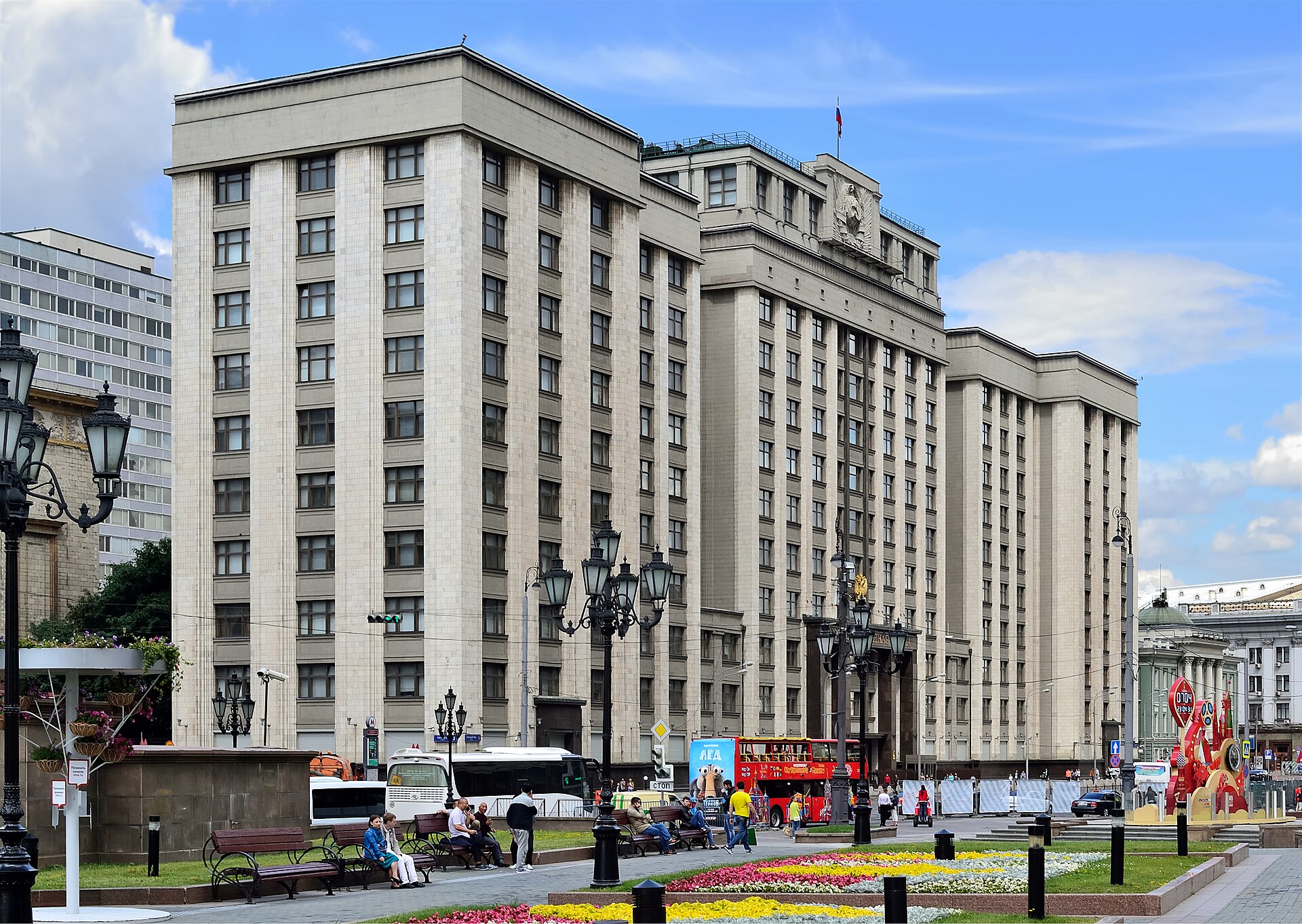
Moscow is moving the other way. In July, the Russian State Duma rushed through its largest bankruptcy overhaul in decades, handing the Kremlin power to decide which firms survive as corporate debt there swells past the country’s entire annual output.

state duma building in moscow
Explore further

Russia stalled bankruptcy reform for six years—then passed it in two days

A system built from nothing

Personal insolvency is new to Ukraine. Parliament first allowed individuals to declare bankruptcy under the 2019 Bankruptcy Code, and in that first year, court records show, just 22 people used it.

Filings rose sharply afterward, reaching several hundred annually by 2023, as consumer borrowing spread and the war strained household finances. Most who file are between 25 and 45, and close to half are women.

The rescue culture the law promises is still mostly on paper. Of debtors currently in proceedings, 76% are already at the liquidation stage, and only 5% are in financial recovery.

Nearly half of the bankruptcy cases now moving through Ukraine’s commercial courts involve individuals and sole proprietors rather than companies.

The new preventive-restructuring procedure, meant to save viable businesses before they fold, has drawn just nine enterprises so far, with six more plans approved. In the first half of 2026, courts opened 1,250 new cases and closed 767—the backlog fills faster than it drains.

Lawyers who work the procedure caution that the climbing numbers reflect financial distress rather than easier access—the procedure stays costly and complex, and reaches only a fraction of those in serious debt.

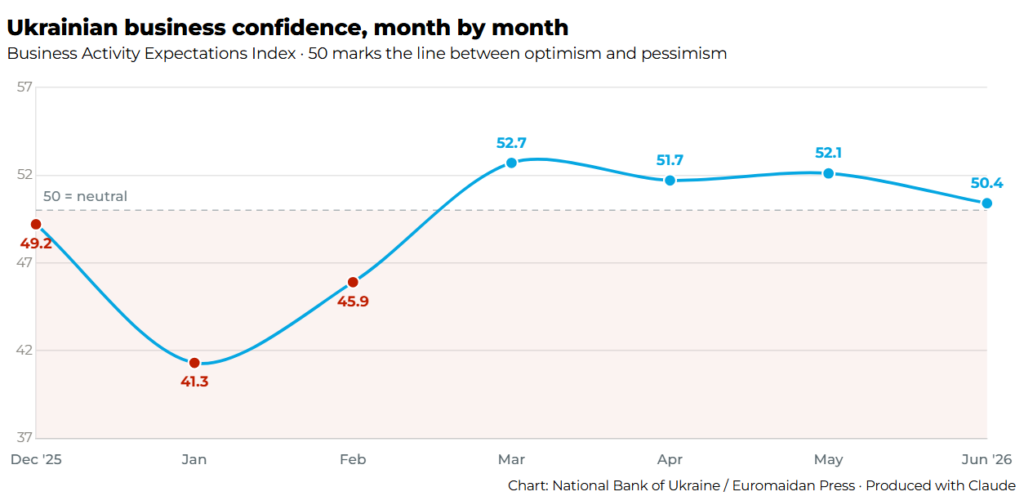
monthly business activity expectations index by the ukrainian national bank
The National Bank’s monthly Business Activity Expectations Index fell to 41.3 in January, then recovered above the neutral 50 line by spring, reaching 50.4 in June. Above 50 signals optimism, below it pessimism. Chart: National Bank of Ukraine / Euromaidan Press.

The confidence that never reaches the courtroom

None of this shows in how Ukrainian businesses feel. In June, firms rated their own prospects positively for the fourth month running, with the National Bank’s expectations index at 50.4, above the neutral 50 line. The survey polled 587 companies that were still trading.

The people turning up in bankruptcy court are the ones the survey does not count—and more and more, they are individuals, not firms.

❌