
Vue lecture

Maggie Haberman on How Trump Has Changed

This week I published an audio essay about what I think is unique about Donald Trump as a personality and political figure and the dangers he poses if he gets a second term in the White House. But I wanted to go deeper on this topic with someone who knows him much better than I do.

Maggie Haberman is a senior political correspondent for The New York Times and has traced his evolution over the decades in her 2022 book, “Confidence Man: The Making of Donald Trump and the Breaking of America.”

In this conversation, we discuss what Haberman agreed and disagreed with in my essay, the forces that shaped Trump’s ideas of politics and power as a real estate developer in New York City, what she thinks he wants from a second term (including his desire for revenge), how his inner circle has changed since his time in office, what he might do if he loses and more.

Note: This conversation was taped before Trump’s former chief of staff John Kelly went on the record saying that Trump meets the definition of a fascist and confirming that the former president made admiring statements about Hitler.

Mentioned:

What’s Wrong With Donald Trump?” by Ezra Klein

Trump’s Speeches, Increasingly Angry and Rambling, Reignite the Question of Age” by Peter Baker and Dylan Freedman

Trump Leans On Creative Bookkeeping to Keep Up in Cash Race” by Shane Goldmacher and Maggie Haberman

Book Recommendations:

Kamala’s Way by Dan Morain

Romney by McKay Coppins

American Carnage by Tim Alberta

Thoughts? Guest suggestions? Email us at ezrakleinshow@nytimes.com.

You can find transcripts (posted midday) and more episodes of “The Ezra Klein Show” at nytimes.com/ezra-klein-podcast. Book recommendations from all our guests are listed at https://www.nytimes.com/article/ezra-klein-show-book-recs.

This episode of “The Ezra Klein Show” is produced by Annie Galvin. Fact-checking by Michelle Harris with Kate Sinclair. Our senior engineer is Jeff Geld, with additional mixing by Aman Sahota. Our supervising editor is Claire Gordon. The show’s production team also includes Rollin Hu, Elias Isquith and Kristin Lin. Original music by Isaac Jones. Audience strategy by Kristina Samulewski and Shannon Busta. The executive producer of New York Times Opinion Audio is Annie Rose Strasser. Special thanks to Jack McCordick.

Subscribe today at nytimes.com/podcasts or on Apple Podcasts and Spotify. You can also subscribe via your favorite podcast app here https://www.nytimes.com/activate-access/audio?source=podcatcher. For more podcasts and narrated articles, download The New York Times app at nytimes.com/app.


Hosted by Simplecast, an AdsWizz company. See pcm.adswizz.com for information about our collection and use of personal data for advertising.
💾

  •  

What’s Wrong With Donald Trump?

I think there’s an answer. But it’s not age — or, at least, it’s not just age.

Mentioned:

White House aides lean on delays and distraction to manage Trump” by Josh Dawsey

I Am Part of the Resistance Inside the Trump Administration” by Miles Taylor

What JD Vance Believes” by Ross Douthat

Thoughts? Guest suggestions? Email us at ezrakleinshow@nytimes.com.

You can find transcripts (posted midday) and more episodes of “The Ezra Klein Show” at nytimes.com/ezra-klein-podcast. Book recommendations from all our guests are listed at https://www.nytimes.com/article/ezra-klein-show-book-recs.

This audio essay for “The Ezra Klein Show” was produced by our supervising editor, Claire Gordon. Fact-checking by Jack McCordick. Our senior engineer is Jeff Geld, with additional mixing by Aman Sahota. Our supervising editor is Claire Gordon. The show’s production team also includes Annie Galvin, Michelle Harris, Rollin Hu, Elias Isquith and Kristin Lin. Original music by Isaac Jones. Audience strategy by Kristina Samulewski and Shannon Busta. The executive producer of New York Times Opinion Audio is Annie-Rose Strasser.

Subscribe today at nytimes.com/podcasts or on Apple Podcasts and Spotify. You can also subscribe via your favorite podcast app here https://www.nytimes.com/activate-access/audio?source=podcatcher. For more podcasts and narrated articles, download The New York Times app at nytimes.com/app.


Hosted by Simplecast, an AdsWizz company. See pcm.adswizz.com for information about our collection and use of personal data for advertising.
💾

  •  

The Hidden Politics of Disorder

Crime data has been a flashpoint in this election. Kamala Harris has claimed that violent crime is at a “near 50-year low,” while Donald Trump has insisted that crime is going up. According to the numbers reported to the F.B.I., Harris is right: Crime, especially violent crime, has been falling. But if you look at survey data, Trump is tapping into something people feel. Last year, 77 percent of Americans told Gallup that they believe crime is on the rise.

So what’s going on here? Why, if crime is falling, do people feel less safe? 

Charles Fain Lehman, a crime and drug policy researcher at the Manhattan Institute, wrote a piece on his Substack, The Causal Fallacy, on exactly this question. In this conversation, we discuss why he thinks Americans are feeling less safe, despite what the data says, as well as the ideological shifts taking place around drugs and crime, on both the left and the right.

Mentioned:

Breakdown” by Heather Mac Donald

Between Tolerant Containment and Concerted Constraint: Managing Madness for the City and the Privileged Family” by Neil Gong

Book Recommendations:

Thinking About Crime by James Q. Wilson

Against Excess by Mark Kleiman

The Bonfire of the Vanities by Tom Wolfe

Thoughts? Guest suggestions? Email us at ezrakleinshow@nytimes.com.

You can find transcripts (posted midday) and more episodes of “The Ezra Klein Show” at nytimes.com/ezra-klein-podcast. Book recommendations from all our guests are listed at https://www.nytimes.com/article/ezra-klein-show-book-recs.

This episode of “The Ezra Klein Show” was produced by Rollin Hu. Fact-checking by Michelle Harris. Our senior engineer is Jeff Geld, with additional mixing by Aman Sahota. Our supervising editor is Claire Gordon. The show’s production team also includes Annie Galvin, Elias Isquith and Kristin Lin. Original music by Isaac Jones. Audience strategy by Kristina Samulewski and Shannon Busta. The executive producer of New York Times Opinion Audio is Annie-Rose Strasser. And special thanks to Switch and Board Podcast Studio.

Subscribe today at nytimes.com/podcasts or on Apple Podcasts and Spotify. You can also subscribe via your favorite podcast app here https://www.nytimes.com/activate-access/audio?source=podcatcher. For more podcasts and narrated articles, download The New York Times app at nytimes.com/app.


Hosted by Simplecast, an AdsWizz company. See pcm.adswizz.com for information about our collection and use of personal data for advertising.
💾

  •  

Book Review: Robert Caro on 50 Years of ‘The Power Broker’

As of this week, the archive of this show is behind a paywall. The three most recent episodes are free, but earlier episodes are available only to New York Times subscribers. If you don’t want the whole subscription, there’s an audio-only subscription for $1.50 a week. That gets you access to our archives, as well as the archives of all the other great Times podcasts.

To help make the pitch here, I wanted to share an episode from our friends at the “Book Review” podcast. It’s hosted by Gilbert Cruz, the editor of The Times’s Book Review section. And I thought you might enjoy this particular episode with Robert Caro about his book “The Power Broker.” It came out 50 years ago, and it’s still one of the most influential books in politics and policy circles — for better or for worse. In this conversation they dig into why that is and what to make of the book’s legacy. I hope you enjoy it. 

To learn more about the subscription, visit nytimes.com/podcasts

Subscribe today at nytimes.com/podcasts or on Apple Podcasts and Spotify. You can also subscribe via your favorite podcast app here https://www.nytimes.com/activate-access/audio?source=podcatcher. For more podcasts and narrated articles, download The New York Times app at nytimes.com/app.


Hosted by Simplecast, an AdsWizz company. See pcm.adswizz.com for information about our collection and use of personal data for advertising.
💾

  •  

Ta-Nehisi Coates on Israel: ‘I Felt Lied To.’

In his new book of essays, “The Message,” Ta-Nehisi Coates writes about a trip he took to Israel and the West Bank in May 2023. “I felt lied to,” he told me. “I felt lied to by my craft. I felt lied to by major media organizations.”

Coates’s essay is a searing portrait of Palestinian life under Israeli rule. It has also been criticized for leaving much out: Hamas is never mentioned. Nor is Oct. 7. Nor are any of the peace processes. So I asked him on the show to discuss what he saw when he was there and what he chose to leave outside the frame.

Mentioned:

The Case for Reparations” by Ta-Nehisi Coates

The Necessity of Exile by Shaul Magid

The Virtue of Nationalism by Yoram Hazony

US media talks a lot about Palestinians — just without Palestinians” by Maha Nassar

Book Recommendations:

Justice for Some by Noura Erakat

Our American Israel by Amy Kaplan

The Unspoken Alliance by Sasha Polakow-Suransky

Thoughts? Guest suggestions? Email us at ezrakleinshow@nytimes.com.

You can find transcripts (posted midday) and more episodes of “The Ezra Klein Show” at nytimes.com/ezra-klein-podcast. Book recommendations from all our guests are listed at https://www.nytimes.com/article/ezra-klein-show-book-recs.

This episode of “The Ezra Klein Show” was produced by Elias Isquith. Fact-checking by Michelle Harris. Fact-checking by Michelle Harris, with Mary Marge Locker and Kate Sinclair. Mixing by Efim Shapiro and Isaac Jones, with Aman Sahota. Our senior engineer is Jeff Geld. Our senior editor is Claire Gordon. The show’s production team also includes Annie Galvin, Rollin Hu and Kristin Lin. Original music by Isaac Jones. Audience strategy by Kristina Samulewski and Shannon Busta. The executive producer of New York Times Opinion Audio is Annie-Rose Strasser.

Subscribe today at nytimes.com/podcasts or on Apple Podcasts and Spotify. You can also subscribe via your favorite podcast app here https://www.nytimes.com/activate-access/audio?source=podcatcher. For more podcasts and narrated articles, download The New York Times app at nytimes.com/app.


Hosted by Simplecast, an AdsWizz company. See pcm.adswizz.com for information about our collection and use of personal data for advertising.
💾

  •  

How Biden’s Middle East Policy Fell Apart

On Oct. 6 of last year, the Biden administration was hammering out a grand Middle East bargain in which Saudi Arabia would normalize relations with Israel in exchange for a Palestinian state. And even after Hamas’s attack the following day, the U.S. hoped to keep that deal alive to preserve the conditions for some kind of durable peace. 

But that deal is now basically unviable. The war is expanding. Israel may be on the verge of occupying Gaza indefinitely and possibly southern Lebanon, too. So why was President Biden ineffective at achieving his goals? In the past year, has the U.S. been able to shape this conflict at all?

Franklin Foer recently wrote a piece in The Atlantic trying to answer these questions. And he starts with the Biden administration’s attempts to de-escalate tensions in the Middle East — an effort that began well before Oct. 7. In this conversation, Foer walks through his reporting inside the diplomatic bubble of the conflict and the administrations of other Middle Eastern states that have serious stakes in Israel’s war in Gaza.

Book Recommendations:

Our Man by George Packer

See Under by David Grossman

Collected Poems by Rita Dove

Thoughts? Guest suggestions? Email us at ezrakleinshow@nytimes.com.

You can find transcripts (posted midday) and more episodes of “The Ezra Klein Show” at nytimes.com/ezra-klein-podcast. Book recommendations from all our guests are listed at https://www.nytimes.com/article/ezra-klein-show-book-recs.

This episode of “The Ezra Klein Show” was produced by Annie Galvin. Fact-checking by Michelle Harris, with Mary Marge Locker and Kate Sinclair . Our senior engineer is Jeff Geld, with additional mixing by Efim Shapiro, Isaac Jones and Aman Sahota. Our senior editor is Claire Gordon. The show’s production team also includes Rollin Hu, Elias Isquith and Kristin Lin. Original music by Isaac Jones. Audience strategy by Kristina Samulewski and Shannon Busta. The executive producer of New York Times Opinion Audio is Annie-Rose Strasser. Special thanks to Emma Ashford, Shira Efron, Natasha Hall, Richard Haass, Michael Koplow, Selcuk Karaoglan and Switch and Board Podcast Studio.

Subscribe today at nytimes.com/podcasts or on Apple Podcasts and Spotify. You can also subscribe via your favorite podcast app here https://www.nytimes.com/activate-access/audio?source=podcatcher. For more podcasts and narrated articles, download The New York Times app at nytimes.com/app.


Hosted by Simplecast, an AdsWizz company. See pcm.adswizz.com for information about our collection and use of personal data for advertising.
💾

  •  

The Economy Is at a Hinge Moment

The economy has hit a hinge moment. For the past few years, inflation has been the big economic story — the fixation of economic policymakers, journalists and almost everyone who goes to the grocery store. But economists now largely see inflation as tamed. It’s still a major political issue; the country continues to reel from years of rising prices, and there is a real affordability crisis. But that isn’t all the next administration will have to deal with. So what does it mean to fight the next economic war rather than the last one?

Jason Furman is an economics professor at Harvard and a former chair of the Council of Economic Advisers under Barack Obama. Furman has closely tracked the inflation crisis over the past few years, and he’s deeply knowledgeable about how economic policy is made.

In this conversation, we discuss why the inflation crisis upended the expectations of so many economists and what we’ve learned for the next time inflation strikes, what he expects to see with mortgage rates and the housing market, the upcoming fight over Donald Trump’s expiring tax cuts, the good and the bad in Kamala Harris’s housing policy and why there seems to be so little concern from either party about the ever-growing U.S. debt.

Mentioned:

The Economic Theory Behind JD Vance’s Populism” with Oren Cass on The Ezra Klein Show

Trump’s Most Misunderstood Policy Proposal” by Oren Cass

In Defense of the Dismal Science” by Jason Furman

Book Recommendations:

How the World Became Rich by Mark Koyama and Jared Rubin

The Goodness Paradox by Richard Wrangham

The Ladies’ Paradise by Émile Zola

Thoughts? Guest suggestions? Email us at ezrakleinshow@nytimes.com.

You can find transcripts (posted midday) and more episodes of “The Ezra Klein Show” at nytimes.com/ezra-klein-podcast. Book recommendations from all our guests are listed at https://www.nytimes.com/article/ezra-klein-show-book-recs.

This episode of “The Ezra Klein Show” was produced by Rollin Hu. Fact-checking by Michelle Harris, with Kate Sinclair. Our senior engineer is Jeff Geld, with additional mixing by Isaac Jones, Efim Shapiro and Aman Sahota. Our senior editor is Claire Gordon. The show’s production team also includes Annie Galvin, Elias Isquith and Kristin Lin. Original music by Isaac Jones. Audience strategy by Kristina Samulewski and Shannon Busta. The executive producer of New York Times Opinion Audio is Annie-Rose Strasser. Special thanks to Tyler Cowen, Veronique de Rugy, Desmond Lachman, Lindsay Owens, Nathan Tankus, Isabella Weber and Sonia Herrero.

Subscribe today at nytimes.com/podcasts or on Apple Podcasts and Spotify. You can also subscribe via your favorite podcast app here https://www.nytimes.com/activate-access/audio?source=podcatcher. For more podcasts and narrated articles, download The New York Times app at nytimes.com/app.


Hosted by Simplecast, an AdsWizz company. See pcm.adswizz.com for information about our collection and use of personal data for advertising.
💾

  •  

The V.P. Debate Came Down to One Moment

The most consequential and revealing exchange during the vice-presidential debate on Tuesday came toward the end, when JD Vance was asked whether he would seek to challenge this year’s election results. That one moment proved that he can’t be trusted with the office he seeks.

But the 85 minutes preceding that moment had a lot of interesting policy discussion, so we couldn’t resist talking about that, too.

This episode contains strong language.

Thoughts? Guest suggestions? Email us at ezrakleinshow@nytimes.com.

You can find transcripts (posted midday) and more episodes of “The Ezra Klein Show” at nytimes.com/ezra-klein-podcast. Book recommendations from all our guests are listed at https://www.nytimes.com/article/ezra-klein-show-book-recs.

This episode of “The Ezra Klein Show” was produced by our senior editor, Claire Gordon. Fact-checking by Michelle Harris, with Kate Sinclair and Mary Marge Locker. Mixing by Isaac Jones, with Aman Sahota. Our senior engineer is Jeff Geld. The show’s production team also includes Annie Galvin, Rollin Hu, Elias Isquith and Kristin Lin. Original music by Isaac Jones. Audience strategy by Kristina Samulewski and Shannon Busta. The executive producer of New York Times Opinion Audio is Annie-Rose Strasser.

Subscribe today at nytimes.com/podcasts or on Apple Podcasts and Spotify. You can also subscribe via your favorite podcast app here https://www.nytimes.com/activate-access/audio?source=podcatcher. For more podcasts and narrated articles, download The New York Times app at nytimes.com/app.


Hosted by Simplecast, an AdsWizz company. See pcm.adswizz.com for information about our collection and use of personal data for advertising.
💾

  •  

About the Coming Paywall

In a couple weeks, the archives of our show will only be available to subscribers. Here’s why that’s happening and what to expect. 

To learn more, go to nytimes.com/podcasts.

Subscribe today at nytimes.com/podcasts or on Apple Podcasts and Spotify. You can also subscribe via your favorite podcast app here https://www.nytimes.com/activate-access/audio?source=podcatcher. For more podcasts and narrated articles, download The New York Times app at nytimes.com/app.


Hosted by Simplecast, an AdsWizz company. See pcm.adswizz.com for information about our collection and use of personal data for advertising.
💾

  •  

MAGA Is Not as United as You Think

I’ve been fascinated by the problem Donald Trump faces with Project 2025. Trump has been caught in an awkward position, disavowing the document itself, but unable to fully disavow the people behind it. So I wanted to do an episode not just on Trump, but on the unwieldy coalition that has formed around him — what is sometimes referred to as the “New Right.”

Emily Jashinsky is the D.C. correspondent and host of “Undercurrents” for UnHerd, a co-host of “Counter Points” with Ryan Grim, and a former editor at The Federalist, one of the most influential sites among conservatives today. She’s described herself as someone with “a foot in both camps” of the “Old Right” and the “New Right.” So I thought she’d be a great guide to understanding how the conservative movement has changed.

In this conversation, we discuss the key differences between the Old Right and the New Right; what the New Right wants; why New Right thinkers are so interested in the concepts of “modernity” and “virtue”; and what influence the New Right might have in a second Trump administration.

Mentioned:

The Virtue of Nationalism by Yoram Hazony

Book Recommendations:

Primal Screams by Mary Eberstadt

The Devil’s Chessboard by David Talbot

The Screwtape Letters by C. S. Lewis

Thoughts? Guest suggestions? Email us at ezrakleinshow@nytimes.com.

You can find transcripts (posted midday) and more episodes of “The Ezra Klein Show” at nytimes.com/ezra-klein-podcast. Book recommendations from all our guests are listed at https://www.nytimes.com/article/ezra-klein-show-book-recs.

This episode of “The Ezra Klein Show” was produced by Elias Isquith. Fact-checking by Michelle Harris, with Kate Sinclair. Our senior engineer is Jeff Geld, with additional mixing by Isaac Jones and Aman Sahota. Our senior editor is Claire Gordon. The show’s production team also includes Annie Galvin, Rollin Hu and Kristin Lin. Original music by Isaac Jones. Audience strategy by Kristina Samulewski and Shannon Busta. The executive producer of New York Times Opinion Audio is Annie-Rose Strasser. Special thanks to Efim Shapiro.

Subscribe today at nytimes.com/podcasts or on Apple Podcasts and Spotify. You can also subscribe via your favorite podcast app here https://www.nytimes.com/activate-access/audio?source=podcatcher. For more podcasts and narrated articles, download The New York Times app at nytimes.com/app.


Hosted by Simplecast, an AdsWizz company. See pcm.adswizz.com for information about our collection and use of personal data for advertising.
💾

  •  

What Pete Buttigieg Learned Playing JD Vance

America has become increasingly polarized when it comes to trust. Voters who distrust the system — who see institutions as corrupt and are prone to conspiracy theories — have long existed on the far left and far right. But Donald Trump seems to have sparked a realignment, what the writer Matthew Yglesias calls “the crank realignment.” The G.O.P. is now the political home of the distrustful, and Robert F. Kennedy Jr.’s Trump endorsement was a clear sign of these changing times.

In 2020, Pete Buttigieg wrote a book on trust in politics. And he’s been persistent in making the case — in speeches, on TV — for what he calls “a better kind of politics.” So I wanted to talk to him about his theory of politics. Why does he think so many Americans have lost trust in the government? What responsibility does the Democratic Party have here? And how does he believe trust can be restored?

Note: I invited Buttigieg on the show in his personal capacity so we could discuss his thoughts on the election without violating the Hatch Act, which prohibits members of the government from campaigning in their official guise. This also means I wasn't able to ask Buttigieg many questions about his work as transportation secretary. But I think we still had a pretty fascinating conversation.

Book Recommendations:

Morning and Evening by Jon Fosse

The Future Is History by Masha Gessen

Mr. Churchill in the White House by Robert Schmuhl

Thoughts? Guest suggestions? Email us at ezrakleinshow@nytimes.com.

You can find transcripts (posted midday) and more episodes of “The Ezra Klein Show” at nytimes.com/ezra-klein-podcast. Book recommendations from all our guests are listed at https://www.nytimes.com/article/ezra-klein-show-book-recs.

This episode of “The Ezra Klein Show” was produced by Rollin Hu. Fact-checking by Michelle Harris, with Kate Sinclair. Our senior engineer is Jeff Geld, with additional mixing by Aman Sahota. Our senior editor is Claire Gordon. The show’s production team also includes Annie Galvin, Elias Isquith and Kristin Lin. Original music by Isaac Jones. Audience strategy by Kristina Samulewski and Shannon Busta. The executive producer of New York Times Opinion Audio is Annie-Rose Strasser. Special thanks to Jonah Kessel, Elliot DeBruyn and Selcuk Karaoglan.

Subscribe today at nytimes.com/podcasts or on Apple Podcasts and Spotify. You can also subscribe via your favorite podcast app here https://www.nytimes.com/activate-access/audio?source=podcatcher. For more podcasts and narrated articles, download The New York Times app at nytimes.com/app.


Hosted by Simplecast, an AdsWizz company. See pcm.adswizz.com for information about our collection and use of personal data for advertising.
💾

  •  

Israel vs. Hamas, Hezbollah, Iran — and Itself

It’s been almost a year since Oct. 7. More than 40,000 Palestinians in Gaza are dead. The hostages are not all home, and it doesn’t look like there will be a cease-fire deal that brings them home anytime soon. Israeli politics is deeply divided, and the country’s international reputation is in tatters. The Palestinian Authority is weak. A war may break out in Lebanon soon. There is no vision for the day after and no theory of what comes next.

So I wanted to talk to David Remnick, the editor of The New Yorker. Remnick has been reporting from Israel for decades and has a deep familiarity and history with both the region and the politics and the people who are driving it. He first profiled Benjamin Netanyahu back in 1998. In 2013, he profiled Naftali Bennett, the politician leading Netanyahu in polls of who Israelis think is best suited to be prime minister. And he recently profiled Yahya Sinwar, the head of Hamas in Gaza.

In this conversation, we talk about what Remnick learned profiling Netanyahu, Bennett and Sinwar, as well as where Israel’s overlapping conflicts with Hamas, the Palestinian Authority, Hezbollah and Iran sit after nearly a year of war. Remnick and I were both recently in Israel and the West Bank, as well as near Israel’s border with Lebanon, and we discuss our impressions from those trips.

Mentioned:

Notes from Underground” by David Remnick

The Party Faithful” by David Remnick

The Outsider” by David Remnick

The Bibi Files

Book Recommendations:

Hope Against Hope by Nadezhda Mandelstam

These Truths by Jill Lepore

Cosmopolitanism by Kwame Anthony Appiah

Thoughts? Guest suggestions? Email us at ezrakleinshow@nytimes.com.

You can find transcripts (posted midday) and more episodes of “The Ezra Klein Show” at nytimes.com/ezra-klein-podcast. Book recommendations from all our guests are listed at https://www.nytimes.com/article/ezra-klein-show-book-recs.

This episode of “The Ezra Klein Show” was produced by Elias Isquith. Fact-checking by Michelle Harris, with Kate Sinclair. Our senior engineer is Jeff Geld, with additional mixing by Aman Sahota and Isaac Jones. Our senior editor is Claire Gordon. The show’s production team also includes Annie Galvin, Rollin Hu and Kristin Lin. Original music by Isaac Jones. Audience strategy by Kristina Samulewski and Shannon Busta. The executive producer of New York Times Opinion Audio is Annie-Rose Strasser.

Subscribe today at nytimes.com/podcasts or on Apple Podcasts and Spotify. You can also subscribe via your favorite podcast app here https://www.nytimes.com/activate-access/audio?source=podcatcher. For more podcasts and narrated articles, download The New York Times app at nytimes.com/app.


Hosted by Simplecast, an AdsWizz company. See pcm.adswizz.com for information about our collection and use of personal data for advertising.
💾

  •  

Zadie Smith on Populists, Frauds and Flip Phones

I stumbled on a Zadie Smith line recently that stopped me in my tracks. She was writing in January 2017, and describing the political stakes of that period — Brexit in the U.K., Trump in the U.S. — and the way you could feel it changing people.

“Millions of more or less amorphous selves will now necessarily find themselves solidifying into protesters, activists, marchers, voters, firebrands, impeachers, lobbyists, soldiers, champions, defenders, historians, experts, critics. You can’t fight fire with air. But equally you can’t fight for a freedom you’ve forgotten how to identify.”

What Smith is describing felt so familiar — how politics can sometimes feel like it demands we put aside our internal conflict, our uncertainty, so we can take a strong position. I see it so often in myself and people around me, and yet I rarely hear it talked about. And Smith’s ability to give language to these kinds of quiet battles inside of ourselves is one reason she’s been one of my favorite writers for years.

Smith is the author of novels, including “White Teeth,” “On Beauty” and “NW,” as well as many essays and short stories. Her latest novel, “The Fraud,” also deals with politics and identity. It’s about a case in 19th-century London, but it has eerie resonances with our current political moment. I wasn’t surprised to learn that Trump and populism were front of mind for her when she wrote it. In this conversation, we discuss what populism is really channeling, why Smith refuses the “bait” of wokeness, how people have been “modified” by smartphones and social media, and more.

This episode contains strong language.

Mentioned:

Feel Free by Zadie Smith

Fascinated to Presume: In Defense of Fiction” by Zadie Smith

Amusing Ourselves to Death by Neil Postman

Generation Why?” by Zadie Smith

Book Recommendations:

The Director by Daniel Kehlmann

The Rebel’s Clinic by Adam Shatz

The Diaries of Virginia Woolf

Thoughts? Guest suggestions? Email us at ezrakleinshow@nytimes.com.

You can find transcripts (posted midday) and more episodes of “The Ezra Klein Show” at nytimes.com/ezra-klein-podcast. Book recommendations from all our guests are listed at https://www.nytimes.com/article/ezra-klein-show-book-recs.

This episode of “The Ezra Klein Show” was produced by Annie Galvin. Fact-checking by Michelle Harris, with Kate Sinclair. Our senior engineer is Jeff Geld, with additional mixing by Aman Sahota and Efim Shapiro. Our senior editor is Claire Gordon. The show’s production team also includes Rollin Hu, Elias Isquith and Kristin Lin. Original music by Isaac Jones. Audience strategy by Kristina Samulewski and Shannon Busta. The executive producer of New York Times Opinion Audio is Annie-Rose Strasser.

Subscribe today at nytimes.com/podcasts or on Apple Podcasts and Spotify. You can also subscribe via your favorite podcast app here https://www.nytimes.com/activate-access/audio?source=podcatcher. For more podcasts and narrated articles, download The New York Times app at nytimes.com/app.


Hosted by Simplecast, an AdsWizz company. See pcm.adswizz.com for information about our collection and use of personal data for advertising.
💾

  •  

The Real ‘Border Czar’ Defends the Biden-Harris Record

Republicans want to label Kamala Harris as the border czar. And by just looking at a chart, you can see why. Border crossings were low when Donald Trump left office. But when President Biden is in the White House, they start shooting up and up — to numbers this country had never seen before, peaking in December 2023. Those numbers have fallen significantly since Biden issued tough new border policies. But that has still left Harris with a major vulnerability. Why didn’t the administration do more sooner? And why did border crossings skyrocket in the first place?

Harris was not the border czar; she had little power over policy. But to the extent that there is a border czar, it’s the secretary of homeland security, Alejandro Mayorkas. So I wanted to have him on the show to explain what’s happened at the border the past few years — the record surge, the administration’s record and what it has revealed about our immigration system.

Book Recommendations:

The Nickel Boys by Colson Whitehead

String Theory by David Foster Wallace

The Dictionary

Thoughts? Guest suggestions? Email us at ezrakleinshow@nytimes.com.

You can find transcripts (posted midday) and more episodes of “The Ezra Klein Show” at nytimes.com/ezra-klein-podcast. Book recommendations from all our guests are listed at https://www.nytimes.com/article/ezra-klein-show-book-recs.

This episode of “The Ezra Klein Show” was produced by Rollin Hu. Fact-checking by Michelle Harris, with Mary Marge Locker and Kate Sinclair. Our senior engineer is Jeff Geld. Our senior editor is Claire Gordon. The show’s production team also includes Annie Galvin, Elias Isquith, Kristin Lin and Aman Sahota. Original music by Isaac Jones. Audience strategy by Kristina Samulewski and Shannon Busta. The executive producer of New York Times Opinion Audio is Annie-Rose Strasser. And special thanks to Ariel G. Ruiz Soto, Dara Lind, David Frum, Jason De Léon, Michael Clemens, Natan Last and Steven Camarota.

Subscribe today at nytimes.com/podcasts or on Apple Podcasts and Spotify. You can also subscribe via your favorite podcast app here https://www.nytimes.com/activate-access/audio?source=podcatcher. For more podcasts and narrated articles, download The New York Times app at nytimes.com/app.


Hosted by Simplecast, an AdsWizz company. See pcm.adswizz.com for information about our collection and use of personal data for advertising.
💾

  •  

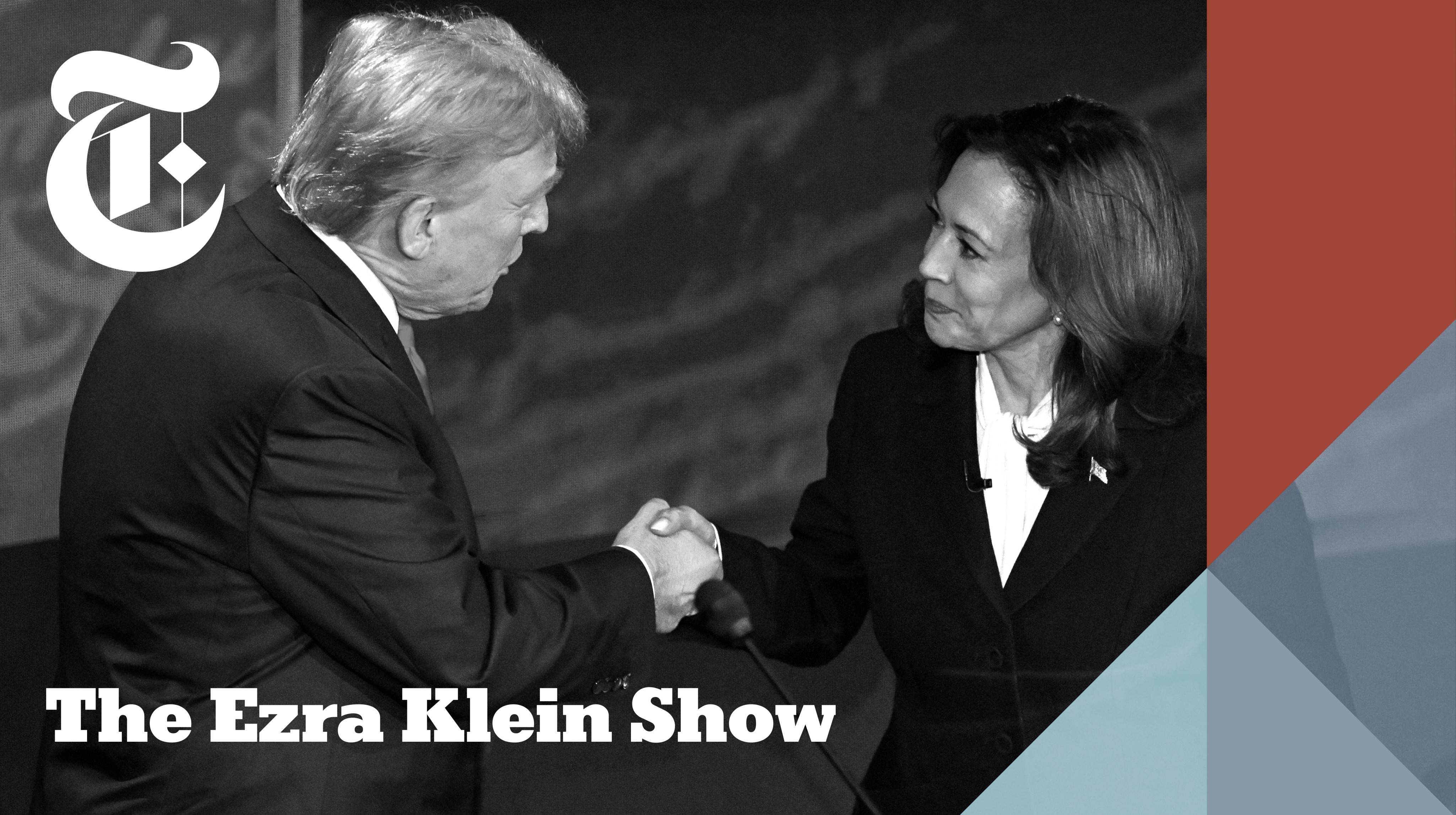
Harris Had a Theory of Trump, and It Was Right

Tuesday night was the first — perhaps the only — debate between Donald Trump and Kamala Harris. And it proved one of Harris’s stump speech lines right: Turns out she really does know Trump’s type. She had a theory of who Trump was and how he worked, and she used it to take control of the collision. But this was a substantive debate, too. The candidates clashed on abortion, health care, the economy, energy, immigration and more. And so we delve into the policy arguments to untangle what was really being said — and what wasn’t.

Thoughts? Guest suggestions? Email us at ezrakleinshow@nytimes.com.

You can find transcripts (posted midday) and more episodes of “The Ezra Klein Show” at nytimes.com/ezra-klein-podcast. Book recommendations from all our guests are listed at https://www.nytimes.com/article/ezra-klein-show-book-recs.

This episode of “The Ezra Klein Show” was produced by Claire Gordon. Fact-checking by Michelle Harris, with Kate Sinclair and Jack McCordick. Our senior engineer is Jeff Geld. Our senior editor is Claire Gordon. The show’s production team also includes Annie Galvin, Rollin Hu, Elias Isquith, Kristin Lin and Aman Sahota. Original music by Isaac Jones. Audience strategy by Kristina Samulewski and Shannon Busta. The executive producer of New York Times Opinion Audio is Annie-Rose Strasser.

Subscribe today at nytimes.com/podcasts or on Apple Podcasts and Spotify. You can also subscribe via your favorite podcast app here https://www.nytimes.com/activate-access/audio?source=podcatcher. For more podcasts and narrated articles, download The New York Times app at nytimes.com/app.


Hosted by Simplecast, an AdsWizz company. See pcm.adswizz.com for information about our collection and use of personal data for advertising.
💾

  •  

The Opinions: A Pro-Life Case for Harris and a Writing Contest With ChatGPT

Our Times Opinion colleagues recently launched a new podcast called “The Opinions.” It’s basically the Opinion page in audio form, so you can hear your favorite Times Opinion columnists and contributing writers in one place, in their own voices.

It’s an eclectic and surprising mix of perspectives, as you’ll see with these two segments we’ve selected for you to enjoy. The first is with the Times Opinion columnist (and friend of the pod) David French, a lifelong conservative who’s staunchly pro-life, on why he’s voting for Kamala Harris this November, and the second is with the novelist Curtis Sittenfeld, who enters into a writing competition of sorts against a new writer on the block — ChatGPT.

Mentioned:

David French on the Pro-Life Case for Kamala Harris

Can You Tell Which Short Story ChatGPT Wrote?

You can subscribe to “The Opinions” on Apple Podcasts, Spotify, Amazon Music, YouTube, iHeartRadio — or wherever you listen to podcasts.

Subscribe today at nytimes.com/podcasts or on Apple Podcasts and Spotify. You can also subscribe via your favorite podcast app here https://www.nytimes.com/activate-access/audio?source=podcatcher. For more podcasts and narrated articles, download The New York Times app at nytimes.com/app.


Hosted by Simplecast, an AdsWizz company. See pcm.adswizz.com for information about our collection and use of personal data for advertising.
💾

  •  

On Children, Meaning, Media and Psychedelics

I feel that there’s something important missing in our debate over screen time and kids — and even screen time and adults. In the realm of kids and teenagers, there’s so much focus on what studies show or don’t show: How does screen time affect school grades and behavior? Does it carry an increased risk of anxiety or depression?

And while the debate over those questions rages on, a feeling has kept nagging me. What if the problem with screen time isn’t something we can measure?

In June, Jia Tolentino published a great piece in The New Yorker about the blockbuster children’s YouTube channel CoComelon, which seemed as if it was wrestling with the same question. So I invited her on the show, and our conversation ended up going places I never expected. Among other things, we talk about how the decision to have kids relates to doing psychedelics, what kinds of pleasure to seek if you want a good life and how much the debate over screen time and kids might just be adults projecting our own discomfort with our own screen time.

We recorded this episode a few days before the Trump-Biden debate — and before Donald Trump chose JD Vance as his running mate. We then got so swept up in politics coverage we never got a chance to air it. But I am so excited to finally get this one out into the world.

This episode contains strong language.

Mentioned:

How CoComelon Captures Our Children’s Attention” by Jia Tolentino

Can Motherhood Be a Mode of Rebellion?” by Jia Tolentino

How to Do Nothing by Jenny Odell

Book Recommendations:

Lonesome Dove by Larry McMurtry

In Ascension by Martin MacInnes

When We Cease to Understand the World by Benjamin Labatut

Thoughts? Guest suggestions? Email us at ezrakleinshow@nytimes.com.

You can find transcripts (posted midday) and more episodes of “The Ezra Klein Show” at nytimes.com/ezra-klein-podcast. Book recommendations from all our guests are listed at https://www.nytimes.com/article/ezra-klein-show-book-recs.

This episode of “The Ezra Klein Show” was produced by Annie Galvin. Fact-checking by Michelle Harris, with Kate Sinclair and Mary Marge Locker. Mixing by Isaac Jones, with Efim Shapiro and Aman Sahota. Our senior editor is Claire Gordon. The show’s production team also includes Jeff Geld, Rollin Hu, Elias Isquith and Kristin Lin. Original music by Isaac Jones. Audience strategy by Kristina Samulewski and Shannon Busta. The executive producer of New York Times Opinion Audio is Annie-Rose Strasser. Special thanks to Sonia Herrero.

Subscribe today at nytimes.com/podcasts or on Apple Podcasts and Spotify. You can also subscribe via your favorite podcast app here https://www.nytimes.com/activate-access/audio?source=podcatcher. For more podcasts and narrated articles, download The New York Times app at nytimes.com/app.


Hosted by Simplecast, an AdsWizz company. See pcm.adswizz.com for information about our collection and use of personal data for advertising.
💾

  •  

Best Of: Tired? Distracted? Burned Out? Listen to This.

I’m convinced that attention is the most important human faculty. Your life, after all, is just the sum total of the things you’ve paid attention to. We lament our attention issues all the time — how distracted we are, how drained we feel, how hard it is to stay focused or present. And yet, while there’s no shortage of advice on how to improve our sleep hygiene or spending habits or physical fitness, there’s hardly any good information about how to build and replenish our capacity for paying attention.

Gloria Mark is a professor at the University of California, Irvine, and the author of the book “Attention Span.” And she’s one of the few people who have deeply studied the way our attention works, how that’s been changing and what we can do to stop frittering away our attention budgets. 

This was our first release of 2024, a kind of New Year’s resolutions episode. And since it can sometimes help to be reminded of the intentions with which you began your year — especially in the midst of a high-intensity election season — we thought we’d share it again. 

Book recommendations:

The Challenger Launch Decision” by Diane Vaughan

The Undoing Project” by Michael Lewis

The God Equation” by Michio Kaku

Thoughts? Guest suggestions? Email us at ezrakleinshow@nytimes.com.

You can find transcripts (posted midday) and more episodes of “The Ezra Klein Show” at nytimes.com/ezra-klein-podcast, and you can find Ezra on Twitter @ezraklein. Book recommendations from all our guests are listed at https://www.nytimes.com/article/ezra-klein-show-book-recs.

This episode of “The Ezra Klein Show” was produced by Claire Gordon. Fact-checking by Michelle Harris, Mary Marge Locker and Kate Sinclair. Our senior engineer is Jeff Geld. Our senior editor is Claire Gordon. The show’s production team also includes Rollin Hu and Kristin Lin. Original music by Isaac Jones. Audience strategy by Kristina Samulewski and Shannon Busta. The executive producer of New York Times Opinion Audio is Annie-Rose Strasser.

Subscribe today at nytimes.com/podcasts or on Apple Podcasts and Spotify. You can also subscribe via your favorite podcast app here https://www.nytimes.com/activate-access/audio?source=podcatcher. For more podcasts and narrated articles, download The New York Times app at nytimes.com/app.


Hosted by Simplecast, an AdsWizz company. See pcm.adswizz.com for information about our collection and use of personal data for advertising.
💾

  •  

Best Of: The Men — and Boys — Are Not Alright

We recently did an episode on the strange new gender politics that have emerged in the 2024 election. But we only briefly touched on the social and economic changes that underlie this new politics — the very real ways boys and men have been falling behind.

In March 2023, though, we dedicated a whole episode to that subject. Our guest was Richard Reeves, the author of the 2022 book “Of Boys and Men: Why the Modern Male Is Struggling, Why It Matters, and What to Do About It,” who recently founded the American Institute for Boys and Men to develop solutions for the gender gap he describes in his research. He argues that you can’t understand inequality in America today without understanding the specific challenges facing men and boys. And I would add that there’s no way to fully understand the politics of this election without understanding that, either. So we’re rerunning this episode, because Reeves’s insights on this feel more relevant than ever.

We discuss how the current education system places boys at a disadvantage, why boys raised in poverty are less likely than girls to escape it, why so many young men look to figures like Jordan Peterson and Andrew Tate for inspiration, what a better social script for masculinity might look like and more.

Mentioned:

"Gender Achievement Gaps in U.S. School Districts" by Sean F. Reardon, Erin M. Fahle, Demetra Kalogrides, Anne Podolsky and Rosalia C. Zarate

"Redshirt the Boys" by Richard Reeves

Book recommendations:

"The Tenuous Attachments of Working-Class Men" by Kathryn Edin, Timothy Nelson, Andrew Cherlin and Robert Francis

Career and Family by Claudia Goldin

The Life of Dad by Anna Machin

Thoughts? Guest suggestions? Email us at ezrakleinshow@nytimes.com.

You can find transcripts (posted midday) and more episodes of “The Ezra Klein Show” at nytimes.com/ezra-klein-podcast, and you can find Ezra on Twitter @ezraklein. Book recommendations from all our guests are listed at https://www.nytimes.com/article/ezra-klein-show-book-recs.

This episode of “The Ezra Klein Show” was produced by Emefa Agawu, Annie Galvin, Jeff Geld, Rogé Karma and Kristin Lin. Fact-checking by Michelle Harris, Mary Marge Locker and Kate Sinclair. Mixing by Sonia Herrero. Original music by Isaac Jones. Audience strategy by Shannon Busta. The executive producer of New York Times Opinion Audio is Annie-Rose Strasser. Special thanks to Carol Sabouraud and Kristina Samulewski.

Subscribe today at nytimes.com/podcasts or on Apple Podcasts and Spotify. You can also subscribe via your favorite podcast app here https://www.nytimes.com/activate-access/audio?source=podcatcher. For more podcasts and narrated articles, download The New York Times app at nytimes.com/app.


Hosted by Simplecast, an AdsWizz company. See pcm.adswizz.com for information about our collection and use of personal data for advertising.
💾

  •  

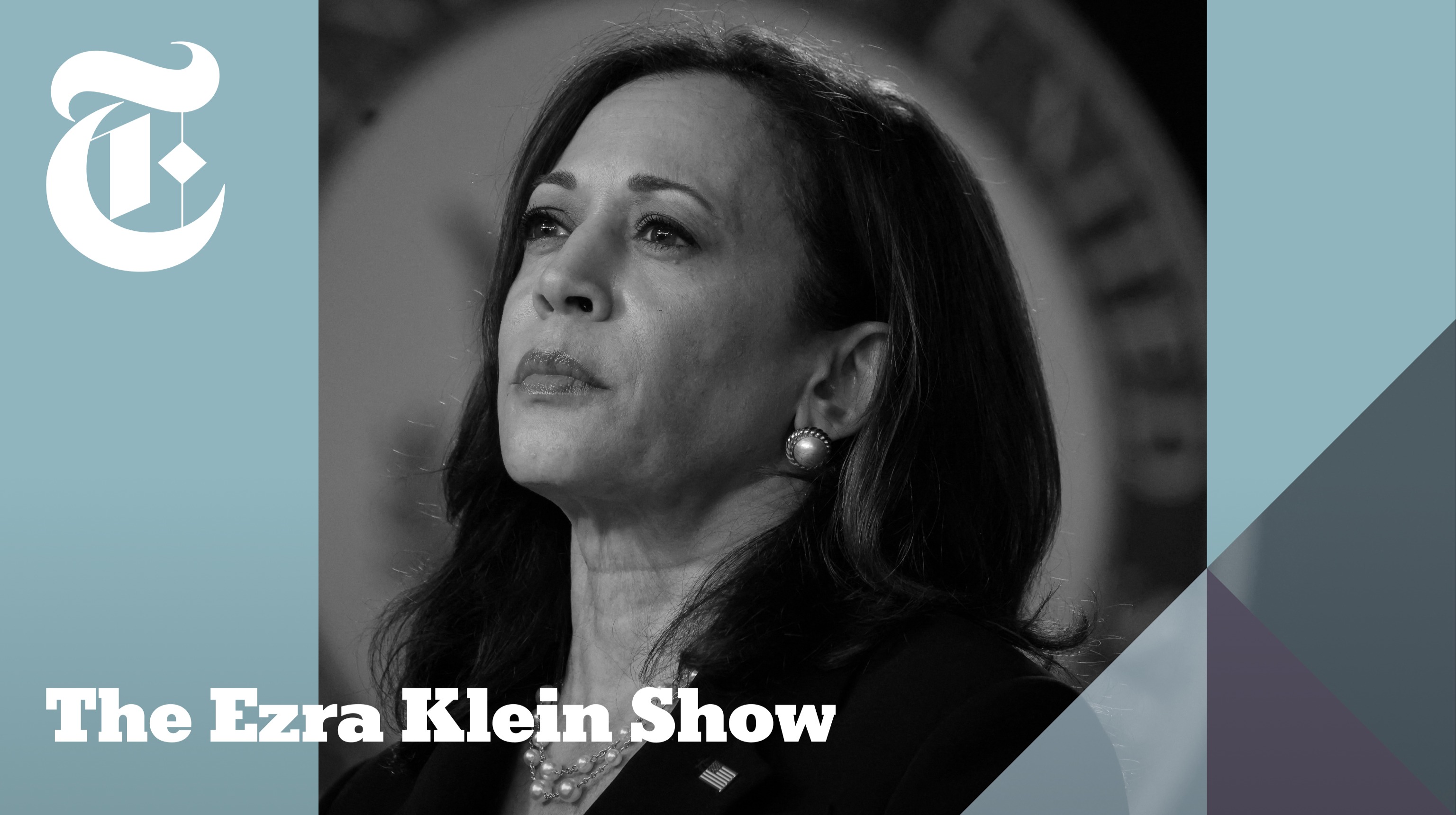
Kamala Harris Wants to Win

On Thursday night, Kamala Harris reintroduced herself to America. And by the standards of Democratic convention speeches, this one was pretty unusual. In this conversation I’m joined by my editor, Aaron Retica, to discuss what Harris’s speech reveals about the candidate, the campaign she’s going to run and how she believes she can win in November.

Mentioned:

The Truths We Hold by Kamala Harris

Thoughts? Guest suggestions? Email us at ezrakleinshow@nytimes.com.

You can find transcripts (posted midday) and more episodes of “The Ezra Klein Show” at nytimes.com/ezra-klein-podcast. Book recommendations from all our guests are listed at https://www.nytimes.com/article/ezra-klein-show-book-recs.

This episode of “The Ezra Klein Show” was produced by Claire Gordon. Fact-checking by Michelle Harris, with Jack McCordick. Our senior engineer is Jeff Geld, with additional mixing by Aman Sahota. Our senior editor is Claire Gordon. The show’s production team also includes Annie Galvin, Rollin Hu, Elias Isquith and Kristin Lin. Original music by Isaac Jones. Audience strategy by Kristina Samulewski and Shannon Busta. The executive producer of New York Times Opinion Audio is Annie-Rose Strasser.

Subscribe today at nytimes.com/podcasts or on Apple Podcasts and Spotify. You can also subscribe via your favorite podcast app here https://www.nytimes.com/activate-access/audio?source=podcatcher. For more podcasts and narrated articles, download The New York Times app at nytimes.com/app.


Hosted by Simplecast, an AdsWizz company. See pcm.adswizz.com for information about our collection and use of personal data for advertising.
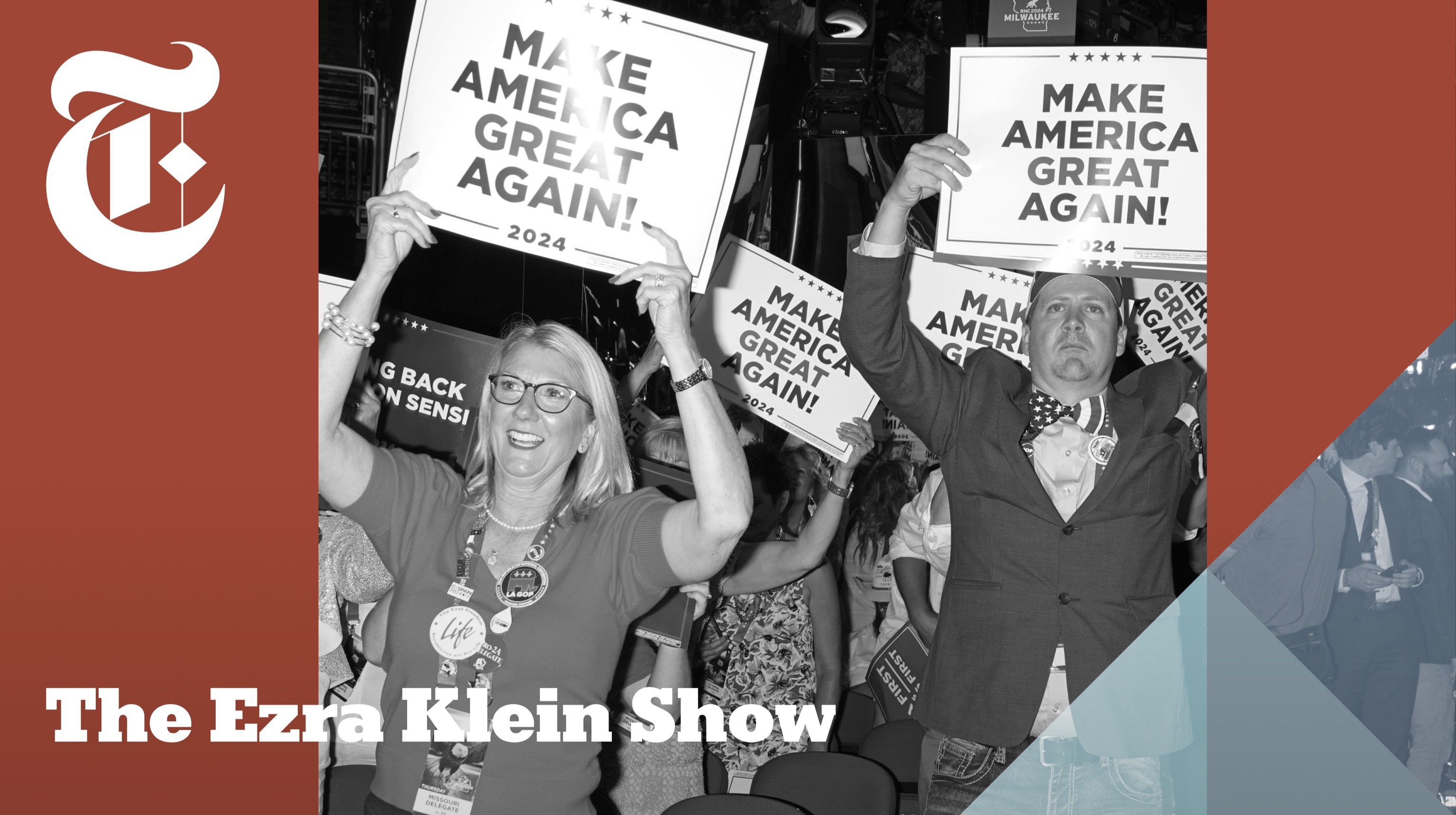
💾

  •  

Can the Democratic Party Reclaim Freedom?

Democrats spent the third night of their convention pitching themselves as the party of freedom. In this conversation, my producer Annie Galvin joined me on the show to take a deep look at that messaging. Why do Democrats see an opportunity in this election to seize an idea that Republicans have monopolized for decades? What’s the meaning of “freedom” that Democrats seem to be embracing? And how does this message square with other Democratic Party values, like belief in the ability of government to do good?

Mentioned:

How Democracies Die by Steven Levitsky and Daniel Ziblatt

Thoughts? Guest suggestions? Email us at ezrakleinshow@nytimes.com.

You can find transcripts (posted midday) and more episodes of “The Ezra Klein Show” at nytimes.com/ezra-klein-podcast. Book recommendations from all our guests are listed at https://www.nytimes.com/article/ezra-klein-show-book-recs.

This episode of “The Ezra Klein Show” was produced and hosted by Annie Galvin. Fact-checking by Michelle Harris, with Kate Sinclair and Mary Marge Locker. Our senior engineer is Jeff Geld, with additional mixing by Aman Sahota. Our senior editor is Claire Gordon. The show’s production team also includes Rollin Hu, Elias Isquith and Kristin Lin. Original music by Isaac Jones. Audience strategy by Kristina Samulewski and Shannon Busta. The executive producer of New York Times Opinion Audio is Annie-Rose Strasser.

Subscribe today at nytimes.com/podcasts or on Apple Podcasts and Spotify. You can also subscribe via your favorite podcast app here https://www.nytimes.com/activate-access/audio?source=podcatcher. For more podcasts and narrated articles, download The New York Times app at nytimes.com/app.


Hosted by Simplecast, an AdsWizz company. See pcm.adswizz.com for information about our collection and use of personal data for advertising.
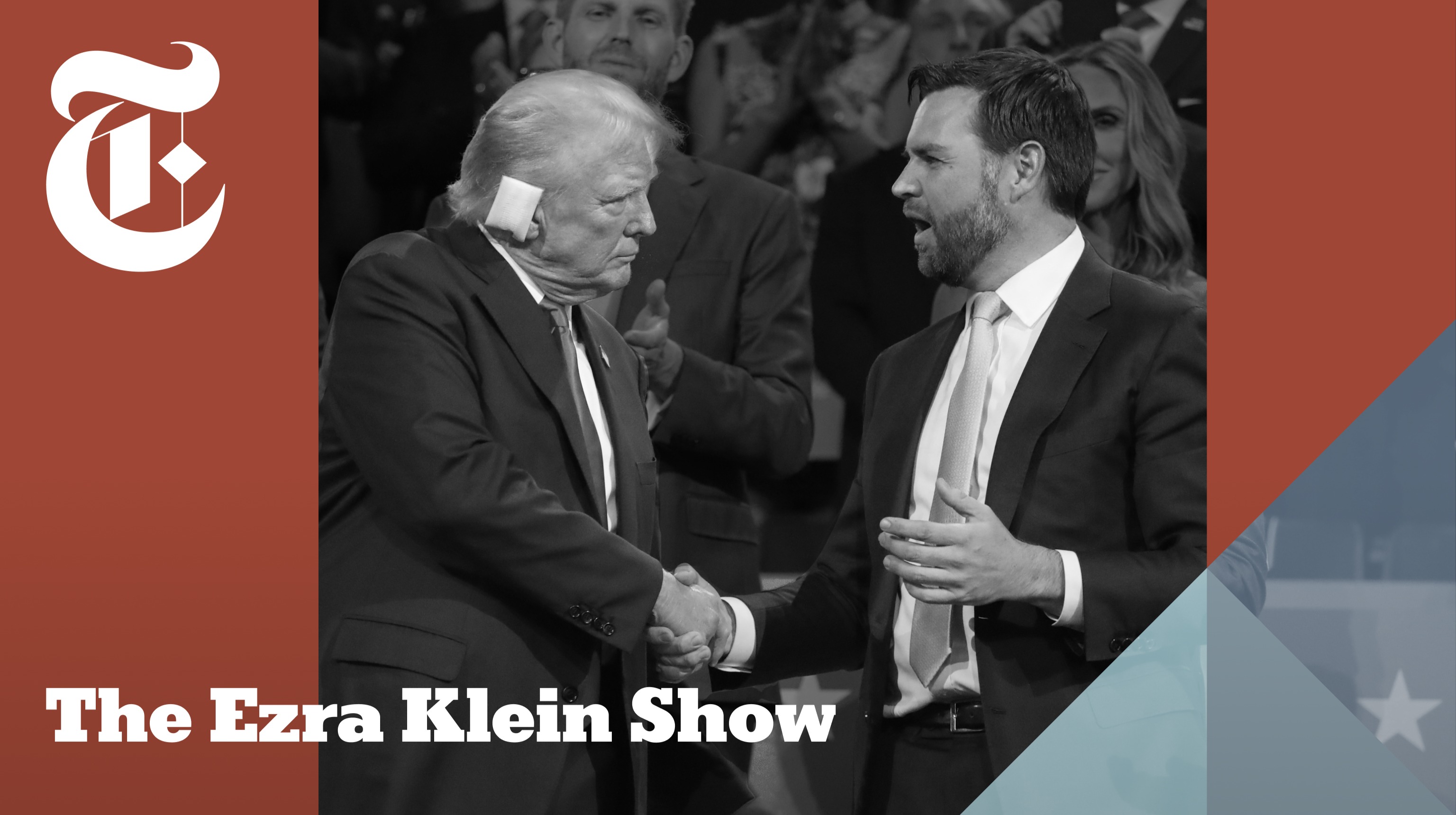
💾

  •  

The Obamas Strike Back

Is Obamaism making a comeback? Tuesday night at the Democratic National Convention, Michelle and Barack Obama electrified the crowd with the most powerful speeches of the week so far, and seemed to anoint Kamala Harris as the inheritor of their political movement. For this audio diary, I’m joined by my producer Elias Isquith to dissect those two speeches. We discuss what Obamaism was in 2008 and 2012, and what it means to pass the baton to Harris in 2024.

Mentioned:

Biden Made Trump Bigger. Harris Makes Him Smaller.” by Ezra Klein

That Feeling You Recognize? Obamacore.” by Nate Jones

Thoughts? Guest suggestions? Email us at ezrakleinshow@nytimes.com.

You can find transcripts (posted midday) and more episodes of “The Ezra Klein Show” at nytimes.com/ezra-klein-podcast. Book recommendations from all our guests are listed at https://www.nytimes.com/article/ezra-klein-show-book-recs.

This episode of “The Ezra Klein Show” was produced and hosted by Elias Isquith. Fact-checking by Michelle Harris, with Mary Marge Locker and Kate Sinclair. Our senior engineer is Jeff Geld. Our senior editor is Claire Gordon. The show’s production team also includes Annie Galvin, Rollin Hu, Kristin Lin and Aman Sahota. Original music by Aman Sahota and Isaac Jones. Audience strategy by Kristina Samulewski and Shannon Busta. The executive producer of New York Times Opinion Audio is Annie-Rose Strasser.

Subscribe today at nytimes.com/podcasts or on Apple Podcasts and Spotify. You can also subscribe via your favorite podcast app here https://www.nytimes.com/activate-access/audio?source=podcatcher. For more podcasts and narrated articles, download The New York Times app at nytimes.com/app.


Hosted by Simplecast, an AdsWizz company. See pcm.adswizz.com for information about our collection and use of personal data for advertising.
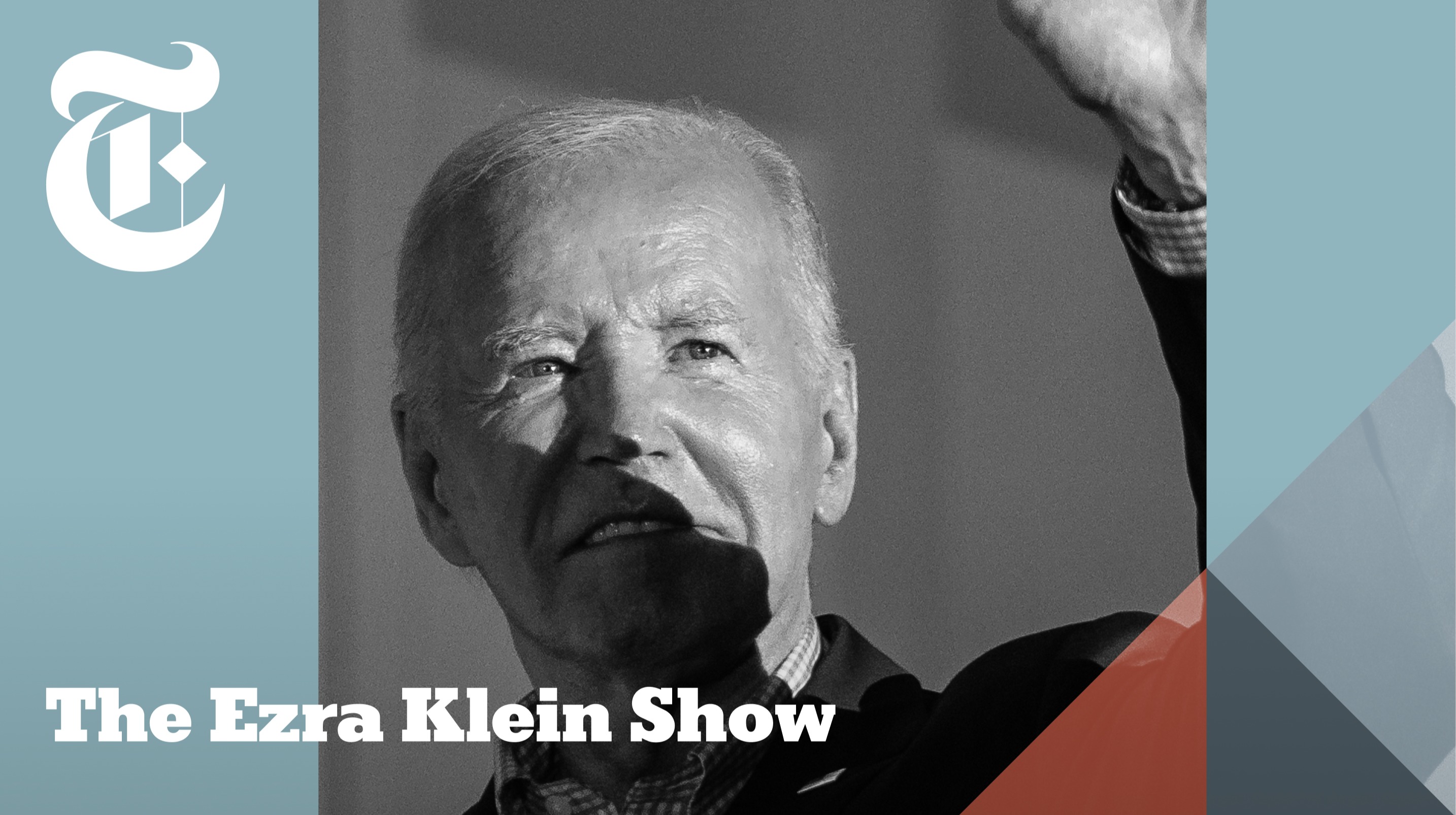
💾

  •  

Democrats Don’t Think They Have This Election Won

I’m reporting from the Democratic National Convention this week, so we’re going to try something a little different on the show — a daily audio report of what I’m seeing and hearing here in Chicago. For our first installment, I’m joined by my producer, Rollin Hu, to discuss what the convention’s opening night revealed about the Democratic Party after a tumultuous couple of months. We talk about how Joe Biden transformed the party over the past four years, the behind-the-scenes efforts to shape the party under Kamala Harris, the impact of the Gaza protests and why many Democrats — despite Harris’s recent momentum — feel cautious about their odds in November.

Mentioned:

Trump Turned the Democratic Party Into a Pitiless Machine” by Ezra Klein

Rep. Alexandria Ocasio-Cortez’s Full Speech at Democratic National Convention

Thoughts? Guest suggestions? Email us at ezrakleinshow@nytimes.com.

You can find transcripts (posted midday) and more episodes of “The Ezra Klein Show” at nytimes.com/ezra-klein-podcast. Book recommendations from all our guests are listed at https://www.nytimes.com/article/ezra-klein-show-book-recs.

This episode of “The Ezra Klein Show” was produced and hosted by Rollin Hu. Fact-checking by Michelle Harris, with Kate Sinclair and Mary Marge Locker. Our senior engineer is Jeff Geld, with additional mixing by Aman Sahota. Our senior editor is Claire Gordon. The show’s production team also includes Annie Galvin, Elias Isquith and Kristin Lin. Original music by Isaac Jones. Audience strategy by Kristina Samulewski and Shannon Busta. The executive producer of New York Times Opinion Audio is Annie-Rose Strasser.

Subscribe today at nytimes.com/podcasts or on Apple Podcasts and Spotify. You can also subscribe via your favorite podcast app here https://www.nytimes.com/activate-access/audio?source=podcatcher. For more podcasts and narrated articles, download The New York Times app at nytimes.com/app.


Hosted by Simplecast, an AdsWizz company. See pcm.adswizz.com for information about our collection and use of personal data for advertising.
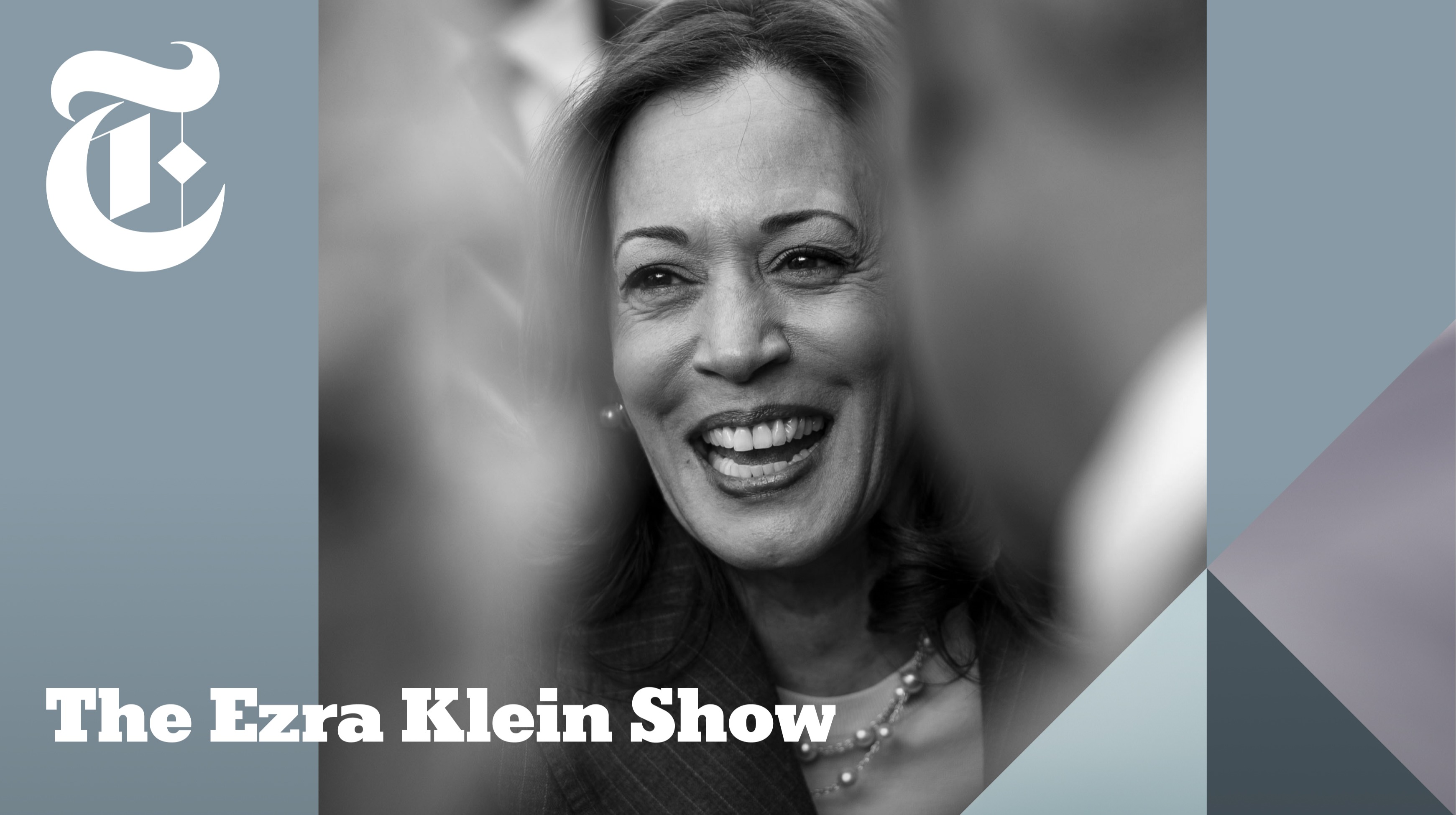
💾

  •  

Manliness, Cat Ladies, Fertility Panic and the 2024 Election

A strange new gender politics is roiling the 2024 election. At the Republican National Convention, Donald Trump made his nomination a show of campy masculinity, with Hulk Hogan, Kid Rock and Dana White, the president of the Ultimate Fighting Championship, warming up the crowd. JD Vance’s first viral moments have been comments he made in 2021 about “childless cat ladies” running the Democratic Party and a “thought experiment” assigning extra votes to parents because they have more of an “investment in the future of this country.” Meanwhile, Kamala Harris is centering her campaign on abortion rights, and Tim Walz has been playing up his own classically masculine profile — as a former football coach, hunter and Midwestern dad.  What are the two sides here really saying about gender and family? And what are the new fault lines of our modern-day gender wars?

Christine Emba is a staff writer at The Atlantic and the author of “Rethinking Sex: A Provocation.” Zack Beauchamp is a senior correspondent at Vox and the author of the new book “The Reactionary Spirit: How America's Most Insidious Political Tradition Swept the World.” In this conversation, we discuss some influences on JD Vance’s ideas about gender and family, the tensions between those ideas and the beliefs about gender represented by Donald Trump, the competing visions of masculinity presented by the two parties in this election, how Dobbs changed Democrats’ message on gender and family, and more.

Mentioned:

What Does the 'Post-Liberal Right' Actually Want?” with Patrick Deneen on The Ezra Klein Show

A Powerful Theory of Why the Far Right Is Thriving Across the Globe” with Pippa Norris on The Ezra Klein Show

Book Recommendations:

Black Pill by Elle Reeve

What Are Children For? by Anastasia Berg and Rachel Wiseman

The Lord of the Rings trilogy by J.R.R. Tolkien

Justice, Gender, and the Family by Susan Moller Okin

Cultural Backlash by Pippa Norris, Ronald Inglehart

Conservative Parties and the Birth of Democracy by Daniel Ziblatt

Thoughts? Guest suggestions? Email us at ezrakleinshow@nytimes.com.

You can find transcripts (posted midday) and more episodes of “The Ezra Klein Show” at nytimes.com/ezra-klein-podcast. Book recommendations from all our guests are listed at https://www.nytimes.com/article/ezra-klein-show-book-recs.

This episode of “The Ezra Klein Show” was produced by Annie Galvin. Fact-checking by Michelle Harris, with Mary Marge Locker. Our senior engineer is Jeff Geld, with additional mixing by Isaac Jones and Aman Sahota. Our senior editor is Claire Gordon. The show’s production team also includes Rollin Hu, Elias Isquith and Kristin Lin. Original music by Isaac Jones. Audience strategy by Kristina Samulewski and Shannon Busta. The executive producer of New York Times Opinion Audio is Annie-Rose Strasser. Special thanks to Sonia Herrero.

Subscribe today at nytimes.com/podcasts or on Apple Podcasts and Spotify. You can also subscribe via your favorite podcast app here https://www.nytimes.com/activate-access/audio?source=podcatcher. For more podcasts and narrated articles, download The New York Times app at nytimes.com/app.


Hosted by Simplecast, an AdsWizz company. See pcm.adswizz.com for information about our collection and use of personal data for advertising.
💾

  •  

Nate Silver on Kamala Harris’s Chances and the Mistakes of the ‘Indigo Blob’

Risk has been on my mind this year. For Democrats, the question of whether Joe Biden should drop out was really a question about risk – the risk of keeping him on the ticket versus the risk of the unknown. And it’s hard to think through those kinds of questions when you have incomplete information and so much you can’t predict. After all, few election models forecast that Kamala Harris would have the kind of momentum we’ve seen the last few weeks.

Nate Silver’s new book, “On the Edge: The Art of Risking Everything,” is all about thinking through risk, and the people who do it professionally, from gamblers to venture capitalists. (Silver is a poker player himself.) And so I wanted to talk to him about how that kind of thinking could help in our politics – and its limits.

We discuss how Harris is performing in Silver’s election model; what he means when he talks about “the village” and “the river”; what Silver observed profiling Peter Thiel and Sam Bankman-Fried, two notorious risk-takers, for the book; the trade-offs of Harris’s decision to choose Tim Walz over Josh Shapiro as a running mate; and more.

This episode contains strong language.

Mentioned:

The Contrarian by Max Chafkin

Nancy Pelosi on Joe Biden, Tim Walz and Donald Trump” by The Ezra Klein Show

Book Recommendations:

The Hour Between Dog and Wolf by John Coates

The Making of the Atomic Bomb by Richard Rhodes

Addiction by Design by Natasha Dow Schüll

Thoughts? Guest suggestions? Email us at ezrakleinshow@nytimes.com.

You can find transcripts (posted midday) and more episodes of “The Ezra Klein Show” at nytimes.com/ezra-klein-podcast. Book recommendations from all our guests are listed at https://www.nytimes.com/article/ezra-klein-show-book-recs.

This episode of “The Ezra Klein Show” was produced by Rollin Hu. Fact-checking by Kate Sinclair and Mary Marge Locker. Our senior engineer is Jeff Geld, with additional mixing by Efim Shapiro and Aman Sahota. Our senior editor is Claire Gordon. The show’s production team also includes Annie Galvin, Michelle Harris, Elias Isquith and Kristin Lin. Original music by Isaac Jones. Audience strategy by Kristina Samulewski and Shannon Busta. The executive producer of New York Times Opinion Audio is Annie-Rose Strasser. Special thanks to Sonia Herrero.

Subscribe today at nytimes.com/podcasts or on Apple Podcasts and Spotify. You can also subscribe via your favorite podcast app here https://www.nytimes.com/activate-access/audio?source=podcatcher. For more podcasts and narrated articles, download The New York Times app at nytimes.com/app.


Hosted by Simplecast, an AdsWizz company. See pcm.adswizz.com for information about our collection and use of personal data for advertising.
💾

  •  

Nancy Pelosi: ‘It Didn’t Sound Like Joe Biden to Me’

It’s been remarkable watching the Democratic Party act like a political party this past month — a party that makes decisions collectively, that does hard things because it wants to win, that is more than the vehicle for a single person’s ambitions. 

But parties are made of people. And in the weeks leading up to President Biden’s decision to drop out of the race, it felt like the Democratic Party was made of one particular person: Nancy Pelosi. Two days after Biden released a forceful letter to congressional Democrats insisting he was staying in the race, the former speaker went on “Morning Joe” and cracked that door back open. And Pelosi has pulled maneuvers like this over and over again in her political career. When an opportunity seems almost lost, she simply asserts that it isn’t and then somehow makes that true. Sometimes it seems like Pelosi is one of the last people left in American politics who knows how to wield power.

Pelosi has a new book, “The Art of Power: My Story as America’s First Woman Speaker of the House,” and I wanted to talk to her about her role in Biden’s decision to drop out and what she’s learned about power in her decades in Congress.

Book Recommendations:

The Island of the Day Before by Umberto Eco

Love in the Time of Cholera by Gabriel García Márquez

The Age of Wonder by Richard Holmes

Thoughts? Guest suggestions? Email us at ezrakleinshow@nytimes.com.

You can find transcripts (posted midday) and more episodes of “The Ezra Klein Show” at nytimes.com/ezra-klein-podcast. Book recommendations from all our guests are listed at https://www.nytimes.com/article/ezra-klein-show-book-recs.

This episode of “The Ezra Klein Show” was produced by Elias Isquith. Fact-checking by Kate Sinclair and Mary Marge Locker. Our senior engineer is Jeff Geld, with additional mixing by Aman Sahota. Our senior editor is Claire Gordon. The show’s production team also includes Annie Galvin, Michelle Harris, Rollin Hu and Kristin Lin. Original music by Isaac Jones. Audience strategy by Kristina Samulewski and Shannon Busta. The executive producer of New York Times Opinion Audio is Annie-Rose Strasser. Special thanks to Jonah Kessel, Emily Holzknecht, Kristen Cruzata and Sonia Herrero.

Subscribe today at nytimes.com/podcasts or on Apple Podcasts and Spotify. You can also subscribe via your favorite podcast app here https://www.nytimes.com/activate-access/audio?source=podcatcher. For more podcasts and narrated articles, download The New York Times app at nytimes.com/app.


Hosted by Simplecast, an AdsWizz company. See pcm.adswizz.com for information about our collection and use of personal data for advertising.
💾

  •  

Kamala Harris Isn’t Playing It Safe

In picking Tim Walz as her running mate, Kamala Harris is after more than just Pennsylvania.

Mentioned:

Is Tim Walz the Midwestern Dad Democrats Need?” by The Ezra Klein Show

Thoughts? Guest suggestions? Email us at ezrakleinshow@nytimes.com.

You can find transcripts (posted midday) and more episodes of “The Ezra Klein Show” at nytimes.com/ezra-klein-podcast. Book recommendations from all our guests are listed at https://www.nytimes.com/article/ezra-klein-show-book-recs.

This episode of “The Ezra Klein Show” was produced by our senior editor, Claire Gordon. Fact-checking by Kate Sinclair and Mary Marge Locker. Our senior engineer is Jeff Geld, with additional mixing by Aman Sahota. The show’s production team also includes Annie Galvin, Michelle Harris, Rollin Hu, Elias Isquith and Kristin Lin. Original music by Isaac Jones. Audience strategy by Kristina Samulewski and Shannon Busta. The executive producer of New York Times Opinion Audio is Annie-Rose Strasser. Special thanks to Sonia Herrero.

Subscribe today at nytimes.com/podcasts or on Apple Podcasts and Spotify. You can also subscribe via your favorite podcast app here https://www.nytimes.com/activate-access/audio?source=podcatcher. For more podcasts and narrated articles, download The New York Times app at nytimes.com/app.


Hosted by Simplecast, an AdsWizz company. See pcm.adswizz.com for information about our collection and use of personal data for advertising.
💾

  •  

‘We Have Created the Scarcity on Purpose’

The economy is one of the biggest vulnerabilities for Democrats this election and, in particular, the issue of affordability. Many Americans blame the Biden administration for the past few years of high inflation, and housing costs have become a crisis in cities across the country. These are top concerns for voters, and the Democratic Party hasn’t articulated the clearest answer.

But there are some Democrats working hard on this and trying to push the party in a new direction. Brian Schatz is the senior senator from Hawaii and an influential policy voice in the Democratic Party. And over the past few years, he’s had a political evolution — about why things are so expensive and the role the government should play to fix it.

In this conversation, I talk with Senator Schatz about the role the Democratic Party has played in making the affordability crisis worse, the policies he thinks could make a dent and why it’s so hard for the party to change course.

This episode contains strong language.

Mentioned:

Americans still waiting on Biden broadband plan; rural high-speed internet stuck in Dems’ red tape” by Susan Ferrechio

Book Recommendations:

Walk, Ride, Paddle by Tim Kaine

The Amen Effect by Sharon Brous

Wounded Knee by Heather Cox Richardson

Thoughts? Guest suggestions? Email us at ezrakleinshow@nytimes.com.

You can find transcripts (posted midday) and more episodes of “The Ezra Klein Show” at nytimes.com/ezra-klein-podcast. Book recommendations from all our guests are listed at https://www.nytimes.com/article/ezra-klein-show-book-recs.

This episode of “The Ezra Klein Show” was produced by Elias Isquith. Fact-checking by Kelsey Kudak. Our senior engineer is Jeff Geld, with additional mixing by Isaac Jones. Our senior editor is Claire Gordon. The show’s production team also includes Annie Galvin, Michelle Harris, Rollin Hu, Kristin Lin and Aman Sahota. Original music by Isaac Jones. Audience strategy by Kristina Samulewski and Shannon Busta. The executive producer of New York Times Opinion Audio is Annie-Rose Strasser. And special thanks to Sophia Boyd, Efim Shapiro and Sonia Herrero.

Subscribe today at nytimes.com/podcasts or on Apple Podcasts and Spotify. You can also subscribe via your favorite podcast app here https://www.nytimes.com/activate-access/audio?source=podcatcher. For more podcasts and narrated articles, download The New York Times app at nytimes.com/app.


Hosted by Simplecast, an AdsWizz company. See pcm.adswizz.com for information about our collection and use of personal data for advertising.
💾

  •  

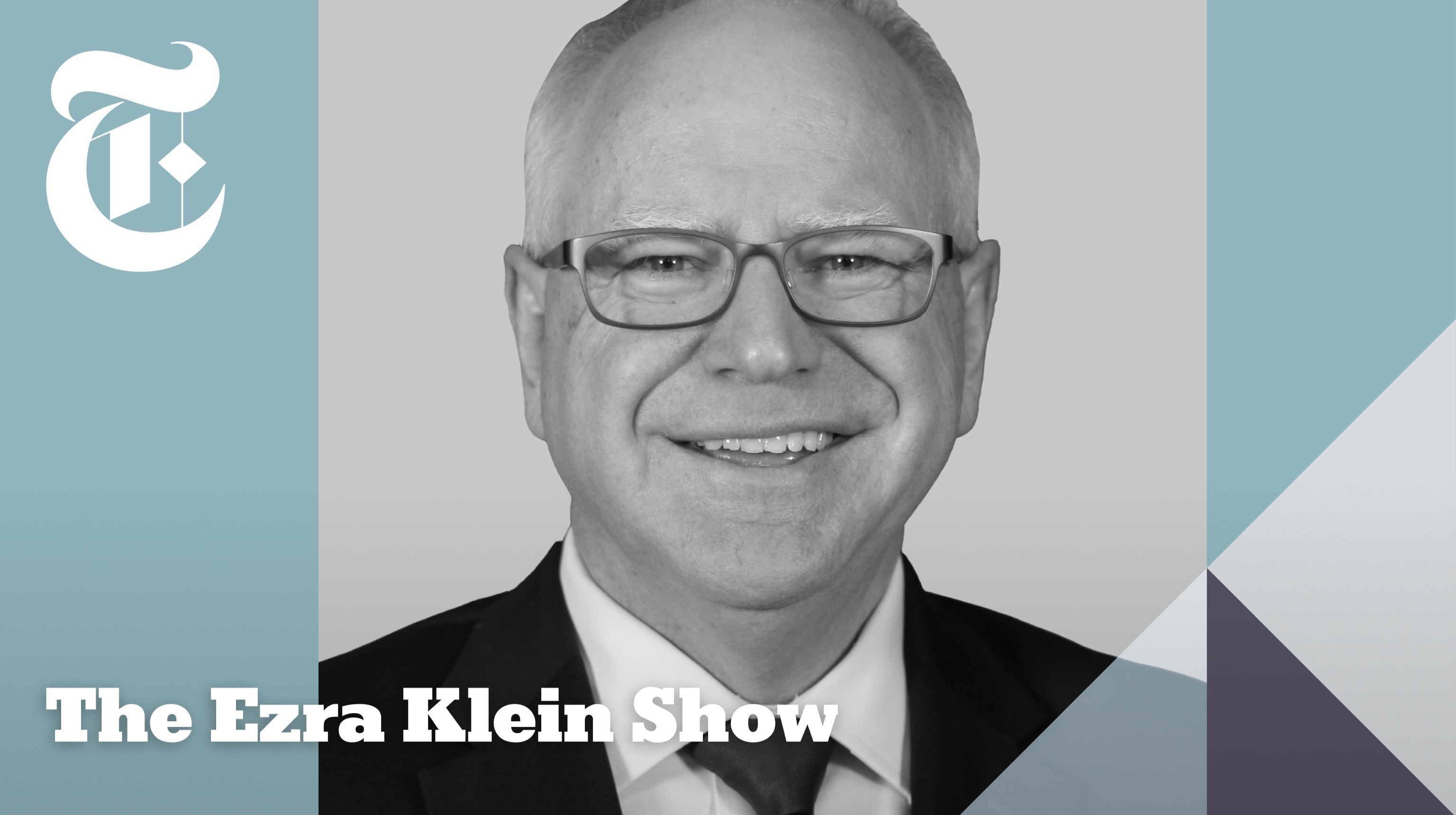
Is Tim Walz the Midwestern Dad Democrats Need?

I’ve watched a lot of presidential campaigns, and I can’t remember one in which the contest for the Democratic vice-presidential nomination has played out quite so publicly. One breakthrough voice has been Gov. Tim Walz of Minnesota. Before last week, he didn’t have much of a national profile. But then he went on “Morning Joe” and said of Donald Trump and JD Vance, “These guys are just weird.”

That one line has transformed the Democratic Party’s messaging, with everyone from Vice President Kamala Harris to Senator Joe Manchin using similar language.

But it’s the kind of criticism that risks coming off as condescending to those who support Trump and Vance, similar to Hillary Clinton’s “deplorables” comment in 2016. But what has stood out to me about Walz’s political ethos is his confidence in speaking on behalf of everyday Americans — a confidence his track record backs up. Walz comes from a very small town and repeatedly won House races in a district that heavily favored Trump.

So I invited him on the show to talk about how he walks this line between attacking Republican politicians without alienating Republican voters and how he thinks Democrats can control the narrative of this election and start winning some of those voters back.

Book Recommendations:

The Most Secret Memory of Men by Mohamed Mbougar Sarr

Command and Control by Eric Schlosser

The Razor’s Edge by W. Somerset Maugham

Thoughts? Guest suggestions? Email us at ezrakleinshow@nytimes.com.

You can find transcripts (posted midday) and more episodes of “The Ezra Klein Show” at nytimes.com/ezra-klein-podcast. Book recommendations from all our guests are listed at https://www.nytimes.com/article/ezra-klein-show-book-recs.

This episode of “The Ezra Klein Show” was produced by Rollin Hu. Fact-checking by Michelle Harris, with Kate Sinclair and Mary Marge Locker. Our senior engineer is Jeff Geld, with additional mixing by Aman Sahota. Our senior editor is Claire Gordon. The show’s production team also includes Annie Galvin, Elias Isquith and Kristin Lin. Original music by Isaac Jones. Audience strategy by Kristina Samulewski and Shannon Busta. The executive producer of New York Times Opinion Audio is Annie-Rose Strasser. Special thanks to Sonia Herrero.

Subscribe today at nytimes.com/podcasts or on Apple Podcasts and Spotify. You can also subscribe via your favorite podcast app here https://www.nytimes.com/activate-access/audio?source=podcatcher. For more podcasts and narrated articles, download The New York Times app at nytimes.com/app.


Hosted by Simplecast, an AdsWizz company. See pcm.adswizz.com for information about our collection and use of personal data for advertising.
💾

  •  

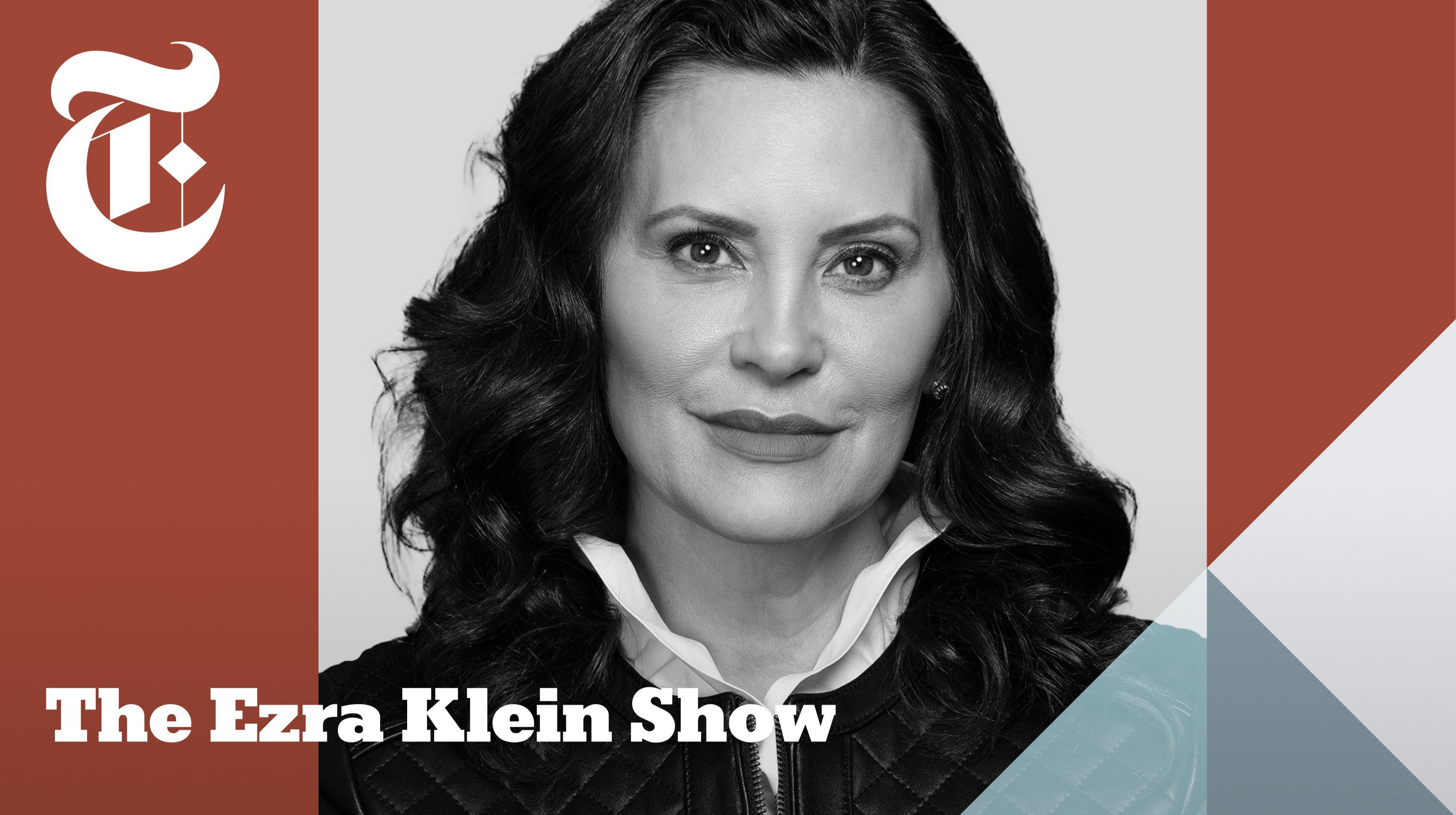
What Democrats Can Learn From Gretchen Whitmer

Gretchen Whitmer is one of the names you often see on lists of Democratic V.P. contenders. She’s swatted that speculation down repeatedly, but the interest in her makes a lot of sense. Michigan is a must-win state for Democrats, and she has won the governorship of that state twice, by significant margins each time. She’s also long been one of the Democratic Party’s most talented and forthright messengers on abortion.

So I think Whitmer has a lot to teach Democrats right now, whether she’s Kamala Harris’s running mate or not. In this conversation we discuss how her 2018 campaign slogan to “fix the damn roads” has translated into a governing philosophy, how she talks about reproductive rights in a swing state, what Democrats can learn from the success of female politicians in Michigan, how she sees the gender politics of the presidential election this year and more.

Mentioned:

True Gretch by Gretchen Whitmer

The Spartan: Why Gretchen Whitmer Has What It Takes for a White House Run” by Jennifer Palmieri

America’s New Political War Pits Young Men Against Young Women” by Aaron Zitner and Andrew Restuccia

Book Recommendations:

Tomorrow, and Tomorrow, and Tomorrow by Gabrielle Zevin

Burn Book by Kara Swisher

To Kill a Mockingbird by Harper Lee

Thoughts? Guest suggestions? Email us at ezrakleinshow@nytimes.com.

You can find transcripts (posted midday) and more episodes of “The Ezra Klein Show” at nytimes.com/ezra-klein-podcast. Book recommendations from all our guests are listed at https://www.nytimes.com/article/ezra-klein-show-book-recs.

This episode of “The Ezra Klein Show” was produced by our senior editor, Claire Gordon. Fact-checking by Michelle Harris, with Kate Sinclair and Mary Marge Locker. Our senior engineer is Jeff Geld. The show’s production team also includes Annie Galvin, Rollin Hu, Elias Isquith, Kristin Lin and Aman Sahota. Original music by Isaac Jones. Audience strategy by Kristina Samulewski and Shannon Busta. The executive producer of New York Times Opinion Audio is Annie-Rose Strasser. Special thanks to Isaac Jones.

Subscribe today at nytimes.com/podcasts or on Apple Podcasts and Spotify. You can also subscribe via your favorite podcast app here https://www.nytimes.com/activate-access/audio?source=podcatcher. For more podcasts and narrated articles, download The New York Times app at nytimes.com/app.


Hosted by Simplecast, an AdsWizz company. See pcm.adswizz.com for information about our collection and use of personal data for advertising.
💾

  •  

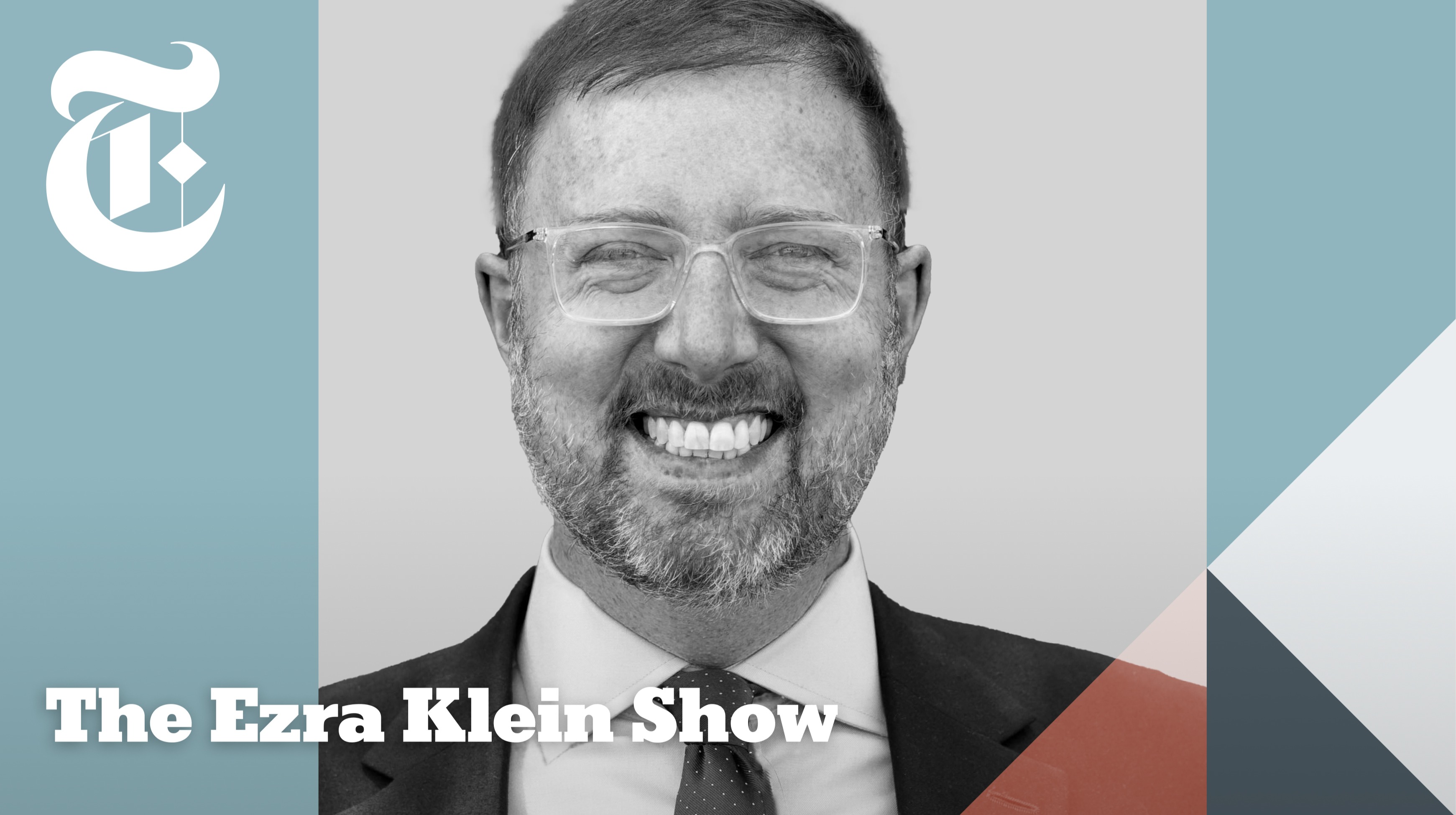
This Is How Democrats Win in Wisconsin

The Democratic Party’s rallying around Kamala Harris — the speed of it, the intensity, the joyfulness, the memes — has been head-spinning. Just a few weeks ago, she was widely seen in the party as a weak candidate and a risk to put on the top of the ticket. And while a lot of those concerns have dissipated, there’s one that still haunts a lot of Democrats: Can Harris win in Wisconsin?

Democrats are still traumatized by Hillary Clinton’s loss in Wisconsin in 2016. It is a must-win state for both parties this year. And while Democrats have been on a fair winning streak in the state, they lost a Senate race there in 2022 — a race with some striking parallels to this election — which has made some Democrats uneasy.

But Ben Wikler is unfazed. He’s chaired the Wisconsin Democratic Party since 2019 and knows what it takes for Democrats to win — and lose — in his state. In this conversation, he tells me what he learned from that loss two years ago, why he thinks Harris’s political profile will appeal to Wisconsin’s swing voters and how Trump’s selection of JD Vance as his running mate has changed the dynamics of the race in his state.

Mentioned:

The Democratic Party Is Having an ‘Identity Crisis’” by Ezra Klein

Weekend Reading by Michael Podhorzer

Book Recommendations:

The Reasoning Voter by Samuel L. Popkin

Finding Freedom by Ruby West Jackson and Walter T. McDonald

The Princess Bride by William Goldman

Thoughts? Guest suggestions? Email us at ezrakleinshow@nytimes.com.

You can find transcripts (posted midday) and more episodes of “The Ezra Klein Show” at nytimes.com/ezra-klein-podcast. Book recommendations from all our guests are listed at https://www.nytimes.com/article/ezra-klein-show-book-recs.

This episode of “The Ezra Klein Show” was produced by Rollin Hu. Fact-checking by Michelle Harris, with Kate Sinclair. Mixing by Isaac Jones. Our senior engineer is Jeff Geld. Our senior editor is Claire Gordon. The show’s production team also includes Annie Galvin, Elias Isquith, Kristin Lin and Aman Sahota. Original music by Isaac Jones. Audience strategy by Kristina Samulewski and Shannon Busta. The executive producer of New York Times Opinion Audio is Annie-Rose Strasser. Special thanks to Sonia Herrero.

Subscribe today at nytimes.com/podcasts or on Apple Podcasts and Spotify. You can also subscribe via your favorite podcast app here https://www.nytimes.com/activate-access/audio?source=podcatcher. For more podcasts and narrated articles, download The New York Times app at nytimes.com/app.


Hosted by Simplecast, an AdsWizz company. See pcm.adswizz.com for information about our collection and use of personal data for advertising.
💾

  •  

Are Democrats Right to Unite Around Kamala Harris?

An open convention or a coronation aren’t the only two options.  

Mentioned:

Democrats Have a Better Option Than Biden” by The Ezra Klein Show

What Is the Democratic Party For?” by The Ezra Klein Show

Thoughts? Guest suggestions? Email us at ezrakleinshow@nytimes.com. You can find transcripts (posted midday) and more episodes of “The Ezra Klein Show” at nytimes.com/ezra-klein-podcast. Book recommendations from all our guests are listed at https://www.nytimes.com/article/ezra-klein-show-book-recs

This audio essay for “The Ezra Klein Show” was produced by Claire Gordon. Fact-checking by Michelle Harris, with Kate Sinclair, Mary Marge Locker and Kristin Lin. Our senior engineer is Jeff Geld. Our senior editor is Claire Gordon. The show’s production team also includes Annie Galvin, Rollin Hu, Elias Isquith and Aman Sahota. Original music by Isaac Jones. Audience strategy by Kristina Samulewski and Shannon Busta. The executive producer of New York Times Opinion Audio is Annie-Rose Strasser.

Subscribe today at nytimes.com/podcasts or on Apple Podcasts and Spotify. You can also subscribe via your favorite podcast app here https://www.nytimes.com/activate-access/audio?source=podcatcher. For more podcasts and narrated articles, download The New York Times app at nytimes.com/app.


Hosted by Simplecast, an AdsWizz company. See pcm.adswizz.com for information about our collection and use of personal data for advertising.

💾

  •  

I Watched the Republican Convention. The Democrats Can Still Win.

This year’s Republican National Convention was Donald Trump’s third as the party’s nominee, but it was the first that felt like a full expression of a G.O.P. that has fully fallen in line with Trumpism. And the mood was jubilant. Speakers even made efforts to reach out to unions, Black voters and immigrants — imagining a big-tent Republican Party that could be far more formidable at the ballot box.

But if the Democrats were running a strong candidate right now, no Democrat would look at that convention with fear.

In this conversation, moderated by the show’s senior editor, Claire Gordon, we dissect the themes and undercurrents of the convention and what they might signal about a Republican Party in the midst of change. We discuss how the party is messaging about race, immigration and populism; what JD Vance believes and represents for the party; what all this means for a Democratic Party that is divided about President Biden’s candidacy; and more.

Mentioned:

Bernie Sanders Wants Joe Biden to Stay in the Race” by Isaac Chotiner

Thoughts? Guest suggestions? Email us at ezrakleinshow@nytimes.com.

You can find transcripts (posted midday) and more episodes of “The Ezra Klein Show” at nytimes.com/ezra-klein-podcast. Book recommendations from all our guests are listed at https://www.nytimes.com/article/ezra-klein-show-book-recs.

This episode of “The Ezra Klein Show” was produced by Elias Isquith. Fact-checking by Michelle Harris, with Mary Marge Locker, Jack McCordick and Kristin Lin. Our senior engineer is Jeff Geld, with additional mixing by Aman Sahota. Our senior editor is Claire Gordon. The show’s production team also includes Annie Galvin and Rollin Hu. Original music by Isaac Jones. Audience strategy by Kristina Samulewski and Shannon Busta. The executive producer of New York Times Opinion Audio is Annie-Rose Strasser.

Subscribe today at nytimes.com/podcasts or on Apple Podcasts and Spotify. You can also subscribe via your favorite podcast app here https://www.nytimes.com/activate-access/audio?source=podcatcher. For more podcasts and narrated articles, download The New York Times app at nytimes.com/app.


Hosted by Simplecast, an AdsWizz company. See pcm.adswizz.com for information about our collection and use of personal data for advertising.

💾

  •  

The Trump Campaign’s Theory of Victory

The Trump campaign isn’t just expecting to win this election; it’s expecting to win it in a landslide. And top Trump campaign officials were feeling that confident even before Joe Biden’s disastrous debate performance. So what’s their strategy to achieve the blowout they’re imagining? And is their confidence justified?

Tim Alberta is a staff writer at The Atlantic and the author of “American Carnage: On the Front Lines of the Republican Civil War and the Rise of President Trump.” He recently spent months profiling Trump’s campaign managers, Susie Wiles and Chris LaCivita. In this conversation, Alberta offers an inside look at the Trump campaign and their theory of victory. We discuss how the campaign has tailored its messaging to capitalize on Joe Biden’s weaknesses; LaCivita’s and Wiles’s personal backgrounds and approaches to the campaign; what Trump’s vice-presidential pick, Senator J.D. Vance, signals about Trump’s vision for his presidency; and more.

Mentioned:

Trump Is Planning for a Landslide Win” by Tim Alberta

How J.D. Vance Won Over Donald Trump” by Jonathan Swan and Maggie Haberman

Book Recommendations:

Tired of Winning by Jonathan Karl

Kingdom of Rage by Elizabeth Neumann

Romney by McKay Coppins

Thoughts? Guest suggestions? Email us at ezrakleinshow@nytimes.com.

You can find transcripts (posted midday) and more episodes of “The Ezra Klein Show” at nytimes.com/ezra-klein-podcast. Book recommendations from all our guests are listed at https://www.nytimes.com/article/ezra-klein-show-book-recs.

This episode of “The Ezra Klein Show” was produced by Rollin Hu. Fact-checking by Michelle Harris, with Kate Sinclair and Mary Marge Locker. Our senior engineer is Jeff Geld, with additional mixing by Aman Sahota. Our senior editor is Claire Gordon. The show’s production team also includes Annie Galvin, Elias Isquith and Kristin Lin. Original music by Isaac Jones. Audience strategy by Kristina Samulewski and Shannon Busta. The executive producer of New York Times Opinion Audio is Annie-Rose Strasser. Special thanks to Sonia Herrero.

Subscribe today at nytimes.com/podcasts or on Apple Podcasts and Spotify. You can also subscribe via your favorite podcast app here https://www.nytimes.com/activate-access/audio?source=podcatcher. For more podcasts and narrated articles, download The New York Times app at nytimes.com/app.


Hosted by Simplecast, an AdsWizz company. See pcm.adswizz.com for information about our collection and use of personal data for advertising.

💾

  •  

The Economic Theory Behind J.D. Vance’s Populism

When Donald Trump on Monday chose Senator J.D. Vance of Ohio as his running mate it excited populists — and unnerved some business elites. Later that evening, the president of the Teamsters, Sean O’Brien, gave a prime-time speech at the Republican National Convention. “Over the last 40 years, the Republican Party has rarely pursued strong relationships with organized labor,” O’Brien said. “There are some in the party who stand in active opposition to labor unions — this too must change,” he added, to huge applause.

There’s something happening here — a real shift in the Republican Party. But at the same time, its official platform, and the conservative policy document Project 2025, is littered with the usual proposals for tax cuts, deregulation and corporate giveaways. So is this ideological battle substantive or superficial?

Oren Cass served as Mitt Romney’s domestic policy director in the 2012 presidential race. But since then, Cass has had an evolution; he founded the conservative economic think tank American Compass, which has been associated with J.D. Vance and other populist-leaning Republicans, like Josh Hawley, Marco Rubio and Tom Cotton. In this conversation, we discuss what economic populism means to him, what it looks like in policy, and how powerful this faction really is in the Republican Party.

Mentioned:

The Electric Slide” by Oren Cass

This Is What Elite Failure Looks Like” by Oren Cass

Budget Model: First Edition” by American Compass

Book Recommendations:

The Path to Power by Robert Caro

Project Hail Mary by Andy Weir

The Green Ember by S.D. Smith

Thoughts? Guest suggestions? Email us at ezrakleinshow@nytimes.com.

You can find transcripts (posted midday) and more episodes of “The Ezra Klein Show” at nytimes.com/ezra-klein-podcast. Book recommendations from all our guests are listed at https://www.nytimes.com/article/ezra-klein-show-book-recs.

This episode of “The Ezra Klein Show” was produced by Annie Galvin. Fact-checking by Michelle Harris with Kate Sinclair and Mary Marge Locker. Our senior engineer is Jeff Geld with additional mixing by Aman Sahota and Isaac Jones. Our senior editor is Claire Gordon. The show’s production team also includes Rollin Hu, Elias Isquith and Kristin Lin. Original music by Isaac Jones. Audience strategy by Kristina Samulewski and Shannon Busta. The executive producer of New York Times Opinion Audio is Annie Rose Strasser. Special thanks to Sonia Herrero.

Subscribe today at nytimes.com/podcasts or on Apple Podcasts and Spotify. You can also subscribe via your favorite podcast app here https://www.nytimes.com/activate-access/audio?source=podcatcher. For more podcasts and narrated articles, download The New York Times app at nytimes.com/app.


Hosted by Simplecast, an AdsWizz company. See pcm.adswizz.com for information about our collection and use of personal data for advertising.

💾

  •  

The Real Danger Within the Democratic Party of a Fundamental Crack-Up

It was once a fringe opinion to say President Biden should drop his re-election bid and Democrats should embrace an open convention. That position is fringe no more. But when the conventional wisdom shifts this rapidly, there’s always the danger of overlooking its potential flaws.

My colleague, the Times Opinion columnist Jamelle Bouie, has been making some of the strongest arguments against Biden dropping out and throwing the nomination contest to a brokered convention. So I invited him on the show to talk through where he and I diverge and how our thinking is changing.

Book Recommendations:

Into the Bright Sunshine by Samuel G. Freedman

Wide Awake by Jon Grinspan

Illiberal America by Steven Hahn

Thoughts? Guest suggestions? Email us at ezrakleinshow@nytimes.com.

You can find transcripts (posted midday) and more episodes of “The Ezra Klein Show” at nytimes.com/ezra-klein-podcast. Book recommendations from all our guests are listed at https://www.nytimes.com/article/ezra-klein-show-book-recs.

This episode of “The Ezra Klein Show” was produced by Elias Isquith. Fact-checking by Michelle Harris, with Kate Sinclair and Mary Marge Locker. Our senior engineer is Jeff Geld, with additional mixing by Efim Shapiro and Aman Sahota. Our senior editor is Claire Gordon. The show’s production team also includes Annie Galvin, Rollin Hu and Kristin Lin. Original music by Isaac Jones. Audience strategy by Kristina Samulewski and Shannon Busta. The executive producer of New York Times Opinion Audio is Annie-Rose Strasser. Special thanks to Sonia Herrero.

Subscribe today at nytimes.com/podcasts or on Apple Podcasts and Spotify. You can also subscribe via your favorite podcast app here https://www.nytimes.com/activate-access/audio?source=podcatcher. For more podcasts and narrated articles, download The New York Times app at nytimes.com/app.


Hosted by Simplecast, an AdsWizz company. See pcm.adswizz.com for information about our collection and use of personal data for advertising.

💾

  •  

Is Kamala Harris Underrated?

If Joe Biden steps aside for the Democratic presidential nomination — still a very big if — the favorite to replace him is Vice President Kamala Harris. In recently leaked post-debate polling from Open Labs, Harris polled better than Biden in matchups against Trump.

In 2019, Dana Goodyear wrote in The New Yorker, “As a Black, female law-and-order Democrat, Harris creates a kind of cognitive dissonance.” The profile Harris inhabited then would be welcome in an election year where disorder is on voters’ minds and the Republicans are nominating a convicted felon. But Harris hasn’t inhabited that political profile for years. And since becoming Biden’s vice president the conventional wisdom on her has shifted: She’s gone from rising star — many thought her “the next Obama” — to political underachiever.

So I’ve had a few questions about Harris. What accounted for the fast fall from grace after she took the vice presidency? What happened to the smart-on-crime prosecutor we once saw? What has the White House done — or not done — to build her profile? And are critics of Harris fair, or is she underrated now?

I’m joined by Elaina Plott Calabro, a staff writer at The Atlantic who traveled with Harris extensively for a major profile last year. I left this conversation with a very different theory of who Harris is, what her politics are and what led to the confusions of her vice presidency.

Mentioned:

The Kamala Harris Problem” by Elaina Plott Calabro

Biden Plunges in Swing States in Leaked Post-Debate Poll” by Peter Hamby

Smart on Crime by Kamala D. Harris, with Joan O'C. Hamilton ·

Book Recommendations:

Southerners by Marshall Frady

The Sheltering Sky by Paul Bowles

The Company She Keeps by Mary McCarthy

Thoughts? Guest suggestions? Email us at ezrakleinshow@nytimes.com.

You can find transcripts (posted midday) and more episodes of “The Ezra Klein Show” at nytimes.com/ezra-klein-podcast. Book recommendations from all our guests are listed at https://www.nytimes.com/article/ezra-klein-show-book-recs.

This episode of “The Ezra Klein Show” was produced by Elias Isquith. Fact-checking by Michelle Harris, with Kate Sinclair and Mary Marge Locker. Our senior engineer is Jeff Geld, with additional mixing by Isaac Jones and Aman Sahota. Our senior editor is Claire Gordon. The show’s production team also includes Annie Galvin, Rollin Hu and Kristin Lin. Original music by Isaac Jones. Audience strategy by Kristina Samulewski and Shannon Busta. The executive producer of New York Times Opinion Audio is Annie-Rose Strasser. Special thanks to Carole Sabouraud.

Subscribe today at nytimes.com/podcasts or on Apple Podcasts and Spotify. You can also subscribe via your favorite podcast app here https://www.nytimes.com/activate-access/audio?source=podcatcher. For more podcasts and narrated articles, download The New York Times app at nytimes.com/app.


Hosted by Simplecast, an AdsWizz company. See pcm.adswizz.com for information about our collection and use of personal data for advertising.

💾

  •  

How an Open Democratic Convention Would Work

After President Biden’s rough performance at the first presidential debate, the question of an open convention has roared to the front of Democratic politics. But how would an open convention work? What would be its risks? What would be its rewards? 

In February, after I first made the case for an open Democratic convention, I interviewed Elaine Kamarck to better understand what an open convention would look like. She literally wrote the book on how we choose presidential candidates, “Primary Politics: Everything You Need to Know About How America Nominates Its Presidential Candidates.” But her background here isn’t just theory. She’s worked on four presidential campaigns and on 10 nominating conventions — for both Democrats and Republicans. She’s a member of the Democratic National Committee’s Rules Committee. And her explanation of the mechanics and dynamics of open conventions was, for me, extremely helpful. It’s even more relevant now than it was then. 

Mentioned:

The Lincoln Miracle by Ed Achorn

Book Recommendations:

All the King’s Men by Robert Penn Warren

The Making of the President 1960 by Theodore H. White

Quiet Revolution by Byron E. Shafer

Thoughts? Guest suggestions? Email us at ezrakleinshow@nytimes.com.

You can find transcripts (posted midday) and more episodes of “The Ezra Klein Show” at nytimes.com/ezra-klein-podcast, and you can find Ezra on Twitter @ezraklein. Book recommendations from all our guests are listed at https://www.nytimes.com/article/ezra-klein-show-book-recs.

This episode of “The Ezra Klein Show” was produced by Annie Galvin. Fact checking by Michelle Harris, with Kate Sinclair and Kristin Lin. Our senior engineer is Jeff Geld. Our senior editor is Claire Gordon. The show’s production team also includes Rollin Hu. Original music by Isaac Jones. Audience strategy by Kristina Samulewski and Shannon Busta. The executive producer of New York Times Opinion Audio is Annie-Rose Strasser. And special thanks to Sonia Herrero.

This conversation was recorded in February 2024.

Subscribe today at nytimes.com/podcasts or on Apple Podcasts and Spotify. You can also subscribe via your favorite podcast app here https://www.nytimes.com/activate-access/audio?source=podcatcher. For more podcasts and narrated articles, download The New York Times app at nytimes.com/app.


Hosted by Simplecast, an AdsWizz company. See pcm.adswizz.com for information about our collection and use of personal data for advertising.

💾

  •  

What Is the Democratic Party For?

Top Democrats have closed ranks around Joe Biden since the debate. Should they? 

Mentioned:

This Isn’t All Joe Biden’s Fault” by Ezra Klein

Democrats Have a Better Option Than Biden” by The Ezra Klein Show

Here’s How an Open Democratic Convention Would Work” with Elaine Kamarck on The Ezra Klein Show

The Hollow Parties by Daniel Schlozman and Sam Rosenfeld

Thoughts? Guest suggestions? Email us at ezrakleinshow@nytimes.com.

You can find transcripts (posted midday) and more episodes of “The Ezra Klein Show” at nytimes.com/ezra-klein-podcast. Book recommendations from all our guests are listed at https://www.nytimes.com/article/ezra-klein-show-book-recs.

This audio essay was produced by Rollin Hu and Kristin Lin. Fact-Checking by Jack McCordick and Michelle Harris. Mixing by Efim Shapiro. Our senior editor is Claire Gordon. The show’s production team also includes Annie Galvin, Jeff Geld, Elias Isquith and Aman Sahota. Original music by Isaac Jones. Audience strategy by Kristina Samulewski and Shannon Busta. The executive producer of New York Times Opinion Audio is Annie-Rose Strasser.

Subscribe today at nytimes.com/podcasts or on Apple Podcasts and Spotify. You can also subscribe via your favorite podcast app here https://www.nytimes.com/activate-access/audio?source=podcatcher. For more podcasts and narrated articles, download The New York Times app at nytimes.com/app.


Hosted by Simplecast, an AdsWizz company. See pcm.adswizz.com for information about our collection and use of personal data for advertising.

💾

  •  

After That Debate, the Risk of Biden Is Clear

I joined my Times Opinion colleagues Ross Douthat and Michelle Cottle to discuss the debate — and what Democrats might do next.

Mentioned:

The Biden and Trump Weaknesses That Don’t Get Enough Attention” by Ross Douthat

Trump’s Bold Vision for America: Higher Prices!” with Matthew Yglesias on The Ezra Klein Show

Democrats Have a Better Option Than Biden” on The Ezra Klein Show

Here’s How an Open Democratic Convention Would Work” with Elaine Kamarck on The Ezra Klein Show

Gretchen Whitmer on The Interview

The Republican Party’s Decay Began Long Before Trump” with Sam Rosenfeld and Daniel Schlozman on The Ezra Klein Show

Thoughts? Guest suggestions? Email us at ezrakleinshow@nytimes.com. You can find transcripts (posted midday) and more episodes of “The Ezra Klein Show” at nytimes.com/ezra-klein-podcast. Book recommendations from all our guests are listed at https://www.nytimes.com/article/ezra-klein-show-book-recs.

Subscribe today at nytimes.com/podcasts or on Apple Podcasts and Spotify. You can also subscribe via your favorite podcast app here https://www.nytimes.com/activate-access/audio?source=podcatcher. For more podcasts and narrated articles, download The New York Times app at nytimes.com/app.


Hosted by Simplecast, an AdsWizz company. See pcm.adswizz.com for information about our collection and use of personal data for advertising.

💾

  •  

Trump’s Bold Vision for America: Higher Prices!

Donald Trump has made inflation a central part of his campaign message. At his rallies, he rails against “the Biden inflation tax” and “crooked Joe’s inflation nightmare,” and promises that in a second Trump term, “inflation will be in full retreat.”

But if you look at Trump’s actual policies, that wouldn’t be the case at all. Trump has a bold, ambitious agenda to make prices much, much higher. He’s proposing a 10 percent tariff on imported goods, and a 60 percent tariff on products from China. He wants to deport huge numbers of immigrants. And he’s made it clear that he’d like to replace the Federal Reserve chair with someone more willing to take orders from him. It’s almost unimaginable to me that you would run on this agenda at a time when Americans are so mad about high prices. But I don’t think people really know that’s what Trump is vowing to do.

So to drill into the weeds of Trump’s plans, I decided to call up an old friend. Matt Yglesias is a Bloomberg Opinion columnist and the author of the Slow Boring newsletter, where he’s been writing a lot about Trump’s proposals. We also used to host a policy podcast together, “The Weeds.”

In this conversation, we discuss what would happen to the economy, especially in terms of inflation, if Trump actually did what he says he wants to do; what we can learn from how Trump managed the economy in his first term; and why more people aren’t sounding the alarm.

Mentioned:

Trump’s new economic plan is terrible” by Matthew Yglesias

Never mind: Wall Street titans shake off qualms and embrace Trump” by Sam Sutton

How Far Trump Would Go” by Eric Cortellessa

Book Recommendations:

Take Back the Game by Linda Flanagan

1177 B.C. by Eric H. Cline

The Rise of the G.I. Army, 1940-1941 by Paul Dickson

Thoughts? Guest suggestions? Email us at ezrakleinshow@nytimes.com.

You can find transcripts (posted midday) and more episodes of “The Ezra Klein Show” at nytimes.com/ezra-klein-podcast. Book recommendations from all our guests are listed at https://www.nytimes.com/article/ezra-klein-show-book-recs.

This episode of “The Ezra Klein Show” was produced by Rollin Hu. Fact-checking by Kate Sinclair and Mary Marge Locker. Mixing by Isaac Jones, with Aman Sahota. Our senior editor is Claire Gordon. The show’s production team also includes Annie Galvin, Elias Isquith and Kristin Lin. Original music by Isaac Jones. Audience strategy by Kristina Samulewski and Shannon Busta. The executive producer of New York Times Opinion Audio is Annie-Rose Strasser. Special thanks to Sonia Herrero, Adam Posen and Michael Strain.

Subscribe today at nytimes.com/podcasts or on Apple Podcasts and Spotify. You can also subscribe via your favorite podcast app here https://www.nytimes.com/activate-access/audio?source=podcatcher. For more podcasts and narrated articles, download The New York Times app at nytimes.com/app.


Hosted by Simplecast, an AdsWizz company. See pcm.adswizz.com for information about our collection and use of personal data for advertising.

💾

  •  

The Biggest Political Divide Is Not Left vs. Right

The biggest divide in our politics isn’t between Democrats and Republicans, or even left and right. It’s between people who follow politics closely, and those who pay almost no attention to it. If you’re in the former camp — and if you’re reading this, you probably are — the latter camp can seem inscrutable. These people hardly ever look at political news. They hate discussing politics. But they do care about issues and candidates, and they often vote.

As the 2024 election takes shape, this bloc appears crucial to determining who wins the presidency. An NBC News poll from April found that 15 percent of voters don’t follow political news, and Donald Trump was winning them by 26 points.

Yanna Krupnikov studies exactly this kind of voter. She’s a professor of communication and media at the University of Michigan and an author, with John Barry Ryan, of “The Other Divide: Polarization and Disengagement in American Politics.” The book examines how the chasm between the deeply involved and the less involved shapes politics in America. I’ve found it to be a helpful guide for understanding one of the most crucial dynamics emerging in this year’s election: the swing to Trump from President Biden among disengaged voters.

In this conversation, we discuss how politically disengaged voters relate to politics; where they get their information about politics and how they form opinions; and whether major news events, like Trump’s recent conviction, might sway them.

Mentioned:

The ‘Need for Chaos’ and Motivations to Share Hostile Political Rumors” by Michael Bang Petersen, Mathias Osmundsen and Kevin Arceneaux

Hooked by Markus Prior

The Political Influence of Lifestyle Influencers? Examining the Relationship Between Aspirational Social Media Use and Anti-Expert Attitudes and Beliefs” by Ariel Hasell and Sedona Chinn

One explanation for the 2024 election’s biggest mystery” by Eric Levitz

Book Recommendations:

What Goes Without Saying by Taylor N. Carlson and Jaime E. Settle

Through the Grapevine by Taylor N. Carlson

Sorry I’m Late, I Didn’t Want to Come by Jessica Pan

Thoughts? Guest suggestions? Email us at ezrakleinshow@nytimes.com.

You can find transcripts (posted midday) and more episodes of “The Ezra Klein Show” at nytimes.com/ezra-klein-podcast. Book recommendations from all our guests are listed at https://www.nytimes.com/article/ezra-klein-show-book-recs.

This episode of “The Ezra Klein Show” was produced by Annie Galvin. Fact-checking by Michelle Harris. Our senior engineer is Jeff Geld, with additional mixing by Efim Shapiro and Aman Sahota. Our senior editor is Claire Gordon. The show’s production team also includes Rollin Hu, Elias Isquith and Kristin Lin. Original music by Isaac Jones. Audience strategy by Kristina Samulewski and Shannon Busta. The executive producer of New York Times Opinion Audio is Annie-Rose Strasser. Special thanks to Sonia Herrero.

Subscribe today at nytimes.com/podcasts or on Apple Podcasts and Spotify. You can also subscribe via your favorite podcast app here https://www.nytimes.com/activate-access/audio?source=podcatcher. For more podcasts and narrated articles, download The New York Times app at nytimes.com/app.


Hosted by Simplecast, an AdsWizz company. See pcm.adswizz.com for information about our collection and use of personal data for advertising.

💾

  •  

The View From the Israeli Right

On Tuesday I got back from an eight-day trip to Israel and the West Bank. I happened to be there on the day that Benny Gantz resigned from the war cabinet and called on Prime Minister Benjamin Netanyahu to schedule new elections, breaking the unity government that Israel had had since shortly after Oct. 7.

There is no viable left wing in Israel right now. There is a coalition that Netanyahu leads stretching from right to far right and a coalition that Gantz leads stretching from center to right. In the early months of the war, Gantz appeared ascendant as support for Netanyahu cratered. But now Netanyahu’s poll numbers are ticking back up.

So one thing I did in Israel was deepen my reporting on Israel’s right. And there, Amit Segal’s name kept coming up. He’s one of Israel’s most influential political analysts and the author of “The Story of Israeli Politics” is coming out in English.

Segal and I talked about the political differences between Gantz and Netanyahu, the theory of security that’s emerging on the Israeli right, what happened to the Israeli left, the threat from Iran and Hezbollah and how Netanyahu is trying to use President Biden’s criticism to his political advantage.

Mentioned:

Biden May Spur Another Netanyahu Comeback” by Amit Segal

Book Recommendations:

The Years of Lyndon Johnson Series by Robert A. Caro

The World of Yesterday by Stefan Zweig

The Object of Zionism by Zvi Efrat

The News from Waterloo by Brian Cathcart

Thoughts? Guest suggestions? Email us at ezrakleinshow@nytimes.com.

You can find transcripts (posted midday) and more episodes of “The Ezra Klein Show” at nytimes.com/ezra-klein-podcast. Book recommendations from all our guests are listed at https://www.nytimes.com/article/ezra-klein-show-book-recs.

This episode of “The Ezra Klein Show” was produced by Claire Gordon. Fact-checking by Michelle Harris with Kate Sinclair. Our senior engineer is Jeff Geld, with additional mixing by Aman Sahota. Our senior editor is Claire Gordon. The show’s production team also includes Annie Galvin, Rollin Hu, Elias Isquith and Kristin Lin. Original music by Isaac Jones. Audience strategy by Kristina Samulewski and Shannon Busta. The executive producer of New York Times Opinion Audio is Annie-Rose Strasser. And special thanks to Sonia Herrero.

Subscribe today at nytimes.com/podcasts or on Apple Podcasts and Spotify. You can also subscribe via your favorite podcast app here https://www.nytimes.com/activate-access/audio?source=podcatcher. For more podcasts and narrated articles, download The New York Times app at nytimes.com/app.


Hosted by Simplecast, an AdsWizz company. See pcm.adswizz.com for information about our collection and use of personal data for advertising.

💾

  •  

The Economic Theory That Explains Why Americans Are So Mad

There’s something weird happening with the economy. On a personal level, most Americans say they’re doing pretty well right now. And according to the data, that’s true. Wages have gone up faster than inflation. Unemployment is low, the stock market is generally up so far this year, and people are buying more stuff.

And yet in surveys, people keep saying the economy is bad. A recent Harris poll for The Guardian found that around half of Americans think the S. & P. 500 is down this year, and that unemployment is at a 50-year high. Fifty-six percent think we’re in a recession.

There are many theories about why this gap exists. Maybe political polarization is warping how people see the economy or it’s a failure of President Biden’s messaging, or there’s just something uniquely painful about inflation. And while there’s truth in all of these, it felt like a piece of the story was missing.

And for me, that missing piece was an article I read right before the pandemic. An Atlantic story from February 2020 called “The Great Affordability Crisis Breaking America.” It described how some of Americans’ biggest-ticket expenses — housing, health care, higher education and child care — which were already pricey, had been getting steadily pricier for decades.

At the time, prices weren’t the big topic in the economy; the focus was more on jobs and wages. So it was easier for this trend to slip notice, like a frog boiling in water, quietly, putting more and more strain on American budgets. But today, after years of high inflation, prices are the biggest topic in the economy. And I think that explains the anger people feel: They’re noticing the price of things all the time, and getting hammered with the reality of how expensive these things have become.

The author of that Atlantic piece is Annie Lowrey. She’s an economics reporter, the author of Give People Money, and also my wife. In this conversation, we discuss how the affordability crisis has collided with our post-pandemic inflationary world, the forces that shape our economic perceptions, why people keep spending as if prices aren’t a strain and what this might mean for the presidential election.

Mentioned:

It Will Never Be a Good Time to Buy a House” by Annie Lowrey

Book Recommendations:

Franchise by Marcia Chatelain

A Place of Greater Safety by Hilary Mantel

Nickel and Dimed by Barbara Ehrenreich

Thoughts? Guest suggestions? Email us at ezrakleinshow@nytimes.com.

You can find transcripts (posted midday) and more episodes of “The Ezra Klein Show” at nytimes.com/ezra-klein-podcast. Book recommendations from all our guests are listed at https://www.nytimes.com/article/ezra-klein-show-book-recs.

This episode of “The Ezra Klein Show” was produced by Rollin Hu. Fact-checking by Michelle Harris. Our senior engineer is Jeff Geld, with additional mixing by Efim Shapiro and Aman Sahota. Our senior editor is Claire Gordon. The show’s production team also includes Annie Galvin, Elias Isquith and Kristin Lin. Original music by Isaac Jones and Aman Sahota. Audience strategy by Kristina Samulewski and Shannon Busta. The executive producer of New York Times Opinion Audio is Annie-Rose Strasser. Special thanks to Sonia Herrero.

Subscribe today at nytimes.com/podcasts or on Apple Podcasts and Spotify. You can also subscribe via your favorite podcast app here https://www.nytimes.com/activate-access/audio?source=podcatcher. For more podcasts and narrated articles, download The New York Times app at nytimes.com/app.


Hosted by Simplecast, an AdsWizz company. See pcm.adswizz.com for information about our collection and use of personal data for advertising.

💾

  •  

The Republican Party’s Decay Began Long Before Trump

After Donald Trump was convicted last week in his hush-money trial, Republican leaders wasted no time in rallying behind him. There was no chance the Republican Party was going to replace Trump as their nominee at this point. Trump has essentially taken over the G.O.P.; his daughter-in-law is even co-chair of the Republican National Committee.

How did the Republican Party get so weak that it could fall victim to a hostile takeover?

Daniel Schlozman and Sam Rosenfeld are the authors of “The Hollow Parties: The Many Pasts and Disordered Present of American Party Politics,” which traces how both major political parties have been “hollowed out” over the decades, transforming once-powerful gatekeeping institutions into mere vessels for the ideologies of specific candidates. And they argue that this change has been perilous for our democracy.

In this conversation, we discuss how the power of the parties has been gradually chipped away; why the Republican Party became less ideological and more geared around conflict; the merits of a stronger party system; and more.

Mentioned:

Democrats Have a Better Option Than Biden” by The Ezra Klein Show

Here’s How an Open Democratic Convention Would Work” by The Ezra Klein Show with Elaine Kamarck

Book Recommendations:

The Two Faces of American Freedom by Aziz Rana

Rainbow’s End by Steven P. Erie

An American Melodrama by Lewis Chester, Godfrey Hodgson, Bruce Page

Thoughts? Guest suggestions? Email us at ezrakleinshow@nytimes.com.

You can find transcripts (posted midday) and more episodes of “The Ezra Klein Show” at nytimes.com/ezra-klein-podcast. Book recommendations from all our guests are listed at https://www.nytimes.com/article/ezra-klein-show-book-recs.

This episode of “The Ezra Klein Show’‘ was produced by Elias Isquith. Fact-checking by Michelle Harris, with Mary Marge Locker, Kate Sinclair and Rollin Hu. Our senior engineer is Jeff Geld, with additional mixing by Aman Sahota and Efim Shapiro. Our senior editor is Claire Gordon. The show’s production team also includes Annie Galvin and Kristin Lin. Original music by Isaac Jones. Audience strategy by Kristina Samulewski and Shannon Busta. The executive producer of New York Times Opinion Audio is Annie-Rose Strasser. Special thanks to Sonia Herrero.

Subscribe today at nytimes.com/podcasts or on Apple Podcasts and Spotify. You can also subscribe via your favorite podcast app here https://www.nytimes.com/activate-access/audio?source=podcatcher. For more podcasts and narrated articles, download The New York Times app at nytimes.com/app.


Hosted by Simplecast, an AdsWizz company. See pcm.adswizz.com for information about our collection and use of personal data for advertising.

💾

  •  

Your Mind Is Being Fracked

The steady dings of notifications. The 40 tabs that greet you when you open your computer in the morning. The hundreds of unread emails, most of them spam, with subject lines pleading or screaming for you to click. Our attention is under assault these days, and most of us are familiar with the feeling that gives us — fractured, irritated, overwhelmed.

D. Graham Burnett calls the attention economy an example of “human fracking”: With our attention in shorter and shorter supply, companies are going to even greater lengths to extract this precious resource from us. And he argues that it’s now reached a point that calls for a kind of revolution. “This is creating conditions that are at odds with human flourishing. We know this,” he tells me. “And we need to mount new forms of resistance.”

Burnett is a professor of the history of science at Princeton University and is working on a book about the laboratory study of attention. He’s also a co-founder of the Strother School of Radical Attention, which is a kind of grass roots, artistic effort to create a curriculum for studying attention.

In this conversation, we talk about how the 20th-century study of attention laid the groundwork for today’s attention economy, the connection between changing ideas of attention and changing ideas of the self, how we even define attention (this episode is worth listening to for Burnett’s collection of beautiful metaphors alone), whether the concern over our shrinking attention spans is simply a moral panic, what it means to teach attention and more.

Mentioned:

Friends of Attention

The Battle for Attention” by Nathan Heller

Powerful Forces Are Fracking Our Attention. We Can Fight Back.” by D. Graham Burnett, Alyssa Loh and Peter Schmidt

Scenes of Attention edited by D. Graham Burnett and Justin E. H. Smith

Book Recommendations:

Addiction by Design by Natasha Dow Schüll

Objectivity by Lorraine Daston and Peter L. Galison

The Confidence-Man by Herman Melville

Thoughts? Guest suggestions? Email us at ezrakleinshow@nytimes.com.

You can find transcripts (posted midday) and more episodes of “The Ezra Klein Show” at nytimes.com/ezra-klein-podcast. Book recommendations from all our guests are listed at https://www.nytimes.com/article/ezra-klein-show-book-recs.

This episode of “The Ezra Klein Show” was produced by Rollin Hu and Kristin Lin. Fact-checking by Michelle Harris, with Mary Marge Locker and Kate Sinclair. Our senior engineer is Jeff Geld, with additional mixing by Isaac Jones and Aman Sahota. Our senior editor is Claire Gordon. The show’s production team also includes Annie Galvin and Elias Isquith. Original music by Isaac Jones and Aman Sahota. Audience strategy by Kristina Samulewski and Shannon Busta. The executive producer of New York Times Opinion Audio is Annie-Rose Strasser. Special thanks to Sonia Herrero.

Subscribe today at nytimes.com/podcasts or on Apple Podcasts and Spotify. You can also subscribe via your favorite podcast app here https://www.nytimes.com/activate-access/audio?source=podcatcher. For more podcasts and narrated articles, download The New York Times app at nytimes.com/app.


Hosted by Simplecast, an AdsWizz company. See pcm.adswizz.com for information about our collection and use of personal data for advertising.

💾

  •  

‘Artificial Intelligence?’ No, Collective Intelligence.

A.I.-generated art has flooded the internet, and a lot of it is derivative, even boring or offensive. But what could it look like for artists to collaborate with A.I. systems in making art that is actually generative, challenging, transcendent?

Holly Herndon offered one answer with her 2019 album “PROTO.” Along with Mathew Dryhurst and the programmer Jules LaPlace, she built an A.I. called “Spawn” trained on human voices that adds an uncanny yet oddly personal layer to the music. Beyond her music and visual art, Herndon is trying to solve a problem that many creative people are encountering as A.I. becomes more prominent: How do you encourage experimentation without stealing others’ work to train A.I. models? Along with Dryhurst, Jordan Meyer and Patrick Hoepner, she co-founded Spawning, a company figuring out how to allow artists — and all of us creating content on the internet — to “consent” to our work being used as training data.

In this conversation, we discuss how Herndon collaborated with a human chorus and her “A.I. baby,” Spawn, on “PROTO”; how A.I. voice imitators grew out of electronic music and other musical genres; why Herndon prefers the term “collective intelligence” to “artificial intelligence”; why an “opt-in” model could help us retain more control of our work as A.I. trawls the internet for data; and much more.

Mentioned:

Fear, Uncertainty, Doubt” by Holly Herndon

xhairymutantx” by Holly Herndon and Mat Dryhurst, for the Whitney Museum of Art

Fade” by Holly Herndon

Swim” by Holly Herndon

Jolene” by Holly Herndon and Holly+

Movement” by Holly Herndon

Chorus” by Holly Herndon

Godmother” by Holly Herndon

The Precision of Infinity” by Jlin and Philip Glass

Holly+

Book Recommendations:

Intelligence and Spirit by Reza Negarestani

Children of Time by Adrian Tchaikovsky

Plurality by E. Glen Weyl, Audrey Tang and ⿻ Community

Thoughts? Guest suggestions? Email us at ezrakleinshow@nytimes.com.

You can find transcripts (posted midday) and more episodes of “The Ezra Klein Show” at nytimes.com/ezra-klein-podcast. Book recommendations from all our guests are listed at https://www.nytimes.com/article/ezra-klein-show-book-recs.

This episode of “The Ezra Klein Show” was produced by Annie Galvin. Fact-checking by Michelle Harris. Our senior engineer is Jeff Geld, with additional mixing by Aman Sahota. Our senior editor is Claire Gordon. The show’s production team also includes Rollin Hu, Elias Isquith and Kristin Lin. Original music by Isaac Jones. Audience strategy by Kristina Samulewski and Shannon Busta. The executive producer of New York Times Opinion Audio is Annie-Rose Strasser. And special thanks to Sonia Herrero and Jack Hamilton.

Subscribe today at nytimes.com/podcasts or on Apple Podcasts and Spotify. You can also subscribe via your favorite podcast app here https://www.nytimes.com/activate-access/audio?source=podcatcher. For more podcasts and narrated articles, download The New York Times app at nytimes.com/app.


Hosted by Simplecast, an AdsWizz company. See pcm.adswizz.com for information about our collection and use of personal data for advertising.

💾

  •  

A Conservative Futurist and a Supply-Side Liberal Walk Into a Podcast …

“The Jetsons” premiered in 1962. And based on the internal math of the show, George Jetson, the dad, was born in 2022. He’d be a toddler right now. And we are so far away from the world that show imagined. There were a lot of future-trippers in the 1960s, and most of them would be pretty disappointed by how that future turned out.

So what happened? Why didn’t we build that future?

The answer, I think, lies in the 1970s. I’ve been spending a lot of time studying that decade in my work, trying to understand why America is so bad at building today. And James Pethokoukis has also spent a lot of time looking at the 1970s, in his work trying to understand why America is less innovative today than it was in the postwar decades. So Pethokoukis and I are asking similar questions, and circling the same time period, but from very different ideological vantages.

Pethokoukis is a senior fellow at the American Enterprise Institute, and author of the book “The Conservative Futurist: How to Create the Sci-Fi World We Were Promised.” He also writes a newsletter called Faster, Please! “The two screamingly obvious things that we stopped doing is we stopped spending on science, research and development the way we did in the 1960s,” he tells me, “and we began to regulate our economy as if regulation would have no impact on innovation.”

In this conversation, we debate why the ’70s were such an inflection point; whether this slowdown phenomenon is just something that happens as countries get wealthier; and what the government’s role should be in supporting and regulating emerging technologies like A.I.

Mentioned:

U.S. Infrastructure: 1929-2017” by Ray C. Fair

Book Recommendations

Why Information Grows by Cesar Hidalgo

The Expanse series by James S.A. Corey

The American Dream Is Not Dead by Michael R. Strain

Thoughts? Guest suggestions? Email us at ezrakleinshow@nytimes.com.

You can find transcripts (posted midday) and more episodes of “The Ezra Klein Show” at nytimes.com/ezra-klein-podcast. Book recommendations from all our guests are listed at https://www.nytimes.com/article/ezra-klein-show-book-recs.

This episode of “The Ezra Klein Show” was produced by Rollin Hu. Fact-checking by Michelle Harris, with Mary Marge Locker and Kate Sinclair. Our senior engineer is Jeff Geld, with additional mixing by Aman Sahota. Our senior editor is Claire Gordon. The show’s production team also includes Annie Galvin, Elias Isquith and Kristin Lin. Original music by Isaac Jones. Audience strategy by Kristina Samulewski and Shannon Busta. The executive producer of New York Times Opinion Audio is Annie-Rose Strasser. And special thanks to Sonia Herrero.

Subscribe today at nytimes.com/podcasts or on Apple Podcasts and Spotify. You can also subscribe via your favorite podcast app here https://www.nytimes.com/activate-access/audio?source=podcatcher. For more podcasts and narrated articles, download The New York Times app at nytimes.com/app.


Hosted by Simplecast, an AdsWizz company. See pcm.adswizz.com for information about our collection and use of personal data for advertising.

💾

  •  

The Disastrous Relationship Between Israel, Palestinians and the U.N.

The international legal system was created to prevent the atrocities of World War II from happening again. The United Nations partitioned historic Palestine to create the states of Israel and Palestine, but also left Palestinians with decades of false promises. The war in Gaza — and countless other conflicts, including those in Syria, Yemen and Ethiopia — shows how little power the U.N. and international law have to protect civilians in wartime. So what is international law actually for?

Aslı Ü. Bâli is a professor at Yale Law School who specializes in international and comparative law. “The fact that people break the law and sometimes get away with it doesn’t mean the law doesn’t exist and doesn’t have force,” she argues.

In this conversation, Bâli traces the gap between how international law is written on paper and the realpolitik of how countries decide to follow it, the U.N.’s unique role in the Israeli-Palestinian conflict from its very beginning, how the laws of war have failed Gazans but may be starting to change the conflict’s course, and more.

Mentioned:

With Schools in Ruins, Education in Gaza Will Be Hobbled for Years” by Liam Stack and Bilal Shbair

Book Recommendations:

Imperialism, Sovereignty and the Making of International Law by Antony Anghie

Justice for Some by Noura Erakat

Worldmaking After Empire by Adom Getachew

The Constitutional Bind by Aziz Rana

The United Nations and the Question of Palestine by Ardi Imseis

Thoughts? Guest suggestions? Email us at ezrakleinshow@nytimes.com.

You can find transcripts (posted midday) and more episodes of “The Ezra Klein Show” at nytimes.com/ezra-klein-podcast. Book recommendations from all our guests are listed at https://www.nytimes.com/article/ezra-klein-show-book-recs.

This episode of “The Ezra Klein Show” was produced by Annie Galvin. Fact-checking by Michelle Harris. Our senior engineer is Jeff Geld, with additional mixing by Aman Sahota and Isaac Jones. Our senior editor is Claire Gordon. The show’s production team also includes Rollin Hu, Elias Isquith and Kristin Lin. Original music by Isaac Jones. Audience strategy by Kristina Samulewski and Shannon Busta. The executive producer of New York Times Opinion Audio is Annie-Rose Strasser. Special thanks to Carole Sabouraud.

Subscribe today at nytimes.com/podcasts or on Apple Podcasts and Spotify. You can also subscribe via your favorite podcast app here https://www.nytimes.com/activate-access/audio?source=podcatcher. For more podcasts and narrated articles, download The New York Times app at nytimes.com/app.


Hosted by Simplecast, an AdsWizz company. See pcm.adswizz.com for information about our collection and use of personal data for advertising.

💾

  •  

This Is a Very Weird Moment in the History of Drug Laws

Drug policy feels very unsettled right now. The war on drugs was a failure. But so far, the war on the war on drugs hasn’t entirely been a success, either.

Take Oregon. In 2020, it became the first state in the nation to decriminalize hard drugs. It was a paradigm shift — treating drug-users as patients rather than criminals — and advocates hoped it would be a model for the nation. But then there was a surge in overdoses and public backlash over open-air drug use. And last month, Oregon’s governor signed a law restoring criminal penalties for drug possession, ending that short-lived experiment.

Other states and cities have also tipped toward backlash. And there are a lot of concerns about how cannabis legalization and commercialization is working out around the country. So what did the supporters of these measures fail to foresee? And where do we go from here?

Keith Humphreys is a professor of psychiatry at Stanford University who specializes in addiction and its treatment. He also served as a senior policy adviser in the Obama administration. I asked him to walk me through why Oregon’s policy didn’t work out; what policymakers sometimes misunderstand about addiction; the gap between “elite” drug cultures and how drugs are actually consumed by most people; and what better drug policies might look like.

Mentioned:

Oregon Health Authority data

Why are there so many illegal weed stores in New York City? (Part 1)” by Search Engine

Why are there so many illegal weed stores in New York City? (Part 2)” by Search Engine

Book Recommendations:

Drugs and Drug Policy by Mark A.R. Kleiman, Jonathan P. Caulkins and Angela Hawken

Dopamine Nation by Anna Lembke

Confessions of an English Opium Eater by Thomas De Quincey

Thoughts? Guest suggestions? Email us at ezrakleinshow@nytimes.com.

You can find transcripts (posted midday) and more episodes of “The Ezra Klein Show” at nytimes.com/ezra-klein-podcast. Book recommendations from all our guests are listed at https://www.nytimes.com/article/ezra-klein-show-book-recs.

This episode of “The Ezra Klein Show” was produced by Annie Galvin. Fact-checking by Michelle Harris, with Kate Sinclair and Mary Marge Locker. Our senior engineer is Jeff Geld, with additional mixing by Aman Sahota and Efim Shapiro. Our senior editor is Claire Gordon. The show’s production team also includes Rollin Hu and Kristin Lin. Original music by Isaac Jones. Audience strategy by Kristina Samulewski and Shannon Busta. The executive producer of New York Times Opinion Audio is Annie-Rose Strasser. Special thanks to Sonia Herrero.

Subscribe today at nytimes.com/podcasts or on Apple Podcasts and Spotify. You can also subscribe via your favorite podcast app here https://www.nytimes.com/activate-access/audio?source=podcatcher. For more podcasts and narrated articles, download The New York Times app at nytimes.com/app.


Hosted by Simplecast, an AdsWizz company. See pcm.adswizz.com for information about our collection and use of personal data for advertising.

💾

  •  
❌