Vue lecture

Why an insurgency in Mali matters in Moscow

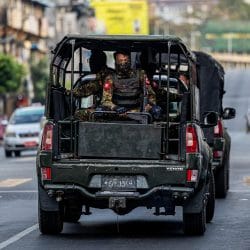
A coup is underway in Mali, though it has not brought down the governing junta just yet. The country’s military leader, General Assimi Goïta has, after days in hiding, appeared in public to claim, unconvincingly, that the “situation is under control.” But rebel forces — an alliance of Al-Qaeda affiliates and Tuareg separatists — have taken over provincial cities and are calling for a blockade of the capital Bamako. Mali’s military junta hangs on by a thread, in a familiar regional story of violence, civilian suffering and international intrigue.

On April 25, coordinated attacks across Mali exposed the junta’s fragile hold over the country. Jamaat Nusrat al-Islam wal-Muslimin (JNIM), the al-Qaeda affiliate that has driven insurgency across the region for over a decade, joined forces for the first time with Tuareg separatist groups — who have been fighting the central government for even longer — to simultaneously strike cities hundreds of miles apart, including the capital Bamako, Gao, Kidal, Sévaré, and the garrison town of Kati. A suicide car bomber drove into the residence of defence minister General Sadio Camara, killing him along with his wife, two grandchildren, and several civilians. Camara was one of the most influential figures in Mali's ruling junta and had been widely seen as a possible future leader of the country. He was also the key architect of Mali's military alliance with Russia. Mali, Burkina Faso and Niger, which together form the Alliance of Sahel States (AES), have all in recent years realigned away from France, the former colonial power in the region, and towards Russia.

Russian mercenaries, in the form of the Wagner Group and more recently the Africa Corps, have backed military juntas in the Sahel, after coups in Mali, Burkina Faso and Niger led to the withdrawal of French troops from France’s former colonies. But during these latest rebel strikes, it was Russian fighters that were chased out of the northern city of Kidal to the sound of jeers. Africa Corps, the Kremlin-controlled paramilitary group, described the insurgent attacks as a "coup attempt" backed by "Western intelligence services." RT amplified these claims, accusing France and the West of orchestrating the violence, even as it claimed Russian fighters successfully repelled rebels. In 2024, Ukraine’s military agency said it had provided information to help Tuareg rebels ambush and rout a Wagner convoy, killing dozens of Russian mercenaries. Both Mali and Niger have cut diplomatic ties with Kyiv. Burkina Faso has described Kyiv as a destabilizing force in the region, making the Sahel effectively a front in Russia’s war with Ukraine. 

The Kremlin’s combination of misinformation and mercenaries helped exploit growing anti-Western sentiments in the Sahel to give Russia a propaganda win in the region. Former colonial powers such as France didn’t help themselves, as can be seen even now in Madagascar, the latest nation to expel a French diplomat and accuse Paris of fomenting unrest. But the success of Russian propaganda hasn’t been matched on the ground. As Mali struggles to contain a rebel alliance that has fresh impetus and energy, Moscow’s control is weakening and the effectiveness of its military support is under question. Already, with Russian weapons in short supply because of war with Ukraine, it is China that the Malian junta turns to for arms. China’s strategic efforts in the Sahel have been similar to its efforts in the rest of the African continent – a focus on securing infrastructure contracts as part of the Belt and Road Initiative and securing access to mineral resources. But rebel attacks in the Sahel are bad for Chinese business. In February, the Chinese embassy in Niamey, the capital of Niger, warned Chinese companies to take their workers out of the firing line as rebels increasingly targeted Chinese infrastructure projects, including a $4.5 billion oil pipeline from Niger to Benin.

In 2024, the United States was forced to leave neighboring Niger after a coup, to withdraw from a $100 million base. It seemed the U.S. was losing ground to both Russia and China in the Sahel. Earlier this year, though, as security concerns in the Sahel escalated sharply, the U.S. adjusted its approach, choosing to deal pragmatically with military juntas. By late February, the U.S. lifted sanctions on top Malian officials, including General Camara, the recently slain defence minister. It may see closer cooperation with Sahel countries as essential to its security interests and a way to undercut Chinese access to Sahelian resources.

The three Sahel states, Mali, Burkina Faso and Niger, have turned away from France and Europe and towards Russia, while increasingly flirting with the U.S. and reliant on Chinese weapons. The result has been disaster. All three Sahel states are ranked in the top 5 for countries impacted by terrorism. And the humanitarian toll has been severe. Millions of people face internal displacement across the region and cuts in aid programmes mean many millions, especially children, also face acute hunger. But, as the great powers circle the region, jockeying for geopolitical gain, the talk remains about the logistics of propping up failing juntas, providing military solutions to human crises, and maintaining power rather than confronting problems.

Mali, Burkina Faso and Niger – all led by military authorities that came to power in a coup – have also isolated themselves from the rest of their neighbors by withdrawing from the West African regional bloc, Ecowas. Meanwhile, they sell their model as an alternative to Western-style democracy, a narrative that Russian propaganda networks have been all too eager to promote. But the strength of the insurgency against Mali’s government, and Russia’s apparent inability to protect it, sends a different message to the rest of the African continent.

The post Why an insurgency in Mali matters in Moscow appeared first on Coda Story.

  •  

Teens making drones: Russia’s demographic collapse

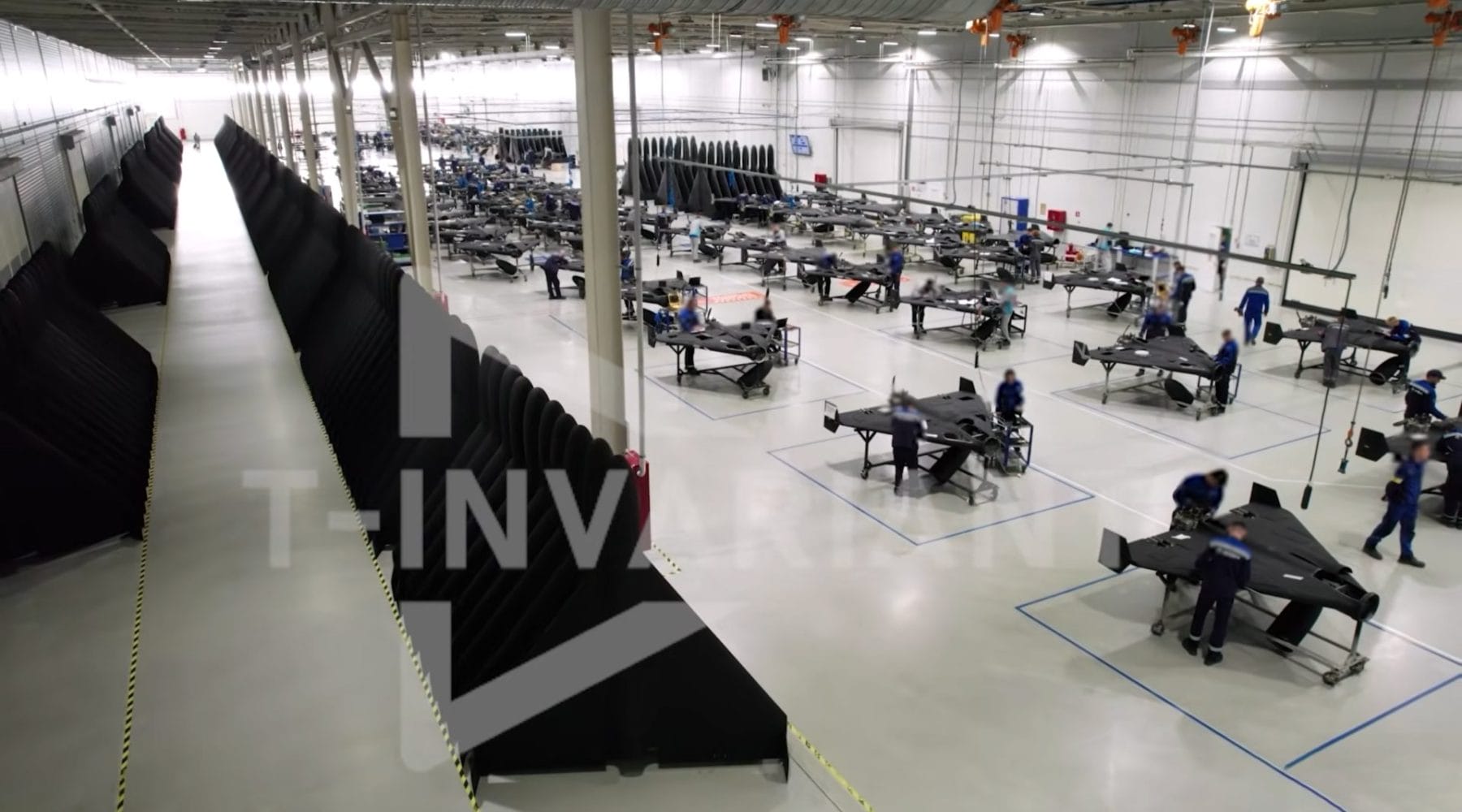
My name is Darina,” says an elfin teen, ponytail pulled through the back of her cap, and “next year I’ll be earning 150,000 rubles (nearly $2,000) a month.” Darina works at what she calls “the world’s largest drone factory,” helping to assemble versions of the Iranian Shahed drone. “My parents are proud of me. Wanna do the same?” She asks as she advertises a polytechnic in Tatarstan. The Russian government, in the face of war and looming demographic disaster, has been relaxing child labor laws since 2022, making it easier to put 14-year-olds to work. Now, legislators are open about the need to reform “outdated” restrictions on employing minors in industries that were “considered dangerous 20 years ago.” Drone production is not the only part of the war effort to which teenagers are being recruited. This month in a “content camp” in Moscow, soldiers and state media propagandists trained 120-plus teens on how to make videos, use AI, and grow their audiences as aspiring influencers. Vladislav Golovin, a former soldier and a leader of Russia’s Young Army Cadets National Movement, said the program had “created a huge team of kids who understand how to broadcast government values.” 

But many young people, subject to year-round conscription, subject to internet shut downs and subject to surveillance, have little desire to spread propaganda. Instead, according to Google Trends data, growing numbers of Russians are seeking information on how to emigrate. A new exodus would accelerate Russia’s deep demographic crisis. Already, up to a million people are thought to have left Russia since the full scale invasion of Ukraine in 2022. According to one recent count, nearly 210,000 Russian soldiers have been killed in the war with Ukraine, with other estimates suggesting over 1.2 million casualties, including 325,000 deaths. And Russian fertility rates are the lowest they have been for 200 years. Anton Kotyakov, the labor minister, has told Vladimir Putin that the country faces a labor shortage of 11 million people by 2030.

So concerning is this crisis that Rosstat, the national statistics agency, has stopped publishing monthly demographic data. State officials and local governors have been told to compete to come up with the most innovative solutions to a seemingly intractable problem. The pressure on Russian officials and the Kremlin is leading to desperate measures, including guidance from the Russian health ministry that women who say they do not want to have children should be referred to a psychologist. Nothing the Russian state has tried has worked, from financial incentives (extended even to schoolgirls under 18) to banning advertising that supposedly promotes “child-free” lifestyles and so-called “LGBTQ propaganda.”   

Darina, 16, assembles Shahed-style drones at a factory in Alabuga, Tatarstan, Russia. Screenshots from YouTube video by T-invariant.

Alongside “anti-woke” policies disguised as family values, is rising xenophobia and anti-immigrant rhetoric that has led to a marked decline in the number of foreigners living in Russia. The Kremlin’s anti-migrant policies include a new system to monitor migrant workers through biometric registration, location tracking, and intensified police oversight. The Russian parliament is currently debating enhancing the number of offences that can be punished by deportation or substantially increased fines. Much of it is targeted at Russia’s Central Asian migrants who make up an overwhelming majority of immigrant labor. Some Central Asian governments, notably Kyrgyzstan and Tajikistan, have now urged their citizens to think twice about going to Russia for work. 

Russia has been publicizing political stunts such as its “shared values visa” in which applicants from 46, largely developed, nations are given temporary residence permits if they profess to support “traditional Russian values.” The visa, the Kremlin has said, is “Russia’s response to what it perceives as the harmful effects of Western neoliberal policies.” But only a tiny fraction of the immigrants Russia needs will be Westerners who apply for such a visa; instead, Russia has been diversifying its pool of migrant workers by looking further east. Around 72,000 work permits were issued to Indian nationals in 2025, up from just 5,000 in 2021. Russian officials have signaled they are ready to accept “unlimited” numbers of workers from South Asian countries like India, Sri Lanka, and Myanmar.

While the Kremlin is looking to South Asia and Africa to address its immediate need for workers (and soldiers), the ambition in the longer term is to boost Russian birthr rates, despite the signal failure of ongoing attempts. 

In the U.S., there have been several moves borrowed from the Kremlin’s playbook, including the restriction of abortion, the attempt to deny women birth control, and even alarm at the fall in teen pregnancies. But data released this month showed that women in the U.S. gave birth to 710,000 fewer babies in 2025 than they did in 2007, a reflection of two decades of steadily dropping birth rates. Russian demographer Salavat Abylkalikov, at the Leibniz Institute for East and Southeast European Studies in Germany, says “if the birth rate has fallen below the level of simple reproduction, it is almost impossible to raise it back.” Especially when financial incentives cover just a fraction of childcare costs. 

In any case, Abylkalikov says, “in Russia, death is much more profitable than birth: in Nizhny Novgorod Oblast, the government provides around 1,000,000 rubles (about $12,000) for each child, but if one person goes to war and dies, the family receives up to 12 million rubles in total. That's more than $120,000. This is the economy of death.” The evidence, from countries like Russia, Hungary and the U.S., is that appeals to tradition, to religion and to female “responsibility” do not work, when support for families is limited. And while migration is an obvious fix to demographic questions everywhere, it’s politically toxic.

Russia knows it is hurtling towards demographic doom but can do little to halt the momentum. Its policies are riddled with inconsistencies — a strong line in anti-migration rhetoric and bullying, while being forced to import workers and soldiers from Asia and Africa; a patriarchal view of women’s roles, mostly confined to the domestic, while increasingly reliant on women to take the jobs of the men who are fighting and dying in Putin's war; and encouraging more women to give birth, while employing children to build drones. With family values like these, no wonder young Russians are hesitant to procreate.

The post Teens making drones: Russia’s demographic collapse appeared first on Coda Story.

  •  

How much longer will Orbán be Putin and Trump’s man in Brussels?

Viktor Orbán, Hungary’s prime minister since 2010, faces an election dogfight. Behind in the polls, he has been effectively endorsed by both the Kremlin and the White House, and a host of conservative world leaders. As wars in Iran and Ukraine exacerbate the fissures that have weakened NATO, as well as the U.S.’s relationship with the European Union, this is an election that is being followed with bated breath in Washington, Moscow, Kyiv and Brussels. 

Before the elections on April 12, a scandal engulfed the Hungarian government. On leaked recordings, foreign minister Péter Szijjártó can be heard deferentially acquiescing to his Russian counterpart Sergey Lavrov and passing on information from EU meetings. Szijjártó appeared willing to help the Kremlin’s cause in Brussels, to remove oligarchs and their relatives from the EU blacklist, and to block efforts to aid Ukraine. Hungary’s advocacy for the Kremlin’s agenda culminated in its recent veto of fresh sanctions on Russia and over $100 billion in loans to Ukraine. On X, Polish prime minister Donald Tusk wrote that while “Hungary is and will be in the European Union, Victor Orbán and his foreign minister left Europe long ago.” And the Irish taoiseach Micheál Martin described Szijjárto’s calls with Lavrov as both “sinister” and “alarming.”

Szijjárto alleged that “foreign intelligence services, with the active involvement of Hungarian journalists, have been intercepting my phone calls.” It is a plot, the Hungarian government claims, to influence the upcoming polls. Orbán directly blames Ukraine for seeking to unseat his government. The opposition, led by Peter Magyar, has a healthy lead in the polls and describes the Hungarian government’s closeness to the Kremlin as “treason.” According to European intelligence reports, Moscow sent a three-person team to Hungary, overseen by Putin confidant Sergei Kiriyenko who ran an operation to interfere in the Moldovan election back in September. His tactics encompassed “vote-buying networks, troll farms, and on-the-ground influence campaigns.” A Kremlin-linked media consultancy, facing EU sanctions, was hired to dismiss Magyar as a Brussels stooge and portray Orbán as the only candidate strong enough to to be treated as an equal by world leaders, as evidenced by the strength of his relationship with Trump. 

Despite a war with Iran that doesn’t appear to be going entirely to plan, the U.S. president took time out to back Orbán with enthusiasm and at considerable length on Truth Social. Trump said Orbán was “a true friend, fighter, and WINNER.” JD Vance, the vice president, is scheduled to visit Hungary on April 7, just five days before the election. And secretary of state Marco Rubio went to Hungary in February. It is now part of the U.S. National Security Strategy to work towards “cultivating resistance to Europe’s current trajectory within European nations.” To that end, notes the U.S. government, “the growing influence of patriotic European parties indeed gives cause for great optimism.” Orbán speaks MAGA’s language on immigration, traditional values and the Christian essence of Western societies. He is, like Putin and Trump, in MAGA’s view, an implacable opponent of secular, progressive, globalist politics as symbolised by Brussels.

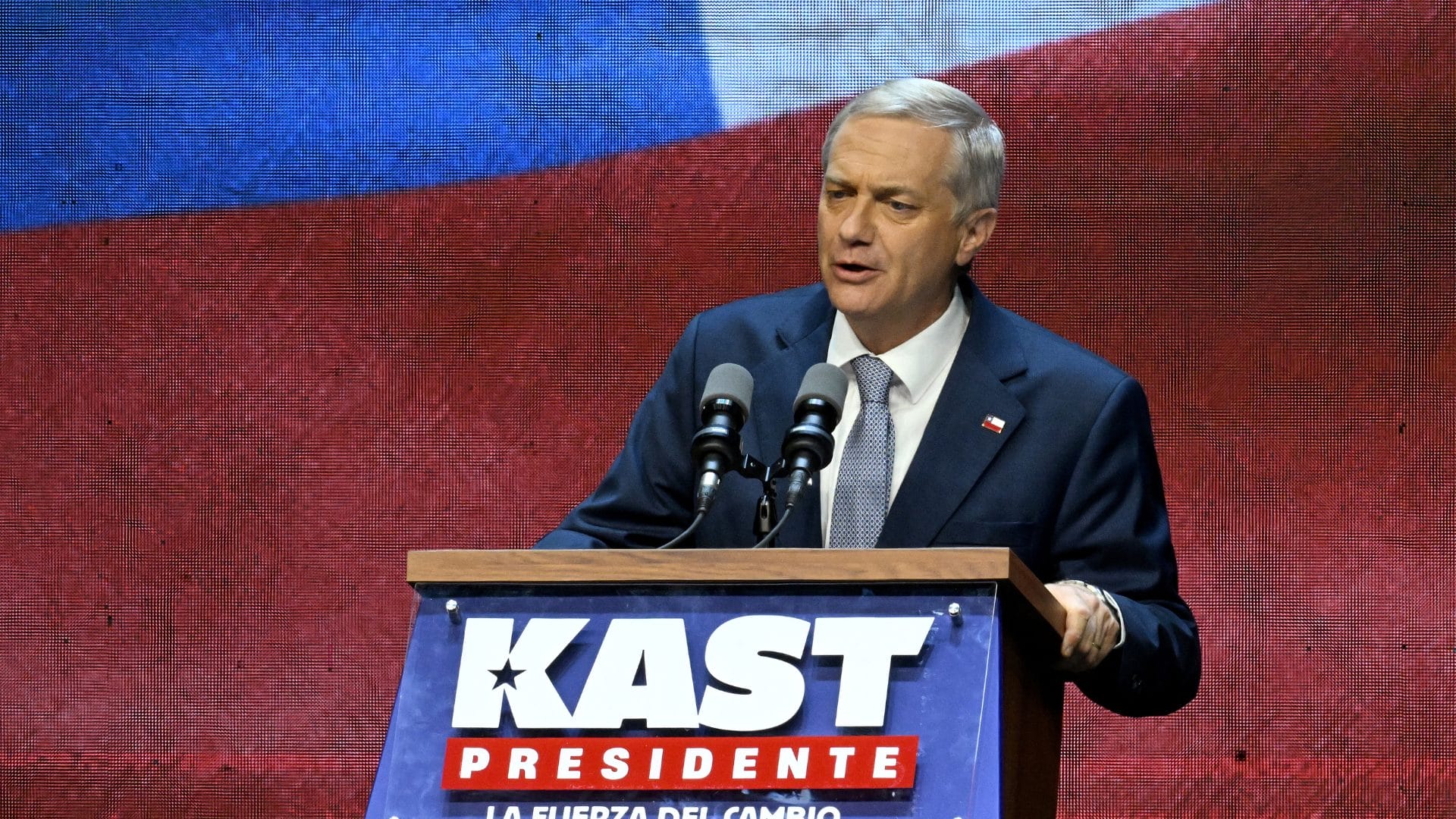
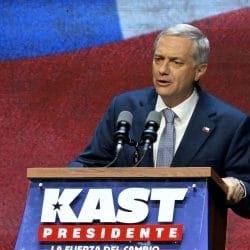
Orbán, the longest serving current head of government in the EU, has become a figurehead for populist, nationalist movements across the world. The recent CPAC Hungary summit was attended by several of these leaders including France’s Marine Le Pen, Italian deputy prime minister Matteo Salvini, and the Netherlands’ Geert Wilders,who called Orbán “a lion on a continent led by sheep.” Latin American leaders close to Trump , including Javier Milei of Argentina and Jose Antonio Kast of Chile, also attended. Milei, who gave the longest speech at the summit, said Orbán was “a beacon for all… who refuse to accept that the West's destiny is one of managed decline.” This international network, with the United States and Russia included, has a vested ideological interest in seeing Orban continue to remain a thorn in the EU's side. 

But what can Brussels do? The answer, it appears, is not much. The EU is consensus driven; it needs all its parts to act in concert, giving holdouts like Orbán considerable power to hold the whole bloc hostage. But given Orbán’s prominence as an ideologue, when Hungary blocks sanctions or delays support for Ukraine, it is more than a single nation going rogue. Alice Weidler, co-chair of the far-right AfD, the largest opposition party in the German Bundestag, was among those who spoke at the CPAC Hungary conference last month. Robert Fico, prime minister of Slovakia, is an Orbán ally. On April 19, Bulgaria will have its eighth general election in just five years. Former president Rumen Radev’s new Progressive Party leads the polls and shares Orbán’s pro-Kremlin, anti-EU inclinations.

So polarized is the Hungarian election, that right wing groups are deploying their own observers from Argentina, Austria, the Czech Republic, Kenya, Poland, Germany, Italy, Spain, Serbia, Tanzania and the United States to monitor proceedings. EU observers have said the Hungarian government controls the national media and a recent documentary alleges that a desperate government is resorting to vote-buying, gerrymandering and intimidation tactics. It’s hard to see how either Orbán or Magyar will accept the election result without protest, unless the margin is crushing. But, given Trump’s disdain for NATO allies and the EU, an Orbán election defeat would be a much-needed victory for European unity. 

A version of this story was published in this week’s Coda Currents newsletter. Sign up here.

The post How much longer will Orbán be Putin and Trump’s man in Brussels? appeared first on Coda Story.
  •  

As Iran burns, a new age of nuclear proliferation begins

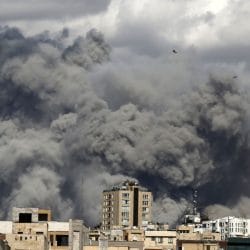
As the Iran war pushes oil prices over $100 a barrel, and ships are attacked and mines are being laid in the Strait of Hormuz, a taboo has been broken and nuclear energy is back in fashion. European Commission president Ursula von der Leyen acknowledged that “the current Middle East crisis is a stark reminder” that it was “a strategic mistake for Europe to turn its back on” nuclear energy. 

She was speaking at an International Atomic Agency summit hosted by France. Just days before the summit, French president Emanuel Macron spoke — a nuclear submarine looming behind him — of the need to increase the country’s stockpile of nuclear warheads for the first time in several decades. “In this dangerous and uncertain world,” Macron said, “you have to be feared if you want to be free.” 

In February, the ‘New START treaty’, a mutual agreement between Russia and the U.S. to reduce and limit their nuclear arsenal, officially expired. The U.S. said China had conducted secret tests and that Beijing had to be part of any future non-proliferation agreement. For its part, the Chinese accused the U.S. government of seeking to mask its own expansionist ambitions. In the wake of the Iran war, started apparently because the Iranian regime was just days away from securing a bomb, other countries have spoken openly of their nuclear ambitions. After the start of the Iran war, North Korean leader Kim Jong Un spoke pointedly about preparing a nuclear-ready navy while inspecting a new destroyer and observing the testing of nuclear-capable cruise missiles. Even Polish prime minister Donald Tusk said Poland “will not want to be passive when it comes to nuclear security in a military context.”

On X, Tusk posted that Poland is in talks with France about joining its nuclear deterrence program. “We are arming together with our friends,” he wrote, “so that our enemies will never dare to attack us.” France is the only nuclear-capable European country, its systems (unlike the UK’s) completely independent of the U.S. and its new deterrence framework will include collaborations with Germany, Poland, Greece, Sweden, Denmark, the Netherlands and Belgium. Macron is calling France’s new strategy “advance deterrence,” a willingness to spread French nuclear armaments across the continent. A senior Pentagon official said the U.S. would “obviously at a minimum strenuously oppose” European countries seeking to acquire nuclear weapons. The U.S., as part of a NATO agreement, already deploys over 100 nuclear weapons in Europe — in Germany, Belgium, Italy, the Netherlands, and Turkey. 

Europe’s anti-nuclear tradition grew out of grassroots movements in the 1970s. In West Germany, protests against a planned nuclear plant in the small wine-growing town of Wyhl began when local farmers feared pollution would destroy their land and crops. By the 1980s, millions of Europeans were protesting nuclear weapons and the deployment of NATO missiles across the continent, bringing nuclear security debates into the public arena and pushing governments toward disarmament efforts. The political impact of those protests were long-lasting. Across Europe, nuclear energy programs were curtailed or abandoned entirely. Denmark banned nuclear power plants in 1985, Germany shut down its last nuclear reactors in 2023, and several countries imposed strict limits on nuclear development. Nuclear technology, whether for energy or weapons, remained politically toxic in much of Europe. But, as Denmark’s Mette Frederiksen said European deterrence “is necessary because the military threat from Russia is expected to increase,” and its reliance on U.S. military support can arguably no longer be taken for granted.

At the Paris summit, China, Brazil, Belgium and Italy all signed up to a pledge to triple global nuclear capacity by 2050. South Africa signed the pledge earlier this month. The war in Iran has once again made clear that the world must wean itself off fossil fuels. The U.S. — which imposed additional tariffs on India for buying Russian oil and thus helping to finance the continuation of the war in Ukraine — has, since the start of the attack on Iran, told India it can continue to buy Russian oil. Delhi promptly bought 30 million barrels of Russian crude oil. But this month India also signed a deal with Canada to receive uranium to expand its nuclear energy program. But in 1974, Canada provided India with nuclear technology for peaceful uses that were promptly put towards the building of nuclear weapons. Nuclear collaborations between the two countries were suspended for decades. It’s not a coincidence that those ties are once again being revived in the current geopolitical context. A growing clamor for nuclear energy has clear proliferation risks.

While France has been talking about greater nuclear deterrence, most European states are speaking about a revival of nuclear energy as an alternative to fossil fuels and as a means to achieve climate goals. The vast energy requirements of AI and data centres is also prompting nations to adopt an “atoms for algorithms” strategy, to be, as Macron said, “at the ​heart ​of ⁠the artificial intelligence challenge.” But to talk about energy alone is to ignore the appeal nuclear deterrence has for nation states trying to navigate dangerous geopolitical straits. Iran was attacked ostensibly because it was on the verge of having a bomb. Favored nations such as Saudi Arabia are able to sign nuclear pacts that remove non-proliferation guardrails, but the actions of the U.S. and Israel in Iran will make the bomb attractive to many more as a national security strategy.

A version of this story was published in this week’s Coda Currents newsletter. Sign up here.

The post As Iran burns, a new age of nuclear proliferation begins appeared first on Coda Story.

  •  

Europe vs Big Tech: A battle for democracy?

“The impunity of the giants must end,” posted Spanish prime minister Pedro Sánchez on X. His government has instructed the public prosecutor to “investigate the crimes that X, Meta and TikTok may be committing through the creation and dissemination of child pornography by means of their AI.” Sánchez has said the state “cannot allow” platforms to affect the “mental health, dignity and rights of our sons and daughters.” But Republican legislators, seemingly in response, released Part II of a report, titled ‘The Foreign Censorship Threat’, in which it accuses the European Commission of “directly infringing on Americans’ online speech.”

Almost simultaneously, Ireland’s Data Protection Commission launched an investigation into Grok, X’s generative AI chatbot, for producing sexualized deepfakes which might have included personal data of Europeans, including children. Even British prime minister Keir Starmer, who has signed a sweeping “Technology Prosperity Deal” with the U.S. has, spoken about the need to “protect children’s wellbeing” from Grok. And earlier this month, French police searched the Paris offices of X as part of a process that X described as a “politicized criminal investigation.” 

With Australia having set a precedent for “age-gating” the Internet through legislation, France’s under-15 ban is now due to come into force in September. The UK already requires age verification for certain content via the Online Safety Act, and Spain, Slovenia, Denmark, Germany, and Greece are among those considering similar measures. ​​The social and political consensus is striking. A 30-country Ipsos survey found strong majorities in every country supporting bans for under-14s.

Elon Musk responded to the Spanish prime minister’s comments about social media being essentially a failed state, rife with criminality and a disregard for law, by calling him “a tyrant and traitor to the people of Spain.” The U.S. government has only been marginally more restrained. The House Judiciary Committee’s report accused Europe of mounting a decade-long campaign to “censor the global internet.” 

The involvement of the U.S. government, and its consistent defence of U.S. tech companies, means the battle is increasingly less about European regulators and Silicon Valley and more about what appears to be a profound ideological mismatch. “Though often framed as combating so-called ‘hate speech’ or ‘disinformation’,” said the Republican legislators’ report, the EU was working to “censor true information and political speech about some of the most important policy debates in recent history — including the Covid-19 pandemic, mass migration, and transgender issues.” Meanwhile, a recently published report in Europe shows how Silicon Valley companies spent 151 million euros lobbying far right European parliamentarians in 2025 to water down regulations. 

Big Tech forging links to the European far right dovetails with a Trump administration in which senior figures, including Donald Trump himself, endorse certain candidates in elections and routinely repeat far right talking points as part of an “unapologetic defense of Western civilization.” And now the U.S. State Department has openly touted the building of a “freedom.gov” portal that enables people to access restricted content, even if it contravenes local laws in sovereign countries.

But European regulations are not the only challenge to the impunity with which social media platforms seem to be able to act. As momentum builds to hold social media platforms to account in Europe, in the U.S. Meta owner Mark Zuckerberg has been defending Instagram in a Los Angeles courtroom. He was testifying in a lawsuit, one of several hundred filed in U.S. civil courts, alleging that social media platforms are addictive, harm the mental health of children and that platforms are aware of these effects but do little to safeguard teenage users from harm. 

The lawsuits have the effect of making the Australian, European, and perhaps global attempt to ban teens from setting up social media accounts appear necessary. But Paige Collings, a digital policy expert at the Electronic Frontier Foundation and board member at European Digital Rights, said that bans are politically attractive precisely because they are simple. “Complex problems require complex solutions,” she said. “It’s more expensive. It’s longer-term. It can’t just be implemented overnight. But blocking under-16s from social media — that is something you can implement overnight.” 

Collings is among a growing chorus of experts that are cautious about embracing bans as a comprehensive solution. For instance, she explains, to ban children, platforms first need to know who is a child. This relies on national digital ID systems, facial recognition, and third-party age verification. In all scenarios, Collings said, “we are trusting that these services and platforms are not storing this information, not selling the information,” often without meaningful guardrails to ensure that is the case. 

When the UK introduced age restrictions last summer, searches for VPNs surged as users of all ages tried to avoid giving away personal information. Now the government has floated expanding restrictions to VPN usage to plug enforcement gaps. The purpose of a VPN itself is to preserve the privacy of its user, however imperfectly. VPNs are essential tools for businesses to secure communications, for journalists to protect sources, and for citizens in restrictive environments to access independent information. Forcing identification to use them fundamentally undermines their purpose. And when the argument for banning them is framed around the protection of children, it reinstates the urgency of an entire infrastructure required to keep children off the internet and risks normalizing identity checks as conditions for access to online spaces. In a digital economy where personal data is highly valuable, such measures raise the question of who ultimately benefits.Beyond privacy concerns, Collings points out that age-gating can become “a fantastic tool for censorship with no accountability or remedy.” It does, in fact, do in part what the U.S. government and Silicon Valley companies say it does, which is restrict speech. At an AI summit in Delhi, French president Emmanuel Macron dismissed Silicon Valley’s invocation of censorship as a defense against European regulation. “Free speech,” he said, “is pure bullshit if nobody knows how you are guided through this… having no clue about how the algorithm is made, how it is tested and where it will guide you — the democratic biases of this could be huge.” But, forcing accountability and improving safety would perhaps be better than a blanket ban where the cutoff is 14 or 16, leaving everyone else to take cover as best they can in a “digital Wild West,” to borrow the Spanish prime minister’s phrase.

currents

Subscribe to our coda currents newsletter

Insights from the Coda newsroom on the global forces that shape local crises.

The post Europe vs Big Tech: A battle for democracy? appeared first on Coda Story.

  •  

A Trump corridor through the Caucasus

After a trip to the Winter Olympics in Italy, already marred by anger and protests at the presence of ICE agents at the games, JD Vance will embark on a victory lap of Armenia and Azerbaijan. It will be the first ever visit by a U.S. vice president to the Armenian capital Yerevan and the first to Baku since Dick Cheney’s brief 2008 whistlestop tour of the region. At war for decades, Armenia and Azerbaijan agreed to make peace in Washington, DC in August last year. The deal included the building of a “Trump Route for International Peace and Prosperity” (TRIPP), a 21st century version of a Panama-style “canal zone” — a narrow strip of land that decides who moves energy, freight, and data between continents, and who gets paid for the privilege. And, vitally, a U.S.-backed counter to infrastructure being built by China. 

TRIPP is more than a photo-op or a vanity project. The South Caucasus, particularly since Russia’s full-scale invasion of Ukraine, has become an area of critical strategic value as a corridor between East and West and a new arena of superpower competition. “Vance is not well known for flying around the world just for fun,” said Svante Cornell, Research Director of the Central Asia-Caucasus Institute in Stockholm. “The U.S. is serious about the TRIPP Corridor and they want everybody in the region to know that.” 

Armenia and Azerbaijan have fought two wars over disputed Nagorno-Karabakh since the late-1980s, as the Soviet Union collapsed. It has been a brutal, society-shaping conflict, followed in 2023 by Azerbaijan’s rapid takeover of Nagorno-Karabakh and the flight of nearly the entire ethnic Armenian population.

Russia, though formally cast as a mediator, spent years manipulating the conflict: arming both sides, managing ceasefires and preventing resolution in a familiar imperial tactic later perfected in Ukraine: manufacturing and freezing instability until it could be turned into full-scale war on Moscow’s terms. But Trump changed the narrative by brokering a peace that has continued to hold. In December, officials from both countries discussed “lasting peace” and a “joint future” at a summit in the Qatari capital Doha. Armenia and Azerbaijan are also deep in discussion about integrating their energy systems. And Washington is now trying to lock that peace into concrete: rails, roads, and fiber that physically re-route the region away from Russian and Iranian gatekeeping.

This, wrote Trump on Truth Social recently, “was a nasty War… but now we have peace and prosperity.” For once, the self-congratulation isn’t entirely empty. Trump – who has confused Armenia for Albania and talked about settling its war with “Aber-baijan” in Davos just weeks ago – can legitimately take credit for making geopolitical gains in what Russia considered its backyard. 

The US president has repeatedly quoted Vladimir Putin as telling him: “‘I cannot believe you got this war settled’... cause it’s his territory.” That line matters because the South Caucasus is to Russia what the Caribbean Basin and the Panama “backyard” once was to the United States: a strategic near-abroad where outside powers aren’t supposed to build permanent leverage. 

Hemispheric defense, the Trump administration has made clear when it comes to Latin America, is at the heart of its defense strategy and that it expects other superpowers to be similarly focused on their spheres of influence. Thus, Russia’s inability to be a reliable ally to Armenia will be seen as weakness to be preyed upon by rival powers. Armenia is now even talking to Turkey, a historical adversary, about opening their shared border and establishing diplomatic relations.

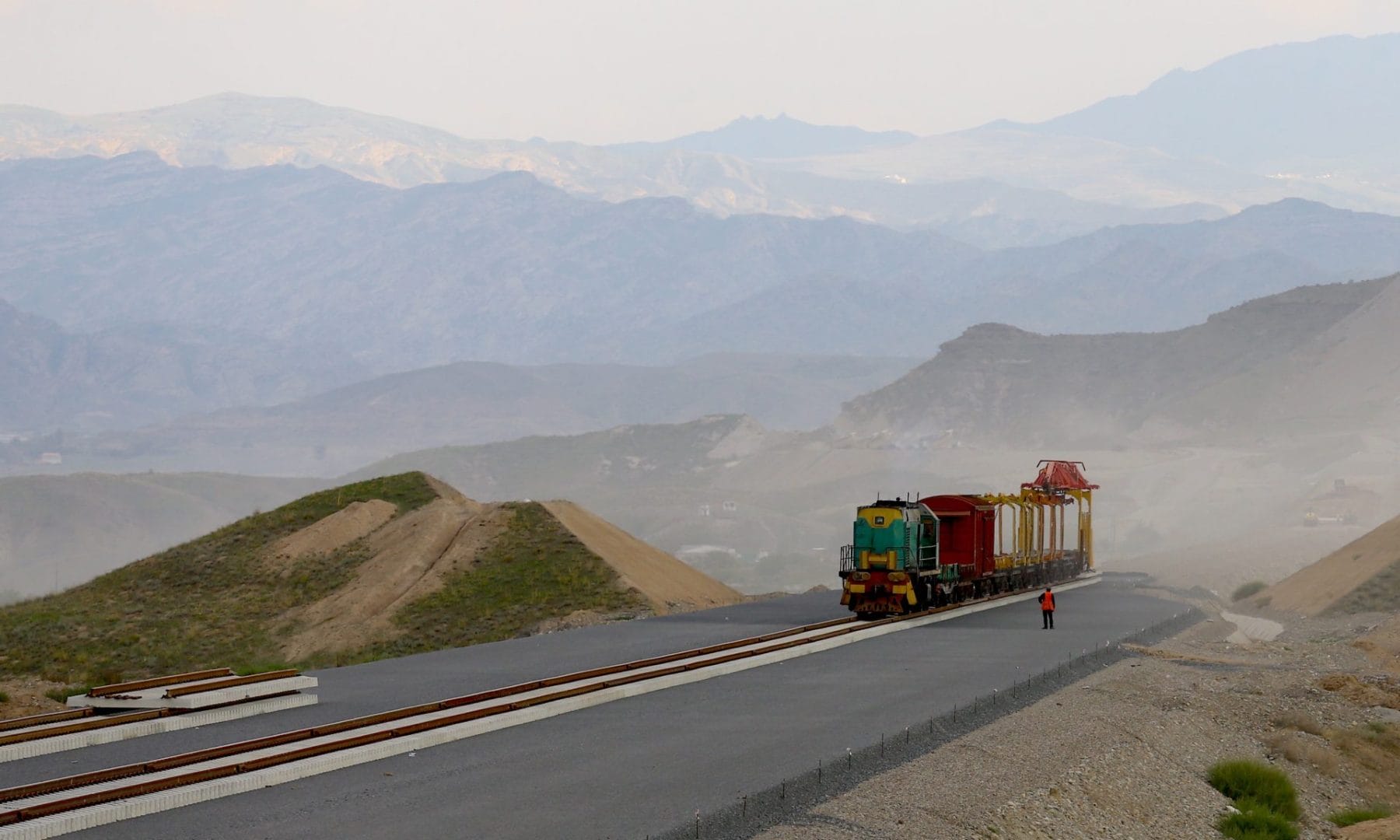
Construction of roads and railways is underway through the Zangezur Corridor, one of the routes extending from China to Central Asia. Resul Rehimov/Anadolu via Getty Images.

Still, Armenia remains a member of the Russian-led Eurasian Economic Union and has its railway networks handled by Russia’s RZhD national rail operator — a factor Russia tried to use in an attempt to get involved with TRIPP. “Regarding the 'Trump Road' project, as it's being called, we confirm our readiness to explore possible options for our involvement,” Russian Foreign Ministry spokeswoman, Maria Zakharova said in January. Armenia’s Parliament Speaker shot down the possibility as “absurd.”

As for Azerbaijan, Trump said on Truth Social that part of Vance’s visit to Baku would be dedicated to “the sale of Made in the U.S.A. Defense Equipment,” a prospect that won’t please Moscow.

Georgia, once considered Washington's closest partner in the South Caucasus, is notably absent from JD Vance’s itinerary and being left behind is as consequential as being included.

For two decades, Georgia’s power and growing prosperity came from being the corridor: the place where pipelines, highways, and rail lines had to pass if Europe wanted Caspian energy without Russian control. The Baku–Tbilisi–Ceyhan pipeline was the signature project of that era, an “East–West energy corridor” literally running through Georgia. TRIPP threatens to redraw that map. A corridor through southern Armenia that becomes the new headline route doesn’t just “leave Georgia behind” — it means Georgia loses its most significant geopolitical bargaining chip because transit was the card it could play with Washington, Brussels, Ankara and Baku.

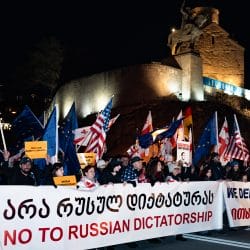
Now, as Washington invests in a new flagship corridor, countries like Georgia that fall outside it are forced to hedge. Over the past decade, Georgia has deepened ties with China through trade deals, cultural exchanges, and visa-free travel, while simultaneously sliding back toward Russia despite Moscow’s 2008 invasion of South Ossetia and Abkhazia. Under the Georgian Dream government, repressive legislation and violent crackdowns on protest have widened the gap with the EU and the U.S. Georgian prime minister Irakli Kobakhidze has appealed directly to Trump for a reset, but TRIPP makes clear where Washington’s priorities now lie. With Azerbaijan and Armenia at the heart of a new U.S.-backed route, influence in the South Caucasus is reorganizing around infrastructure — and power is flowing along it.

TRIPP, even if it exists just on paper for now, indirectly challenges the Chinese Belt and Road Initiative, a network of railways, ports, pipelines, and trade corridors aimed at boosting international trade under Beijing’s leadership. It enables the moving of goods while bypassing Russia and, where possible, Iran — an approach that became more urgent after 2022. And it undermines China, which has been busy paving routes to Iran. Both countries have been in intense contact with Central Asian countries and last summer inaugurated a railway route that connects China and Iran through Kazakhstan, Turkmenistan, and Uzbekistan. 

The South Caucasus is just a small piece in a puzzle that fits together over 140 Belt and Road countries — and Cornell is skeptical about the scale of China’s ambition versus its actual investment. “Belt and Road maps include a lot of infrastructure in this part of the world that has nothing to do with China,” he told me. “Most everything that's been built in the region has been built as a result of the funding from the countries in the region, not by Chinese funds.“  In keeping with this strategy, a fully operational TRIPP might be seen by China as a benefit, a way to trade while avoiding unreliable maritime routes. But researchers in China say that the problem will be if TRIPP “becomes securitized or if Washington leverages its control for geopolitical influence.” And with U.S. foreign policy increasingly waged as a battle with China for resources and global influence, TRIPP could become a threat to Chinese influence in the region. 

Vice President Vance’s visit is a sign of sustained U.S. engagement in the region and a sign that Trump’s attention has not waned after a ceremonial peace agreement in Washington.

The simplest way to read TRIPP is as a 27-mile project with an outsized consequence: it reorders who controls the “land bridge” between Europe and Central Asia and it tells every capital nearby who Washington thinks matters. 

And China will have to prepare for an economic standoff in terrain it once assumed was ripe for Chinese dominance. Russia, meanwhile, finds itself on slippery ground, no longer the indispensable broker it once was in its immediate neighborhood. TRIPP also adds an unexpected edge to the Ukraine-shaped narrative of a Trump administration willing to accommodate Moscow at every turn, suggesting instead a relationship that is less uniform and more selectively disruptive than it first appears.

currents

Subscribe to our coda currents newsletter

Insights from the Coda newsroom on the global forces that shape local crises.

The post A Trump corridor through the Caucasus appeared first on Coda Story.

  •  
❌