
❌

Vue lecture

Peta releases video showing experiments on infant monkeys at University of Washington

Animal-rights group released video footage that shows distressed baby macaques undergoing lab experiments

Footage released by the animal-rights group Peta reveals, for the first time, filmed experiments at the University of Washington’s National Primate Research Center (WaNPRC), in which newborn monkeys were separated from their mothers and subjected to neurological tests after prenatal exposure to a neurotoxin.

Records show that the infant monkeys, some just two days old, were used in research on domoic acid, a toxin produced by marine algae that accumulates in shellfish and can cause illness in humans. The experiments were part of a project that ran for six years until 2020.

Continue reading...
© Photograph: PETA
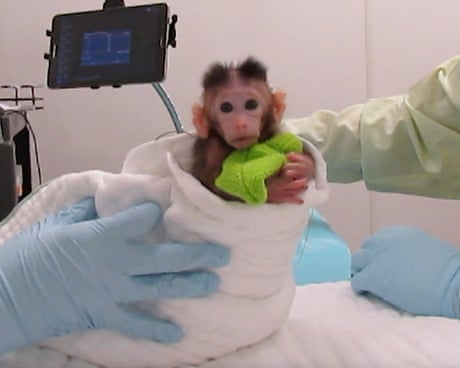
© Photograph: PETA
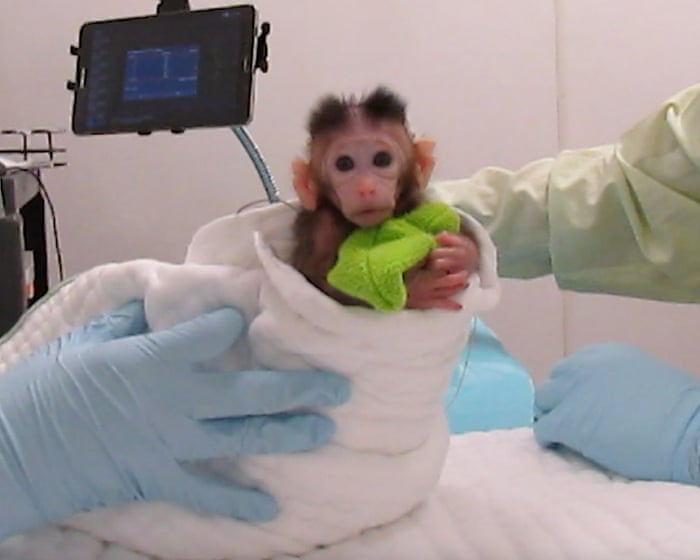
© Photograph: PETA

  •  

David Sabatini, an M.I.T. Scientist, Wins $6 Million in Sexual Harassment Defamation Suit

David Sabatini, once a prominent scientist at M.I.T., sued a former colleague who accused him of inappropriate behavior. A jury found in his favor.

© David L. Ryan/The Boston Globe, via Getty Images

David Sabatini, a former M.I.T. scientist, in court at the end of a trial in a defamation lawsuit he brought against a former colleague.
  •  

Inside the Plague Research Labs at the Heart of a Russian Mystery

A Russian researcher, who died from an unknown illness, worked at a remote anti-plague facility. Few foreigners have visited these labs, which dot the former Soviet states, and are shrouded in secrecy.

© Irkutsk Antiplague Research Institute, via Agence France-Presse — Getty Images

A picture released by the Irkutsk Anti-Plague Research Institute showing specialists working in a laboratory in Krasnoyarsk, Russia, in 2019.
  •  

A Week Later, Russia Hasn’t Said What Pathogen Killed Plague Researcher

Experts said they believed that with modern testing technology, the Russian authorities should know the answer by now.

© Associated Press

The Irkutsk Anti-Plague Research Institute of Siberia and the Far East in Irkutsk, Russia, on Wednesday. A 28-year-old researcher there died of an unexplained pneumonia.
  •  

Russia Plague Scare: What to Know About Fears of an Outbreak

Russian authorities aren’t saying much about the death of a woman who worked in a lab studying plague. But experts say any risk of contagion would be limited.

© Tatyana Makeyeva/Agence France-Presse — Getty Images

A security person looks out the door of an infectious diseases hospital in the Russian town of Shelekhov, where an employee of the Irkutsk Anti-Plague Research Institute died.
  •  

Trump Administration Delays Threaten Funding for HIV Research

The networks also develop treatments and preventions for other infectious diseases and were instrumental in testing the Covid vaccine.

© Ihsaan Haffejee for The New York Times

Drawing blood at an H.I.V. clinic in South Africa last year. The research networks’ large footprint has enabled them to develop tools to prevent and treat H.I.V., including in marginalized or rare populations.
  •  

Russia Says It Found No ‘Emergency’ in Plague Lab

New information around the death of a lab worker, including a statement that she had been vaccinated against the plague, came as U.S. officials demanded more data.

© Tatyana Makeyeva/Agence France-Presse — Getty Images

The entrance to the grounds of the anti-plague institute in Irkutsk, Russia, on Wednesday. An employee of the institute died of a mysterious pneumonia.
  •  

Can Artificial Intelligence Learn the Art of Surgery?

Canada wants to leverage A.I. to improve its health care system. At a Toronto hospital, surgeons are training a machine to distinguish a safe incision from a catastrophic one.

© Cole Burston for The New York Times

Dr. Madani, left, and Dr. Timothy Jackson, perform laparoscopic cholecystectomy surgery on a patient at Toronto General Hospital, with the help of visual A.I. guides.
  •  

In Race With U.S., China Struggles to Recruit Foreign A.I. Researchers

Par : Zeyi Yang
China’s booming artificial intelligence sector has given local researchers good reason to remain in the country, but it has yet to lure overseas scientists despite a government push.

© Jade Gao/Agence France-Presse — Getty Images

Chinese A.I. companies like Deepseek and Moonshot have made a name for themselves internationally. But China still struggles to recruit foreign researchers.
  •  
❌