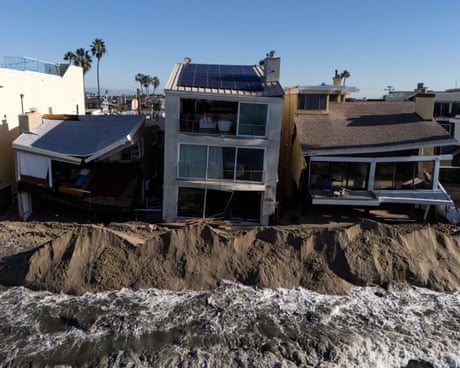
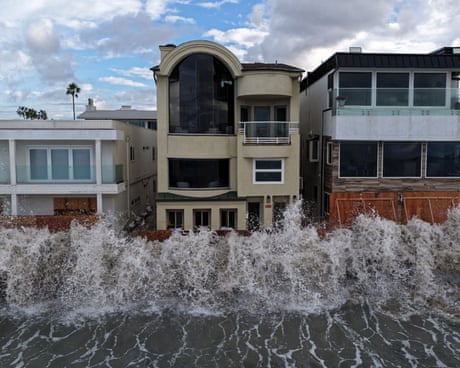
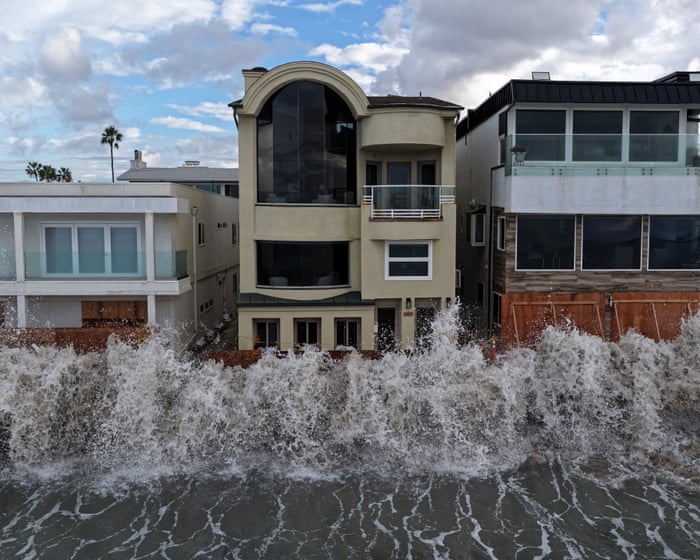
Coastal communities across California were preparing for days of flooding amid potentially 'record-breaking tides' this week, as water levels began rising on Monday.
Residents of coastal towns told to avoid beaches during high tides and keep further away from the ocean than usual
Coastal communities across California were preparing for days of flooding amid potentially “record-breaking tides” this week, as water levels began rising on Monday.
The National Weather Service warned that significant coastal flooding was expected in San Diego and Orange counties through Thursday that could close roads and inundate homes, businesses and critical infrastructure. A wide swath of the coast from San Luis Obispo county to Los Angeles county could see “minor to moderate” coastal flooding with tides as high as 8ft. Further north in the Bay Area, officials advised there could be as much as 2.1ft of inundation, primarily in low-lying coastal areas.
More inclement weather forecast in rain-soaked Four Corners region after evacuations and rescues last week
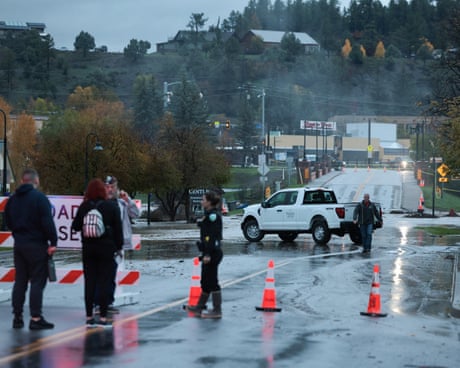
Another round of heavy showers and thunderstorms were expected to hit the south-west US on Sunday after the region endured days of rain that forced evacuations, water rescues and multi-million-dollar damage.
The National Weather Service issued a flood watch for much of the Four Corners – the meeting point of Arizona, Colorado, New Mexico and Utah – even as local officials forecast further receding of swollen rivers that surged since rains picked up on Wednesday.
At least one injured after flooding in Four Corners region – which includes Colorado, New Mexico, Arizona and Utah
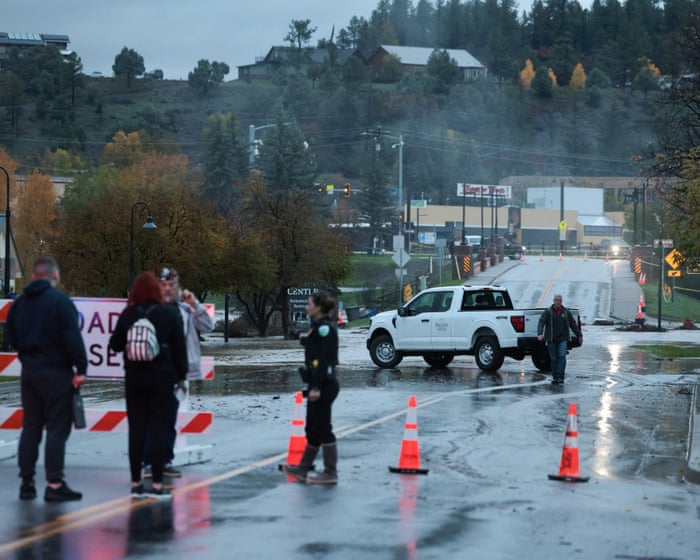
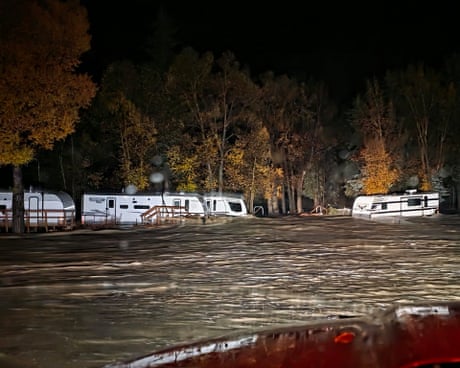
Severe flooding in the Four Corners region on Friday led to water rescues – some from rooftops – and impassable roads, with some residents being told to evacuate low-lying areas of Colorado and New Mexico and others advised to shelter in place until water levels go down.
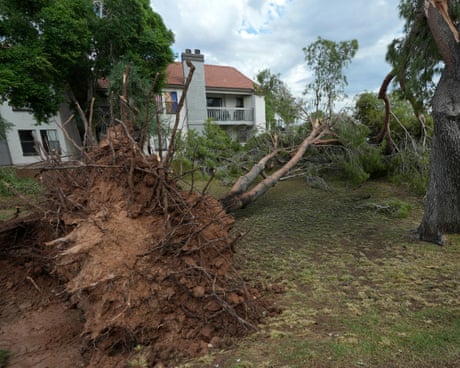
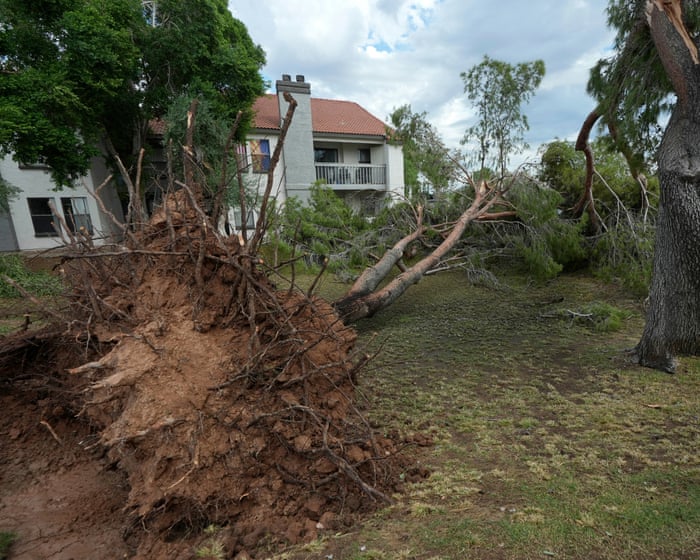
It followed several busy days of flooding in the region that swamped dozens of homes in Utah. Earlier in the week, tornadoes blew off roofs, knocked trees on to houses and downed power lines in Arizona. At least one person was injured.
Violent storms overnight knocked over utility poles and trees and carried thunder and heavy winds through state
Yet more severe weather struck Thursday in the US south-west as the Four Corners region surveyed blown-away roofs, trees knocked on to homes and power lines downed from overnight tornadoes that injured one person.
The injuries weren’t life-threatening but rare for an area better known for scalding heat. But this fall has been unusually soggy in the south-west with El Niño conditions that have sent one tropical system after another in from the Pacific, causing the Grand Canyon and surrounding deserts to rage with floods.
At a gathering in Texas, near where floods killed 136 people last year, survivors are united on the need for urgent action
It may be a club none of its members actually want to be in, but the growing number of people in the US affected by extreme weather disasters are starting to organize into a political force.
Severe wildfires, floods storms and other calamities now touch the lives of huge numbers of Americans – about half of all people in the US by one estimate – as the climate crisis supercharges extreme events. Some survivors are now coalescing to push for improved disaster response and even action on the politically contentious issue of global heating.
The last long-term federal recovery funds allocated for a major disaster were for Hurricane Milton, which hit in late 2024
Survivors of extreme weather disasters across the US are facing long waits for government assistance funds to rebuild their lives, with the last long-term recovery funds allocated for Hurricane Milton that hit Florida two years ago. Government officials estimate more than $10bn is needed in long-term disaster recovery funding to rebuild affected communities in Los Angeles county and St Louis, Missouri, alone.
Demetrice Davis’s home in north St Louis still has damage from the EF3 tornado that tore through the area in May 2025. “The insurance didn’t cover much of anything. And the Fema just kind of backed you up for a little while, but didn’t get you back on track,” he said. “The government agencies are not really doing what they’re supposed to do.”
Hot, windy weather stokes fires in southern California with mandatory evacuation orders in place for many
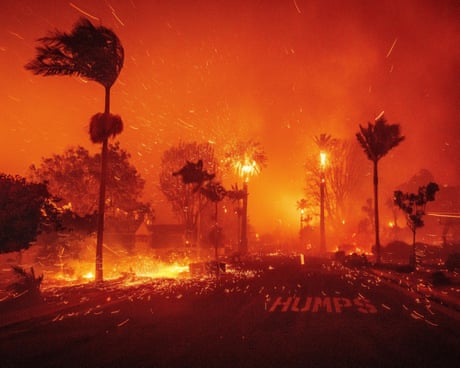
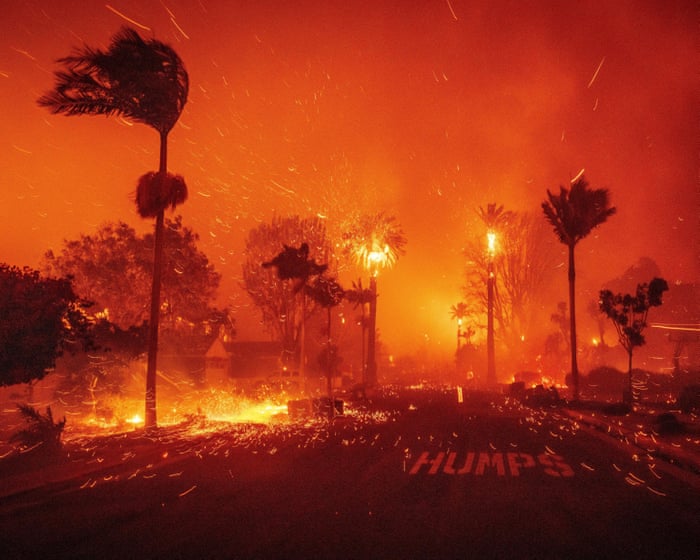
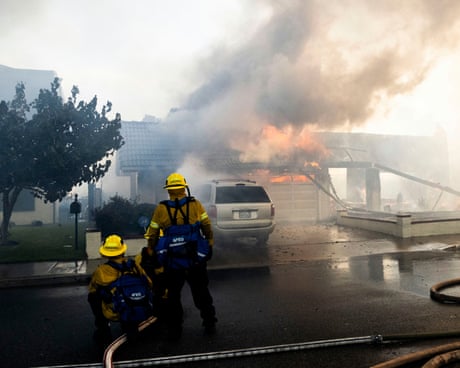
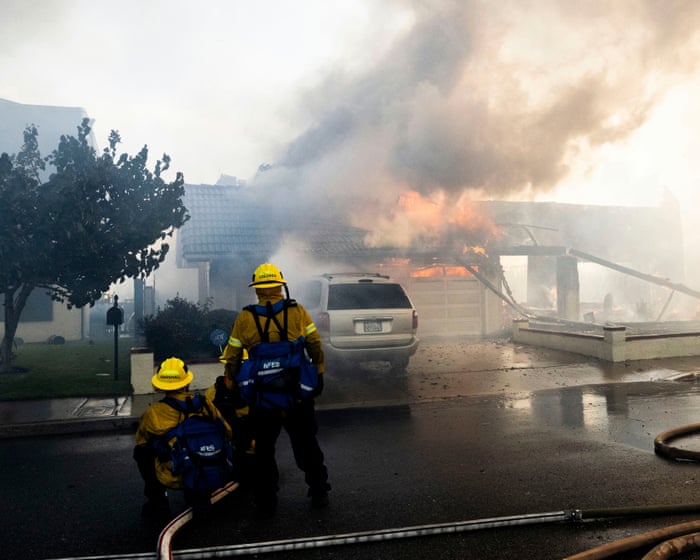
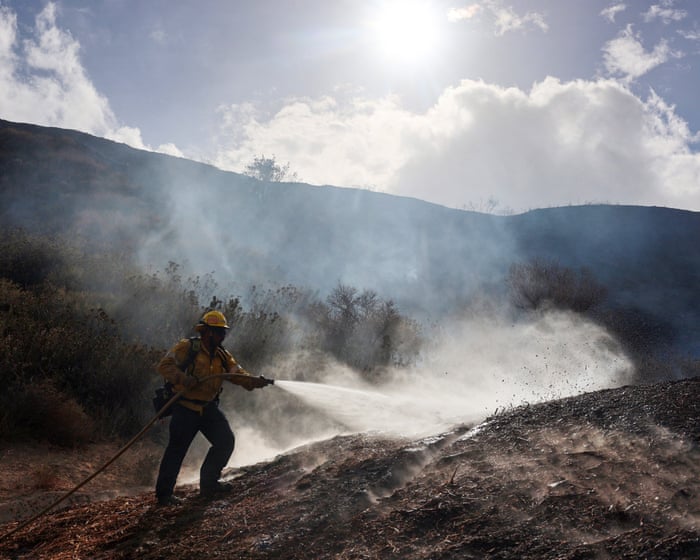
A fast-moving fire spread into neighborhoods in southern California on Fridayas the region braces for more hot, windy weather that will amplify fire dangers through Saturday.
Several structures could be seen ablaze in video footage captured by local news helicopters as firefighters worked to wrangle the more than 465 acre Norte fire, which erupted in Orange county on Friday.
Largest blaze the Henderson fire near San Diego as strong winds and severe heat could fuel rapid spread
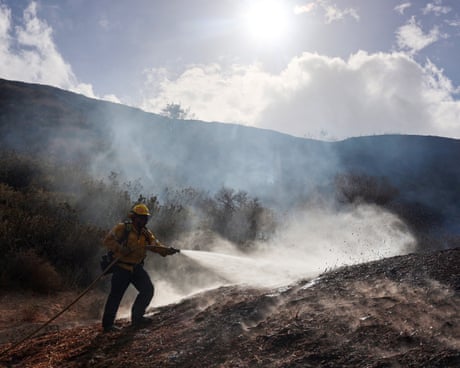
Multiple wildfires ignited across California on Thursday as the state braced for more strong winds and high temperatures that could fuel rapid fire growth over the next several days.
The largest blaze, dubbed the Henderson fire, erupted in Camp Pendleton, a San Diego Marine Corps training base, and quickly consumed more than 1,000 acres. Evacuations have been issued and officials briefly closed part of the Interstate 5, a major highway in the region.
El Niño will likely shift weather patterns to bring more rain, but much snow still isn’t forecast for the northern states
Winter in the United States looks like it will generally be wetter and warmer, but not necessarily snowier, according to the federal government’s seasonal outlook and other meteorologists’ forecasts. You can thank or blame El Niño.
El Niño is likely to shift weather patterns to bring more moisture, but with it higher temperatures. That should help erase persistent western drought, but it is unlikely to make northern snow-lovers happy, the National Oceanic and Atmospheric Administration (Noaa) said on Thursday.

 Connexion