Vue lecture

Reconstruction holds Ukraine’s economy above water as service sector cracks
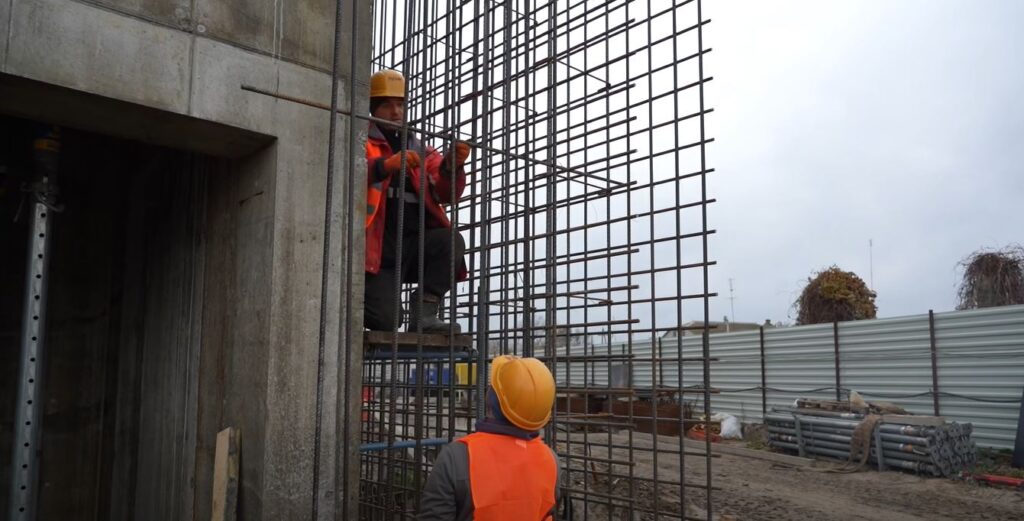
kharkiv digs over 40 underground schools being built russia keeps bombing · post workers reinforce concrete structure construction site school oksen lisovyi video surrounding oblast crews working shifts often without

Ukraine’s wartime business optimism has split in two. In July, the construction sector, funded by state money for roads and damaged infrastructure, remained the country’s most confident, even as service firms slid into outright pessimism, and overall confidence in the economy stopped improving.

The divide is about money. Rebuilding, paid for by the government and its foreign backers, is thriving. The businesses that earn their own keep—transport, hospitality, professional and financial firms—are squeezed by rising costs and a shortage of skilled workers.

Only builders expect to hire; industry and services plan to cut.

Each month, the National Bank of Ukraine asks companies whether they expect business to improve or worsen. In July, there was only barely more expected improvement than decline: a reading of 50.1, where 50 is the dividing line, down from 50.4 in June.

A year earlier, more firms were gloomy than hopeful. As 2025 closed, the divide ran along a different line: retail firms stayed confident while industry shrank under Russian strikes, and the overall mood was still a shade negative.

kyiv skyline
Explore further

Ukraine’s economy adapts to war, but hits a ceiling money can’t break (INFOGRAPHICS)
business expecation index july 2026
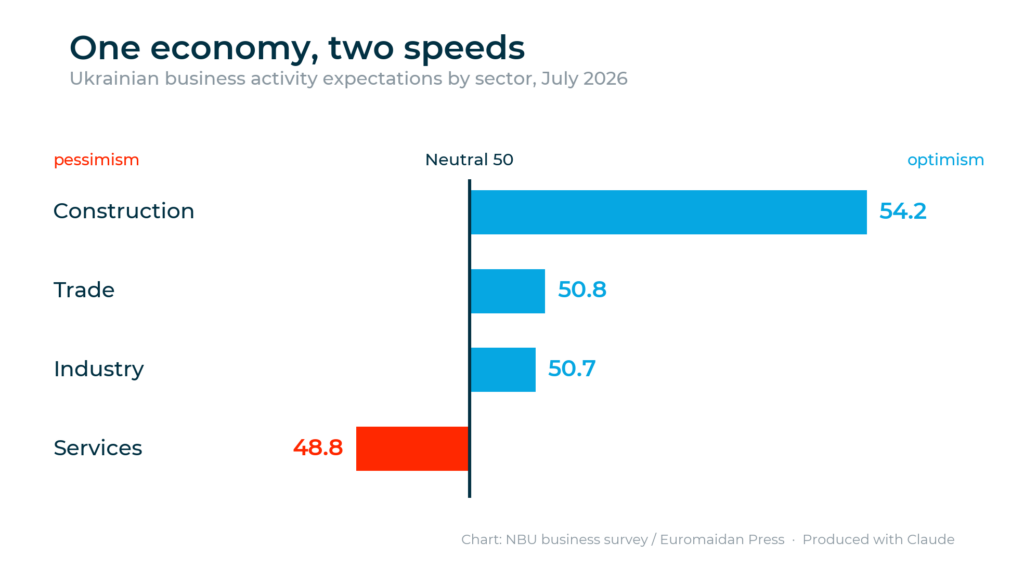
Ukraine’s war economy split cleanly along its funding line in July: construction, paid for by state and foreign rebuilding funds, remained the most confident sector, while services—left to earn their own way—fell into pessimism, the only sector below the neutral 50 mark. Chart: NBU business survey / Euromaidan Press

Where the rebuilding money goes, confidence follows

Construction was far above the line, at 54.2, lifted by financing for road repair and rebuilding—even as the same survey listed intensifying strikes on critical infrastructure among the factors holding activity back.

Industry and trade stayed barely positive. Services alone fell below the line, into pessimism, squeezed by higher costs and too few skilled workers. Only builders expect to hire; industry and services plan to cut.

For Ukraine’s partners, the survey shows where rebuilding money actually reaches. That spending—part-funded by Western aid, which the bank lists as one reason confidence holds up at all—is a preview of the demand that a full postwar rebuild would bring.

In June 2026, Russian strikes on that same industrial base pushed Ukraine into its sharpest wartime contraction since 2023.

The next survey, covering August, is due on the first working day of September.

  •  

Ukraine’s ousted defense minister took drone contracts away from the generals. Now they may take them back

Ukrainian Defense Minister Mykhailo Fedorov in Germany, on 15 April 2026. Source: Fedorov

For most of the war, a circle of generals decided which companies got paid to arm Ukraine. They named the suppliers, they named the models, and the money followed the list.

Then the defense minister Mykhailo Fedorov took that power away and made the companies compete on price and on how their weapons performed at the front. Three weeks ago, the minister was fired. Now, the people who did well under the old list are pushing to get it back.

What makes this more than a lobbying fight is that its two loudest voices agree on almost nothing else: Fedorov, who says he believes the overhaul cost him his job, and an anti-corruption watchdog who owes him no favors. Both say the reform may not outlast him.

What rides on it is real money, and Ukraine has little to spare. It now pours almost all its own revenue into defense, while the West covers nearly the entire civilian budget, roughly $50 billion in 2026. Every dollar lost to a rigged contract is one that never reaches a front already too short of soldiers to absorb the waste.

mykhailo fedorov
Explore further

Ukraine’s defense minister explained how the country buys weapons—after he was sacked

They describe it from opposite corners. Fedorov told Ukrainska Pravda on 30 July he believes his removal was tied to the procurement overhaul—the restructuring, he said, “sparked significant dissatisfaction” among powerful people who then leaned on President Volodymyr Zelenskyy.

Fedorov is not a neutral witness: he has said he would take the job back tomorrow. He does not have to be neutral to be right about what he built.

Ukraine is about to discover that it built less of an institution than it thought.

tetiana nikolaienko
Tetiana Nikolaienko, deputy head of the public anti-corruption council that monitors Defense Ministry spending. Photo: Tetiana Nikolaienko / Facebook

Four days later, Tetiana Nikolaienko told Radio NV what the fight looks like from inside. Anonymous Telegram channels attacking one drone maker, then the next. Investigators searching companies’ offices. A loud public argument over which drones are overpriced.

These are not separate quarrels, said Nikolaienko, deputy head of the public anti-corruption council that watches Defense Ministry spending—they are the opening moves of a scramble to grab a bigger share of the weapons money, now that the man who set the rules is gone.

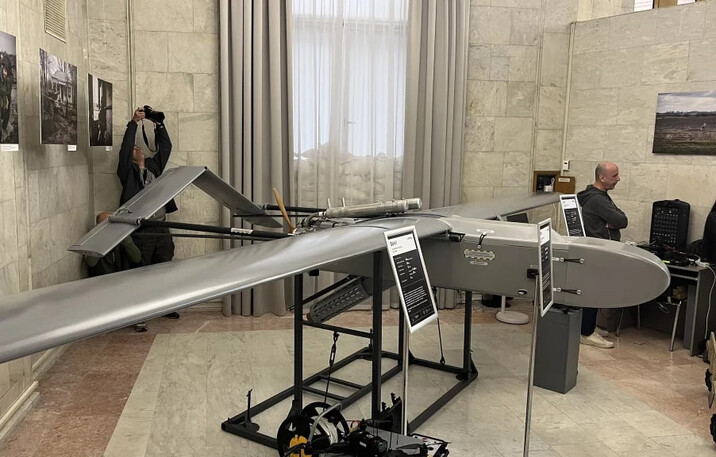
FP-2 combat attack drone Ukraine
The FP-2 drone, produced by Ukrainian company Fire Point, can carry a 100-kg bomb. Photo: weuaplus.tv

What the reform actually changed

What they are describing is the unwinding of one specific change. Fedorov took the power to pick winners away from the General Staff, which had named the exact companies and models the state would buy, and made the ministry buy instead on open competition and combat performance.

That widened the field of who could win a contract. It also cut the guaranteed business of the suppliers who had thrived on the old list—among them Fire Point, whose drones account for roughly 60 percent of Ukrainian long-range strikes inside Russia.

This is not a tale of one honest reformer against thieves. Fedorov’s overhaul was unfinished: only about a fifth of drone purchases were conducted through open competition when he left. And he had staffed the ministry with his own people.

Fedorov was not the spotless auditor the street protests made him out to be. But an unfinished reform can still be worth keeping, and the people fighting it are not fighting to finish it.

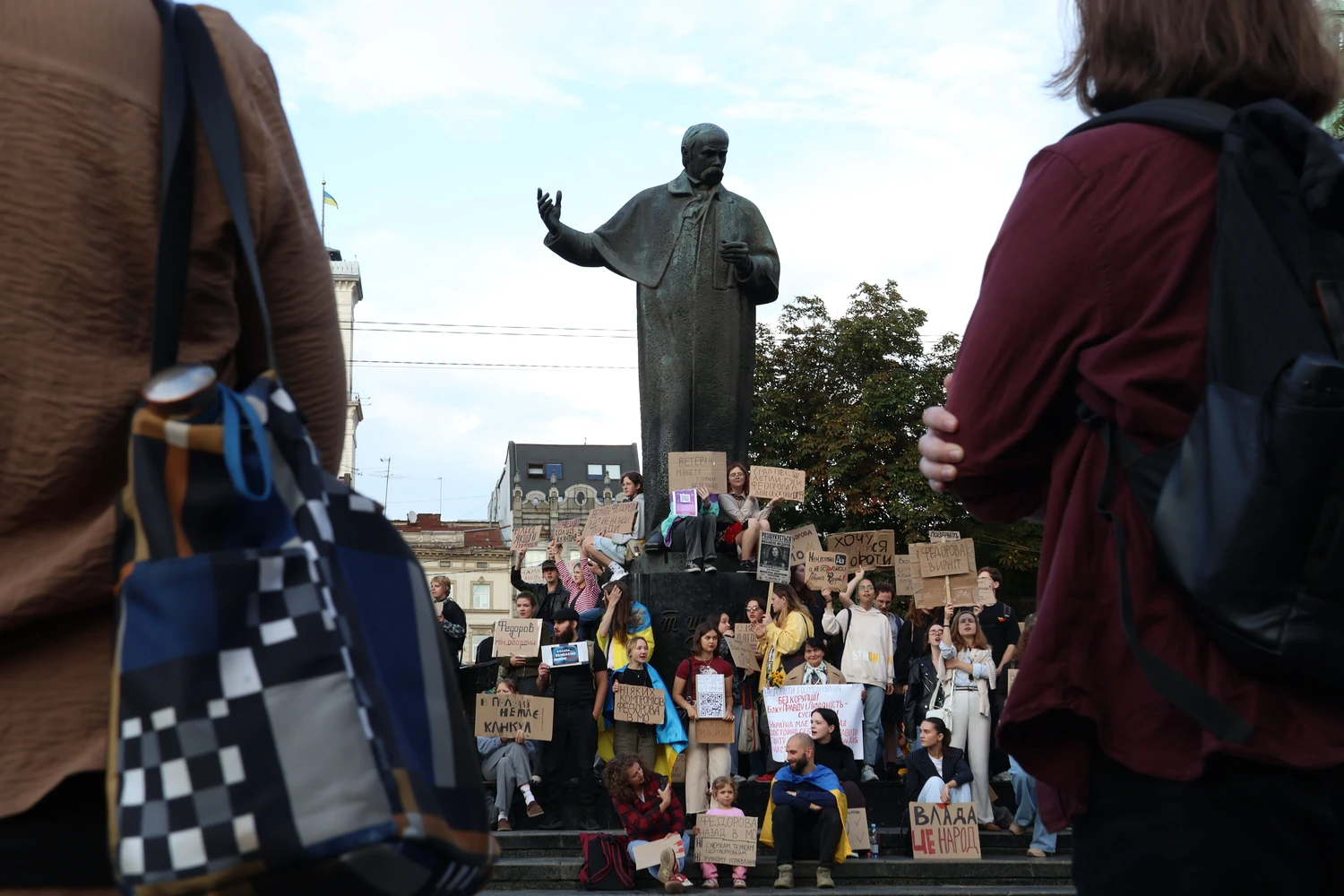
Protesters demand Mykhailo Fedorov is reinstated as defense minister in Lviv. Photo: Solomia Stanovych
Explore further

Ukraine’s Gen Z protested for their anti-corruption agencies last year. Now they’re protesting for one man

What survives, and what leaves with him

What survives comes down to a plain distinction: what Fedorov wrote into Ukraine’s rules, and what was only his practice. The register of approved arms suppliers exists because of a government decree, and a decree does not walk out when a minister does. That part will most likely hold.

The part that made the reform actually bite was never set down that hard. The open competitions, the public figure showing how much buying was contested rather than quietly handed out, the team that enforced both—those were Fedorov’s way of running the ministry, not Ukraine’s law, and they are exactly what Nikolaienko says is now under pressure.

So Ukraine is about to discover that it built less of an institution than it thought. The paperwork stays, but the part that really worked walks out with one man, when Ukraine can least afford the loss.

  •  

Repeated Russian missile-targeting failures may themselves violate the laws of war

The authors of a new Ukrainian war-crimes framework say the line between a Russian targeting error and a deliberate method may not matter in law: a repeated failure to spare civilians can itself be a violation, whoever the missile was meant for. That goes further than their own report, published last week.

“An isolated targeting error and a method of conducting attacks are not mutually exclusive alternatives, nor is an error necessarily exculpatory,” Volodymyr Hryshko, deputy head of the legal department at Truth Hounds, told Euromaidan Press.

report out of control by the truth hounds
Explore further

Precision missiles hit the coordinates. Investigators ask who was still standing there

International law obliges an attacker to verify a target and to break off if it changes or the civilian cost turns excessive. Skip that, over and over, and “a recurring failure to take such feasible precautions may itself constitute a violation, regardless of whether civilian harm was specifically intended.”

The report calls this a “moving target attack”: the weapon cannot be recalled, and the target can move, disperse, or be warned before it lands. Russia’s standard defense—that a precise hit proves a lawful target—does not, the authors argue, survive that gap.

“A recurring failure to take such feasible precautions may itself constitute a violation, regardless of whether civilian harm was specifically intended.”

Volodymyr Hryshko
victoria amelina
Victoria Amelina. Credit: Victoria Amelina via Facebook.

Error and method are not the only options

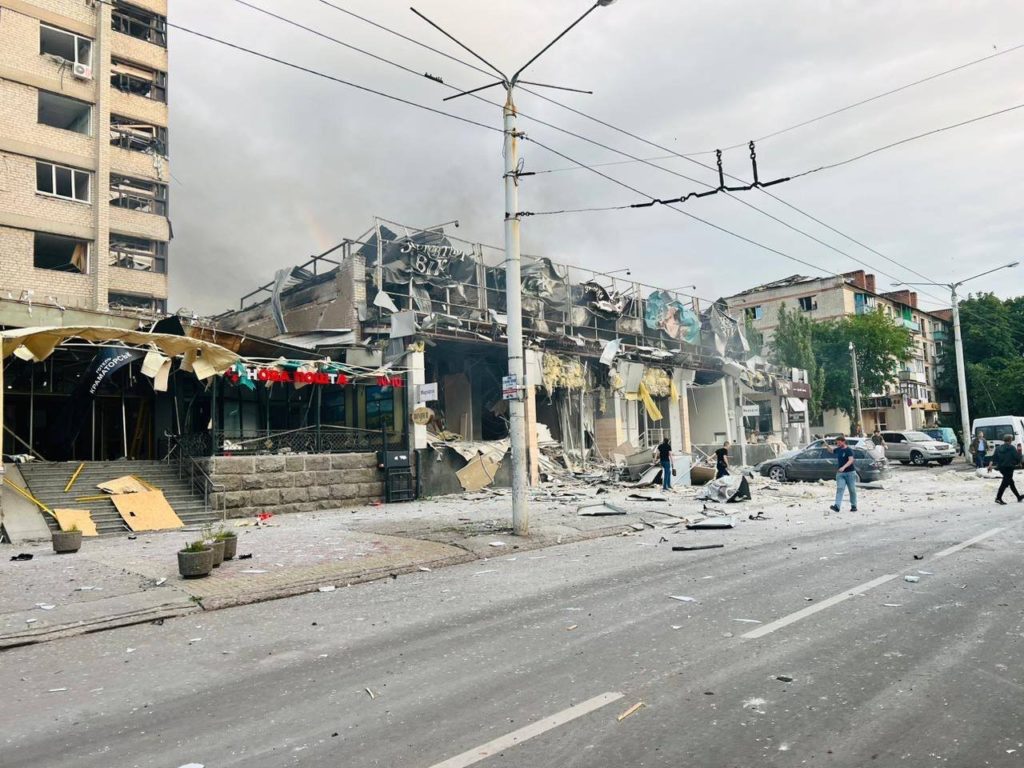
The report found a war crime in only one of its four cases—Kramatorsk, 27 June 2023, a Russian cruise missile into a pizzeria that killed 13 people, among them the novelist Victoria Amelina, who had left fiction to document Russian war crimes for Truth Hounds itself. The other three it left unresolved, and those are the ones Euromaidan Press asked about.

The four strikes are hard to read as simple accidents, said Maria Burnett, senior legal coordinator at Project Expedite Justice. Soldiers were present in each case—off duty, or at a scheduled meeting, or at an exhibition—but a temporary presence, the report argues, did not strip these places of protection.

Russian forces used precision weapons despite long gaps between the last intelligence and impact, she said, so “the risk that the target would move or disperse, while civilians remained exposed, was entirely foreseeable.” Doing it repeatedly “suggests a willingness to proceed without reliable control over whether the military objective would still be present when the missile arrived.”

The evidence that would settle it

Nothing in the open yet proves “an officially directed policy or deliberate method across the Russian armed forces,” Burnett said.

What would prove it is inside the targeting chain—the intelligence before each strike and when it was last checked, the choice of warhead, the launch order, the legal advice, the after-action report—and none of that is public. Orders or testimony from the people involved, she said, would show whether the strikes were “individual failures, a tolerated operational practice, or a formally approved policy.”

What the framework asks

The recommendations run to the International Criminal Court, the ICRC, the UN human rights office, and courts acting under universal jurisdiction: treat the interval between launch and impact as evidence, and stop reading precision as proof that a strike was lawful.

But the orders and targeting files that would prove method over error sit inside the Russian military, within reach only of investigators who can compel them. Truth Hounds is trying to build those cases on a shrinking budget—it lost the American money that had covered a third of it, and has laid off staff and shelved an archiving project.

  •  

Russia lowered its 2030 electronics-independence target from 80% to 59%

russian irtysh server processor

Russia has lowered its benchmark for technological independence. A revised government target now requires domestic hardware to make up 58.7% of state technology projects by 2030—down from the 80% Moscow had long promised—a reduction proposed by Russia’s own Ministry of Industry and Trade and set by a decree signed in July 2026 by Prime Minister Mikhail Mishustin.

Funding collapsed as deadlines slipped

The scale of the retreat was laid out by Ukraine’s Foreign Intelligence Service, which called the downgrade a capitulation to reality. Funding for the flagship state program collapsed roughly fivefold, from $338.4 million in 2024 to $62.6 million in 2026, and the broader electronics-engineering development program faces a $422.7 million shortfall for 2026–2028, the service said.

Several microelectronics-equipment projects were canceled outright, and deadlines for domestic processors and modems have slipped to 2032. The “Irtysh” processor Moscow presented as a homegrown design for critical infrastructure is, by the service’s account, effectively a copy of China’s Loongson chip, and the Kurchatov Institute missed its deadline to build replacements for Intel, Marvell, Broadcom, and Integrated Device Technology parts.

Russian specialists themselves say localizing more than 60% is impossible without domestic production of chips at 28 nanometers and below, which sanctions and the loss of Western tooling put out of reach.

The GRU buys abroad what Russia cannot make

What Russia cannot build, it increasingly smuggles. Estonia’s Foreign Intelligence Service reported in February 2026 that Russian military intelligence—the GRU—takes an active role in acquiring sanctioned dual-use goods, running import-export front companies to route Western and Asian components home.

One such firm, Moscow-registered Neptun Ko, is directed by an identified GRU officer, Aleksandr Matrossov, and moved more than €500,000 ($540,000) worth of critical semiconductors to Russia’s defense industry through a Chinese intermediary in the first year of the full-scale war, the Estonian service found.

yevgeniy pluzhnik in kuala lumpur
Explore further

Russian businessman runs Hong Kong pipeline feeding European electronics to Kremlin’s weapons labs

Every chip Russia’s factories cannot make is one it must source abroad, through the third-country sanctions loopholes that still route Western components into Russian missiles and drones—which is where the practical fight over Russia’s electronics now lies, whatever share Moscow prints as its goal for 2030.

  •  

Individuals now drive nearly half of Ukraine’s bankruptcy cases

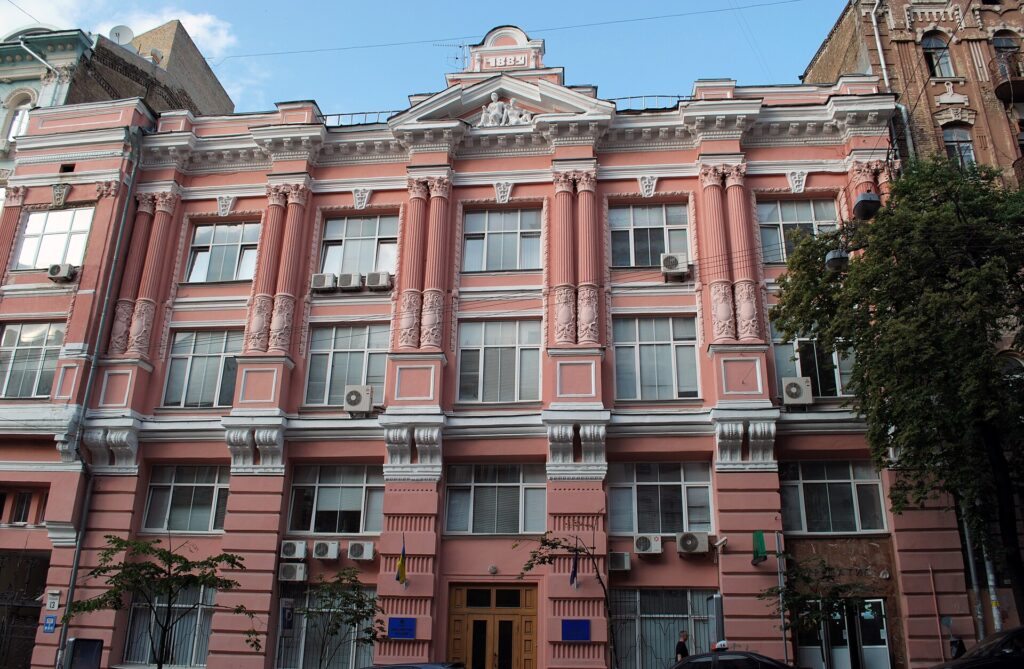
ukraine’s ministry of justice building in kyiv

Nearly half of the bankruptcy cases now moving through Ukraine’s commercial courts—45% of over 6,107—involve individuals and sole proprietors rather than companies, the Ministry of Justice reported on 30 July. Individuals could not legally file for bankruptcy in Ukraine until 2019.

Ukraine’s bankruptcy law is being rebuilt around the European Union’s “second chance” principle: that an honest debtor, company or individual, should get a supervised route back to solvency. Kyiv is introducing that framework—out-of-court settlement, preventive restructuring—as an EU accession commitment, even as the war continues.

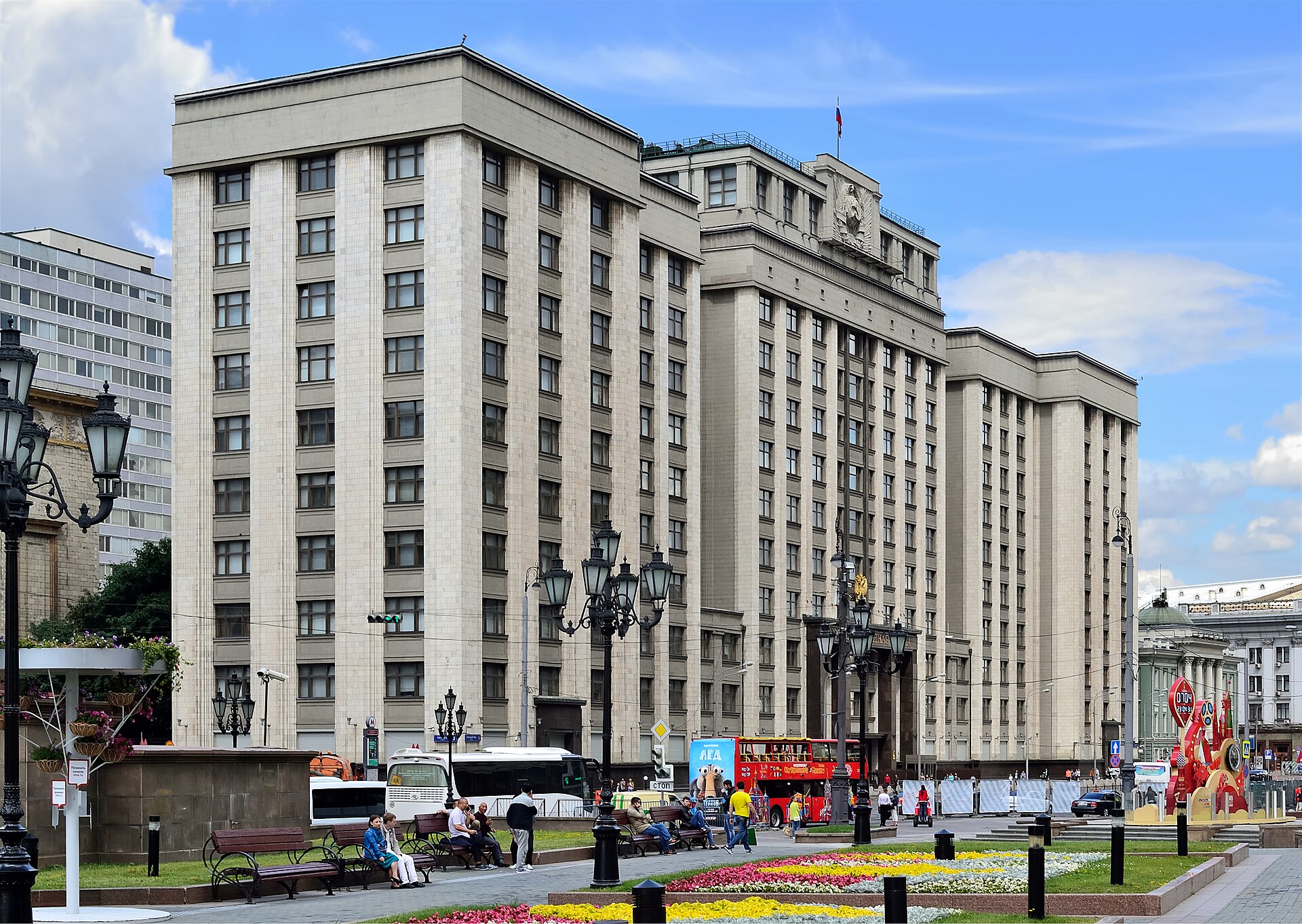
Moscow is moving the other way. In July, the Russian State Duma rushed through its largest bankruptcy overhaul in decades, handing the Kremlin power to decide which firms survive as corporate debt there swells past the country’s entire annual output.

state duma building in moscow
Explore further

Russia stalled bankruptcy reform for six years—then passed it in two days

A system built from nothing

Personal insolvency is new to Ukraine. Parliament first allowed individuals to declare bankruptcy under the 2019 Bankruptcy Code, and in that first year, court records show, just 22 people used it.

Filings rose sharply afterward, reaching several hundred annually by 2023, as consumer borrowing spread and the war strained household finances. Most who file are between 25 and 45, and close to half are women.

The rescue culture the law promises is still mostly on paper. Of debtors currently in proceedings, 76% are already at the liquidation stage, and only 5% are in financial recovery.

Nearly half of the bankruptcy cases now moving through Ukraine’s commercial courts involve individuals and sole proprietors rather than companies.

The new preventive-restructuring procedure, meant to save viable businesses before they fold, has drawn just nine enterprises so far, with six more plans approved. In the first half of 2026, courts opened 1,250 new cases and closed 767—the backlog fills faster than it drains.

Lawyers who work the procedure caution that the climbing numbers reflect financial distress rather than easier access—the procedure stays costly and complex, and reaches only a fraction of those in serious debt.

monthly business activity expectations index by the ukrainian national bank
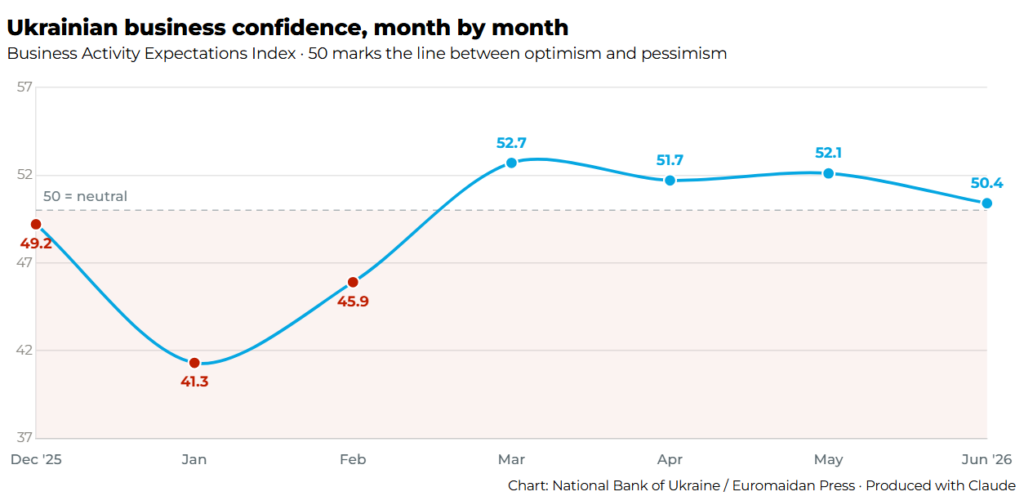
The National Bank’s monthly Business Activity Expectations Index fell to 41.3 in January, then recovered above the neutral 50 line by spring, reaching 50.4 in June. Above 50 signals optimism, below it pessimism. Chart: National Bank of Ukraine / Euromaidan Press.

The confidence that never reaches the courtroom

None of this shows in how Ukrainian businesses feel. In June, firms rated their own prospects positively for the fourth month running, with the National Bank’s expectations index at 50.4, above the neutral 50 line. The survey polled 587 companies that were still trading.

The people turning up in bankruptcy court are the ones the survey does not count—and more and more, they are individuals, not firms.

  •  
❌