Vue normale

  • ✇404 Media
  • Pornhub's Parent Company to Pay $120 Million to Settle Child Sexual Abuse Lawsuits

    Pornhub's parent company will pay $120 million to settle claims that its platforms violated federal sex trafficking and child sexual abuse imagery laws.The deal settles two 2021 class action lawsuits in California and Alabama that claim Mindgeek, which has since rebranded to Aylo, profited off of child abuse material allegedly posted by abusers to its platforms. In the California case, a woman alleged that her ex-boyfriend posted child sexual abuse videos of her when she was 16 years old to P
     

Pornhub's Parent Company to Pay $120 Million to Settle Child Sexual Abuse Lawsuits

17 août 2026 à 17:04
Pornhub's Parent Company to Pay $120 Million to Settle Child Sexual Abuse Lawsuits

Pornhub's parent company will pay $120 million to settle claims that its platforms violated federal sex trafficking and child sexual abuse imagery laws.

The deal settles two 2021 class action lawsuits in California and Alabama that claim Mindgeek, which has since rebranded to Aylo, profited off of child abuse material allegedly posted by abusers to its platforms. In the California case, a woman alleged that her ex-boyfriend posted child sexual abuse videos of her when she was 16 years old to Pornhub. In the Alabama case, two women claimed to have been trafficked as minors and that their trafficker uploaded videos to Mindgeek's sites; one of the women claimed she was drugged and raped at 16, and that her abuser profited off of the videos of her abuse through Pornhub's Modelhub program. 

The class includes anyone who was under the age of 18 "when they appeared in a video or image that has been made available for viewing" on a Mindgeek-owned or operated website between February 12, 2011 and December 6, 2024.

Mindgeek was bought by Ethical Capital Partners and rebranded to Aylo in 2023. Aylo will pay into the settlement fund with an initial $25 million in 2026 followed by six annual installments over the next six years. In a press release, Aylo noted that the settlement "resolves the matter with no admission of liability or wrongdoing by Aylo and remains subject to court approval." 

In addition to paying $120 million, Aylo agreed to a series of content moderation terms, including verifying that all of the models in uploaded content are over the age of 18, human and automated review of content to prevent child sexual abuse material from going up on its sites, and reporting suspected abuse material to the relevant authorities. Aylo's sites have implemented many of these injunctive reliefs agreed to in the settlement for years. 

Pornhub Will Pay $5 Million Over Allegations of Hosting Child Sexual Abuse Material
Pornhub’s parent company Aylo and its affiliates settled a lawsuit with the FTC and Utah that alleged the company “deceived users” about abuse material on the site.

In late 2020, following allegations of abuse material on the site and being dropped by major credit card processors including Visa and Mastercard, Pornhub overhauled its trust and safety measures to ban downloads, restrict uploads to verified users, and expand its moderation processes. It also launched its “Trusted Flagger Program" — mentioned as part of this settlement's terms — which allows a group of non-profit internet and child safety organizations around the world to immediately disable content it flags as abusive. In early 2021, Pornhub implemented biometric identity verification for uploaders through Yoti, and in 2024, it started requiring written proof of consent from everyone in every video.

The attorney for the plaintiff class did not immediately respond to a request for comment.

“Over the years, we have put in place robust measures to help protect our platform from abuse. Only verified content creators can publish on our platform, and every upload is subject to a combination of technological tools and human review by trained moderators before it goes live, to confirm that it complies with our Terms of Service, Community Guidelines and related Policies," Aylo management said in a statement. "Many of the commitments in this settlement reflect practices we already have in place. Trust and Safety should be a priority for every online platform, and we all share responsibility for a safer online experience. Every day, our trust and safety and engineering teams work alongside law enforcement, advocacy groups and other stakeholders to prevent online abuse and to hold those abusers to account.”
  • ✇404 Media
  • ‘Show How 3M Is 0% at Fault:’ Expert Witness Used ChatGPT to Write Report Defending Company in Deadly Explosion Lawsuit
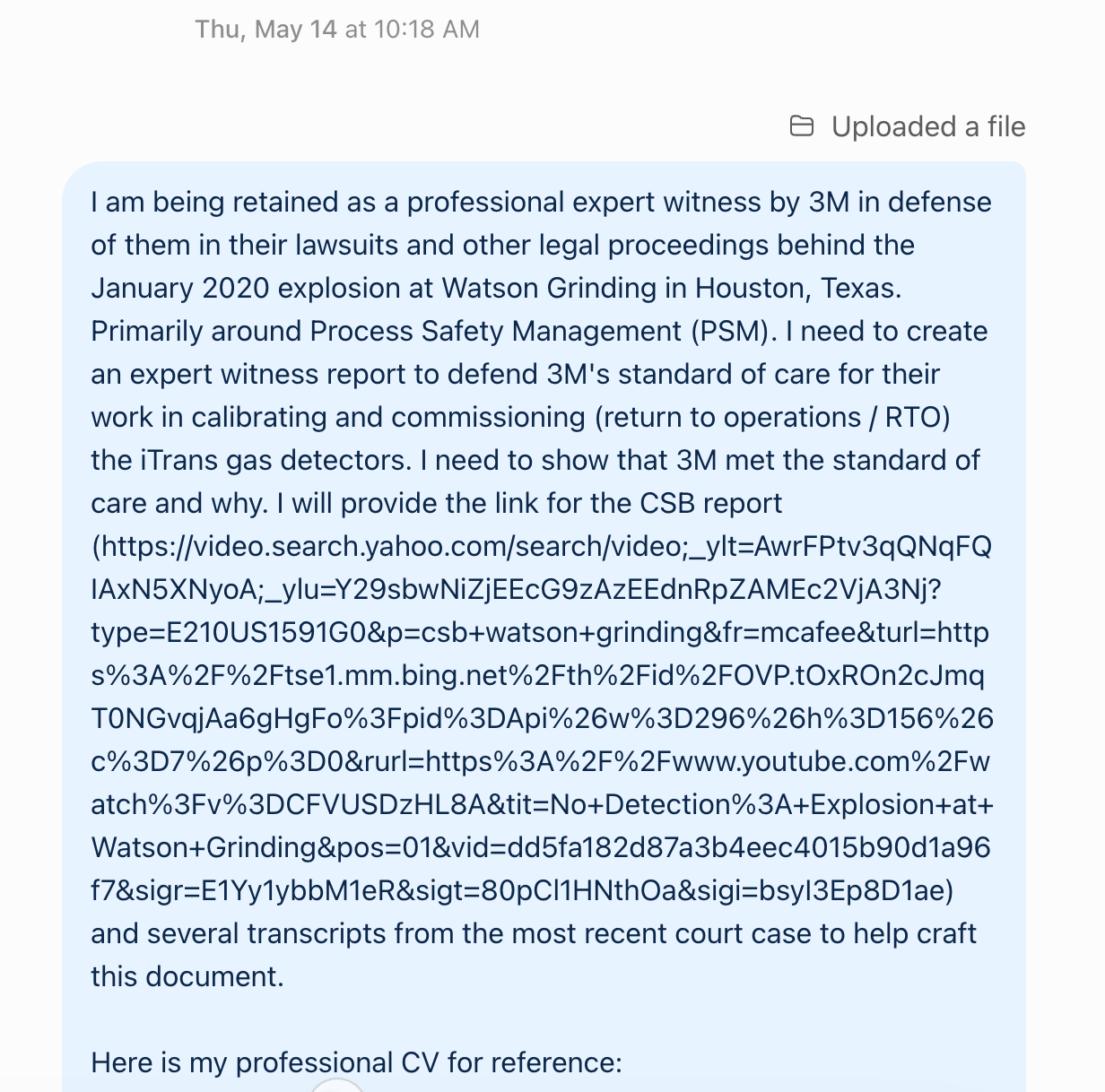
    An expert witness testifying in a lawsuit about liability for a Houston explosion that killed three people and destroyed roughly 200 homes used ChatGPT to write significant portions of his “expert report.” The man, who was hired by the industrial product conglomerate 3M, exposed his AI prompts publicly. They showed that he asked ChatGPT to help him “create an exceptional expert witness report defending the standard of care at 3M,” and that the report should “show how 3M is 0% at fault for the ex
     

‘Show How 3M Is 0% at Fault:’ Expert Witness Used ChatGPT to Write Report Defending Company in Deadly Explosion Lawsuit

17 août 2026 à 10:56
‘Show How 3M Is 0% at Fault:’ Expert Witness Used ChatGPT to Write Report Defending Company in Deadly Explosion Lawsuit

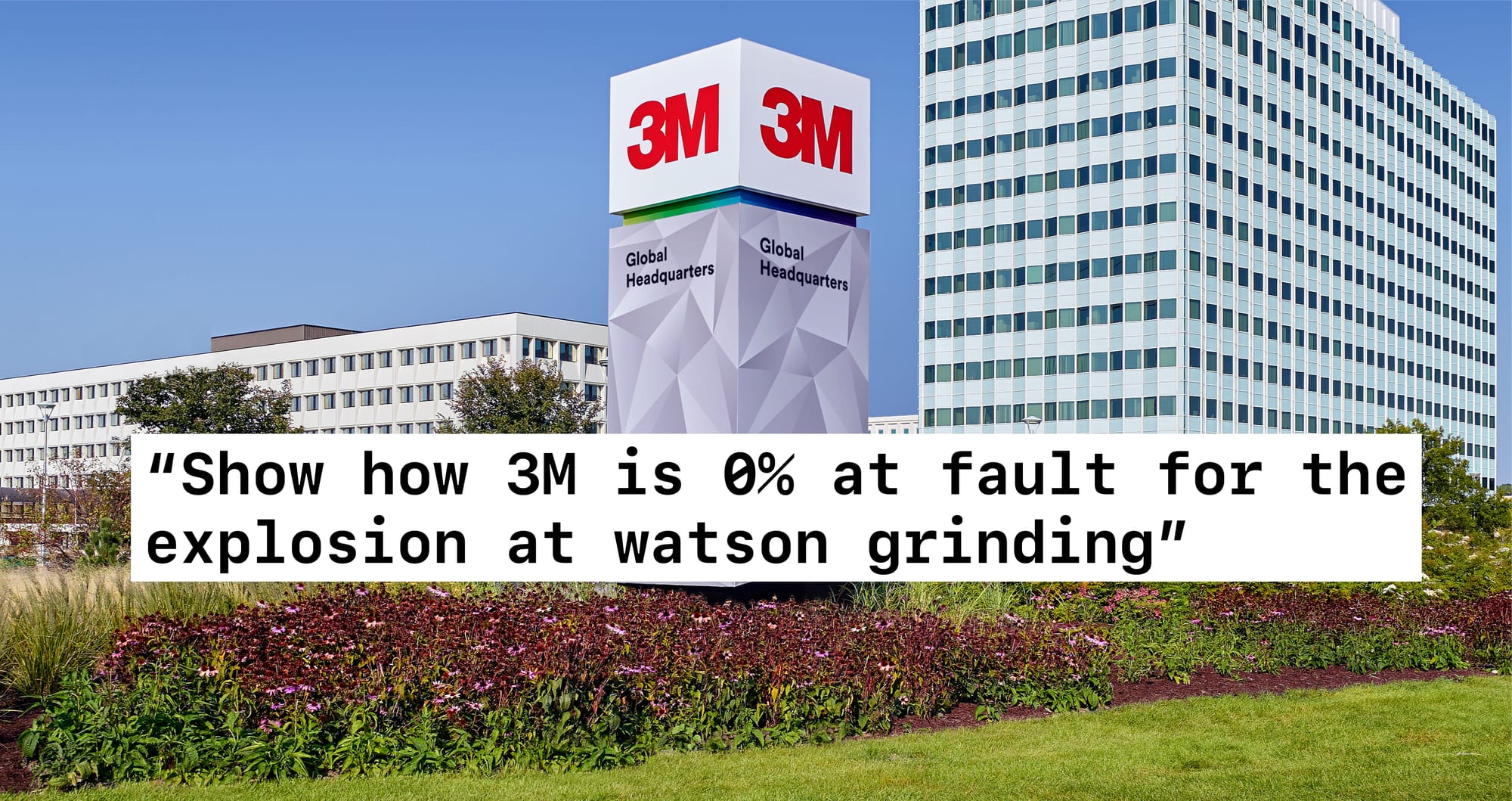
An expert witness testifying in a lawsuit about liability for a Houston explosion that killed three people and destroyed roughly 200 homes used ChatGPT to write significant portions of his “expert report.” The man, who was hired by the industrial product conglomerate 3M, exposed his AI prompts publicly. They showed that he asked ChatGPT to help him “create an exceptional expert witness report defending the standard of care at 3M,” and that the report should “show how 3M is 0% at fault for the explosion at Watson Grinding.”

The incident shows that artificial intelligence has made its way into courtrooms not just in AI-generated legal briefings, hallucinated cases, and adversarial “prompt injections,” but in expert witness testimonies. Court transcripts, deposition documents, and discovery records shared with 404 Media show extensive AI use in an extremely high profile case, where multiple people died and hundreds of millions of dollars in total liability are at stake in ongoing litigation about the explosion. The case also shows that the specific prompts used to create this type of expert testimony can be discoverable during a case, and that those prompts can be quite embarrassing. (Prompts provided in the case are here). 

‘Show How 3M Is 0% at Fault:’ Expert Witness Used ChatGPT to Write Report Defending Company in Deadly Explosion Lawsuit

The case is one of several about liability for a 2020 explosion at Watson Grinding, a manufacturing facility in Houston that was caused by a “degraded and poorly crimped rubber welding hose,” which leaked a flammable gas that eventually exploded in the facility, according to the U.S. Chemical Safety and Hazard Investigation Board. Dozens of homeowners have sued 3M and Watson Grinding; the plaintiffs alleged that 3M didn’t properly service the facility’s gas detection system and made other errors that contributed to the explosion. 

  • ✇404 Media
  • The Future of Deepfakes and the Decline of Reality (With Hany Farid)
    I think we’re pretty good at telling the difference between an AI generated image and a real photograph, but when I need help I call Hany Farid. Farid is the cofounder of GetReal, a company that specializes in detecting deepfakes and other AI-generated images, and is the developer of PhotoDNA, a perceptual hashing algorithm that helps companies automatically detect and remove some of the worst images that exist online, and that is now being used by every serious internet platform in the world. W
     

The Future of Deepfakes and the Decline of Reality (With Hany Farid)

17 août 2026 à 10:19
The Future of Deepfakes and the Decline of Reality (With Hany Farid)

I think we’re pretty good at telling the difference between an AI generated image and a real photograph, but when I need help I call Hany Farid. 

Farid is the cofounder of GetReal, a company that specializes in detecting deepfakes and other AI-generated images, and is the developer of PhotoDNA, a perceptual hashing algorithm that helps companies automatically detect and remove some of the worst images that exist online, and that is now being used by every serious internet platform in the world. 

We started talking to Hany regularly in 2017, when Sam first reported on deepfakes. As that technology evolved and changed how we perceive reality, so have our conversations. I wanted to talk to him today on the podcast so you could hear of those conversations, and so that Hany and I could zoom out, reflect on the past few years, and speculate about where we might be headed. 

404 Media is a journalist-founded company and needs your support. To subscribe, go to 404media.co. As well as bonus content every single week, subscribers get access to additional episodes where we respond to their best comments. Subscribers also get early access to our interview series. Gain access to that content at 404media.co.

Listen to the weekly podcast on Apple Podcasts, Spotify, or YouTube

Become a paid subscriber for early access to these interview episodes and to power our journalism. If you become a paid subscriber, check your inbox for an email from our podcast host Transistor for a link to the subscribers-only version! You can also add that subscribers feed to your podcast app of choice and never miss an episode that way. The email should also contain the subscribers-only unlisted YouTube link for the extended video version too. It will also be in the show notes in your podcast player.

  • ✇404 Media
  • We Tracked a Shipment of Rare Books. It Ended at an Amazon AI Training Facility
    Amazon is buying massive quantities of books, scanning them for AI training data, and destroying them in the process. A 404 Media investigation was able to reveal Amazon’s book buying operation, which hasn’t been previously reported, by placing a tracking device in a rare book we suspected would be acquired by an AI company for training data, and following it around the country to its final destination. 📖Do you know work at a facility where you scan books? I would love to hear from you. Using a
     

We Tracked a Shipment of Rare Books. It Ended at an Amazon AI Training Facility

17 août 2026 à 09:16
We Tracked a Shipment of Rare Books. It Ended at an Amazon AI Training Facility

Amazon is buying massive quantities of books, scanning them for AI training data, and destroying them in the process. 

A 404 Media investigation was able to reveal Amazon’s book buying operation, which hasn’t been previously reported, by placing a tracking device in a rare book we suspected would be acquired by an AI company for training data, and following it around the country to its final destination. 

📖
Do you know work at a facility where you scan books? I would love to hear from you. Using a non-work device, you can message me securely on Signal at @emanuel.404. Otherwise, send me an email at emanuel@404media.co.

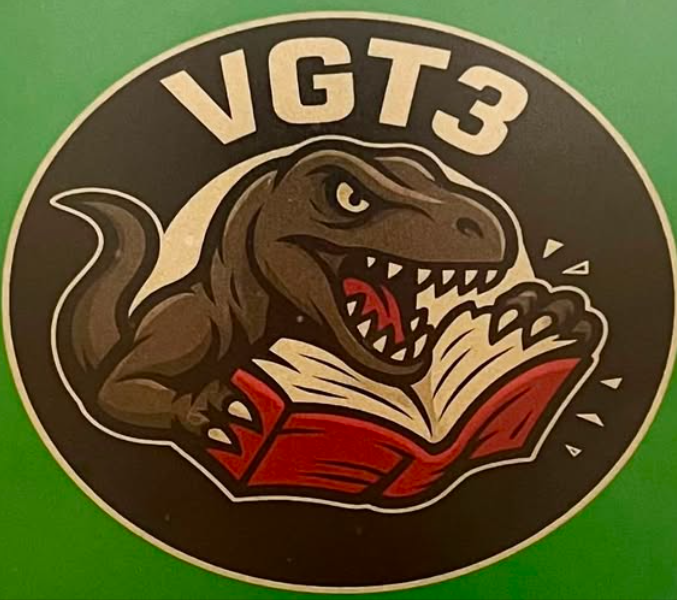
That final destination was an Amazon warehouse in Las Vegas, Nevada. Amazon employees who work at this location say all they do is receive massive shipments of printed books which they then cut the bindings off in order to scan the books more quickly. The printed book is destroyed in the process. The logo of the Amazon team that works at this warehouse, called VGT3, is a dinosaur, brandishing its teeth and with a book in its hands.

❌