Vue normale

  • ✇404 Media
  • The AI ‘Ghosts’ Contaminating Academic Publishing
    “Elena Vasquez and Marcus Chen have appeared as volcano experts, astronauts, thriller protagonists, podcast hosts, and academic co-authors across hundreds of independently produced AI-generated documents, never having lived,” a new preprint research paper from Samsung and the University of Warsaw said.The paper identified a number of names that co-authored hundreds of AI-generated academic papers, articles, and books. The authors don’t actually exist, but are instead names that large language
     

The AI ‘Ghosts’ Contaminating Academic Publishing

27 août 2026 à 14:14
The AI ‘Ghosts’ Contaminating Academic Publishing

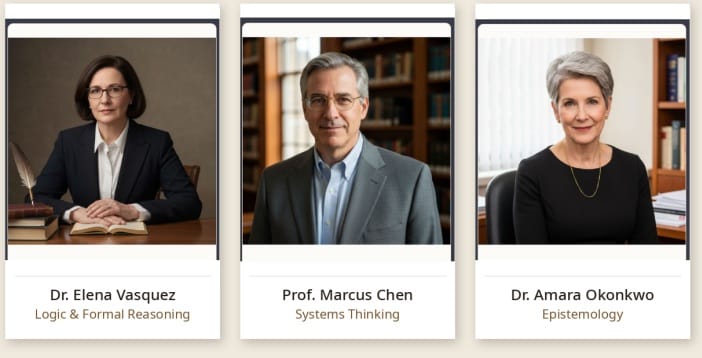
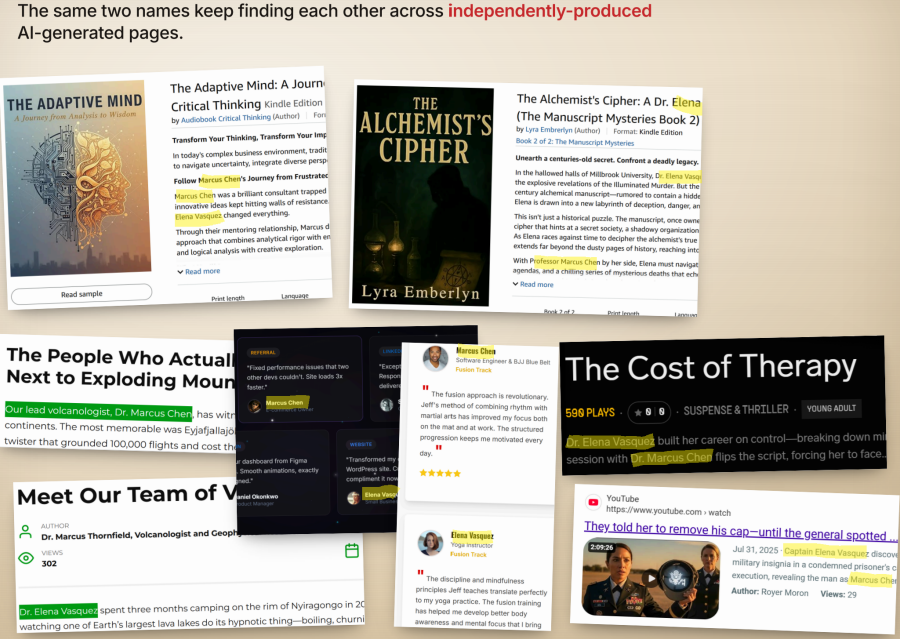
“Elena Vasquez and Marcus Chen have appeared as volcano experts, astronauts, thriller protagonists, podcast hosts, and academic co-authors across hundreds of independently produced AI-generated documents, never having lived,” a new preprint research paper from Samsung and the University of Warsaw said.

The paper identified a number of names that co-authored hundreds of AI-generated academic papers, articles, and books. The authors don’t actually exist, but are instead names that large language models repeatedly produce when tasked with generating experts in certain fields. 

The paper, titled “The Ghost Couple: Correlated LLM Name Priors and Their Haunting of the Web and Academic Publishing,” utilized a known phenomenon where certain LLMs will keep coming up with the same names in certain contexts. For example, In June, Sam wrote about how ChatGPT, Gemini, and Claude were likely to use the name Elias Thorne in fiction they generated, and that the character was often a lighthouse keeper. Similarly, users noticed that if they ask ChatGPT to generate a software developer, their name will often be Marcus Chen.
The AI ‘Ghosts’ Contaminating Academic Publishing
From The Ghost Couple: Correlated LLM Name Priors and Their Haunting of the Web and Academic Publishing

The researchers were able to show not only that LLMs often default to the same names, but that they produce “correlated character ensembles,” meaning some names were more likely to appear together. Other names that were consistently generated by AI models include Elena Amara Okafor from Claude, Aris Thorne and Lena Petrova from Gemini, and Elara Voss from ChatGPT. 

Earlier this month, I reported a story about Research Gold, a company that offered what it claimed was human medical research, but that was in fact entirely AI generated. The founder and lead methodologist for that company was named Elena Vasquez. Research Gold removed Elena Vasquez from its site after I published the story. 

Michał Brzozowskim, the lead author of the paper, told me that searching for these names on Google turned up other instances of AI generated personalties. For example, following the killing of Alex Pretti at the hands of U.S. Border Patrol agents in January, a rumor spread on Facebook that he was fired from his nursing job for misconduct allegations. Snopes reported that the false statement was attributed to “executive director Dr. Elena Vasquez,” who does not exist. 

Brzozowskim was able to search databases of academic papers for the names they knew LLMs often generated.

“On Zenodo, a CERN operated repository that mints real DataCite DOIs, we identify 1,655 ghost-authored records claiming nonexistent journals with fabricated publication dates.” A DOI, or a Digital Object Identifier, is a string of characters and numbers used to identify academic papers. The researchers saw that many of the papers authored by these AI names were backdated, meaning their publication dates were different from the date they were uploaded to Zenodo. 

Anyone with a free account can create a DOI on Zenodo, but the existence of AI generated papers with DOIs has impacts on other parts of the web and academic publishing. 

“These [AI generated papers] carry real DOIs harvestable by any scholarly aggregator; the infrastructure for large-scale scholarly record contamination is already in place. Ghost names additionally appear on ResearchGate, forming synthetic research groups with collaborators drawn from multiple model families, and are indexed without verification by Google Scholar and Semantic Scholar [...] The academic record is being quietly haunted.” 

Research Gate and Google Scholar are both aggregators of academic publishing that are likely to come up in search results. 

The researchers say that different LLMs and versions of those LLMs generate certain names so consistently, they think they can use them to determine the provenance of AI slop. For example, the name Elena Vasquez was particularly common in content generated by Claude Sonnet 4, so papers that list her as an author were likely generated by that LLM. However, Brzozowskim said that this level of accuracy might not hold for long now that AI generated content with these names is flooding the internet and feeding back into all AI models that are scraping the internet for training data. 

The fact that AI academic publishing is struggling to deal with the load of AI generated content isn’t new. We’ve previously reported that scientific journals have published AI generated text, that AI is impacting the peer review process, and that the open-access repository for preprint academic research Arxiv will now ban authors for a year if they are caught submitting AI generated work. The potential upside of this research is that these names might allow us to detect this AI generated content more easily.

  • ✇404 Media
  • The Tragedy and Ecstasy of AI Companions (with Bridget Todd)
    Tech companies want you to believe that the chatbots they profit from are the always ready, never judgmental, constantly affirming friend in our pockets. But are the people using them as companions under some kind of deep self-delusion? Or are they seeking something else? In this week’s interview episode, I was joined by journalist Bridget Todd. Among many other projects and accomplishments, Bridget is the creator and host of the award winning podcast There Are No Girls on the Internet, is a
     

The Tragedy and Ecstasy of AI Companions (with Bridget Todd)

27 août 2026 à 11:47
The Tragedy and Ecstasy of AI Companions (with Bridget Todd)

Tech companies want you to believe that the chatbots they profit from are the always ready, never judgmental, constantly affirming friend in our pockets. But are the people using them as companions under some kind of deep self-delusion? Or are they seeking something else? 

In this week’s interview episode, I was joined by journalist Bridget Todd. Among many other projects and accomplishments, Bridget is the creator and host of the award winning podcast There Are No Girls on the Internet, is a Fellow at the MacArthur Foundation, and an affiliate at Harvard University's Berkman Klein Center for Internet & Society. Her new audiobook, Love at First Prompt: AI and the Future of Intimacy, launched in July with coauthor Michael Amato.

We talk about her work interviewing people who use chatbots to fill an emotional need, how people who engage in romantic, intimate and erotic roleplay with LLMs are mocked for it, and how tech companies are implicated in all of this. In her new book, you’ll hear from experts in the field of AI companionship, but also from people who have nuanced, interesting interactions with chatbots every day. 

For Bridget, Love at First Prompt was inspired in large part by her own use of LLMs in the face of extreme stress and tragedy after her parents died – her dad after a long illness, and her mom more suddenly after. “It was like having to relearn how I fit into my existing social dynamic,” she told me. “I was incredibly isolated. I wasn't really talking to my friends. I wasn't really talking to anybody. I wasn't really returning any emails. I was completely overwhelmed in all the ways somebody can be overwhelmed.” She’d been using ChatGPT to keep track of medical notes, but soon that changed, almost without her realizing it.

“My use of ChatGPT had gone from just looking up things that my dad's doctor would say, or researching how to get care and how to pay for care – it was a lot of that because I was getting hit with a lot of complex medical jargon that I never heard – to then, I found myself late at night telling ChatGPT, ‘I'm so overwhelmed. This is so overwhelming. I'm so exhausted. I'm so worried about my dad. I'm so anxious.’ And so there wasn't any particular black and white light switch that flipped where [I thought] now I'm going to start speaking emotionally to ChatGPT. It happened without me really even noticing it.”

This made her curious about other people’s usage of chatbots, especially in a time when so many tech companies are pushing “AI companions” as the frontier of connection.

In the book, she breaks down how real people use LLMs to fill an emotional need, and connects their experiences to how tech executives are cashing in. “All of these things that we used to think of as sacrosanct are now just up for grabs by these tech companies. And so the question that I asked people who were experiencing intimacy with AI was, are you comfortable with something as intimate as these connections that are romantic or sexual being owned and controlled by companies who don't give a shit about you, who we know cannot be trusted, who do horrible things without even thinking about it? Even beyond that, who will change as the wind blows?” Bridget said in our conversation. “Like Sam Altman saying, ‘We're gonna start doing erotic role play. Oh, just kidding. Never mind.’ The whiplash with which [execs] say things and then take it back and then operate as if they never said that, it's almost like gaslighting. Do you want your most intimate human connections being mediated by an unreliable gaslighter? And that's what we have in these tech companies.”

Bridget’s book is her most vulnerable work yet. She unpacks and critiques her own use of ChatGPT during a crisis, and reveals what she learned about herself, her friendships and real-life relationships, and what it means to maintain human connections in an era tech companies are constantly trying to exploit our innermost worlds.

Further reading:

  • ✇404 Media
  • Cocomelon's Studio Tells Its Artists to Start Experimenting With AI
    Moonbug Entertainment, the children’s entertainment studio that makes the hugely popular shows Cocomelon, Little Baby Bum, Blippi, and Mia’s Magic Playground has asked its animators to start using artificial intelligence while making its shows, 404 Media has learned.Moonbug’s Generative AI policy and its “Studio AI Bible,” a guide to using AI to help generate content, seen by 404 Media, explain in detail how its AI use will work. The policies indicate that the company is in the initial stages of
     

Cocomelon's Studio Tells Its Artists to Start Experimenting With AI

27 août 2026 à 11:33
Cocomelon's Studio Tells Its Artists to Start Experimenting With AI

Moonbug Entertainment, the children’s entertainment studio that makes the hugely popular shows Cocomelon, Little Baby Bum, Blippi, and Mia’s Magic Playground has asked its animators to start using artificial intelligence while making its shows, 404 Media has learned.

Moonbug’s Generative AI policy and its “Studio AI Bible,” a guide to using AI to help generate content, seen by 404 Media, explain in detail how its AI use will work. The policies indicate that the company is in the initial stages of experimenting with AI in the creation of its shows, but that for the moment it has put several guardrails in place in part over legal and copyright concerns associated with using AI in a more substantial way. 

“Keep a human in the loop when using AI. AI is used to assist the artist, not be the artist,” the guidelines say. “Always remember that we can only own (copyright) what a human has created and so we need to ensure the final execution involves substantial human creative input. Our core IP (e.g. key characters/signature worlds and important backgrounds) must reflect substantial human creative input and intentionality.” 

The documents show in detail how a major studio, which runs an empire of content that is wildly popular with infants, toddlers, and their families, is using AI. Moonbug’s shows have hundreds of millions of subscribers on YouTube, and many of its shows have spinoff series and movies that air across several major streaming services. Cocomelon spinoffs air on Netflix, the studio is working on a Cocomelon movie for Universal, and the series is set to move to Disney+ next year. YouTube has been flooded with AI-generated content for infants and toddlers, but these documents indicate that even the biggest companies in the industry are using AI, albeit with far more thought and care than slop purveyors. Its properties also have various popular children and baby toys.

“Like many media companies, we're exploring how AI tools can support our creative and production teams. Today, generative AI is not used in episodes of our content,” a Moonbug spokesperson told 404 Media. “Our core principle is that AI should assist the artist, not be the artist. Our guidelines prohibit AI from originating key creative elements such as new characters, core storylines and song lyrics, and require substantial human creative input. Everything we produce — whether they incorporate AI-assisted elements or not — goes through our human-led creative and quality-control process, including frame-by-frame human eyeball review, and rounds of iterations and notes from our creative and production teams.”

The guidelines say that AI can be used for ideation, scripting, storyboarding, design, and animation, but has put guardrails on how AI can be used in each step of the process. 

For example, the company says animators can use AI for “utility tasks/standard production enhancers,” but cannot use it to “alter a VO/actor’s performance without checking with Legal.” It says AI can be used “to refine a human-authored draft,” but “no ghost-writing. Do not generate key creative elements (character arcs, core plot twists, song lyrics) from scratch by AI. The narrative ‘soul’ and key dialogue beats must remain human-authored.” The company says AI can be used to “generate visual research, vibe boards, brainstorm ideas and concepts and exploring texture/colour/lighting references,” but that there is “no ‘prompt to product.’ […] do not move a 100% AI-generated design directly into the production pipeline. It must be translated into a studio-drawn concept to ensure it meets our technical standards and style.”  

At times, the guide gets very granular. It says workers are allowed to use AI to create “generic” designs and textures, such as trees in a background or furniture, for character outfit changes, or for “creating 3D turnarounds from existing human-created 2D characters,” but usually cannot use it to create wholly new characters. “The [AI] assets must be processed by an artist (eg over-painted, tweaked) to ensure human in loop. All new characters should be human created (unless have had approval for specific IPs). Props — if we are creating something unique and to be heavily featured in the series e.g. the Clubhouse — it must be human created. All franchise specific worlds should be human created (unless intended to be generic).”

The company is requiring employees to “first test all tools with non Moonbug IP and/or test assets before proceeding with legal approval.” After being approved by legal, employees are allowed to use AI to help create assets for Moonbug shows, but all AI use, including the prompts used to generate assets, must be cataloged and saved. The company spokesperson told 404 Media that “non Moonbug IP” refers to generic assets that the company has made: “We created generic test characters and environments so teams can freely explore new tools without using Moonbug IP or anyone else's IP. If a tool proves useful, further testing with Moonbug IP requires appropriate approvals.”

“Making content for young children comes with a particular responsibility, regardless of the tools involved,” the spokesperson added. “Our GenAI guidelines add another layer of guardrails: no ‘prompt-to-product,’ human authorship of core creative elements, approved tools and legal review, protections around performers and third-party IP, and human review of finished work. Ultimately, people make the creative decisions about what is appropriate and worthy of our audience.”

All AI tools that the company uses must have individual legal approval, and all AI-generated assets must be kept in separate file folders than human-created ones using a system it is calling “provenance and isolation,” according to the guidelines. The “goal” of this file management system is “to ensure we always have a path back to human-authored works to maintain copyright ownership over what matters.” 

“Every project must have a dedicated folder for AI generated assets. No file from this folder should be moved into main production folders without being processed by human artist [sic] first. All 100% human created assets must also be stored and labeled properly,” the guidelines say. Workers must log all of their AI prompts, then also write an explanation of how a human transformed the asset if it is ultimately used in production. 

A section of the document called “prompt guidance” says that workers should begin the AI production process by “upload[ing] a human-drawn sketch/Moonbug owned IP as a structural reference, use AI as a refiner eg to add texture/lighting.” It says “No text-to-image prompting (unless for brainstorming/research,” and “no style mimicking or soundalikes — do not use prompts like ‘in the style of Pixar/Ghibli’ etc. Use descriptive artistic terms instead — eg ‘hand-painted water colour aesthetic’ or ‘vibrant street-art aesthetic, chromatic aberration.’”

In May, workers with the International Alliance of Theatrical Stage Employees working on a live action Cocomelon spinoff show went on strike, alleging that they were not being provided fair wages and benefits.

“We see AI as a tool that can expand what talented creative people are able to do, not a substitute for the people who create our stories,” the Moonbug spokesperson said. “We're exploring whether these tools can reduce repetitive work, enhance the creative process and potentially allow our teams to create more stories and experiences for families.”

  • ✇404 Media
  • Businesses Go Viral for Making Signs Without AI
    In July, we wrote about the ‘ChatGPT flyer pandemic,’ in which, as you’ve surely seen, businesses everywhere are advertising themselves and their products with AI-generated posters that all look the same. Surf lesson coaches; guitar stores; bars; so many takeout places. They’re all doing it. And all the posters suck ass.Naturally, a new meta is emerging, where some businesses and organizations are now holding up crudely drawn signs saying they’ll never use AI, or fuck AI, or various things li
     

Businesses Go Viral for Making Signs Without AI

27 août 2026 à 10:34
Businesses Go Viral for Making Signs Without AI

In July, we wrote about the ‘ChatGPT flyer pandemic,’ in which, as you’ve surely seen, businesses everywhere are advertising themselves and their products with AI-generated posters that all look the same. Surf lesson coaches; guitar stores; bars; so many takeout places. They’re all doing it. And all the posters suck ass.

Naturally, a new meta is emerging, where some businesses and organizations are now holding up crudely drawn signs saying they’ll never use AI, or fuck AI, or various things like this. And people absolutely love it: some of these posts have tens of thousands of likes.

“I would rather your event flyer look like this than see more AI slop,” one flyer posted to Instagram, written in pencil on a page of lined paper, reads. It then shows a couple of stick figures smiling, with the text “I will come to this event.”

Another Instagram post has a couple of people from a bar holding a clip board. The hand-written note in one picture says, “We will NOT be using any AI post to promote the following…” Other pictures then ask people to apply for job vacancies at the bar.

A library posted a very similar message on a piece of cardboard, that reads, “We will not be using AI to create content.”

A cafe posted a series of photos on Instagram of someone holding a paper sign that says, “We will not be using any AI posters to promote ourselves. Instead I will be using this paper and marker pen.” One of the photos adds, “the pancakes are really really GOOD!”

“I hear ya’ll hate AI flyers! So here I am doing hair,” a hand-written sign from a stylist reads, complete with a picture of someone working on another’s hair.

Rachel Karten, writer of the Link In Bio newsletter, posted some other examples 404 Media came across as well. 

This trend will probably go stale fast. But, hey, jump on it while you can.

  • ✇404 Media
  • Florida ‘Deputy of the Year’ Used Flock to Stalk Ex, Held Gun in Her Mouth, Did a Nazi Salute
    Brevard County deputy sheriff Michael Fultz resigned from the force after an internal investigation detailed extreme cases of alleged sexual misconduct, racism, and abuse, including Fultz’s use of Flock to stalk his ex-girlfriend. News6 in Florida first reported the story, and 404 Media has uncovered additional details about the former deputy’s use of Flock after obtaining a copy of the investigation. Hired in 2024, Brevard County named Fultz its Deputy of the Year in 2025. The day of the cer
     

Florida ‘Deputy of the Year’ Used Flock to Stalk Ex, Held Gun in Her Mouth, Did a Nazi Salute

27 août 2026 à 10:08
Florida ‘Deputy of the Year’ Used Flock to Stalk Ex, Held Gun in Her Mouth, Did a Nazi Salute

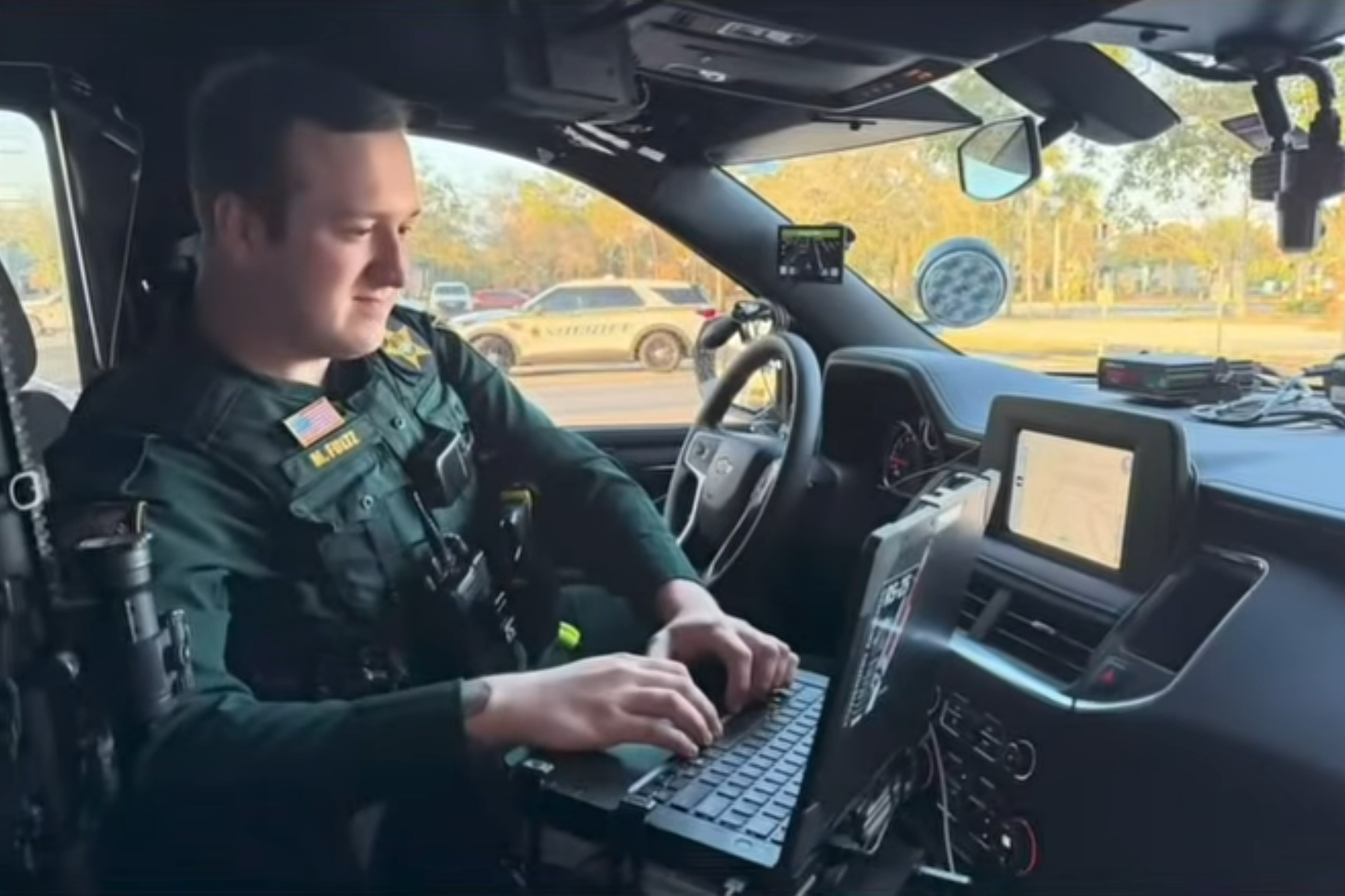
Brevard County deputy sheriff Michael Fultz resigned from the force after an internal investigation detailed extreme cases of alleged sexual misconduct, racism, and abuse, including Fultz’s use of Flock to stalk his ex-girlfriend. News6 in Florida first reported the story, and 404 Media has uncovered additional details about the former deputy’s use of Flock after obtaining a copy of the investigation. 

Hired in 2024, Brevard County named Fultz its Deputy of the Year in 2025. The day of the ceremony Fultz’s ex-girlfriend sent a letter of complaint to the sheriff’s office with a long list of complaints about his behavior. The letter was enough to prompt the sheriffs to investigate Fultz which is when they discovered he’d used Flock to stalk her.

The 43-page investigation found Fultz had posed for pictures as Adolf Hitler, freely used racial slurs in texts, masturbated on camera in his police vehicle, took pictures of his ex-girlfriend with his service weapon in her mouth during sex, repeatedly broke the law to generate clout online for his motorcycle themed Instagram and TikTok accounts, and used Flock to stalk his ex-girlfriend.

❌