Vue normale

  • ✇Euromaidan Press
  • New satellite imagery shows a caved-in roof at Russia’s only Soyuz rocket-assembly plant
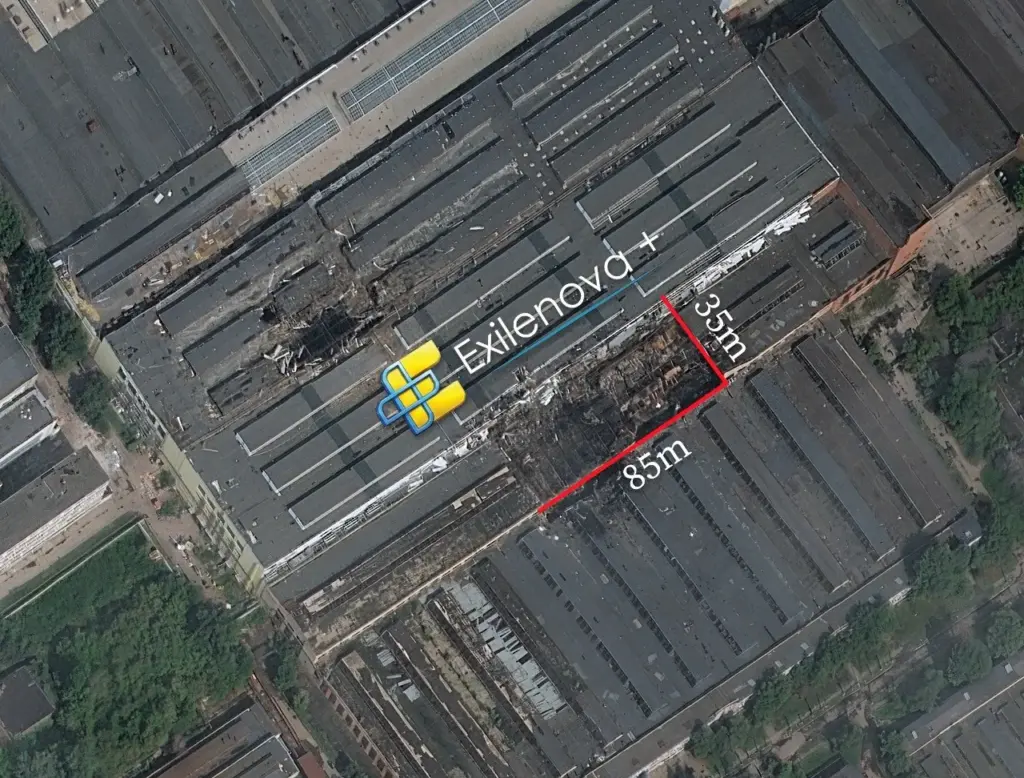
    Satellite imagery shows the damage Ukraine's Flamingo missiles inflicted on Russia's main rocket-assembly plant, the Ukrainian Telegram channel Exilenova+ reported on 18 August. The overhead photo show a collapsed roof section over a key hall at the Progress Rocket Space Center in Samara, a Russian city about 900 km from the war zone in Ukraine. It puts a measurable figure on damage Kyiv had until now only claimed. Ukraine has steadily carried its war into Russia's indu
     

New satellite imagery shows a caved-in roof at Russia’s only Soyuz rocket-assembly plant

18 août 2026 à 10:18

new overhead photos show caved-in roof russia's only soyuz rocket-assembly plant · post satellite 85-by-35-meter section collapsed progress rocket space center samara russia after ukrainian flamingo missile strike 15 2026

Satellite imagery shows the damage Ukraine's Flamingo missiles inflicted on Russia's main rocket-assembly plant, the Ukrainian Telegram channel Exilenova+ reported on 18 August. The overhead photo show a collapsed roof section over a key hall at the Progress Rocket Space Center in Samara, a Russian city about 900 km from the war zone in Ukraine. It puts a measurable figure on damage Kyiv had until now only claimed.

Ukraine has steadily carried its war into Russia's industrial rear, striking the plants that sustain Moscow's war machine hundreds of kilometers from any front in a sharply growing deep-strike campaign. Every confirmed hit on an irreplaceable Russian factory narrows Moscow's ability to rebuild what it loses, extending a reach Kyiv keeps pushing farther into Russia.

The satellite photo centers the damage on building 106A, Exilenova+ said. Crews there wire the rockets' control systems, cabling and instrument bays. The imagery shows two missile hits on that hall, the channel reported.

The collapsed roof section runs 85 meters long and 35 meters wide. Ukraine struck the plant on 15 August with its home-built Flamingo cruise missiles, which President Volodymyr Zelenskyy confirmed at the time.
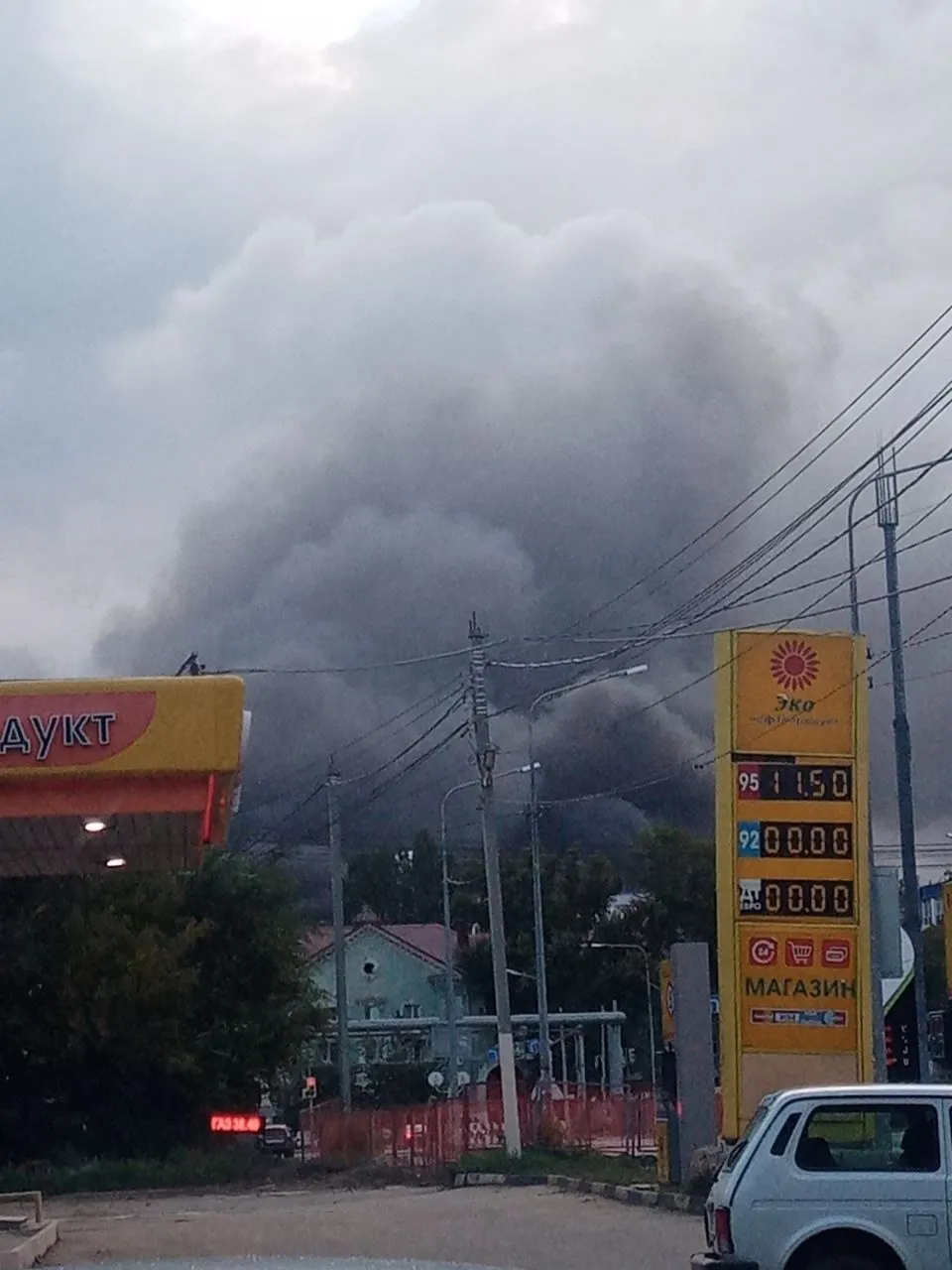
Thick gray smoke rises behind buildings, power lines, and a fuel station in Samara after a reported missile strike.
Explore further

Reported Flamingo strike hits Samara industrial area housing factory that builds rockets for Russia’s Starlink rival

A rocket hall with no domestic replacement

Progress is the only plant in Russia that serially assembles the Soyuz-2 rocket family, used to launch military reconnaissance and targeting satellites, Exilenova+ noted. 

The plant also lofts the Rassvet satellites built by Bureau 1440, Russia's answer to Starlink. The country has no full alternative to the Samara site, they added. Next to building 106A stands 106B, the complex's final-assembly hall.

Ukraine's Fire Point company builds the Flamingo, a long-range cruise missile. Its growing reach lets Kyiv strike defense and space plants far from the front. Overhead imagery has exposed earlier Flamingo damage deep inside Russia.
Reported Flamingo strike hits Samara industrial area housing factory that builds rockets for Russia’s Starlink rival

15 août 2026 à 06:01

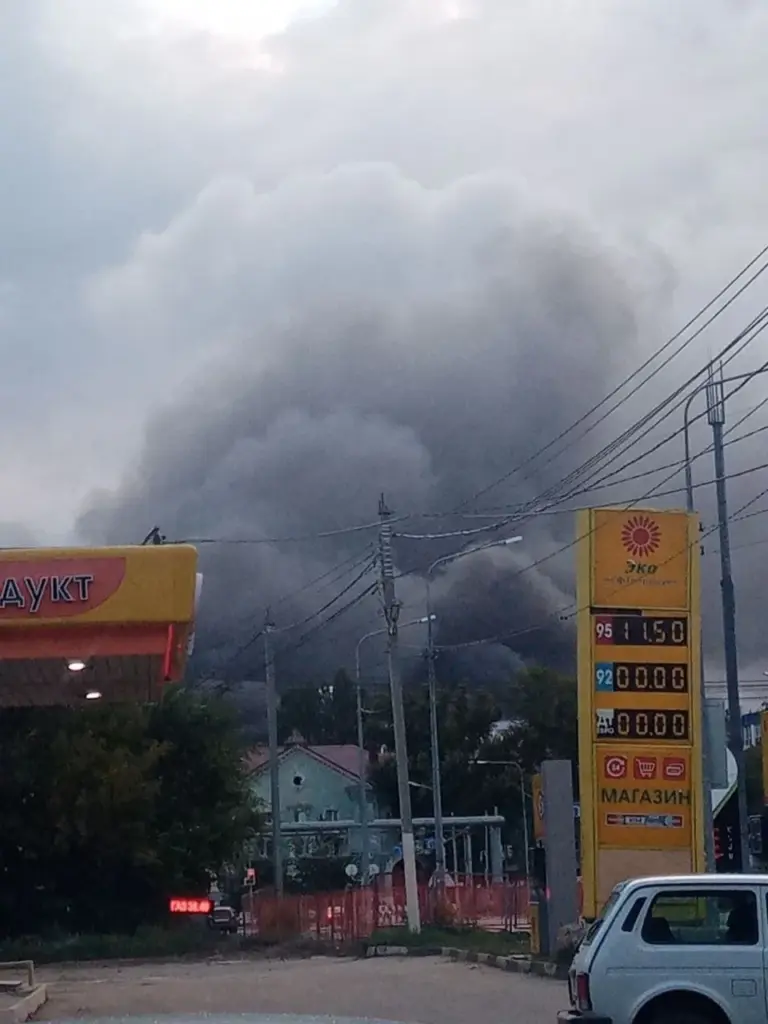
Thick gray smoke rises behind buildings, power lines, and a fuel station in Samara after a reported missile strike.

Samara Oblast Governor Vyacheslav Fedorishchev confirmed that a missile struck an unnamed industrial enterprise overnight on 15 August 2026. Andrii Kovalenko, head of Ukraine’s Center for Countering Disinformation, said the Progress Rocket Space Center was burning. He provided no damage details.

Progress would be a significant target because it builds Soyuz-2 rockets used to launch Rassvet, Russia’s planned alternative to Starlink. Its Soyuz-2.1b rockets carried Russia’s first serial-production Rassvet satellites into orbit this year. However, neither the governor’s statement nor available imagery establishes that Progress itself was hit.

Exilenova+ published early footage from Samara and reported that a Flamingo cruise missile had struck the city.

A mature Rassvet network could reduce Russia’s dependence on unauthorized Starlink terminals. For now, neither damage to Progress nor the reported use of a Flamingo missile has been independently confirmed.

❗Two Ukrainian FP-5 Flamingo cruise missiles reportedly struck Samara. The likely target was TsSKB-Progress. TsSKB-Progress develops, produces and operates medium-class launch vehicles and spacecraft for Earth observation and scientific purposes. The enterprise says more than… pic.twitter.com/VW09MVpRuU

— NOELREPORTS 🇪🇺 🇺🇦 (@NOELreports) August 15, 2026

Open-source analysts at Falcon Insight Map geolocated the smoke near Aviakor’s Building No. 106. Militarnyi said Aviakor and Progress sit a few hundred meters apart, and available images could not establish which enterprise was hit. The industrial area lies roughly 900 kilometers from Ukraine.

Kyiv pushes strikes deeper into Russia

Ukraine has increasingly attacked factories far behind the front to disrupt the supply chains sustaining Russian weapons production.

Speaking separately to Euromaidan Press, defense scholar Marc DeVore urged Ukraine to disrupt Russian missile production and launches. Retired US Lieutenant General Ben Hodges noted that Ukraine’s interceptor shortage means it is better to “kill the archer” than try to stop every arrow. 

In June 2026, Ukrainian cruise missiles hit a Voronezh semiconductor plant supplying components for the Pantsir-S1, Iskander-K, and Kh-101.

MISSILE ATTACK IN SAMARA, RUSSIA

INSANE FOOTAGE OF THE DIRECT HIT

🇺🇦🇷🇺‼‼‼‼‼‼‼‼‼‼‼‼‼ pic.twitter.com/8UVHSL5hid

— WW3 Monitor (@WW3_Monitor) August 15, 2026

A reported Flamingo strike in July also damaged the Avitek defense plant in Kirov, more than 1,200 kilometers from Ukraine.

The deeper strikes come as Ukraine’s military intelligence (HUR) says Russian factories are producing 110% to 120% of their monthly missile quotas. 

How the Samara plant supports Russia’s Starlink alternative

The Progress factory in Samara makes the Soyuz-2.1b rockets used to launch Rassvet satellites developed by Russia’s Bureau 1440. A second batch of 16 entered orbit in July, bringing the serial constellation to 32.

Rassvet’s coverage remains intermittent. However, Moscow plans to deploy 292 satellites by the end of 2027 and 924 by 2035. A Ukrainian defense adviser estimated that continuous service would require 200–250 satellites.

  • ✇Euromaidan Press
  • “Faster than originally planned”: Russia wants 292 Starlink-rival satellites by 2027
    Russia is deploying Rassvet satellites, its answer to Starlink, faster than originally planned, Vadym Skibitskyi, Deputy Chief of Ukraine's Defense Intelligence (GUR), told RBC-Ukraine. Moscow aims to expand the network to 292 satellites by the end of 2027 and 924 by 2035, he said. Existing satellites can already provide intermittent connections as they pass over Ukraine. Rassvet could give Moscow an independent alternative to Starlink, which Ukrainian forces rely on
     

“Faster than originally planned”: Russia wants 292 Starlink-rival satellites by 2027

11 août 2026 à 14:04

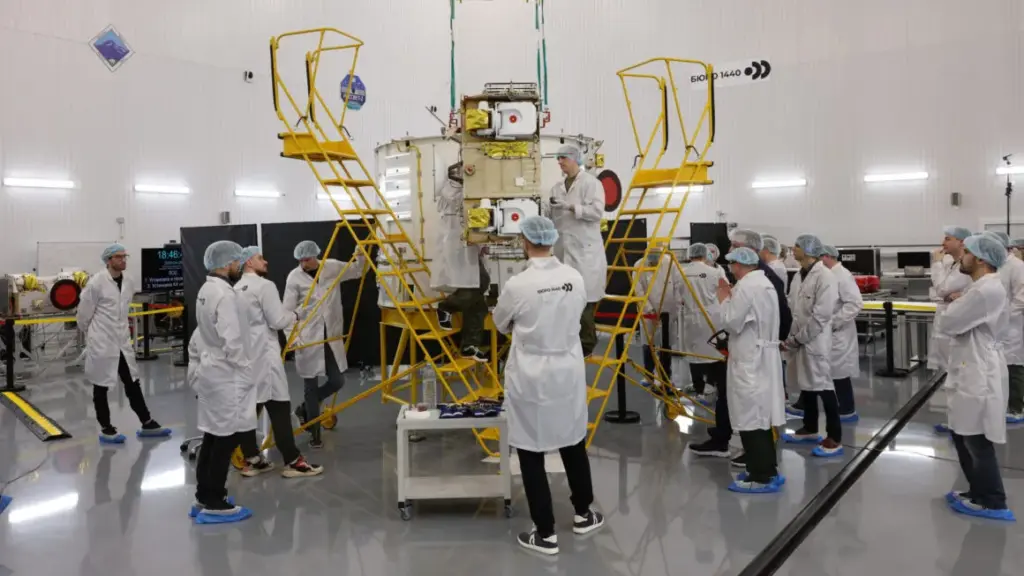
Employees of Russian company Bureau 1440 work on a Rassvet communications satellite.

Russia is deploying Rassvet satellites, its answer to Starlink, faster than originally planned, Vadym Skibitskyi, Deputy Chief of Ukraine's Defense Intelligence (GUR), told RBC-Ukraine.

Moscow aims to expand the network to 292 satellites by the end of 2027 and 924 by 2035, he said. Existing satellites can already provide intermittent connections as they pass over Ukraine.

Rassvet could give Moscow an independent alternative to Starlink, which Ukrainian forces rely on for battlefield communications and drone operations. Russian forces also used unauthorized Starlink terminals until Ukraine and SpaceX blocked access. Rassvet’s coverage remains intermittent but could eventually support strike drones, prompting Kyiv to consider countermeasures.

Why Russia wants its own Starlink

Ukrainian forces rely heavily on Starlink for frontline communications, drone operations, and command and control. 

Russian forces also relied heavily on unverified terminals until Ukraine and SpaceX blocked them on 5 February. The shutdown disrupted Russian communications and assaults across multiple parts of the front. On 10 August 2026, the SBU said it had dismantled two schemes that registered terminals in Ukraine for transfer to Russian forces.

Rassvet could reduce Russia’s dependence on SpaceX and illicit supply networks. Ukrainian experts have warned that a mature network could also relay data to Russian strike drones.

32 satellites up, 260 to go by 2027

Bureau 1440, the Russian satellite developer behind Rassvet, began testing the network with three satellites in 2023. Three larger prototypes followed in 2024 to test upgraded equipment, including satellite-based 5G technology and laser links between spacecraft. 

Russia launched its first batch of 16 serial Rassvet satellites on 23 March 2026 after manufacturing problems delayed the mission. A second group of 16 followed in July, Militarnyi reported.

In May 2026, Serhii “Flash” Beskrestnov, a defense technology adviser to the President of Ukraine, said each Rassvet satellite then in orbit passed over Ukraine roughly once daily, providing six to 10 minutes of connectivity. He estimated that continuous coverage would require 200–250 satellites. 

❌