
 Connexion
Russia’s state statisticians report the growth Putin demanded—economists doubt it will hold
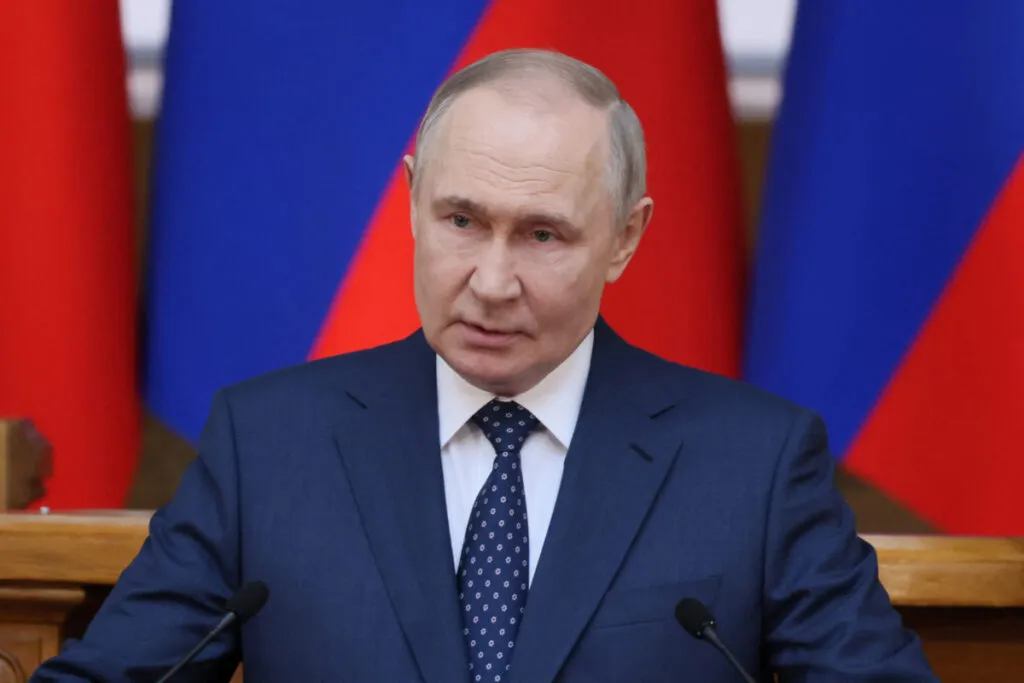
Russia's economy grew 1.3% in the second quarter of 2026, the state news agency TASS reported on 12 August, citing preliminary estimates from the state statistics agency Rosstat — a figure that, if accurate, would end a slump that had opened the year with the country's first quarterly contraction since 2023.
And it comes from a state agency months after Putin dressed down his economic team in April and demanded "concrete measures" to restore growth — the print then beat the government's own economists in exactly the direction he wanted.
The quarter may have brought a real if shallow rebound, or the state's statisticians may have produced the figure the president wanted. Either way it matters, because Russia's economy is what pays for its war, and its strength sets the ceiling on how long the Kremlin can keep fighting.
Barely growing all year
Even taken straight, the rebound is thinner than it looks. The first quarter had closed 0.2% down, and across the whole first half of the year output rose just 0.6%, half of last year's pace and close to seven times slower than the wartime boom of 2023 and 2024. The quarterly figure jumped. The underlying trend barely moved.
The weakness had been building for over a year. War spending drove the 2023–24 boom and overheated the economy; to curb the resulting inflation, the central bank raised its key rate to 21%, choking lending and investment. It has cut rates since, to 14% in July, but money is still tight and inflation is rising again as Ukrainian strikes push up fuel prices.
Growth the war paid for
As The Moscow Times set out, reviewing the data and the economists reading it, most of the quarter's growth rested on one-off factors: more working days than a year earlier, a temporary oil-revenue spike during the Iran war, and a budget that lifted spending 16%, a third of it on the army and weapons. The split underneath is the tell.
Military plants kept raising output; civilian industry kept shrinking, down 3.2% from a year earlier by the Center for Macroeconomic Analysis and Short-Term Forecasting (CMASF), a Russian forecasting institute, according to its estimate.
Rosstat also billed the quarter as its strongest in six, and said it had beaten the forecasts of both the economy ministry, which had projected 0.9%, and the central bank, which saw 0.8%.
Few expect it to last
Russia will "remain in a state of stagnation" for the foreseeable future, said Liam Peach of Capital Economics, citing high interest rates and the fuel crisis.
Ukraine's long-range drones are adding to the strain. Their strikes have cut Russian oil refining to its lowest level in more than two decades, draining fuel supply and pushing prices up at home, and forcing Moscow, an oil giant, to import gasoline from as far as Morocco.