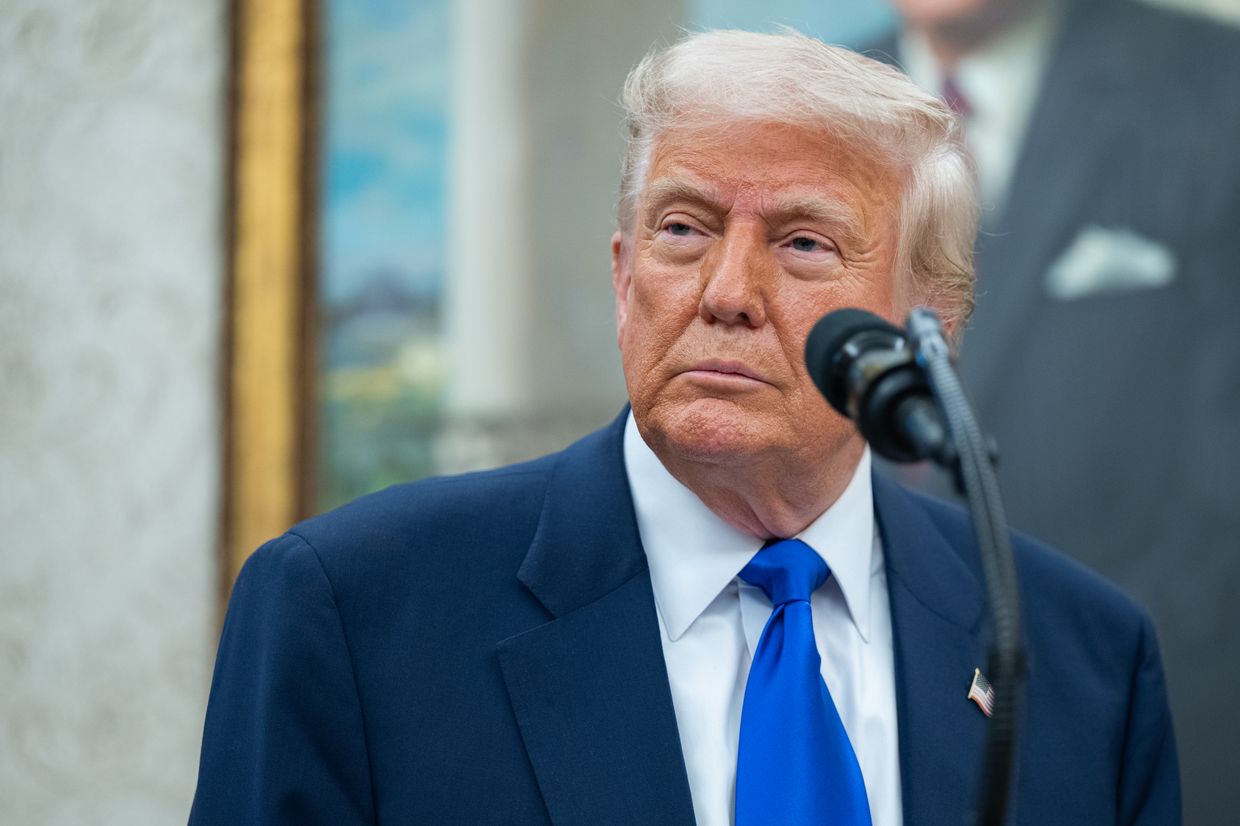
U.S. President Donald Trump is weighing direct military action against Iran, including potential strikes on its nuclear facilities, Axios reported on June 17, citing unnamed U.S. officials. Trump demanded Iran's "unconditional surrender" on Truth Social on June 17 and threatened Supreme Leader Ayatollah Ali Khamenei, boasting about U.S. air superiority.The U.S. president is expected to meet with his national security team later in the day to determine the scope of involvement in the escalating c
U.S. President Donald Trump is weighing direct military action against Iran, including potential strikes on its nuclear facilities, Axios reported on June 17, citing unnamed U.S. officials.
Trump demanded Iran's "unconditional surrender" on Truth Social on June 17 and threatened Supreme Leader Ayatollah Ali Khamenei, boasting about U.S. air superiority.
The U.S. president is expected to meet with his national security team later in the day to determine the scope of involvement in the escalating conflict between Israel and Iran, according to Axios.
The meeting comes after his early departure from the G7 Leaders' Summit on June 16, where he had been scheduled to meet with President Volodymyr Zelensky the following day.
"We now have complete and total control of the skies over Iran," Trump wrote on Truth Social.
He added that "we know exactly where the so-called 'Supreme Leader' is hiding."
"He is an easy target, but is safe there - We are not going to take him out (kill!), at least not for now," Trump continued. "But we don't want missiles shot at civilians, or American soldiers. Our patience is wearing thin."
The U.S. president is increasingly leaning toward using military force to target Iran's nuclear facilities, moving away from a diplomatic resolution, CNN reported, citing two unnamed U.S. officials.
Although Trump continues to be receptive to negotiations, CNN sources indicated that any agreement would require significant concessions from Tehran.
German Chancellor Friedrich Merz said on June 17 that U.S. involvement in Israel's military campaign is under serious consideration, and a decision could be "made in the near future," Politico reported.
Merz said the decision depends on whether the Iranian regime "is prepared to return" to the negotiating table.
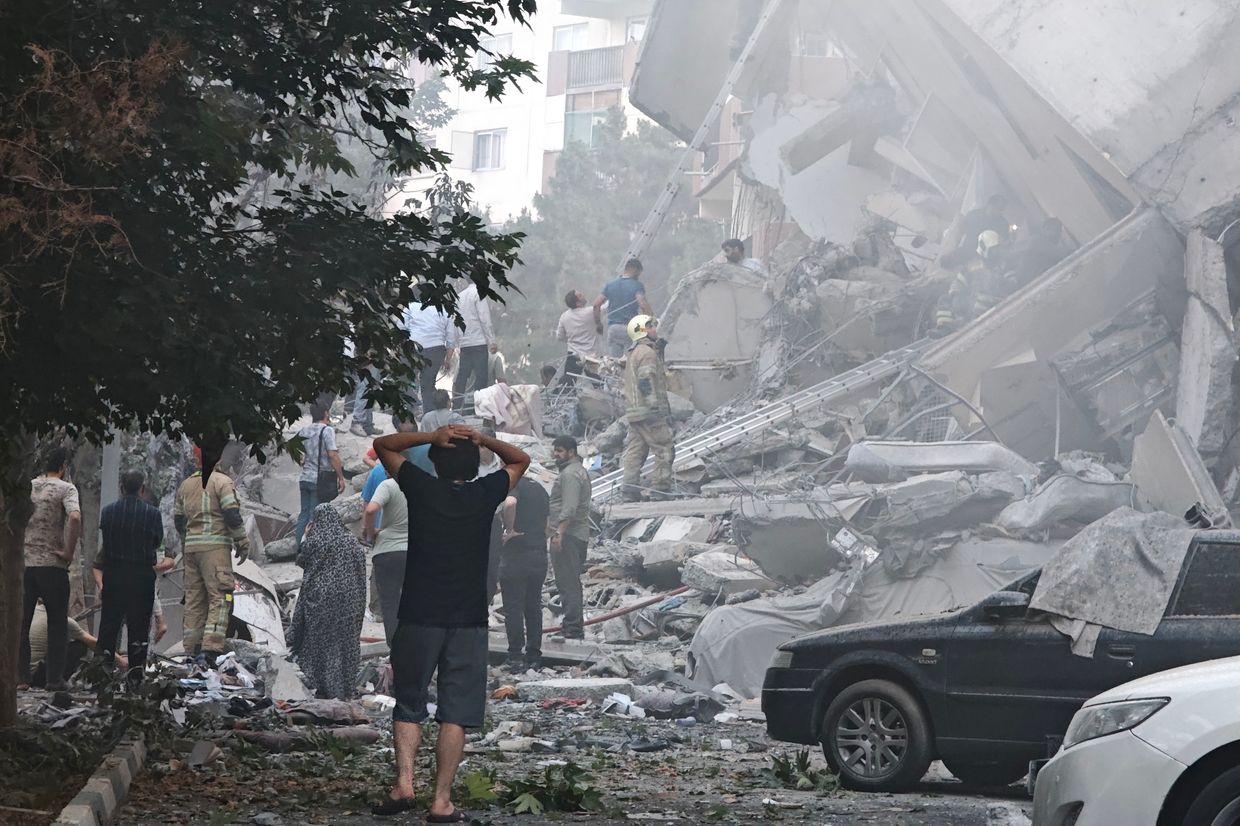
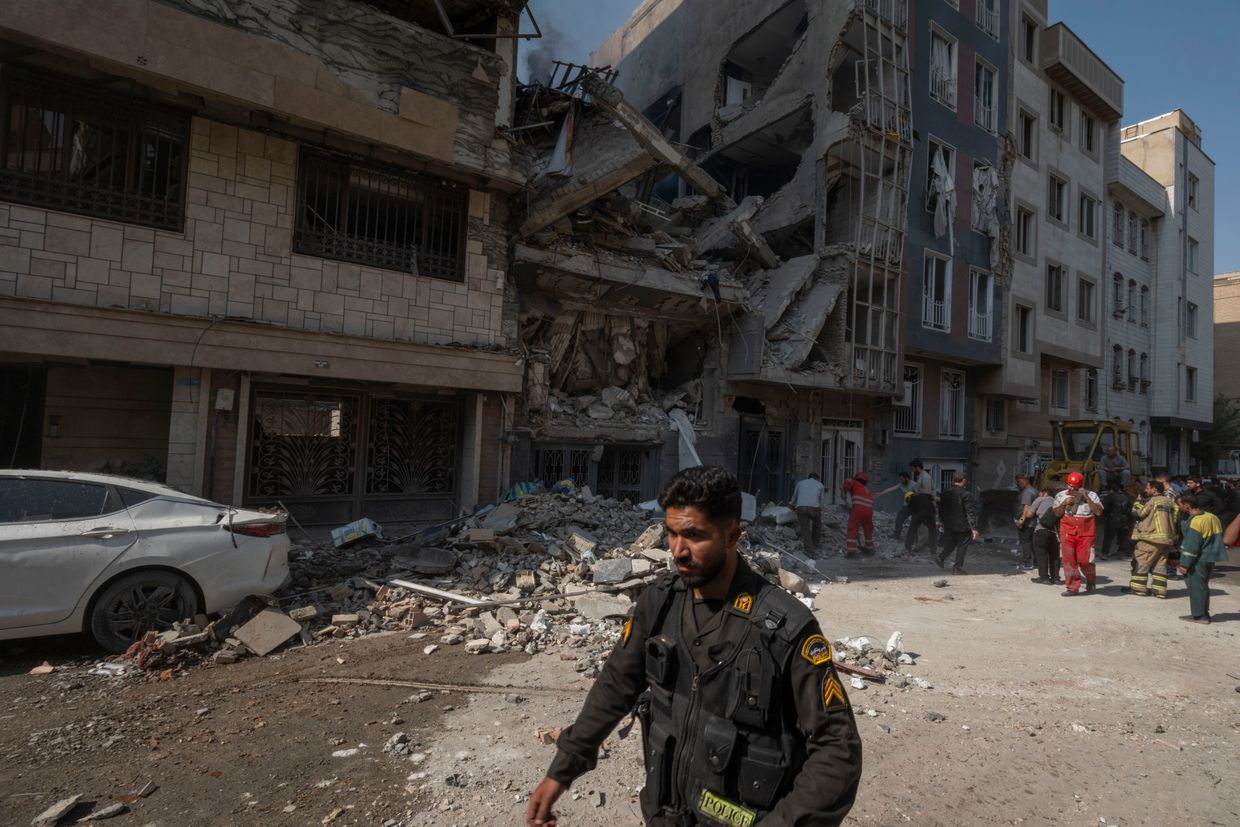
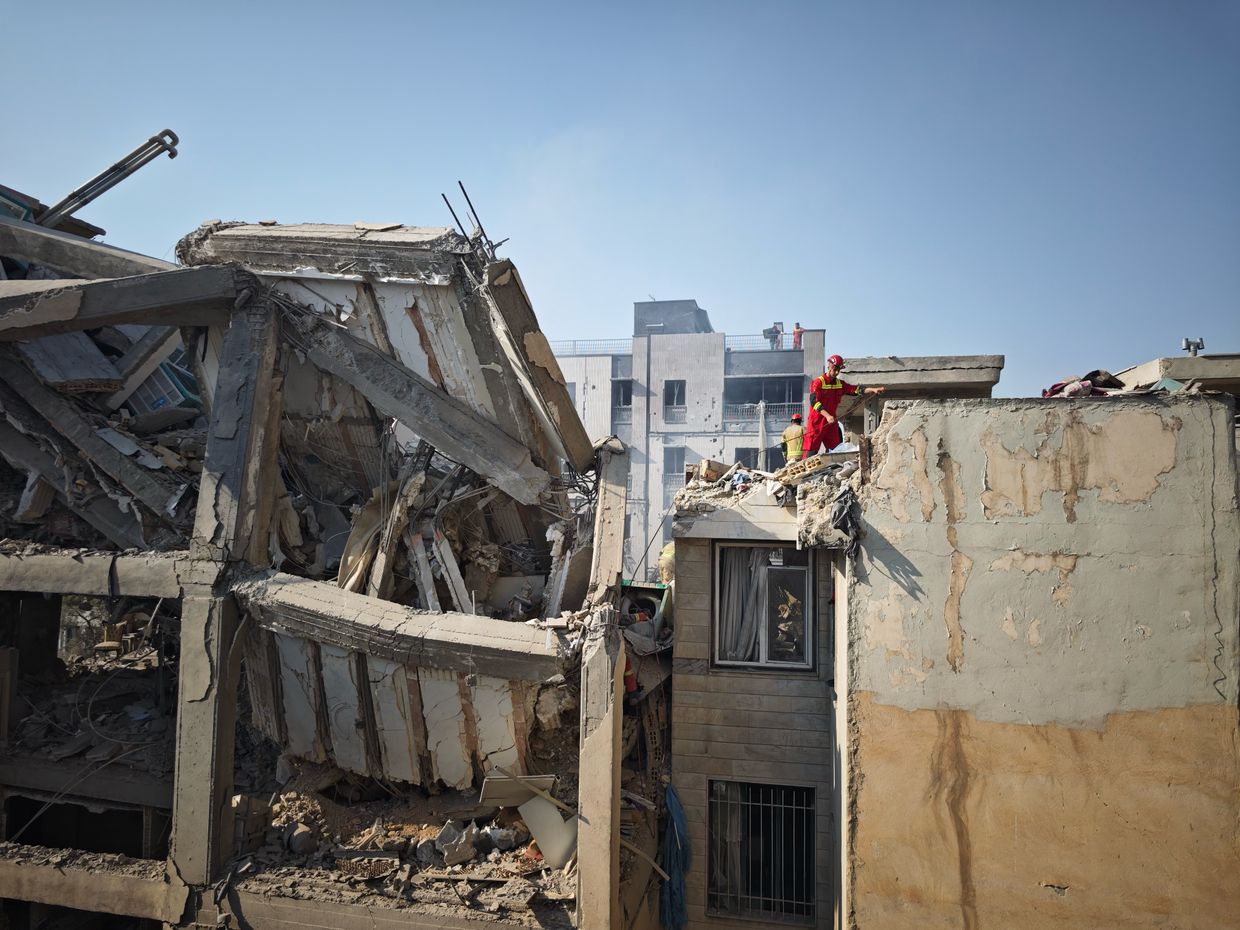
Israel launched a series of massive air strikes on Iran starting June 13, targeting nuclear facilities and senior military figures. The Israeli government claimed Tehran was nearing nuclear weapons capability.
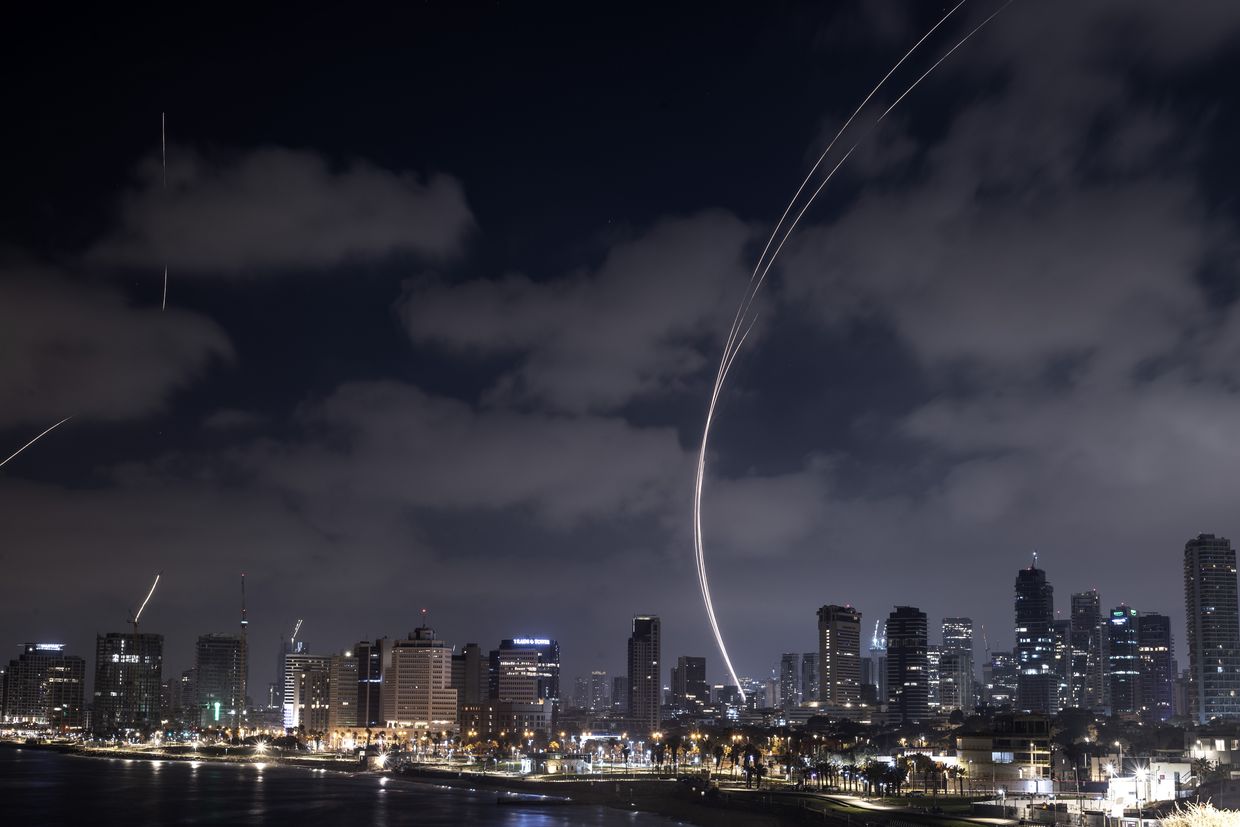
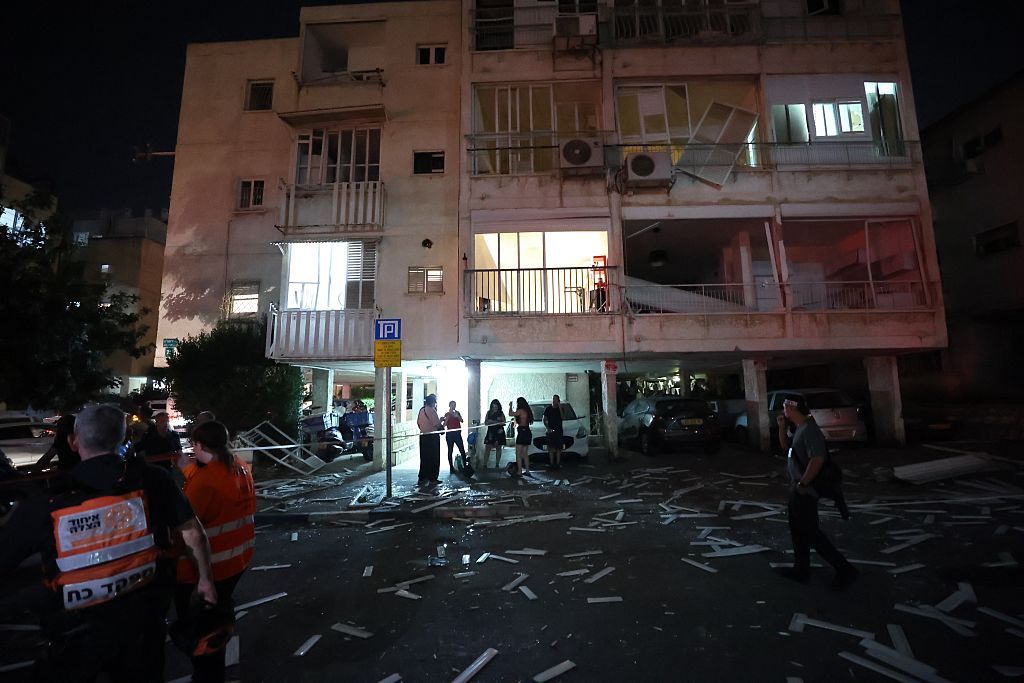
Iran responded with missile strikes on Tel Aviv and other Israeli cities, which resulted in civilian casualties, including five Ukrainian citizens on June 14.
Iranian officials claimed 224 people have been killed in Israeli attacks so far, most of them civilians. The figures have not been independently verified.
As tensions grow, Trump has floated the idea of Russian President Vladimir Putin serving as a mediator between Israel and Iran. Putin spoke with both Iranian President Masoud Pezeshkian and Israeli Prime Minister Benjamin Netanyahu on June 13, offering mediation and condemning Israeli strikes.
Israel has not publicly responded to Russia's proposal, but Kremlin spokesperson Dmitry Peskov said on June 17 that Tel Aviv appeared unwilling to accept Russian mediation.
French President Emmanuel Macron dismissed the suggestion entirely, saying on June 15 that Moscow, given its war in Ukraine and disregard for the UN Charter, "cannot be a mediator."
Tehran has become one of Russia's closest military partners during its war against Ukraine, supplying thousands of Shahed drones and ballistic missiles used in daily strikes on Ukrainian cities.
Israel, which has historically maintained careful relations with Russia and is home to a substantial Russian-speaking population, has not joined in Western sanctions against Moscow.
On June 13, Kyiv expressed its support for Israel, describing Iran as a "source of instability in the region and beyond," citing Tehran's extensive military cooperation with Russia.
Israel is reluctant to accept Russia's mediation in its war with Iran, Kremlin spokesperson Dmitry Peskov said on June 17, according to the Russian state news agency TASS. "At the moment, we see reluctance — at least on Israel’s part — to resort to mediation or pursue a peaceful resolution," Peskov claimed. Since June 13, Israel has repeatedly carried out massive air strikes against Iran, particularly the country's military leadership and nuclear facilities. The Israeli government justified the
Israel is reluctant to accept Russia's mediation in its war with Iran, Kremlin spokesperson Dmitry Peskov said on June 17, according to the Russian state news agency TASS.
"At the moment, we see reluctance — at least on Israel’s part — to resort to mediation or pursue a peaceful resolution," Peskov claimed.
Since June 13, Israel has repeatedly carried out massive air strikes against Iran, particularly the country's military leadership and nuclear facilities. The Israeli government justified the attacks by saying that Tehran was on the verge of creating a nuclear bomb.
Iran responded by attacking Israeli cities, including Tel Aviv, which resulted in civilian casualties, including five Ukrainian citizens on June 14.
U.S. President Donald Trump on June 15 said he was open to the idea of Russian President Vladimir Putin mediating between Iran and Israel.
"He is ready. He called me about it. We had a long talk about it. We talked about this more than his situation (war against Ukraine)," Trump said, according to ABC reporter Rachel Scott.
The Russian president held separate calls with Iranian President Masoud Pezeshkian and Israeli Prime Minister Benjamin Netanyahu on June 13.
During the call with Iran, Putin offered condolences for what the Kremlin labeled "numerous civilian casualties" and condemned Israel's actions as violations of the UN Charter. He later proposed that Russia could serve as a neutral mediator.
Israel has not commented publicly on the Kremlin's offer, but Peskov's statement implies Tel Aviv's rejection. France has also dismissed the idea, with President Emmanuel Macron saying on June 15 that Moscow "cannot be a mediator."
Russia's ties with Iran have deepened since the start of its full-scale invasion of Ukraine in 2022. Tehran has supplied Moscow with thousands of Shahed attack drones and ballistic missiles used in daily strikes against Ukrainian cities and infrastructure.
Israel, which has historically maintained cautious relations with Russia and is home to a significant Russian-speaking population, has not joined Western sanctions against Moscow.
As of June 16, Iran's Health Ministry claimed 224 people had been killed by Israeli strikes, with Tehran alleging that 90% of the casualties are civilians.
The figures have not been independently verified. Israel has not confirmed casualty numbers but maintains that the strikes were aimed at preventing an existential threat.
On June 13, Kyiv expressed support for Israel, describing Iran as a "source of instability in the region and beyond," citing Tehran's extensive military cooperation with Russia.
Ukraine's Foreign Ministry has urged its citizens to leave Israel and Iran "as soon as possible" due to a serious deterioration in regional security, the ministry said in a statement on June 17."In connection with a significant worsening of the security situation in the Middle East, the Ministry of Foreign Affairs strongly recommends that Ukrainian citizens leave the territory of the State of Israel and the Islamic Republic of Iran as soon as possible, until the situation stabilizes," the statem
Ukraine's Foreign Ministry has urged its citizens to leave Israel and Iran "as soon as possible" due to a serious deterioration in regional security, the ministry said in a statement on June 17.
"In connection with a significant worsening of the security situation in the Middle East, the Ministry of Foreign Affairs strongly recommends that Ukrainian citizens leave the territory of the State of Israel and the Islamic Republic of Iran as soon as possible, until the situation stabilizes," the statement read.
Ukrainians who remain in either country are advised to remain vigilant, monitor updates from local authorities, follow air raid alerts, adhere to safety protocols, and always carry valid identification documents.
The Ukrainian embassies in Israel and Iran are compiling evacuation lists and preparing potential evacuation plans. Information about available evacuation routes is being published on the official Facebook pages of the Ukrainian embassies in Israel and Iran.
The Israeli military launched a large-scale attack on Iran's nuclear and military infrastructure on June 13, which were followed by retaliatory ballistic missile strikes from Tehran. Israel has since struck key defense targets in Tehran, including the headquarters of Iran's Defense Ministry.
Iran's Islamic Revolutionary Guard Corps (IRGC) said it used a new method to breach Israel's air defenses during a missile attack early on June 16, that killed at least eight people, Reuters reports.According to the IRGC, Iranian missiles were guided in a way that caused Israeli interceptor missiles to target each other, confusing Israel's integrated defense system, which includes Iron Dome, David's Sling, and Arrow platforms. It did not provide any further details. Ballistic missiles are rocket
Iran's Islamic Revolutionary Guard Corps (IRGC) said it used a new method to breach Israel's air defenses during a missile attack early on June 16, that killed at least eight people, Reuters reports.
According to the IRGC, Iranian missiles were guided in a way that caused Israeli interceptor missiles to target each other, confusing Israel's integrated defense system, which includes Iron Dome, David's Sling, and Arrow platforms.
It did not provide any further details.
Ballistic missiles are rocket-powered and are launched high into the atmosphere before arcing back down onto their target.
They're only guided during the initial stages of launch, so they can be less accurate than cruise missiles, but have the advantage of reaching incredibly high speeds – sometimes more than 3,200 kilometers per hour – as they approach their targets.
Israel's Defense Forces (IDF) reported for the first time that its systems had an 80-90% success rate intercepting Iran's ballistic missiles, while roughly 5-10% penetrated the shield and struck populated areas, according to the Jerusalem Post.
The strike came three days after Israel launched a sweeping aerial campaign against Iranian nuclear and military facilities, killing several high-ranking officials, including IRGC aerospace commander Amir Ali Hajizadeh.
Kyiv has expressed support for Israel, describing Iran as a "source of instability in the region and beyond," citing Tehran's extensive military cooperation with Russia.
Since 2022, Iran has supplied Moscow with thousands of Shahed kamikaze drones and short-range ballistic missiles for use against Ukraine. Russia, for its part, has condemned the Israeli air strikes on Iran as "unprovoked aggression" and backed calls for restraint.
Israel is home to one of the largest Russian-speaking populations outside the former Soviet Union, with approximately 1 million people — or 15% of the total population — identifying as Russian-speaking. Israel has historically maintained relatively friendly ties with Russia.
U.S. President Donald Trump said on June 15 that he is considering Russian President Vladimir Putin as a possible mediator between Israel and Iran.
As of June 16, Iran's Health Ministry claims 224 people have been killed since the Israeli air campaign began on June 13 — 90% of them civilians, according to Tehran. Israel has not confirmed the civilian casualty figure, and independent verification remains difficult.
President Volodymyr Zelensky on June 15 condemned Russia's latest mass attack against Ukraine, calling the strikes on energy infrastructure "a spit in the face of everything the international community is trying to do to stop this war."Earlier in the day, Russia targeted the city of Kremenchuk in Poltava Oblast with a combined missile and drone attack, damaging energy and agricultural facilities. The strike involved nearly 200 drones and missiles, including both cruise and ballistic missiles. Th
President Volodymyr Zelensky on June 15 condemned Russia's latest mass attack against Ukraine, calling the strikes on energy infrastructure "a spit in the face of everything the international community is trying to do to stop this war."
Earlier in the day, Russia targeted the city of Kremenchuk in Poltava Oblast with a combined missile and drone attack, damaging energy and agricultural facilities. The strike involved nearly 200 drones and missiles, including both cruise and ballistic missiles. The attack came shortly after a phone call between U.S. President Donald Trump and Russian President Vladimir Putin.
In his nightly address, Zelensky said the attack on Kremenchuk was "deliberately and treacherously planned to target our civilian infrastructure" and that Russia intended to damage energy facilities.
"This is Russia's spit in the face of everything the international community is trying to do to stop this war," Zelensky said in his nightly address.
"It happened right after Putin's conversation with Trump. After the Americans asked us not to strike Russian energy facilities. At the same time as Putin tries to portray himself as a mediator for the Middle East ... The level of cynicism is staggering."
Following his call with Putin, Trump claimed he would be "open" to the Russian president acting as a mediator in the rapidly escalating conflict between Israel and Iran. Zelensky rejected the idea of Putin — who has waged war against Ukraine for over 10 years and has taken no steps towards a lasting ceasefire — playing the role of peacemaker.
Putin "is war itself," Zelensky said, urging the international community not to fall for "Russian manipulation and lies."
Zelensky also warned that Russia may be planning additional attacks on Ukraine's energy sector, including nuclear power infrastructure. According to the president, Ukrainian intelligence agencies have obtained evidence of Russia's threat and shared the information with the International Atomic Energy Agency (IAEA) and the Trump administration.
"Russia is planning further attacks on our energy sector — attacks that may be less visible to the world right now because all eyes are on the situation in the Middle East," he said.
Throughout the full-scale war, Russia has attempted to disrupt Ukraine's power grid through targeted attacks on energy infrastructure. After rejecting a U.S. proposal for a 30-day unconditional ceasefire in March, Moscow instead agreed to a month-long ceasefire on energy attacks.
Russia subsequently violated the partial ceasefire, which ended in in April. The Kremlin continues to refuse calls for an unconditional truce.
Editor's note: This is a developing story and is being updated.U.S. President Donald Trump and Russian President Vladimir Putin held a phone call on June 14 in which the two leaders discussed Ukraine and the conflict between Israel and Iran."Another telephone conversation between Russian President Vladimir... Putin and U.S. President Donald Trump," Russian state media reported, citing Putin's foreign policy aide Yuri Ushakov.The phone call took place on Trump's birthday, as the U.S. president ma
Editor's note: This is a developing story and is being updated.
U.S. President Donald Trump and Russian President Vladimir Putin held a phone call on June 14 in which the two leaders discussed Ukraine and the conflict between Israel and Iran.
"Another telephone conversation between Russian President Vladimir... Putin and U.S. President Donald Trump," Russian state media reported, citing Putin's foreign policy aide Yuri Ushakov.
The phone call took place on Trump's birthday, as the U.S. president marks the occasion with a military parade in Washington.
The two leaders discussed Russia's ongoing war against Ukraine and the situation in the Middle East as Israel and Iran continue to exchange aerial attacks.
"The exchange of opinions naturally focused on the dangerous escalation of the situation in the Middle East," Ushakov said.
The phone call between Trump and Putin lasted 50 minutes, he said.
"Russia expressed its readiness to continue negotiations with the Ukrainians, as agreed, after June 22. Donald Trump took note of this information and once again noted his interest in a speedy end to the Russian-Ukrainian conflict," Ushakov said, according to Russian state media.
Trump later confirmed he held a phone call with Putin, saying that the main topic the two leaders covered was Iran.
"President Putin called this morning to very nicely wish me a Happy Birthday, but to more importantly, talk about Iran, a country he knows very well," Trump said in a post to Truth social.
Trump noted that the phone call between the two leaders lasted about one hour, with Putin congratulating Trump on his birthday.
"Much less time was spent talking about Russia/Ukraine, but that will be for next week. He is doing the planned prisoner swaps — large numbers of prisoners are being exchanged, immediately, from both sides," Trump said.
The latest round of prisoner swaps occurred on June 14. Ukraine mainly returned severely wounded and seriously ill soldiers, many of whom were captured during the defense of Mariupol in 2022.
Russia has intensified drone and missile attacks on Ukraine following two rounds of largely inconclusive peace talks between Moscow and Kyiv in Turkey on May 16 and June 2.
Israel and Iran continued to exchange attacks on June 14, more than 24 hours after Israel launched its first strikes on Iran's nuclear sites and military leadership.
Trump has said that the U.S. military is on high alert and watching for any kind of retaliation, adding that the U.S. will respond to defend itself or Israel if Iran strikes back.
President Volodymyr Zelensky's office has confirmed plans for a high-stakes meeting with U.S. President Donald Trump at the upcoming G7 summit on June 17, according to the Kyiv Independent journalist who attended a closed-door briefing with Zelensky on June 13. "Both teams are working to ensure we meet," Zelensky said. The meeting would mark the third in-person encounter between the two leaders during Trump's second term in the White House. Their most recent meeting took place on April 26 at St
President Volodymyr Zelensky's office has confirmed plans for a high-stakes meeting with U.S. President Donald Trump at the upcoming G7 summit on June 17, according to the Kyiv Independent journalist who attended a closed-door briefing with Zelensky on June 13.
"Both teams are working to ensure we meet," Zelensky said.
The meeting would mark the third in-person encounter between the two leaders during Trump's second term in the White House. Their most recent meeting took place on April 26 at St. Peter's Basilica in the Vatican, where they spoke privately on the sidelines of Pope Francis' funeral. Both sides described the meeting as productive and constructive, though details remained sparse.
Earlier in February, Zelensky met Trump and Vice President JD Vance in the White House when the infamous tense Oval Office exchange erupted, with Trump criticizing Kyiv's perceived lack of gratitude for U.S. support
Zelensky said his priority is to discuss with Trump sanctions against Russia, peace talks, weapons purchase, and U.S.-Ukraine economic cooperation.
"The United States communicates with the EU on sanctions at the level of senators and congressmen. But I want to raise this issue personally with President Trump," Zelensky said.
"There are steps forward we can take — but we need the political will of the U.S. president, if he wants."
He added that Ukraine has long prepared a "strong" weapons package to purchase from Washington. "Only at the presidential level can we finalize it," Zelensky said ahead of the G7 summit.
Russian offensives in Sumy, Dnipropetrovsk oblasts
Zelensky said that heavy fighting is ongoing along Ukraine's northeastern border. Russian forces have concentrated around 53,000 troops in the Sumy sector, pushing into multiple settlements such as Andriivka, Kindrativka, and Oleksiivka.
According to the open-source monitoring group DeepState, Russian troops have been advancing along the border in Sumy Oblast, with the current front line lying just about 20 kilometers away from the regional capital of Sumy.
According to media reports, Russia exploited a thinning of Ukraine's front-line forces, which were later replaced by newer, under-equipped formations.
Zelensky said that Russia only pushed seven kilometers deep into Sumy, adding that the Russian army "has been stopped there."
Zelensky added that Ukrainian forces had successfully struck Russian positions in the neighboring Russian Kursk Oblast, near Tyotkino, to stall Russian momentum and split their offensive groups.
In Dnipropetrovsk Oblast, Zelensky confirmed that small Russian reconnaissance groups had briefly crossed into Ukrainian territory — likely for propaganda purposes. One six-man unit was reportedly eliminated one kilometer from the administrative border.
"For them (Russia), it's an important story, to take a photo, video," Zelensky said. "That's why they are launching small working groups to do just that."
Earlier, the Kremlin has claimed the operations in Dnipropetrovsk are part of an effort to create a so-called "buffer zone." Ukrainian officials have rejected these claims as disinformation.
When speaking about the recent escalation between Israel and Iran in the Middle East, Zelensky said that the subsequent regional tension had driven up oil prices, enhancing Russia's war financing through energy exports.
"This factor clearly doesn't help us," he said, adding that Ukraine will urge Washington to implement stricter price caps on Russian oil at the G7.
He further revealed that U.S. weapons previously allocated to Ukraine, including 20,000 air-defense interceptors used to counter Iranian-designed Shahed drones, were redirected to support Israel ahead of its recent strikes on Iran.
"That was a serious blow... We were counting on these missiles," Zelensky said.
Zelensky warned that Ukraine must not become "a bargaining chip" in larger geopolitical negotiations involving the U.S., Russia, and the Middle East. Russia and Iran have deepened their cooperation since 2022, with Iran supplying weapons and technology to boost Moscow's war machine.
"I was constantly afraid that we could become a bargaining chip, just one factor in the negotiations between the United States and the Russians. So, along with the situation with Iran, the situation with Ukraine was also a factor. They are really dependent on each other," he said.
Zelensky voiced concerns about a slowdown in Western diplomatic momentum, particularly around the "coalition of the willing" initiative led by France and the UK.
Earlier, media reported that the "coalition of the willing," aimed at offering post-ceasefire security guarantees to Ukraine, has faced delays due to the absence of U.S. commitment.
"Europe hasn't yet decided what to do if America steps back," he said. "Their energy depended on U.S. resolve. Without it, things slow down."
Still, Zelensky made clear that Ukraine would not accept any ultimatums from Moscow amid the uncertainty of Western support. He described the latest Russian ceasefire proposals as capitulation.
"They pretend to be ready for talks, but all they offer is an ultimatum," Zelensky said. "We won't go along with that. Not now, not ever."
Zelesnky also expressed optimism that the European Union's 18th sanctions package would pass later this month and said he would personally push for closer U.S.-EU coordination at the G7.
Zelensky confirmed that prisoner exchanges with Russia are continuing and that another round of direct peace talks with Moscow may take place soon after.
"We expect that they (prisoner swaps) can be completed on the 20th or 21st (of June)," he said.
Over the week, Ukraine and Russia held a series of exchanges under an agreement reached during peace talks in Istanbul. Most recently, on June 12, Ukraine brought home another group of severely wounded and seriously ill service members.
The June 12 operation followed a similar swap two days earlier, both conducted without immediate disclosure of the number of released prisoners.
The June exchanges are part of a phased prisoner swap arrangement agreed during the second round of direct talks between Ukrainian and Russian delegations in Istanbul on June 2. While no political breakthroughs emerged from the discussions, both sides agreed to continue exchanging POWs and repatriating the remains of fallen soldiers.
Editor's note: This is a breaking story and is being updated.Iran and Israel continued to exchange attacks on June 14, more than 24 hours after Israel launched its first strikes on Iran's nuclear sites and military leadership.According to recent reports, there are civilian casualties in both countries. In Israel, two people have been killed and more than 40 injured since Iran launched its initial wave of retaliatory strikes. In Iran, more than 70 people have been killed and 329 injured, accordin
Editor's note: This is a breaking story and is being updated.
Iran and Israel continued to exchange attacks on June 14, more than 24 hours after Israel launched its first strikes on Iran's nuclear sites and military leadership.
According to recent reports, there are civilian casualties in both countries. In Israel, two people have been killed and more than 40 injured since Iran launched its initial wave of retaliatory strikes.
In Iran, more than 70 people have been killed and 329 injured, according to the country's United Nations ambassador, Amir Saeid Iravani.
Responding to Israel's preemptive strikes on Iran overnight on June 13, Tehran responded with multiple waves of ballistic missiles, as well as an earlier barrage of drones.
The drone attack followed heavy air strikes launched by Israel against Iran, targeting the country's nuclear program and reportedly killing Hossein Salami, the commander-in-chief of the Islamic Revolutionary Guard Corps (IRGC), and other top officials.
Amid the escalation, Prime Minister Benjamin Netanyahu vowed to respond to the most recent attack.
"More is on the way. The (Iranian) regime does not know what hit them, or what will hit them. It has never been weaker," Netanyahu said in an address.
Clear, dramatic footage captures active missile intercepts over Tel Aviv, including impacts that struck locations downtown. pic.twitter.com/ISxbIQ6CU0
U.S. President Donald Trump said earlier in the day that the U.S. military is on high alert and watching for any kind of retaliation, adding that the U.S. will respond to defend itself or Israel if Iran strikes back.
Before the attacks, Trump emphasized that despite tensions, he is committed to avoiding conflict and prefers a diplomatic solution to Iran's nuclear aspirations. "I want to have an agreement with Iran," Trump said, referring to ongoing Iran-U.S. nuclear talks in Oman.
Iran insists its nuclear program is for peaceful purposes and has expressed willingness to accept limited restrictions in exchange for the lifting of sanctions.
Beyond the Middle East, Iran has emerged as a key ally of Russia in its war against Ukraine, supplying Moscow with drones used in attacks on Ukrainian cities. Iran's Islamic Revolutionary Guard Corps (IRGC) confirmed on June 13 that its aerospace commander, Amir Ali Hajizadeh, who led Iran's Shahed drone supply to Russia, was killed in the strike on June 13.
Just hours after Russia launched its own missile and drone assault on Ukraine, Russian President Vladimir Putin decried the "numerous civilian casualties" in Iran and condemned Israel's actions as violations of the UN Charter and international law.
Following the initial strikes by Israel, Kyiv expressed concern over the security situation in the Middle East after Israeli air strikes against Iran, but stressed that Tehran remains a "source of problems" in the region "and beyond."
Kyiv on June 13 expressed concern over the security situation in the Middle East after Israeli air strikes against Iran, but stressed that Tehran remains a "source of problems" in the region "and beyond."The statement follows what Israel called a "preemptive" strike against Iran overnight on June 13, targeting the country's nuclear program and reportedly killing top military officials."We would like to remind you that the Iranian regime supports Russia in its illegal war of aggression against Uk
Kyiv on June 13 expressed concern over the security situation in the Middle East after Israeli air strikes against Iran, but stressed that Tehran remains a "source of problems" in the region "and beyond."
The statement follows what Israel called a "preemptive" strike against Iran overnight on June 13, targeting the country's nuclear program and reportedly killing top military officials.
"We would like to remind you that the Iranian regime supports Russia in its illegal war of aggression against Ukraine and provides Moscow with weapons to kill Ukrainians," the Ukrainian Foreign Ministry said in a statement.
Along with North Korea, Iran has been a key ally to Russia during its full-scale war against Ukraine, providing thousands of Shahed strike drones and short-range ballistic missiles.
Ukraine has called upon the international community "to take joint and decisive action" and deter a "group of aggressive regimes — Russia, Iran, and North Korea."
Kyiv nevertheless also warned that further hostilities could destabilize the region with "negative consequences for international security and global financial stability, especially in oil markets."
Israeli strikes were quickly followed by a surge in oil prices, Russia's key export commodity, with Brent and Nymex crude prices jumping by more than 10%.
"We are convinced that restoring peace and stability in the Middle East will serve the interests not only of the region but also of the entire international community," the Ukrainian Foreign Ministry said.
Iran has pledged a response to Israeli air strikes and accused the United States of "also being responsible for the dangerous consequences of this reckless escalation." The Trump administration has acknowledged it knew about the operation in advance but denied any involvement.
According to the Israel Defense Forces (IDF), Tehran has already launched over 100 drones against Israel in response.
The attacks took place amid escalating tensions in the Middle East and U.S. President Donald Trump's push to find a diplomatic solution to Iran's nuclear aspirations. A round of indirect U.S.-Iranian negotiations in Oman was scheduled for June 15.
Russia has condemned Israel's attacks as "unprovoked aggression" and a violation of the U.N. Charter.
Editor's note: This story was updated to include a comment from Ukrainian Foreign Ministry spokesperson Heorhii Tykhyi.Russia's Foreign Ministry expressed "extreme concern" on June 13 over Israel's recent strike on Iran, calling it a dangerous escalation that violated the United Nations Charter and international law.Moscow, which currently wages war against Ukraine, the largest conflict on the European continent since World War II, condemned Israel's attack as an "unprovoked aggression."Earlier
Editor's note: This story was updated to include a comment from Ukrainian Foreign Ministry spokesperson Heorhii Tykhyi.
Russia's Foreign Ministry expressed "extreme concern" on June 13 over Israel's recent strike on Iran, calling it a dangerous escalation that violated the United Nations Charter and international law.
Moscow, which currently wages war against Ukraine, the largest conflict on the European continent since World War II, condemned Israel's attack as an "unprovoked aggression."
Earlier on June 13, Israeli Prime Minister Benjamin Netanyahu said that Israeli forces had launched "Operation Rising Lion," a preemptive strike targeting Iran's nuclear program. In a televised address, Netanyahu claimed Israeli forces struck Iran's main nuclear enrichment site in Natanz and targeted key nuclear scientists.
In a statement, the Russian Foreign Ministry denounced Israel's overnight attacks as "unprovoked military strikes" targeting a sovereign U.N. member's nuclear facilities. The ministry said the international community "cannot remain indifferent" to such actions that undermine global and regional stability.
The statement called it "cynical" that the strikes occurred during a session of the International Atomic Energy Agency and just before another round of indirect Iran–U.S. talks in Oman, scheduled for June 15.
Moscow said this timing undermined diplomatic efforts aimed at reducing confrontations over Tehran's nuclear program.
The ministry accused Western countries of fueling "anti-Iranian hysteria" in international forums and warned that military solutions cannot resolve the Iranian nuclear issue. It urged all parties to show restraint to avoid a full-scale regional war.
Ukrainian Foreign Ministry spokesperson Heorhii Tykhyi responded to Russia's statement, saying it was "one of those awkward moments when the Russian Foreign Ministry comments on the Middle East but forgets to look at the mirror."
Russian condemnation comes as Moscow and Tehran continue to strengthen their ties. Iran's parliament ratified on May 21 a 20‑year strategic partnership agreement with Russia, deepening military and economic cooperation.
While the pact does not include mutual defense, it outlines joint military exercises, energy cooperation, and interbank links designed to circumvent Western sanctions.
Iran has also supplied Russia with thousands of Shahed drones and ballistic missiles used against Ukraine throughout Moscow's war.
Previously, Moscow claimed its willingness to remove excess nuclear material from Iran, converting it into reactor fuel in support of U.S.–Iran nuclear talks. Kremlin spokesperson Dmitry Peskov said Russia is prepared to assist if both Iran and the U.S. find its help valuable.
Global oil prices soared on June 13 after Israel launched a strike on Iran, triggering fears of a broader conflict in the energy-rich Middle East that could disrupt global supplies, the BBC reported. The spike threatens to undermine Western efforts to choke off a vital revenue stream for Russia, which relies heavily on oil profits to sustain its war in Ukraine.According to the BBC, Brent and Nymex crude prices jumped by more than 10% following the Israeli attack, reaching their highest levels s
Global oil prices soared on June 13 after Israel launched a strike on Iran, triggering fears of a broader conflict in the energy-rich Middle East that could disrupt global supplies, the BBC reported.
The spike threatens to undermine Western efforts to choke off a vital revenue stream for Russia, which relies heavily on oil profits to sustain its war in Ukraine.
According to the BBC, Brent and Nymex crude prices jumped by more than 10% following the Israeli attack, reaching their highest levels since January. Prices later stabilized but remained about 7.5% higher, with Brent at $74.50 a barrel and Nymex at $73.20.
The price surge comes at a crucial time for Ukraine and its Western allies, who are intensifying efforts to minimize the Kremlin's oil revenues — the backbone of Russia's wartime economy.
President Volodymyr Zelensky urged the European Union on June 11 to impose tougher sanctions on Russia, including a more aggressive price cap on oil exports.
"A ceiling of $45 per barrel of oil is better than $60, that's clear," Zelensky said at the Ukraine-Southeast Europe Summit in Odesa. "But real peace will come with a ceiling of $30. That's the level that will really change the mindset in Moscow."
The EU's current $60 per barrel cap, introduced in December 2022, prohibits Western companies from shipping, insuring, or servicing Russian oil sold above the threshold. While this measure has curtailed some of Russia's profits, the Kremlin continues to earn significant revenue, especially when market prices rise.
European Commission President Ursula von der Leyen said on June 10 that the EU is considering lowering the cap to $45, a move that will be discussed at the G7 summit in Canada between June 15 and 17. According to Reuters, most G7 countries, excluding the U.S. and Japan, are prepared to proceed with the reduction regardless of Washington’s stance.
Israeli Prime Minister Benjamin Netanyahu said early on June 13 that Israeli forces had launched "Operation Rising Lion," a preemptive strike targeting Iran's nuclear program. In a televised address, Netanyahu claimed Israeli forces struck Iran's main nuclear enrichment site in Natanz and targeted key nuclear scientists.
Editor's note: The article was updated with Trump's statement on Truth Social.U.S. President Donald Trump said on June 13 that he was aware of Israel's plans to conduct strikes on Iran in advance and that Washington is watching for any signs of retaliation by Tehran, Fox News reported."Iran cannot have a nuclear bomb and we are hoping to get back to the negotiating table. We will see. There are several people in leadership that will not be coming back," Trump told Fox News' anchor Bret Baier.The
Editor's note: The article was updated with Trump's statement on Truth Social.
U.S. President Donald Trump said on June 13 that he was aware of Israel's plans to conduct strikes on Iran in advance and that Washington is watching for any signs of retaliation by Tehran, Fox News reported.
"Iran cannot have a nuclear bomb and we are hoping to get back to the negotiating table. We will see. There are several people in leadership that will not be coming back," Trump told Fox News' anchor Bret Baier.
The comments come after Israel launched heavy air strikes against 100 sites in Iran, targeting the country's nuclear program and reportedly killing Hossein Salami, the commander-in-chief of the Islamic Revolutionary Guard Corps (IRGC), and other top officials.
In a statement released by the State Department, U.S. Secretary of State Marco Rubio said that the United States was not involved in the strikes on Iran, calling it a "unilateral action."
The U.S. has reached out to at least one Middle Eastern ally to say that the strike is going to happen, but that Washington was not involved, Fox News reported.
Trump said the U.S. military is on high alert and watching for any kind of retaliation, adding that the U.S. will respond to defend itself or Israel if Iran strikes back.
The Israel Defense Forces (IDF) said that Tehran had already launched over 100 drones against Israel, which are expected to reach their targets within the next few hours.
On the Truth Social media platform, Trump said he gave Iran a "chance after chance to make a deal" and had warned Tehran that "it would be much worse than anything they know" if there is no agreement.
"Certain Iranian hardliners spoke bravely, but they didn't know what was about to happen. They are all dead now, and it will only get worse!" Trump wrote.
The U.S. president added that there is still time to stop the slaughter, calling upon Iran to make a deal "before there is nothing left."
Before the attacks, Trump emphasized that despite tensions, he is committed to avoiding conflict and prefers a diplomatic solution to Iran's nuclear aspirations. "I want to have an agreement with Iran," Trump said, referring to ongoing Iran-U.S. nuclear talks in Oman.
Iran insists its nuclear program is for peaceful purposes and has expressed willingness to accept limited restrictions in exchange for the lifting of sanctions.
In turn, the International Atomic Energy Agency released a report highlighting Iran’s failure to comply with its obligations to fully disclose activities at its nuclear facilities.
Beyond the Middle East, Iran has emerged as a key ally of Russia in its war against Ukraine, supplying Moscow with drones used in attacks on Ukrainian cities.
Iran launched over 100 drones against Israel, all of which were intercepted outside of Israeli airspace, Ynet News reported on June 13, citing Israeli military spokesperson Effie Defrin.The drone attack follows heavy air strikes launched by Israel against Iran, targeting the country's nuclear program and reportedly killing Hossein Salami, the commander-in-chief of the Islamic Revolutionary Guard Corps (IRGC), and other top officials.Israel said it had deployed some 200 aircraft in its "preemptiv
Iran launched over 100 drones against Israel, all of which were intercepted outside of Israeli airspace, Ynet News reported on June 13, citing Israeli military spokesperson Effie Defrin.
The drone attack follows heavy air strikes launched by Israel against Iran, targeting the country's nuclear program and reportedly killing Hossein Salami, the commander-in-chief of the Islamic Revolutionary Guard Corps (IRGC), and other top officials.
Israel said it had deployed some 200 aircraft in its "preemptive" attack overnight on June 13, dropping 330 munitions over 100 sites.
The full extent of the consequences was not immediately clear. Multiple explosions were reported in Tehran as videos posted on social media purportedly show fire burning in multiple locations of the Iranian capital.
Open-source intelligence researchers have shared alleged footage of Shahed kamikaze drones flying in the direction of Israel. Tehran has provided thousands of these drones to Russia for use against Ukrainian cities.
Iranian Shahed-136 attack drone headed westbound over Iraq, towards Israel.
Iran reportedly launched more than 100 attack drones this morning, as part of its opening wave of strikes on Israel. pic.twitter.com/0SU3aLR9ZX
Iran's Supreme Leader Ali Khamenei vowed to enact "severe punishment" in response to the attack, accusing the United States for "also (being) responsible for the dangerous consequences of this reckless escalation."
In a statement released by the State Department, U.S. Secretary of State Marco Rubio said that the United States was not involved in the strikes on Iran, calling it a "unilateral action."
The U.S. Embassy in Israel instructed its employees and family members to take shelter until further notice.
Jordan has announced it had closed its airspace "as a precaution against any risks resulting from the regional escalation."
The attacks are taking place amid escalating tensions in the Middle East. In April 2024, Iran launched 170 drones and 150 missiles against Israel, with an overwhelming majority being shot down outside of Israel with the assistance of Western partners.
The attack was a response to Israel’s strike on an Iranian consulate in Syria on April 1 as part of the broader Israel-Hamas war.

 Connexion

 The Kyiv IndependentDmytro Basmat