Russia's crude oil production in June fell below its agreed-upon OPEC+ target, according to individuals familiar with the data interviwed by Bloomberg. Russian producers reportedly pumped 9.022 million barrels per day last month, a figure 28,000 barrels per day below the required level, including compensation cuts. This marks the largest gap between Russia's output and its monthly quota this year, based on Bloomberg's calculations.Historically, Russia, which co-leads the OPEC+ alliance with Saud
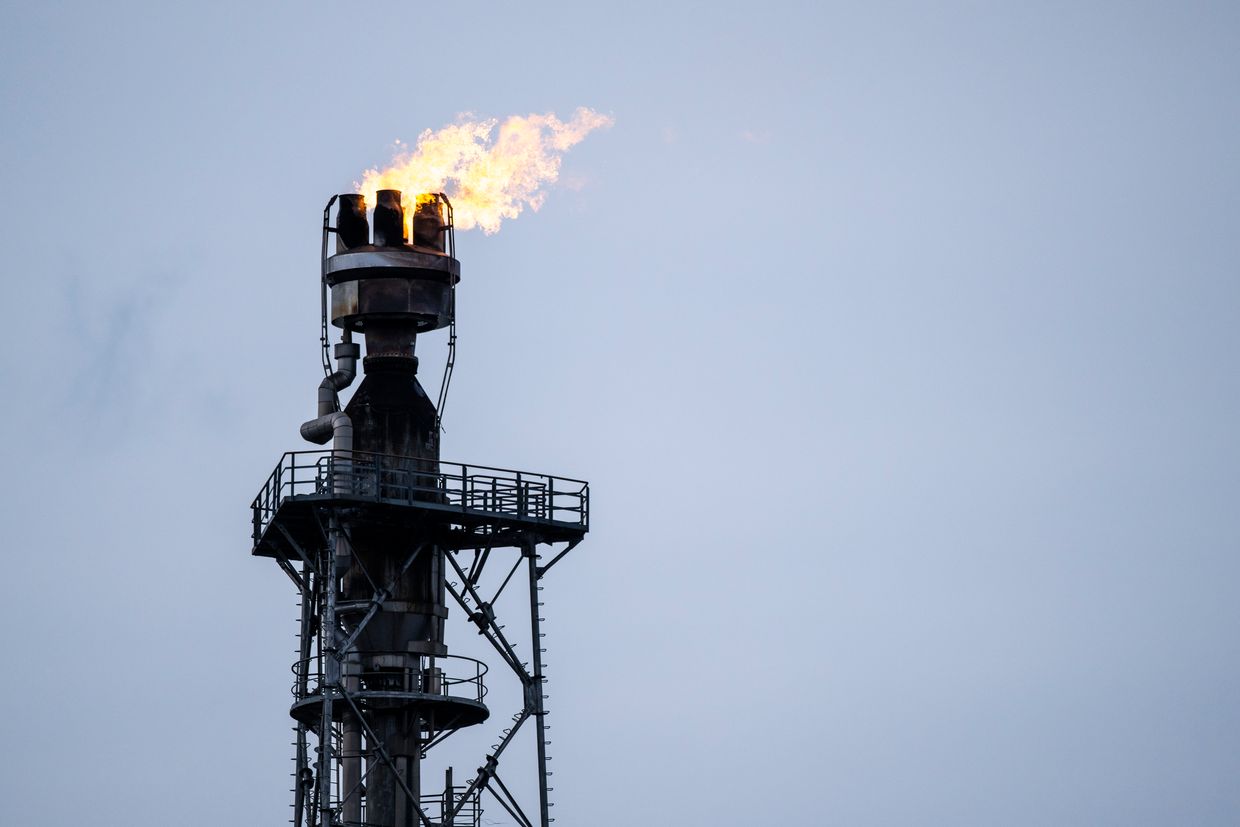
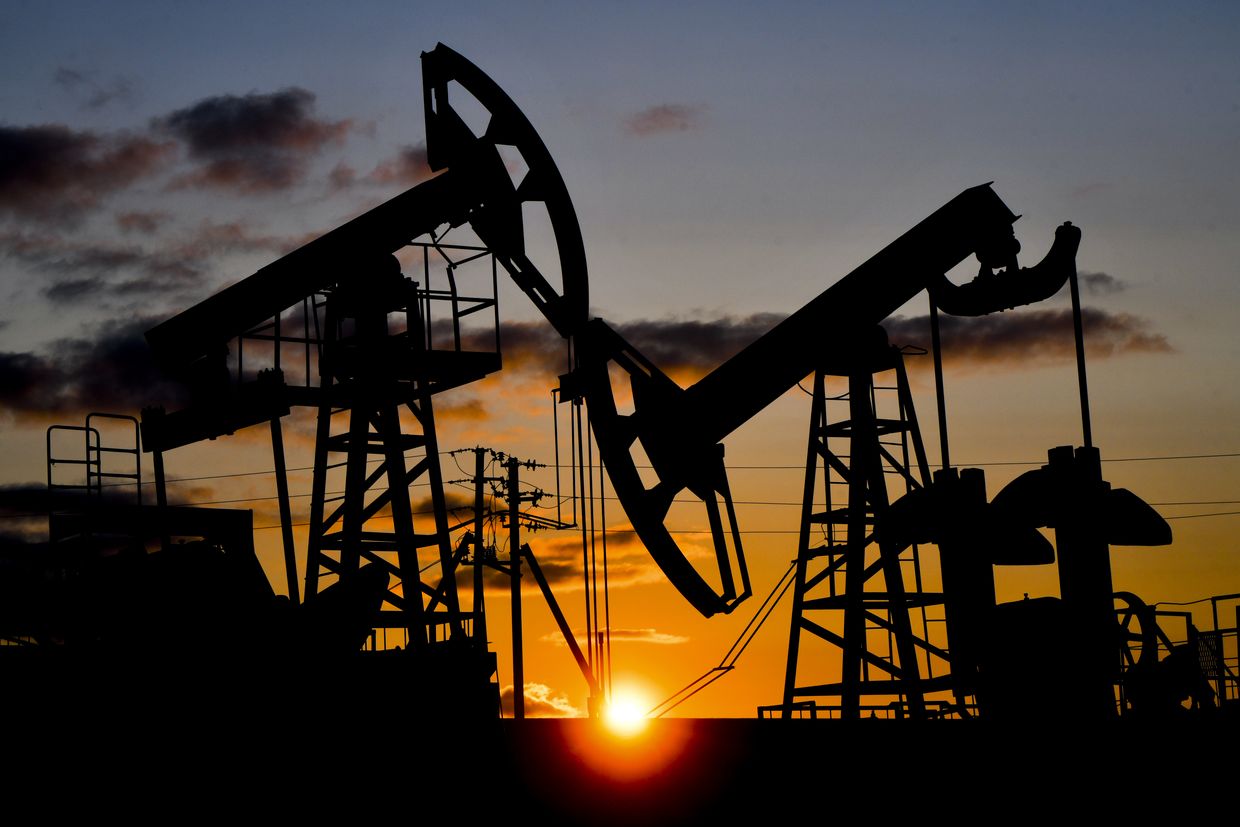
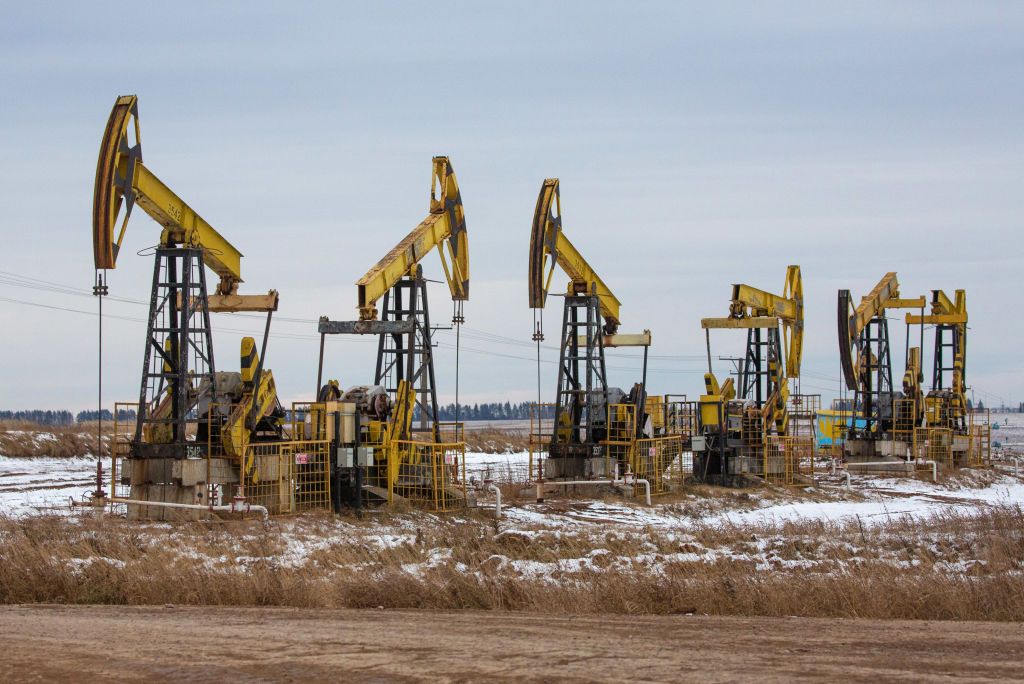
Russia's crude oil production in June fell below its agreed-upon OPEC+ target, according to individuals familiar with the data interviwed by Bloomberg.
Russian producers reportedly pumped 9.022 million barrels per day last month, a figure 28,000 barrels per day below the required level, including compensation cuts. This marks the largest gap between Russia's output and its monthly quota this year, based on Bloomberg's calculations.
Historically, Russia, which co-leads the OPEC+ alliance with Saudi Arabia, has faced criticism for poor compliance with production quotas. However, the nation has shown improved adherence for most of 2025, often pumping below its required levels, according to analysis of Russian data. This increased focus on production discipline follows earlier critiques from Riyadh.
Under the terms of the OPEC+ agreement, Russia's daily production quota for June had increased by 78,000 barrels to 9.161 million barrels. However, Moscow had also committed to a 111,000 barrel-a-day compensation cut for the month, bringing its actual output target to 9.050 million barrels per day.
On July 5, eight OPEC+ nations collectively agreed to raise production by 548,000 barrels per day in August, aiming to capitalize on strong summer consumption. Analysts suggest these additional barrels may be quickly absorbed but could contribute to a crude surplus later in the year.
Independent verification of Russia's oil output data has become challenging since Moscow classified official figures after Western sanctions targeting the nation's energy industry following its full-scale invasion of Ukraine. Consequently, market watchers now largely rely on indicators such as seaborne exports and domestic refinery runs to track trends in Russia's oil production.
Russia's economy, which defied initial sanctions and saw growth propelled by massive military spending and robust oil exports, is now showing significant signs of a downturn. Recent economic indicators are flashing red, with manufacturing activity declining, consumer spending tightening, and inflation remaining stubbornly high, straining the national budget, the Wall Street Journal (WSJ) reported on July 4. Russian officials are openly acknowledging the risks of a recession. Economy Minister Max
Russia's economy, which defied initial sanctions and saw growth propelled by massive military spending and robust oil exports, is now showing significant signs of a downturn.
Recent economic indicators are flashing red, with manufacturing activity declining, consumer spending tightening, and inflation remaining stubbornly high, straining the national budget, the Wall Street Journal (WSJ) reported on July 4.
Russian officials are openly acknowledging the risks of a recession. Economy Minister Maxim Reshetnikov warned last month that Russia was on the "verge of a recession," while Finance Minister Anton Siluanov described the situation as a "perfect storm." Companies, from agricultural machinery producers to furniture makers, are reducing output. The central bank announced on July 3 it would debate cutting its benchmark interest rate later this month, following a reduction in June.
While analysts suggest this economic sputtering is unlikely to immediately alter President Vladimir Putin’s war objectives—as his focus on "neutering Ukraine" overrides broader economic concerns—it exposes the limits of his war economy.
The slowdown indicates that Western sanctions, though not a knockout blow, are increasingly taking a toll. If sanctions intensify further or global oil prices fall, Russia’s economy could face more severe instability. This downturn undermines Putin's strategic bet that Russia can financially outlast Ukraine and its Western allies, suggesting Moscow may struggle to finance the war indefinitely.
Experts warn that Russia's economic growth model, overly reliant on military spending, is unsustainable and necessitates a contraction of civilian economic capacities to free up workers for the war machine, which is not a viable long-term strategy. Putin recently dismissed suggestions that the war is stifling the economy, echoing Mark Twain by stating reports of its death "are greatly exaggerated." However, he also cautioned that a recession or stagflation "should not be allowed under any circumstances."
After a brief recession in 2022, military spending, which accounts for over 6% of gross domestic product this year (the highest since Soviet times) and approximately 40% of total government spending, had propped up Russia’s economy and blunted the impact of Western sanctions. Russia’s ability to reroute oil exports to China and Beijing’s support with electronics and machinery provided additional economic stimulus. This created an economic paradox: the most sanctioned major economy was, for a period, growing faster than many advanced economies.
However, this military spending "sugar rush" fueled runaway inflation, compelling the central bank to raise interest rates to a record 21% to try and tame it. Higher interest rates increased borrowing costs for businesses, curbing investment, expansion plans, and squeezing profits. The economic comedown has already begun.
Official data shows Russian GDP growth slowed to 1.4% in the first quarter compared to a year earlier, down significantly from 4.5% in the fourth quarter of 2024. S&P Global’s purchasing managers’ index indicated Russia’s manufacturing sector contracted at its sharpest rate in over three years in June, and new car sales dropped nearly 30% year-over-year in June.
Businesses across Russia are feeling the effects, according to the WSJ. Rostselmash, the country’s largest producer of agricultural machinery, announced in May it would cut production and investment, and pull forward mandatory annual leave for its 15,000 employees due to a lack of demand. In Siberia, electricity grid operator Rosseti Sibir stated it was on the verge of bankruptcy due to high debt, halting investments and proposing tariff hikes for industrial users.
While some analysts argue the Russian banking system remains stable, others warn of increasing instability. A recent report by the Washington, D.C.-based Center for Strategic and International Studies (CSIS) highlighted risks from a government decision to control war-related lending at major Russian banks. The state could direct banks to offer preferential loans, potentially forcing the government to absorb losses if high interest rates prevent companies from meeting obligations.
The Moscow-based Center for Macroeconomic Analysis and Short-Term Forecasting also assessed in May that the risk of a protracted systemic banking crisis in 2026 was "moderate" and growing.
These economic challenges intensify pressure on the Kremlin by reducing its financial capacity to fund its war in Ukraine. The government has operated with a budget deficit throughout the war and projects this will continue for at least two more years. This fiscal strain could provide an opening for Western nations to implement more powerful sanctions.
Falling oil prices present another significant risk for Russia, as energy sales account for about a third of its budget revenues. The price of Russian crude has consistently remained below the level assumed in this year’s budget, and Russia’s oil-and-gas revenue in June fell to its lowest level since January 2023, according to Finance Ministry data.
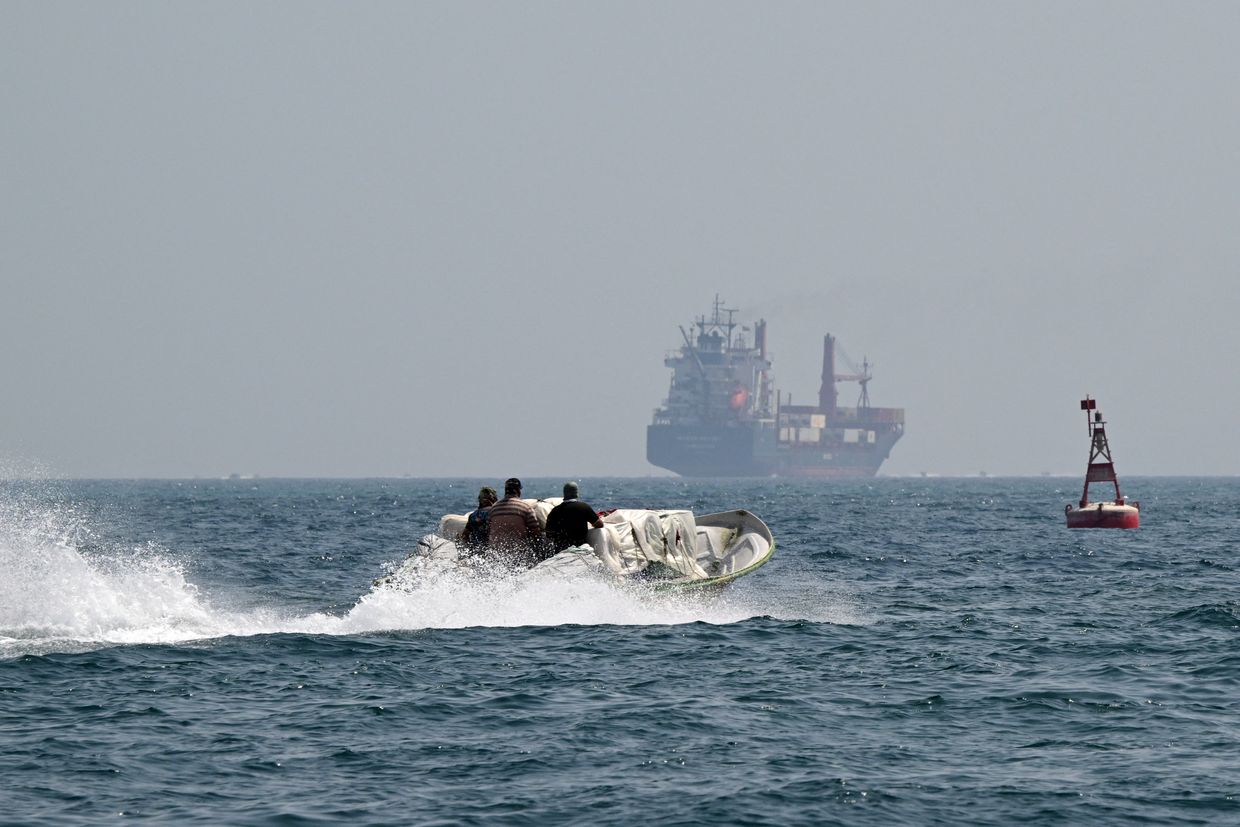
Iran is reportedly preparing to mine the Strait of Hormuz, a move that would spike global oil prices and give a significant boost to the Russian economy and its war machine in Ukraine.Reuters reported on July 1 that Iran loaded naval mines onto vessels in the Persian Gulf last month, citing two U.S. officials, who said the preparations had been detected after Israel launched its "preemptive" attack against Iran on June 13.Amid the conflict with Israel which has currently settled into an uneasy c
Iran is reportedly preparing to mine the Strait of Hormuz, a move that would spike global oil prices and give a significant boost to the Russian economy and its war machine in Ukraine.
Reuters reported on July 1 that Iran loaded naval mines onto vessels in the Persian Gulf last month, citing two U.S. officials, who said the preparations had been detected after Israel launched its "preemptive" attack against Iran on June 13.
Amid the conflict with Israel which has currently settled into an uneasy ceasefire, Iran has repeatedly threatened to block the Strait of Hormuz as a means of deterrence.
If the Strait were mined, Iran could block one-fifth of global oil demand and spike world energy prices — a boon for Russia's oil-dependent economy.
"Any disruption to Gulf supplies would push up global crude prices. Prices for Russian crude would rise in line," John Gawthrop, Argus Eurasia Energy editor, told the Kyiv Independent.
Russia’s energy sector made up 35-40% of its budget revenues pre-full-scale invasion and is powering its war machine.
Western sanctions on Russian energy and the G7’s Russian oil price cap of $60 per barrel have hampered its profits, with Russia losing more than $150 billion over the last three years, but have yet to deal a crippling blow.
The conflict between Israel and Iran caused a spike in prices — Brent crude, the global benchmark, on June 13 jumped from $69.36 to $75 per barrel, a surge that looked like it could grant Russia's economy a reprieve.
Until the Israeli attacks, the future for Russian crude wasn’t looking so bright. Europe was planning its 18th sanctions package targeting Russia's energy sector, and the G7 was pushing for a $45 price cap. Hungary and Slovakia have since blocked the sanctions package.
Prices have since settled along with the conflict and on July 2 Brent crude was $67.50, but if Iran does go ahead with mining the Strait of Hormuz, blocking one-fifth of global oil demand, another surge would follow.
This would also mean Iran blocks its own oil exports too, so it would only be a last resort from Tehran, David Fyfe, chief economist at Argus Media, a market analyst group, told the Kyiv Independent last month.
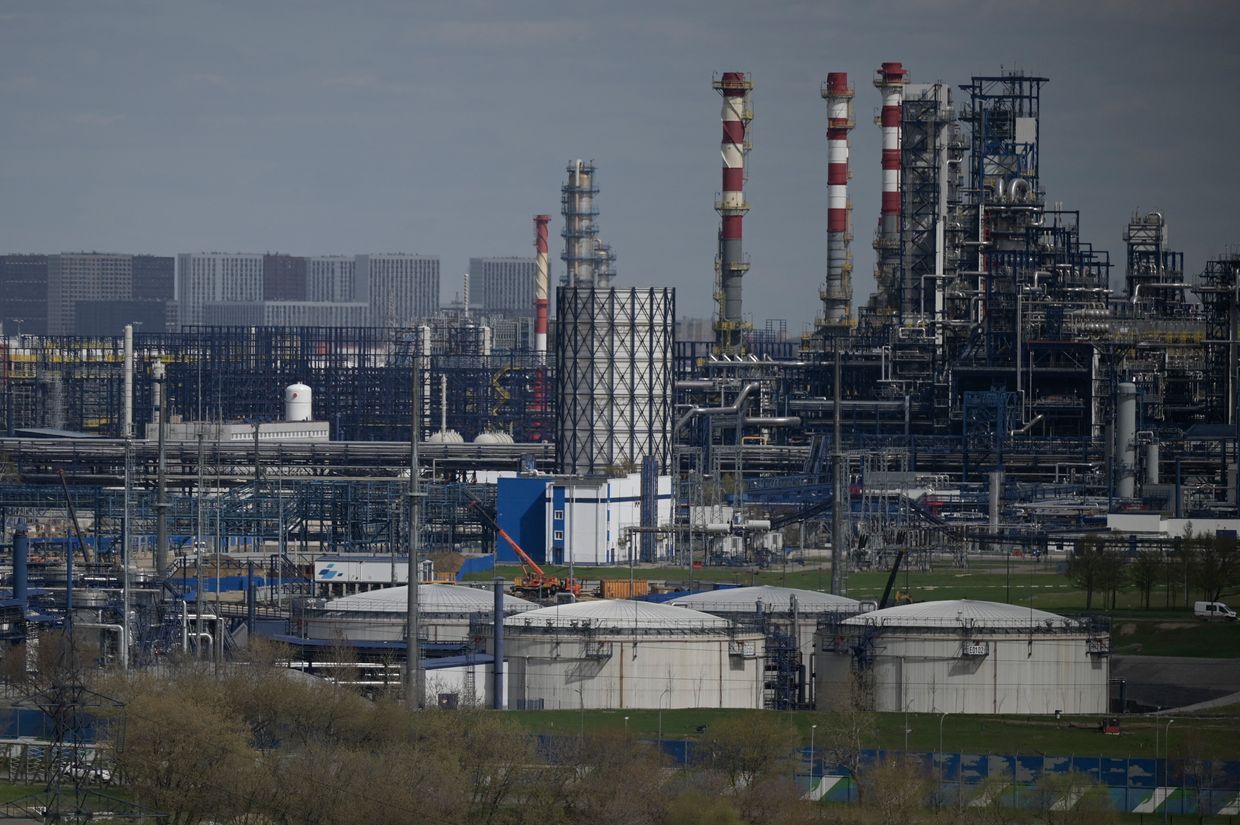
Ukrainian drones struck the Saratovorgsintez oil refinery in Russia's Saratov Oblast, causing damage to the facility, Ukraine's General Staff reported on July 1. "An important facility has been hit," the General Staff said via its official Telegram channel. The Saratovorgsintez refinery and chemical plant, owned by Russian energy giant Lukoil, is located nearly 1,500 kilometers (930 miles) from Ukraine's border in the city of Saratov. The city hosts multiple strategic military and industrial sit
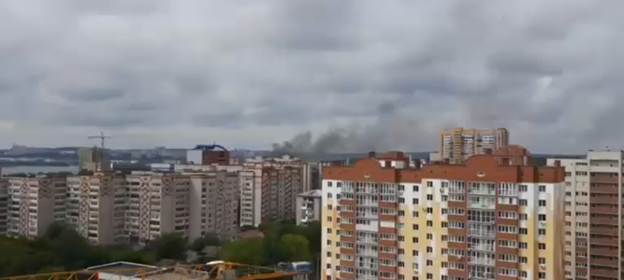
Ukrainian drones struck the Saratovorgsintez oil refinery in Russia's Saratov Oblast, causing damage to the facility, Ukraine's General Staff reported on July 1.
"An important facility has been hit," the General Staff said via its official Telegram channel.
The Saratovorgsintez refinery and chemical plant, owned by Russian energy giant Lukoil, is located nearly 1,500 kilometers (930 miles) from Ukraine's border in the city of Saratov. The city hosts multiple strategic military and industrial sites.
The refinery was targeted to "reduce the enemy's offensive capabilities," the General Staff wrote.
"The occupiers use the capacity of this refinery to supply fuel and lubricants to Russian military units involved in the armed aggression against Ukraine."
The attack was a joint operation carried out by Ukraine's military intelligence agency (HUR) and other military units, the General Staff said. A fire broke out at the site of the attack and damage to the refinery's technological installations has been confirmed. The full consequences of the strike are still being investigated.
The Kyiv Independent could not verify these claims.
The report is the latest in a series of announcements on July 1 about successful Ukrainian strikes on Russian targets. Earlier in the day, HUR released footage of Ukraine's UJ-26 drones, commonly known as Bober (Beavers), targeting high-value Russian air defenses and a fighter jet in occupied Crimea.
A source in the Security Service of Ukraine (SBU) told the Kyiv Independent that Ukrainian drones struck a major Russian military plant in the city of Izhevsk, over 1,300 kilometers (800 miles) from the front lines.
Ukraine also hit a Russian command post in occupied Donetsk Oblast, according to the General Staff.
Around 50% of Americans support sanctions against countries that purchase Russian oil and gas, according to the results of a YouGov poll published on June 27. A bipartisan sanctions bill in the U.S. Senate aims to slap 500% tariffs on imports from countries that continue to purchase Russian energy products. U.S. President Donald Trump has not backed the measure and a vote on the bill has reportedly been postponed. In a YouGov survey of adult U.S. citizens conducted June 12-16, 24% said they "str
Around 50% of Americans support sanctions against countries that purchase Russian oil and gas, according to the results of a YouGov poll published on June 27.
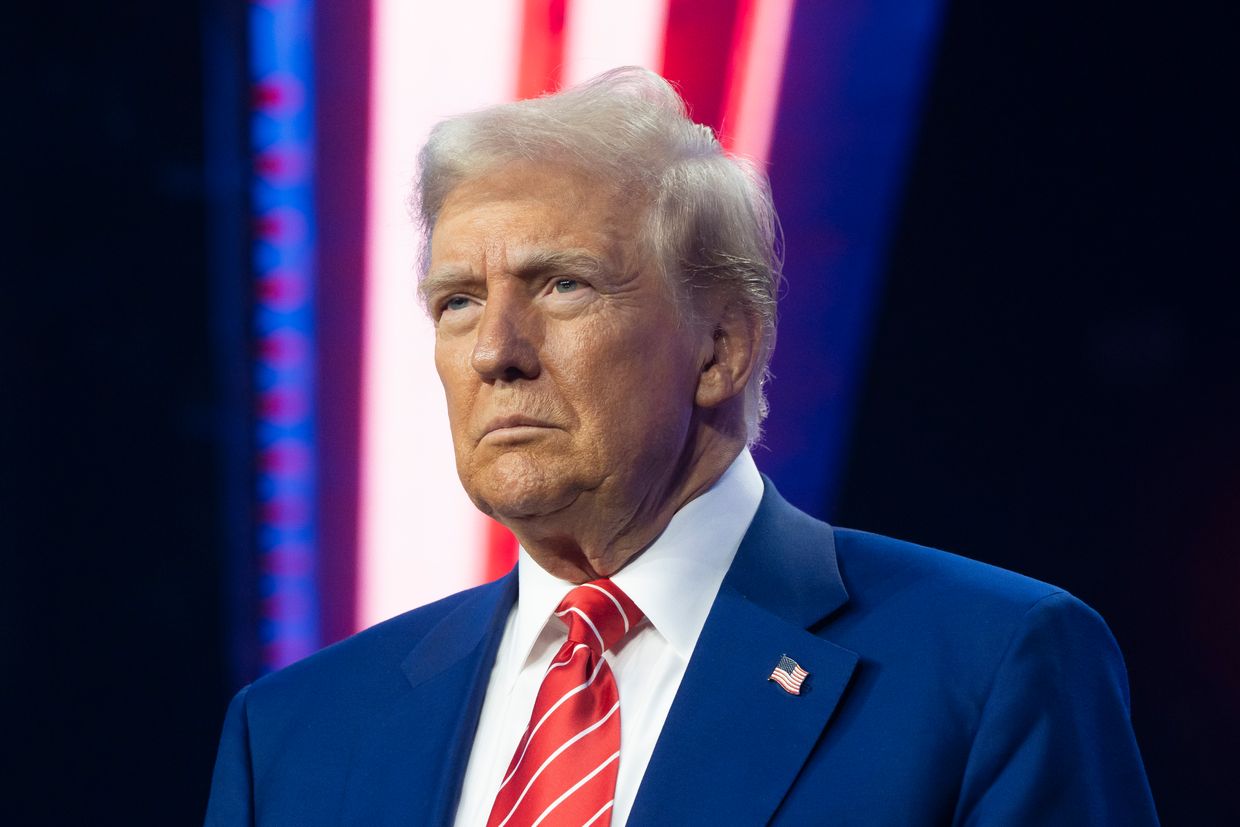
A bipartisan sanctions bill in the U.S. Senate aims to slap 500% tariffs on imports from countries that continue to purchase Russian energy products. U.S. President Donald Trump has not backed the measure and a vote on the bill has reportedly been postponed.
In a YouGov survey of adult U.S. citizens conducted June 12-16, 24% said they "strongly support" sanctioning Russian energy buyers while 25% said they "somewhat support" secondary sanctions against these countries.
Like the Senate bill, support for secondary sanctions among respondents was bipartisan. Of "strong supporters," 26% indentified as Democrats while 27% were Republicans.
More Republicans than Democrats said they favored the specific 500% tariff penalty proposed by legislators. While 29% of respondents who "strongly supported" the measure were Democrats, 41% were Republicans. Only 32% of survey respondents overall said they supported the 500% tariff.
The 500% tariff has been championed by Republican Senator Lindsey Graham, a Trump ally and co-author of the sanctions bill alongside Democrat Richard Blumenthal. Along with tariffs on countries purchasing Russian oil, the bill would also slap "bone-crushing" new sanctions against Russia, according to Graham.
A majority of Americans support increasing or maintaining U.S. sanctions against Russia, the survey found. Here the division along party lines is stark, with 59% of those in favor of increasing sanctions on Moscow identifying as Democrats and only 37% identifying as Republicans.
The poll also showed that about 50% of Americans oppose cutting military aid to Ukraine. According to YouGov, 26% of U.S. adults are in favor of increasing military aid while 23% believe Washington should maintain its current levels of support.
The results illustrate the contrast between the prevailing views of the American public and the policies of the Trump administration. Trump has repeatedly undercut the Senate sanctions bill, requesting delays to the vote and calling on lawmakers to weaken the proposed measures.
While Trump has at times threatened to impose new sanctions on Russia, he has never followed through on any of those threats and consistently shoots down domestic and international appeals to get tough on Moscow. At the recent G7 Summit in Canada, Trump reportedly insisted that sanctions would be at odds with U.S. business interests.
U.S. Defense Secretary Pete Hegseth also announced earlier this month that Washington will cut military aid to Ukraine in its upcoming defense budget.
U.S. President Donald Trump on June 23 called for urgent measures to prevent rising oil prices amid escalating tensions with Iran."Everyone, keep oil prices down. I'm watching," Trump wrote on Truth Social. "To the Department of Energy: Drill, baby, drill! And I mean now."The post comes after global oil prices surged on June 13 following a series of Israeli air strikes on Iranian nuclear facilities. The escalation sparked fears of broader conflict in the energy-rich Middle East, home to critical
U.S. President Donald Trump on June 23 called for urgent measures to prevent rising oil prices amid escalating tensions with Iran.
"Everyone, keep oil prices down. I'm watching," Trump wrote on Truth Social. "To the Department of Energy: Drill, baby, drill! And I mean now."
The post comes after global oil prices surged on June 13 following a series of Israeli air strikes on Iranian nuclear facilities. The escalation sparked fears of broader conflict in the energy-rich Middle East, home to critical oil shipping routes.
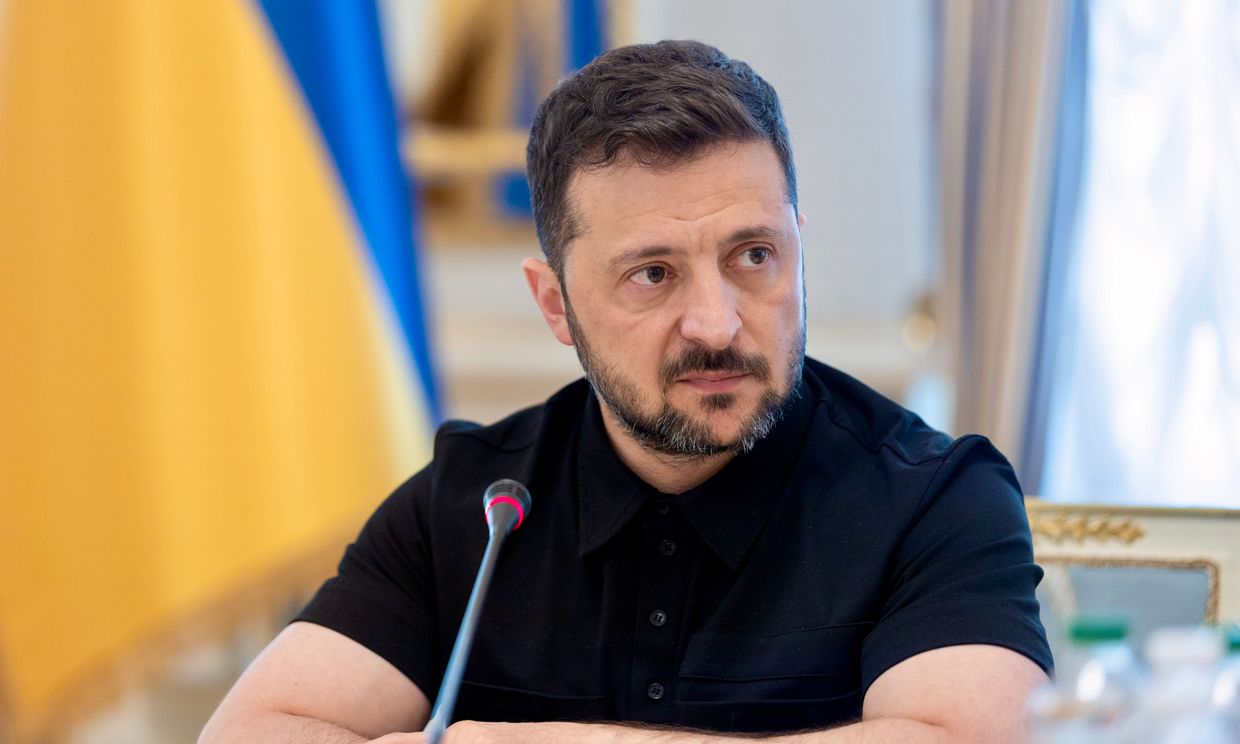
The surge in oil prices risks undermining Western attempts to curb Russia's war funding, as the Kremlin relies heavily on oil revenues to sustain its invasion of Ukraine. President Volodymyr Zelensky has warned that a price surge could further embolden the Kremlin.
On June 21, the U.S. joined Israel in conducting airstrikes that targeted three nuclear facilities in Iran — Fordow, Natanz, and Esfahan. The operation triggered a strong response from Tehran, which threatened to block the Strait of Hormuz, a key global oil transit route.
U.S. Vice President JD Vance responded on June 22 that any Iranian attempt to shut the strategic waterway would "destroy their own economy." The strait is a vital chokepoint for global energy supplies, with nearly a fifth of the world's oil passing through it daily.
Amid the turmoil, the EU has reportedly postponed plans to tighten the $60-per-barrel price cap on Russian crude, originally imposed in December 2022. The mechanism restricts Western firms from shipping or insuring Russian oil sold above that threshold.
The Russian Finance Ministry has relied heavily on energy revenues to sustain defense spending, which hit record highs this year.
Ukrainian strikes deep inside Russian territory between January and May have cost Russia over $10 billion, including $1.3 billion in direct damage to industrial facilities and infrastructure, Commander-in-Chief Oleksandr Syrskyi told journalists on June 21. The indirect damage caused by the disruption of Russian industrial activities is estimated at $9.5 billion, putting the cost-to-result ratio of Ukrainian deep strikes at 1:15, Syrskyi said at a briefing attended by the Kyiv Independent.Kyiv h
Ukrainian strikes deep inside Russian territory between January and May have cost Russia over $10 billion, including $1.3 billion in direct damage to industrial facilities and infrastructure, Commander-in-Chief Oleksandr Syrskyi told journalists on June 21.
The indirect damage caused by the disruption of Russian industrial activities is estimated at $9.5 billion, putting the cost-to-result ratio of Ukrainian deep strikes at 1:15, Syrskyi said at a briefing attended by the Kyiv Independent.
Kyiv has ramped up drone attacks against Russian military and industrial sites far behind the border as part of its DeepStrike strategy, seeking to undermine Moscow's ability to wage war.
The attacks targeted Russia's oil refining sector, the fuel and lubricants facilities, energy and transport support, and strategic lines of communication.
"Remember that during negotiations, the Russian side listed a halt to strikes against the oil refining industry as one of the conditions. This shows that our strikes are truly effective," Syrskyi said.
Oil and gas exports are among Russia's key revenue sources and play a crucial role in sustaining its war effort.
"Of course, we will continue (attacking deep inside Russian territory). We will increase the scale and the depth," the commander added, stressing that the attacks target solely military facilities.
Ukraine has increased the production of long-range drones with the support of Western partners and developed new tactics in striking Russia behind the lines.
In one of the most audacious attacks, the Security Service of Ukraine (SBU) on June 1 struck dozens of Russian bombers and other aircraft across four different air bases in an operation dubbed Spiderweb. SBU drones were smuggled to Russia in trucks and then deployed to attack airfields thousands of kilometers from the Russia-Ukraine border.
The European Union has postponed a move to lower the existing price cap on Russian oil, after concerns that the Iran-Israel conflict could lead to higher prices, Politico reported on June 20, citing unnamed diplomatic sources.The price cap, introduced in December 2022 as a measure to limit the Kremlin's ability to finance its war against Ukraine, prohibits Western companies from shipping, insuring, or otherwise servicing Russian oil sold above $60 per barrel.Ukraine has been calling on Western p
The European Union has postponed a move to lower the existing price cap on Russian oil, after concerns that the Iran-Israel conflict could lead to higher prices, Politico reported on June 20, citing unnamed diplomatic sources.
The price cap, introduced in December 2022 as a measure to limit the Kremlin's ability to finance its war against Ukraine, prohibits Western companies from shipping, insuring, or otherwise servicing Russian oil sold above $60 per barrel.
Ukraine has been calling on Western partners to lower the price cap on Russian oil from $60 to $30 per barrel. Meanwhile, two diplomats told Politico that the escalation of the conflict between Iran and Israel would make it impossible to impose new restrictions.
"The idea of lowering the price cap is probably not going to fly because of the international situation in the Middle East and the volatility," said one diplomat on the condition of anonymity.
The issue of reducing the price cap on Russian oil was discussed during the Group of Seven (G7) summit, which was held June 15-17 in Canada. However, the participants failed to reach a consensus.
"At the G7 meeting this week, it was agreed by all the countries they would prefer not to take the decision right now," the diplomat added. "The prices were quite close to the cap; but now the prices are going up and down, the situation is too volatile for the moment."
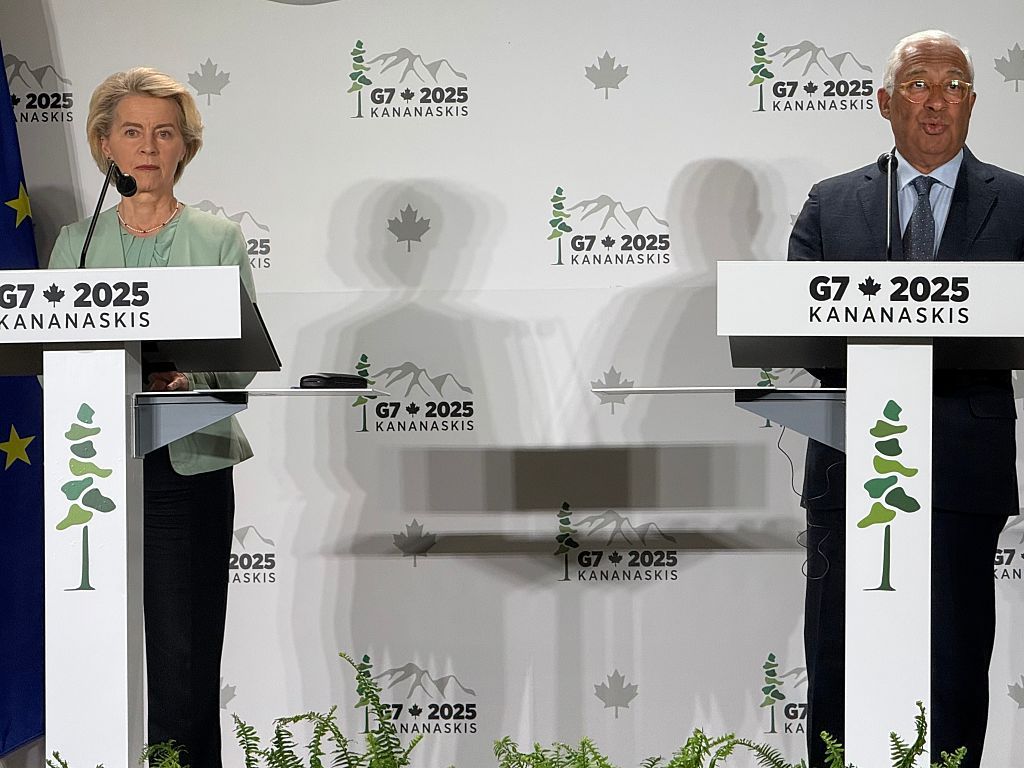
European Commission President Ursula von der Leyen said during the G7 summit that the existing measures on Russian oil exports "had little effect," while noting that oil prices had risen in recent days, so "the cap in place does serve its function. "
Global oil prices spiked on June 13, after Israeli strikes on Iran triggered a long-range war between the two countries that has continued for over a week.
Brent and Nymex crude prices surged more than 10% before stabilizing around 7.5% higher, with Brent at $74.50 a barrel and Nymex at $73.20 as of June 20, the BBC reported.
The spike threatens to undermine Western efforts to restrict the wartime revenue of the Russian state, which depend heavily on oil exports.
EU High Representative Kaja Kallas previously urged the European Union to pursue lowering the oil price cap on Russian oil, even without U.S. support, warning that Middle East tensions could otherwise drive prices up and boost Russia's revenues.
Australia has, for the first time, imposed sanctions on Russia's so-called "shadow fleet" of oil tankers, targeting 60 vessels used to circumvent international sanctions and sustain the Kremlin's war effort in Ukraine, the Australian government said on June 18.The move aligns Canberra with similar measures introduced by the United Kingdom, Canada, and the European Union. Australia's Foreign Ministry said the sanctioned vessels operate under "deceptive practices, including flag-hopping, disabling
Australia has, for the first time, imposed sanctions on Russia's so-called "shadow fleet" of oil tankers, targeting 60 vessels used to circumvent international sanctions and sustain the Kremlin's war effort in Ukraine, the Australian government said on June 18.
The move aligns Canberra with similar measures introduced by the United Kingdom, Canada, and the European Union.
Australia's Foreign Ministry said the sanctioned vessels operate under "deceptive practices, including flag-hopping, disabling tracking systems and operating with inadequate insurance," enabling illicit Russian oil trade that undermines international sanctions.
"Russia uses these vessels to circumvent international sanctions and sustain its illegal and immoral war against Ukraine," the ministry said in a statement.
With this move, Australia has now sanctioned more than 1,400 Russian individuals and entities since Moscow's full-scale invasion of Ukraine began in February 2022, the government said.
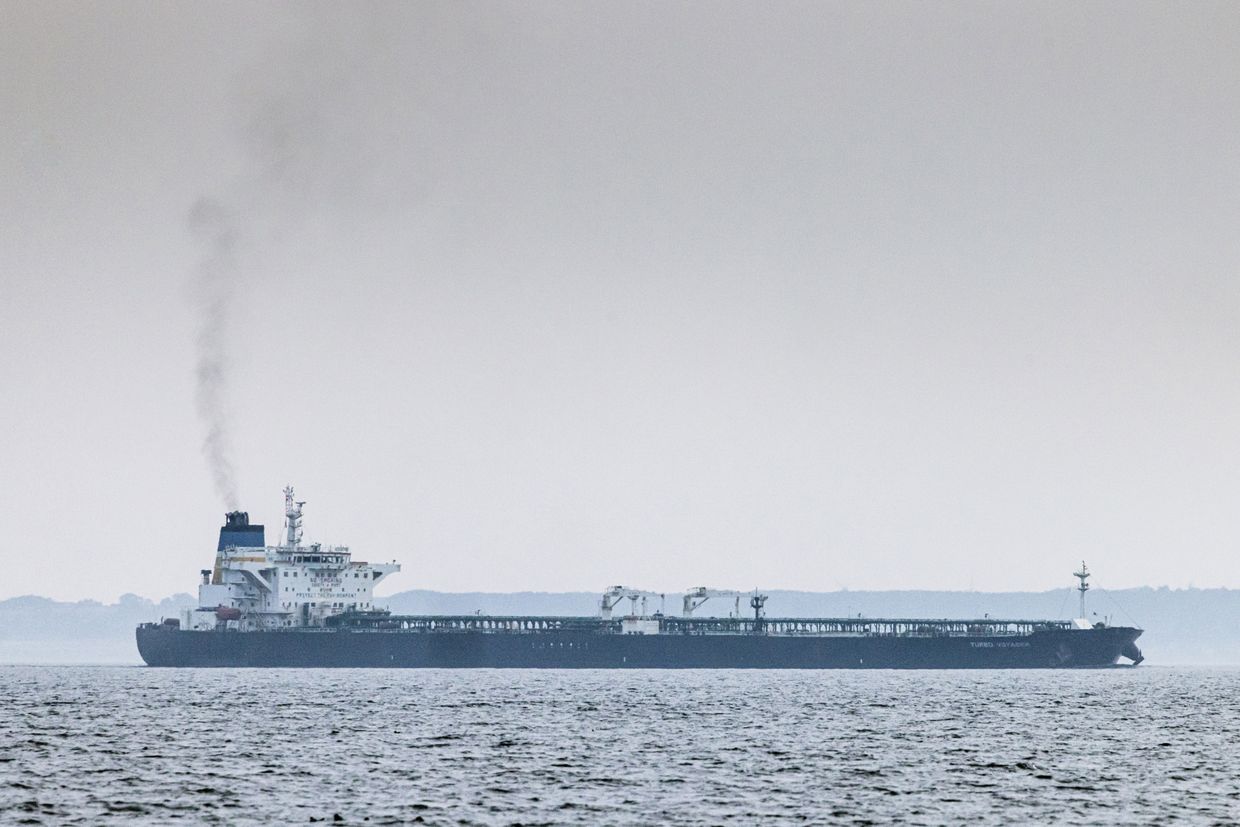
The step comes amid the continued operation of Russia's shadow fleet. According to a recent study by the Kyiv School of Economics (KSE), Russia currently operates 435 tankers outside the control of Western regulators to evade sanctions such as the G7-EU price cap on Russian oil.
These vessels are typically un- or underinsured and pose a rising environmental risk due to their age and operational opacity.
KSE estimates that as of April 2024, 83% of Russia's crude oil and 46% of its petroleum product exports were shipped using shadow fleet tankers. The study warns that this undermines the effectiveness of Western sanctions and increases the likelihood of maritime disasters, as many of these ships fall outside international safety and insurance standards.
The EU formally adopted its 17th sanctions package against Russia in May, sanctioning nearly 200 vessels tied to the shadow fleet. EU foreign policy chief Kaja Kallas said the new measures also target hybrid threats and human rights violations, with more sanctions under consideration.
Some EU member states and observers have criticized the package for lacking stronger provisions to disrupt Russia's sanction evasion schemes.
Now, the EU seeks to approve its 18th sanctions package, which will add 77 more shadow fleet vessels to comply with the cap to prevent Russia from circumventing sanctions and propose imposing a ban on imports of petroleum products made from Russian oil.
The United States has signaled reluctance to pursue additional sanctions despite Moscow's continued aggression in Ukraine and rejection of ceasefire proposals supported by Western allies.
Russian President Vladimir Putin "cannot be trusted" to mediate peace in the Middle East while continuing to launch brutal attacks against civilians, EU High Representative Kaja Kallas said on June 17, following a mass Russian strike on Kyiv that killed at least 21 people and injured over 130."Clearly, President Putin is not somebody who can talk about peace while we see actions like this,” Kallas said during a briefing in Brussels. "He's not a mediator that can really be considered. Russia cann
Russian President Vladimir Putin "cannot be trusted" to mediate peace in the Middle East while continuing to launch brutal attacks against civilians, EU High Representative Kaja Kallas said on June 17, following a mass Russian strike on Kyiv that killed at least 21 people and injured over 130.
"Clearly, President Putin is not somebody who can talk about peace while we see actions like this,” Kallas said during a briefing in Brussels. "He's not a mediator that can really be considered. Russia cannot be a mediator if they don't really believe in peace."
Russia has sought to position itself as a potential mediator in the escalating conflict between Israel and Iran. Kremlin spokesperson Dmitry Peskov said on June 17 that Israel appeared unwilling to accept Russia’s offer of mediation.
President Donald Trump said on June 15 that Putin had expressed willingness to help mediate between Tel Aviv and Tehran — an idea already dismissed by France. EU leaders have also questioned Moscow’s neutrality given its deep military ties with Iran, which has supplied Russia with drones and missiles used in attacks on Ukraine.
Kallas also pointed to Iran's role in enabling Russia's attacks. "Iran has helped Russia do these attacks… their cooperation is working in this regard," she said.
Kallas urged the European Union to press forward with lowering the oil price cap on Russian oil, even without U.S. support, warning that Middle East tensions could otherwise drive prices up and boost Russia's revenues.
"The whole idea of the oil price cap is to lower the prices," Kallas said. "We shouldn't end up in a situation where the crisis in the Middle East increases oil prices and makes Russia earn more… that would mean they can fund their war machine on a bigger scale."
Her warning comes after global oil prices soared on June 13, following an Israeli strike on Iran that raised fears of a broader regional conflict. Brent and Nymex crude prices surged more than 10% before stabilizing around 7.5% higher, with Brent at $74.50 a barrel and Nymex at $73.20, the BBC reported.
The spike threatens to undermine Western efforts to restrict Russia’s wartime revenues, which heavily depend on oil exports.
Earlier, Kallas said the EU can act independently to lower the oil price ceiling, noting that most Russian crude flows through European-controlled waters.
"Even if the Americans are not on board, we can still do it and have an impact," she said.
Her remarks come as the EU works on its 18th sanctions package targeting Russia's energy, banking, and defense sectors. The 17th package entered into force on May 20. European Commission President Ursula von der Leyen has said new measures will further target Russia's war-sustaining supply chains.
Kallas spoke hours after one of Russia's deadliest attacks on Kyiv since the start of its full-scale invasion. The nearly nine-hour assault saw Moscow fire 472 aerial weapons, including over 280 Shahed drones and multiple cruise and ballistic missiles.
Ukraine's Air Force reported intercepting 428 targets, but several missiles hit residential buildings, including a nine-story apartment block in Solomianskyi district, where 16 people were killed.
President Volodymyr Zelensky called the assault "one of the most horrifying attacks on Kyiv" and again called on Western leaders to act decisively.
An uninsured Russian Aframax-class tanker has been illegally conducting ship-to-ship oil transfers in international waters near Greece and Cyprus since July 2024, Ukraine's military intelligence (HUR) reported on June 16.According to the agency, the vessel, operating without Western insurance, is part of Russia's expanding shadow fleet used to bypass G7 and EU sanctions on Russian oil exports. HUR said such transfers "pose an environmental threat, allow the aggressor to conceal the origin of oil
An uninsured Russian Aframax-class tanker has been illegally conducting ship-to-ship oil transfers in international waters near Greece and Cyprus since July 2024, Ukraine's military intelligence (HUR) reported on June 16.
According to the agency, the vessel, operating without Western insurance, is part of Russia's expanding shadow fleet used to bypass G7 and EU sanctions on Russian oil exports.
HUR said such transfers "pose an environmental threat, allow the aggressor to conceal the origin of oil, evade international control, and ensure its supply to third countries in circumvention of sanctions."
Ukraine has identified the tanker as IMO 9247443 and listed it on the War&Sanctions platform, along with 159 other tankers allegedly belonging to Russia's shadow fleet and 55 captains involved in sanction-busting operations.
Despite price caps and Western restrictions, Russia continues to profit from oil and gas exports, which remain a vital revenue source. According to HUR estimates, roughly one-third of those profits are expected to fund Russia's war against Ukraine in 2025.
In May, the EU approved its 17th sanctions package, targeting nearly 200 shadow fleet vessels. The U.S. Treasury had earlier sanctioned over 180 tankers, which together accounted for nearly half of Russia's offshore oil shipments.
While the Biden administration ramped up pressure on Russia's oil trade early in 2024, U.S. President Donald Trump has since declined to impose new sanctions, despite Moscow's continued refusal to agree to a ceasefire.
The United States is opposing a proposal by other Group of Seven nations to lower the price cap on Russian oil, Bloomberg reported on June 13.Citing unnamed sources, Bloomberg said the U.S. remains opposed to reducing the cap from $60 to $45 per barrel – a position it first took earlier this year when Treasury Secretary Scott Bessent declined to support a similar effort.The price cap, introduced in December 2022 as a measure to limit the Kremlin's ability to finance its war against Ukraine, proh
The United States is opposing a proposal by other Group of Seven nations to lower the price cap on Russian oil, Bloomberg reported on June 13.
Citing unnamed sources, Bloomberg said the U.S. remains opposed to reducing the cap from $60 to $45 per barrel – a position it first took earlier this year when Treasury Secretary Scott Bessent declined to support a similar effort.
The price cap, introduced in December 2022 as a measure to limit the Kremlin's ability to finance its war against Ukraine, prohibits Western companies from shipping, insuring, or otherwise servicing Russian oil sold above $60 per barrel.
One source told Bloomberg that the EU and U.K. could explore lowering the cap without the U.S., as most of Russia's oil is transported in European waters. However, a unified G7 agreement would carry greater impact if it could be enforced by the U.S.
The price cap debate has become more urgent as oil prices, which had fallen below the $60 cap in recent months, surged following Israel's strikes against Iran in the past 24 hours.
G7 leaders will revisit the price cap discussion during the upcoming summit, hosted by Canada from June 15-17 in Kananaskis County, Alberta.
The summit agenda will also include topics such as support for Ukraine in the Russian war, global economic stability, digital transformation, and climate change.
The G7 currently includes Canada, France, Germany, Italy, Japan, the United Kingdom, and the United States. The European Union is also represented in the group.
Global oil prices soared on June 13 after Israel launched a strike on Iran, triggering fears of a broader conflict in the energy-rich Middle East that could disrupt global supplies, the BBC reported. The spike threatens to undermine Western efforts to choke off a vital revenue stream for Russia, which relies heavily on oil profits to sustain its war in Ukraine.According to the BBC, Brent and Nymex crude prices jumped by more than 10% following the Israeli attack, reaching their highest levels s
Global oil prices soared on June 13 after Israel launched a strike on Iran, triggering fears of a broader conflict in the energy-rich Middle East that could disrupt global supplies, the BBC reported.
The spike threatens to undermine Western efforts to choke off a vital revenue stream for Russia, which relies heavily on oil profits to sustain its war in Ukraine.
According to the BBC, Brent and Nymex crude prices jumped by more than 10% following the Israeli attack, reaching their highest levels since January. Prices later stabilized but remained about 7.5% higher, with Brent at $74.50 a barrel and Nymex at $73.20.
The price surge comes at a crucial time for Ukraine and its Western allies, who are intensifying efforts to minimize the Kremlin's oil revenues — the backbone of Russia's wartime economy.
President Volodymyr Zelensky urged the European Union on June 11 to impose tougher sanctions on Russia, including a more aggressive price cap on oil exports.
"A ceiling of $45 per barrel of oil is better than $60, that's clear," Zelensky said at the Ukraine-Southeast Europe Summit in Odesa. "But real peace will come with a ceiling of $30. That's the level that will really change the mindset in Moscow."
The EU's current $60 per barrel cap, introduced in December 2022, prohibits Western companies from shipping, insuring, or servicing Russian oil sold above the threshold. While this measure has curtailed some of Russia's profits, the Kremlin continues to earn significant revenue, especially when market prices rise.
European Commission President Ursula von der Leyen said on June 10 that the EU is considering lowering the cap to $45, a move that will be discussed at the G7 summit in Canada between June 15 and 17. According to Reuters, most G7 countries, excluding the U.S. and Japan, are prepared to proceed with the reduction regardless of Washington’s stance.
Israeli Prime Minister Benjamin Netanyahu said early on June 13 that Israeli forces had launched "Operation Rising Lion," a preemptive strike targeting Iran's nuclear program. In a televised address, Netanyahu claimed Israeli forces struck Iran's main nuclear enrichment site in Natanz and targeted key nuclear scientists.
Most Group of Seven (G7) nations are prepared to lower the Russian oil price cap from $60 to $45 a barrel even without support from the United States, Reuters reported on June 12, citing unnamed sources familiar with the matter.According to Reuters, the European Union and United Kingdom, backed by other European G7 countries and Canada, are ready to lead the charge in lowering the Russian oil price cap – even if U.S. President Donald Trump opts out.The price cap, which bans Western companies fro
Most Group of Seven (G7) nations are prepared to lower the Russian oil price cap from $60 to $45 a barrel even without support from the United States, Reuters reported on June 12, citing unnamed sources familiar with the matter.
According to Reuters, the European Union and United Kingdom, backed by other European G7 countries and Canada, are ready to lead the charge in lowering the Russian oil price cap – even if U.S. President Donald Trump opts out.
The price cap, which bans Western companies from shipping, insuring, or otherwise servicing Russian oil sold above $60 per barrel, was first introduced in December 2022 as a measure to limit the Kremlin's ability to finance its war against Ukraine.
The G7 had previously attempted to lower the Russian oil price cap; however, the proposal was dropped after U.S. Treasury Secretary Scott Bessent reportedly declined to support it.
It is unclear whether the U.S. will support the decision this time around. Japan's position is also undecided.
Participating country leaders will revisit the price cap discussion at the upcoming G7 summit. Canada, which holds the G7 presidency this year, will host the summit on June 15-17 in Kananaskis County, located in the western province of Alberta.
The summit agenda will include topics such as support for Ukraine in the Russian war, global economic stability, digital transformation, and climate change.
President Volodymyr Zelensky is expected to attend the summit and seek a meeting with U.S. President Donald Trump.

 Connexion
 The Kyiv IndependentMartin Fornusek