Vue normale

  • ✇404 Media
  • We Need to Quarantine Aliens on the Moon, Scientists Propose
    Welcome to a special edition of the Abstract! I’m out on vacation for the next two weeks, which means it’s time to break out all of the weird and wild studies that have come out so far in 2026, but that slipped through the cracks for one reason or another. I’ve been saving these gems up for a special occasion and hope you enjoy the roundups this week and next!So without further delay, here are the studies this year that put aliens on lockdown, bedazzled their axes, undulated spermily, and captur
     

We Need to Quarantine Aliens on the Moon, Scientists Propose

1 août 2026 à 06:00
We Need to Quarantine Aliens on the Moon, Scientists Propose

Welcome to a special edition of the Abstract! I’m out on vacation for the next two weeks, which means it’s time to break out all of the weird and wild studies that have come out so far in 2026, but that slipped through the cracks for one reason or another. I’ve been saving these gems up for a special occasion and hope you enjoy the roundups this week and next!

So without further delay, here are the studies this year that put aliens on lockdown, bedazzled their axes, undulated spermily, and captured shooting stars.

First, scientists come up with a game plan to protect Earth from invasive extraterrestrial species. Then: a trove of rare decorative tools, GIGANTIC SPERM, and a long-sought solution to a Venusian mystery.

As always, for more of my work, check out my book First Contact: The Story of Our Obsession with Aliens, or subscribe to my personal newsletter the BeX Files

Stay tuned for another special edition of the Abstract next week!

An island quarantine, but it’s in outer space

Moxley, Frederick I. & Ricciardi, Anthony. “Protecting earth from extraterrestrial contamination: The case for a lunar biocontainment facility.” Ambio.

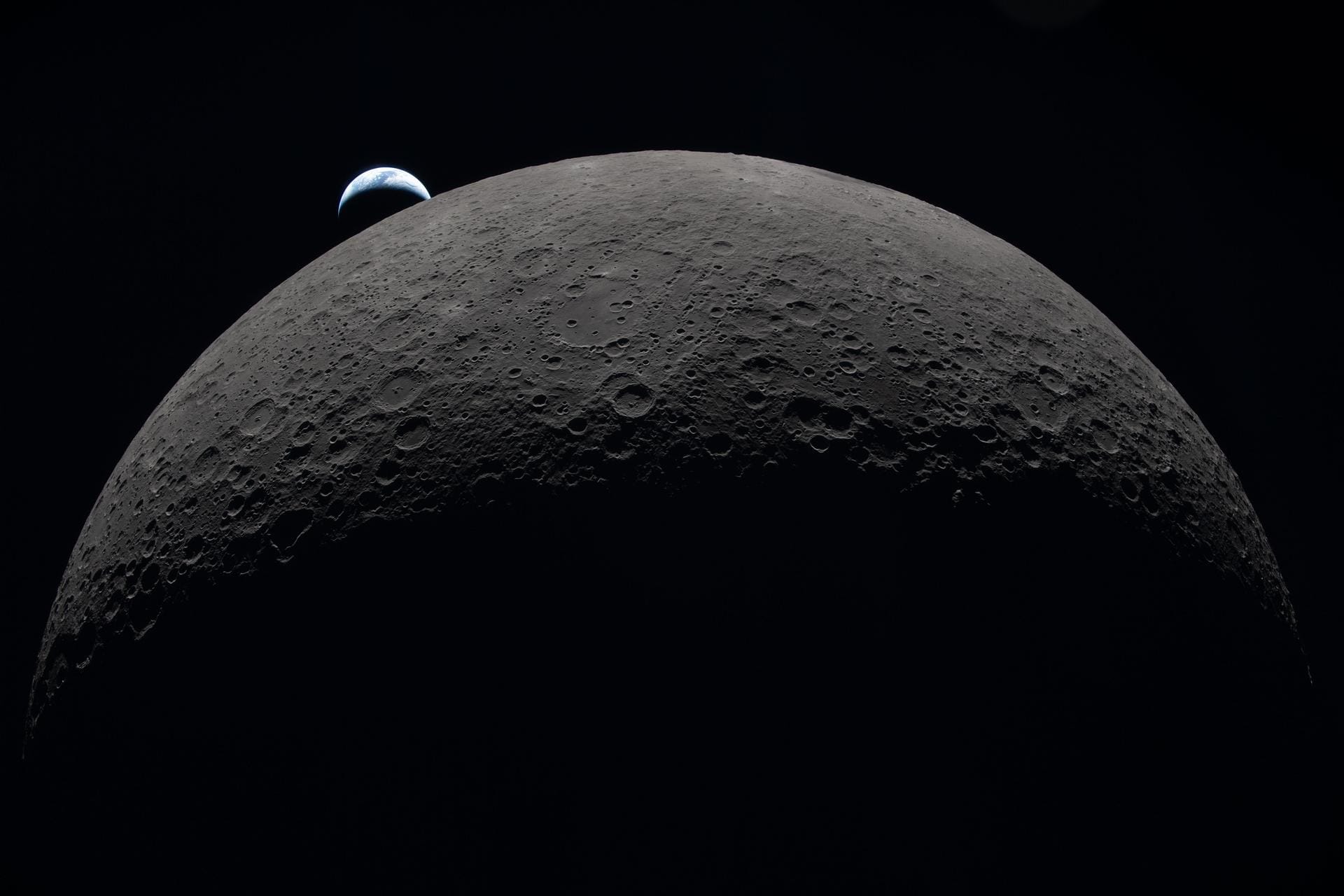
Well, folks: It’s finally time to build a quarantine on the Moon for aliens. 

That’s the upshot of a study published in May that argues for the establishment of “a lunar biocontainment facility” to house extraterrestrial samples en route to Earth until they are deemed safe. 

The U.S. and China's space programs both aim to bring back samples from the surface of Mars in the coming years, and many missions have already delivered rocks from asteroids. The new study anticipates a disastrous scenario in which samples from nearby celestial bodies might contain dangerous extraterrestrial life. 

“If samples from Mars or other celestial bodies harbor dormant or active biological entities, then Earth’s biosphere could become exposed to a potentially invasive novel organism with unpredictable pathogenicity or ecological effects,” said Frederick I. Moxley of Strategic Threat and Analysis Research Laboratories, LLC, and Anthony Ricciardi of McGill University.

“For example, if extraterrestrial life exists, its molecular architecture could reflect atypical biochemistry (such as chirality reversal or alternative nucleic acid analogs) that is hazardous to Earth’s ecosystems and even to human biology,” the team added.

The team pointed to earthly analogs, such as viral strains that have broken containment or species that thrive in habitats that are completely different from the ones in which they originally evolved. If life on Earth can be this adaptable and unpredictable, why should we expect anything different from life elsewhere?

“The Moon must not merely serve as a stepping stone for exploration, but also as a preemptive shield between Earth and potential forms of extraterrestrial contamination…ensuring that exploration does not come at the expense of Earth’s biosphere” the team said. “The formalization of such precautionary lunar quarantine protocols will not only safeguard our planet, but also affirm humanity’s maturity as an interplanetary civilization.”

Moreover, “the economic cost for a lunar biocontainment facility is negligible compared to the potential ecological devastation of an invasive extraterrestrial organism.”

There you have it: We can’t afford not to build an alien Moon quarantine.  

In other news…

Axes of ancients

Barkai, Ran and Shalata, Muataz. “Lower Palaeolithic Tools of Potency: Handaxes Shaped around Fossils and Other Extraordinary Features at Sakhnin Valley, Israel.” Tel Aviv.

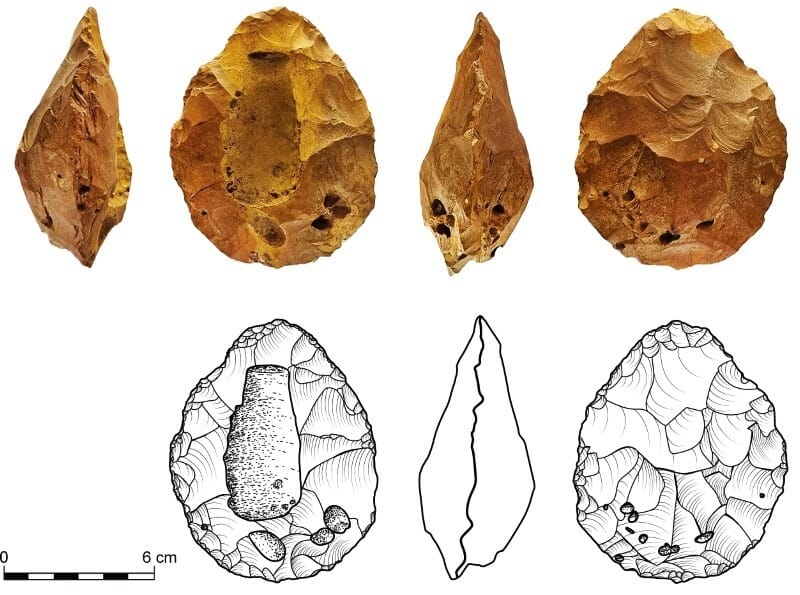
Some 500,000 years ago, early humans collected fossils and geodes and crafted them into handaxes, according to a study published in March that suggested these decorative tools had symbolic significance to their makers.

From 2024 to 2025, archaeologists discovered an unprecedented trove of ten fossil-bearing handaxes in what is today the Sakhnin Valley in Israel, which were made by the influential early human Homo erectus. While previous digs have unearthed the occasional handaxe containing fossils, this is the first site to yield a whole hoard of them.
We Need to Quarantine Aliens on the Moon, Scientists Propose
A handaxe shaped around a fossil imprint. Image: Barkai, Ran and Shalata, Muataz.

“To our knowledge, no other archaeological context besides Sakhnin Valley has yielded more than a single extraordinary specimen,” said authors Ran Barkai of Tel Aviv University and Muataz Shalala, a local independent researcher who found the site.

“We propose that these handaxes served as tools and mediators between humans and the cosmos, conceived as objects of potency enhanced by the primeval fossil imprints and unique geological features within the stone,” the team said. “The richly embellished rocky landscape of Sakhnin Valley, particularly with its abundant geodes, may have encouraged early humans to express their profound and extraordinary relationships with the cosmos via stones.”

The human appreciation for cool rocks knows no bounds. Given that there’s no obvious functional advantage to the fossil-bearing stones beyond aesthetics, It’s tantalizing to imagine what these geological rarities meant to the bygone humans who selected them.

Go with the (sperm) flow

Alsous, Jasmin Imran, Chakrabarti, Brato, et al. “The physical consequences of sperm gigantism.” Nature Physics.

Here’s a fun fact to share at a party: Fruit flies have the longest sperm in nature. Measuring anywhere from several millimeters to more than two inches depending on the species, these bugs offer an extreme example of “sperm gigantism,” a phenomenon seen across many animal species.  

Now, scientists have probed the mystery of how these “ultralong sperm” avoid getting all tangled up in their journey through the female reproductive tract, according to a study published in June. 

Using in vivo imagery and mathematical models, researchers revealed how two-millimeter-long sperm from the fruit fly Drosophila melanogaster autonomously organizes themselves en route to prospective fertilization. 

We Need to Quarantine Aliens on the Moon, Scientists Propose
Illustration of collective flows of fruit fly sperm. Image: Lucy Reading-Ikkanda/Simons Foundation

“Giant sperm have evolved in several animal taxa for >100 million years—a testament to the enduring success of sperm gigantism as a sexual strategy,” said researchers co-led by Jasmin Imran Alsous of the Flatiron Institute and Brato Chakrabarti of International Centre for Theoretical Sciences in India.

Fruit fly sperm seamlessly forms “collective flows” that are “primarily associated with the dense packing of sperm, rather than the specific geometry of the confining organs,” the team found.  

Who knew fruit fly sperm could be so mesmerizing? Nature continues to astonish in the most unexpected places.

Venus gets a cosmic glow-up

Karyu, Hiroki et al. “A cosmic origin of Venus’ lower haze.” Nature Astronomy.

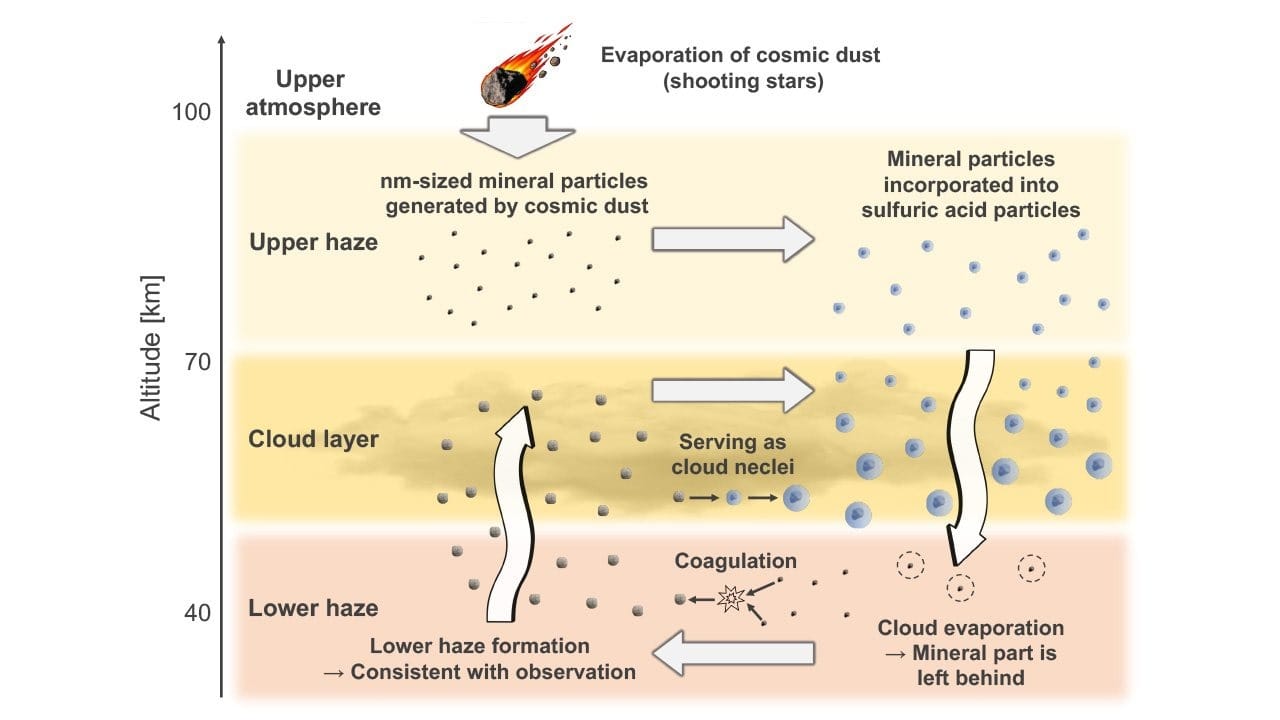
For more than a half-century, scientists have pondered the origin of the so-called “lower haze” on Venus, a particle-rich layer of clouds at about 20 to 30 miles of altitude that was first detected by spacecraft in the 1970s. 

In April, a team finally solved the mystery; turns out it’s just a light sprinkling of cosmic dust from bygone shooting stars that broke up and dispersed in the Venusian skies. In addition to providing an ethereal explanation for the phenomenon on Venus, the new results may also inform our understanding of exoplanet atmospheres.
We Need to Quarantine Aliens on the Moon, Scientists Propose
A figure illustrating the cosmic dust origin of Venus’s lower haze. Image: ©Hiroki Karyu et al. 

“On planets like Earth, where surface liquid water exists, rain constantly scavenges involatile particles from the air,” said researchers led by Hiroki Karyu of Tohoku University. “However, as observed in our Solar System, planets with surface liquid water are truly unique; most planets possess dry atmospheres where liquid droplets evaporate before reaching the surface.” 

“In such worlds, the lower haze originating from cosmic dust can accumulate in the hot lower atmosphere, enhancing cloud formation” and “substantially [impacting] the planet’s climate,” the team added. “These effects establish cosmic dust as an essential component of planetary climates, a role that is also likely to be important for exoplanets.”

No big deal, Venus is just marinating in cosmic crumbs that can shed light on alien skies. Go on with your day.

Thanks for reading! See you next week.
  • ✇404 Media
  • A Hidden 'Dark Dimension' Could Rewrite Our Understanding of the Universe
    Scientists have proposed the existence of a fifth “dark dimension” that governs the behavior of both dark energy and dark matter—and which may be observationally detected in the near future, according to a recent preprint study. The dark dimension hypothesis could potentially provide an elegant solution to some of the biggest mysteries in science, including the nature of dark matter, an unidentified substance that makes up most mass in the universe, and dark energy, the term for whatever is c
     

A Hidden 'Dark Dimension' Could Rewrite Our Understanding of the Universe

31 juillet 2026 à 08:47
A Hidden 'Dark Dimension' Could Rewrite Our Understanding of the Universe

Scientists have proposed the existence of a fifth “dark dimension” that governs the behavior of both dark energy and dark matter—and which may be observationally detected in the near future, according to a recent preprint study

The dark dimension hypothesis could potentially provide an elegant solution to some of the biggest mysteries in science, including the nature of dark matter, an unidentified substance that makes up most mass in the universe, and dark energy, the term for whatever is causing the universe to expand at an accelerating rate. 

The idea arose from string theory, a decades-old framework that suggests the universe contains many dimensions beyond the four dimensions that we can perceive as humans—time, and three-dimensional space. In a series of studies published over the past several years, a group of string theory experts have suggested that one of these dimensions could simultaneously govern dark matter and dark energy, and that this dimension changes over time. 

“The question was whether or not this extra dimension is frozen or can evolve,” said Cumrun Vafa, the Timken University Professor in the physics department at Harvard University and an author on these studies, including the newest preprint, in a call with 404 Media. “The fifth dimension is somehow related to the value of dark energy, so it's natural that when the value of the extra dimension changes, the value of dark energy also changes.”

When Vafa and his colleagues started to develop this idea, the conventional wisdom was that dark energy had a fixed value, according to the standard model of cosmology, a well-corroborated set of assumptions that explains most laws and phenomena in the universe.  

“We were scrutinized by our colleagues for predicting that string theory requires dark energy to change, whereas dark energy looks constant,” said Vafa. “This is not good for our field because you are predicting string theory is inconsistent with observation.”

But the assumption that dark energy has a fixed value, a central tenet of the standard model, has been challenged by the Dark Energy Spectroscopic Instrument (DESI), a major survey of the universe based at the Kitt Peak National Observatory in Arizona, which released its first results in 2025. 

To the surprise of many scientists, the DESI release hinted that the value of dark energy may shift over time, a discovery that was in line with predictions of a dark dimension put forward by Vafa’s team.

“We didn't write a model to fit the data, but rather we had a model based on theory,” said Vafa. “Now that fits the data automatically. That is why I believe in it. It's easy to write a model after you know the data to try to fit it somehow. This is not what we did.”

“Our model is still the best model, as far as I know, that fits the DESI results,” he added.  

In their newest preprint, which is currently in the process of peer review, Vafa and his colleagues expand on the workings of this possible dark dimension in light of the DESI data. According to string theory, the universe has many dimensions that are “compactified” into subatomic scales that are not detectable by current instruments, which is why we have not discovered them. The hypothetical dark dimension, however, may be enlarged to a micron scale range. 

This would allow gravitons, which are the hypothetical particles that mediate the force of gravity, to spill over into the dark dimension, where they would become dark matter particles. In this view, dark matter is not made of some new form of exotic particle. Instead, it’s made up of gravitons that also exist in our familiar universe and have traversed into the dark dimension. 

“We are using the extra dimension to our benefit to explain what dark matter is,” Vafa said. “We don't need to introduce a new particle or particles. We are just saying it's the usual gravity.”

As this dark dimension evolves, so does the mass of these dark matter particles in that realm; Vafa’s team predicts they are becoming lighter. Likewise, the value of dark energy weakens over time. In this way, dark matter and dark energy—long thought to be likely unrelated—arise from the properties of the same extra dark dimension.

It’s a trippy and esoteric concept, and it may soon be put to the test. If a dark dimension does exist, then it should manifest as tiny deviations in Newton's gravitational force at micrometer scales. A team at the Institute for Quantum Optics and Quantum Information in Vienna is currently designing an experiment to test this idea, which could yield results in the coming years. 

Moreover, if dark matter particles are just gravitons that wandered into a dark dimension, then there should be some subtle observational hints of “a fifth force” in the dark sector. For example, scientists plan to test the hypothesis by closely watching the movements of stars in interacting galaxies, which are held together by dark matter halos, to search for a dark fifth force. 

When the galaxies come near each other, “the visible matter attracts the visible matter of the other galaxy, and dark matter of one also attracts the dark matter of the other galaxy as well,” Vafa explained. “But there's extra force between the dark matter compared to the visible matter because of this fifth force, so you get a more attractive force pulling the dark matter towards each other more than the visible part.”

“There are multiple fronts where things can come together,” he concluded. “Of course, the most exciting would be the confluence of all of these together, that somehow they agree. That would be really remarkable.”

  • ✇404 Media
  • Scientists Uncover Lost ‘Golden Age’ of Languages That Ended 1,000 Years Ago
    Welcome back to the Abstract! Here are the studies this week that spoke in tongues, sought forbidden love, orbited an orbiter, and performed ritual magic.First, scientists have uncovered a “golden age” of languages that flourished for millennia before fading into our dark age of linguistic extinction. Then, Alan Turing’s erotica, the search for the first exomoon, and the cave of the Old Ancestors.As always, for more of my work, check out my book First Contact: The Story of Our Obsession with Ali
     

Scientists Uncover Lost ‘Golden Age’ of Languages That Ended 1,000 Years Ago

25 juillet 2026 à 06:00
Scientists Uncover Lost ‘Golden Age’ of Languages That Ended 1,000 Years Ago

Welcome back to the Abstract! Here are the studies this week that spoke in tongues, sought forbidden love, orbited an orbiter, and performed ritual magic.

First, scientists have uncovered a “golden age” of languages that flourished for millennia before fading into our dark age of linguistic extinction. Then, Alan Turing’s erotica, the search for the first exomoon, and the cave of the Old Ancestors.

As always, for more of my work, check out my book First Contact: The Story of Our Obsession with Aliens, or subscribe to my personal newsletter the BeX Files

The silence of long-lost languages

Blasi, Damián et al. The rise and fall of language diversity through the Holocene. Science.

Some 3,000 years ago, a “golden age” of languages dawned around the world, resulting in the proliferation of tens of thousands of tongues over the next 2,000 years. But over the past millennia, we have entered a dark age of linguistic diversity, driven by the rise of “behemoth languages” that have pushed others into extinction.

That’s the conclusion of a new study that reconstructed humanity’s linguistic diversity since the dawn of agriculture, which emerged about 12,000 years ago at the end of the Ice Age. 

The global human population before agriculture is estimated to have been between 4.4 and seven million people. Modern hunter-gatherer societies can act as rough proxies for the likely distribution, sizes, and linguistic diversity of these preagricultural populations. With that in mind, researchers led by Damián Blasi of Pompeu Fabra University in Barcelona developed a model based on 171 hunter-gatherer groups, which suggested that humans spoke about 4,500 to 6,000 languages before the dawn of agriculture. That’s fewer than the 7,500 that are spoken today, but still a lot considering how few people there were on Earth at the time.

The team then ran thousands of models predicting how languages diversified and evolved as humans adopted plant and animal domestication, a process that radically increased populations and complexified cultures. The predictions converged around a scenario in which linguistic diversity peaked around 2,000 years ago with possibly as many 75,000 tongues spoken worldwide.  

“We uncovered a linguistic ‘golden age’ with tens of thousands of languages 3,000 to 1,000 years ago,” Blasi’s team said in the study.”In our model, this “golden age” was followed by an extremely rapid decrease in linguistic diversity, especially over the last two millennia.”

The spread of colonialism over the past 500 years has accelerated language loss due to the ascent of behemoth languages such as English, Spanish, Mandarin, and Hindi. But the new study suggests that linguistic diversity was already in decline starting at least 1,000 years ago due to the formation of smaller-scale multinational empires. Sadly, this trend of linguistic impoverishment has far-reaching consequences beyond language itself.

“Languages (and their histories) are regularly utilized as proxies for other units of culture because language is often transmitted and acquired along with other cultural traits, including marriage patterns, religious practices, kinship systems, or modes of social organization,” the team concluded. “Therefore, cultural variants with transmission dynamics similar to those of languages have also undergone a recent mass extinction.”

In other news…

The unfinished work of Alan Turing

Dillon, Sarah. “‘Pryce’s Buoy’: Alan Turing’s Autofictional Short Story.” The Review of English Studies.

Alan Turing, the famed British mathematician who helped break the Nazi enigma code, packed a mind-boggling list of accomplishments into his short life. A foundational figure in the fields of computer science and artificial intelligence, Turing died at just 41 of cyanide poisoning in the wake of horrific persecution from the British government for what was then the crime of being a gay man. 

In his spare time from dramatically changing the course of history, Turing also tried his hand at writing fiction, according to a new study about his erotic short story “Pryce’s Buoy.” The draft is an autofictional account of Turing’s affair with his young lover Arnold Murray, a relationship that ultimately forced Turing to endure a sentence of chemical castration to avoid prison in the 1950s.

Scientists Uncover Lost ‘Golden Age’ of Languages That Ended 1,000 Years Ago
Sarah Dillon with the handwritten draft of “Pryce’s Buoy.” Image: © King’s College, Cambridge

The draft is cut short before any sexual encounter between the characters—perhaps because Turing’s family censored it, or perhaps because Turing left it unfinished—though the tale is very clearly headed to the bedroom. Sarah Dillon of the University of Cambridge revisits the story in a new study that contextualizes it in the final years of Turing's life and links it directly to the works of gay writer Sir Angus Wilson by revealing that Turing copied many of Wilson’s stylistic choices. 

“Wilson braved…dangers—he did not hide his homosexuality, and he did publish his work,” said Dillon in the study. “Turing did not hide his sexuality either, and although he did not publish his story, we cannot say whether this was through choice or because of the abrupt end to his life in June 1954.”

Turing’s life story is heartbreaking, but Dillon emphasized that “Pryce’s Buoy” is an expression of his playful, cheeky side, which persisted even in the midst of the immense injustice to which he was subjected. 

That’s no moon—it’s an exosatellite

Hoy, Kevin et al. “Planetary-mass exosatellite detected around the substellar companion of a star.” Nature.

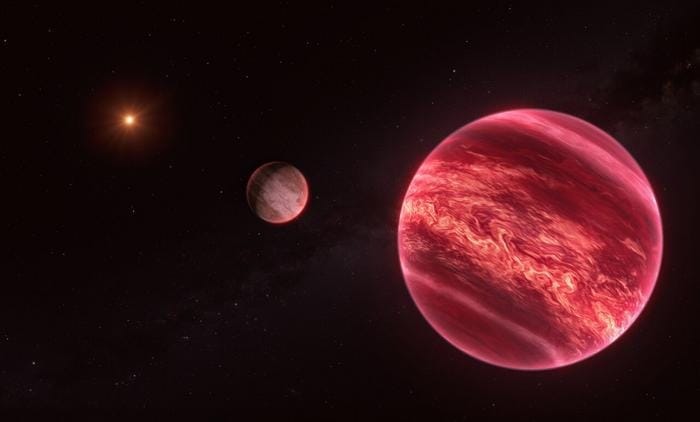
Astronomers have discovered thousands of exoplanets, which are worlds that orbit other stars, but nobody has clearly spotted an “exomoon” orbiting one of these exoplanets. Now, a team reports the discovery of a Jupiter-sized world that is orbiting a massive object called a brown dwarf that is, in turn, orbiting a star called CD-35 2722, which is about 73 light years from Earth. 

Scientists Uncover Lost ‘Golden Age’ of Languages That Ended 1,000 Years Ago
Concept art of the CD-35 2722 system, with the brown dwarf in the foreground, orbited by an exosatellite. Image: ESO/M. Kornmesser

This might be the first known exomoon, but the system is so weird and novel that researchers aren’t quite sure that’s the right term. Brown dwarfs are sometimes called “failed stars” because they are about as big as a gas planet can get without igniting nuclear fusion in their cores and transforming into stars. Moons orbit planets, and brown dwarfs are somewhere in between a planet and a star, so the team went with the term “exosatellite.”

“Exoplanet satellites can be easily described as exomoons, but it is not clear if satellites of brown dwarf companions can be called the same, as the term lacks a formal definition,” said researchers led by Kevin Hoy of Diego Portales University. “Perhaps we are approaching the limit of language invented to describe the Solar System, which is entirely unlike CD-35 2722.”

This is why you should always bring a poet! Whether or not the giant exosatellite gets minted as the first exomoon, the discovery is an exciting example of how diverse star systems are increasingly coming into focus.

The cave of the Old Ancestors

Grono, Elle et al. “Phytoliths from Cloggs Cave, GunaiKurnai country (southeastern Australia) reveal the gathering of whole grasses for burning practices inside the cave.” Frontiers in Environmental Archaeology.

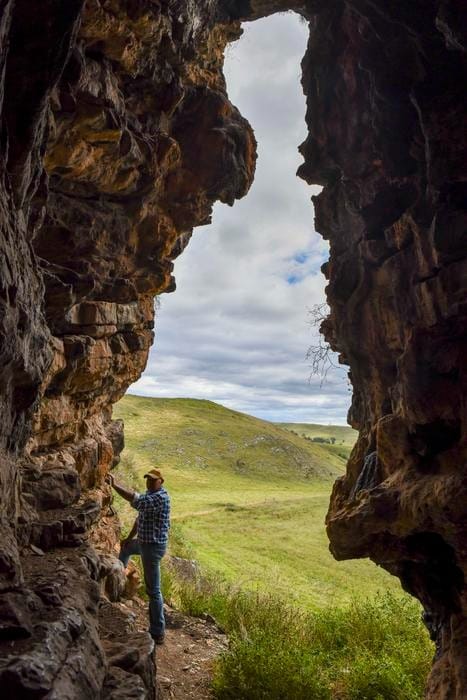
For at least 25,000 years, the “Old Ancestors” of Aboriginal Australians gathered to burn grass and perform magic rituals within Cloggs Cave, a cavernous site several hundred miles east of Melbourne. 

While the immense significance of the cave is well-known to the GunaiKurnai people of the region, as well as to generations of archaeologists, a new study has confirmed the deep roots of the site as a ritual setting for the Old Ancestors. Researchers led by Elle Grono of the Australian National University unearthed layers of “phytoliths,” which are mineral structures found in plant cells, to corroborate that the cave has been a site of magic and healing for 25,000 years.

Scientists Uncover Lost ‘Golden Age’ of Languages That Ended 1,000 Years Ago
GunaiKurnai Elder Uncle Russell Mullett at the cave entrance of Cloggs Cave. Image: Jess Shapiro, courtesy of GunaiKurnai Land and Waters Corporation

“Taken together, the archaeological features and multiple lines of archaeobotanical evidence at Cloggs Cave corroborates traditional GunaiKurnai knowledge and nineteenth century ethnography of ritual practices involving the use of plant resources, indicating that the cave was a special, secluded place used by mulla-mullung, powerful learned men and women, for the practice of magic, healing, cursing and spiritual practices,” said the team in their new study.

In our disorienting time of ephemeral reels and shortened attention spans, there’s inspiration in the incredible continuity of this storied cave, which has witnessed thousands of generations seeking solace in its confines.

Thanks for reading! See you next week.
❌