A brutal summer has exposed how much pressure European countries are under from forces largely out of their grip: war in Iran and Ukraine, record heat and more.
A brutal summer has exposed how much pressure European countries are under from forces largely out of their grip: war in Iran and Ukraine, record heat and more.
Ceuta, Spain, and Fnideq, Morocco, are physically separated by only a mile, but they are intertwined by family and trade. A recent border crisis is the latest chapter in their story.
Ceuta, Spain, and Fnideq, Morocco, are physically separated by only a mile, but they are intertwined by family and trade. A recent border crisis is the latest chapter in their story.
En quelques jours, plus de 1 500 personnes – dont plusieurs centaines hier – sont arrivées par la mer en provenance du Maroc dans l’enclave espagnole de Ceuta.
Les corps de neuf personnes qui avaient tenté de rejoindre la rive à la nage ont été repêchés.
Le gouvernement espagnol a déployé des militaires.
Il a indiqué que les personnes entrées illégalement seront rapatriées vers le Maroc.
Ceuta, située à la pointe nord du Maroc, est l’une des deux enclaves espagnoles en Afr
En quelques jours, plus de 1 500 personnes – dont plusieurs centaines hier – sont arrivées par la mer en provenance du Maroc dans l’enclave espagnole de Ceuta.
Les corps de neuf personnes qui avaient tenté de rejoindre la rive à la nage ont été repêchés.
Le gouvernement espagnol a déployé des militaires.
Il a indiqué que les personnes entrées illégalement seront rapatriées vers le Maroc.
Ceuta, située à la pointe nord du Maroc, est l’une des deux enclaves espagnoles en Afrique du Nord.
C’est une frontière terrestre de l’Union européenne sur le continent africain.
My name is Darina,” says an elfin teen, ponytail pulled through the back of her cap, and “next year I’ll be earning 150,000 rubles (nearly $2,000) a month.” Darina works at what she calls “the world’s largest drone factory,” helping to assemble versions of the Iranian Shahed drone. “My parents are proud of me. Wanna do the same?” She asks as she advertises a polytechnic in Tatarstan. The Russian government, in the face of war and looming demographic disaster, has been relaxing child labor laws s
My name is Darina,” says an elfin teen, ponytail pulled through the back of her cap, and “next year I’ll be earning 150,000 rubles (nearly $2,000) a month.” Darina works at what she calls “the world’s largest drone factory,” helping to assemble versions of the Iranian Shahed drone. “My parents are proud of me. Wanna do the same?” She asks as she advertises a polytechnic in Tatarstan. The Russian government, in the face of war and looming demographic disaster, has been relaxing child labor laws since 2022, making it easier to put 14-year-olds to work. Now, legislators are open about the need to reform “outdated” restrictions on employing minors in industries that were “considered dangerous 20 years ago.” Drone production is not the only part of the war effort to which teenagers are being recruited. This month in a “content camp” in Moscow, soldiers and state media propagandists trained 120-plus teens on how to make videos, use AI, and grow their audiences as aspiring influencers. Vladislav Golovin, a former soldier and a leader of Russia’s Young Army Cadets National Movement, said the program had “created a huge team of kids who understand how to broadcast government values.”
But many young people, subject to year-round conscription, subject to internet shut downs and subject to surveillance, have little desire to spread propaganda. Instead, according to Google Trends data, growing numbers of Russians are seeking information on how to emigrate. A new exodus would accelerate Russia’s deep demographic crisis. Already, up to a million people are thought to have left Russia since the full scale invasion of Ukraine in 2022. According to one recent count, nearly 210,000 Russian soldiers have been killed in the war with Ukraine, with other estimates suggesting over 1.2 million casualties, including 325,000 deaths. And Russian fertility rates are the lowest they have been for 200 years. Anton Kotyakov, the labor minister, has told Vladimir Putin that the country faces a labor shortage of 11 million people by 2030.
So concerning is this crisis that Rosstat, the national statistics agency, has stopped publishing monthly demographic data. State officials and local governors have been told to compete to come up with the most innovative solutions to a seemingly intractable problem. The pressure on Russian officials and the Kremlin is leading to desperate measures, including guidance from the Russian health ministry that women who say they do not want to have children should be referred to a psychologist. Nothing the Russian state has tried has worked, from financial incentives (extended even to schoolgirls under 18) to banning advertising that supposedly promotes “child-free” lifestyles and so-called “LGBTQ propaganda.”
Darina, 16, assembles Shahed-style drones at a factory in Alabuga, Tatarstan, Russia. Screenshots from YouTube video by T-invariant.
Alongside “anti-woke” policies disguised as family values, is rising xenophobia and anti-immigrant rhetoric that has led to a marked decline in the number of foreigners living in Russia. The Kremlin’s anti-migrant policies include a new system to monitor migrant workers through biometric registration, location tracking, and intensified police oversight. The Russian parliament is currently debating enhancing the number of offences that can be punished by deportation or substantially increased fines. Much of it is targeted at Russia’s Central Asian migrants who make up an overwhelming majority of immigrant labor. Some Central Asian governments, notably Kyrgyzstan and Tajikistan, have now urged their citizens to think twice about going to Russia for work.
Russia has been publicizing political stunts such as its “shared values visa” in which applicants from 46, largely developed, nations are given temporary residence permits if they profess to support “traditional Russian values.” The visa, the Kremlin has said, is “Russia’s response to what it perceives as the harmful effects of Western neoliberal policies.” But only a tiny fraction of the immigrants Russia needs will be Westerners who apply for such a visa; instead, Russia has been diversifying its pool of migrant workers by looking further east. Around 72,000 work permits were issued to Indian nationals in 2025, up from just 5,000 in 2021. Russian officials have signaled they are ready to accept “unlimited” numbers of workers from South Asian countries like India, Sri Lanka, and Myanmar.
While the Kremlin is looking to South Asia and Africa to address its immediate need for workers (and soldiers), the ambition in the longer term is to boost Russian birthr rates, despite the signal failure of ongoing attempts.
In the U.S., there have been several moves borrowed from the Kremlin’s playbook, including the restriction of abortion, the attempt to deny women birth control, and even alarm at the fall in teen pregnancies. But data released this month showed that women in the U.S. gave birth to 710,000 fewer babies in 2025 than they did in 2007, a reflection of two decades of steadily dropping birth rates. Russian demographer Salavat Abylkalikov, at the Leibniz Institute for East and Southeast European Studies in Germany, says “if the birth rate has fallen below the level of simple reproduction, it is almost impossible to raise it back.” Especially when financial incentives cover just a fraction of childcare costs.
In any case, Abylkalikov says, “in Russia, death is much more profitable than birth: in Nizhny Novgorod Oblast, the government provides around 1,000,000 rubles (about $12,000) for each child, but if one person goes to war and dies, the family receives up to 12 million rubles in total. That's more than $120,000. This is the economy of death.” The evidence, from countries like Russia, Hungary and the U.S., is that appeals to tradition, to religion and to female “responsibility” do not work, when support for families is limited. And while migration is an obvious fix to demographic questions everywhere, it’s politically toxic.
Russia knows it is hurtling towards demographic doom but can do little to halt the momentum. Its policies are riddled with inconsistencies — a strong line in anti-migration rhetoric and bullying, while being forced to import workers and soldiers from Asia and Africa; a patriarchal view of women’s roles, mostly confined to the domestic, while increasingly reliant on women to take the jobs of the men who are fighting and dying in Putin's war; and encouraging more women to give birth, while employing children to build drones. With family values like these, no wonder young Russians are hesitant to procreate.
When the United States and Israel started blitzing Iran last weekend, eyes turned to the Chagos Islands in the Indian Ocean. The British-administered archipelago is home to a strategically vital US air base on the island of Diego Garcia. Would US President Donald Trump be using it in his “Operation Epic Fury”?
It's fair to say Trump probably didn't give a damn about Misley Mandarin’s opinion. But the self-styled “interim first minister” of Chagos, who recently upped sticks from Britain in a “
When the United States and Israel started blitzing Iran last weekend, eyes turned to the Chagos Islands in the Indian Ocean. The British-administered archipelago is home to a strategically vital US air base on the island of Diego Garcia. Would US President Donald Trump be using it in his “Operation Epic Fury”?
It's fair to say Trump probably didn't give a damn about Misley Mandarin’s opinion. But the self-styled “interim first minister” of Chagos, who recently upped sticks from Britain in a “super, super secret” mission to take up residence on the long-deserted Peros Banhos atoll, gave Washington his official “blessing” anyway.
I spoke via WhatsApp to the 47-year-old Chagossian in his base camp: basically a few tents, with a solar generator and a Starlink satellite connection enabling him to beam reels to his 10,000 Facebook followers. He quit his job as a bus driver in London to come here, determined to halt Britain’s plan to hand over what he considers to be his land to Mauritius after a long-running decolonization battle.
“We’re British citizens here. We’re not moving,” he said.
Mandarin wants the land of his forebears to remain under the rule of Britain, the former colonial ruler that booted out about 1,500 native Chagossians, including his own father, to make room for the U.S. military base in the late 1960s. The removal consigned Chagossians to a miserable fate in newly independent Mauritius.
Now on home turf, Mandarin, his 72-year-old dad, and two other Chagossians have dodged immediate deportation: they’ve obtained an injunction from a British court allowing them to stay until a hearing on March 13. Since their arrival, two more Chagossians have joined them. “We can do self-determination right now. We don't want to cut any links with Britain. We're not looking for independence,” Mandarin says.
“The next generation will decide on independence.”
Marriage of convenience
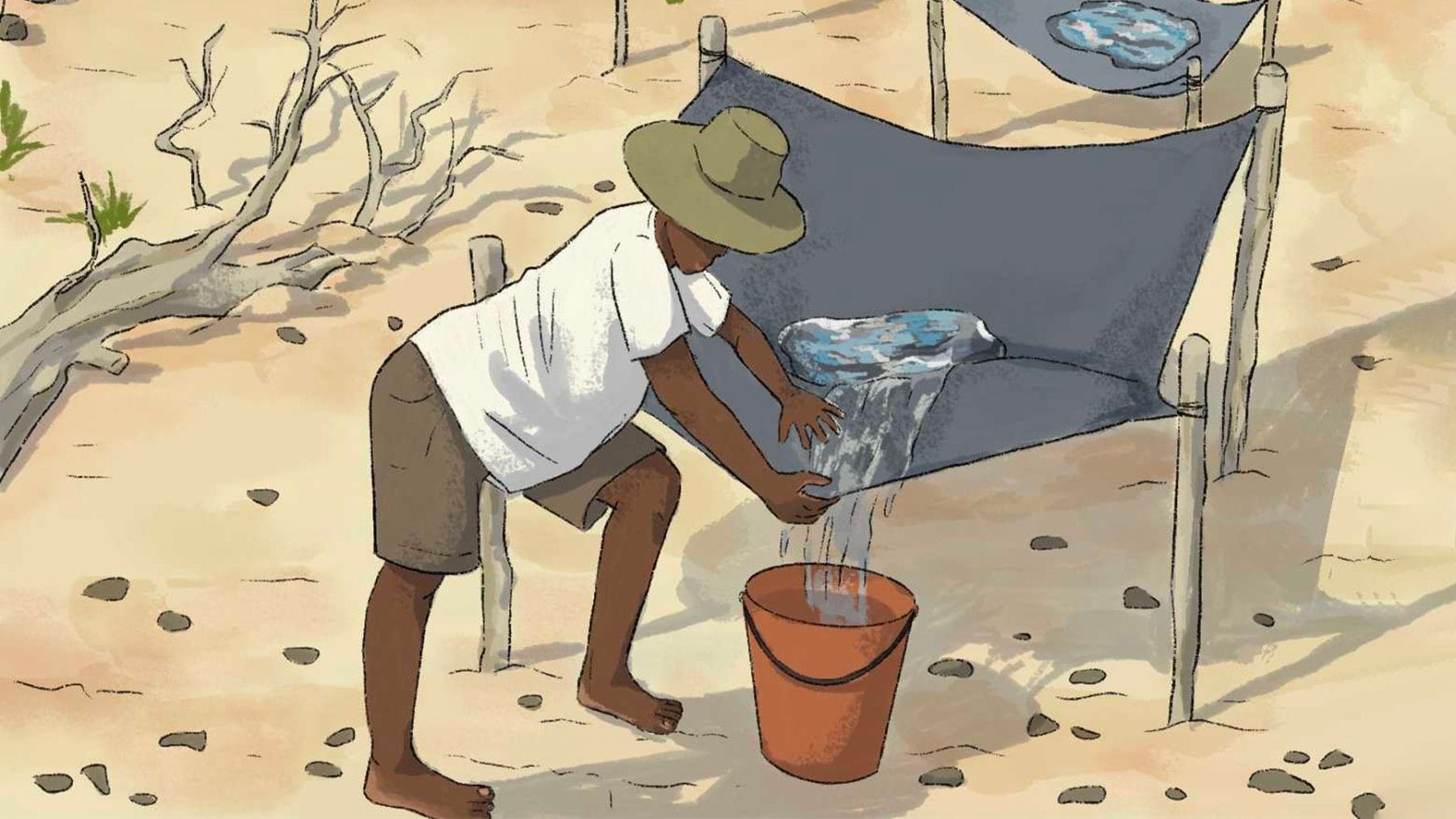
Life on Île du Coin, the largest island on Peros Banhos, is simple. The daily routine revolves around catching fish and finding a supply of fresh water. The new residents collect overnight rainfall in tarpaulin sheets to drink. Bathing involves a dip in the sea to wash off dirt, followed by a splash of precious rainwater to rinse.
Mandarin appears to be relishing the experience. Soon after his arrival, the former army cook, who has bags of swagger, posted a video of himself cooking up “naan fromaaz”, or cheese naan, in a skillet on a makeshift stove. “Pa bizin madam isi mwa!” he jokes. I don't need a wife here!
The Chagossians arrived on the island on 16 February, accompanied by former army officer Adam Holloway, a former Conservative MP who recently defected to the radical right Reform UK party.
Reform, which is surging in the polls, is leading opposition to a bilateral treaty that would see Britain cede sovereignty of Chagos to Mauritius, while paying an average of £101-million ($135-million) per year to maintain a lease on Diego Garcia over the coming century. Negotiations began after the International Court of Justice ruled in 2019 that Britain should transfer sovereignty of Chagos to Mauritius “as rapidly as possible.”
The sleek yacht that brought the group on the five-day journey from Sri Lanka and travels back and forth with supplies was paid for by British-Thai businessman Christopher Harborne, a mega-donor to Reform. Its name is No Excuse – as in, “no excuse for us not to stay on Chagos,” says Mandarin.
Reform UK and the Chagossians make for curious bedfellows. On the one hand, there's a political party that has floated plans to create a Trump-inspired, ICE-style agency to carry out mass deportations in Britain.
On the other, there’s Mandarin’s dad, finally back home after being brutally evicted from his atoll at the age of 14. “I will not go back to England. I want to die here,” said Michel Mandarin, as he set foot on his cherished Chagossian soil.
The unlikely pairing has had cause for joint celebration. Two days after they arrived, Trump withdrew his approval for the UK-Mauritius transfer treaty, which was supposed to provide legal certainty for the base in a hypothetical world governed by the rules-based international order.
It turned out the president was annoyed at British Prime Minister Keir Starmer’s refusal to sanction the use of Diego Garcia for the Iran offensive. “DO NOT GIVE AWAY DIEGO GARCIA!” he told the British prime minister. The treaty was paused. Then war broke out and a beleaguered Starmer agreed to “defensive” strikes from Diego Garcia.
On Île du Coin, war seems like a distant prospect, even if it is potentially less than 200km (about 125 miles) away in Diego Garcia. As Tuesday drew to a close, there had so far been neither sight nor sound of the US’s deadly B-52, B-1, and B-2 bombers in the slightly overcast skies.
Wynona Mutisi/The Continent
Kicking the can
Mandarin left Mauritius at age 22. He joined the British army in a bid to improve his lot and later became a bus driver in south London. He says he always felt like a second-class citizen in Mauritius, with “no opportunity to progress”.
Rights groups have charted how evictees from Chagos struggled to cope in Mauritius, many of them ending up trapped in an urban nightmare of poverty, mental illness, and addiction — with little sympathy from their hosts. Many Chagossians left for Britain after securing citizenship rights.
Now the fate of their homeland is being decided by a treaty negotiated over their heads. Last year, a UN committee on racial discrimination warned that the treaty could perpetuate “long-standing violations” of Chagossian rights.
The treaty says Mauritius is “free” to resettle islanders on any of the Chagos islands — except Diego Garcia. But there is no binding obligation for it to do so and the exclusion of Diego Garcia rankles. The deal also includes a £40-million trust fund to be managed by Mauritius, which has been criticised as a ruse by Britain to avoid paying proper compensation.
“People talk about decolonisation, but if Britain did the wrongs, Britain should have to repair the wrongs — not kick the can to Mauritius,” says Mandarin. “Or they will get away with it.”
One of the reels he has filmed on Île du Coin features an industrial oven that was used by colonial officials to burn the islanders’ dogs before they were evicted. Officials threatened the islanders with the same fate if they refused to leave. Britain must pay compensation, he says.
'Belongers'
Mandarin’s joint odyssey with Reform UK has provoked mixed feelings among the Chagossian diaspora in Britain, Seychelles, and Mauritius.
“He’s put us back in the centre of the story, but will we be overshadowed by Reform’s agenda?” asked one Chagossian in the English town of Crawley – home to a 3,500-strong Chagossian community — who is also opposed to the deal.
As the treaty was being negotiated, Chagossians’ concerns were largely swept under the carpet as a complicating factor in a pragmatic decolonization drive.
The hard right has capitalized on the deal’s major flaw, positioning itself as the main champion of Chagossians, just as their ancestral land finds itself embroiled in a conflict that could upend the global order.
One video recently posted by Reform leader Nigel Farage saw him express outrage after being “denied access” to Île du Coin for the delivery of “humanitarian” supplies to Mandarin and his men, racking up a cool 4.7 million views on X.
Asked whether he is being used by Reform and its supporters, Mandarin is sanguine. He says he also contacted the left-wing Green Party for support, but it never replied. “Only Reform responded. At the end of the day, it’s politics. You have to make your own judgements for the sake of your people,” he says.
He views the upcoming hearing as a potential “turning point in our fight”. The injunction barring their removal was granted on the basis that their location was too far from the base to pose a security threat. “If the court says they can’t remove us, then maybe more people will come,” he says. “This is our people. This is our time. We’re not visitors — we’re belongers.”
The Age of Exile
This story is part of our Age of Exile series, which explores how displacement has evolved from historical punishment into a defining condition of our time—one that reveals profound transformations in how we construct identity, maintain community, and exercise power across borders. In an era where digital connection enables presence without physical proximity, exile has become more complex, more global, and more central to understanding our world. Explore The Age of Exile series
Il paraît que l’Allemagne et le Danemark devraient servir d’exemple au Québec en matière de politique migratoire. C’est ce que laisse entendre le député Alex Boissonneault dans une vidéo voulant défaire le « mythe » que « plus d’immigration veut dire moins de pénurie de main d’œuvre ». Selon lui, les gouvernements allemand et danois ont changé leur politique d’immigration après avoir réalisé que l’immigration ne règle pas la pénurie de main-d’œuvre. M. Boissonneault connaît-il réellement la poli
Il paraît que l’Allemagne et le Danemark devraient servir d’exemple au Québec en matière de politique migratoire. C’est ce que laisse entendre le député Alex Boissonneault dans une vidéo voulant défaire le « mythe » que « plus d’immigration veut dire moins de pénurie de main d’œuvre ». Selon lui, les gouvernements allemand et danois ont changé leur politique d’immigration après avoir réalisé que l’immigration ne règle pas la pénurie de main-d’œuvre. M. Boissonneault connaît-il réellement la politique migratoire de ces deux pays et leurs fondements?
À gauche: Alex Boissonneault, député d’Arthabaska-l’Érable depuis 2025 À droite: Mette Frederiksen, première ministre du Danemark depuis 2019
« Il y a plusieurs exemples de pays qui ont changé de politique en matière d’immigration parce qu’ils ont constaté cette situation. C’est le cas de l’Allemagne. L’Allemagne qui comptait beaucoup sur l’immigration pour combler ses postes vacants mais qui a constaté en 2023 que l’augmentation de l’immigration avait créé une pénurie de main d’œuvre dans les secteurs névralgiques. Donc il y a eu changement de politique. »
C’est complètement faux. La modification de la politique migratoire allemande en 2023 n’a rien à voir avec des considérations économiques ou sociales. Au même moment où le gouvernement d’Olaf Scholz renforçait le contrôle des frontières, l’Allemagne cherchait à attirer des travailleurs étrangers, en particulier les travailleurs qualifiés, notamment en réduisant les barrières administratives. Voici ce qu’affirmait Scholz en novembre 2024: « Aucun pays du monde ne peut connaître de croissance économique avec une main-d’oeuvre qui diminue. C’est la vérité à laquelle nous sommes confrontés. » Dans le même discours, le chancelier allemand défend le droit de l’Allemagne de choisir qui est admis en son sein, donc de repousser les réfugiés. Le problème de l’Allemagne n’est pas que l’immigration ne suffit pas à combler la pénurie de main-d’oeuvre, mais qu’elle ne parvient pas à attirer une main d’oeuvre de souche européenne en assez grande quantité.
« Même chose pour le Danemark avec un gouvernement social-démocrate, normalement considéré de gauche. Le gouvernement danois a constaté que l’augmentation de l’immigration a eu des conséquences négatives sur les services à la population. Il y a donc eu un changement de politique. »
Encore une fois, ce « changement de politique » du gouvernement danois n’a rien à voir avec l’économie ou avec les services à la population. C’est une question purement idéologique et, ce gouvernement ne s’en cache pas, raciste.
Commençons par dire que le racisme n’est pas une question de droite ou de gauche. On peut très bien être à gauche économiquement et à droite sur le plan de l’identité nationale. C’est le cas de la première ministre danoise, Mette Frederiksen, très attachée à l’État-providence danois, mais ouvertement raciste. En 2018, elle proposait de renvoyer les migrants « non occidentaux », non seulement du Danemark, mais de l’Europe, et de les placer dans des camps de concentration en Afrique sous supervision des Nations unies. À son arrivée au pouvoir en 2019, Frederiksen a promis de faire du Danemark un pays « sans demandeur d’asile ». En 2021, le gouvernement danois a voté une loi pour expulser les demandeurs d’asile hors d’Europe en attendant le traitement de leur demande, en contradiction totale avec les traités internationaux et les directives européennes. En 2022, une entente est signée avec le Rwanda. En gros, le Danemark paie le Rwanda pour détenir les demandeurs d’asile. Un bien triste revirement pour le premier pays à avoir signé la Convention de 1951 sur les réfugiés. Ce n’est pas sans raison que ce gouvernement « social-démocrate » est appuyé par l’extrême droite danoise.
En soi, la politique de Frederiksen et des sociaux-démocrates ne jure pas avec celle des administrations précédentes. Depuis le début des années 2000, le gouvernement danois est hostile à l’immigration. Le délai nécessaire pour obtenir la résidence permanente est passé de trois à huit ans. La « loi sur les étrangers » est modifiée régulièrement pour devenir toujours plus restrictive et viser des groupes en particulier. Elle a été modifiée 42 fois entre 2017 et 2019. Et la loi danoise est ouvertement raciste en ciblant des groupes spécifiques. En 2016, les Syriens ont été directement ciblés par une loi restreignant l’accés au regroupement familial pour les réfugiés et confisquant leurs objets de valeur pour financer leur séjour. En 2018, des mesures sont prises pour que des peines plus sévères soient infligées aux « résidents non occidentaux ». Des amendes importantes sont infligées aux personnes venant en aide aux « immigrants irréguliers ». Et pour bien montrer que la politique danoise est motivée par le racisme et non pas par des préoccupations économiques ou sociales, le Danemark a ouvert grand ses portes aux réfugiés ukrainiens fuyant l’invasion russe.
Ironiquement, ces dernières années, c’est la droite (modérée) qui a commencé à demander un assouplissement des politiques migratoires au Danemark. Pas pour des raisons humanitaire, mais pour des raisons économiques. Il y a une pénurie de main-d’œuvre, voyez-vous. Et les employeurs aimeraient bien qu’on leur permette de recruter à l’étranger les travailleurs qu’ils ne trouvent pas localement.
Christèle Meilland, chercheuse à l’Institut de recherches économiques et sociales (IRES), explique que la politique migratoire danoise s’appuie sur un discours « assimilant les étrangers, et particulièrement les réfugiés, à un fardeau pour l’État-providence ». Ça vous rappelle quelque chose?
Il paraît que l’Allemagne et le Danemark devraient servir d’exemple au Québec en matière de politique migratoire. C’est ce que laisse entendre le député Alex Boissonneault dans une vidéo voulant défaire le « mythe » que « plus d’immigration veut dire moins de pénurie de main d’œuvre ». Selon lui, les gouvernements allemand et danois ont changé leur politique d’immigration après avoir réalisé que l’immigration ne règle pas la pénurie de main-d’œuvre. M. Boissonneault connaît-il réellement la poli
Il paraît que l’Allemagne et le Danemark devraient servir d’exemple au Québec en matière de politique migratoire. C’est ce que laisse entendre le député Alex Boissonneault dans une vidéo voulant défaire le « mythe » que « plus d’immigration veut dire moins de pénurie de main d’œuvre ». Selon lui, les gouvernements allemand et danois ont changé leur politique d’immigration après avoir réalisé que l’immigration ne règle pas la pénurie de main-d’œuvre. M. Boissonneault connaît-il réellement la politique migratoire de ces deux pays et leurs fondements?
À gauche: Alex Boissonneault, député d’Arthabaska-l’Érable depuis 2025 À droite: Mette Frederiksen, première ministre du Danemark depuis 2019
« Il y a plusieurs exemples de pays qui ont changé de politique en matière d’immigration parce qu’ils ont constaté cette situation. C’est le cas de l’Allemagne. L’Allemagne qui comptait beaucoup sur l’immigration pour combler ses postes vacants mais qui a constaté en 2023 que l’augmentation de l’immigration avait créé une pénurie de main d’œuvre dans les secteurs névralgiques. Donc il y a eu changement de politique. »
C’est complètement faux. La modification de la politique migratoire allemande en 2023 n’a rien à voir avec des considérations économiques ou sociales. Au même moment où le gouvernement d’Olaf Scholz renforçait le contrôle des frontières, l’Allemagne cherchait à attirer des travailleurs étrangers, en particulier les travailleurs qualifiés, notamment en réduisant les barrières administratives. Voici ce qu’affirmait Scholz en novembre 2024: « Aucun pays du monde ne peut connaître de croissance économique avec une main-d’oeuvre qui diminue. C’est la vérité à laquelle nous sommes confrontés. » Dans le même discours, le chancelier allemand défend le droit de l’Allemagne de choisir qui est admis en son sein, donc de repousser les réfugiés. Le problème de l’Allemagne n’est pas que l’immigration ne suffit pas à combler la pénurie de main-d’oeuvre, mais qu’elle ne parvient pas à attirer une main d’oeuvre de souche européenne en assez grande quantité.
« Même chose pour le Danemark avec un gouvernement social-démocrate, normalement considéré de gauche. Le gouvernement danois a constaté que l’augmentation de l’immigration a eu des conséquences négatives sur les services à la population. Il y a donc eu un changement de politique. »
Encore une fois, ce « changement de politique » du gouvernement danois n’a rien à voir avec l’économie ou avec les services à la population. C’est une question purement idéologique et, ce gouvernement ne s’en cache pas, raciste.
Commençons par dire que le racisme n’est pas une question de droite ou de gauche. On peut très bien être à gauche économiquement et à droite sur le plan de l’identité nationale. C’est le cas de la première ministre danoise, Mette Frederiksen, très attachée à l’État-providence danois, mais ouvertement raciste. En 2018, elle proposait de renvoyer les migrants « non occidentaux », non seulement du Danemark, mais de l’Europe, et de les placer dans des camps de concentration en Afrique sous supervision des Nations unies. À son arrivée au pouvoir en 2019, Frederiksen a promis de faire du Danemark un pays « sans demandeur d’asile ». En 2021, le gouvernement danois a voté une loi pour expulser les demandeurs d’asile hors d’Europe en attendant le traitement de leur demande, en contradiction totale avec les traités internationaux et les directives européennes. En 2022, une entente est signée avec le Rwanda. En gros, le Danemark paie le Rwanda pour détenir les demandeurs d’asile. Un bien triste revirement pour le premier pays à avoir signé la Convention de 1951 sur les réfugiés. Ce n’est pas sans raison que ce gouvernement « social-démocrate » est appuyé par l’extrême droite danoise.
En soi, la politique de Frederiksen et des sociaux-démocrates ne jure pas avec celle des administrations précédentes. Depuis le début des années 2000, le gouvernement danois est hostile à l’immigration. Le délai nécessaire pour obtenir la résidence permanente est passé de trois à huit ans. La « loi sur les étrangers » est modifiée régulièrement pour devenir toujours plus restrictive et viser des groupes en particulier. Elle a été modifiée 42 fois entre 2017 et 2019. Et la loi danoise est ouvertement raciste en ciblant des groupes spécifiques. En 2016, les Syriens ont été directement ciblés par une loi restreignant l’accés au regroupement familial pour les réfugiés et confisquant leurs objets de valeur pour financer leur séjour. En 2018, des mesures sont prises pour que des peines plus sévères soient infligées aux « résidents non occidentaux ». Des amendes importantes sont infligées aux personnes venant en aide aux « immigrants irréguliers ». Et pour bien montrer que la politique danoise est motivée par le racisme et non pas par des préoccupations économiques ou sociales, le Danemark a ouvert grand ses portes aux réfugiés ukrainiens fuyant l’invasion russe.
Ironiquement, ces dernières années, c’est la droite (modérée) qui a commencé à demander un assouplissement des politiques migratoires au Danemark. Pas pour des raisons humanitaire, mais pour des raisons économiques. Il y a une pénurie de main-d’œuvre, voyez-vous. Et les employeurs aimeraient bien qu’on leur permette de recruter à l’étranger les travailleurs qu’ils ne trouvent pas localement.
Christèle Meilland, chercheuse à l’Institut de recherches économiques et sociales (IRES), explique que la politique migratoire danoise s’appuie sur un discours « assimilant les étrangers, et particulièrement les réfugiés, à un fardeau pour l’État-providence ». Ça vous rappelle quelque chose?

 Connexion