She Sewed the Blue Angels’ Suits for 40 Years. Then a Big Company Got the Job.

© USA TODAY Network via Reuters Connect


© USA TODAY Network via Reuters Connect


© Kathleen Flynn for The New York Times


For most of the war, a circle of generals decided which companies got paid to arm Ukraine. They named the suppliers, they named the models, and the money followed the list.
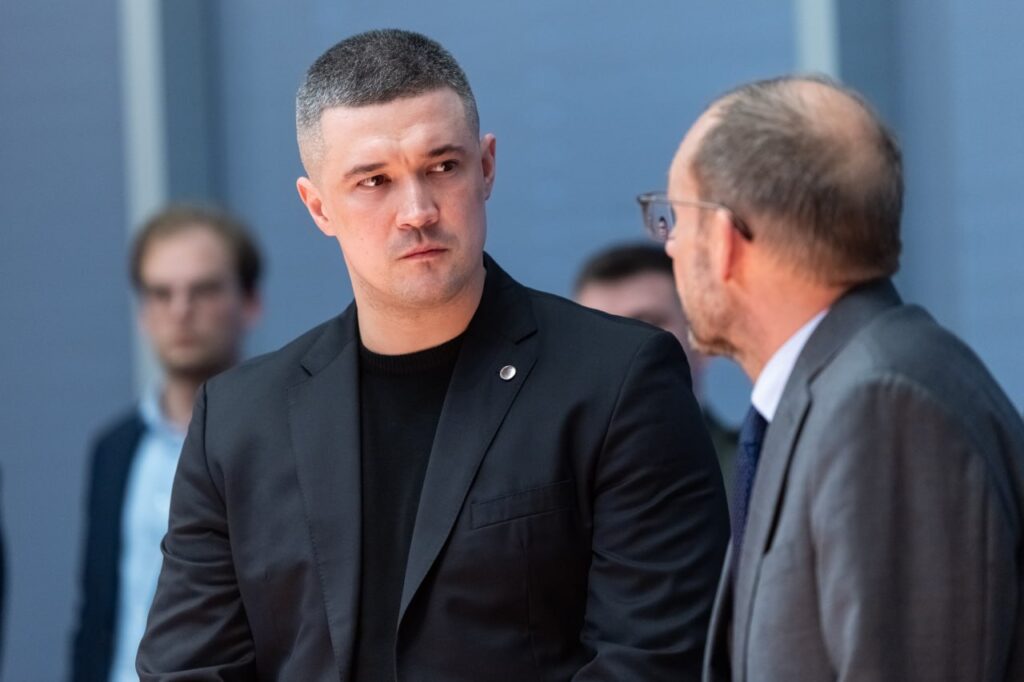
Then the defense minister Mykhailo Fedorov took that power away and made the companies compete on price and on how their weapons performed at the front. Three weeks ago, the minister was fired. Now, the people who did well under the old list are pushing to get it back.
What makes this more than a lobbying fight is that its two loudest voices agree on almost nothing else: Fedorov, who says he believes the overhaul cost him his job, and an anti-corruption watchdog who owes him no favors. Both say the reform may not outlast him.
What rides on it is real money, and Ukraine has little to spare. It now pours almost all its own revenue into defense, while the West covers nearly the entire civilian budget, roughly $50 billion in 2026. Every dollar lost to a rigged contract is one that never reaches a front already too short of soldiers to absorb the waste.
They describe it from opposite corners. Fedorov told Ukrainska Pravda on 30 July he believes his removal was tied to the procurement overhaul—the restructuring, he said, “sparked significant dissatisfaction” among powerful people who then leaned on President Volodymyr Zelenskyy.
Fedorov is not a neutral witness: he has said he would take the job back tomorrow. He does not have to be neutral to be right about what he built.
Ukraine is about to discover that it built less of an institution than it thought.

Four days later, Tetiana Nikolaienko told Radio NV what the fight looks like from inside. Anonymous Telegram channels attacking one drone maker, then the next. Investigators searching companies’ offices. A loud public argument over which drones are overpriced.
These are not separate quarrels, said Nikolaienko, deputy head of the public anti-corruption council that watches Defense Ministry spending—they are the opening moves of a scramble to grab a bigger share of the weapons money, now that the man who set the rules is gone.

What they are describing is the unwinding of one specific change. Fedorov took the power to pick winners away from the General Staff, which had named the exact companies and models the state would buy, and made the ministry buy instead on open competition and combat performance.
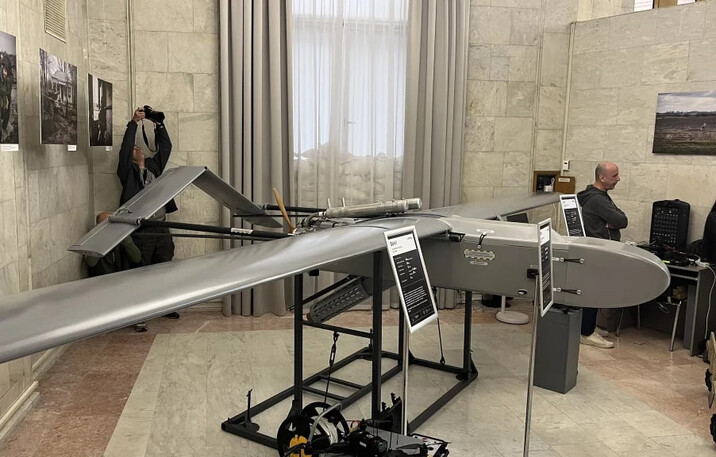
That widened the field of who could win a contract. It also cut the guaranteed business of the suppliers who had thrived on the old list—among them Fire Point, whose drones account for roughly 60 percent of Ukrainian long-range strikes inside Russia.
This is not a tale of one honest reformer against thieves. Fedorov’s overhaul was unfinished: only about a fifth of drone purchases were conducted through open competition when he left. And he had staffed the ministry with his own people.
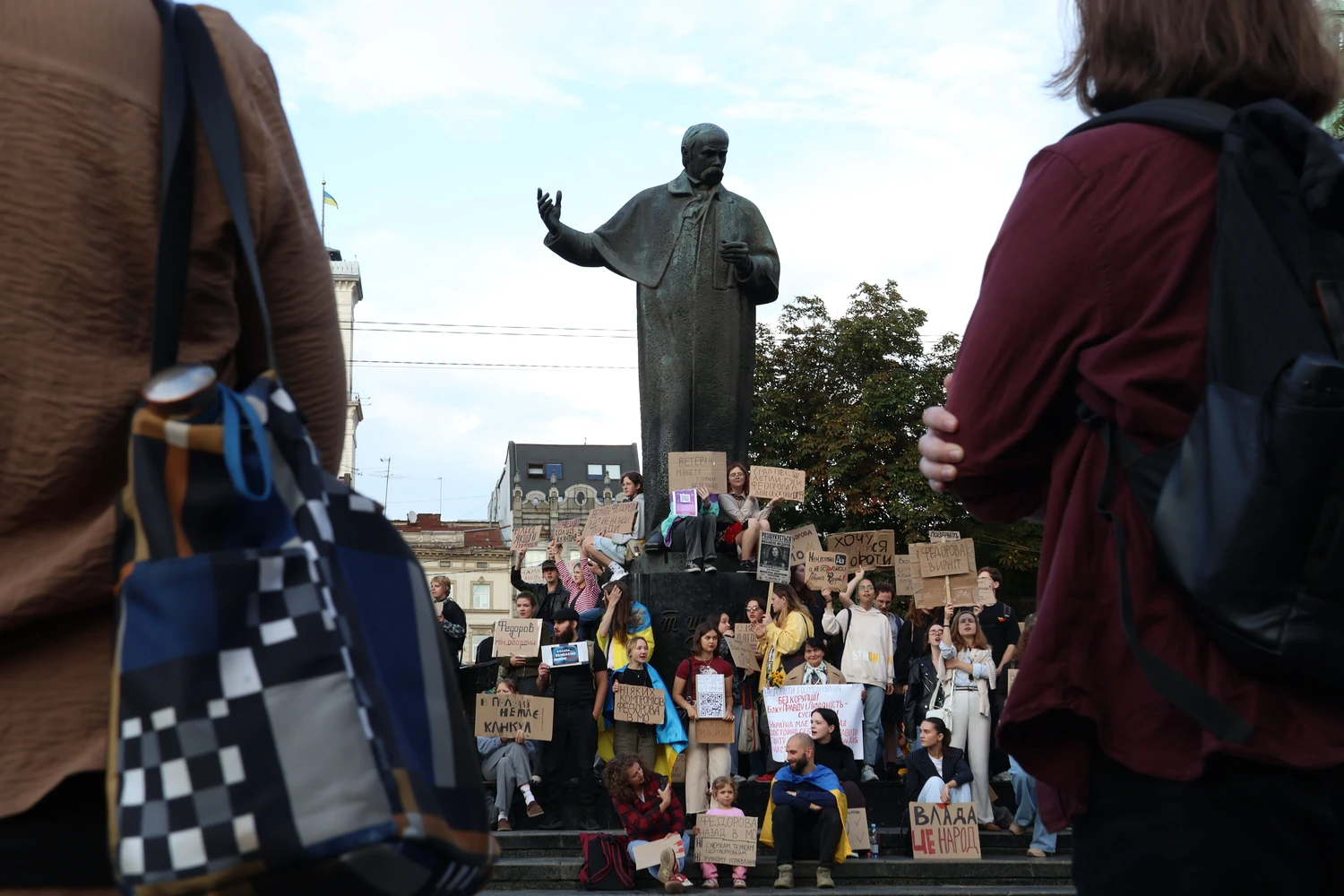
Fedorov was not the spotless auditor the street protests made him out to be. But an unfinished reform can still be worth keeping, and the people fighting it are not fighting to finish it.
What survives comes down to a plain distinction: what Fedorov wrote into Ukraine’s rules, and what was only his practice. The register of approved arms suppliers exists because of a government decree, and a decree does not walk out when a minister does. That part will most likely hold.
The part that made the reform actually bite was never set down that hard. The open competitions, the public figure showing how much buying was contested rather than quietly handed out, the team that enforced both—those were Fedorov’s way of running the ministry, not Ukraine’s law, and they are exactly what Nikolaienko says is now under pressure.
So Ukraine is about to discover that it built less of an institution than it thought. The paperwork stays, but the part that really worked walks out with one man, when Ukraine can least afford the loss.


The U.K. has used interest generated from frozen Russian assets to purchase weapons for Ukraine, buying 350 air defense missiles worth £70 million ($87 million), The Guardian reported on June 25.
The move represents the U.K.'s first direct use of Russia-linked funds to buy weaponry for Kyiv.
The weapons purchase was funded through Britain's Extraordinary Revenue Acceleration (ERA) scheme, which captures interest from frozen Russian central bank assets.
According to The Guardian, the missiles, originally designed as air-to-air weapons, were converted by RAF engineers and MBDA UK in just three months to fire from ground-based systems.
Five additional Raven launcher systems will accompany the missiles to Ukraine, bringing the total to 13.
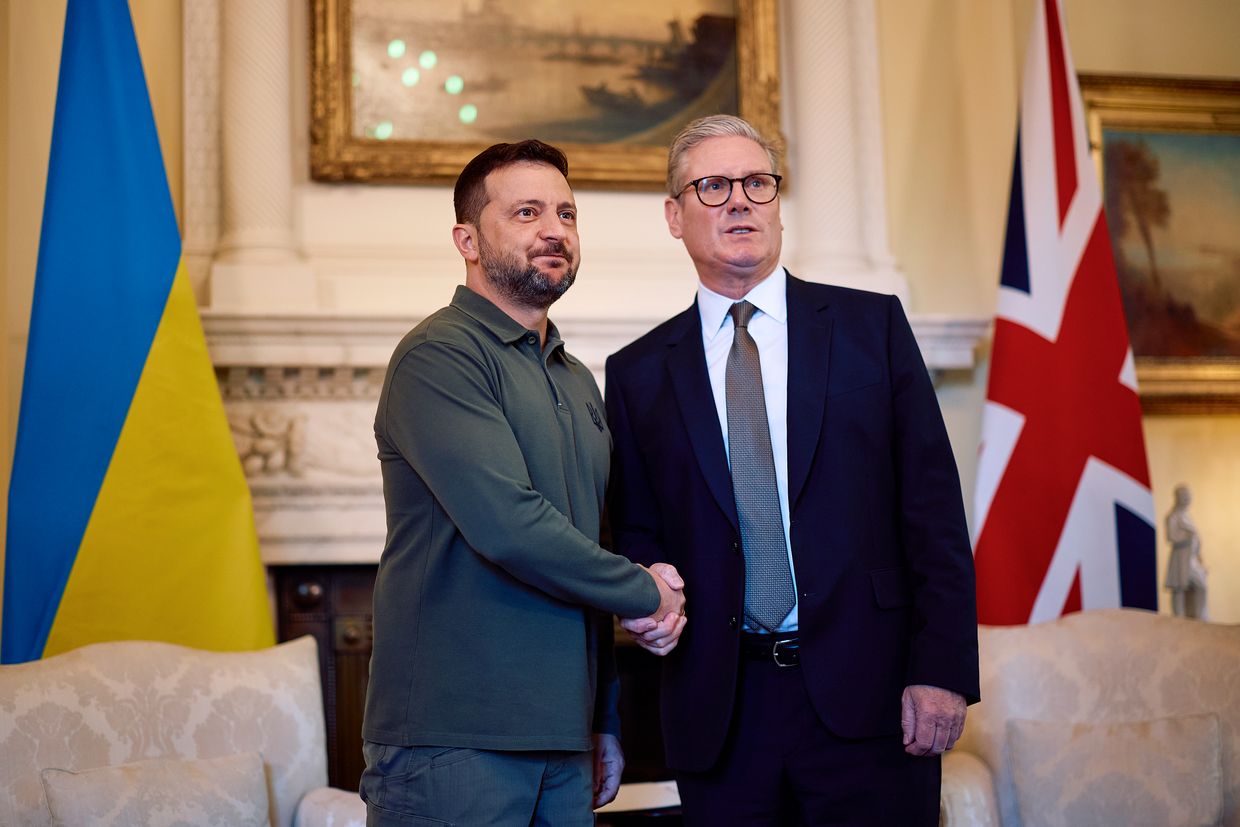
U.K. Prime Minister Keir Starmer announced the package ahead of NATO's annual summit.
"Russia, not Ukraine, should pay the price for Putin's barbaric and illegal war," he said.
The package is part of Britain's largest-ever annual military commitment to Ukraine of £4.5 billion ($5.6 billion), the Guardian reports.
It follows a £1.6 billion ($2.0 billion) deal in March for over 5,000 air defense missiles and a separate £350 million ($436 million) investment to increase drone deliveries tenfold.
The announcement comes as Starmer and President Volodymyr Zelensky agreed to work closely on military production between the UK and Ukraine. On June 24, Ukraine's Defense Minister Rustem Umerov announced that Britain will finance Ukrainian-designed drones manufactured in the UK.
European countries cannot fully confiscate the frozen Russian assets due to concerns about international law and financial stability. The European Central Bank warned that such a move could undermine confidence in the euro as a reserve currency, since most of the assets are euro-denominated.
Instead, only the interest generated from these funds is currently being used to back a $50 billion loan package for Ukraine, while the principal amount of 300 billion euros ($348 billion) remains frozen but not seized.
In June, Ukraine received another 1 billion euros ($1.1 billion) from the EU as part of the G7 loan program backed by frozen Russian assets, Prime Minister Denys Shmyhal announced.


Ukraine’s domestically developed short-range Sapsan ballistic missile has successfully completed combat testing and is in the process of serial production, Ukrainian media reported on June 13.
The missile, with a payload of 480 kg, completed testing in May after successfully striking a Russian military target at a range of nearly 300 km, Valentyn Badrak, head of the an independent Ukrainian think Center for Army, Conversion and Disarmament Studies told Liga.net.
Ukraine's Defense Ministry reportedly dedicated a department to formulate and test the missile.
There is no reported timeline as to when the missiles can be seen in regular use on the battlefield.
Domestically produced long-range weapons are of key importance to Ukraine's defense strategy, as Western partners have been slow in delivering adequate weaponry amid increasing Russian attacks and offensives.
The news comes as U.S. Defense Secretary Pete Hegseth said in a congressional hearing on June 10 that the United States will reduce funding allocated for military assistance to Ukraine in its upcoming defense budget
In November 2024, President Volodymyr Zelensky announced that Ukraine has produced its first 100 missiles.
Since then, Ukraine has continued to increase domestic weapon production. Zelensky said on April 16 that over 40% of the weapons used at the front line are now produced in Ukraine, including over 95% of drones used at front line.
Zelensky also previously revealed that Ukraine had developed another domestic-made weapon, a missile-drone Palianytsia.
As Ukraine attempt to increase its defense production, Russia has continued to unleash large-scale attacks on Ukrainian cities, regularly launching hundreds of drones to overwhelm Ukrainian air defenses.
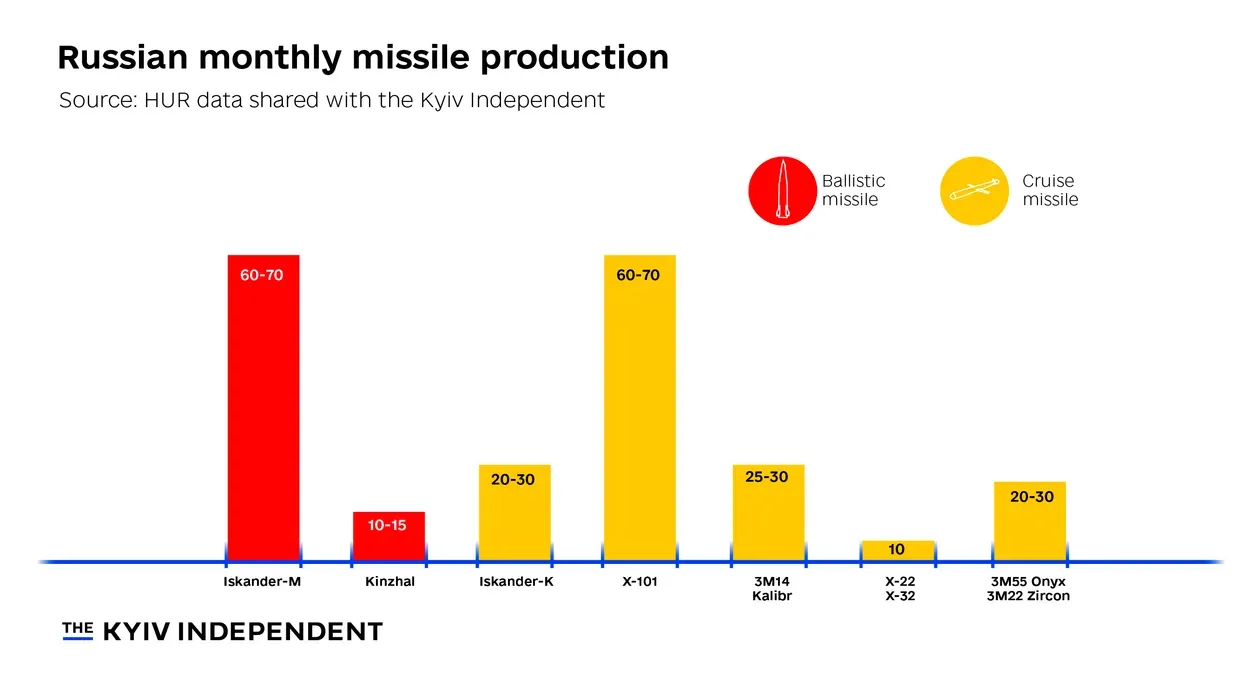
Ukraine's military intelligence (HUR) shared with the Kyiv Independent that Russia's production of ballistic missiles has increased by at least 66% over the past year.

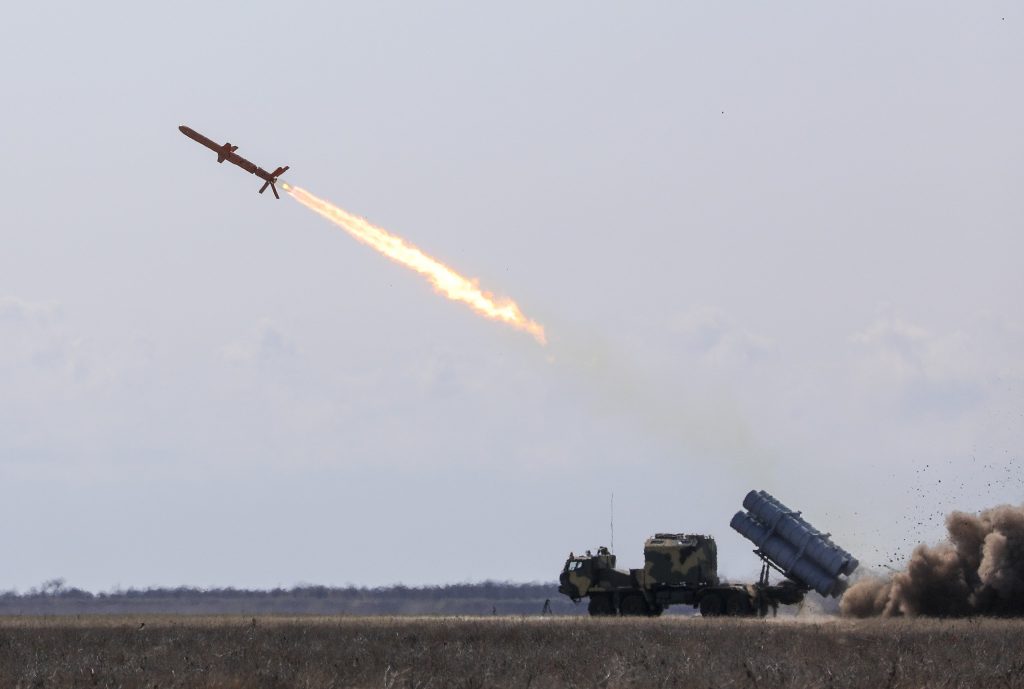
Ukraine's Defense Minister Rustem Umerov said in late 2024 that Ukraine also resumed and scaled up serial production of Neptune cruise missiles, modifying them to have a greater range.
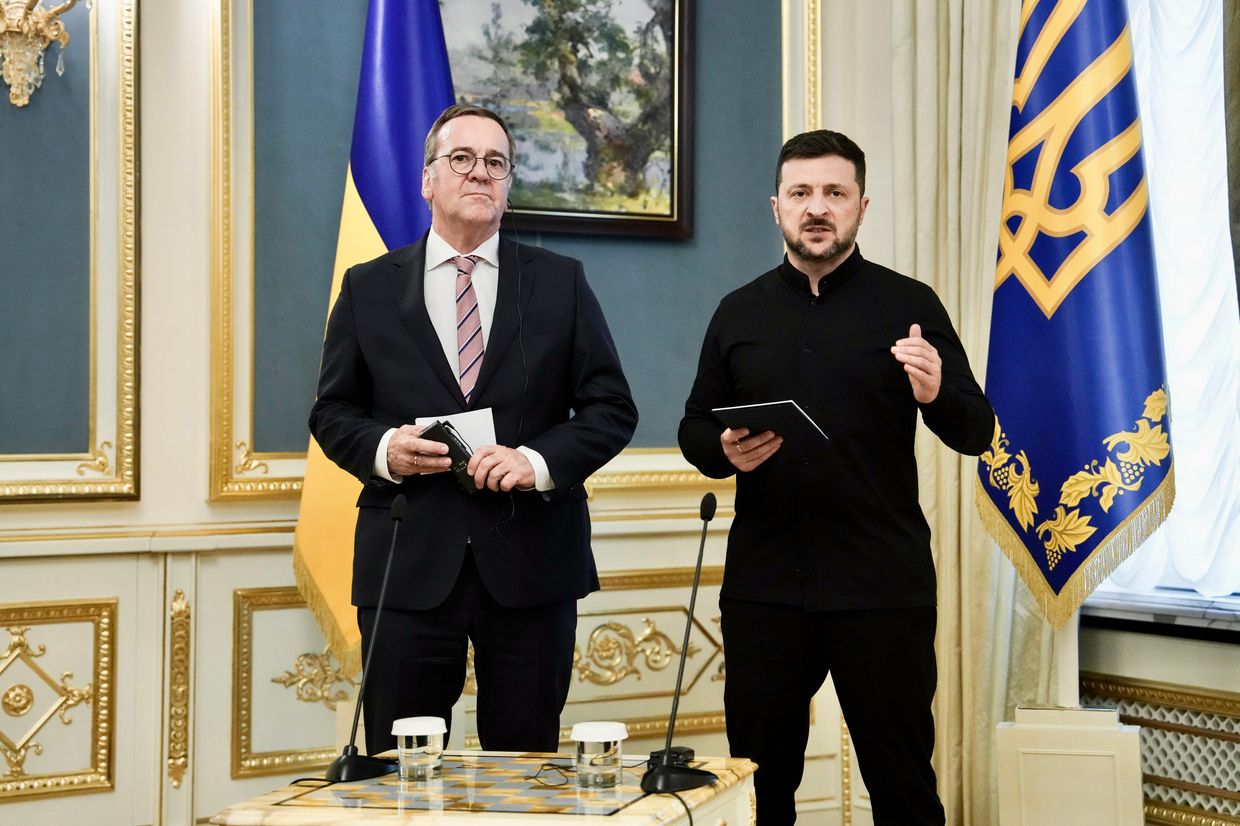
Kyiv has received a number of long-range missiles from partners, such as U.S.-made ATACMS, British Storm Shadow, or French SCALP/T. Despite Ukrainian requests, German Defense Minister Boris Pistorius said on June 12 that Berlin has no plans to provide Taurus long-range missiles to Kyiv.