❌

Vue normale

  • ✇Euromaidan Press
  • Ukraine put robots where its soldiers used to die clearing mines—and lost none
    Ukraine's Third Army Corps says it became the first military unit in the world to use ground robots for mine clearance inside a live offensive, sending the machines ahead of its infantry into the deadliest sectors to keep soldiers out of the line of fire, Censor.NET reported. The corps built the capability from nothing during its Operation Vivaldi counteroffensive in Donetsk Oblast. Keeping soldiers alive has become the organizing principle of how Ukraine fights, and handing the jobs mo
     

Ukraine put robots where its soldiers used to die clearing mines—and lost none

24 septembre 2026 à 14:04

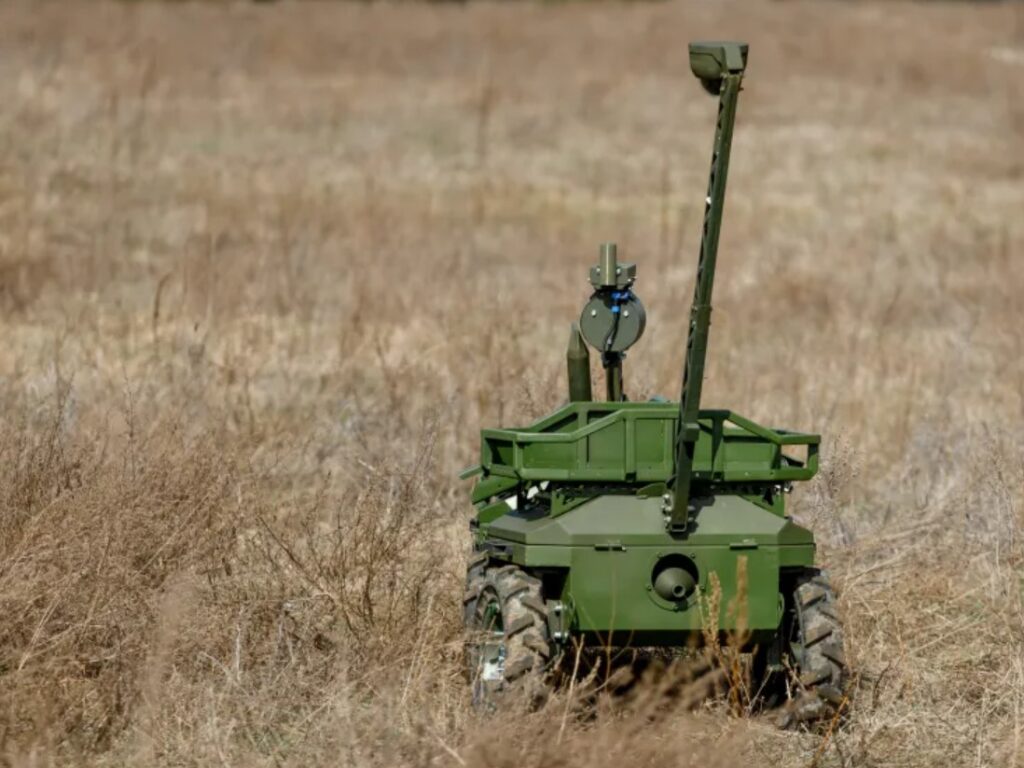
One of Ukraine's fiber optic-controlled UGVs.

Ukraine's Third Army Corps says it became the first military unit in the world to use ground robots for mine clearance inside a live offensive, sending the machines ahead of its infantry into the deadliest sectors to keep soldiers out of the line of fire, Censor.NET reported. The corps built the capability from nothing during its Operation Vivaldi counteroffensive in Donetsk Oblast.

Keeping soldiers alive has become the organizing principle of how Ukraine fights, and handing the jobs most likely to kill them to ground robots is how an army that refuses to treat its people as expendable defends the line.

Robots cleared 30 km of routes in two nights

On the Shandryholove axis, the robots cleared 30 kilometers of routes in two nights—work that two companies of sappers would have needed a full week to finish. The corps reported no losses among its sappers there. Announcing the operation's second phase, corps commander Brigadier General Andrii Biletskyi said protecting personnel drives how his troops plan and fight:

"People often ask, but what about our losses? My answer: we minimize them by every possible means. In assault operations, drones and ground robots always move ahead of the infantry," he said.

Robots clear most of the mines and mine Russian routes in return

The corps says it built the system from scratch and scaled it from a single squad up to the entire corps, arguing that manual clearing would be impossible across open terrain swept by fire. Ground robots now lift roughly 60% of the anti-personnel mines in its area of responsibility. They also work in reverse, remotely mining Russian advance routes—one crew can lay up to 200 meters a day, cutting off enemy reserves. The same machines carry frontline logistics, evacuating the wounded and hauling in provisions and equipment.

Operation Vivaldi continues in Donetsk Oblast, where the corps recently air-dropped robots behind Russian lines. Its advance has disrupted Russia's plan to encircle the fortified belt of Donetsk cities. In the second phase, the Third Army Corps liberated Shandryholove and Derylove and took full control of Drobysheve. Across the operation's first two phases, it has retaken 125 square kilometers.

  • ✇The Kyiv Independent
  • Ukraine approves new 'Murakha' ground robot for combat use
    The Defense Ministry has approved the Ukrainian-made ground-based robotics complex "Murakha" ("Ant") for combat operations, the ministry announced on June 28. Since 2024, Ukraine has been scaling up robotics development in hopes that mass production of unmanned ground vehicles (UGVs) will "minimize human involvement on the battlefield." The Murakha is a tracked robotic platform designed to support front-line units working under challenging conditions, such as under enemy artillery and in heavily
     

Ukraine approves new 'Murakha' ground robot for combat use

29 juin 2025 à 00:58
Ukraine approves new 'Murakha' ground robot for combat use

The Defense Ministry has approved the Ukrainian-made ground-based robotics complex "Murakha" ("Ant") for combat operations, the ministry announced on June 28.

Since 2024, Ukraine has been scaling up robotics development in hopes that mass production of unmanned ground vehicles (UGVs) will "minimize human involvement on the battlefield."

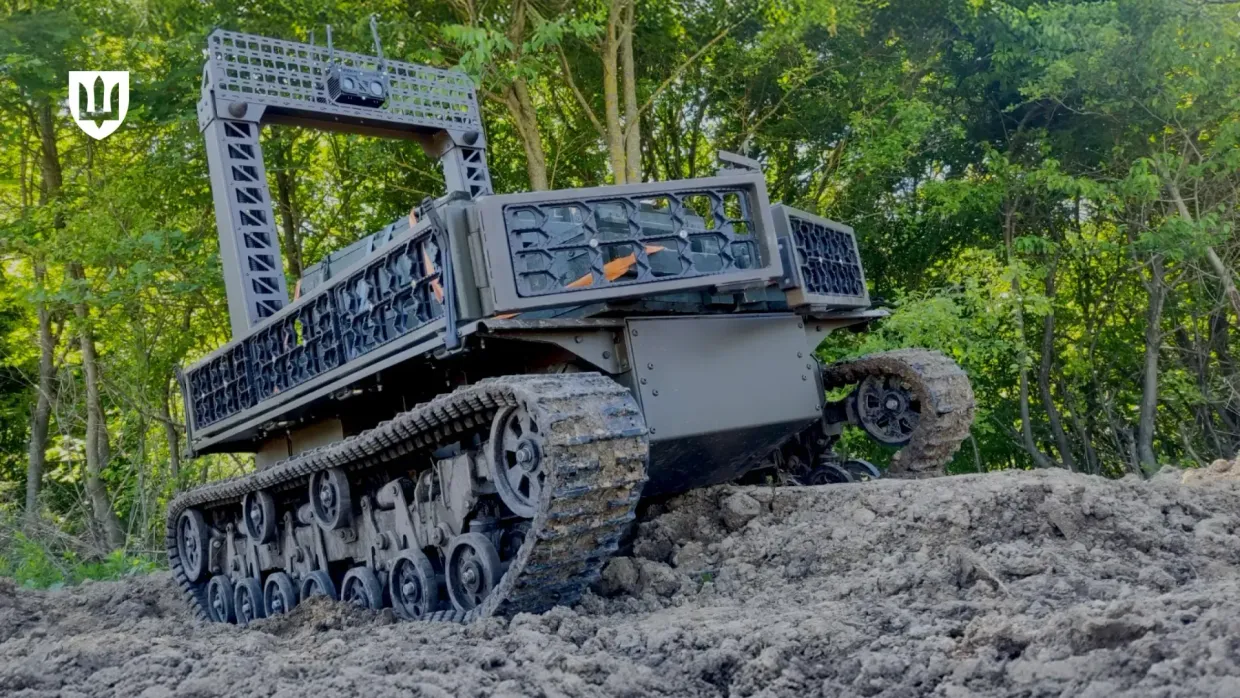
The Murakha is a tracked robotic platform designed to support front-line units working under challenging conditions, such as under enemy artillery and in heavily mined terrain, the Defense Ministry said.

Its larger size makes it one of Ukraine's leading UGVs in terms of load capacity. The Murakha can reportedly carry over half a ton of weight across dozens of kilometers. It can also cross difficult terrain and shallow water.

According to the Defense Ministry, the Murakha's multiple control channels allow it to function successfully even in areas of the battlefield where Russian electronic warfare (EW) systems are operating.

Mobile robots are capable of performing several tasks on the battlefield, including offensive and defensive activities, evacuation of the wounded, logistical support for units, and mining and demining.

In April, the Defense Ministry unveiled the D-21-12R UGV, a ground-based robot equipped with a machine gun.

Ukrainian drones strike missile, drone arsenal in Russia’s Bryansk Oblast
Ukraine’s military intelligence (HUR) struck on June 28 the 1060th Material-Technical Support Center in the city of Bryansk, Ukraine’s General Staff said. The facilities store a Russian missile and drone arsenal, Ukrainska Pravda reported, citing a source in HUR.
Ukraine approves new 'Murakha' ground robot for combat useThe Kyiv IndependentDmytro Basmat
Ukraine approves new 'Murakha' ground robot for combat use
❌