❌

Vue normale

“Killing Ukraine’s internet would take nuclear or chemical weapons”—MiroHost founder whose data center Russia just destroyed
25 septembre 2026 à 12:18

kyiv strike

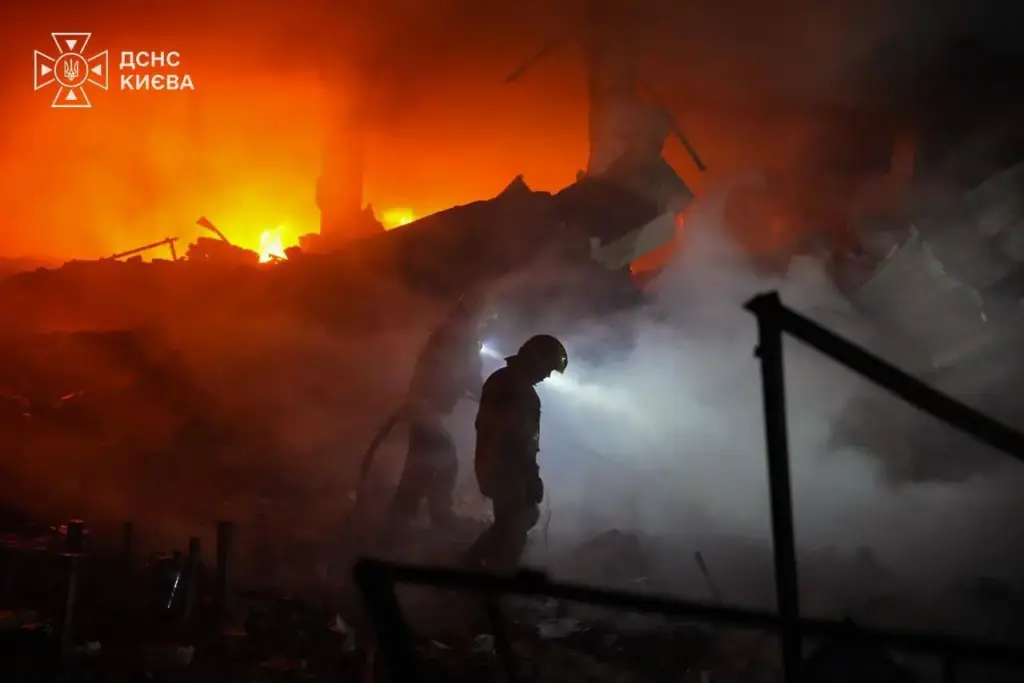
Russian drones and missiles struck Kyiv data centers over 23–24 September, knocking out internet and hosting providers. The Digital Transformation Ministry said about 100,000 subscribers lost service, NV Business reported.

Russia has widened its air campaign from power plants and warehouses to railways, fuel stations, and now digital infrastructure as it tries to grind down the country's ability to function before another war winter.

"You'd have to destroy 70-80% of Kyiv's buildings"

MiroHost founder and Internet Invest Group head Oleksandr Olshanskyi told NV Business the attack destroyed his own data center.

"Most critically important data and systems have been moved abroad or to the cloud," Olshanskyi said. "If an online store stops working, that's unpleasant but not a tragedy."

He called rumors about a full internet blackout or sharp service price hikes baseless.

"Destroying all internet in a simple way is impossible—you'd have to use nuclear or chemical weapons or destroy 70-80% of buildings in Kyiv," he said.

What Russia hit

The strikes damaged a Kyiv data center housing UTELS switching equipment on 23 September. Overnight into 24 September, Russia destroyed equipment of hosting provider CityHost.UA and the data center housing MiroHost. About 95% of MiroHost's clients operate outside Ukraine and were unaffected, he said. Russia also struck the Pavutyna network's data center. Crazy Network said a missile struck Kyiv's central traffic exchange hub, cutting service for its subscribers in Vinnytsia, Kyiv, and Khmelnytskyi Oblast.

Providers KIEVNET, Domonet, FAUST, and Etherlink also reported disruptions. Ukraine's telecom regulator NKEK said on 24 September that providers were completing emergency restoration, and Domonet estimated service would return by 21:00 that evening.

The 23 September strikes killed two people and injured more than 40, and hit a college building in Kyiv while students were on campus, Ukrainian Foreign Minister Andrii Sybiha wrote that evening. Russia targeted major Ukrainian data centers "seeking to disrupt the flow of information," he said. "This is critical civilian infrastructure that ensures people can access life-saving information. It is not a military target."

"More sanctions pressure, more missile interceptors are the only way to stop this terror," Sybiha wrote. "These attacks must not become the new normal."

Panic, not military gain

Olshanskyi said Russia uses these strikes to spread fear, not achieve lasting results.

"The enemy's goal is to cause damage, inflame panic, and heighten nervousness," he said.

His data center's destruction "will not affect the situation at the front in any way," he said.

Russia strikes second civilian ship in Black Sea in six days, killing both captains to choke route that carries 90 percent of Ukraine’s farm exports

25 septembre 2026 à 09:45

cargo ship

Russia hit an Antigua and Barbuda-flagged cargo ship in the Black Sea on the night of 22–23 September, killing its Ukrainian captain, according to Ukraine's Sea Ports Authority.

Ukraine says Russia is targeting civilian vessels in the Black Sea to block the country's maritime exports—about 90% of its agricultural exports transit these routes. Ukraine could lose $1.5 to $3 billion in export revenue if the attacks continue, according to Foreign Policy. The latest strike came six days after a Russian drone struck a Tanzania-flagged vessel heading to a Ukrainian port, killing its captain and wounding three crew members, and days after London's marine insurance market expanded its high-risk reporting area to cover the entire Black Sea.

Rescuers evacuated crew despite fire and heavy smoke

The State Border Guard Service said its Maritime Guard dispatched patrol boats to the burning vessel and evacuated the 15 surviving crew members despite heavy smoke and the threat of renewed Russian attacks. The service identified the weapon as a Russian attack drone. The survivors were brought to the nearest safe port and examined by medical personnel.

The vessel had departed from a Ukrainian port, the Border Guard Service said. Oleg Kiper, head of Ukraine's Odesa Oblast, also reported the attack and said it occurred off the oblast's coast. Neither the ship's name, its cargo, nor its destination have been disclosed.

The Border Guard Service said its Maritime Guard evacuated the crew, while Ukraine's Sea Ports Authority said the Ukrainian Navy carried out the evacuation and extinguished the fire aboard the vessel.

"This is another terrorist act by the Russian Federation against civilian shipping," the authority said.

Attacks on civilian shipping have killed dozens of crew members in 2026

Russia has repeatedly struck civilian vessels in the Black Sea this year. A strike on a Turkish-owned bulk carrier off Odesa killed ten crew members in July. Russian drones killed a sailor and wounded five on two ships in June. On the same day as the latest attack, the EU called for a moratorium on strikes against Black Sea shipping.

  • ✇Euromaidan Press
  • Eight months of 2026 brought more Ukrainian civilian casualties than all of last year, UN says
    Russian strikes have killed or wounded more Ukrainian civilians in the first eight months of 2026 than in all of last year, a senior United Nations official told the Security Council, Censor.net reported. The official warned that the toll keeps climbing as missiles and drones increasingly reach cities far from the front line. She also cautioned that mounting attacks on Ukraine's battered energy grid could push millions into a dark, cold winter. In the war's fifth year, Russia's long-ran
     

Eight months of 2026 brought more Ukrainian civilian casualties than all of last year, UN says

24 septembre 2026 à 13:01

protest Russia hunts targets civilians with drones Do I look like a target stop human safari save kherson

Russian strikes have killed or wounded more Ukrainian civilians in the first eight months of 2026 than in all of last year, a senior United Nations official told the Security Council, Censor.net reported. The official warned that the toll keeps climbing as missiles and drones increasingly reach cities far from the front line. She also cautioned that mounting attacks on Ukraine's battered energy grid could push millions into a dark, cold winter.

In the war's fifth year, Russia's long-range strikes on Ukrainian cities have shifted the danger from the front to the streets where people live, and the rising civilian toll now tracks how far those weapons reach.

Casualties outpace all of 2025

Rosemary DiCarlo, the UN Under-Secretary-General for Political and Peacebuilding Affairs, gave the toll as the Council met on Ukraine, Ukrinform reported.

"In just the first eight months, more civilians were killed or injured in Ukraine than in all of 2025," she said.

The heavy toll already recorded in September shows the trend continuing, she added, as strikes hit populated areas away from the front.

The UN human rights office has confirmed at least 17,257 civilians killed since February 2022, including 835 children. Another 53,693 people have been wounded, among them 3,247 children, and DiCarlo said the real numbers are likely far higher. Kyiv and other cities have faced near-daily attacks in recent weeks, she said, with strikes hitting railways, shopping centers, gas stations, warehouses, and food and logistics firms.

A warning over the coming winter

DiCarlo said the mounting strikes on Ukraine's already-damaged energy infrastructure are especially worrying with another war winter near.

"The cumulative impact of these strikes could plunge millions of people into darkness and cold in the coming months," she said.

She urged an immediate moratorium on strikes on populated areas and urgent action to protect the power grid. Targeting civilians and civilian sites is prohibited under international law, she noted.

The warning follows the deadliest stretch of the war for civilians, when UN monitors counted 437 people killed in July, the worst monthly toll since May 2022. Russia has also renewed strikes on gas production and power plants ahead of the heating season.

❌