❌

Vue normale

Not just the grid: Russia struck a 24-story block, a university, and warehouses overnight, and four people are dead

21 octobre 2026 à 03:52

just grid 24-storey block university warehouses were russia’s target list overnight four people dead · post smoke rises apartment building kyiv’s sviatoshynskyi district after russian drone strike 21 2026 kyivjfif

Russian drones struck a 24-story apartment building in Kyiv, a university building in Kremenchuk, warehouses, and hypermarkets overnight on 21 October, killing two people in the capital and an elderly couple near Kharkiv, Ukrainian officials said. The attack went well beyond Ukraine’s power grid, hitting places where people live, study, and shop. Over the past day, Russian strikes also killed three more civilians and injured dozens across several oblasts.

Russia has kept up nightly drone and missile attacks on Ukrainian cities through the autumn, mostly aimed at the energy system. It struck Ukraine’s energy 76 times during a US-declared truce, and fired 39 ballistic missiles at the grid three days after Washington announced it. This time the targets also included homes, a university, warehouses, and shops.

Overnight, Russia launched 186 Shahed-type and other attack drones, 88 of them jet-powered, along with Iskander-K cruise missiles, Ukraine’s Air Force said. Air defenses downed or jammed 150 drones. Hits were recorded at 27 locations, and debris fell at 13 more.

Two killed on the 20th floor in Kyiv

A drone hit a 24-story residential building in Kyiv’s Sviatoshynskyi district at the level of the 20th floor, starting a fire, Mayor Vitali Klitschko said. The fire spread over about 70 square meters, and rescuers found the bodies of two people while clearing debris, the State Emergency Service said. Two people were injured and hospitalized, Klitschko said, including a 46-year-old man who was walking past the building, according to the police.

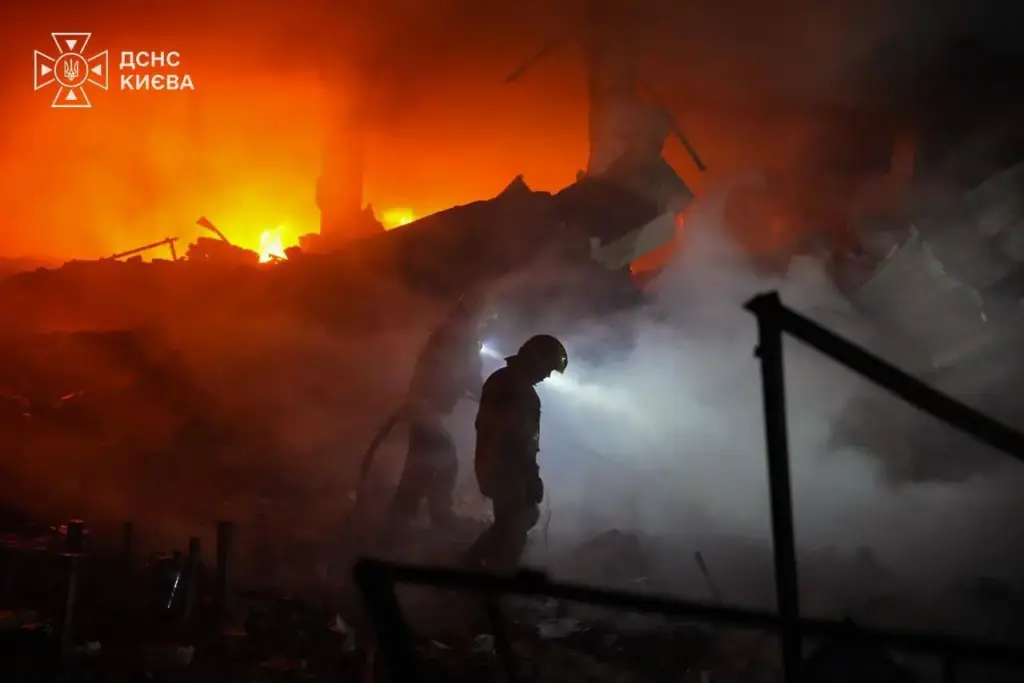
A rescuer carries a cat out after a Russian drone strike on an apartment building in Kyiv, 21 October 2026.
A rescuer carries a cat out after a Russian drone strike on an apartment building in Kyiv, 21 October 2026. Photo: State Emergency Service of Ukraine

In the Desnianskyi district, seven parked cars caught fire, the State Emergency Service said; police put the number at about 10. The evening before, drones hit a warehouse building in Desnianskyi and a transport facility in Solomianskyi district.

An elderly couple killed near Kharkiv

In the village of Korotych near Kharkiv, Russian drones killed an 81-year-old woman and an 83-year-old man, Kharkiv Oblast Governor Oleh Syniehubov said. Rescuers recovered their bodies from the rubble of their house, the State Emergency Service said. Eleven people, including a two-month-old boy and an eight-year-old girl, were treated for acute stress, and 13 houses were damaged.

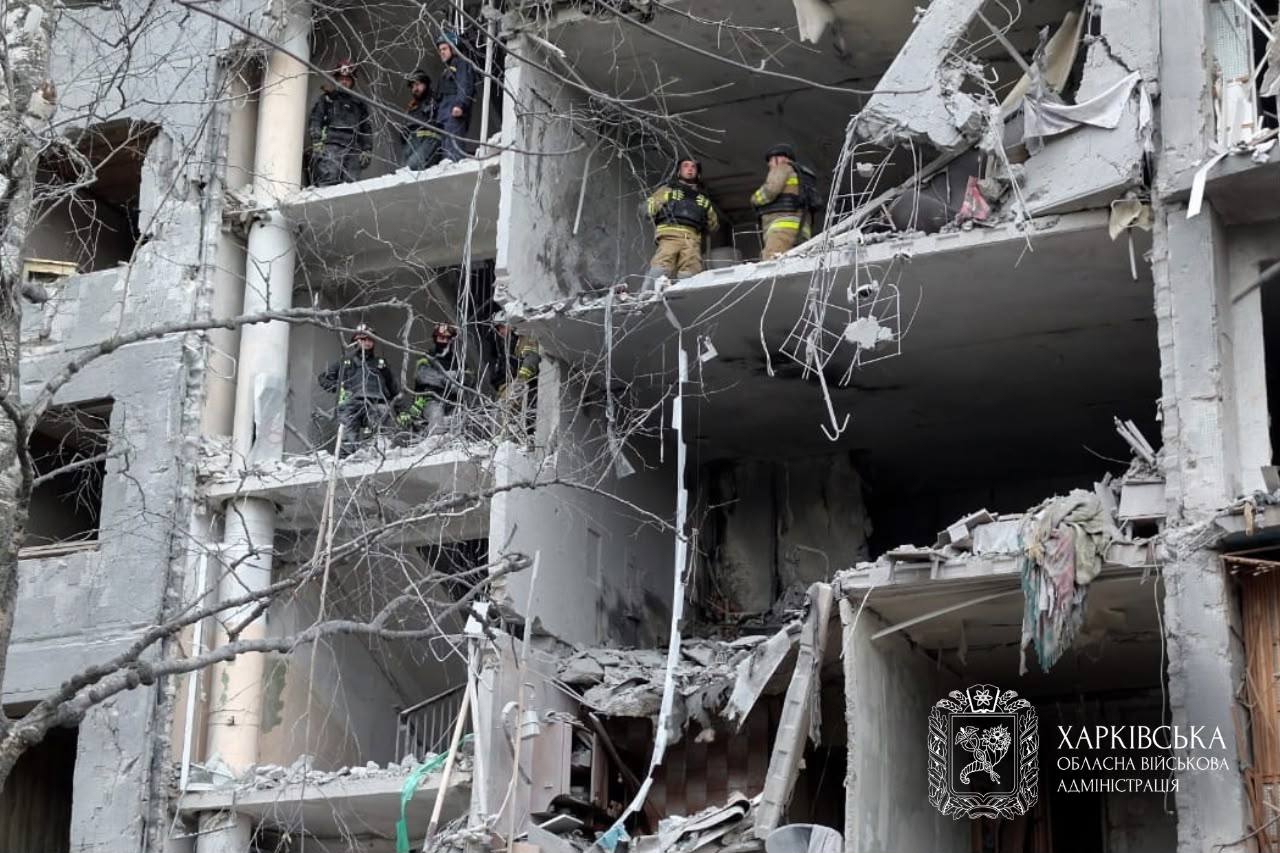
A house destroyed by a Russian drone strike in Korotych, Kharkiv Oblast, 21 October 2026.
A house destroyed by a Russian drone strike in Korotych, Kharkiv Oblast, 21 October 2026. Photo: State Emergency Service of Ukraine

A university, warehouses, and hypermarkets

In Kremenchuk, a drone hit a building of the Mykhailo Ostrohradskyi National University, setting it on fire, the State Emergency Service said. Three people were injured, including a 16-year-old who was hospitalized with a concussion, Poltava Oblast Governor Vitalii Diakivnych said. In the Poltava community, drones damaged an administrative building and warehouses.

Firefighters put out a fire at an enterprise in Lviv district after a Russian attack, 21 October 2026.
Firefighters put out a fire at an enterprise in Lviv district after a Russian attack, 21 October 2026. Photo: State Emergency Service of Ukraine

In Lviv Oblast, an attack set fire to an enterprise in a village in Lviv district and injured two people, while a house was damaged in a neighboring village, the State Emergency Service said. In Uman, drones hit a hypermarket and damaged a hotel, injuring one person, Cherkasy Oblast Governor Ihor Taburets said.
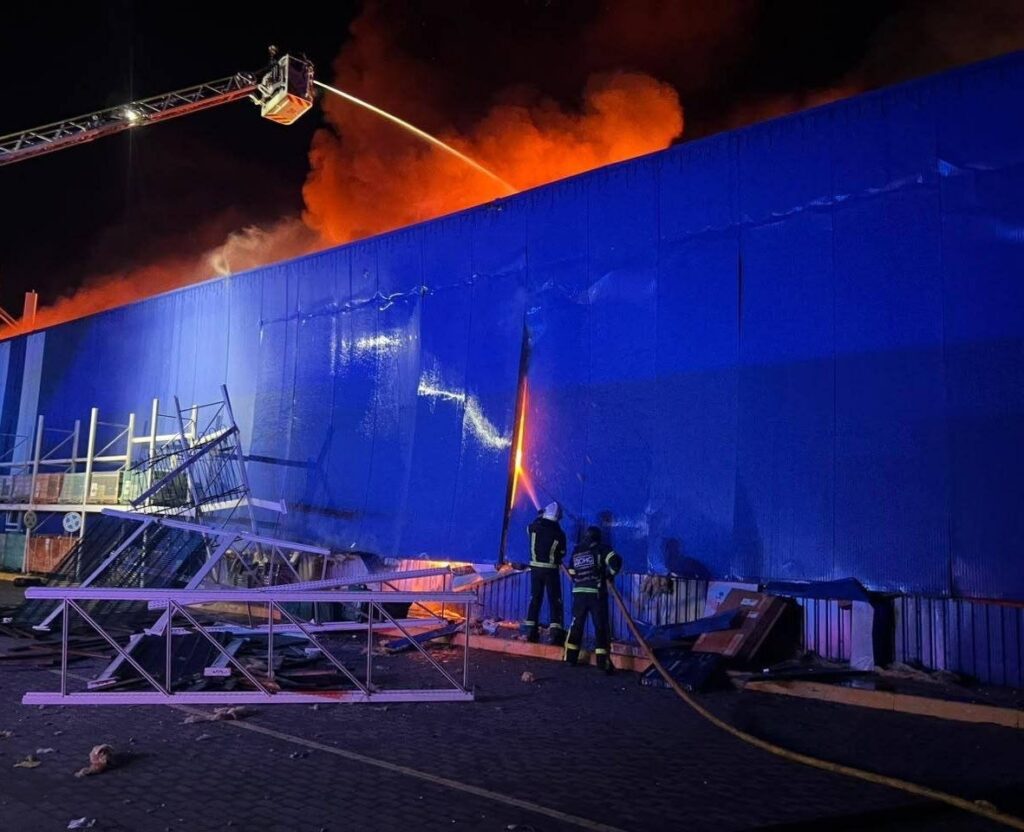
A hypermarket in Uman damaged by a Russian drone strike, 21 October 2026.
A hypermarket in Uman damaged by a Russian drone strike, 21 October 2026. Photo: Cherkasy Oblast Military Administration

On the evening of 20 October, a drone hit an Epicentr hypermarket in Pervomaisk, Mykolaiv Oblast, injuring eight people, acting Governor Heorhii Reshetilov said. Russia also struck a hypermarket in Rivne Oblast several times that day, injuring four and forcing rescuers to pull back while they fought the fire, the State Emergency Service said.

More dead and injured over the past day

The overnight strikes followed a day of attacks. In Kyiv, Russian strikes on 20 October killed one person and injured 21, three of them seriously, Klitschko said. An administrative building caught fire, rescuers freed four people trapped on its upper floors, and a healthcare facility was damaged, the State Emergency Service said. In Dnipropetrovsk Oblast, two men were killed and seven people injured that day, regional officials said.

In Kharkiv Oblast, Russian attacks over the past day injured 11 more people in Kharkiv, Derhachi, and Shestakove, Syniehubov said. In Kherson Oblast, 13 people were injured, three of them children, the regional administration reported. In the Chernihiv region, an 89-year-old woman and a young woman were hurt in strikes on villages and on Novhorod-Siverskyi, Governor Viacheslav Chaus said, and a 21-year-old woman was injured in the Sumy community, according to the Sumy regional administration.

More than 5,000 subscribers lost power in Volyn Oblast’s Lutsk district, Governor Roman Romaniuk said. In Ternopil Oblast’s Kremenets district, 7,949 subscribers remained without power after earlier Russian strikes on energy facilities, the regional administration reported.

  • ✇Euromaidan Press
  • Ukraine detains a gas station worker and a Telegram commenter suspected of scouting targets for Russian strikes
    Ukraine’s Security Service (SBU) detained two men suspected of scouting targets for Russian strikes on Sloviansk and Dnipro, the agency reported on 14 October. Catching both early let it secure Ukrainian reserve command posts and the gas stations the alleged agents had been hunting, the agency added. Sloviansk anchors the northern end of the Fortress Belt, the chain of fortified cities that has held Ukraine’s defense of Donetsk Oblast since 2014. Russia is pushing to seize them, and its
     

Ukraine detains a gas station worker and a Telegram commenter suspected of scouting targets for Russian strikes

15 octobre 2026 à 09:07

bomb-maker working russia's military intelligence zaporizhzhia loses freedom 15 years · post security service ukraine officers during operation sbu news ukrainian reports

Ukraine’s Security Service (SBU) detained two men suspected of scouting targets for Russian strikes on Sloviansk and Dnipro, the agency reported on 14 October. Catching both early let it secure Ukrainian reserve command posts and the gas stations the alleged agents had been hunting, the agency added.

Sloviansk anchors the northern end of the Fortress Belt, the chain of fortified cities that has held Ukraine’s defense of Donetsk Oblast since 2014. Russia is pushing to seize them, and its aircraft bombed a residential area of Sloviansk on 11 October. Where Ukrainian convoys stop and troops gather is exactly what Russian handlers allegedly asked these suspects to supply.

A gas station worker suspected of filming convoys

The first suspect worked at a gas station complex in Sloviansk, Donetsk Oblast. Russian intelligence allegedly reached him through a former classmate who left for Russia after the full-scale invasion and now works for its special services, the SBU said. He then allegedly used his phone to secretly film Ukrainian army convoys at or near gas stations. He was allegedly supposed to send the photos and videos to Russia to help it prepare a targeted strike. He also allegedly drove his own car around other gas stations and bridges that the Defense Forces use for logistics.

Spotted through Telegram comments

The second suspect, a former Pokrovsk resident, moved to Dnipro in 2024 and settled in a dormitory. Russian intelligence noticed him through pro-Kremlin comments he posted in Telegram chats, investigators say. A female handler in Russia allegedly tasked him with guiding missile and drone attacks on places in the city where Ukrainian troops and equipment were concentrated. He allegedly scouted on foot or took public transport to reach outlying districts.

An example of a fake summons
Explore further

Ukrainians think their own security service is calling—it’s Russia recruiting saboteurs

Officers seized computers and smartphones containing evidence of the men’s alleged work for Russia. Both are suspected of treason under martial law and of unauthorized dissemination of information on Ukrainian troop movements or deployment, under Articles 111(2) and 114-2(2) of the Criminal Code. They remain in custody without bail and face up to life imprisonment with confiscation of property. The SBU’s office for Donetsk and Luhansk oblasts ran the operation under the Donetsk Oblast Prosecutor’s Office.

  • ✇Euromaidan Press
  • Kyiv’s supermarkets are the new front line as Russia hunts civilian life before winter
    Russia is preparing to make daily life in Kyiv harder before winter, aiming at the ordinary places civilians use rather than at military sites, The Economist reported. Ukrainian officials say the push blends bombing, sabotage, and disinformation, and expect it to peak in November. Every winter of its full-scale invasion, Russia has tried to freeze Ukrainians into surrender, and each year the strikes reach deeper into ordinary life. The civilian casualties recorded in 2026 have already p
     

Kyiv’s supermarkets are the new front line as Russia hunts civilian life before winter

30 septembre 2026 à 08:15

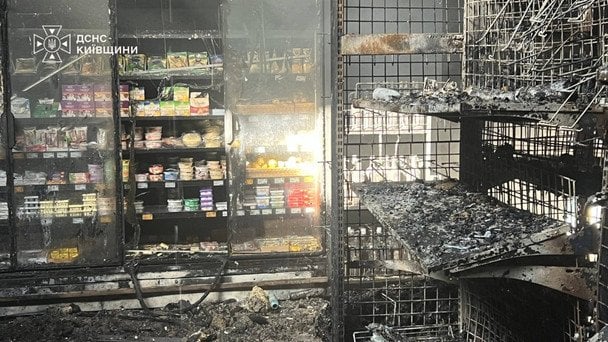
Aftermath of the Russian strike on a store in Kyiv Oblast, September 30, 2026.

Russia is preparing to make daily life in Kyiv harder before winter, aiming at the ordinary places civilians use rather than at military sites, The Economist reported. Ukrainian officials say the push blends bombing, sabotage, and disinformation, and expect it to peak in November.

Every winter of its full-scale invasion, Russia has tried to freeze Ukrainians into surrender, and each year the strikes reach deeper into ordinary life. The civilian casualties recorded in 2026 have already passed the whole of last year, the UN says.

From the power grid to the grocery store

Russia has already turned its drones on Kyiv's supermarkets, food warehouses, and data centers this year. On 28 September, a Russian jet drone struck the National Academy of Sciences in central Kyiv. The strike killed two people, the Academy said. Survivors climbed from the windows of the burning building. A senior Ukrainian official told The Economist the Kremlin now wants shoppers too afraid to enter a store. Russia is also keeping its winter routine, hitting electricity, water, and sewage systems.

Cheaper jet drones that stream live to their pilots

Most of the damage now comes from Russia's cheap jet drones, The Economist said. Pilots guide them onto targets and watch a live video feed. They are hard to stop, and Russia's ballistic missiles are deadlier still as Ukraine's supply of Patriot interceptors dwindles. Ukrainian President Volodymyr Zelenskyy said Kyiv had agreed a new Patriot interceptor package, but it remains short of interceptors of its own. A security official told The Economist that Russia has thousands of drones stockpiled and plans to use its entire ballistic missile stock within two months.

russia hits kharkiv high-rise overnight injuring 43 people strikes central kyiv dnipro broad daylight · post rescuers destroyed floors apartment building hit ukraine 28 2026 synehubov5319173733626879672 news ukrainian reports
Explore further

War is costing Ukraine $155 billion per year. With Western aid running late, Kyiv is freezing everything but army, pensions, and public wages

Sabotage, chaos, and a city that won't switch off

Ukraine's counter-intelligence services say they foil seven or eight Russian plots a week, and officials believe some sleeper cells remain. The campaign's third element, disinformation, targets war fatigue and corruption scandals. Russia runs the same plan every year, hoping its bot farms will push Ukrainians onto the streets to demand surrender, said Andrii Kovalenko, who heads the Center for Countering Disinformation at the National Security and Defense Council.

"It's nonsense," he told The Economist, adding that someone is feeding the idea to Putin so they can steal more money.

Kyiv is also far harder to shut down than Moscow assumes, Kovalenko said. The city's internet is too decentralized for a handful of strikes to knock out, The Economist noted. Energy expert Olha Babii said the test is how fast crews restore power, not whether it can be destroyed. The capital is emptying, its population down from about 3.7 million to 3.3 million by The Economist's count.

“Killing Ukraine’s internet would take nuclear or chemical weapons”—MiroHost founder whose data center Russia just destroyed

25 septembre 2026 à 12:18

kyiv strike

Russian drones and missiles struck Kyiv data centers over 23–24 September, knocking out internet and hosting providers. The Digital Transformation Ministry said about 100,000 subscribers lost service, NV Business reported.

Russia has widened its air campaign from power plants and warehouses to railways, fuel stations, and now digital infrastructure as it tries to grind down the country's ability to function before another war winter.

"You'd have to destroy 70-80% of Kyiv's buildings"

MiroHost founder and Internet Invest Group head Oleksandr Olshanskyi told NV Business the attack destroyed his own data center.

"Most critically important data and systems have been moved abroad or to the cloud," Olshanskyi said. "If an online store stops working, that's unpleasant but not a tragedy."

He called rumors about a full internet blackout or sharp service price hikes baseless.

"Destroying all internet in a simple way is impossible—you'd have to use nuclear or chemical weapons or destroy 70-80% of buildings in Kyiv," he said.

What Russia hit

The strikes damaged a Kyiv data center housing UTELS switching equipment on 23 September. Overnight into 24 September, Russia destroyed equipment of hosting provider CityHost.UA and the data center housing MiroHost. About 95% of MiroHost's clients operate outside Ukraine and were unaffected, he said. Russia also struck the Pavutyna network's data center. Crazy Network said a missile struck Kyiv's central traffic exchange hub, cutting service for its subscribers in Vinnytsia, Kyiv, and Khmelnytskyi Oblast.

Providers KIEVNET, Domonet, FAUST, and Etherlink also reported disruptions. Ukraine's telecom regulator NKEK said on 24 September that providers were completing emergency restoration, and Domonet estimated service would return by 21:00 that evening.

The 23 September strikes killed two people and injured more than 40, and hit a college building in Kyiv while students were on campus, Ukrainian Foreign Minister Andrii Sybiha wrote that evening. Russia targeted major Ukrainian data centers "seeking to disrupt the flow of information," he said. "This is critical civilian infrastructure that ensures people can access life-saving information. It is not a military target."

"More sanctions pressure, more missile interceptors are the only way to stop this terror," Sybiha wrote. "These attacks must not become the new normal."

Panic, not military gain

Olshanskyi said Russia uses these strikes to spread fear, not achieve lasting results.

"The enemy's goal is to cause damage, inflame panic, and heighten nervousness," he said.

His data center's destruction "will not affect the situation at the front in any way," he said.

❌