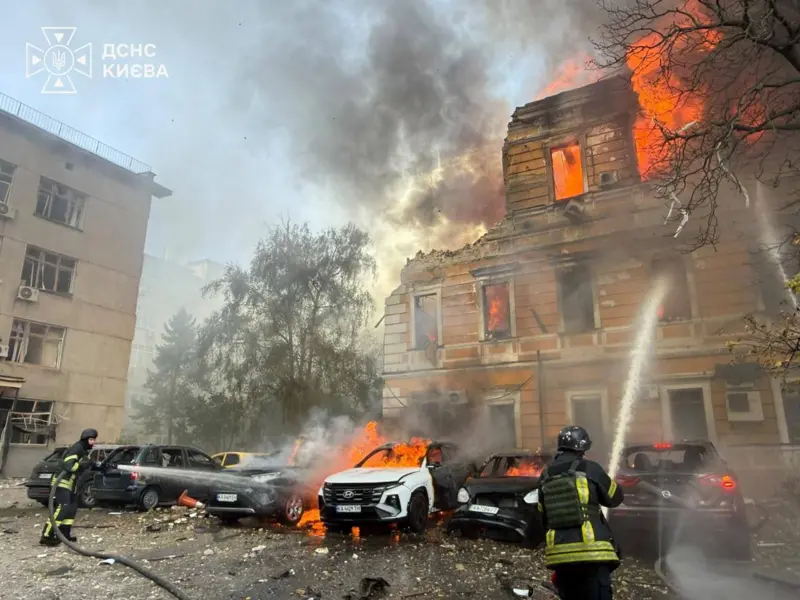
Ukraine’s Security Service (SBU) detained two men suspected of scouting targets for Russian strikes on Sloviansk and Dnipro, the agency reported on 14 October. Catching both early let it secure Ukrainian reserve command posts and the gas stations the alleged agents had been hunting, the agency added.
Sloviansk anchors the northern end of the Fortress Belt, the chain of fortified cities that has held Ukraine’s defense of Donetsk Oblast since 2014. Russia is pushing to seize them, and its
Ukraine’s Security Service (SBU) detained two men suspected of scouting targets for Russian strikes on Sloviansk and Dnipro, the agency reported on 14 October. Catching both early let it secure Ukrainian reserve command posts and the gas stations the alleged agents had been hunting, the agency added.
Sloviansk anchors the northern end of the Fortress Belt, the chain of fortified cities that has held Ukraine’s defense of Donetsk Oblast since 2014. Russia is pushing to seize them, and its aircraft bombed a residential area of Sloviansk on 11 October. Where Ukrainian convoys stop and troops gather is exactly what Russian handlers allegedly asked these suspects to supply.
A gas station worker suspected of filming convoys
The first suspect worked at a gas station complex in Sloviansk, Donetsk Oblast. Russian intelligence allegedly reached him through a former classmate who left for Russia after the full-scale invasion and now works for its special services, the SBU said. He then allegedly used his phone to secretly film Ukrainian army convoys at or near gas stations. He was allegedly supposed to send the photos and videos to Russia to help it prepare a targeted strike. He also allegedly drove his own car around other gas stations and bridges that the Defense Forces use for logistics.
Spotted through Telegram comments
The second suspect, a former Pokrovsk resident, moved to Dnipro in 2024 and settled in a dormitory. Russian intelligence noticed him through pro-Kremlin comments he posted in Telegram chats, investigators say. A female handler in Russia allegedly tasked him with guiding missile and drone attacks on places in the city where Ukrainian troops and equipment were concentrated. He allegedly scouted on foot or took public transport to reach outlying districts.
Explore further
Ukrainians think their own security service is calling—it’s Russia recruiting saboteurs
Officers seized computers and smartphones containing evidence of the men’s alleged work for Russia. Both are suspected of treason under martial law and of unauthorized dissemination of information on Ukrainian troop movements or deployment, under Articles 111(2) and 114-2(2) of the Criminal Code. They remain in custody without bail and face up to life imprisonment with confiscation of property. The SBU’s office for Donetsk and Luhansk oblasts ran the operation under the Donetsk Oblast Prosecutor’s Office.
Russian glide bombs that struck central Sumy on 29 September damaged a 19th-century church, the city cemetery around it, and a bronze statue of Christ, NV reported, citing the diocesan outlet Pravoslavna Sumshchyna. The same strike hit a school and nearby homes. Russia kept up its attacks across Ukraine over the following night and day.
Russia continues its terror campaign against Ukrainian civilians, and churches are among its routine targets, from a church its incendiary drone burned
Russian glide bombs that struck central Sumy on 29 September damaged a 19th-century church, the city cemetery around it, and a bronze statue of Christ, NV reported, citing the diocesan outlet Pravoslavna Sumshchyna. The same strike hit a school and nearby homes. Russia kept up its attacks across Ukraine over the following night and day.
Russia continues its terror campaign against Ukrainian civilians, and churches are among its routine targets, from a church its incendiary drone burned to the ground in Donetsk Oblast to one its drone damaged in western Ukraine's Lviv. Its strikes keep landing in city centers where people live, study, and pray, as when a drone hit Kyiv's Academy of Sciences in broad daylight.
The church near the epicenter
Russia struck Sumy with four guided aerial bombs. The blast damaged the Church of Saints Peter and Paul, a national-level architectural monument that stood near the epicenter. The church belongs to the Sumy Diocese of the Ukrainian Orthodox Church (Moscow Patriarchate).
Windows of the Church of Saints Peter and Paul in Sumy, Ukraine, torn from their frames by the blast in the Russian strike on 29 September 2026. Photo: Transfiguration Cathedral of Sumy/Facebook
Almost the entire building was damaged, said the rector, Archpriest Mykola Holyk. The blast wave knocked out windows and broke nearly every pane.
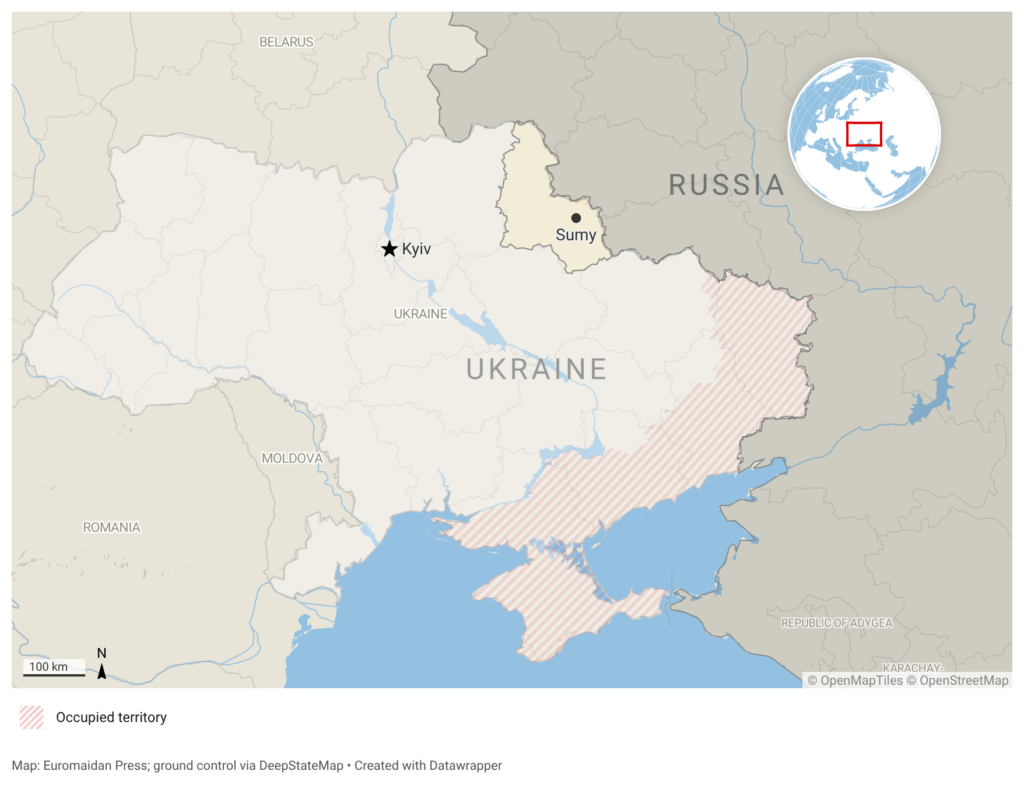
Sumy is located only 35-40 km away from Russia's border, placing the city within the range of Russian glide bombs. Map: Euromaidan Press.
Plaster fell and the ceiling collapsed in several places. It tore out doors and wooden fittings, knocked some icons from their places, and holed the roof in many spots. Large and small fragments of the bomb pitted the walls.
The statue of Christ on the grave of Dmytro Sukhanov in front of the Church of Saints Peter and Paul in Sumy, Ukraine, with shrapnel marks on the church wall behind it, after the Russian strike on 29 September 2026. Photo: Transfiguration Cathedral of Sumy/Facebook
Local patrons paid to build the church between 1843 and 1851, in the late classicist style.
A cut across Christ's chest
In front of the church stands a bronze statue of Christ, placed in the late 19th century on the grave of Dmytro Sukhanov, a merchant and former mayor of Sumy. Bomb fragments left a cut across the statue's chest. The statue is a local landmark of monumental art, the outlet Tsukr noted. The strike also damaged about 50 graves in the Central City Cemetery beside the church.
"The godless enemy continues to kill civilians, endanger children, and destroy schools, homes, hospitals, churches, and cemeteries," the diocese said.
A window of the Church of Saints Peter and Paul in Sumy, Ukraine, damaged in the Russian strike on 29 September 2026. Photo: Transfiguration Cathedral of Sumy/Facebook
The same attack hit a school where students were sheltering, and a residential area where two people were killed and six injured, three of them children. In September, Russian strikes on Kyiv also damaged two churches belonging to the same Moscow-linked church, the Exaltation of the Cross on Podil and the Pokrova Church on Priorka.
A house destroyed by a Russian guided aerial bomb in the Kovpakivskyi district of Sumy, Ukraine, overnight on 1 October 2026. Photo: Sumy City Military Administration
Another day of Russian strikes
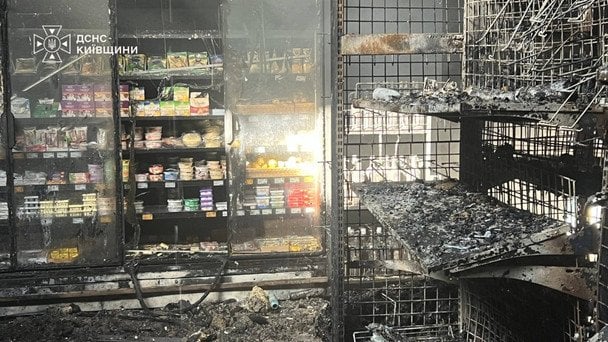
Overnight on 1 October, Russia launched 107 Shahed-type drones at Ukraine, 63 of them jet-powered, the Air Force said. Air defenses downed or suppressed 87, and drones hit 11 locations. In Sumy, a guided bomb hit private homes, injuring two women and damaging about six houses, city military administration head Serhii Kryvosheienko reported. On the morning of 30 September, a Russian strike set a shopping center in Sumy Oblast's Romny district on fire, and crews fought the blaze until late that night, the State Emergency Service said. In Kyiv on the morning of 1 October, a drone hit a school in the Solomianskyi district while children sheltered inside, Mayor Vitali Klitschko said. More than 100 students and about 60 staff were in the shelter, and no one was hurt, police said. A warehouse fire in Kyiv's Obolon district injured one person.
Explore further
Kyiv’s supermarkets are the new front line as Russia hunts civilian life before winter
Over the past 24 hours, Russian mortar fire killed two men in Sumy Oblast's Seredyna-Buda hromada, and 15 people were injured across the oblast, the regional administration reported. A morning drone attack killed a 50-year-old man in Mykolaiv Oblast, and drones killed a 44-year-old man in Nikopol district, Dnipropetrovsk Oblast. In Kherson Oblast, Russian attacks killed one person and injured four. Eight people were hurt in Kharkiv Oblast, six in Kyiv Oblast, five in Donetsk Oblast, and three in Zaporizhzhia Oblast, according to regional authorities.
A Russian strike on an apartment building in Kharkiv injured dozens of people, many of them children, early on 28 September, regional prosecutors reported. Through the rest of the day, Russian drones hit Kyiv, Dnipro, and other cities, killing civilians in several of them.
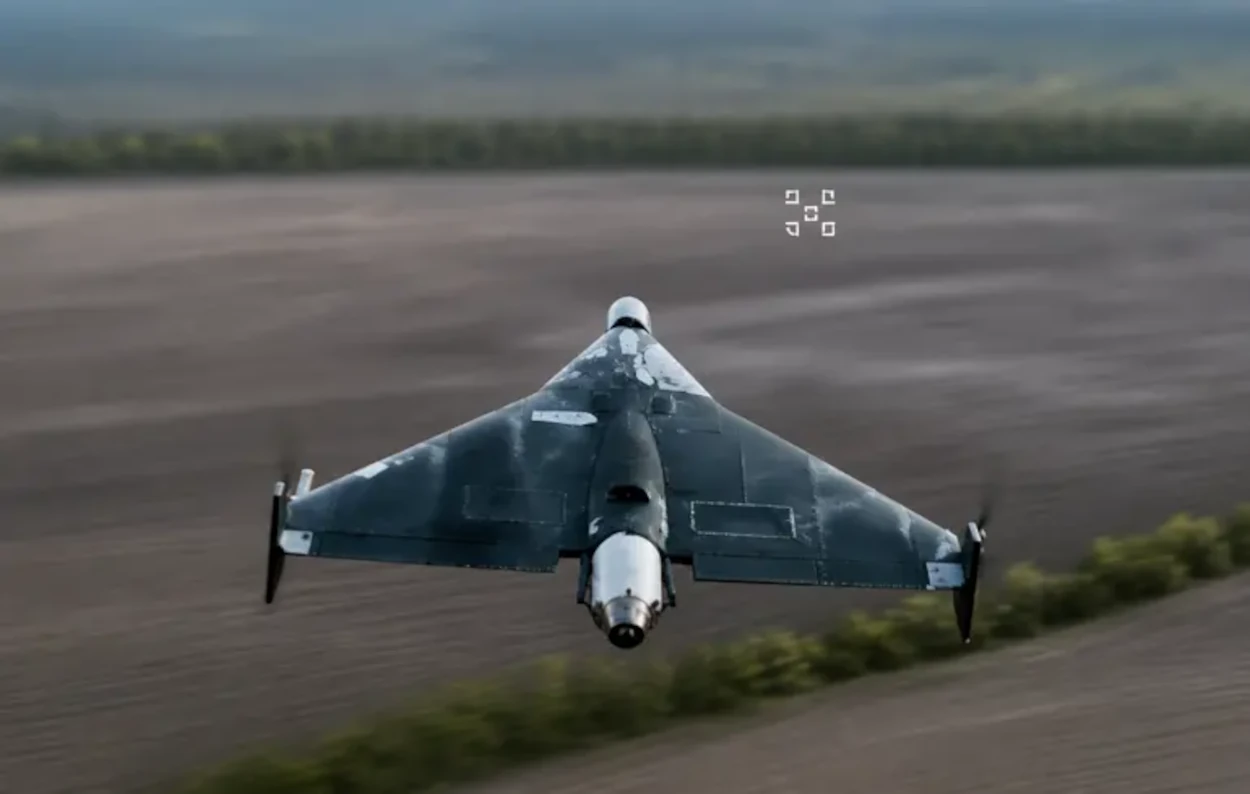
Russia has moved much of its aerial campaign to jet-powered drones that fly too fast for the cheap interceptors Ukraine built against older models. Every switch to a faster weapon reopens gaps in city defenses that Uk
A Russian strike on an apartment building in Kharkiv injured dozens of people, many of them children, early on 28 September, regional prosecutors reported. Through the rest of the day, Russian drones hit Kyiv, Dnipro, and other cities, killing civilians in several of them.
Russia has moved much of its aerial campaign to jet-powered drones that fly too fast for the cheap interceptors Ukraine built against older models. Every switch to a faster weapon reopens gaps in city defenses that Ukraine had only just begun to close.
Two floors partly destroyed in a Kharkiv apartment block
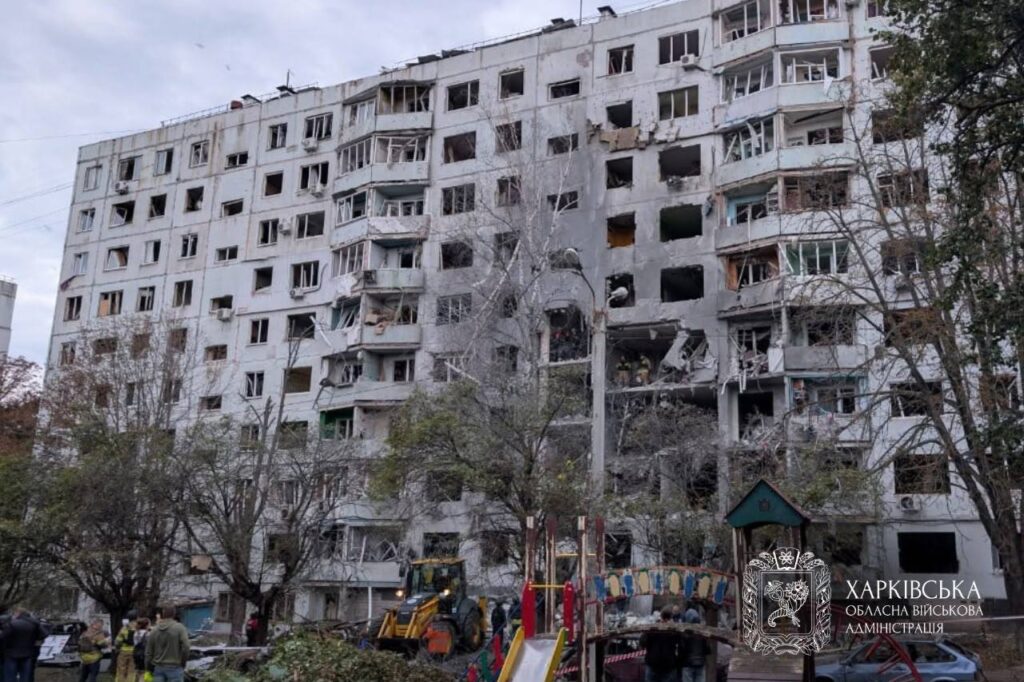
Russia hit a nine-story building in Kharkiv's Saltivskyi district around 04:00. By early afternoon, the count had risen to 43 injured, including 11 children, prosecutors said.
A man of 43 and a girl of 14 remain in hospital with blast wounds, and the others have moderate or light injuries, Kharkiv Oblast head Oleh Syniehubov said. Three children lived in the apartment that took the hit. Their father carried them out himself, and none of them was seriously hurt.
Rescuers on the destroyed floors of an apartment building hit by Russia in Kharkiv, Ukraine, 28 September 2026. Photo: Kharkiv Oblast Military Administration
The strike hit the second floor and destroyed the ceiling between the third and fourth floors. Rescuers brought 32 people out of the building. Across the district, the attack damaged 18 apartment buildings and blew out more than 1,500 windows. More than 100 volunteers are helping city services seal them, Syniehubov added.
A resident who fled Kramatorsk a year and a half ago said her family never heard the blast itself.
"We didn't hear any explosion. Glass came pouring down, and a column of smoke stood there," Yuliia Baldzhy told Suspilne Kharkiv. "The children were sleeping in another room, and my husband and I barely squeezed through, grabbed them, and got out."
Yuliia Baldzhy, a resident of the damaged apartment building in the Saltivskyi district of Kharkiv, Ukraine, 28 September 2026. Photo: Suspilne Kharkiv
Kharkiv Mayor Ihor Terekhov said the city had not taken a hit "of this level" in some time. Officials are still establishing the weapon. Syniehubov named guided aerial bombs (KABs) and counted six of them over the oblast in the past day. Prosecutors named a UMPB-5, a Russian munition, as the preliminary version. Terekhov said the city was checking whether it was a KAB or a Banderol, a small cruise missile.
Fire among wrecked structures after overnight Russian strikes in Kharkiv Oblast, Ukraine, 28 September 2026. Photo: Kharkiv Oblast Military Administration
Russia has hit Kharkiv high-rises with guided bombs before. In November 2024, one such strike injured 25 people, including an infant.
Explore further
Combat shows speed alone can’t catch Russia’s jet-powered drones, despite eight Ukrainian makers’ assurances. So why can’t they stop them?
Kyiv hit through the night and into the day
In the middle of the working day, a Russian jet drone struck the main building of the National Academy of Sciences in Kyiv's historic center. The attack killed a woman and injured five people, the Kyiv City Military Administration said. Three of them were hospitalized, Klitschko said. People climbed out of windows to escape the fire.
Firefighters put out fires at the main building of the National Academy of Sciences of Ukraine and at burning cars after a Russian drone strike in Kyiv, Ukraine, 28 September 2026. Photo: State Emergency Service of Kyiv
"Russia will definitely get a response to this," Ukrainian President Volodymyr Zelenskyy said.
Overnight and into the morning, Russian drones hit a gas station in Obolon, a café by a gas station, office buildings, and a 16-story residential building in Podil. The attacks injured three teenagers in Podil, Kyiv Mayor Vitali Klitschko said. A 17-year-old boy was hospitalized.
A firefighter tackles a blaze in a two-story house after a Russian drone attack in Kyiv, Ukraine, 28 September 2026. Photo: State Emergency Service of Kyiv
Nationwide, Russia launched 165 drones overnight, 79 of them jet-powered, the Air Force reported. Air defenses downed or suppressed 112, and hits were recorded at 14 locations.
The capital is now under attack daily. On 27 September, Russian strikes injured nine people in Kyiv, and Russia hit a Kyiv data center twice. That evening, a Russian drone struck the Stolychnyi market in Sofiivska Borshchahivka, just outside the city, and killed two people. Zelenskyy wrote that one of the two killed in Kyiv Oblast was a citizen of Azerbaijan.
Deaths in Dnipro and Synelnykove
Around 11:15, a Russian drone hit a business center in central Dnipro, killing three people. The number of injured rose to 15, Dnipropetrovsk Oblast head Oleksandr Hanzha said. Rescuers led 47 people out of the burning building, regional council head Mykola Lukashuk said.
"Nearby are residential buildings, a park, a library, offices, shops. The center of Dnipro. In the middle of the working day, hundreds of people are here," Hanzha wrote.
In Synelnykove, a Russian strike on a logistics company's branch killed one person. It injured three others, including a 15-year-old boy now in hospital in serious condition.
Overnight, Russian drones also hit infrastructure in the Vasylkivka community and a market in Nikopol.
Strikes across other regions
In Kharkiv Oblast on 27 September, a Russian FPV drone killed a 67-year-old driver in Shestakove, prosecutors said. A drone on fiber-optic control also killed a 41-year-old woman in a car in Velykyi Burluk and injured a 46-year-old man.
Debris at a warehouse after an overnight Russian strike in Odesa Oblast, Ukraine, 28 September 2026. Photo: Odesa Oblast Military Administration
Explosions sounded in Poltava overnight. In Rivne Oblast, a Russian attack damaged a detached house without injuring anyone. In Odesa Oblast, Russia struck a warehouse, and an evening attack injured a man of 62 and a woman of 63. Zelenskyy also listed a Palau-flagged ship hit in Odesa Oblast and an ice cream plant damaged in Zhytomyr Oblast, in the same post.

 Connexion