Vue normale

  • ✇Euromaidan Press
  • Ukraine’s secret counteroffensive is more successful than we thought
    Ukraine's quiet counteroffensive north of Lyman has produced dramatic results since April Now two Russian regiments are in danger of encirclement Escape is still likely for the Russians, but their retreat buys time for the Ukrainian defenders of Lyman and nearby Sloviansk Ukraine secret eastern counteroffensive seems to have been even more successful than some observers reported. It's possible that, in the sector just north of the town of Lyman in eastern Ukra
     

Ukraine’s secret counteroffensive is more successful than we thought

Par : David Axe
26 août 2026 à 17:15

  • Ukraine's quiet counteroffensive north of Lyman has produced dramatic results since April
  • Now two Russian regiments are in danger of encirclement
  • Escape is still likely for the Russians, but their retreat buys time for the Ukrainian defenders of Lyman and nearby Sloviansk

Ukraine secret eastern counteroffensive seems to have been even more successful than some observers reported. It's possible that, in the sector just north of the town of Lyman in eastern Ukraine's Donetsk Oblast, the Ukrainian 3rd Army Corps is just a few kilometers short of encircling two Russian regiments.

That doesn't mean the Russian units can't escape. After all, there isn't a contiguous line of Ukrainian forces—nor a contiguous line of Russian forces for that matter—anywhere along the 1,200-km disputed gray zone that threads across eastern and southern Ukraine.

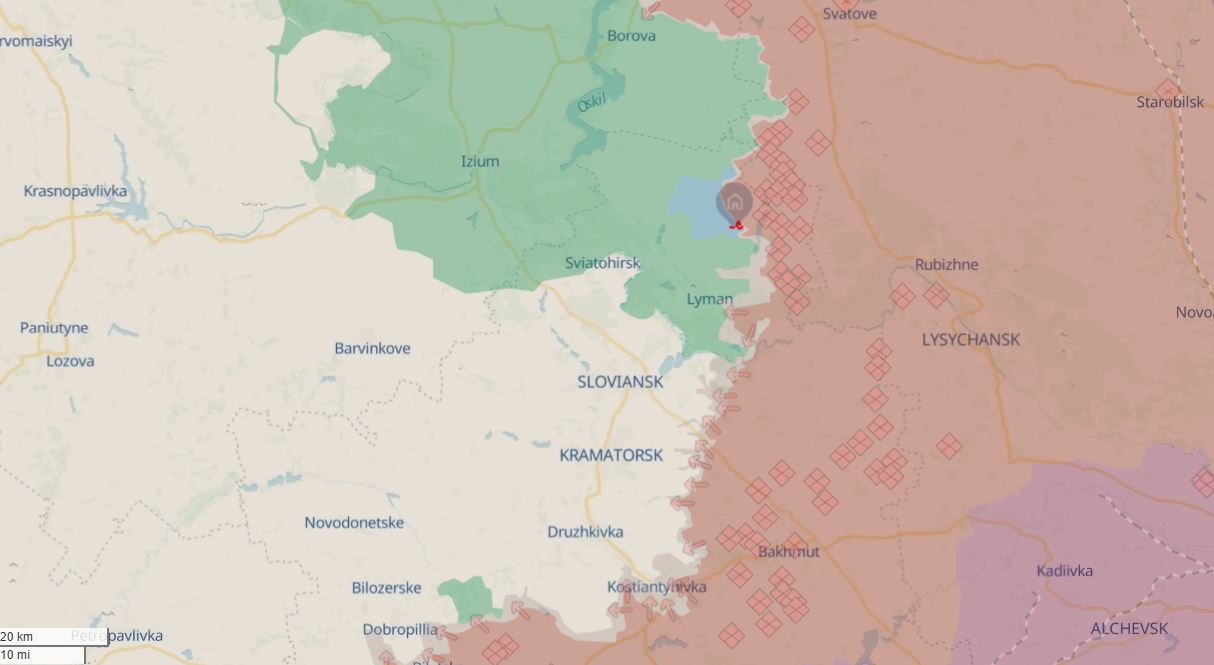
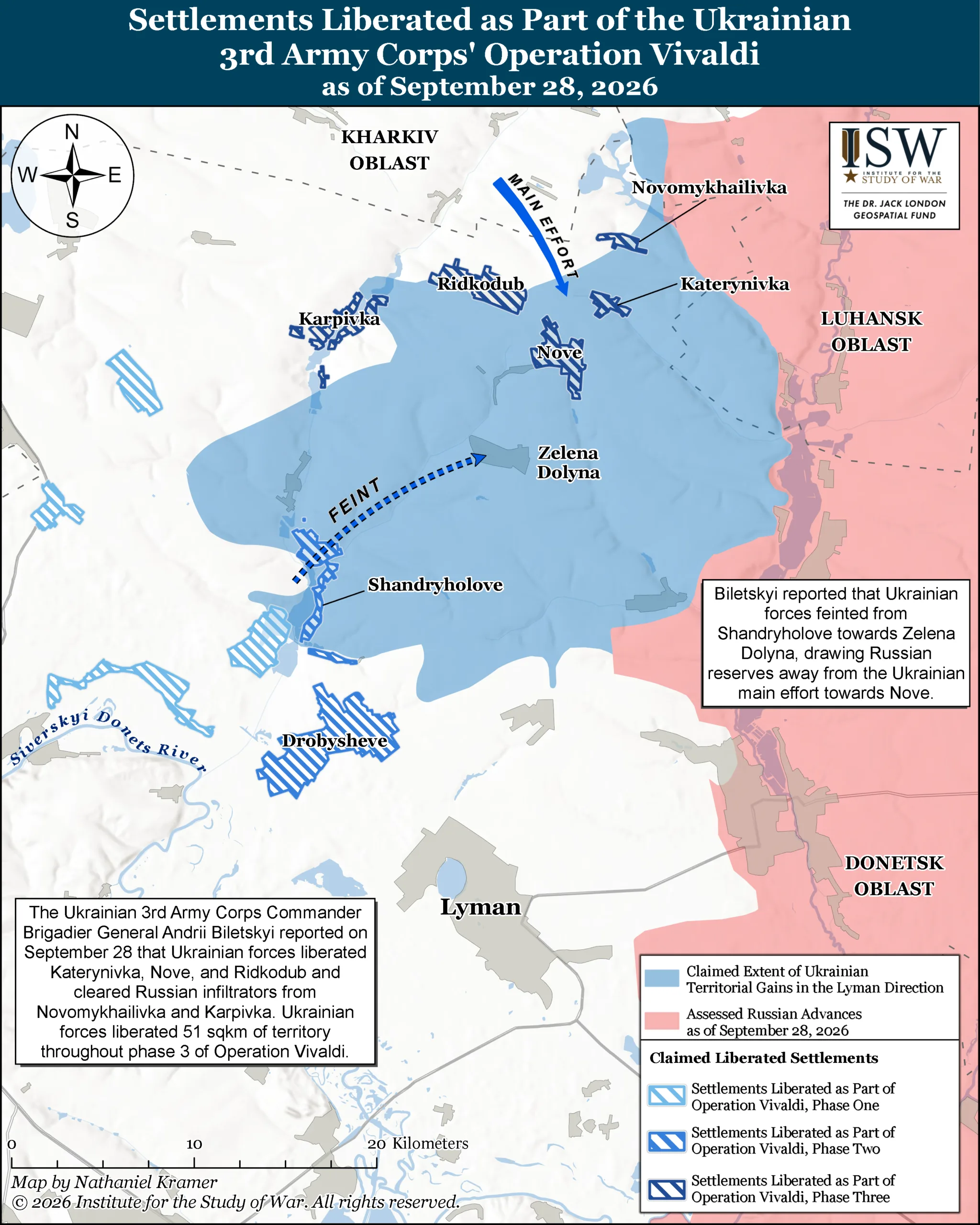
Situation near Nove as of 23 August
Situation near Nove as of 23 August. Map: Euromaidan Press

But the closing pincer around elements of the Russian 2nd and 144th Motor Rifle Divisions could strain the Russians' logistics and compel the Russians to reconsolidate in order to preserve their combat power—by retreating east. That would take a lot of pressure off Lyman and, by extension, also take a lot of pressure off Sloviansk and Kramatorsk, the last two big free cities in Donetsk.

Lyman, which lies 15 km northeast of Sloviansk—the northernmost of the free cities—is the main obstacle between at least six Russian regiments and Sloviansk. The Russians have been inching toward Sloviansk and Kramatorsk from several directions for months now, racing against the coming winter to position forces for a possible siege of the twin cities next year. Winter in Ukraine punishes any attacker by depriving them of the leafy tree canopy that can conceal infiltrating troops during warmer months.

According to the most recent map from analyst and mapper Thorkill, one of the more reliable observers of unit-level action in Ukraine, the Ukrainian 3rd Assault Brigade is just a few kilometers away from linking up with the 60th Mechanized Brigade in or around the village of Kolodyazi.

Sytuacja w rejonie Nowego (Łyman), część II.

Jednym z odcinków frontu w Donbasie, na którym wojska ukraińskie prowadzą obecnie działania zaczepne, jest rejon Kateryniwka - Nowe – Zełena Dolyna, na północ od Łymanu. Od połowy maja 2026 r. pozycje rosyjskiej 144 Dywizji Strzelców… pic.twitter.com/AIvInwHGX3

— Thorkill (@Thorkill65) August 25, 2026

Galloping advance

If true, that means the 3rd Assault Brigade and adjacent units from the 3rd Army Corps have carried out one of the more successful Ukrainian counteroffensives in memory. In April they first exploited gaps in Russian defenses north of the village of Nove. In May and June they advanced toward the village. In July they captured it.

After that, the attacking Ukrainians kept pushing south into the right flank of a 10-km-by-10-km salient that advancing Russian regiments created as they maneuvered around Lyman from the north, aiming to surround the town instead of directly assaulting it on their way toward Sloviansk.

Leaving their flank exposed, the Russians trying to encircle Lyman found themselves at risk of encirclement, instead. If the 3rd Assault Brigade or 60th Mechanized Brigade—together possessing thousands of troops, on paper—can march through Kolodyazi, they will have closed a ring of loose Ukrainian control around at least two Russian regiments, also with potentially thousands of troops.

Emphasis on loose control. Again, there aren't enough Ukrainian forces on the ground north of Lyman to prevent any "encircled" Russians from retreating back to the east. But that retreat would represent a major victory for the Ukrainian defenders north and east of Sloviansk. "The fall of this salient [north of Lyman] would significantly delay the fall of Lyman," analyst and mapper AMK Mapping predicted.

Situational update on the Lyman direction:

The Ukrainian counterattacks north of Lyman are now entering their fourth month, as they come closer and closer to cutting off the Russian salient. Two pincers have been formed, which are both dangerously close to cutting the Russians… pic.twitter.com/mu2kZ4S3Jv

— AMK Mapping 🇳🇿 (@AMK_Mapping_) August 26, 2026

No one expects the Russians to halt their offensive toward Sloviansk and Kramatorsk. But in potentially taking two steps forward and one step back in their northerly march on the free cities, the Russians sacrifice time. Time the Ukrainians can use to stiffen their defenses in Sloviansk and Kramatorsk and evacuate more of the tens of thousands of civilians who remain in the cities despite the constant danger from Russian drones and bombs.

The possible extent of the Ukrainian gains north of Lyman—a 10-km march since April—is impressive given Russia's overall advantage in manpower and firepower in the east. Equally impressive is the operational security, or OPSEC, that cloaked the offensive until now. Sure, there were a few videos of action around Nove that hinted at a major Ukrainian action.

But the units involved exercised surprising discipline, and prevented too much information from leaking. "Someone in the 3rd Corps responsible for [OPSEC] is actually trying to do their job diligently and has quite effectively cut off information," Thorkill noted. The secrecy may have facilitated the Ukrainian advance by delaying any sense of panic among the Russian commanders who are responsible for reinforcing the Lyman salient, but who also tend to ignore bad news as long as possible because they know it could reflect poorly on them.

News of the counteroffensive is now available for all to see, even if official Ukrainian sources have yet to confirm it. That may mean time is running out for the 3rd Army Corps to close its pincer before the Russians retreat or reinforce. AMK Mapping has already seen some evidence of a "partial withdrawal from the most vulnerable positions in the salient.

A 53rd Mechanized Brigade trooper.
Explore further

Can Ukrainian forces save Sloviansk and Kramatorsk?

  • ✇Euromaidan Press
  • One tracked tank repairs, one marked artillery, one aimed bombs at civilians—all three got 15 years
    A Ukrainian court sentenced three Russian agents to 15 years each for guiding Russian strikes on Donetsk Oblast, the Security Service of Ukraine (SBU) said on 26 August. Each had been recruited to mark Ukrainian military sites or civilian targets in the east, and counterintelligence exposed them between spring 2025 and March this year. The court found all three guilty of treason committed under martial law. The SBU did not name the court or say which specific strikes th
     

One tracked tank repairs, one marked artillery, one aimed bombs at civilians—all three got 15 years

26 août 2026 à 04:20

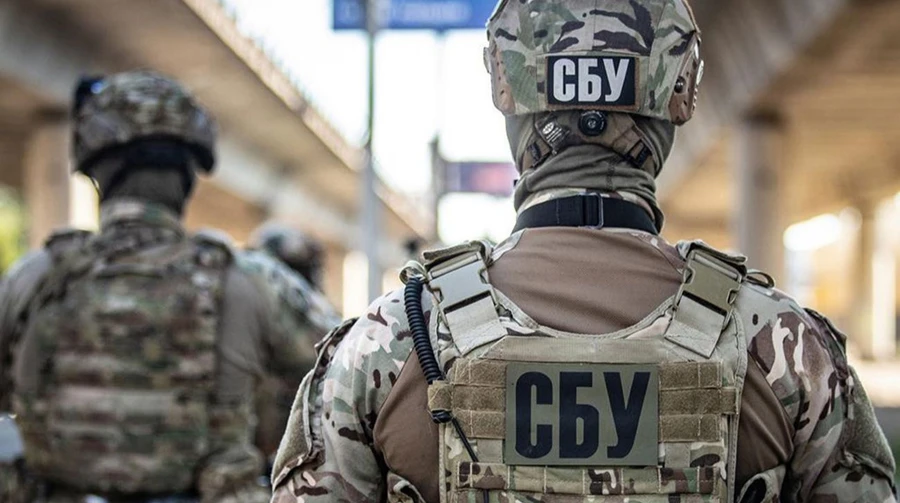
SBU officers in camouflage and tactical gear, seen from behind during an operation.

A Ukrainian court sentenced three Russian agents to 15 years each for guiding Russian strikes on Donetsk Oblast, the Security Service of Ukraine (SBU) said on 26 August. Each had been recruited to mark Ukrainian military sites or civilian targets in the east, and counterintelligence exposed them between spring 2025 and March this year. The court found all three guilty of treason committed under martial law. The SBU did not name the court or say which specific strikes the men enabled.

Russia has spent this war turning Ukrainian civilians into spotters for its bombs — reaching them through Telegram job and drug channels, forged official summonses, relatives in occupied areas, and promises of easy money — and the SBU has opened more than 3,800 treason investigations since 2022 as of February 2026, so any single verdict stands for a caseload far larger than what reaches the news.

The informer inside the armor repair base

One of the convicted men worked at a Defense Forces repair base, and the SBU detained him in the Kramatorsk sector in April 2025. Russian services noticed him through his brother, who lives in Russia and works for the Federal Security Service (FSB), the investigation established. Recruitment through relatives in Russia or the occupied territories is a method Ukrainian counterintelligence has documented before, including inside a marine brigade on the active front.

During his own shifts at the defense enterprise, he recorded the geolocations of repair shops used to restore heavy armored vehicles for Ukraine's Armed Forces. He tried to pass the photographs and building coordinates to his Russian handler through an anonymous chat in a messenger.

sbu arrests suspected russian spies foils sabotage plots lyman chernihiv kirovohrad vinnytsia detainment saboteurs security service says arrested agent aiding airstrikes 2 ukraine's reported multiple agents involved espionage across several
Explore further

SBU arrests suspected Russian spies, foils sabotage plots in Lyman, Chernihiv, Kirovohrad, Vinnytsia

The Dobropillia man who aimed 1.5-ton bombs near Pokrovsk

The second man was an unemployed resident of Dobropillia and an agent of Russian military intelligence, which noticed him through anti-Ukrainian comments in Telegram channel chats, the SBU said. The agency's counterintelligence detained him near Pokrovsk in March this year. Investigators established that he directed 1.5-ton guided aerial bombs at fortified areas and at artillery positions that keep Russian assault groups under fire control on the Pokrovsk axis. Russian forces have leaned more heavily on heavy glide bombs across this stretch of front this year, hitting fortifications and reducing towns to rubble their infantry then uses as cover.

The Kostiantynivka resident who marked his own city

The third man, recruited by the FSB, lived in Kostiantynivka, and SBU military counterintelligence exposed him in August 2025, according to the report. He approached Russian services through pro-Kremlin Telegram channels and offered them his help.

He directed Russian guided aerial bombs and small first-person-view drones at the civilian infrastructure of the front-line city, according to the case materials. He also tracked the positions of Ukrainian drone units carrying out combat tasks on the Kramatorsk axis. Russian strikes on that axis have repeatedly hit residential blocks, with prosecutors opening war-crimes investigations.

Ukrainian courts have handed down the same 15-year term in comparable cases, including for a locomotive depot engineer who mapped Ukrainian positions around Lyman.
  • ✇Euromaidan Press
  • Ukraine’s secret counteroffensive takes the pressure off Sloviansk
    Without much fanfare, Ukrainian forces have been counterattacking north of Lyman in eastern Ukraine's Donetsk Oblast The Ukrainian advance takes some pressure off the free city of Sloviansk, just 20 km to the southwest The problem is: the Russians are advancing toward Sloviansk and Kramatorsk from several other directions Russian forces are fighting against time to close a pincer around the last free cities in eastern Ukraine. The deadline: the coming winter,
     

Ukraine’s secret counteroffensive takes the pressure off Sloviansk

Par : David Axe
25 août 2026 à 07:51

A Ukrainian soldier carries an FPV drone.

  • Without much fanfare, Ukrainian forces have been counterattacking north of Lyman in eastern Ukraine's Donetsk Oblast
  • The Ukrainian advance takes some pressure off the free city of Sloviansk, just 20 km to the southwest
  • The problem is: the Russians are advancing toward Sloviansk and Kramatorsk from several other directions

Russian forces are fighting against time to close a pincer around the last free cities in eastern Ukraine. The deadline: the coming winter, which will strip the leaves from the trees and leave any attacking force exposed to overhead surveillance and attack.

But in one key sector, Ukrainian forces are spoiling the coordinated Russian operation to partially surround Sloviansk and neighboring Kramatorsk. With admirable operational security, or OPSEC, a clutch of Ukrainian brigades under the 3rd Army Corps hasn't just blunted the advance of the Russian Center Group of Forces—it has pushed the Russians back.

This Ukrainian counterattack along the axis through the town of Lyman, ongoing since May, has largely escaped widespread notice. Yes, there is some scant video evidence of Ukrainian attacks. And yes, a few analysts have adjusted their maps to account for apparent Ukrainian advances, especially in the direction of Nove, a Russian-occupied village 15 km north of Lyman, which itself lies 15 km north of Sloviansk.

Ukrainian 🇺🇦 forces have been conducting for weeks two unnoticed counter-attacks in two directions of the frontline.

With barely any geolocation, the Ukrainians kept a good level of OPSEC and the russians have been reluctant to publish videos from these areas.

In the Ivanivka… pic.twitter.com/hNJy4YhkxG

— Clément Molin (@clement_molin) June 10, 2026

But for the most part, Ukrainian and Russian sources have avoided talking about Lyman. "The Ukrainians kept a good level of OPSEC and the Russians have been reluctant to publish videos from these areas" depicting their retreats, analyst and mapper Clément Molin noted in June, just a few weeks after the Ukrainians attacked toward Nove.

Molin, for one, expects the OPSEC to lift in the coming days. "By the end of the month, we should have an official update on the good results of a Ukrainian offensive that has largely remained secret," he wrote on Monday.

Situation near Nove as of 23 August
Situation near Nove as of 23 August. Map: Euromaidan Press

April offensive

The Ukrainians' limited counteroffensive around Lyman apparently kicked off on in mid-April. One of the first attacks that left any real evidence occurred on 22 May, when a small Ukrainian mechanized force—perhaps from the 60th or 66th Mechanized Brigade, the 77th Air Assault Brigade, or the Presidential Brigade—attacked in armored trucks and M-113, Stryker, and BTR-4 armored personnel carriers. Heavy bomber drones flew top cover.

The Russian 144th Motor Rifle Division fought back with its own drones. Interceptor drones took aim at the bombers. First-person-view and heavy bomber drones blasted at least one BTR-4, hitting it before and after it dropped off its infantry passengers. Drones struck some of the disembarked Ukrainian infantry.

How many Ukrainian troops survived and entrenched in new positions on 22 May is unclear. Regardless, the Ukrainian 3rd Army Corps wasn't done with Nove. Attacks continued. And sometime after the 22 May assault on Nove, "the Ukrainians managed to consolidate their gains," Molin concluded after scrutinizing a few videos and some satellite imagery.

By early July, Ukrainian forces had succeeded in "operationally encircl[ing] the Russian forces defending the village of Nove," according to analyst and mapper Thorkill. "Fierce fighting is currently underway to expel the Russians from that locality," Thorkill reported at the time.

Sytuacja w rejonie Nowego (Łyman).

Jednym z odcinków frontu w Donbasie, na którym wojska ukraińskie prowadzą obecnie działania zaczepne, jest rejon wsi: Nowe – Zełena Dolyna, na północ od Łymanu. Od połowy maja 2026 r. pozycje rosyjskiej 144 Dywizji Strzelców Zmotoryzowanych… pic.twitter.com/2EJQgz4eps

— Thorkill (@Thorkill65) July 8, 2026

The aim of the Ukrainian counterattacks is obvious. The 3rd Army Corps intends to put pressure on the northern right flank of 10 km-by-10-km salient jutting into the battleground north of Lyman. The Russian 144th Motor Rifle Division has been pouring troops into the salient, clearly intending to surround and isolate Lyman instead of directly assaulting it—all in order to clear a path toward Sloviansk.

Salients are risky for both sides, however. The farther the Russians extend their Lyman salient, the more exposed they are on their flanks. The Ukrainians know this. And even if the 3rd Army Corps can't fully cut across the salient in order to surround the Russians inside of it, the corps can at least take advantage of the salient's exposed flanks.

Capturing Nove, on the very northern edge of the salient, could allow the Ukrainians to bring to bear more artillery and drones on the Russians south of Nove. The 3rd Army Corps doesn't have to fully encircle the Russian troops closest to Lyman in order to hammer them with withering firepower.

Soldiers of Ukraine's 79th Air Assault Brigade.
Explore further

Ukraine’s quiet counteroffensive took 745 square km. Russia’s dead Starlink is how

Just how successful the 3rd Army Corps has been in its local counteroffensive could become clearer very soon. That won't spell lasting relief for Sloviansk and Kramatorsk, however. Fighting against the clock as summer begins turning into fall and then winter, the Russians are slowly advancing toward the twin cities from several directions.

The siege of Kramatorsk and Sloviansk is coming. Perhaps not this year, but surely by 2027. To fully safeguard the twin cities, the Ukrainians would need to duplicate their success north of Lyman along several other directions.

That's a big ask of a Ukrainian force that's overall still outnumbered and outgunned.

  • ✇Euromaidan Press
  • Russia grinds up the eastern approach to Sloviansk after its northeastern push stalled
    Russian forces have gained ground on the eastern approaches to Sloviansk and continue to prioritize an eastern route toward the city, according to the Institute for the Study of War (ISW). Their earlier push from the northeast had bogged down, and Russia now aims to set up a future assault on one of the last major cities Ukraine still holds in Donetsk Oblast. A quick move on the city itself remains extremely unlikely, ISW said. Russia's 2026 summer campaign in the east
     

Russia grinds up the eastern approach to Sloviansk after its northeastern push stalled

24 août 2026 à 13:29

The aftermath of the destruction following one of the strikes in Sloviansk

Russian forces have gained ground on the eastern approaches to Sloviansk and continue to prioritize an eastern route toward the city, according to the Institute for the Study of War (ISW). Their earlier push from the northeast had bogged down, and Russia now aims to set up a future assault on one of the last major cities Ukraine still holds in Donetsk Oblast. A quick move on the city itself remains extremely unlikely, ISW said.

Russia's 2026 summer campaign in the east has advanced through field edges and small villages rather than the breakthroughs the Kremlin keeps promising, the grinding pattern that has defined the fighting across Donetsk Oblast for years.

Destroyed Kostiantynivka
Explore further

Kostiantynivka: Why one city in Donbas matters so much that Putin lies about having captured it

The eastern approach

Ukrainian military observer Kostiantyn Mashovets reported that Russian forward units are advancing across several tactical areas at once in the Sloviansk direction. He said the command of Russia's 3rd Combined Arms Army rushes assault infantry forward right after each successful infiltration. Russian troops reached the southeastern edge of Pyskunivka, east of Sloviansk, from the east and northeast, moving off positions they had seized on the southern bank of the Siverskyi Donets, Mashovets said. Zakitne lies northeast of Pyskunivka and Kryva Luka southeast of it, and ISW read the advance as evidence Russia has consolidated positions in both.

They also infiltrated the southern and southeastern outskirts of Mykolaivka from western Rai-Oleksandrivka. ISW assessed that Russia is running a dual effort to connect its units near Kryva Luka with those at Rai-Oleksandrivka, so it can assault Mykolaivka from dominant terrain to the east and south at once. Mashovets added that other Russian groups slipped through three settlements along the E-40 Bakhmut-Sloviansk highway, trying to hold the western bank of the Siverskyi Donets-Donbas Canal and reach the river just east of the city.

ISW observed reports on 23 August that Ukrainian forces repelled a Russian infiltration attempt in Mykolaivka.

Oleksandr Borodin, spokesperson for Ukraine's 3rd Army Corps, said the Lyman direction falls in his corps' zone and that Russia's goal there is to half-encircle the Sloviansk-Kramatorsk agglomeration from the flank—first securing bridgeheads across the rivers, then cutting logistics. He called those plans unrealistic:

"We have quite serious defensive positions there and have been preparing for a long time. The capabilities they currently have to try to accomplish this task are insufficient even to come close to achieving such a goal."

Why Moscow switched directions

Russia prioritized attacking Sloviansk from the northeast through Lyman when it opened its spring-summer 2026 offensive, but that effort has largely stalled. The Siverskyi Donets River, which loops north and northeast of the city, together with a web of canals, handed Ukrainian defenders a natural moat. So Russian commanders now treat Mykolaivka as a key prize. Taking it would let them strike west toward Sloviansk from the east, skirting the water obstacles that blocked the northeastern route.

Soldiers of the 93rd Separate Mechanized Brigade’s Fox Crew prepare for a logistics run near the Kramatorsk–Kostiantynivka road in Donetsk Oblast. The unit, once focused on anti-tank warfare, now uses strike drones to disrupt Russian supply lines. Credit: 93rd Separate Mechanized Brigade / Fox Crew.
Explore further

Ukrainian intelligence units will not help: Analyst warns that once Russia breaks into Sloviansk and Kramatorsk, reinforcing them only delays inevitable

A slow road into the Fortress Belt

Sloviansk anchors the northern end of Ukraine's Fortress Belt, a chain of fortified cities that has blunted Russian advances in Donetsk Oblast since 2014. ISW cautioned that Russian forces are extremely unlikely to make fast gains west of Mykolaivka, since they still need to seize several more settlements first.

Ukraine's President Volodymyr Zelenskyy said on 23 August that Putin has ordered his army to seize all of Donetsk Oblast by 31 December. By ISW's count, it is the 15th such deadline since 2022, and Russia has missed every one that has come due.

Zelenskyy put Russia's frontline casualties this year at around 267,000, including about 155,000 killed, and said 70% to 80% of them fall in the Kostiantynivka direction. Russia holds about 79.89% of Donetsk Oblast, by ISW's count, and Zelenskyy said the Kremlin is preparing to mobilize around 300,000 men after the 18–20 September State Duma elections, partly to reinforce Donetsk and Luhansk oblasts.

Ukrainian intelligence units will not help: Analyst warns that once Russia breaks into Sloviansk and Kramatorsk, reinforcing them only delays inevitable

22 août 2026 à 12:42

Soldiers of the 93rd Separate Mechanized Brigade’s Fox Crew prepare for a logistics run near the Kramatorsk–Kostiantynivka road in Donetsk Oblast. The unit, once focused on anti-tank warfare, now uses strike drones to disrupt Russian supply lines. Credit: 93rd Separate Mechanized Brigade / Fox Crew.

Ukrainian analysts warn that the situation on a key stretch of the Donetsk front is becoming increasingly dangerous for two cities central to Ukraine's defense. The eastern flank of the Sloviansk-Kramatorsk agglomeration is taking on an increasingly threatening character, and earlier stabilization measures are clearly not working, military analyst Oleksandr Kovalenko said.

The two cities anchor the line that has held Russia back for over a decade. Sloviansk and Kramatorsk form part of the so-called fortress belt, the line of Ukrainian fortifications that has restrained the Russian advance since 2014. The agglomeration serves as the most important bastion and logistics hub for Ukrainian forces in the east. A threat to it is a threat to the backbone of Ukraine's defense in Donbas.

Russia is 12 to 13 km away

Kovalenko laid out how close Russian forces have come. Their forward positions are 12-13 kilometers from Sloviansk and Kramatorsk. He warned that if Russia's pace does not slow, the first infiltrations into both cities could come by December 2026.

The advance is measured in ground lost. The problem on the eastern flank runs about 30 kilometers, where Russia's 3rd Combined Arms Army operates.

"Only in the third week of August, Russian forces captured 21 square kilometers of Ukrainian territory in this section of the frontline," the expert said.

Russia uses the terrain of the "Cretaceous Flora" reserve, its hilly micro-relief rather than open steppe, to advance, absorbing not just square kilometers into pockets but villages and settlements.

The flank threatens neighboring sectors

The deterioration is spreading pressure sideways. The advance creates pressure from the southern bank of the Siverskyi Donets on the zone of the 3rd Army Corps, which had stabilized the Lyman direction and pinned Russian forces near Yampil, Kovalenko believes. The former Siverskyi direction saw the fastest rate of territorial loss of any sector in 2025, slowed in April and May 2026, but the 3rd Combined Arms Army's advance has not yet been stopped.

The cumulative loss is large. After losing more than 500 square kilometers over a year, the unstable flank, sagging since June 2025, is becoming a problem for other directions, looming over or pressuring them.

Kovalenko argued the sector has gone months without attention while threatening both the main agglomeration and the successfully held directions around it.

Analysts urge reinforcement before it is too late

Kovalenko proposed a specific fix. The sector must be reinforced as soon as possible, he said, suggesting that the nearest resource, Andrii Biletsky's 3rd Army Corps, often described as one of the most capable formations in Ukraine's forces, be used at least to relieve both banks of the Siverskyi Donets.

"Once infiltrations into Sloviansk and Kramatorsk begin, reinforcing garrisons and landing intelligence-directorate troops will not solve the problem but only delay the inevitable," he warned.

A second analyst gave a similar warning. Yurii Butusov, a drone company commander in the National Guard's "Khartia" corps, said that if Ukraine's forces retreat from there, Russia gains tactical advantages and Sloviansk-Kramatorsk is gradually lost, ultimately leading to the loss of the Donbas.

He also said that only Biletskyi can take responsibility for this battle.

"Only orderly command and organization at the front now will allow us to turn the course of a battle that is so far not going in our favor," Butusov said.

  • ✇Euromaidan Press
  • Russia drops eight FAB-250 bombs on Kramatorsk, killing one and injuring 18
    Russia's glide-bomb strike on Kramatorsk killed one person and wounded 18, the head of the Donetsk Oblast Military Administration, Vadym Filashkin, reported on the morning of 14 August. The Donetsk Oblast Prosecutor's Office has opened a war-crimes investigation into the attack. Russian forces dropped eight FAB-250 aerial bombs fitted with universal glide and correction modules (UMPK) on the city on the evening of 13 August, hitting residential areas including apart
     

Russia drops eight FAB-250 bombs on Kramatorsk, killing one and injuring 18

14 août 2026 à 07:36

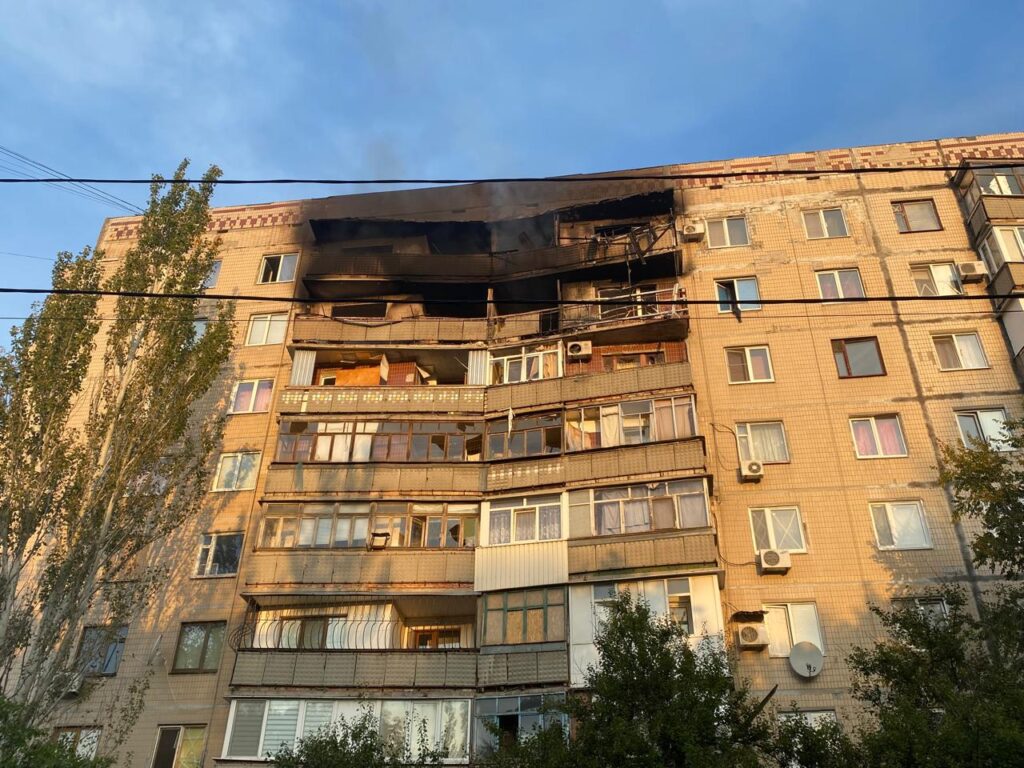
An apartment building hit in a Russian strike on Kostiantynivka on the evening of 13 August, 2026. Photo: Donetsk Region Prosecutor's Office

Russia's glide-bomb strike on Kramatorsk killed one person and wounded 18, the head of the Donetsk Oblast Military Administration, Vadym Filashkin, reported on the morning of 14 August. The Donetsk Oblast Prosecutor's Office has opened a war-crimes investigation into the attack.

Russian forces dropped eight FAB-250 aerial bombs fitted with universal glide and correction modules (UMPK) on the city on the evening of 13 August, hitting residential areas including apartment buildings, the prosecutor's office reported. An apartment building and a car were damaged. Filashkin said the strikes also hit the nearby settlement of Bilenke.

The strike on the residential area was another instance of Russian forces using guided aerial munitions against civilian areas. Under international humanitarian law, civilian objects may not be deliberately targeted.

The toll rose overnight. Filashkin first reported at least one killed and 15 wounded on the evening of 13 August. By the next morning, the prosecutor's office had documented 17 of the wounded — seven men and 10 women aged between 47 and 85 — with blast and traumatic brain injuries, shrapnel wounds, cuts to the head, arms and legs, and abrasions and bruises. Filashkin's later update put the number of wounded at 18.

An apartment building hit in a Russian strike on Kramatorsk on the evening of 13 August, 2026. Photo: Donetsk Region Prosecutor's Office

"Russia again turned an ordinary evening in the city into deadly danger. This is not an accident or a mistake — this is how the enemy wages war against our people," Filashkin said.

Deliberately directing attacks against civilian objects may constitute a war crime under international humanitarian law. The prosecutor's office has opened a pre-trial investigation under Part 2 of Article 438 of Ukraine's Criminal Code.

"In total, over the past day, Russians shelled populated areas of Donetsk Oblast 37 times. 624 people, including 90 children, have been evacuated from the front line," Filashkin reports.

A car hit in a Russian strike on Kramatorsk on the evening of 13 August, 2026. Photo: Donetsk Region Prosecutor's Office

Repeated pattern of glide-bomb strikes on Donetsk Oblast

Russian forces regularly use FAB-250 bombs equipped with UMPK to strike populated areas in Donetsk Oblast and other frontline regions.

On 11 August 2025, Russian aircraft dropped FAB-250 bombs equipped with UMPK on a residential quarter in Bilozerske, Donetsk Oblast. Two civilians were killed, a 43-year-old man and a 34-year-old woman, while seven others were injured, including a 16-year-old boy. Eight apartment buildings and six vehicles were damaged. A pre-trial investigation was opened under Part 2 of Article 438 of Ukraine's Criminal Code.

An apartment building hit in a Russian strike on Bilozerske on 11 August, 2025. Photo: Donetsk Region Prosecutor's Office

On 18 September 2025, Russian forces struck civilians with a FAB-250 bomb equipped with UMPK in Kostiantynivka, Donetsk Oblast. Five residents aged between 62 and 74 were killed; three men and two women were outside at the time of the strike. The facades of four apartment buildings were damaged.

On 25 June 2026, Russian forces dropped three FAB-250 bombs equipped with UMPK on Druzhkivka, Donetsk Oblast. A 56-year-old woman was killed, and four others were injured: a 68-year-old man and three women aged 51, 58, and 67, sustaining blast injuries and shrapnel wounds.

  • ✇Euromaidan Press
  • Russia squeezes the flanks, then infiltrates the middle. Around Kramatorsk, it can’t do both
    Russian forces use the same strategy over and over to capture Ukrainian cities Surround on the flanks, infiltrate in the middle But that strategy requires doing both at once, and Russia lacks the infantry Around Kramatorsk, every Ukrainian unit that holds forces a shuffle that stalls something else Russian troops are slowly marching toward and around Kramatorsk and Sloviansk, the last two big free cities in eastern Ukraine's Donetsk Oblast. The Russians
     

Russia squeezes the flanks, then infiltrates the middle. Around Kramatorsk, it can’t do both

Par : David Axe
10 août 2026 à 17:24

Soldiers of the 93rd Separate Mechanized Brigade’s Fox Crew prepare for a logistics run near the Kramatorsk–Kostiantynivka road in Donetsk Oblast. The unit, once focused on anti-tank warfare, now uses strike drones to disrupt Russian supply lines. Credit: 93rd Separate Mechanized Brigade / Fox Crew.

  • Russian forces use the same strategy over and over to capture Ukrainian cities
  • Surround on the flanks, infiltrate in the middle
  • But that strategy requires doing both at once, and Russia lacks the infantry
  • Around Kramatorsk, every Ukrainian unit that holds forces a shuffle that stalls something else

Russian troops are slowly marching toward and around Kramatorsk and Sloviansk, the last two big free cities in eastern Ukraine's Donetsk Oblast.

The Russians have a standard playbook for taking a Ukrainian city, and running it means doing two things at the same time. Along the nearly 100-km Kramatorsk front, they don't have the infantry to do both at once. Every time a Ukrainian brigade holds somewhere, the Russians have to move men to cover it—and something stalls somewhere else.

That strategy is simple in concept but difficult in practice. The idea is for Russian forces to advance along a city's under-protected flanks in order to put pressure on the main supply lines of the city's garrison. As the flank attacks squeeze the garrison's logistics, Russian infiltrators slip into the city, hoping to create a lodgement for follow-on forces.

The final assault through that lodgement comes late in the campaign, after the Ukrainians are already weakened by a lack of supplies.

Structural Deterrence

Russian offensive planning at the operational level remains disciplined on paper: groupings are sequenced, axes are assigned, objectives are staggered. What the discipline is not is well-manned. I read the shift to two- and three-man infiltration teams on… https://t.co/Py1GbXM9aR

— Vitaly (@M0nstas) July 24, 2026

The strategy only works when the troops on the flanks and those in the middle work together. The former squeezes. The latter infiltrates. The problem for the Russian Center Group of Forces on the Kramatorsk front is that it's not squeezing and infiltrating at the same time. That delays the overall Russian advance and buys time for Ukrainian forces to dig in, reinforce, and hope for a miracle.

"Russian offensive planning at the operational level remains disciplined," mapper and analyst Vitaly explained. But only "on paper," Vitaly added. "Groupings are sequenced, axes are assigned, objectives are staggered."

"What the discipline is not is well-manned," the mapper wrote.

Vitaly reads one recent Russian adaptation as evidence of the shortfall rather than of cleverness. "I read the shift to two- and three-man infiltration teams on motorcycles and ATVs as less a sign of tactical innovation than of a manpower deficit that organization is straining to hide," he wrote.

Russian forces advance towards Kramatorsk and Sloviansk, making inroads in the last 2 months
Map: Euromaidan Press

Manpower shortages

Ukraine's manpower problems are well-known. Fewer observers appreciate that Russia struggles, too. Yes, the Russians still recruit around 30,000 fresh troops every month. In theory, that's enough new manpower to replace monthly losses.

But replacing casualties is not the same as resourcing a strategy. Ukraine's commander-in-chief Oleksandr Syrskyi put the Russian force in Ukraine at 721,300 at the end of June—a gain of only around 11,000 since late 2025, against Russian losses he estimated at 30,000 to 35,000 a month. Contract recruitment collapsed in the spring, falling by a third year on year, and Ukraine's foreign intelligence service counted 195,000 contract recruits by early July against an annual target of 409,000.

A Russian general, speaking anonymously to the investigative outlet IStories, put the requirement more starkly. To capture the rest of the Ukrainian-held Donbas, he said Russia would need to replace at least 55,000 to 60,000 casualties every month—roughly double what it recruits. That figure rests on a single unnamed source and should be weighed accordingly. But it describes the same gap Vitaly sees on the map.

When a Ukrainian brigade defeats one attack anywhere along the Kramatorsk front, it may compel Russian regiments to shuffle troops between units in order to quickly replace the losses. The shuffle may sap the combat power of a flanking or infiltration unit working along some other section of the front.

A weak flanking unit may not be able to keep up the pressure on enemy supply lines, perhaps imperiling the adjacent infiltration unit as it probes for the gaps in Ukrainian defenses that the flankers were supposed to help create. By the same token, weak infiltrators may find gaps in Ukrainian defenses, but fail to secure a lodgement—effectively wasting the efforts of the adjacent flankers.

A drone operator from the 81st Air Mobile Brigade.
Explore further

Russia is assaulting the gateway to Sloviansk. Ukraine’s 81st Brigade is holding it nearly alone

"That gap keeps producing the same effect," Vitaly explained. The Ukrainian armed forces' "ability to hold separate sections of the front independently forces Russian formations to compensate for each other's failures, and that compensation creates new stalls."

Vitaly gave a name to the effect, and was careful about what he was not claiming. "I call it structural deterrence—not deterrence in the conventional sense, and not a doctrine, but the byproduct of asking an undermanned army to keep a sequenced plan on schedule."

A byproduct is not a defense, and it holds only as long as the Ukrainians can keep producing it. That requires synchronization of their own. Supplies and reinforcements must arrive when and where they're most badly needed. Air and artillery support should shift from sector to sector depending on the urgency of the local garrisons' needs.

All that is to say, the lack of synchronization that has slowed the Russians' march on Kramatorsk could eventually speed up the Russians' march—if and when the Ukrainians are the ones struggling to synchronize.

It's worth noting that the Russians aren't advancing fast toward Kramatorsk and Sloviansk, but they are advancing—especially from the northeast.

The Russians may not be perfectly synchronized. But they're clearly synchronized enough to grind toward the last free cities in Donetsk. Just very, very slowly.

A 53rd Mechanized Brigade trooper.
Explore further

Can Ukrainian forces save Sloviansk and Kramatorsk?

  • ✇Euromaidan Press
  • Russia is assaulting the gateway to Sloviansk. Ukraine’s 81st Brigade is holding it nearly alone
    Russian forces are creeping into Mykolaivka, the gateway to Sloviansk The Ukrainian 81st Airmobile Brigade is defending the town nearly alone Reinforcements would have to cross a canal under Russian fire—but so would the Russians, later For years, Russian troops probed the Ukrainian garrison at Mykolaivka in eastern Ukraine's Donetsk Oblast, sending in small teams of infiltrators for the defenders to hunt down. On 29 July, they stopped probing. "The Russians h
     

Russia is assaulting the gateway to Sloviansk. Ukraine’s 81st Brigade is holding it nearly alone

Par : David Axe
6 août 2026 à 19:06

A drone operator from the 81st Air Mobile Brigade.

  • Russian forces are creeping into Mykolaivka, the gateway to Sloviansk
  • The Ukrainian 81st Airmobile Brigade is defending the town nearly alone
  • Reinforcements would have to cross a canal under Russian fire—but so would the Russians, later

For years, Russian troops probed the Ukrainian garrison at Mykolaivka in eastern Ukraine's Donetsk Oblast, sending in small teams of infiltrators for the defenders to hunt down. On 29 July, they stopped probing. "The Russians have begun an assault on Mykolaivka from the east," observer Thorkill reported, citing the local Ukrainian Telegram channel nikolaevka_online.

Russian assault groups are attacking the apartment blocks along the town's eastern edge. Mykolaivka sits 8 km east of Sloviansk, one of just two big free cities in Donetsk Oblast, and taking it is the precondition for any Russian siege of the city. "The situation is deteriorating," nikolaevka_online warned.

Mykolaivka is "the eastern gateway to Sloviansk," according to mapper Clément Molin. The Russian offensive in Donetsk aims to lay siege to and ultimately capture Sloviansk and neighboring Kramatorsk, which together are still home to nearly 100,000 people despite hundreds of thousands of others having fled.

For months, the situation on the Sloviansk front has been deteriorating

The new Chief of the General Staff of the Ukrainian 🇺🇦Army, Mykhailo Drapaty, must respond as the first Russian 🇷🇺 units have reached approximately 10 km east of Sloviansk and Kramatorsk.

Since the fall of… pic.twitter.com/qnQ3WwB3PT

— Clément Molin (@clement_molin) July 28, 2026

A Ukrainian garrison anchored by the 81st Airmobile Brigade has defended Mykolaivka for years. But the garrison has been struggling to interdict every team of Russian infiltrators—and now the infiltrators have company.

The sector is an exception to a mostly frozen front. Russian troops captured 106 square km of Ukrainian territory in July, according to the Blackbird Group—the fastest Russian advance since January, but a fifth of what the Russians seized in July 2025. Blackbird reads the figure as evidence Russia has largely exhausted its offensive options; in June, Russian forces lost 9 square km on net. The slow average along the 1,200 km gray zone belies much faster movement in a handful of sectors, and east of Sloviansk is one of them.

Expect a long, hard fight in and around the ruins of Mykolaivka. "It is highly unlikely that the battle for Sloviansk will begin this year, not least because the fighting in Mykolaivka is likely to be prolonged," Molin explained.

According to our data, in July the net gains of the Russian armed forces in Ukraine were approximately 106km².

This is the fastest Russian advance since January, but their gains remain extremely limited. In July of 2025 the Russians captured nearly 5 times as much territory.

1/ pic.twitter.com/02931eDLk0

— Black Bird Group (@Black_BirdGroup) August 4, 2026

Tough terrain

The geography is difficult for both the defenders and the attackers. The Donets Canal, which abuts Mykolaivka on the west, "aids the Ukrainian defense just as much as it facilitates the Russian offensive," Molin noted. To reinforce the 81st Airmobile Brigade in and around Mykolaivka, Ukrainian troops must cross the canal while under Russian fire. "Massing troops there is a highly complex undertaking," Molin warned.

Sloviansk kramatorsk mykolaivka map
Map: Euromaidan Press

But the Russian army will face the same challenge if and when it marches through Mykolaivka. "Crossing the canal, particularly around the Sloviansk power plant and its network of waterways, will come at a very high cost, especially given the extensive fortifications the Ukrainians have built in the area over recent months," according to Molin.

In other words, the 81st Airmobile Brigade has fallback positions on the near side of the Donets Canal. If the brigade can't hold Mykolaivka, maybe it can hold the canal—and delay if not halt further Russian advances toward Sloviansk.

The Ukrainians would prefer to hold in Mykolaivka, of course. But it's looking increasingly dire. The Russians appear to be accumulating in the seasonal homes, or "dachas," on the northeastern outskirts of Mykolaivka. "It is difficult to say at this point how many Russian soldiers have infiltrated there," Thorkill wrote. "However, their very presence has forced the command of the 81st Air Assault Brigade—responsible for the city's defense—to secure with patrols."

A 53rd Mechanized Brigade trooper.
Explore further

Can Ukrainian forces save Sloviansk and Kramatorsk?

The Ukrainian brigade is trying to build a wall of infantry and drones between the dachas and a key road intersection that can carry defenders and attackers across central Mykolaivka.

But the 81st Airmobile Brigade is outnumbered, probably badly so. For the first two years of the wider war, the brigade could count on help from the 54th Mechanized Brigade, which clung to the 81st Airmobile Brigade's right flank.

While the 54th Mechanized Brigade still registers on many maps of the gray zone, in fact it's barely there. "Various snippets of information indicate that the 54th Mechanized Brigade—longtime right-flank neighbor of the 81st Brigade—was completely withdrawn from the front between June and July 2024 and sent to the deep rear," Thorkill wrote. East of Sloviansk, "only its drone group remained."

"The unit had long been a brigade in name only," Thorkill noted. So the 81st Airmobile Brigade fights mostly alone, for now—defending the gateway to Sloviansk.

Take Lyman, then Sloviansk, then Kramatorsk: Russia’s plan is still stuck on step one, the Ukrainian military says

4 août 2026 à 08:17

isw first pokrovsk huliaipole—now russia points its logistics-killing air campaign fortress belt · post slovyansk-direction-august-3-2026 ukraine news ukrainian reports

Russia is trying to seize the town of Lyman in northern Donetsk Oblast to turn it into a base for a push toward the twin cities of Sloviansk and Kramatorsk, Ukraine's Joint Forces spokesman Viktor Trehubov said on Ukrainian TV, according to Ukrinform. He described control of the town as a necessity for any Russian advance deeper into the region. For now, he said, Russian troops still cannot establish themselves inside it.

For years, Donetsk Oblast in eastern Ukraine has seen the heaviest and most intense fighting along the roughly 1,200-kilometer frontline. Russia has spent 2026 trying to break the chain of fortified cities that has anchored Ukraine's eastern defense since 2014, a line it failed to crack even in the opening months of the full-scale invasion.

Why Russia needs Lyman

Trehubov said the Russians want to enter Lyman and dig in, aiming to hold the town and use it as a launchpad. 

"The Russians want to enter Lyman and entrench," he said. "Their goal is precisely to take control directly over the settlement."

He stressed that it means "not just somewhere nearby, but over the settlement itself." Russia needs it to "use it as a base for further developing the offensive south toward the Sloviansk-Kramatorsk agglomeration. Even if you just look at the map, it becomes clear that for them this is a necessity."


isw first pokrovsk huliaipole—now russia points its logistics-killing air campaign fortress belt · post russian-strikes-against-bridges-within-slovyansk-august-3-2026-scaled ukraine news ukrainian reports
Explore further

ISW: First Pokrovsk, then Huliaipole—now Russia points its logistics-killing air campaign at the Fortress Belt

For months Russia has looked for routes that avoid Lyman, he said, including attempts to move through the village of Rai-Oleksandrivka. Without holding the town, he added, any Russian effort to enter Sloviansk would be extremely risky and awkward. So Moscow keeps trying to take it. 

Trehubov told national television that Russian forces have pushed as far as Lyman's eastern edge but cannot secure a foothold there. Lyman sits across the Siverskyi Donets River northeast of the twin cities, the largest settlements still under Ukrainian control in the area.

Russia bombs two front-line Donetsk Oblast areas, injuring civilians

Russian aviation dropped four bombs on Kramatorsk overnight, wounding three and setting a 14-story building alight, then hit the Sloviansk community with a bomb and a drone, wounding one more, officials said.… pic.twitter.com/wrX8ypFOrT

— Euromaidan Press (@EuromaidanPress) July 31, 2026

Ukraine's drones start to tip the balance

Over the past year Ukraine's drone units have grown sharply, gradually shifting the front in Kyiv's favor, Trehubov said. 

"The Russians still have some individual advantages, and there are moments where they have big problems, which they acknowledge, like heavy copters, for example, which they never managed to set up effectively," he said. 

Moscow's failure to field working heavy drones stands out on this stretch of front.

"Overall the situation is evening out in Ukraine's favor thanks to both the quantitative and qualitative growth of Ukrainian drones and drone operators," Trehubov said, adding "There are more of them, they are used more effectively, and the organization of their interaction has become much better relative to the Russian one." 

That shift in the drone math has been building for more than a year.

Over the past day, Ukraine's Defense Forces recorded 226 combat clashes with Russian troops, with the Kostiantynivka direction the most active.

The Institute for the Study of War (ISW) reads the main threat differently. The US-based think tank has assessed that Russia is now aiming its logistics-strangling air campaign at Sloviansk and Kramatorsk. Before it storms the cities, Moscow wants to cut their supply lines with drones, missiles, and increasingly glide bombs, the same method that set up its advances near Pokrovsk and Huliaipole in 2025.

ISW: First Pokrovsk, then Huliaipole—now Russia points its logistics-killing air campaign at the Fortress Belt

4 août 2026 à 06:55

isw first pokrovsk huliaipole—now russia points its logistics-killing air campaign fortress belt · post russian-strikes-against-bridges-within-slovyansk-august-3-2026-scaled ukraine news ukrainian reports

Russia is trying to cut off two of Ukraine's biggest remaining strongholds in the east before it ever storms themaccording to the Institute for the Study of War (ISW). The think tank finds Moscow reviving a months-long air campaign against supply lines — the same method that preceded its 2025 advances elsewhere in eastern Ukraine. This time, the target is the Fortress Belt, and the effort leans more heavily on glide bombs than before.

Capturing all of Donetsk Oblast has been Russia's central war aim for years, and the Fortress Belt — a chain of fortified cities held and reinforced since 2014 in northwestern Donetsk Oblast — is the last major barrier standing between Russian forces and that goal.

Russia dusts off its 2025 logistics playbook

Through 2025, Russian forces ran long campaigns of drones, glide bombs, and missiles to sever Ukrainian supply lines before pushing near Pokrovsk and Huliaipole. ISW calls this battlefield air interdiction (BAI) — using airpower to strike rear targets behind the front and choke an enemy's logistics. Now the same approach has moved north, ISW assessed, aimed at Sloviansk and Kramatorsk, the twin cities anchoring the top of the Fortress Belt. The goal is to isolate the defenders there from steady resupply. Ukrainian and Russian commentators alike have described the strain, noting that nighttime logistics runs into the two cities have become hard to pull off.

isw first pokrovsk huliaipole—now russia points its logistics-killing air campaign fortress belt · post slovyansk-direction-august-3-2026 ukraine news ukrainian reports
Map: ISW

The target list: bridges, rails, and the roads between

Russia has increasingly gone after the locomotives that keep Ukrainian supplies moving, and reportedly handed troops 1,000 Molniya loitering munitions in July 2026 with orders to intensify strikes near Kramatorsk. It has also begun hitting major bridges. Geolocated footage posted on 2 August showed a heavily damaged crossing over the Kazennyi Torets River in eastern Sloviansk. The bridge linked the city to the highway leading to Kramatorsk.

isw russia's long push toward sloviansk gains ground ukraine counterattacks · post lyman-tactical-area-july-28-2026 news ukrainian reports
Explore further

ISW: Russia’s long push toward Sloviansk gains no ground as Ukraine counterattacks

More glide bombs, fewer drones

This year's campaign appears to lean more heavily on glide bombs than the 2025 versions did, ISW found, with many reports of guided glide-bomb strikes on Sloviansk, Kramatorsk, and surrounding settlements over recent weeks. ISW assessed that Russia may be reaching for these heavy bombs because Ukrainian jamming and interceptors have blunted its capacity to field drones as widely as before. The bombs do more than break fortifications. ISW noted the strikes reduce cities to rubble that Russian troops then use as cover, as they have in Kostiantynivka.

A slow build, not a quick breakthrough

The point of the campaign, ISW assessed, is to shape the battlefield for a future offensive against Sloviansk and Kramatorsk — not to seize them now. ISW does not expect Russian forces to reach or push through the cities soon. Russian troops have been infiltrating Kostiantynivka for months without capturing it, despite Russian claims otherwise. Russia's 2025 campaigns needed months to prepare later advances, and ISW expects this one to move just as slowly.

isw first pokrovsk huliaipole—now russia points its logistics-killing air campaign fortress belt · post russian-strikes-against-bridges-within-slovyansk-august-3-2026-scaled ukraine news ukrainian reports
Explore further

ISW: First Pokrovsk, then Huliaipole—now Russia points its logistics-killing air campaign at the Fortress Belt

At the same time, Ukraine's Joint Forces spokesman Viktor Trehubov gave a similar read on Lyman. He told national television that Russia wants the town as a launchpad toward Sloviansk and Kramatorsk. But he said Russian forces still cannot dig in there, and Ukraine's growing drone advantage is tipping the fight toward Kyiv.

  • ✇Euromaidan Press
  • Can Ukrainian forces save Sloviansk and Kramatorsk?
    Russian forces are creeping toward Sloviansk and Kramatorsk from the north It could be months before the Russians can lay siege to Sloviansk, but it's unclear Ukrainian forces can stop them Russian bombardment of the supply lines leading to and through the twin cities complicates the Ukrainian defense A doomed Russian tank assault on 22 July along the southern approaches to the twin cities of Kramatorsk and Sloviansk, the last big free cities in eastern Uk
     

Can Ukrainian forces save Sloviansk and Kramatorsk?

Par : David Axe
3 août 2026 à 17:33

A 53rd Mechanized Brigade trooper.

  • Russian forces are creeping toward Sloviansk and Kramatorsk from the north
  • It could be months before the Russians can lay siege to Sloviansk, but it's unclear Ukrainian forces can stop them
  • Russian bombardment of the supply lines leading to and through the twin cities complicates the Ukrainian defense

    A doomed Russian tank assault on 22 July along the southern approaches to the twin cities of Kramatorsk and Sloviansk, the last big free cities in eastern Ukraine’s Donetsk Oblast, was ultimately a sideshow. The Russians’ main effort, in their long and bloody campaign to capture all of Donetsk, is playing out in the north, not the south. 

    The front northeast of Sloviansk “has been the most successful for the Russian army throughout 2026,” mapper Clément Molin noted

    Russian encroachment on Sloviansk and Kramatorsk, the last free cities in Donbas. Map by Euromaidan Press
    Russian encroachment on Sloviansk and Kramatorsk, the last free cities in Donbas. Map by Euromaidan Press

    The bad news for Ukraine is that its forces in the area—parts of six brigades including the 53rd, 54th and 63rd Mechanized Brigades and the 81st Air Mobile Brigade and the 117th and 120th Territorial Defense Brigades—are “insufficient,” according to Molin. 

    Worse, relentless Russian bombardment of the roads and paths leading to and through Sloviansk means the Ukrainians may struggle to sustain any additional brigades in the area. Assuming there are any free brigades, of course.

    For months, the situation on the Sloviansk front has been deteriorating

    The new Chief of the General Staff of the Ukrainian 🇺🇦Army, Mykhailo Drapaty, must respond as the first Russian 🇷🇺 units have reached approximately 10 km east of Sloviansk and Kramatorsk.

    Since the fall of… pic.twitter.com/qnQ3WwB3PT

    — Clément Molin (@clement_molin) July 28, 2026

    The bombardment is intensifying. On 31 July, a Russian warplane struck the Sloviansk Chemical Plant, deep inside the city, with a 1,500-kg KAB-1500 precision glide bomb. “The city has come under increasingly heavy attacks in recent days,” AMK Mapping noted.

    But the same difficult terrain, crisscrossed by the Donets Canal and dense Ukrainian fortifications, complicates Russian attacks. There are few protected approaches toward Sloviansk from the Russians’ main bases in the ruins of Siversk, 31 km to the east. And one big town town stands between the Russians and the free city: Mykolaivka.

    And the Ukrainians are bombarding Russian supply lines with the same intensity that the Russians are bombarding Ukrainian supply line. It’s for those reasons that Molin expects the Russians to eventually lay siege to Sloviansk and neighboring Kramatorsk from the northeast.

    But not anytime soon. “It is highly unlikely that the battle for Sloviansk will begin this year, not least because the fighting in Mykolaivka is likely to be prolonged,” Molin predicted.

    Russia attacked the Slovyansk Chemical Plant with a KAB-1500 glide-bomb a short time ago.

    The city has come under increasingly heavy attacks in recent days. pic.twitter.com/2v0ZBzCBcW

    — AMK Mapping 🇳🇿 (@AMK_Mapping_) July 31, 2026

    Crawling advance

    The slow pace of the Russian advance belies the worsening conditions in Sloviansk and Kramatorsk. Out of a combined pre-war population of around 440,000, just 90,000 people remain in the twin cities. The other 350,000 have fled.  

    As the cities slowly empty, all eyes turn to the tiny village of Rai-Oleksandrivka, 14 km east of Sloviansk. “This small village, seemingly insignificant at first glance, is actually of strategic importance, as the surrounding high ground overlooks the city of Sloviansk,” Molin explained. 

    “In recent weeks, Russian forces have been consolidating their hold on the village and the surrounding heights, even though Ukrainian troops still maintain positions in many areas,” Molin wrote. 

    A T-72B3A the moment before a Ukrainian drone strikes.
    Explore further

    Russia took the cages off its newest tanks. The new Arena-M shield bought them a few minutes.

    Russian forces are already relentlessly bombarding Ukrainian supply lines in the area with air-launched glide bombs. As Russian ground forces advance closer to Sloviansk and consolidate along key heights such as those around Rai-Oleksandrivka, they can begin aiming more tube artillery at the same supply lines, compounding the Ukrainians’ logistical problems. 

    The coming battle is neither won nor lost yet. But time is running out for Ukrainian forces to reset the battlefield in their favor. 

    If the Ukrainian command can prioritize the front, and push enough supplies to front-line positions, it might yet save Sloviansk and Kramatorsk. As Ukrainian Pres. Volodymyr Zelensky completes his reshuffle of key civilian and military leaders and a new command, that command’s attention “must shift to the Donbas,” Molin stressed.

    • ✇Euromaidan Press
    • ISW: Russia’s long push toward Sloviansk gains no ground as Ukraine counterattacks
      Russia is still unable to break into Sloviansk and the fortified towns shielding it, months into an offensive to seize the rest of eastern Ukraine's Donetsk Oblast, the Institute for the Study of War (ISW) found. Its troops keep leaning on guided bombs and small groups of infiltrating infantry, while Ukrainian forces counterattack and hunt the drone crews harassing their supply lines. In the latest fighting the attacker moved and the front did not. As the frontline area
       

    ISW: Russia’s long push toward Sloviansk gains no ground as Ukraine counterattacks

    3 août 2026 à 04:04

    isw russia's long push toward sloviansk gains ground ukraine counterattacks · post lyman-tactical-area-july-28-2026 news ukrainian reports

    Russia is still unable to break into Sloviansk and the fortified towns shielding it, months into an offensive to seize the rest of eastern Ukraine's Donetsk Oblast, the Institute for the Study of War (ISW) found. Its troops keep leaning on guided bombs and small groups of infiltrating infantry, while Ukrainian forces counterattack and hunt the drone crews harassing their supply lines. In the latest fighting the attacker moved and the front did not.

    As the frontline areas are heavily saturated with killer drones on both sides, Russia's full-scale invasion has settled into a war of position where the attacker can still bomb and probe but rarely breaks through, and every stalled push costs it more men for less ground than the year before. Eastern Ukraine's chain of fortified cities is the last major barrier before the open country beyond.

    Russia's drive on Sloviansk holds nothing new

    Russian forces kept up offensive operations toward Sloviansk on 1 and 2 August without a confirmed advance, as Ukrainian units counterattacked, ISW says. A Russian milblogger claimed Ukrainian troops hit back near Rai-Oleksandrivka, just east of the city. Russia's TASS state news agency claimed its forces had taken and were clearing Lyman to the north, but the assessment confirmed no such capture.

    The northern approach is not new. Lyman is the gateway to the Sloviansk-Kramatorsk area, and its defense has repeatedly blunted the claw Russia needs to close around the two cities. The current push is part of a Fortress Belt offensive that opened in spring and has crawled forward at heavy cost since.

    Russia is using guided bombs to shape Sloviansk before its infantry moves. Vadym Lyakh, head of the city's military administration, reported a FAB-250 glide-bomb strike on the morning of 2 August. The strike fit a long-running pattern: level the buildings from the air to open a path the ground troops have not been able to take.

    Russia keeps bombing other Donetsk Oblast cities in what the assessment calls the Fortress Belt to prepare later assaults. Ukraine's National Police reported that two KAB-250 guided glide bombs hit Druzhkivka on 2 August, killing two civilians and wounding two more. Farther out, Russian forces also kept attacking around Dobropillia on both days and did not advance.

    Kostiantynivka holds as infantry infiltrates on foot

    To the south, Russian forces attacked around Kostiantynivka on both days without a confirmed gain, ISW noted. Ukraine's General Staff logged continued fighting, and Russian bloggers claimed only small local moves to the north.

    The tactic is the same one Russia has run for weeks. A Ukrainian special-forces officer reported that small groups hide in basements and ruins, waiting for reinforcements, and a Ukrainian non-commissioned officer reported that troops use dense summer foliage to conceal the approach. It echoes the assault Russia has pressed into the city for weeks, flattening it and pushing men in on foot.

    isw russia's long push toward sloviansk gains ground ukraine counterattacks · post kostyantynivka-druzhkivka-tactical-area-august-1-2026 news ukrainian reports
    Map: ISW.

    Ukrainian forces are striking Russian drone control points in the near rear south of Kostiantynivka, likely in part to protect their supply roads. Ukraine's General Staff reported a strike on one such point near Berestok on 1 August. The drones reach deep: Ukrainian troops described Molniya drones flying up to 20 kilometers and aircraft-type drones up to 40 kilometers, complicating nighttime resupply through Kramatorsk and Sloviansk.

    "Neither Ukrainian nor Russian forces made confirmed advances on August 2," ISW wrote regarding the situation all across the front.

    ❌