Ukrainians can now check a free live map of where Russian attack targets are flying, a Ukrainian air-threat monitoring project called monitor announced on X on 13 October. The beta pulls public reports of drones in flight into a single view and lays them over official air raid alerts.
Russia now flies jet-powered drones, and some switch off their engines before an attack and glide in. Over a hundred drones can arrive in one night. Yet since September, drone-only yellow alerts in some Ob
Ukrainians can now check a free live map of where Russian attack targets are flying, a Ukrainian air-threat monitoring project called monitor announced on X on 13 October. The beta pulls public reports of drones in flight into a single view and lays them over official air raid alerts.
Russia now flies jet-powered drones, and some switch off their engines before an attack and glide in. Over a hundred drones can arrive in one night. Yet since September, drone-only yellow alerts in some Oblasts no longer shut everything down. So during drone alerts, some Ukrainians now stay at their desks rather than in shelters. The new maps offers them a quick look at the sky from a phone, even on a weak signal.
What the map shows
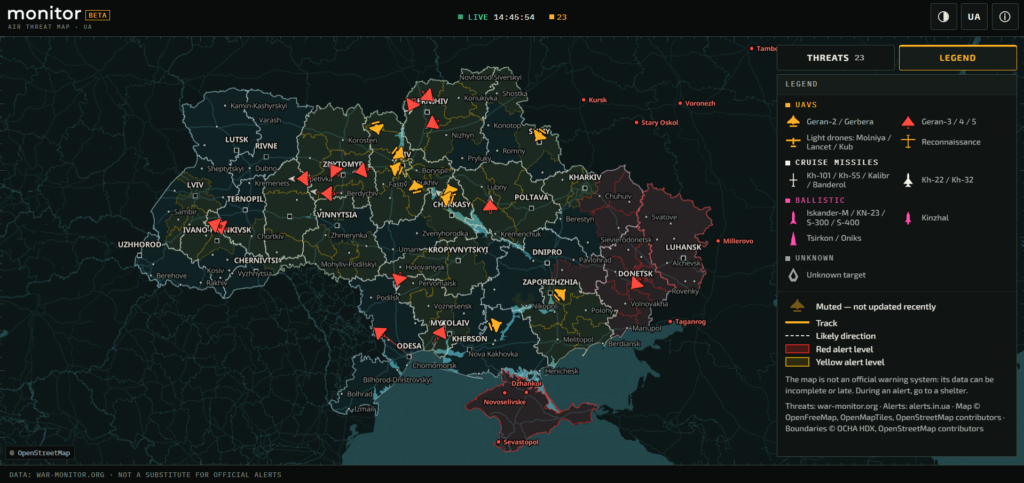
The launch post described the service as one that tries to show where each target is, using open sources and algorithmic processing. It said the beta focuses on drones, with other targets to follow.
Screenshot from the Monitor map used to track aerial targets.
The drone data does not come from radar. The service draws on regional Telegram channels that post where drones and missiles are flying over their own oblasts. It cross-checks those posts to estimate what each target is, roughly where it is, and where it is heading, the project explains. The same page already lists cruise and ballistic missiles among the targets. It also says the map is free, ad-free, and needs no registration, and that it runs in a browser or on Telegram, designed to work on a phone with a weak signal.
A target log lists each drone’s district and course. Alert data comes from alerts.in.ua, and areas under alert turn red or yellow. The map refreshes about every 20 seconds while targets are airborne.
Screenshot from the Monitor map used to track aerial targets.
However, the developers warn that the dots are only estimates and show up late. Some targets slip through untracked. That is why “an empty map does not mean you are safe,” they wrote. When sirens sound, they urge people to rely on official signals and take shelter.
On 17 October, the Defense Ministry said that Ukraine’s Air Alert app now maps the approximate position and heading of some targets. These include cruise missiles, Banderol drone-launched missiles, and Shahed-type drones. The data comes straight from the Air Force over secure channels.
Screenshot from the Air Alert! map used to track aerial targets.
For security reasons, it carries no exact coordinates or real-time tracking and may lag. Ballistic missiles and anything faster than 2,000 km/h don’t appear at all. The ministry’s advice matches monitor’s: get to a shelter first, then check the map from there.
German Chancellor Friedrich Merz arrived in Kyiv on an unannounced visit on 4 October and announced more than €1.3 billion ($1.5 billion) in new German support for Ukraine, Ukrainian President Volodymyr Zelenskyy said at a joint press conference. Part of the money will fund interceptors against Russia's jet-powered drones, as Russian drones struck Kyiv again during Merz's visit. Merz also pledged to speed up Ukraine's EU accession and announced a Coalition of the Willing meeting in Berlin
German Chancellor Friedrich Merz arrived in Kyiv on an unannounced visit on 4 October and announced more than €1.3 billion ($1.5 billion) in new German support for Ukraine, Ukrainian President Volodymyr Zelenskyy said at a joint press conference. Part of the money will fund interceptors against Russia's jet-powered drones, as Russian drones struck Kyiv again during Merz's visit. Merz also pledged to speed up Ukraine's EU accession and announced a Coalition of the Willing meeting in Berlin this winter.
Russia now attacks Kyiv and other Ukrainian cities daily, increasingly with jet-powered drones that outrun the cheap interceptors built for slower Shaheds. That leaves Ukraine dependent on scarce air defense missiles and on partners willing to pay for new weapons fast.
A package aimed at Russia's jet drones
The €1 billion ($1.13 billion) military part of the package includes funding for joint production of interceptor drones against jet-powered drones, Merz said. Recent technological progress means the new interceptors can quickly enter serial production, he added.
"This will quickly and noticeably strengthen Ukraine's air defense," Merz said.
The package also includes long-range weapons, combat drones, and satellite equipment, which Merz said should help Ukraine destroy Russian launchers more effectively. A separate €350 million ($394 million) will go to Ukraine's energy sector before winter, covering generators, transformer substations, and repair kits, Liga reported.
Ukrainian President Volodymyr Zelenskyy and German Chancellor Friedrich Merz at the building of the National Academy of Sciences of Ukraine in Kyiv, damaged by a Russian drone strike on 28 September, 4 October 2026. Photo: Office of the President of Ukraine
The two countries also signed an agreement on counter-drone cooperation, Merz said. He stressed that the help runs both ways, with German defense companies learning from Ukraine's war experience. The broader deal also covers joint development of weapons with a range of more than 1,000 km, Reuters reported.
Explore further
Russia’s drones keep targeting the bridges Kyiv can’t easily replace—now the Northern crossing is cratered
Among interceptor drones, the Bars has so far shown the best results, downing up to 30% of its targets, Zelenskyy said. He expects the first results from small missiles designed to counter jet drones in the second half of October.
"We will not be intimidated"
Before the visit, Russia's Foreign Ministry warned foreign nationals and diplomats against staying in Ukraine and threatened new massive strikes on Kyiv. Merz arrived by train with Economy Minister Katherina Reiche and a delegation of German business executives.
"Despite the threats that have reached us from Moscow in recent days, I came today... This shows: we will not let ourselves be intimidated," Merz said.
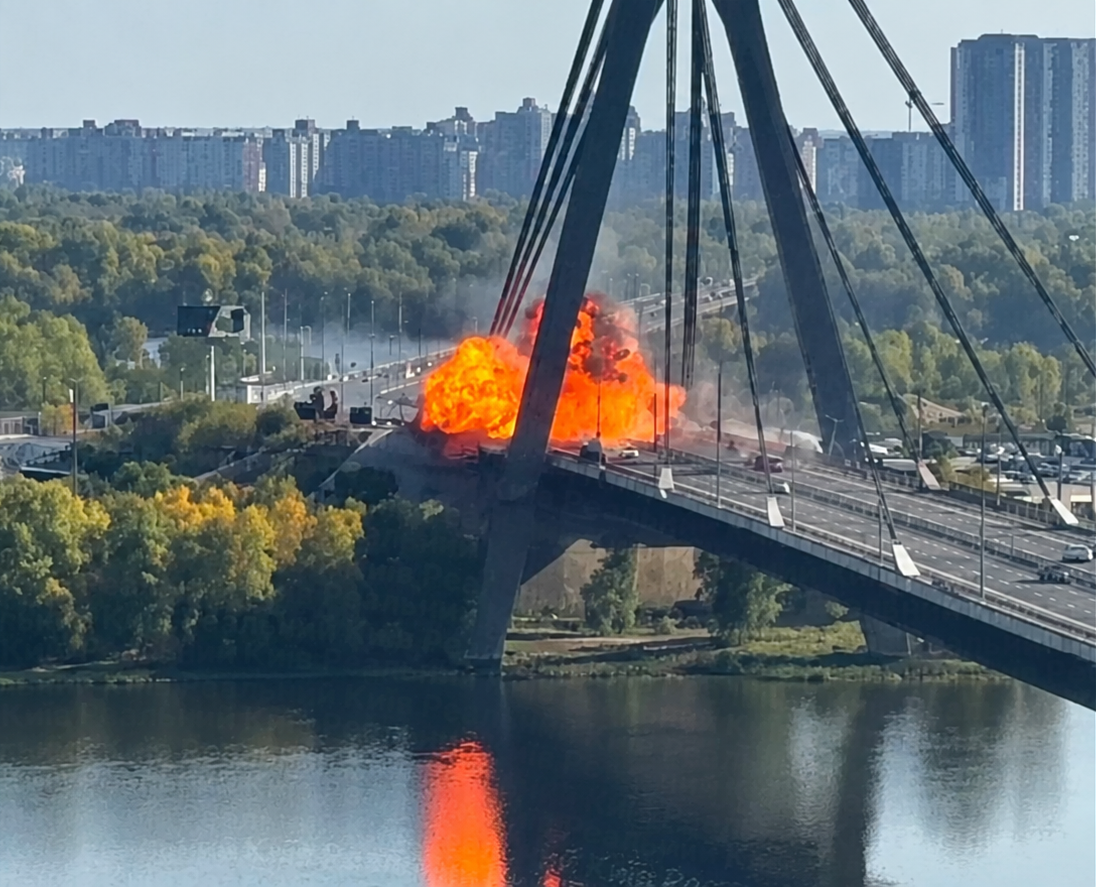
Merz and Zelenskyy visited the National Academy of Sciences, where a Russian drone killed two people and injured seven on 28 September, the State Emergency Service and the Office of the President said. An air-raid alert sounded while they spoke with rescuers, and emergency service chief Andrii Danyk showed Merz the movement of Russian drones in real time. The same day, a Russian drone hit Kyiv's Northern Bridge again.
"I can only repeat it once again from this point: Mr Putin, put an end to this senseless war," Merz said during the visit. "We are ready for talks, we are ready to discuss bringing this war to an end, but these barbaric attacks on the civilian population of Ukraine must stop," he added, Reuters reported.
Explore further
NYT: France, Germany and UK build joint format to secure Europe a place in Ukraine peace talks
Zelenskyy called the chancellor's presence despite the alert "a needed and brave signal" from Merz personally and from all of Germany.
EU path and a Berlin meeting
Germany wants to speed up Ukraine's EU accession and is working toward that in Brussels, Merz said. He welcomed Zelenskyy's assurances on rule-of-law and anti-corruption reforms, which he said matter for further financial aid. Together with France and the UK, Germany plans to host a Coalition of the Willing meeting in Berlin this winter to coordinate further support, he added.
Ukrainian Foreign Minister Andrii Sybiha greets German Chancellor Friedrich Merz on his arrival in Kyiv, 4 October 2026. Photo: Andrii Sybiha/X
The trip was Merz's second to Ukraine as chancellor and his fourth since the full-scale invasion. He arrived just as his standing at home is slipping: the far-right AfD reached 30% for the first time in an INSA poll for Bild, while Merz's CDU/CSU fell to a record low of 18%. Days earlier, Merz had directly accused the AfD of having "Russian backers."
A Russian strike on an apartment building in Kharkiv injured dozens of people, many of them children, early on 28 September, regional prosecutors reported. Through the rest of the day, Russian drones hit Kyiv, Dnipro, and other cities, killing civilians in several of them.
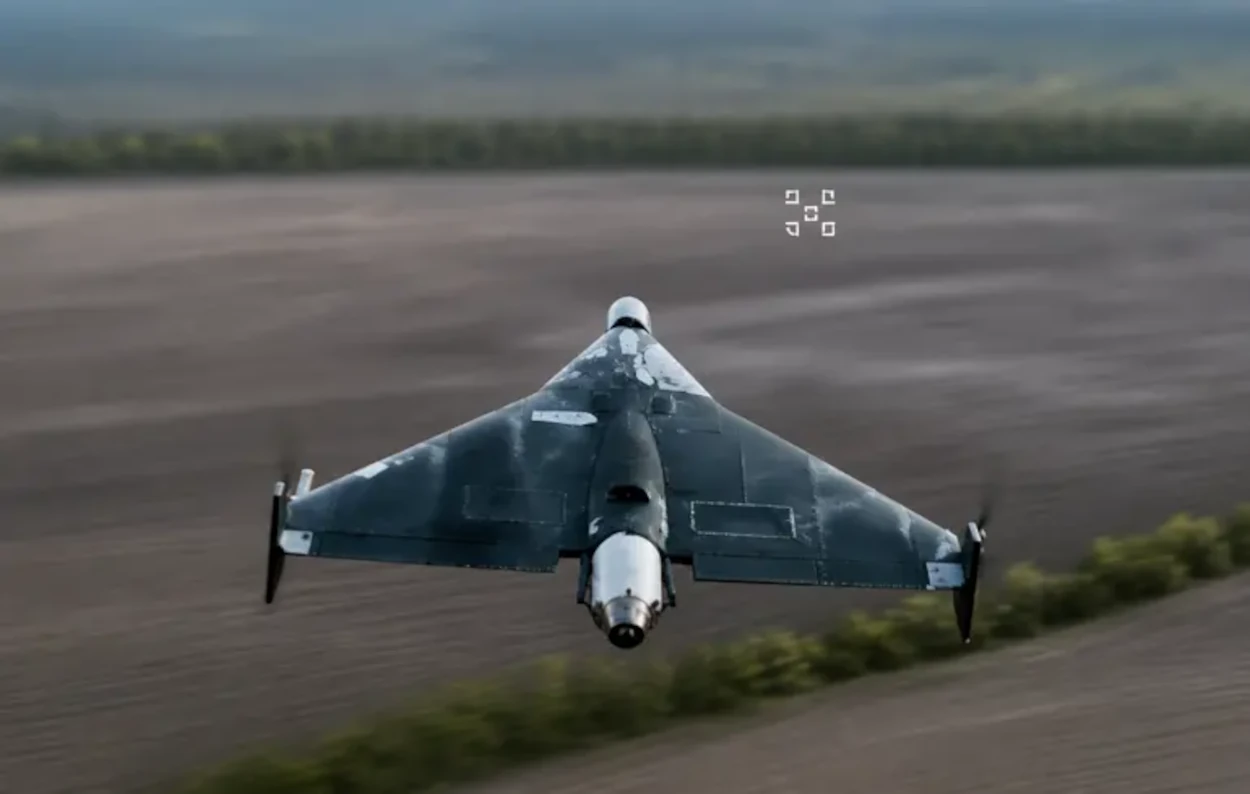
Russia has moved much of its aerial campaign to jet-powered drones that fly too fast for the cheap interceptors Ukraine built against older models. Every switch to a faster weapon reopens gaps in city defenses that Uk
A Russian strike on an apartment building in Kharkiv injured dozens of people, many of them children, early on 28 September, regional prosecutors reported. Through the rest of the day, Russian drones hit Kyiv, Dnipro, and other cities, killing civilians in several of them.
Russia has moved much of its aerial campaign to jet-powered drones that fly too fast for the cheap interceptors Ukraine built against older models. Every switch to a faster weapon reopens gaps in city defenses that Ukraine had only just begun to close.
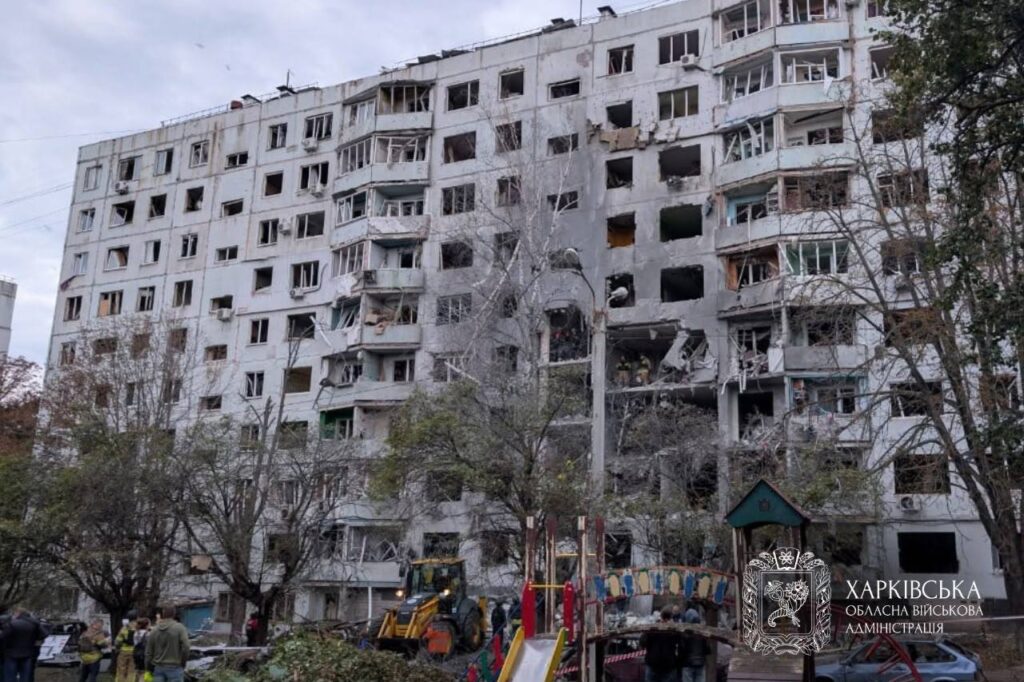
Two floors partly destroyed in a Kharkiv apartment block
Russia hit a nine-story building in Kharkiv's Saltivskyi district around 04:00. By early afternoon, the count had risen to 43 injured, including 11 children, prosecutors said.
A man of 43 and a girl of 14 remain in hospital with blast wounds, and the others have moderate or light injuries, Kharkiv Oblast head Oleh Syniehubov said. Three children lived in the apartment that took the hit. Their father carried them out himself, and none of them was seriously hurt.
Rescuers on the destroyed floors of an apartment building hit by Russia in Kharkiv, Ukraine, 28 September 2026. Photo: Kharkiv Oblast Military Administration
The strike hit the second floor and destroyed the ceiling between the third and fourth floors. Rescuers brought 32 people out of the building. Across the district, the attack damaged 18 apartment buildings and blew out more than 1,500 windows. More than 100 volunteers are helping city services seal them, Syniehubov added.
A resident who fled Kramatorsk a year and a half ago said her family never heard the blast itself.
"We didn't hear any explosion. Glass came pouring down, and a column of smoke stood there," Yuliia Baldzhy told Suspilne Kharkiv. "The children were sleeping in another room, and my husband and I barely squeezed through, grabbed them, and got out."
Yuliia Baldzhy, a resident of the damaged apartment building in the Saltivskyi district of Kharkiv, Ukraine, 28 September 2026. Photo: Suspilne Kharkiv
Kharkiv Mayor Ihor Terekhov said the city had not taken a hit "of this level" in some time. Officials are still establishing the weapon. Syniehubov named guided aerial bombs (KABs) and counted six of them over the oblast in the past day. Prosecutors named a UMPB-5, a Russian munition, as the preliminary version. Terekhov said the city was checking whether it was a KAB or a Banderol, a small cruise missile.
Fire among wrecked structures after overnight Russian strikes in Kharkiv Oblast, Ukraine, 28 September 2026. Photo: Kharkiv Oblast Military Administration
Russia has hit Kharkiv high-rises with guided bombs before. In November 2024, one such strike injured 25 people, including an infant.
Explore further
Combat shows speed alone can’t catch Russia’s jet-powered drones, despite eight Ukrainian makers’ assurances. So why can’t they stop them?
Kyiv hit through the night and into the day
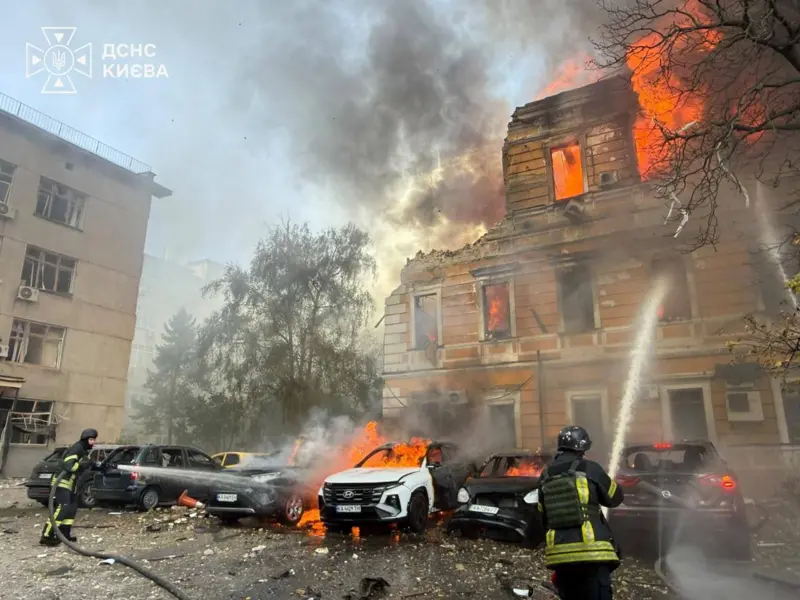
In the middle of the working day, a Russian jet drone struck the main building of the National Academy of Sciences in Kyiv's historic center. The attack killed a woman and injured five people, the Kyiv City Military Administration said. Three of them were hospitalized, Klitschko said. People climbed out of windows to escape the fire.
Firefighters put out fires at the main building of the National Academy of Sciences of Ukraine and at burning cars after a Russian drone strike in Kyiv, Ukraine, 28 September 2026. Photo: State Emergency Service of Kyiv
"Russia will definitely get a response to this," Ukrainian President Volodymyr Zelenskyy said.
Overnight and into the morning, Russian drones hit a gas station in Obolon, a café by a gas station, office buildings, and a 16-story residential building in Podil. The attacks injured three teenagers in Podil, Kyiv Mayor Vitali Klitschko said. A 17-year-old boy was hospitalized.
A firefighter tackles a blaze in a two-story house after a Russian drone attack in Kyiv, Ukraine, 28 September 2026. Photo: State Emergency Service of Kyiv
Nationwide, Russia launched 165 drones overnight, 79 of them jet-powered, the Air Force reported. Air defenses downed or suppressed 112, and hits were recorded at 14 locations.
The capital is now under attack daily. On 27 September, Russian strikes injured nine people in Kyiv, and Russia hit a Kyiv data center twice. That evening, a Russian drone struck the Stolychnyi market in Sofiivska Borshchahivka, just outside the city, and killed two people. Zelenskyy wrote that one of the two killed in Kyiv Oblast was a citizen of Azerbaijan.
Deaths in Dnipro and Synelnykove
Around 11:15, a Russian drone hit a business center in central Dnipro, killing three people. The number of injured rose to 15, Dnipropetrovsk Oblast head Oleksandr Hanzha said. Rescuers led 47 people out of the burning building, regional council head Mykola Lukashuk said.
"Nearby are residential buildings, a park, a library, offices, shops. The center of Dnipro. In the middle of the working day, hundreds of people are here," Hanzha wrote.
In Synelnykove, a Russian strike on a logistics company's branch killed one person. It injured three others, including a 15-year-old boy now in hospital in serious condition.
Overnight, Russian drones also hit infrastructure in the Vasylkivka community and a market in Nikopol.
Strikes across other regions
In Kharkiv Oblast on 27 September, a Russian FPV drone killed a 67-year-old driver in Shestakove, prosecutors said. A drone on fiber-optic control also killed a 41-year-old woman in a car in Velykyi Burluk and injured a 46-year-old man.
Debris at a warehouse after an overnight Russian strike in Odesa Oblast, Ukraine, 28 September 2026. Photo: Odesa Oblast Military Administration
Explosions sounded in Poltava overnight. In Rivne Oblast, a Russian attack damaged a detached house without injuring anyone. In Odesa Oblast, Russia struck a warehouse, and an evening attack injured a man of 62 and a woman of 63. Zelenskyy also listed a Palau-flagged ship hit in Odesa Oblast and an ice cream plant damaged in Zhytomyr Oblast, in the same post.

 Connexion