
 Connexion

The Trump administration is backing Orbán, who blocked a €90 billion EU loan to Ukraine, for UN secretary-general and is counting on support from Moscow and Beijing, WSJ says

The Trump administration has encouraged former Hungarian Prime Minister Viktor Orbán to run for UN secretary-general and discussed a joint US-Russia-China candidacy with Moscow and Beijing, the Wall Street Journal’s (WSJ) editorial board wrote on 25 October, citing sources in three countries. Russia’s biggest ally in the EU, Orbán has been out of office since May, when Péter Magyar became Hungary’s prime minister.
The UN secretary-general can influence the war through diplomatic negotiations, mediation, and by drawing the Security Council’s attention to Russia’s aggression. António Guterres’s term ends on 31 December, so the council has to settle on a successor within weeks.
According to the WSJ, US officials discussing the next UN chief kept saying they wanted “someone like Orbán,” and their Russian and Chinese counterparts agreed. The US then brought the idea to Orbán himself. Russia and China are believed to support his bid based on those earlier talks with Washington, and the plan is for him to be the three countries’ joint candidate.
Ukraine warns of Orbán’s veto tactics at the UN
Orbán is receptive but has not decided, and he does not want to enter the race unless he is sure he can win, the editorial board wrote. A State Department official counted eight Security Council votes as safe for him and 10 within reach. A candidate needs nine of the 15 votes and no veto from a permanent member. The editorial board asked whether Britain and France, typically cautious in using their veto, would stand in the way. Any announcement is being held until after the 3 November US midterm elections.
Ukraine’s Foreign Minister Andrii Sybiha wrote on X that Orbán as secretary-general would put to good use “the masterful veto and blackmail skills” he developed over years of derailing major EU decisions. Ukraine, he added, could share its “great experience of taking him out for coffee at the right moment,” a reference to the December 2023 EU summit, where Orbán left the room so the other leaders could open accession talks with Ukraine without his veto.
Orbán ran Hungary for 16 years as Putin’s closest EU partner
Orbán’s 16 years of “illiberal democracy” eroded democratic values in Hungary. Since 2010, Fidesz has built an enormous partisan media ecosystem. Before the vote, it amended the electoral law twice and gerrymandered more than a third of the electoral districts, so the opposition might need around 55% of the popular vote to win a simple majority. Orbán still lost the 12 April election. Magyar’s Tisza won 138 of 199 seats, a two-thirds majority in parliament.

Orbán kept close ties with Moscow throughout the full-scale war. When he met Putin in Beijing in October 2023, he spoke of “the military operations and the sanctions” rather than a war. In summer 2024, while Hungary held the EU Council presidency, he flew to Moscow on what he called a peace mission, and the EU distanced itself from the trip. In November 2025, he went back to Moscow, seeking to keep Hungary’s access to Russian oil and gas. He is widely considered Putin’s closest partner among EU leaders. After that visit, he said the only solution was for Ukraine to become a buffer state again, and that the longer peace was delayed, the more people and territory Ukraine would lose.
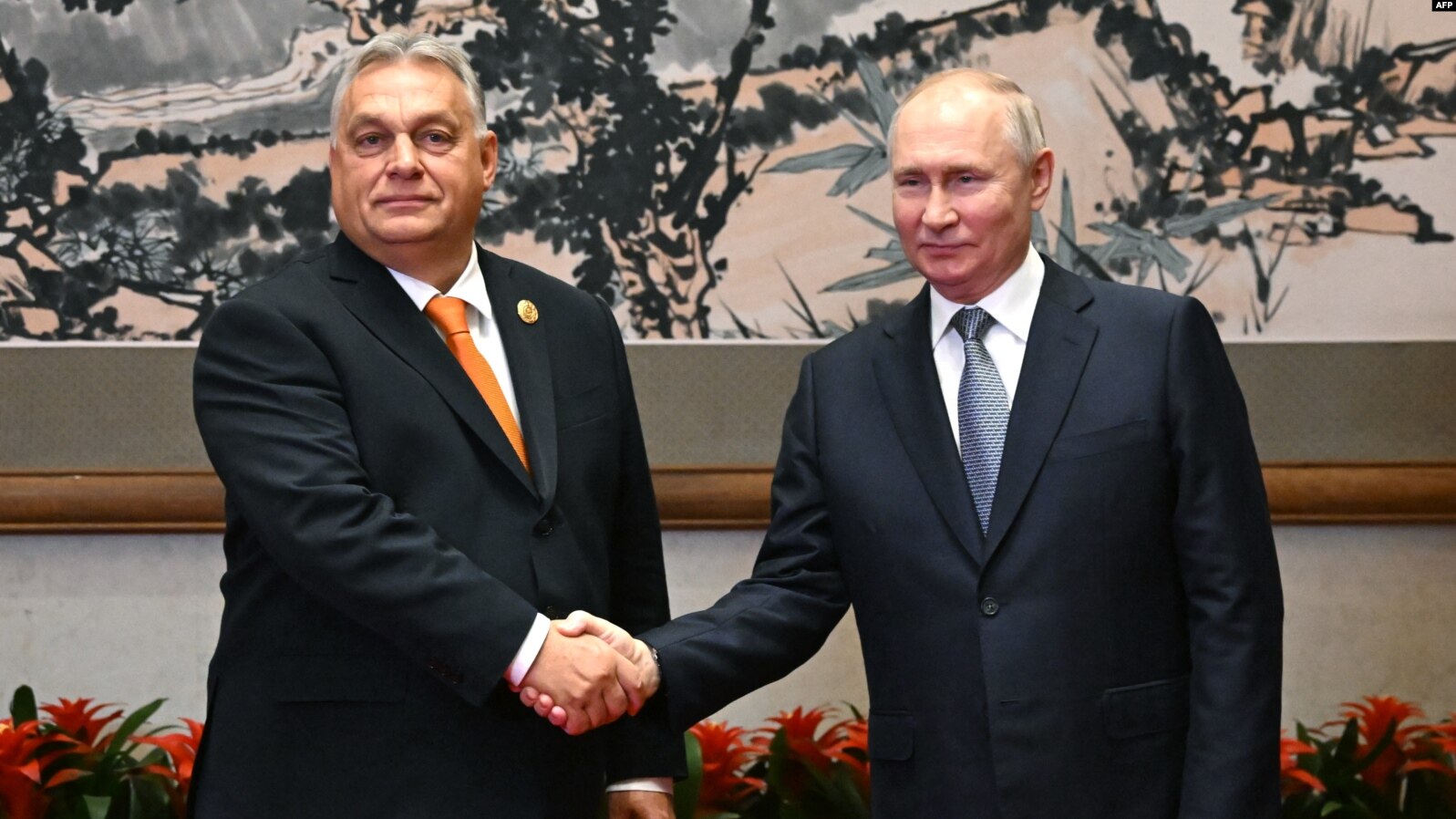
He used Hungary’s veto against Ukraine until his last weeks in office. In February, Orbán vetoed a €90 billion EU loan to Ukraine amid the disruption of Russian oil supplies through the Druzhba pipeline to Hungary and Slovakia. Hungary lifted its veto in April after repairs to the pipeline were announced. Foreign Minister Péter Szijjártó phoned Russian Foreign Minister Sergei Lavrov from EU meetings for years with “live reports on what’s been discussed,” a European security official told The Washington Post. Szijjártó did not respond to the Post’s request for comment.
Read also
-
EU just held its first summit without Orbán, and discovered his obstruction was covering deeper divisions
-
“I am at your service”: Bloomberg transcript shows Orbán pledged full assistance to Putin
-
Russia retaliates after Hungary expels 10 diplomats, deepening Budapest-Moscow rift since Orbán’s ouster
