
❌

Vue normale

Postal service Nova Post says it has already shot down Russian Shahed drones, as Ukrainian businesses take air defense into their own hands
27 octobre 2026 à 11:48

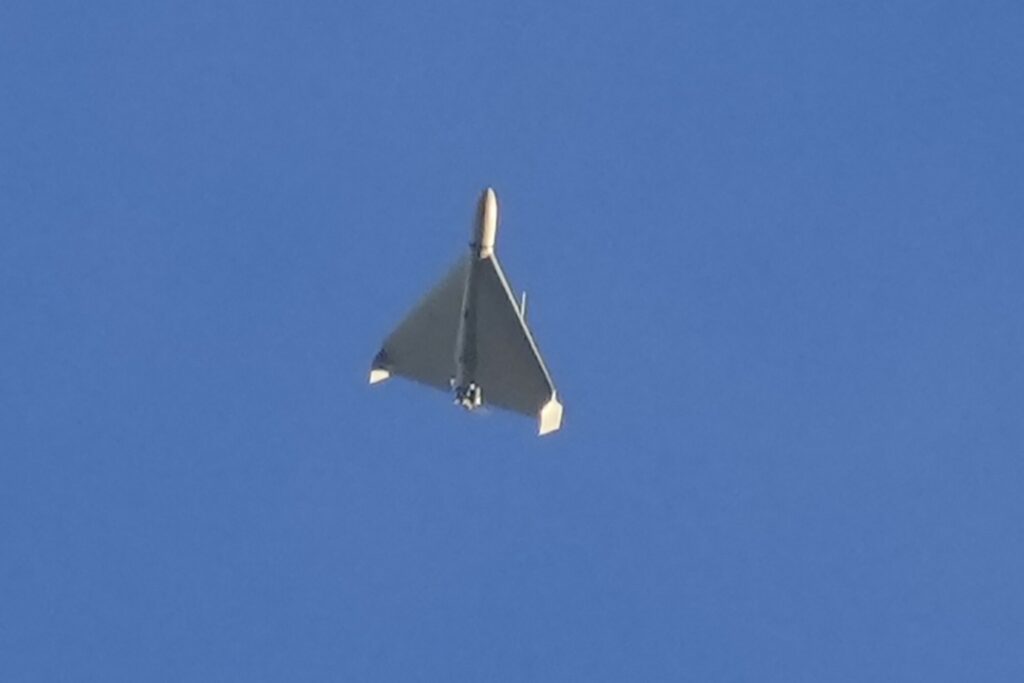
shahed-136 Geran-2 iranian airborne A drone is seen in the sky seconds before it attacked buildings in Kyiv, Ukraine, on Oct. 17, 2022. The Russian military has been using the Iranian Shahed exploding drones to strike Ukraine's vital infrastructure for more than a year. (AP Photo/Efrem Lukatsky/EastNews

Ukrainian postal company Nova Post has established its own private air defense capability and has already shot down Russian Shahed attack drones, company co-owner Viacheslav Klymov said on 27 October, according to Interfax-Ukraine.

As Russia increasingly targets Ukrainian factories, warehouses, transport hubs, and other civilian infrastructure, localized air defense is becoming more important. Ukraine’s expanding private air defense program allows businesses to help protect their facilities while operating within the country’s military air defense command system.

“We are one of the few companies that has implemented this project. I don’t want to disclose figures, but we have Shahed shootdowns,” Klymov said at the 12th Kyiv International Economic Forum, according to Interfax-Ukraine.

Klymov also argued that businesses can take on responsibilities that were previously considered exclusively the state’s domain. He pointed to firefighting as another area where companies can strengthen their own response capabilities.

Nova Post employees already extinguish many fires caused by Russian attacks on the company’s facilities without waiting for the State Emergency Service of Ukraine (DSNS) to arrive, he said. Large businesses are also looking for fire engines in Europe to establish their own firefighting units.

Aftermath of Russian strikes on a Nova Poshta warehouse in Sviatopetrivske near Kyiv on 28 August 2026. Photo: Anton Ovsienko/Facebook

Private air defense expands across Ukraine

Ukraine began allowing private companies to establish air defense units under a government-approved framework in November 2025. These units operate under Air Force command, with the military coordinating their missions and integrating them into the national air defense network.

Nearly 100 companies have reportedly joined the experimental program. About 50 air defense groups had been formed, and crews from six companies were already carrying out combat missions. By 14 October, the groups had downed more than 60 aerial targets, mostly Russian drones, according to Ukraine’s Defense Ministry.

The program allows participating businesses to help defend industrial sites and critical infrastructure using capabilities that include interceptor drones and remotely operated heavy machine guns. The approach adds another layer of protection without requiring the military to cover every facility with its own units.

The need for such protection has grown as Russia continues launching long-range attack drones against civilian and industrial targets across Ukraine. Localized air defense can help protect specific sites and reduce the burden on military units, although it remains part of a coordinated national system rather than an independent replacement for military air defense.
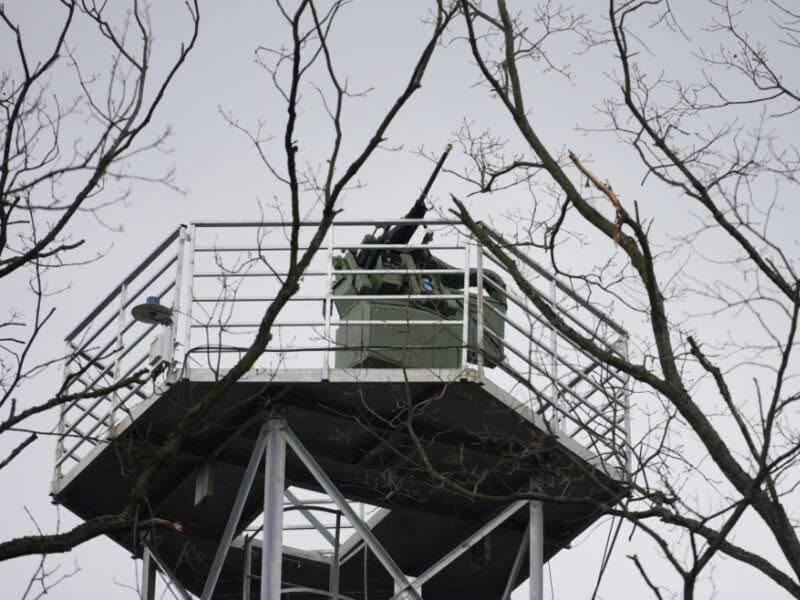
Remote-controlled machine gun turret used in a privately developed air defense system in Ukraine. Photo: Serhii Beskrestnov
Explore further

Ukraine’s air defense goes private: businesses can now buy point coverage for their own sites

Not every company sees private air defense as the answer

The approach has its limits. On 26 October, Kateryna Zahorii, chair of the board of directors of major pharmaceutical company Darnytsia, said her company had studied private air defense but decided against deploying it, Interfax-Ukraine reported.

Zahorii said the changing nature of the threat could make the investment difficult to sustain, as companies might need to keep upgrading their defenses. Darnytsia is instead prioritizing attack monitoring, employee shelters, and safety procedures. The company has been hit by Russian forces three times in September, according to NV.

UN commission finds Russia’s grid strikes are crimes against humanity, citing last winter at minus 21°C. Now they’re intensifying

27 octobre 2026 à 08:21

Russia struck a burning Odesa Oblast plant twice more as firefighters worked on 26 October 2026

Russian authorities committed war crimes and crimes against humanity through attacks on Ukraine’s energy infrastructure, the UN Independent International Commission of Inquiry on Ukraine said in a report to the UN General Assembly on 26 October.

International Criminal Court (ICC) warrants for former Russian Defense Minister Sergei Shoigu and Chief of the General Staff Valery Gerasimov, issued in June 2024, already covered alleged crimes linked to Russia’s 2022–2023 strikes on Ukraine’s energy infrastructure. The UN commission’s new report reaches into last winter, 2025–2026, and the cumulative toll since 2022, documenting what the attacks did to civilians living through outages in freezing temperatures.

“As the cold season approaches, the attacks have intensified once again, raising serious concerns about the threats to civilians’ lives and health,” commission chair Erik Møse said.

Russian commanders knew heating facilities were vital

The commission said Russian commanders knew that heating facilities in large cities were indispensable to civilians, particularly during winter. Russian authorities also made official declarations about further attacks and referred to a plan to carry them out, it said. It found that Russian authorities intentionally directed attacks against civilian objects, constituting war crimes.

The commission also concluded that the attacks were carried out under a state policy aimed at depriving civilians of electricity and other essential energy-dependent services and causing suffering. It classified these acts as crimes against humanity in the form of “other inhumane acts.”

Minus 21°C, weeks without heat, and shelters out of reach for older people

Last winter, temperatures fell to minus 21°C as millions of Ukrainians endured prolonged disruptions to heating, electricity, water, and gas, the commission said.

The commission relied on the accounts of 255 people from Dnipropetrovsk, Kyiv, Kharkiv, Kherson, Mykolaiv, Odesa, Poltava, Zaporizhzhia, and Zhytomyr Oblasts, alongside officials, doctors, and nongovernmental organizations.

Older people and those with limited mobility were particularly affected. Fear of becoming trapped in elevators during blackouts prevented some residents from reaching shelters during air raid alerts. They remained in unheated homes, sometimes without access to life-support equipment.

A 53-year-old Kyiv resident told investigators he tried to stay awake at night because he feared he might not wake up if he fell asleep in the cold.

Meanwhile, school closures disrupted children’s education, and children fell ill in unheated homes, the report said.

Russia rejects the findings

Russia’s UN mission said Moscow did not recognize the commission’s mandate and dismissed its findings as “falsified data,” the Associated Press reported.

The commission also examined Ukrainian attacks on energy infrastructure in Russia and Russian-occupied Ukraine. It said it could not investigate their impact fully because Russia denied access and did not respond to its requests.

Foreign recruits trafficked to the front

The same report found “compelling evidence” that Russian authorities trafficked men from 29 countries into the Russian armed forces through deception and coercion.

Recruitment agents arranged visas and travel, presenting themselves as legitimate businesses. After arriving in Russia, the men were forced to sign military contracts in Russian and were sent to the front, where many were killed or went missing, the commission said.

❌