Vue lecture

Florida ‘Deputy of the Year’ Used Flock to Stalk Ex, Held Gun in Her Mouth, Did a Nazi Salute
Florida ‘Deputy of the Year’ Used Flock to Stalk Ex, Held Gun in Her Mouth, Did a Nazi Salute

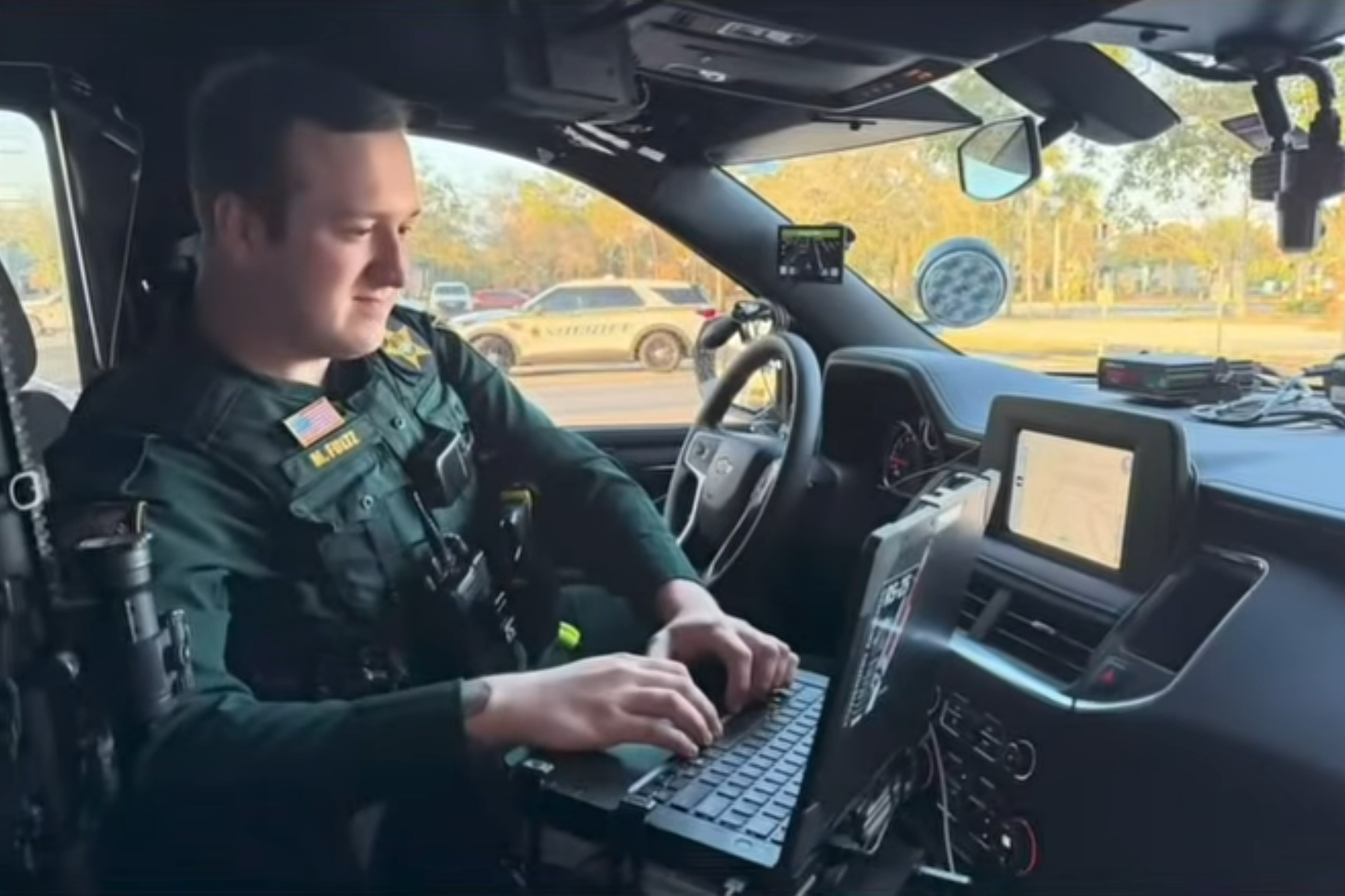
Brevard County deputy sheriff Michael Fultz resigned from the force after an internal investigation detailed extreme cases of alleged sexual misconduct, racism, and abuse, including Fultz’s use of Flock to stalk his ex-girlfriend. News6 in Florida first reported the story, and 404 Media has uncovered additional details about the former deputy’s use of Flock after obtaining a copy of the investigation. 

Hired in 2024, Brevard County named Fultz its Deputy of the Year in 2025. The day of the ceremony Fultz’s ex-girlfriend sent a letter of complaint to the sheriff’s office with a long list of complaints about his behavior. The letter was enough to prompt the sheriffs to investigate Fultz which is when they discovered he’d used Flock to stalk her.

The 43-page investigation found Fultz had posed for pictures as Adolf Hitler, freely used racial slurs in texts, masturbated on camera in his police vehicle, took pictures of his ex-girlfriend with his service weapon in her mouth during sex, repeatedly broke the law to generate clout online for his motorcycle themed Instagram and TikTok accounts, and used Flock to stalk his ex-girlfriend.

One of the sheriff's office’s key findings was that Fultz used Flock to spy on his ex and bragged about it to her. When questioned about using Flock, Fultz told investigators that he remembered the conversation with his ex but “denied checking her vehicle registration to spy on her or out of revenge.” The investigators audited the Flock logs and found that Fultz had, indeed, tracked her movements.

When someone runs a search using Flock, the system requires users to enter a reason. Fultz flagged his search for his ex as a general investigation, and simply entered “investigation” as the reason.

Investigators also found that Fultz accessed Flock while he was off-duty. “Deputy Fultz agreed that he would have entered the registration number prior to leaving for work based on the time, and denied using his agency laptop. Deputy Fultz explained all his flock inquiries were made from his agency-issued cellular telephone,” the investigation said.

Fultz denied he was using Flock to stalk his ex. He claimed to investigators that he may have been showing her how it works, and denied spying on her. The report also states that he said “he had her location on Snapchat, so it wouldn’t have benefitted him to track her on Flock.” 

Fultz’s abuse of Flock is just one piece of a much larger investigation into his behavior. In an image provided by his ex, he “had shaved your mustache to resemble Adolf Hitler and [was] demonstrating a Nazi salute,” the investigation said. She also “provided photographic evidence of you holding a firearm to her head and also inserting it into her mouth while having sex.” She said it was consensual, according to the investigation, but “she realized it was a poor idea and inappropriate for a deputy sheriff. The firearm in the images appears to be an agency-issued Walther.”

In April 2025, Fultz shot and killed a man who charged him with a knife. “She specifically noted that the sexual encounter where you introduced the firearm occurred after your on-duty shooting incident.”

She also shared numerous text messages where Fultz used racial slurs. “She described Deputy Fultz as active on Discord and other web-based chats and believes his attempted humor was reflective of the dark humor he observes on those sites,” the investigation said.

When questioned about this, Fultz pointed to his childhood and an edgy card game. “Deputy Fultz said he grew up in a foster home with black parents and siblings, and the words became normal to use. Deputy Fultz stated that although he would not use the words in public, he felt comfortable using them via text messages” with his ex, the investigation said. “Deputy Fultz did recall playing an edgy game called ‘Cards Against Humanity’ on several occasions, but he stated it never turned into anything more than edgy humor which is the design of the game.”

Investigators also found that Fultz had been pulled over for speeding on his motorcycle and covering up his license tag at least four times, including one incident where he was going 111 MPH. He walked away from every interaction after identifying himself as a member of law enforcement.

Investigators told him he had to keep his motorcycle’s license tags visible. “Inexcplicably, within 30 minutes of the direct order you were provided, you drove your motorcycle out of the Brevard County Sheriff’s Office parking lot with no license tag attached. The incident was captured on video and preserved as part of the investigation,” the investigation said.

Fultz explained he was speeding and covering his tag for online clout. “Deputy Fultz stated he made several posts to his account about riding with no license tag, claiming it was a trend that he followed. Deputy Fultz stated the posts were to get more ‘likes’ and ‘views’ on his account. Deputy Fultz claimed that he uses AI to generate some of the images,” the investigation said.

At the end of the investigation, the Brevard County Sheriff’s Office made it clear that Fultz would not keep his job, but they allowed him to resign rather than be fired. “Although termination is warranted for your egregious misconduct, due to the fact you are no longer employed by the Brevard County Sheriff’s Office, this Administrative Investigation is closed and referred to file,” the investigation concluded.

Fultz is just one of a growing list of law enforcement officers who are losing their jobs and, sometimes, getting arrested across the country for abusing their Flock access. An officer in Charlotte, South Carolina was arrested after misusing Flock in July. The town of Greer, South Carolina suspended its Flock contract after it discovered two of its officers used the system to stalk their exes. Another South Carolina officer was fired after an audit discovered she’d used Flock 166 times to watch an ex.

Fultz is unique in that he told the person he was watching that he used the Flock camera system to spy on her. Many of the stalking victims don’t find out about the abuse until it’s gone on for months or even years. The investigation also paints a broader picture of the kind of law enforcement officer who abuses their access to Flock.

The Brevard County Sheriff’s Office provided 404 Media with a copy of its investigation but did not respond to a request for comment.


  •  

Israel Is Running a Synthetic Think Tank to Influence AI Search Results

Israel Is Running a Synthetic Think Tank to Influence AI Search Results

A synthetic Israel-funded think tank has published more than 100 articles since it launched less than a month ago. First spotted by Politico, the Hanover Institute for Public Policy is run by the American advertising firm Piro Inc, paid for by Israel, and appears designed to generate content for LLMs that are continually scanning the internet to inform their responses, with the goal of tweaking chatbot answers in favor of Israel.  

Every few days, the Hanover Institute publishes around a dozen articles related to Israel, antisemitism, and Palestine. Every article’s headline has a question. The articles have no byline, often contain graphs, and cite real sources but do not link to them.

The articles ask questions like How Much Palestinian Land Has Israel Taken?, Why Is Israel Seen as the Aggressor?, and Is There a Policy of Starvation in Gaza? The answers often read like word salad nonsense. “A reader who has encountered the claim as a consensus has encountered something real,” one article said about Israel restricting food supply to Gaza. 

“The reframe is the denominator. Six documents from five bodies is a count of assertions, not a change in the kind of evidence available,” it said. “Adding a seventh organization stating the same conclusion does not convert an organizational determination into an adjudicated finding, because the evidentiary route is the same in each case: a body assembling material, applying its own threshold, and publishing.”

The site’s about page said the lack of a byline was “the convention at institutional publishers” and that it wants readers to weigh the sources “rather than the author.”

“Accountability for the material is not anonymous,” Hanover said on its about page. “The registrant responsible for distributing it is named in the disclosure at the foot of every page and on the public register at the Department of Justice, where each report is filed. The researchers are not named because a finding should stand or fall on its sources rather than on the standing of whoever assembled it, and because the subject attracts harassment. That is a considered editorial position, not an oversight.”

An analysis from AI detection tool Pangram found that three Hanover Institute articles we tested were written entirely by AI. Only the bibliography at the end of each article was human written, according to Pangram. The images, too, are AI generated.

There’s evidence that Hanover’s articles are not just written by LLMs, but are also written for LLMs. The site has an llms.txt, a webpage markdown that’s designed to make it easier for LLMs to scrape a website and the “registrant responsible for distributing” is the marketing firm Piro, which advertises a service to manipulate chatbot answers on its website.

Piro did not return 404 Media’s request for comment, but co-founder Daniel Rosenberg explained how its system worked in a post on LinkedIn. “Every day, more buying journeys begin with an AI conversation instead of a Google search. If the models don't understand your story, they'll tell someone else's,” he said. 

“The question was: how do you make sure AI knows how to tell them? We spent the last year searching for the best technical minds in the space, learning how AI models discover, evaluate, and synthesize information across the web,” he said on LinkedIn. “Then we built a process that brings both disciplines together: identify where a brand's narrative is thin, inconsistent, or missing, then strengthen the signals that shape how AI understands and explains it [...] We call it AI Story Optimization.”

Prio’s website explained more. “Search is no longer about keywords. It’s about story. About trust. Not only the trust of a language model deciding whether to cite you, but the trust of the actual human being reading that answer and deciding whether to buy. That is two audiences in one sentence: the engine that recommends you, and the person who believes it,” Piro said on a page advertising its AI Story Optimization service. 

“We map every surface the models read. Reddit threads, YouTube transcripts, G2 reviews, publisher pages, forums, comparison sites, and we score each one by how much it actually shapes what the engines say about you. Not a vanity dashboard. A ranked map of real influence,” Piro said on its website.

Hanover is registered as a foreign agent with the United States government which means it has to file paperwork disclosing its broad goals and its funding. According to Foreign Agents Registration Act (FARA) paperwork reviewed by 404 Media, Piro is working with LaPam — the Israeli government’s official advertising agency: “Piro, Inc. will provide strategic communications and media relations services in connection with LaPam’s engagement on behalf of the State of Israel,” the paperwork states. Piro has also uploaded copies of each article to FARA’s website.

According to FARA paperwork, these activities are political and “may include the creation and dissemination of factual, source-supported informational materials intended to educate the U.S. public regarding Israel and related issues through publicly distributed content.”

The FARA paperwork also included two invoices from HAVAS Media — a European advertising agency working for Israel — provided to Piro for its services. One invoice dated April 30, 2026, included a total of $900,000 to develop the project. “Services include audience research, content architecture, scriptwriting, asset production, distribution planning, interactive performance analysis, and final program evaluation. All content is developed for distribution via digital and social media platforms in the United States.” Another invoice filed on June 20 showed that HAVAS paid Piro an additional $100,000 for two months of work.

“It shouldn't surprise any of us that Israel is funding a disinformation and propaganda machine intended to manipulate the American public,” Margaret DeReus, the executive director of the Institute for Middle East Understanding, told 404 Media. “This is just the newest iteration of what Israel has been doing for decades and it isn't working. No amount of chatbot manipulation can reverse the massive surge in public support for Palestinian freedom" 

Hanover’s articles feel impersonal, a dry reading of complicated and deadly conflicts. According to its website, however, the work is deeply personal.

“The Institute’s original founder traced this work to a moment in his own childhood. At ten, he asked the man his grandmother had married about the numbers tattooed on his arm; the man had survived Auschwitz. What a child could not fully grasp, the adult came to understand: that such hatred is recent rather than distant, that it reached within a single lifetime and within his own family,” the website said. “That is his account of why the work exists. It is not offered as a credential for it.”

The Hanover Institute did not return 404 Media’s request for comment.

  •  

Charges Dropped Against Person Who Clapped at a City Data Center Meeting

Charges Dropped Against Person Who Clapped at a City Data Center Meeting

Emporia Kansas has dropped its criminal case against Lux Claridge, a high school teacher who was arrested for clapping during a city data center meeting.

“Today, I was informed by my attorney that the city has dropped my charges and has passed my information along to the county. As far as I know, I'm in the clear unless the county is feeling froggy,” Claridge told 404 Media in an email on Monday.

Claridge's lawyer forwarded them a message from Emporia's assistant city attorney: "Due to conflicts on this matter, the case has been dismissed without prejudice in municipal court and sent to the County Attorney’s office for their review."

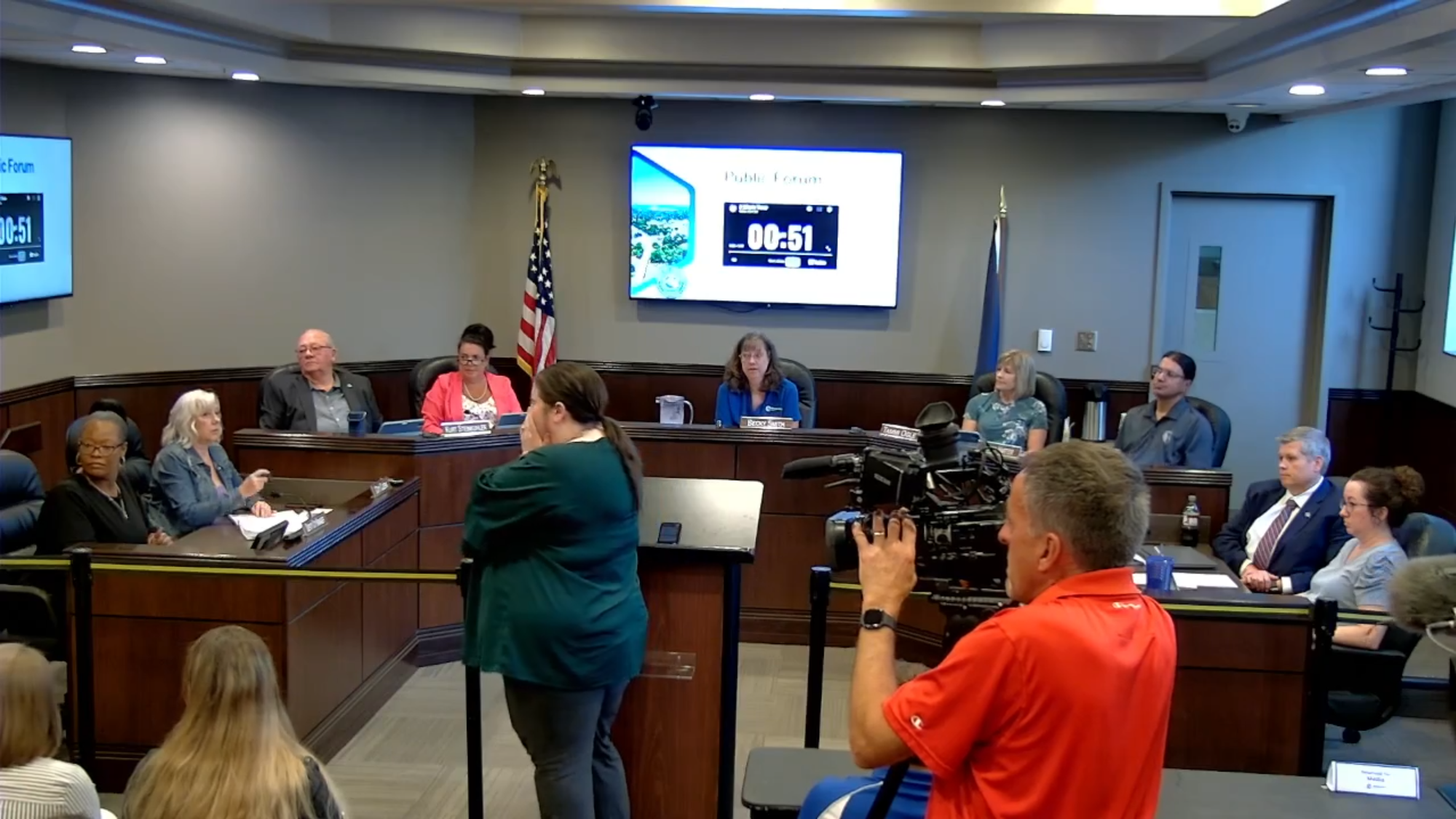
The small town of Emporia, Kansas is fighting against its city commission and a proposed hyperscale data center project that would sit on 1,000 acres of prairie land near Claridge’s home. Claridge attended a commission meeting on July 22 and planned to speak out against the project, but was dragged out of the meeting and arrested by police when they clapped during a presentation.

Emporia held Claridge for eight hours and charged them with disorderly conduct and interfering with a law enforcement officer. The city refused to show 404 Media a copy of the arrest report and has not responded to a request for comment about the dropped charges.

After Clardige’s arrest, Emporia’s city commission moved to virtual meetings and ended public comment. The city said it was doing so “in the interest of public safety.” According to Claridge, the city commission announced that in-person meetings with open public comments will return soon. “Our mayor is ‘willing to give us another shot to act like grown ups,’” Claridge said, quoting Emporia mayor Becky Smith. They added that the city will vote on whether or not to ban hyper-scale data centers outright in November.

According to a press release from the Emporia city commission, the city will meet in-person in a special session open to the public on August 26. “Public comment is expected to resume at the regular September 2 meeting,” the announcement said. In a different press release, the city said the November vote on a data center ban hinges on a County court giving it the OK.

Emporia did not return 404 Media’s request for a comment.

  •  

Township Fights Nuclear Weapons Data Center By Passing a Moratorium on Electrical Infrastructure

Township Fights Nuclear Weapons Data Center By Passing a Moratorium on Electrical Infrastructure

Ypsilanti Township in Michigan passed a six month moratorium on “major electric utility infrastructure” on Tuesday night. The moratorium is a delaying tactic, the latest in the Township’s long fight to stop the construction of a $1.2 billion data center that’s backed by the University of Michigan and the Pentagon’s nuclear war scientists at Los Alamos National Laboratories (LANL).

Last year, the university announced it was partnering with LANL on the construction of a massive 220,000 square foot hyperscale data center in Ypsilanti Township and residents have been fighting it ever since. During a meeting of the Township Board on August 18, the council unanimously passed a resolution that will delay the construction of new electrical infrastructure for 180 days.

💡
Do you know anything else about this story? Is your town fighting a data center? I would love to hear from you. Using a non-work device, you can message me securely on Signal at +1 347 762-9212 or send me an email at matthew@404media.co.

Data centers need a lot of energy, and Michigan’s power authority will have to build new substations in the Township to power the proposed facility. The moratorium asked the local power authorities to use the six month delay to study noise pollution and how the new infrastructure would affect existing customers. 

The moratorium is narrowly focused on “the nature and scale of electrical infrastructure necessary to serve new high-energy-demand land uses [...] including infrastructure associated, but not limited to hyper-scale data centers, mid-sized data centers, artificial intelligence computing facilities, and high-performance computational centers, industrial facilities, and other intensive electrical users.”

Earlier this month, the University of Michigan announced it had settled on a specific plot of land in Ypsilanti Township — a 144-acre plot on Textile Road. In a press release about the decision, the University said the data center would have the “capacity to change the world” and insisted it would not be a “high value target risk” in a war, that it would not store any hazardous nuclear material, and was not a weapons production facility. LANL previously confirmed that the data center will be used for nuclear weapons research. Ypsilanti Township Supervisor Brenda Stumbo told WEMU news that the selection of the site was a “travesty of justice” because it ignores constituents’ concerns about environmental impact.

During the August 18 moratorium vote, the Board projected a large stock photograph of an electric substation behind its members. The photo was meant to remind people of the size of the incoming infrastructure and the lack of communication from the university about it.

“This picture’s really important to think about because U of M has been so crystal clear that they’ve been communicating to us abundantly — which is not true,” Township clerk Debbie Swanson said during the meeting. “That speaks to the lack of respect.”

Ypsilanti Township's data center fight is unique in that its board of local leaders are united with the community in opposition to the project. Township Board members have repeatedly spoken about the University's lack of respect and lack of communication. “We will fight to our very last breath,” Strumbo said during a Board meeting in June. In April, the Board voted to institute a 365 moratorium on delivering water to data centers. The University threatened legal action in response and called the move “discriminatory.” 

The University of Michigan declined to comment on this story.

  •  

X's Algorithm Feeds Off Ragebait and Impacts Democrats More, Study Finds

X's Algorithm Feeds Off Ragebait and Impacts Democrats More, Study Finds

X’s algorithm learns what you hate and shows you more of it, according to a new study just published in the Proceedings of the National Academy of Sciences (PNAS). The paper, titled Value misalignment of X’s feed algorithm is a reflection of value tensions in engagement, found that the site’s algorithm prioritized engagement above all else when it generated a user’s For You Page. It also showed that X serves more ragebait to people who say they are Democrats, although the exact reason for that is unclear.

“In 2026 that’s maybe not the most surprising headline ever,” Ziv Epstein, a postdoctoral researcher at Stanford University, and co-author of the paper, told 404 Media. “So we actually dug in a little deeper to figure out why this is actually happening, and it turns out that X's feed algorithm, like a lot of these social media algorithms, is optimized for engagement [but] it turns out that not all types of engagement are considered equally.”

The study’s goal was to understand how a user’s self-professed values system might shape what they see on X. “We recruited a nationally representative sample of N = 715 Americans who are active users of X in September and October 2024, quota matched on ethnicity, gender and partisanship, to install a browser extension to collect their [For You Page] and Following feeds,” the study said.

Epstein said the study was observational and meant to get people asking questions about what they want to see on social media, how their feed is designed, and by whom. “There are these social media algorithms that have enormous amounts of power in our lives, they shape the information that we consume, and we have very little transparency into how they operate and what their implications are,” he said. “And so, we were very interested in trying to understand the particular effects of this particular algorithm, and so I think that has kind of important implications for civil society and just fighting some of the technofeudalistic tendencies of platforms to control these algorithms.”

For the study, researchers collected a “values inventory” of the volunteers using a research tool called the Schwartz Theory of Basic Values. The values inventory in the study is presented as a wheel with 19 points that corresponded to features like “tolerance,” “dominance,” “hedonism,” and “openness to change.” Users also reported their political alignments.

Then researchers watched how users engaged with posts on X and how those posts reflected their self-reported values. “We observe that the inventory of posts from followed accounts reflects users’ self-stated values — but that there is an overall negative correlation (misalignment) between users’ explicit values and the values in content that the algorithm is more likely to amplify,” the study said.

When a user on X sees a post that makes them mad — like a press release from a politician from a political party they don’t like — sometimes they’ll fight about the post in the replies. It doesn’t matter who you follow or what your stated values are, X reads replying as engagement and will send more of the infuriating posts the user’s way.

“When we look at commenting, the act of replying to posts, that's where we actually see some kind of meaningful misalignment between people’s values and the values of the content they’re replying to,” Epstein explained.

Most of the participants liked and reposted content on X and got served more of the same sort of content. Replying was rare, just 6.8% of the interactions according to the study, but had an outsized impact on the algorithm. “Replying is only a fraction of engagement, but there does seem to be some evidence that these algorithms are prioritizing and learning more from this kind of rarer form of engagement,” Epstein said. “So it’s this feedback loop of outrage baiting. The algorithm learns that you get outraged and then continues to serve more content in that direction and that seems to be particularly true of the Democratic users of our study.”

Though this happened across the political spectrum, the study found that ragebaiting occurred more for users that identified themselves as Democrats. “Democrat users confront the abundant value-misaligned content by replying to it, which the algorithm in turn preferentially learns from and continues to feed them,” the study said. “This highlights a core tension with how engagement-maximizing algorithms operate on social media: frictions between users’ stated preferences and their behaviors of reactive confrontation are exploited by engagement-maximizing algorithms to create runaway feedback loops of increasing value misalignment.”

Epstein said he’d need to do more research to find out why X seems to serve ragebait to Democrats more often than Republicans. It could be that there’s more rightwing content on X overall or it could be that Democrats tend to engage with posts they disagree with more often. “There might be some kind of differential effects on information diets there, or it might be something more psychological about how different you know partisan identities are triggering different kinds of actions and reactions, but ultimately I don't want to speculate too much,” he said.

I asked Epstein if he worried that prioritizing “values” in a social media algorithm might lead to more siloed user bases and more echo chambers. “I do think that if we go kind of down this path of thinking through and imagining value line social media feeds, we do have to be very aware of the potentials of value echo chambers, right?” he said. “Where people just, you know, they have the certain values that they have, and all the content they see is just aligned with those values. I think that is a very scary and dark reality.”

But he also said that values are intentional and that thinking about the kind of stuff you want to see on a social media site before you pull up your feed is a positive. “You're pumping the brakes, you're taking a breath, and you're thinking about what you actually really care about. In this world — and I don't have the data for this — but I would speculate that a lot of people actually do care about seeing a diverse set of content and engaging meaningfully across these lines, and you know maybe that isn't a particular value on my 19-dimensional wheel, but this is just a starting point of thinking about our intentions and thinking very deliberately about the kind of information we want to be exposed to, versus the the knee-jerk reaction that we're kind of learning in this very kind of short, shallow attention span, emotion and negative affect-driven model of these very myopic forms of engagement.”

X did not return 404 Media’s request for comment, but Nikita Bier — X’s former head of product — confirmed that the site’s algorithm had at one time been set to favor replies. “This is no longer true,” Bier said in a post on X. “The largest contributor of seeing ragebait was the reply predictor and we were aware that angry replies were causing people to see more of that content. So last month, we gave the reply predictor a 15x boost if it’s a friend’s post — and it reduced ragebait by [an] order of magnitude.”

Update 8/18/26 at 1:30PM: This story has been updated to include a comment from X’s former head of product

  •  

Man Arrested in Texas For Cussing at a County Meeting

Man Arrested in Texas For Cussing at a County Meeting

Police arrested a man in Texas early Wednesday morning for saying “bullshit” at a public city meeting a week earlier.

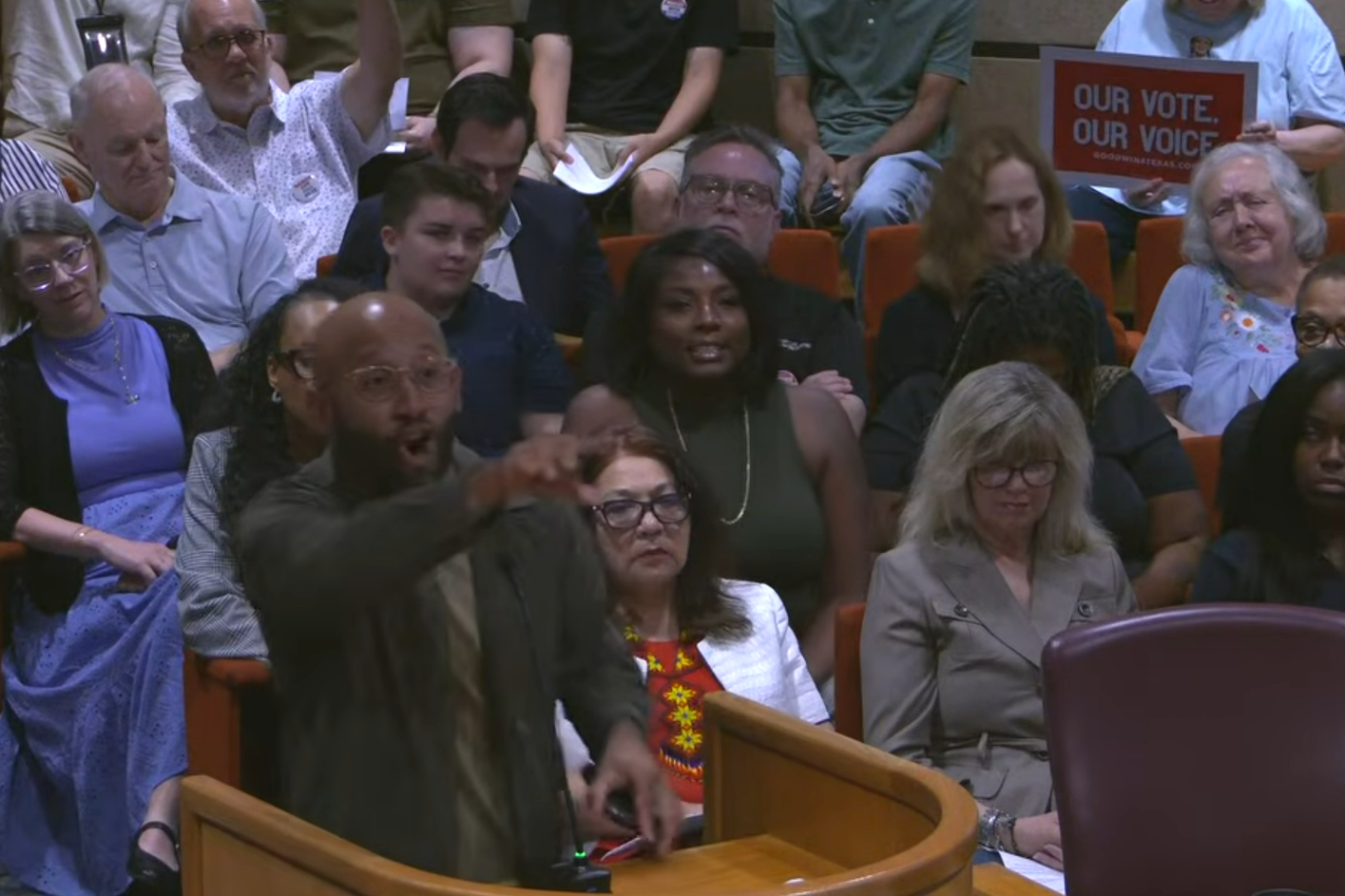
Police in Fort Worth, Texas pulled over local radio host and political activist EJ Carrion just outside of his home and arrested him for "tumultuous behavior” related to a Commissioner's Court meeting on August 4, according to a copy of the arrest report obtained by 404 Media. Video of the alleged crime on YouTube showed Carrion saying the word “bullshit” while talking about polling center reductions during the meeting before walking away from the microphone.

Carrion told NBC DFW that he had been out with friends late Tuesday night and came home around 3 AM on Wednesday morning. He pulled into his cul-de-sac when the cops pulled him over for not using a turn signal. They told Carrion they had a warrant for his arrest.

According to an arrest report obtained by 404 Media, Carrion is charged with two counts of disrupting a meeting or procession, a misdemeanor in the state of Texas. “On or about the 4th day of August 2026, in the county of Tarrant, state of Texas, [Carrion] did intentionally hinder an official proceeding [...] by noise or violent or tumultuous behavior,” the record said.

Tarrant County is the home of the city of Fort Worth, where. Carrion and other residents have been fighting a long battle with city officials over a plan to reduce the number of polling places by almost 50 percent ahead of the November midterms. During the last election, the city had 316 polling places. The county’s election administrator wants to cut that to 176.

Carrion is a local celebrity — a podcast host, political activist, and EdTech entrepreneur — who has used his platform to speak out against the plan. He’s attended many public meetings of the Tarrant County Commissioners and spoken against the proposed polling plan several times.

“You said you were all about cooling the temperature and yet you vote for this extremist bullshit,” Carrion said. “All of you are bullshit.” Carrion then turned around and walked away from the mic.

“Remove him immediately from the room,” Tarrant County judge Tim O’Hare said.

“I’m walking out, small man,” Carrion shouted over his shoulder as he walked away.

“You are disrupting the meeting, we are now in recess,” O’Hare said. This exchange was, apparently, what caused Tarrant County to issue a warrant for Carrion’s arrest.

Things did not calm down after Carrion left. Thirty minutes after his comments, a woman took the mic and criticized how the meetings worked. “People are removed for clapping. People are removed for speaking out. People are treated like a disruption instead of the reason this government exists,” she said. “You keep telling us not to ‘California my Texas’ while in reality you keep Russia my Texas. You three boys from the GOP—”

“Alright, hang on, that’s it,” O’Hare cut her off. “We’re going to clear the chambers now.” Off camera, someone called something out to O’Hare.

“Take that one, remove him from the building,” O’Hare said, pointing off camera.

An hour after that, the chamber cleared, O’Hare ordered the arrest of another speaker for touching the microphone. Former Texas State representative Lon Burnham spoke out against the polling plan and the Commission. “For the last couple of years now all we have seen is total disrespect for the public,” he said. A previous speaker had been removed for touching the microphone and Burnam picked it up during his own speech.

“Set the microphone down, Mr. Burnam,” O’Hare said. “I’ve asked you to set the microphone down. Please remove him.” The judge placed the meeting in recess again and Tarrant county officers physically dragged Burnam out of the chambers and charged him with two counts of public disruption — the same charges faced by Carrion.

O’Hare is an elected official who presides over the Tarrant County Commission with four other elected representatives. Commissioner Roderick Miles Jr. questioned Carrion’s arrest in a public statement on his Facebook page. “I am deeply disturbed by the circumstances surrounding the arrest of Efrin ‘EJ’ Carrion earlier this morning,” Miles Jr. said in the statement.

“Government must exercise extraordinary restraint when speech at a public meeting leads to involvement with the criminal justice system. Residents should never have to wonder whether speaking forcefully to their elected officials could result in a warrant, an arrest, or an encounter with law enforcement,” he said. “Because once that fear takes hold, the damage reaches far beyond one person.”

Miles Jr. called on his fellow commissioners to make the Commissioners Court a place where residents could feel safe to speak their mind. “There must be a line the government does not cross,” he said. “The authority entrusted to us does not belong to us. It belongs to the people [...] this must stop. And I will not be silent when the public trust, the safety of our residents, and their rights to be heard are at stake.”

Carrion’s arrest is the latest in a growing trend around the country. People are angry at their local politicians — often about surveillance cameras and data center contracts — and have been showing up at public hearings in huge numbers to tell them. In February, cops in Oklahoma arrested a farmer for speaking a little too long during a data center meeting. In July, police arrested a person in Kansas for clapping during the public comments portion of a data center meeting.

Carrion and the Fort Worth Police Department did not return 404 Media’s request for a comment.

  •  

Medical Startup Selling Prescription Kit for Nuclear Disaster

Medical Startup Selling Prescription Kit for Nuclear Disaster

A telehealth startup is selling $345 emergency kits packed with medicine that it claims could help people survive nuclear disasters.

Amble Health’s “Oh Sh*T Kit” comes with iodine tablets, Prussian blue pills for removing radioactive cesium and thallium, and anti-nausea medication ondansetron, or Zofran. “If the unthinkable happens, whether from an accident, disaster, or other radiological event, having the right medications on hand can make a critical difference in the earliest hours. Because when radiation is involved panic is optional, but preparation isn’t,” the company’s website says. You’ll need a prescription to order it; Amble also does telehealth appointments with licensed healthcare providers who can issue prescriptions.

The fear of a radiological disaster isn’t unfounded. After decades of declining nuclear weapons stockpiles, America is building more and new kinds of nuclear weapons. The Trump administration’s nuclear deal with Saudi Arabia includes a provision to allow it to enrich its own uranium and, possibly, a path towards a nuclear bomb for the Middle Eastern Kingdom. Russia is modernizing its nuclear arsenal and field testing new types of nuclear-capable missiles in Ukraine.

If nuclear war doesn’t get you then a power plant meltdown might. The Trump administration has rewritten and outright cut safety regulations around the construction of nuclear power plants. Tech companies are investing billions in new and untested forms of nuclear power generation. Microsoft and others are using AI systems to speed through the lengthy safety processes.

According to Amble, the “Oh Sh*T Kit” is “primarily focused” on people exposed to radiation as part of their jobs, not the next nuclear war. “Millions of workers across medicine, construction, mining, shipping, agriculture, and power generation are routinely exposed to these hazards,” an Amble spokesperson told 404 Media.

“We created this kit to give people an actionable, reliable solution so they have peace of mind and know exactly what to do when the unexpected happens,” the spokesperson added. “Our clinicians (especially in a post pandemic world) identified a growing request-need-concern from their patients having medication available in a situation of emergency when a pharmacy would otherwise be unavailable.”

‘If you have been exposed to enough radiation that you are vomiting [...] you’re already in a lot of trouble.’

Should the worst happen, Amble’s “Oh Shi*t Kit” has promised to help for just $345. But experts told 404 Media that the kits might not actually be all that useful if you’re buying it for prepper reasons.

Amble is an online platform that “connects patients to licensed healthcare professionals in all 50 states, 100% online,” according to a description on its website. The site’s frontage advertises it as a place where people can get prescriptions for weight-loss drugs like GLP-1s and “anti-aging” drugs like NAD+ and Sermorelin.

It was founded by Joey Stiver, an entrepreneur with a felony conviction and a desire to “democratize healthcare,” according to his personal website. According to Stiver, he got a double-tear in his shoulder when he was 18 and didn’t want to have invasive surgery so he bought “healing peptides” online. He liked the product so much he began to sell medical items himself in an “illicit industry” which landed him a federal indictment and felony conviction. Now he’s a telehealth mogul. 

GLP-1s are Amble’s big draw, but it also offers a number of “kits” for basic medical emergencies like a “Cold & Immunity Kit” that comes with a run of prescription antibiotics like Amoxicillin and Azithromycin. The “Oh Sh*T Kit” is part of this line of products. Alex Wellerstein, a nuclear war historian and professor at the Stevens Institute of Technology, told 404 Media that the “Oh Sh*T Kit” is “a ripoff at $345. Doomsday grifting at its best.” Iodine tablets, potentially the most useful part of the package, are available cheaply without a prescription. A bottle of 60 pills will run you around $13 at a GNC.

“Iodine tablets can be of some benefit if taken directly after some kind of release of fresh fission products (whether a nuclear power plant accident or a nuclear detonation),” Wellerstein said. “They max out the thyroid’s iodine levels and prevent it from greedily up-taking environmental iodine, which means [the thyroid] won’t grab any I-131 that has been produced by nuclear fission.”

I-131 is one of the principal radioactive substances present in the fallout that follows a nuclear disaster. It has a short half life and can wreak havoc on the body. “It is not the only fission product of worry, of course, it is just one that is particularly easy to avoid by taking potassium iodide [...] and a pernicious one as it is so quickly taken up by the body (and also, in turn, excreted relatively quickly, so you have the extra bonus of having radioactive sweat and excrement),” Wellerstein said. Potassium iodide is a medical compound made from iodine.

Medical-grade Prussian blue is a prescription substance that binds to heavy metals like cesium and thallium. According to the CDC, the medicine traps the heavy metals in the intestine and keeps them from being absorbed in the body until the afflicted can shit them out. “[Cesium] has a much longer half-life than I-131 (30 years), and is in the ‘worrisome chronic carcinogen’ category rather than the ‘will give you radiation poisoning’ that I-131 is in,” Wellerstein said. “I suspect it is the sort of thing that would be administered by a doctor, not taken by an individual, assuming there are doctors around after said ‘radiological event.’ It is not something that one should take without knowing exactly what dosages are required, I gather.”

Zofran will keep you from throwing up, but that will be cold comfort. It’s possible that in the aftermath of a nuclear disaster, there are things in your stomach that your body does not want to absorb. “If you have been exposed to enough radiation that you are vomiting (e.g., suffering from some form of acute radiation syndrome), you’re already in a lot of trouble,” Wellerestein said. “Anyway, that would be symptom management, a different category. It has its own possible adverse health effects.”

If you’re worried about nuclear disasters, you can do worse than buying some iodine tablets online. “I think the risk/reward tradeoff for potassium iodide is not terrible for people who worry about being exposed to radiological hazards,” Wellerstein said. “Which is to say, the risk of it happening is pretty low, and it is very cheap when bought on its own and not from grifters, and so if it brings you peace of mind to keep some around, I see no harm in that.” The rest, however, is probably not worth the money.

  •  

The Mayor Who Said 'No' When Flock Came to Town

The Mayor Who Said 'No' When Flock Came to Town

Norman, Oklahoma is a Flockless outpost on the outskirts of the Oklahoma City metro area. As you drive south down I-35 away from the big city and into Norman, coverage from the automated license plate readers (ALPR) dwindles. That’s because Norman has rejected Flock’s pitch multiple times.

“They've given us two presentations in the last three years at the request of our police department who wanted to implement them,” Stephen Tyler Holman, the mayor of Norman, told me. “They haven’t been back since I’ve been mayor.”

Norman is an outlier. When the surveillance company comes to a city or a town, the city often signs up. The city council in my small town of 12,000 people just voted to install 22 new Flock cameras despite overwhelming pushback from residents. A big centerpiece of Flock’s pitch was that it would help solve crimes. My town’s chief of police told a story about how Flock had been instrumental in arresting child predators.

Holman told me that Flock and the cops made the same pitch to Norman. “Crime prevention and helping the police more efficiently solve crime. That was their main point that they wanted to advocate for,” he said. “They really focused on amber alerts and silver alerts and ‘don't you want to find kidnapped kids and elderly people that have wandered off who have Alzheimer's?’”

But Norman’s leaders had questions about privacy and data security and they didn’t like Flock’s answers. “Those were some of the reasons why we ended up not doing it,” Holman said. “Questions about data storage and how long and who has access to it […] you're gathering data on every single car vehicle that goes in and out of the city of Norman, regardless of if they've committed a crime or not, and then that's stored for 30 days on some kind of database? Who has access to it? How secure is it? Those are the questions we have that were kind of deal breakers for us [...] 30 days seemed like a long time to sit on that much data. There were some council members that were like, ‘It should only be an hour. Thirty minutes.’ Why do you need it any longer than that? Why would you need to keep it for 30 days? How is it accessed? How secure is it?”

All of the city council’s nine members said no to Flock. Since then, Holman has watched with some small satisfaction as other cities push back. Cops keep getting into trouble for using the cameras to stalk people, the system makes mistakes, and one of its ex-workers recently told 404 Media that the company lied to him about its business practices

More than 80 cities across the country have cancelled Flock contracts. None of them are near Norman, which sits on the border of Oklahoma City — a city covered in Flock cameras. According to Holman, the company played this up in its most recent presentation saying that “people would find that out and they’d come to commit crime in Norman because they know that we don’t have Flock cameras.”

But Norman’s city council doesn’t control every square inch of Norman and its surroundings. Despite their best efforts, Flock cameras have gotten in. The city sits in Cleveland county and county leaders approved the installation of 20 cameras for use by the Cleveland County Sheriff’s Office. “There are numerous homeowners associations that use them too,” Holman said. “But the city of Norman government does not. We’re, I guess, the only ones around here that don’t.”

Holman said that Norman’s politics are difficult to explain. “It’s neither liberal nor conservative,” he said. “Our three state reps are Democrats but two of them represent Republican majority voter districts.” He said the tension between the major parties and a healthy swath of independent voters has made citizens engaged with local politics and that constituents have sent a clear anti-Flock message. 

“Pretty much everywhere else around here absolutely would just roll over and approve something like this. Nobody would show up and protest it. And if they did, the councils probably wouldn't care. But in Norman it’s a big deal and people can lose re-election over stuff like this and have,” he said.

Holman served on the city council for 12 years before becoming mayor last year. He said one of the issues that turned people against the previous mayor was the purchase of a Bearcat APC for the local police department. In the 20 years after the start of America’s wars in Afghanistan and Iraq, town and city police departments have purchased a lot of military surplus gear from the Pentagon. “Things like a Bearcat would be rubber stamp approved in most cities. In Norman it took them 10 years and [passed] barely by a five-four vote of our previous mayor who I ran against and beat,” Holman said. The APC is still causing controversy in Norman.

Buying an armored car for the police 10 years after it was fashionable to do so is one thing. Private companies installing police cameras is another. “There’s a lot of folks here who are weary about government surveillance, especially giving that over to a private company,” Holman said.

Holman told me he’d been watching the city council meetings like mine where mayors and representatives fight with the voting public about their concerns. “I would really encourage them to listen to the public, listen to the people they represent in their cities and the very valid concerns that folks have about this technology and the private company itself, Flock, and the issues that have arisen with them and why many cities have started to explore pulling out,” he said.

He said that concerned citizens have a right to be worried about the conduct and ethics of a company like Flock. “I always come back to the freedom versus safety thing, this conversation we’ve been having since our founding,” Holman said. “That conversation may not resonate with a mayor like yours. There seems to be a lot of folks that are completely willing to give up all freedom for perceived safety. Well, I guess all crime could be eliminated if you put cameras everywhere, surveillance everywhere, and had drones patrolling the skies. That seems to be the way some folks want to go but what life are we living then?

  •  

City That Arrested Person for Clapping at Data Center Meeting Moves to Virtual Meetings for 'Public Safety'

City That Arrested Person for Clapping at Data Center Meeting Moves to Virtual Meetings for 'Public Safety'

The small town that arrested a person who clapped during a city council meeting about a hyperscale data center held its meeting on Wednesday virtually and had no public comment period in the name of “public safety.” It says it will do the same for another meeting later this month.

The city, Emporia, Kansas, announced the change just two days before the meeting. 

“In the interest of public safety, the Emporia City Commission meetings scheduled for Wednesday, August 5, 2026, and Wednesday, August 19, 2026, will be conducted virtually,” Emporia said in a post about the change on Facebook. “No public comment period will be provided during either meeting.” Then it shared the city’s email and phone number for citizens who wanted to voice concerns privately. Emporia’s police chief told KVOE News that city leaders had received death threats.

“The City remains committed to conducting the public’s business in an open and transparent manner while taking reasonable measures to protect the safety of elected officials, City staff, and members of the public,” the post said. “The City appreciates the public's understanding and cooperation as it implements these temporary measures while ensuring the continuity of City business.”

Citizens upset about the data center and no longer allowed to make a public comment gathered outside Emporia’s municipal auditorium to protest on Wednesday. Lux Claridge, the person arrested for clapping, attended the protest and told 404 Media that both the protest and the virtual city commission meeting went well. “The commissioners voted unanimously to get our petition on the ballot measure to ban high-impact data centers to a judge. They said that doing otherwise could open up the city to a lawsuit but didn't really elaborate on who, why, or how,” they said.

Some citizens in Emporia are upset about a proposed gigawatt data center called the Flint Hills Digital Campus that would sit on 1,000 acres of prairie land. Zoning and city commission meetings have been held about the project, during which citizens have pushed back during the public comment periods of meetings. During a July 22 meeting, a city leader ordered Claridge to be arrested for clapping. Police charged Claridge with disorderly conduct and interference with police.

On Wednesday, the city commission streamed its meeting on the city website. Residents could watch, but not participate. The commission voted 5 - 0 to send the petition to a judge to see if Kansas law would allow that kind of restriction. 

“I would like to see it go to the courts, that way it has an outside decision, so that we don't get ourselves entangled in something that could come back later and we'd be sued over,” Emporia mayor Becky Smith said.

“I think if you accept it or decline it, you’re opening yourself up to a legal battle either way so let’s just send it straight to a judge,” commissioner Erren Harter said. 

Claridge said the reason the commission meetings had gone virtual and closed public comment was that members of the commission had reported receiving death threats. “This was also happening days leading up to my arrest, but the threats seem to have ramped up. While I don't doubt that there are credible threats, my big question is on how many there are and from where they are coming,” they said. “Mayor Smith did mention in yesterday's meeting that the threats don't seem to really be coming from locals but ‘it only takes one’ to ruin a meeting so they went virtual. I feel like we're being punished for the actions of outsiders.”

“I'm not so upset about going virtual, it makes sense, but back it up with examples of these threats. I'm more upset that they opted to close public comment and I don't understand why,” Claridge added.

The commissioners will meet, virtually, again on August 19 but they have not yet published the agenda on the city’s website. The commission did not return 404 Media’s request for comment.

  •  

Data Centers Are Easy to Build. Powering Them Is Complicated, Slow, and Expensive

Data Centers Are Easy to Build. Powering Them Is Complicated, Slow, and Expensive

On Wednesday the power flickered in homes from Washington DC to Chicago. The cause was a data center disconnecting from PJM — a massive power grid that connects 13 states including North Carolina, Virginia, New Jersey, and Michigan, a span that covers 67 million customers. The incident points to a larger problem with the compute warehouses fueling the AI boom: It’s physically and economically impossible to build power infrastructure fast enough to meet the demands of AI data centers and when problems occur, everyone will pay the price.

AI requires massive amounts of computer hardware to scale. That hardware is housed in data centers, and data centers demand shocking amounts of electricity. More data centers mean more demand on the grid which raises the costs of energy for everyone. This is one of the reasons people hate data centers and have begun to fight their construction.

To bypass the issue of grid demand, many data center builders have promised to power the buildings themselves. The problem with that plan is that it’s easy to build a warehouse full of GPUs. Building power plants and transmission lines to power those warehouses will take years and cost billions more than the data centers. A skilled and efficient builder can complete a data center construction in under a year. Building new energy generation to meet that data center's power needs could take a decade. 

  •  

Person Opposing Data Center Arrested for Clapping at City Meeting

Person Opposing Data Center Arrested for Clapping at City Meeting

Police arrested a high school physics teacher for clapping during a city council meeting last Wednesday. Teacher Lux Claridge went to a meeting of the Emporia, Kansas City Commission on July 22 with their spouse and brother. All three were there to speak out against a proposed hyperscale data center that would sit on 1,000 acres of rural land in Emporia. They left the meeting in handcuffs, dragged out by police on the orders of a city commissioner.

  •  

What Happened When Flock Came to My Town

What Happened When Flock Came to My Town

On Tuesday night, the city council of my small town of Irmo, South Carolina, voted to install 22 new Flock cameras. That’ll bring the total up to 33. With a population of only 12,000 or so, it means there’ll be one Flock camera for every 300 residents. That means there will be more Flock cameras in my town than police officers. The city council — the governing body consisting of the mayor and 4 councilpersons — voted for Flock expansion despite presentations from residents about the dangers of what they described as the creeping surveillance state.

The vote for the cameras was a hot topic in local news and South Carolina social media. The city council expected a lot of people to show and asked folks to sign up early if they wanted to talk. Since I work for a publication that has been on the cutting edge of reporting on the myriad problems with Flock cameras, I decided I should probably speak. I spent Tuesday refreshing myself on 404 Media’s reporting and wrote a presentation for the council.

Meetings like this are happening in hundreds of communities across the country and I want to give 404 Media readers a snapshot of what they’re like. There’s a nationwide debate on whether cities and towns want Flock cameras or not and this was my experience speaking at one of the small ones.

There was a hard 3-minute time limit and I had written three pages. I found details about Irmo’s Flock searches in the logs of other states, talked about the specific data security concerns with the cameras, and attempted to explain all the mistakes and false arrests Flock had caused. Three minutes goes by fast, and I ran out of time before I could say everything I had planned.

I wasn’t the only person who decided to speak. More than 10 other citizens went to the podium and spoke out against the cameras. “Is Irmo such a dangerous place that current law enforcement tools are not sufficient to keep the citizens safe without the use of this dangerous and controversial technology?” one guy said.

“I’m pretty enthralled by all the pushback you’re getting on the cameras you installed without asking a single member of the community if they wanted them installed,” said another resident, a man in a T-shirt and shorts. “If you give the government a tool, they will misuse it. Period. End of story. Get rid of them or we will get rid of them for you.”

The city council members looked its residents in the face. They maintained eye contact and appeared shocked when citizens talked about their concerns. For a bit, I thought it was possible that the town might not install these cameras. Then the police chief stood up and explained how he’d used Flock to capture pedophiles and I knew that was probably the end of it.

Police chief Bobby Dale has long been an advocate for the expansion of Flock in town. He told local outlet News19 that 33 cameras will allow him to see all the entrances and exits. “That would ultimately cover pretty much every nook and cranny, every entry point into the town,” he said. “That's what we want. As the chief of police, I've got to make sure our town is safe. I'm learning that with these cameras, with these license plate readers, we're solving crimes and solving them quicker.”

During the city council meeting, Dale explained that Flock cameras had been instrumental in a To Catch a Predator style sting operation Irmo PD conducted. “During an internet crimes against children operation hosted by a department, 15 adults traveled to our community believing they were coming to meet children for sexual activity," Dale said. “Fourteen of those 15 suspects were not from our jurisdiction.”

“So you lured them here. Into our town. Genius,” the T-shirt and shorts guy shouted from the back of the room. This was the guy who’d said the community would remove the Flock cameras if the city didn’t. The mayor had police escort him from the meeting. He left without a fight and Dale finished his speech praising Flock.

After a brief question and answer period with the police chief, the mayor spoke. The city’s leaders had just returned from the Municipal Association of South Carolina annual meeting — a yearly conference of local officials in the state. Mayor Bill Danielson opened his portion of the Flock discussion by talking about how he’d recently commiserated with other mayors at the conference about how mean people were on Facebook.

“I came back with a renewed vigor to be the mayor of this town,” he said. “And knowing that I’m not the only one being abused on Facebook, social media, by some people in this room. It’s going to take a whole lot more than that to sway any position I may or may not have on behalf of these citizens.”

The other thing the mayor learned is that everyone loves Flock. “There was not a mayor at that conference that I touched bases with […] that did not use Flock, did not use Motorola license plate readers,” he said, referring to another company that sells similar technology (we’ve reported ICE is offering demos to its agents to use a Motorola license plate reader app). “Every one of those mayors either wanted Flock, was trying to figure out how to budget for Flock, or had Flock and was figuring out how to increase their presence.”

Flock is not, in fact, universally popular among state and local officials. The Los Angeles Police Department just announced it wouldn’t renew its contact with the company after an internal audit found it led to 161 false accusations of car theft and “eroded public trust.” Bandera, Texas, voted to remove its cameras after months of outrage from its citizens. Dayton, Ohio wants their cameras gone but isn’t sure how to cancel the contract so it's covering the cameras with black trash bags. Flock seems unable to remotely disable its own cameras so cities that no longer want them have to find their own solutions.

Cops also often misuse Flock. There are dozens of cases around the country of cops using the system to stalk people. In nearby Greer, South Carolina, two police officers were just fired by the town after they were discovered using Flock to track people around town

Mayor Danielson said he’d met a leader from Greer at the conference. “I even spoke to a councilmember from Greer, the dreaded Greer […] whose two cops abused it,” Danielson said. “And I told him point blank, if that happened in the town of Irmo they would not only be fired they would never be a cop again and face charges.”

My city council voted 4 to 1 to increase the presence of Flock in this small town of 12,000 people. Police chief Dale will soon have more cameras than officers. And, if they can get money from the state, they may also purchase a drone from Flock to use as part of the company’s “drones as first responder” program

People weren’t happy. The mood in the room was sour. I’ve attached my entire speech to this story so you can see what I planned to say.

My Flock speech for the city council

Hello.

My name is Matthew Gault and I’m here today to talk about Flock cameras.

I’m a resident of Irmo and I am also an investigative journalist. I work at a publication called 404 Media that focuses on technology.

Over the past few years, my colleagues at 404 Media have written a number of stories about Flock cameras and, before you vote to install 22 more of them in our small town, I want to share the results of some of those investigations with you.

Mr. Ward, I understand you’re concerned about cyber security around the data these cameras collect.

Last month, 404 Media found Flock had accidentally exposed some of the searches performed by law enforcement in its automatic license plate readers. The searches were cached in search engine results. This meant that anyone was able to see what police were looking for. 404 Media conducted some of its own searches and found that Flock had exposed people’s license plate numbers and various search terms like “investigation” and “GTA,” which is short for Grand Theft Auto.

In December of last year, 404 Media found a different and more severe security issue in Flock’s systems. The company had left 60 of its AI-enabled Condor cameras exposed on the open internet.

That meant that anyone could watch them, download 30 days worth of video archives, change settings, see log files, and run diagnostics. My colleagues were able to access Flock’s cameras simply by typing a website into a browser. They did not need a username or a password. There was no great trick to it. Once inside the system they could see playgrounds, parking lots, and people doing their shopping.

These are just two of the security issues we know about. 

It’s also worth telling the council how, exactly, Flock’s systems work.

Many of Flock’s license plate reading cameras are connected to local, state, and national networks. When an Irmo police officer runs a search for a specific license place, they may not just be searching the cameras in their jurisdiction. The search can run through the national network of Flock cameras, if configured to do so. This works two ways. Meaning law enforcement officers at a state and federal level searching Flock cameras may have access to Irmo’s data too.

In fact, because many of these cameras are networked and interconnected, I have access to some of the current records about how Irmo, PD is using them.

I know that Irmo, PD has conducted at least 7,576 searches of Flock’s networks since 2023. If you were curious, most of the searches are conducted around 5 PM. Most of the searches happen on Monday. I know that, for some reason, Irmo PD ran 489 searches on December 21, 2025. 

I know that on June 30 at 4:36 PM, the Irmo PD ran a search of the Flock system related to a stalking case.

Two days before, on June 28 at 6:45 PM, the police searched Flock in relation to a case of property damage.

On May 22, just before noon, police searched Flock in relation to a financial crime, something that was marked as “embezzlement or fraud” in the system. For this search in particular, Irmo PD accessed cameras outside of its jurisdiction — it widened the search to footage recorded by cameras nation-wide.

Why do I know all this? How is this possible? Because some police departments in the Flock network conduct routine audits of Flock’s search logs. All three of the searches I just noted were in an audit conducted by the city of Twin Falls, Idaho, a city on the other side of the country. I found information about Irmo’s historical Flock use in audits conducted by police in Georgia, Connecticut, Pennsylvania, and California. 

Calling Flock’s cameras “license plate readers” is technically true, but can sell the system short. The basic model is recording the license plate of vehicles, automatically logging information about the make and model of the car as well as stickers and any other distinguishing features. Much of this information is recorded by an AI system. It makes mistakes.

This system has led to false arrests or traffic stops. Earlier this month, a journalist for a car magazine was pulled over by police in Minnesota. The cops said they’d been tracking him for days and that the car he was driving was stolen. The tip came from Flock’s systems, which had been alerted to the theft of a car in California. But the AI system had transcribed the license plate incorrectly.

In Colorado, a woman was accused of stealing packages off people’s porches.The police’s evidence that she’d committed the crime was footage pulled from Flock cameras. Bodycam footage published by 404 Media showed how confident officers were that they had their thief.

“I have you on camera doing this […] I get that this is a shock to you, but I am telling you, this is a lock, 100 percent no doubt she did this,” an officer in Colorado said.

The woman had not committed the crime. She had ample evidence she had not committed the crime, but the police in Colorado insisted that Flock cameras do not lie and do not make mistakes. But they had. Her own dashcam exonerated her and police dropped the charges.

Last week, the Los Angeles Police Department announced it would not renew its contract with Flock. In a two month period, LAPD pulled over 161 innocent people acting on tips from Flock cameras.

“Subsequent investigations determined the vehicles were not stolen,” LAPD said in an investigation into its Flock cameras. “In addition to creating an inconvenience for vehicle owners, these inaccuracies can affect individual liberties, erode public trust, and potentially create substantial legal and financial liability concerns.”

These stories are just a small selection of the issues with Flock and I hope the council will consider them before its vote today.

  •  
❌