Vue lecture

Behind the Blog: Rare Books and Baseball Brain

Behind the Blog: Rare Books and Baseball Brain

This is Behind the Blog, where we share our behind-the-scenes thoughts about how a few of our top stories of the week came together. This week, we discuss Flock blogging, "rare" books, and Jesus Christ.

EMANUEL: I was out last Friday so I want to talk about the story I published two weeks ago about AI companies buying printed books so they can scan them for training data

The story has gone mega viral on X, but mostly in the form of a post from an engagement farming account that both misrepresented my article and didn’t properly link back to our website. This is frustrating because it means a lot of other people siphoned traffic from our site and also because it caused a fair bit of confusion about what is happening. 

  •  

City That Arrested Person for Clapping at Data Center Meeting Moves to Virtual Meetings for 'Public Safety'

City That Arrested Person for Clapping at Data Center Meeting Moves to Virtual Meetings for 'Public Safety'

The small town that arrested a person who clapped during a city council meeting about a hyperscale data center held its meeting on Wednesday virtually and had no public comment period in the name of “public safety.” It says it will do the same for another meeting later this month.

The city, Emporia, Kansas, announced the change just two days before the meeting. 

“In the interest of public safety, the Emporia City Commission meetings scheduled for Wednesday, August 5, 2026, and Wednesday, August 19, 2026, will be conducted virtually,” Emporia said in a post about the change on Facebook. “No public comment period will be provided during either meeting.” Then it shared the city’s email and phone number for citizens who wanted to voice concerns privately. Emporia’s police chief told KVOE News that city leaders had received death threats.

“The City remains committed to conducting the public’s business in an open and transparent manner while taking reasonable measures to protect the safety of elected officials, City staff, and members of the public,” the post said. “The City appreciates the public's understanding and cooperation as it implements these temporary measures while ensuring the continuity of City business.”

Citizens upset about the data center and no longer allowed to make a public comment gathered outside Emporia’s municipal auditorium to protest on Wednesday. Lux Claridge, the person arrested for clapping, attended the protest and told 404 Media that both the protest and the virtual city commission meeting went well. “The commissioners voted unanimously to get our petition on the ballot measure to ban high-impact data centers to a judge. They said that doing otherwise could open up the city to a lawsuit but didn't really elaborate on who, why, or how,” they said.

Some citizens in Emporia are upset about a proposed gigawatt data center called the Flint Hills Digital Campus that would sit on 1,000 acres of prairie land. Zoning and city commission meetings have been held about the project, during which citizens have pushed back during the public comment periods of meetings. During a July 22 meeting, a city leader ordered Claridge to be arrested for clapping. Police charged Claridge with disorderly conduct and interference with police.

On Wednesday, the city commission streamed its meeting on the city website. Residents could watch, but not participate. The commission voted 5 - 0 to send the petition to a judge to see if Kansas law would allow that kind of restriction. 

“I would like to see it go to the courts, that way it has an outside decision, so that we don't get ourselves entangled in something that could come back later and we'd be sued over,” Emporia mayor Becky Smith said.

“I think if you accept it or decline it, you’re opening yourself up to a legal battle either way so let’s just send it straight to a judge,” commissioner Erren Harter said. 

Claridge said the reason the commission meetings had gone virtual and closed public comment was that members of the commission had reported receiving death threats. “This was also happening days leading up to my arrest, but the threats seem to have ramped up. While I don't doubt that there are credible threats, my big question is on how many there are and from where they are coming,” they said. “Mayor Smith did mention in yesterday's meeting that the threats don't seem to really be coming from locals but ‘it only takes one’ to ruin a meeting so they went virtual. I feel like we're being punished for the actions of outsiders.”

“I'm not so upset about going virtual, it makes sense, but back it up with examples of these threats. I'm more upset that they opted to close public comment and I don't understand why,” Claridge added.

The commissioners will meet, virtually, again on August 19 but they have not yet published the agenda on the city’s website. The commission did not return 404 Media’s request for comment.

  •  

Flock Pitched a Plan To Turn Uber and Lyft Drivers Into Roaming Surveillance Vehicles

Flock Pitched a Plan To Turn Uber and Lyft Drivers Into Roaming Surveillance Vehicles

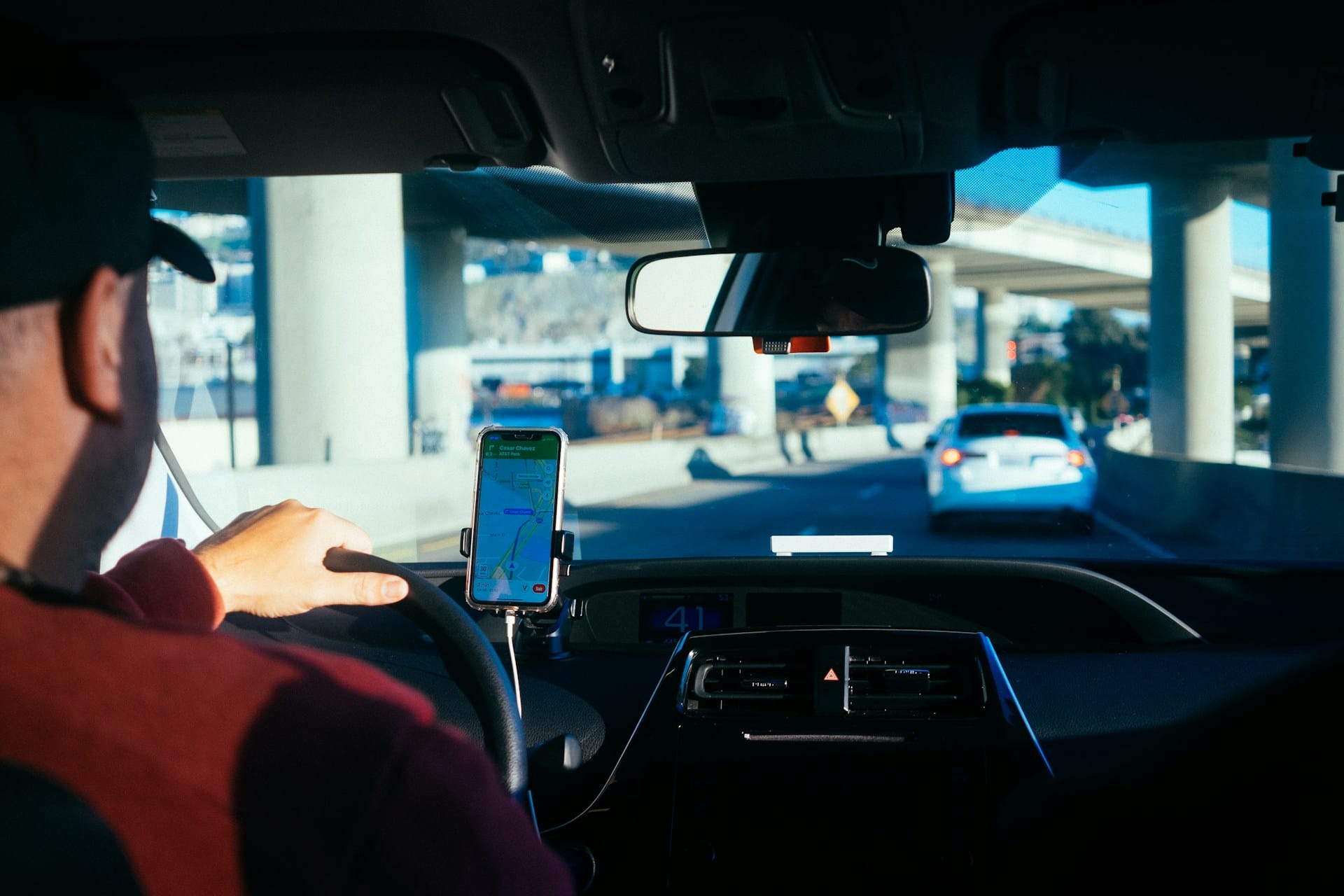
Flock planned to use dashcams installed in hundreds of thousands Uber, Lyft, and delivery drivers’ vehicles to scan license plates those drivers travelled passed, essentially turning Uber and Lyft drivers into roaming surveillance vehicles, according to a Flock presentation shared with 404 Media.

The document provides more details on Flock’s planned partnership with Nexar, a popular dashcam company. 404 Media first revealed the intended partnership last August when multiple sources provided information on the plan. The presentation shows Flock was actively pitching this partnership, and its use of Uber and Lyft drivers, to potential customers right around the time 404 Media reported on it.

💡
Do you work for Flock, Axon, or a similar company? I would love to hear from you. Using a non-work device, you can message me securely on Signal at joseph.404 or send me an email at joseph@404media.co.

Flock told 404 Media in an email it never executed the partnership with Nexar. But the presentation still shows Flock’s ambitious plan to conscript rideshare and delivery drivers to collect license plate data for its network. It is not clear whether Uber or Lyft, or drivers working for those apps, would have been aware of the data collection.

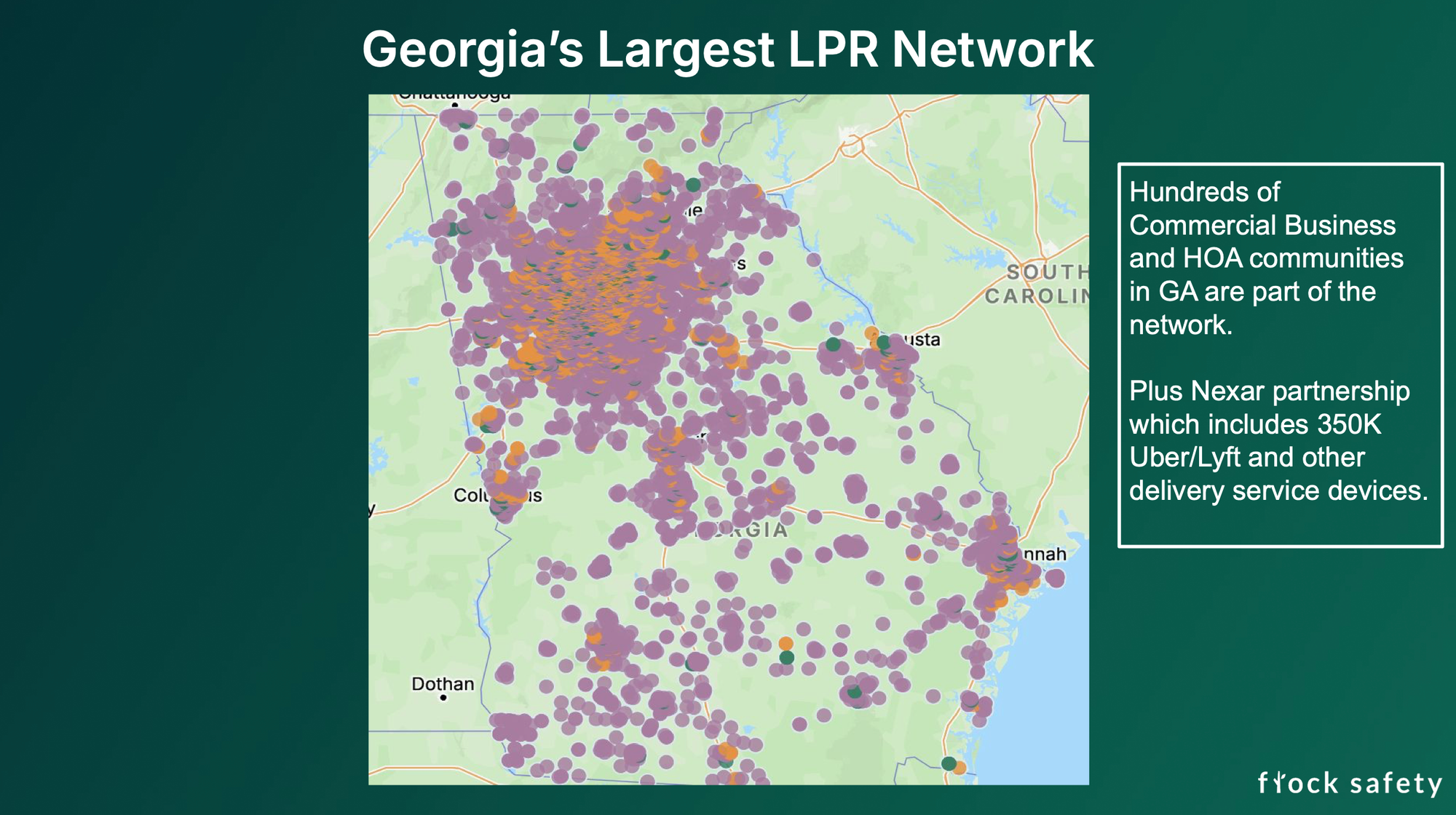
“Hundreds of Commercial Business and HOA [home owners associations] in GA [Georgia] are part of the network,” the presentation, written by Flock to present to the Georgia Office of the Attorney General last August, reads. “Plus Nexar partnership which includes 350k Uber/Lyft and other delivery service devices.”

Jason Hunyar, a Dunwoody, Georgia, resident who obtained the presentation through a public records request, shared the document with 404 Media.

Flock Pitched a Plan To Turn Uber and Lyft Drivers Into Roaming Surveillance Vehicles
Image: screenshot of the presentation.

Flock’s automatic license plate reader (ALPR) cameras are usually stationary cameras installed on tall poles that constantly scan the license plate, color, make, and brand of every vehicle that drives past. The Nexar partnership would have made those data collection efforts mobile. Axon, the law enforcement contracting giant that also sells ALPR cameras, sells some of its cameras to be installed in police officers’ roaming cars. Vigilant Solutions and the Digital Recognition Network (DRN), two ALPR companies now owned by Motorola, perform similar license plate data collection through cameras in vehicles belonging to repossession agencies.

Nexar sells various different models of dashcams providing front, cabin, and rear views, and already can provide “clear license plate capture with Full HD video,” according to its website. Nexar markets the cameras to rideshare drivers and also “commuters,” “long-distance drivers,” and “casual drivers.”

In September, 404 Media reported that a hacker broke into Nexar and accessed a database of terabytes of video recordings taken by customers’ cameras. Those included footage of people driving around sensitive Department of Defense locations.

Flock has explored obtaining other unusual datasets too. Last May, 404 Media reported Flock was building a massive people lookup tool that would use hacked data to “jump from LPR to person,” according to leaked audio. Flock scrapped those plans after 404 Media’s coverage and internal pressure.

Neither Uber nor Lyft responded to a request for comment. Neither did Nexar.

In May, 404 Media reported a company called BusPatrol, that has cameras installed in tens of thousands of school buses, plans to turn those cameras into ALPRs and give access to that data to law enforcement.

  •  
❌