Last week we published a story that revealed an Amazon warehouse where the company scans and destroys thousands of books for AI training data. The following is an interview with one of the Amazon employees at this warehouse. We granted this employee anonymity because they were not authorized to speak to the press.
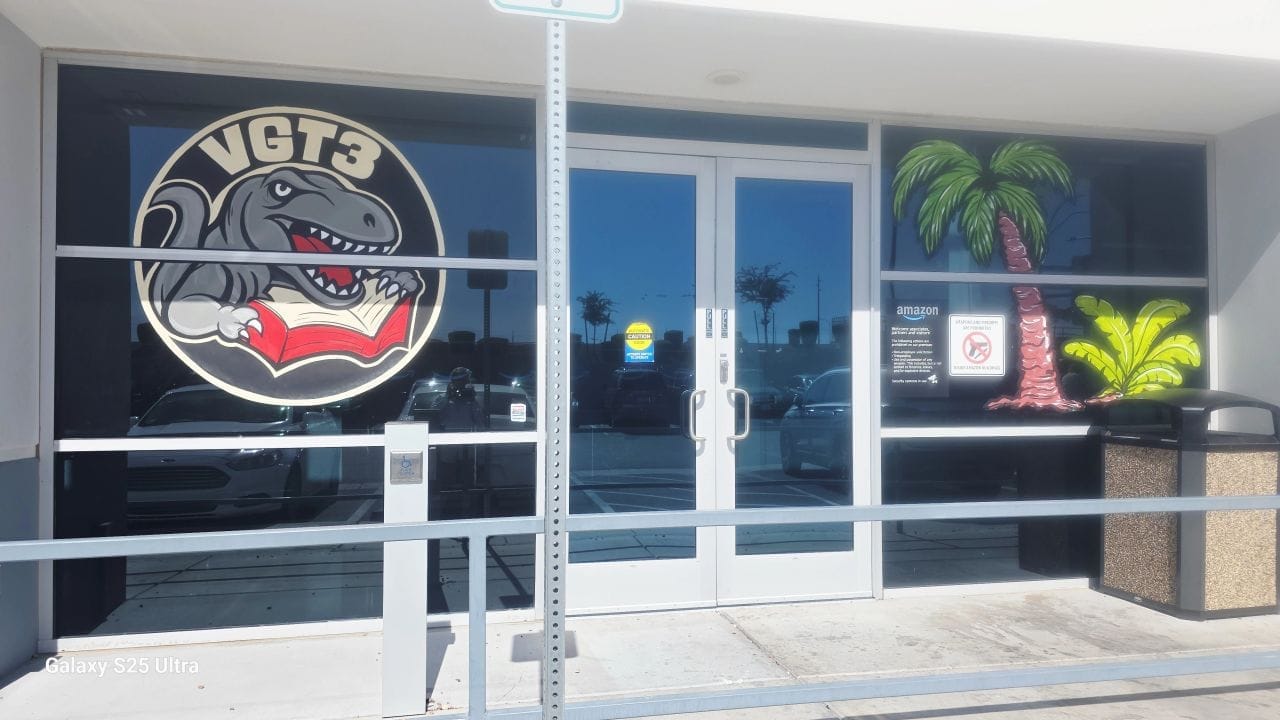
The employee worked at Amazon’s VGT3 warehouse, which is housed in the same facility as LAS8, where Amazon operates its print-on-demand business. Both operations are part of a larger complex of Amazon facilities in Las Vegas, Nevada.
We discovered that VGT3 was used to destructively scan books for AI training data by placing a tracking device in a shipment of rare books that a bookseller suspected was being acquired by an anonymous AI company. We saw the shipment travel across the country before finally landing at VGT3. Online, Amazon employees who worked at VGT3 described the work of receiving shipments of books, cutting the spines off of them, and scanning the loose pages.
The Amazon employee I talked to described what that operation looks like from the warehouse floor.
This interview has been edited for clarity and length.
404 Media: What do you do when you get to work at VGT3?
Anonymous: We have to walk past everything to get to the back of the warehouse. That's where I first saw all the scanners, and I was really wondering what was going on. I remember I even asked someone what they were doing and they said they’re not sure even the people who work there know what they’re doing. Of course, once I got over there and started putting two and two together, I kind of understood. And you know, I think people who work there probably know what was going on over there, but probably just didn't want to talk about it.
📖
Do you work at a company that scans books for AI training? I would love to hear from you. Using a non-work device, you can message me securely on Signal @emanuel.404. Otherwise, send me an email at emanuel@404media.co.
We also saw them cutting the spines off the books and everything. And after they scan it, they throw all the loose leaf papers into a big shuttle. [Editor’s note: Shuttles is how Amazon refers to gaylords, which are big open cardboard boxes that are often used to store books in bulk.] So they're all mixed together. There's no way to put the book back together or anything. Where I worked, primarily they would bring us boxes of books, or sometimes there's shuttles of books.
What kind of books?
All kinds of books. When we first started a lot of them were brand new. Some of them are used as well. Like you could tell, they were liquidated from a library or something like that. We were even getting boxes of stuff from London. There were a lot of books from the University of London. There was even like, I don't know what you would call them, but it was like kind of stapled together papers that said that they were presented to Parliament on the behalf of Her Royal Majesty the Queen. So they were like government documents. I don't know if they're public. Probably they're public, but it was just interesting that we found all that in there.
What did you think the books were for?
That's what we were wondering, and we were kind of like, ‘this is a lot of random information.’ They have literally any kind of book you could think of. They have ones in different languages. We saw a lot of German and Russian books, and we actually got whole pallets of Japanese books. Some of these books are brand new and they're like still sealed. A lot of the Japanese ones were, but yeah, we do get the stuff from the libraries, and that's the stuff I think is more mixed because they're not all nice in boxes and everything like that. They're kind of just thrown into the shuttle.
What was it like working there?
Our job was to unbox the books, and honestly, they seem like a mess over there. Like they're not really well managed or organized at all. Their process wasn't solid. Their process changed every day. But we were pretty much putting them in a tote [a small plastic stackable bin] so that they can go be scanned in and sorted, so that they can go over to the people to cut the bindings off.
They take them off the truck. The dock's right there, and then they stage them, which is just putting them on standby. People pick up the books and bring them to our station and we stack up the totes until it’s a whole pallet, and then the people with the pallet jacks come and they take the whole pallet.
And I think the next area, I think they call it receiving. What I've heard they do there is that they're scanning all the barcodes pretty much to see if they need it and just weed out duplicates. Something else they had us do was—we call it the trash but we don't we don't know exactly what they do with them—but one day we were taking all the duplicates and all the ones they said, “oh, we don't need these,” and we were throwing those in different shuttles. They're like yeeted in there, like they're not nicely placed in there or anything. And they say they're returning them to the vendors, but I'm like, you know, ‘do the vendors go through it and see which ones are actually worth it?’ Because it's like a tall shuttle that's probably six feet tall, six or seven feet tall. They're just piled in there. It’s also right next to where they start cutting the spines, and so I think right after that, that's where it's going [the trash].
What does it look like when they cut the spines off the books?
It's a machine people operate. Each of these machines is just like a little workstation, and there'll be one person at each of these stations. It's really safe because it has a little cover and it has a little area where you slide the book into, remove your fingers from the area, and then you press a button, and it just comes down and slices it. And then you remove the books after the blade is gone.
After they cut the spines they have these kind of library carts, kind of like how you would stack books, but instead, it's a stacks of paper and little cardboard things to separate—I'm guessing— the different books.
I saw the pages being thrown in a shuttle after they were scanned. We were walking by and we went over to one of the shuttles and looked into it because we could tell they were throwing the old books in it or the cut books in it, and it's just a bunch of loose paper like just sheets thrown in there.
Did you see the scanners?
They probably have like at least 20 scanners, maybe 25. They look like machines that count cash, it flips through the pages really fast. It kind of has something like that they load it into, and I can see their screens, and on their screens, you can see the scans of the book, and it's going really fast.
What do you think about Amazon doing this?
At first what they were telling people is that it was for Kindles, but I just didn't believe that. I instantly was like, I don't think that's how they do it because of publication rights and stuff, copyright and everything. Then I saw it was for AI. I don't like it only because I wish I could take these books. There's so much knowledge and so much stuff in them and some of them look like they might be rare, and I've heard that they order rare books, and that's why I say some of these are so obscure. I definitely don't like the idea that they can't be reused or anything like that afterwards. They're reducing the amount of available copies for other people.

 Connexion