Vue lecture

Ukraine’s Gen Z protested for their anti-corruption agencies last year. Now they’re protesting for one man
Par : zoriana

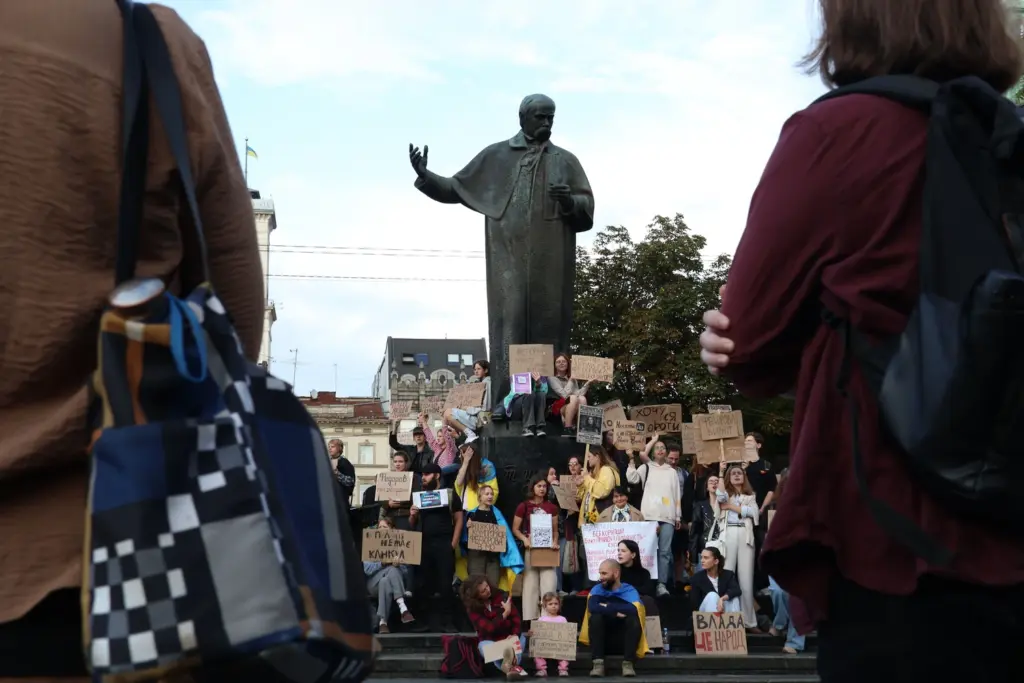
Protesters demand Mykhailo Fedorov is reinstated as defense minister in Lviv. Photo: Solomia Stanovych

Friday evening, 19:00, they met again. The crowd wasn't uniform: students, pensioners, whole families who'd come with small children, couples. A five-year-old girl in fluffy earmuffs held her own cardboard protest sign. A few soldiers among them. Several hundred people, loose across the steps beneath the Shevchenko monument, the poet's bronze hand open above them.

The mood was quiet, more communion than fury, people just standing together in the fading light. The signs were as diverse as the attendees. One sign, in green marker with a row of red hearts, read "Mykhailo Vasyliovych, we believe in you!!!" Another, block letters on brown card: "Fedorov is our Minister of Defense." A third, held high near the scaffolding: "Fedorov, minister of victory." The child's placard read simply: "My first placard."
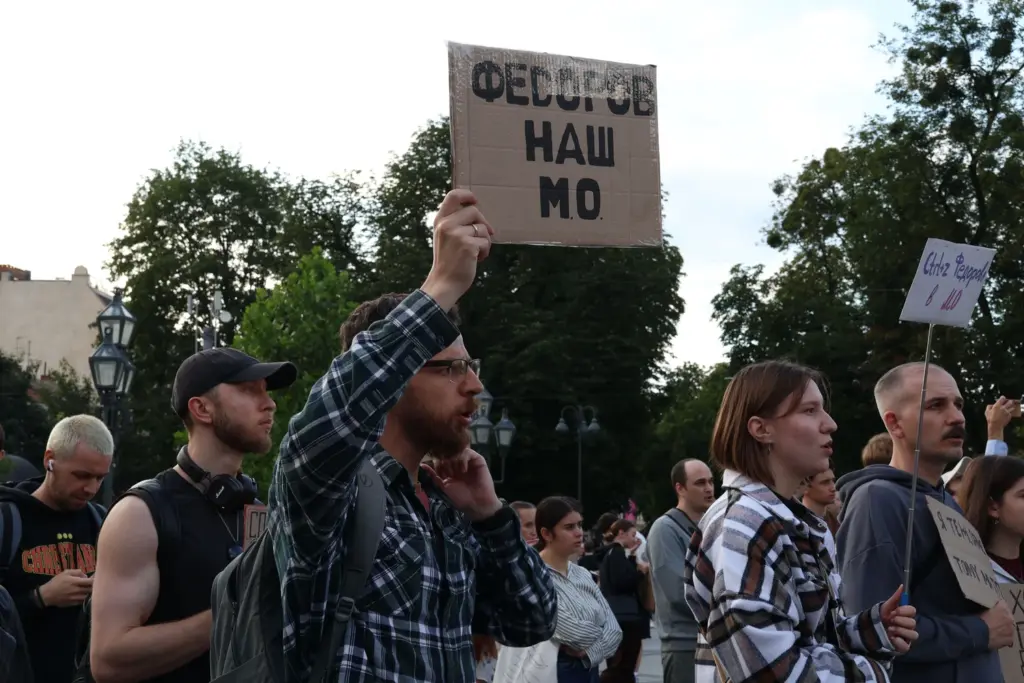
Protesters demand Mykhailo Fedorov is reinstated as defense minister in Lviv. Photo: Solomia Stanovych
"Fedorov is our defense minister!" Protesters demand Mykhailo Fedorov is reinstated as defense minister in Lviv. Photo: Solomia Stanovych

Protests like this have been ongoing in cities across Ukraine since 16 July, amid President Zelenskyy's Cabinet shakeup that had the popular defense minister fired. Participants want Mykhailo Fedorov reinstated and say they will stay until their demand is granted.

Fedorov is not a career soldier: he built Ukraine's Diia digital-state platform and, as digital-transformation minister, drove the drone-procurement push that turned cheap unmanned systems into the country's most-used weapon against Russia's invasion. To the people on the square he is the man who stands for winning the war with technology rather than with bodies—and his removal, after barely six months at the ministry, landed as that bet being called off.

A year ago the same kind of crowd defended institutions: the anti-corruption bureau and prosecutor's office, when the government moved to strip their independence. This time the placards carry one man's surname. The instrument is the same; what it is pointed at has narrowed from a rule to a person.
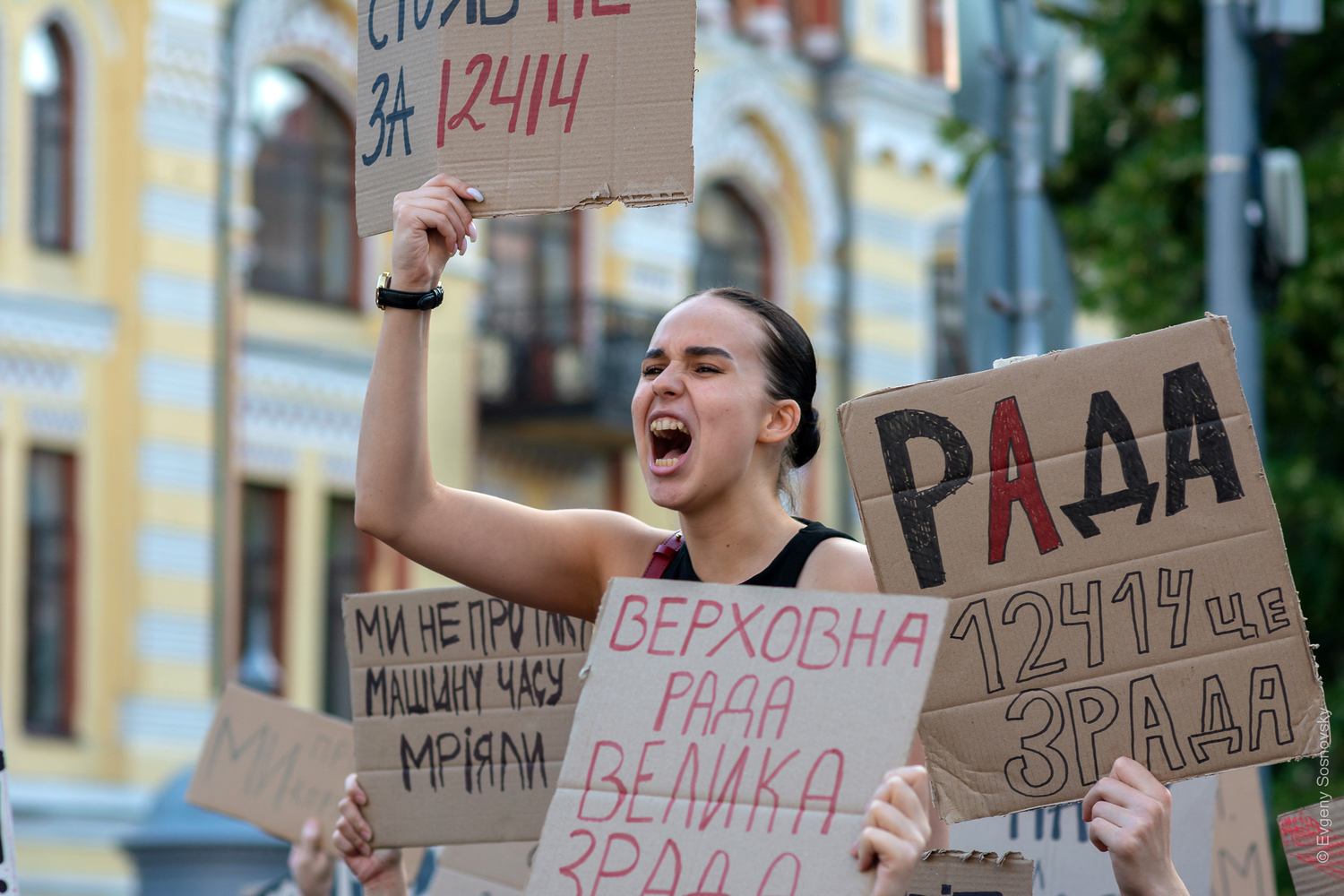
Ukraine protests against corruption NABU SAPO Zelenskyy Kyiv
That 2025 anti-corruption protest

They came. They cussed. They won.

What a passerby would not have guessed is that no one on the square could say who had called it. The rally assembles by loudspeaker and group chat—a woman with a megaphone naming the next time to gather, a Telegram channel filling in the rest.

Kyiv-based Zinaida Averina, who helped launch last year's anti-corruption protests, says this wave has no single leader or even a single group of organizers: each local initiative, she wrote, plugs in and syncs "small pieces" into one shared wave. In the middle of a full-scale war, in roughly twenty cities, Ukrainians are holding open-ended nightly rallies that no party organized and no leader directs.

The demand, and the reason behind it
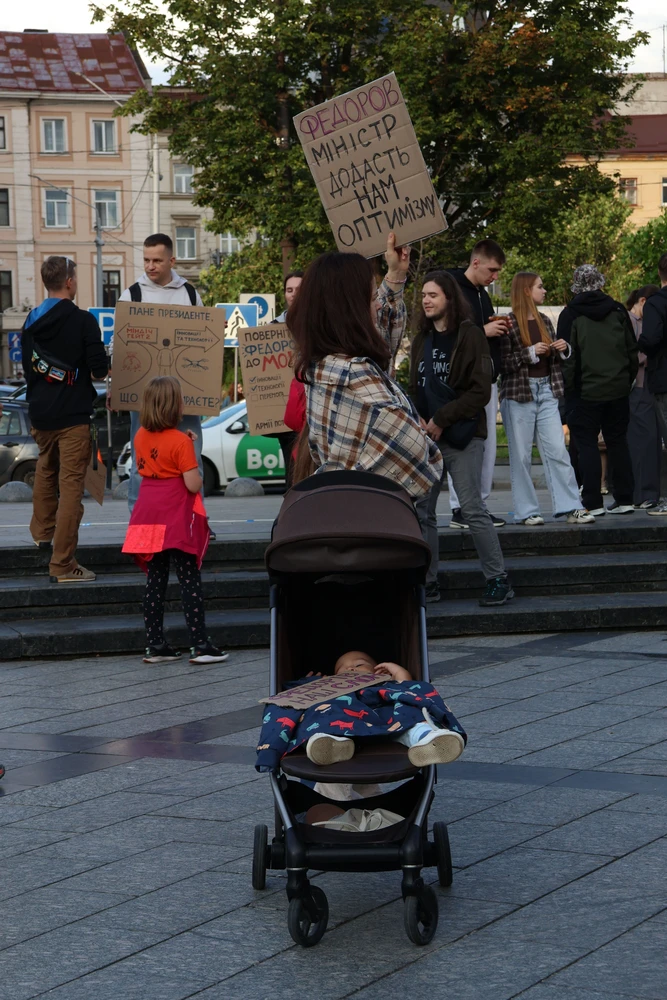
Protesters demand Mykhailo Fedorov is reinstated as defense minister in Lviv. Photo: Solomia Stanovych
"Fedorov the minister will give us optimism" says the sign of this protester amid a Lviv crowd demanding Mykhailo Fedorov is reinstated as defense minister. Photo: Solomia Stanovych

Protesters in Lviv began the open-ended rallies on 24 July. "The main demand is the appointment of Fedorov as minister of defense," said Dmytro, 24, who described the dismissal as a violation of a social contract. "This has become a systemic problem when the entire Cabinet of Ministers is dismissed without any explanation given to us."

The crowds made two demands: remove Oleksandr Syrskyi as commander-in-chief, and bring Fedorov back. The first was met within days—Syrskyi was dismissed and replaced by the more popular Mykhailo Drapatyi. The second was refused.

Iryna, 23, said she felt a violation of reciprocity between citizen and state. "Through documentation, taxes, and declarations, we are always accountable to the state, but the state is not as accountable to us as it should be," she said. She had chosen to stay in Ukraine when she could have left abroad as a refugee, she said, and wanted transparency in how personnel decisions are made.

What almost no Gen-Z on the square could say precisely was what, exactly, was being done wrong—only that something was. It is the same barometer that worked a year ago: most of the anti-corruption protesters could not have explained what the bureau adjudicates, but they knew corruption was being shielded, and they acted the only way they knew.
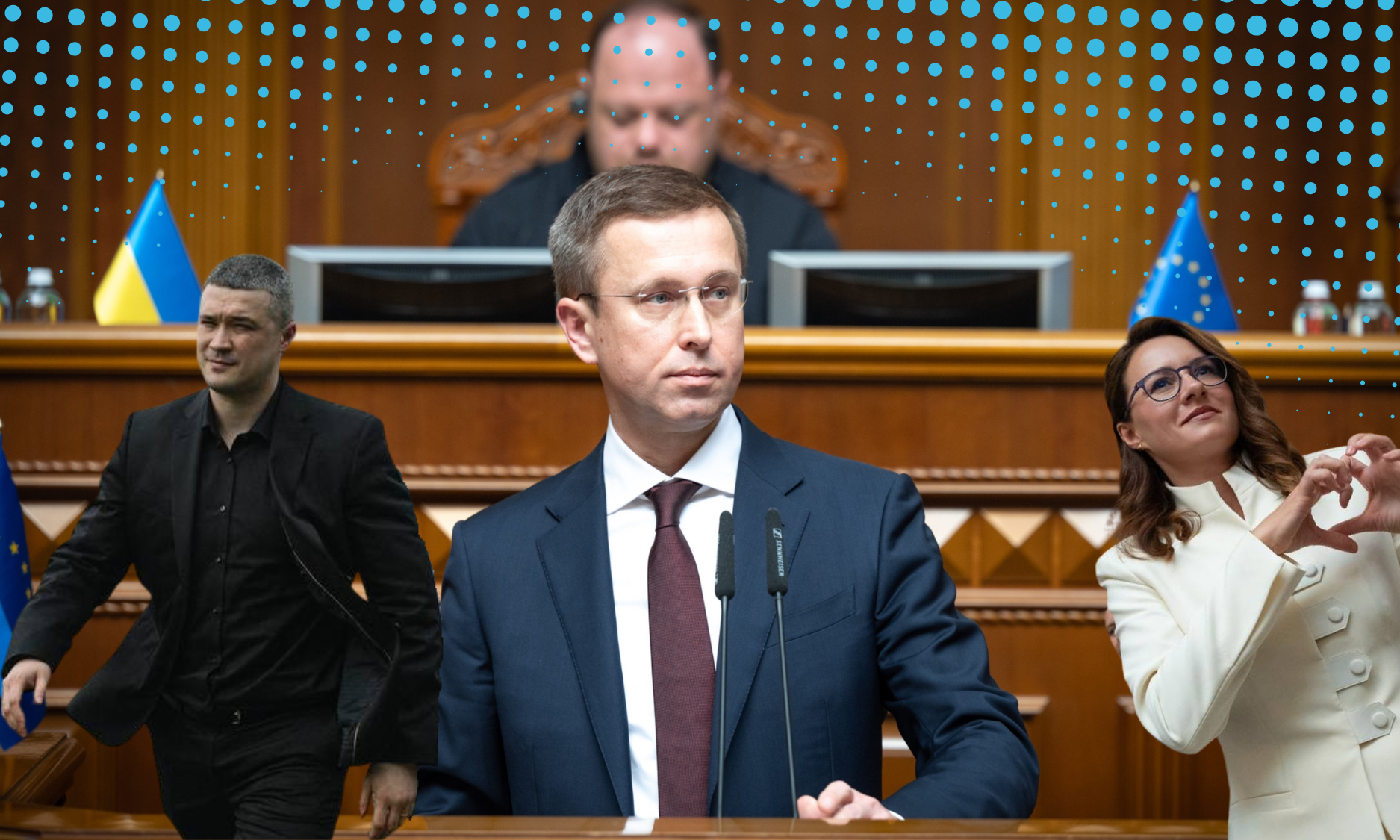
fedorov, koretskyi, svyrydenko collage
Explore further

“They removed the auditor, not the thieves”: why Ukrainians are protesting Zelenskyy’s reshuffle

Blogger-driven outrage and media bombshells
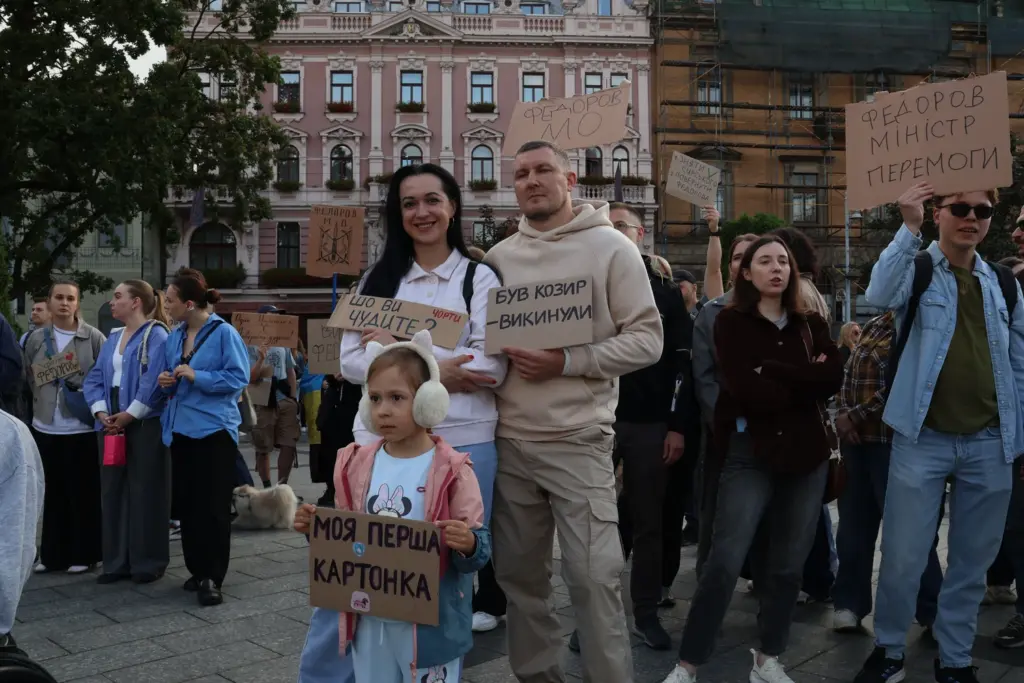
Protesters demand Mykhailo Fedorov is reinstated as defense minister in Lviv. Photo: Solomia Stanovych
"My first cardboard" says the sign of the girl. "Fedorov is the minister of victory" says another. Protesters demand Mykhailo Fedorov is reinstated as defense minister in Lviv. Photo: Solomia Stanovych

In many countries, the media struggle to get Gen Zs interested in politics. In Ukraine, bloggers fill that niche. Media activist and volunteer Serhii Sternenko has spent the protest days explaining the firing to a Gen-Z audience—one stream making the case against Syrskyi drew more than 842,000 views.

What they sense, and what Sternenko names for them, is an old-army culture—"sovok," in the protest's own shorthand—of loyalty over competence and lives spent cheaply, against the newer Ukraine Fedorov stood for. Fedorov, in this telling, was pushed out for trying to change it.

The sensing rests on something real. In late June the outlet Babel published a two-month investigation into the 425th "Skelia" assault regiment, reporting at least 25 non-combat deaths of recruits in training over roughly six months—a toll that has since risen past 30 as more families came forward—with accounts of beatings and torture and official causes recorded as illness. State investigators, police, the military prosecutor and the ombudsman have opened proceedings, and the regiment's commander has been suspended. Syrskyi has called it a shameful situation and blamed individual offenders. Sternenko calls it a systemic pattern—a characterization the investigations have not established.

Why the protests went open-ended

The escalation on 24 July followed the president's decision not to nominate Fedorov. "As long as necessary, we will keep coming out until the government hears us," said Yevheniia Kupriienko, 23.

Andrii, 23, rated the government's transparency at one out of ten and said protesters want parliament to act as an independent institution rather than a rubber stamp: "decisions cannot be made by one person in the country without any commentary or communication with the people."

The man at the center of it describes something more tangled than the chant. In an interview on 29 July, Fedorov said the main reason for his removal was not the clash with Syrskyi at all. Reshaping defense procurement and tenders, he said, "stepped on the interests of many people and companies," after which pressure on his team built through the spring. He called the government's collapse a possible "screen" for his dismissal, and said he never fought for the post and would have gone quietly had someone simply explained why.
mykhailo fedorov
Explore further

The Syrskyi feud was not it: why Ukraine really dropped its drone-war minister

Even the adulation makes him uneasy. His wife, Anastasia, called the frenzy around him a "sick cult of personality." The crowd chanted his name at a Kyiv music festival anyway, his face on the big screen. The man the movement is built around, and the person closest to him, are both declining the icon it has made of him.

A soldier, and a philosopher, dissent

Andrii said he had come to stand up for the voices of Ukraine's soldiers. One serviceman passing by did not recognize himself in that description. "I know neither Drapatyi nor Fedorov. I can talk about my company commander or battalion commander," he said. He questioned how civilians, and young women in particular, could judge how senior officials are appointed, and said of the leadership: "They have big brains, they know what they are doing."

His doubt is not only his. It is the worry named this week by the philosopher Volodymyr Yermolenko, president of PEN Ukraine: that the tech dream the protesters chant for is real but incomplete, and that there is no alternative to massive military mobilization. "Without technology we won't win the war, but with technology alone we won't win it either. We still need people," he said. A street that senses correctly that something is wrong, in his account, is a reliable alarm—not a mechanism for choosing who runs the war.

Yet other soldiers support the protests. Veteran Dmytro Koziatynskyi, one of the Kyiv protest initiators, sparked a march "for dialogue in reform" held on vul. Khreshchatyk on 31 July. He demands Zelenskyy give Fedorov a year to conduct reforms and then "make decisions based on results."

The predictable counter-narratives have arrived too: claims that the rallies are paid, which Fedorov himself has rejected. Ukraine's disinformation center has also flagged Russian attempts to exploit the moment abroad. None of it touches the crowds on Ukraine's own squares.

Is this Euromaidan?
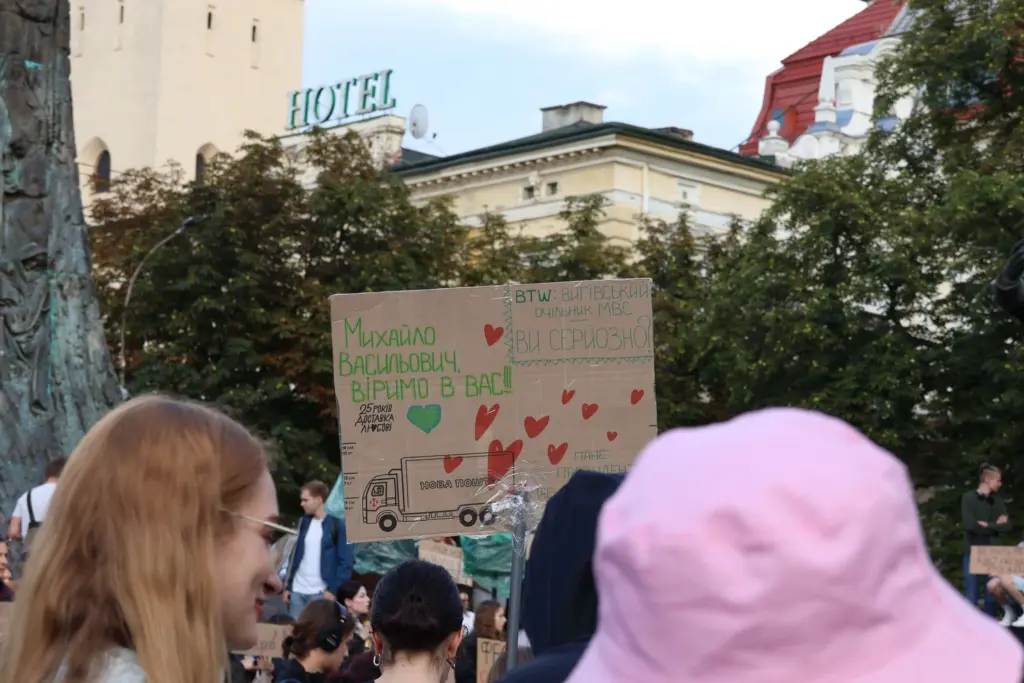
Protesters demand Mykhailo Fedorov is reinstated as defense minister in Lviv. Photo: Solomia Stanovych
"Mykhailo Vasyliovych, we believe in you!" Protesters demand Mykhailo Fedorov is reinstated as defense minister in Lviv. Photo: Solomia Stanovych

The comparison to the Euromaidan Revolution, in which the Russian-aligned president Yanukovych fled in the winter of 2014 after three months of protests against a rejected EU Association agreement, comes up constantly, and the protesters do not agree on it. One participant argued the mechanism is the same even if the scale is not: "No matter who the president is, if he doesn't listen, that was Yanukovych's mistake."

The serviceman rejected the comparison entirely. In 2013 the choice was between the European Union and Russia, and Russia's response to that choice produced the war Ukraine is now fighting. The present situation—a fired minister—is a different matter entirely, he said.

Halyna, 88, who watched the Euromaidan Revolution from Lviv while her son was in Kyiv, said the two are not comparable in intensity. "In 2013, the Euromaidan was such that I can't even describe it to you," she said. "Well, now the protests are not like that. People are just relaxing."

She supports them anyway. People are tired of lies and tired of a war Russia forced on them, she said, and the worst of it is that young people are dying with no end in sight. She wants to live long enough to see Ukraine at peace and left alone. Whether the rallies continue, she did not know. "I think the clock is ticking."

mykhailo fedorov
Explore further

Ukraine’s defense minister explained how the country buys weapons—after he was sacked

  •  

In Kherson, the children still train under the drones

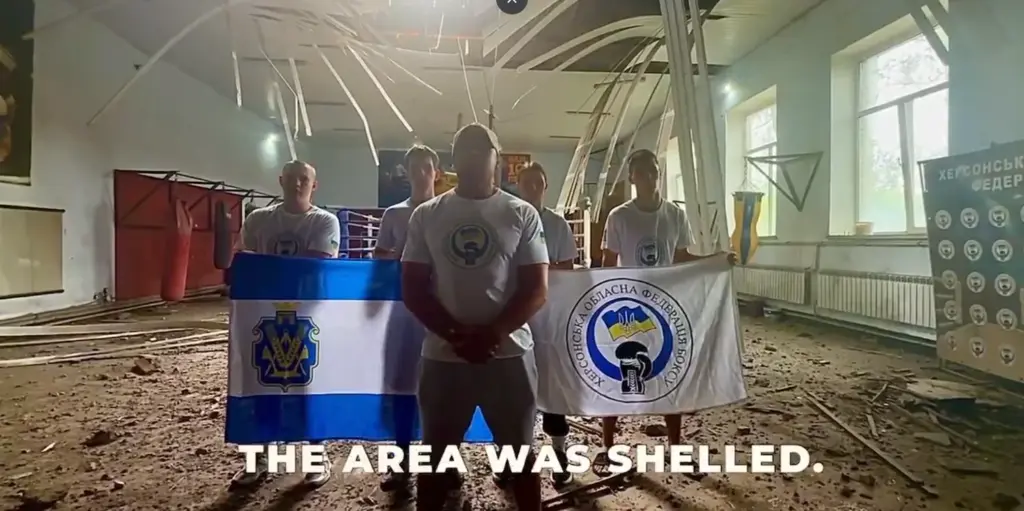
Ukrainian athletes appealed to World Boxing to keep Russia out in the last boxing gym in Kherson, destroyed by Russian shelling on 25 July 2026. World Boxing readmitted Russia on 31 July. Screenshot from video by Zarina Zabrisky/X

World Boxing has lifted the last restrictions on Russian athletes, clearing them to compete under their own flag and anthem as they chase qualification for the 2028 Los Angeles Olympics. Days earlier, in a frontline Kherson gym that Russian artillery had wrecked, the teenage boxers who trained there had recorded their own message to the Olympic movement: keep Russia out.

World Boxing approved the change on 30 July, the latest sports federation to roll back its wartime restrictions as the Olympic movement eases Russia back toward the Games, even as its attacks keep destroying Ukraine's sports infrastructure and the lives of athletes in frontline oblasts such as Kherson.

Eleven-year-old boxer Timur trains in the yard of his home in Kherson
Tymur training in his yard. Photo from the family archive.

The 11-year-old martial-arts champion who trains between drone strikes

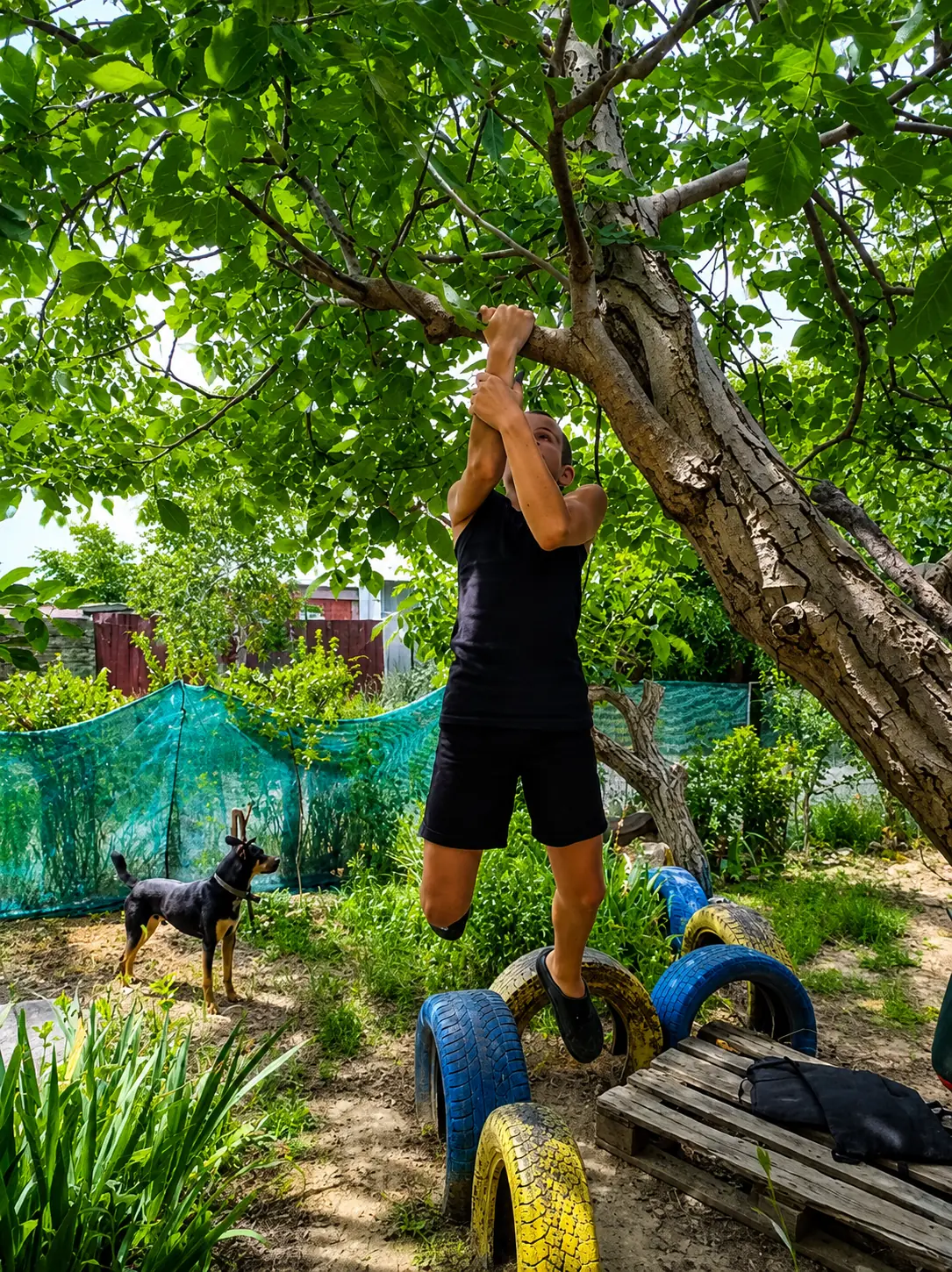
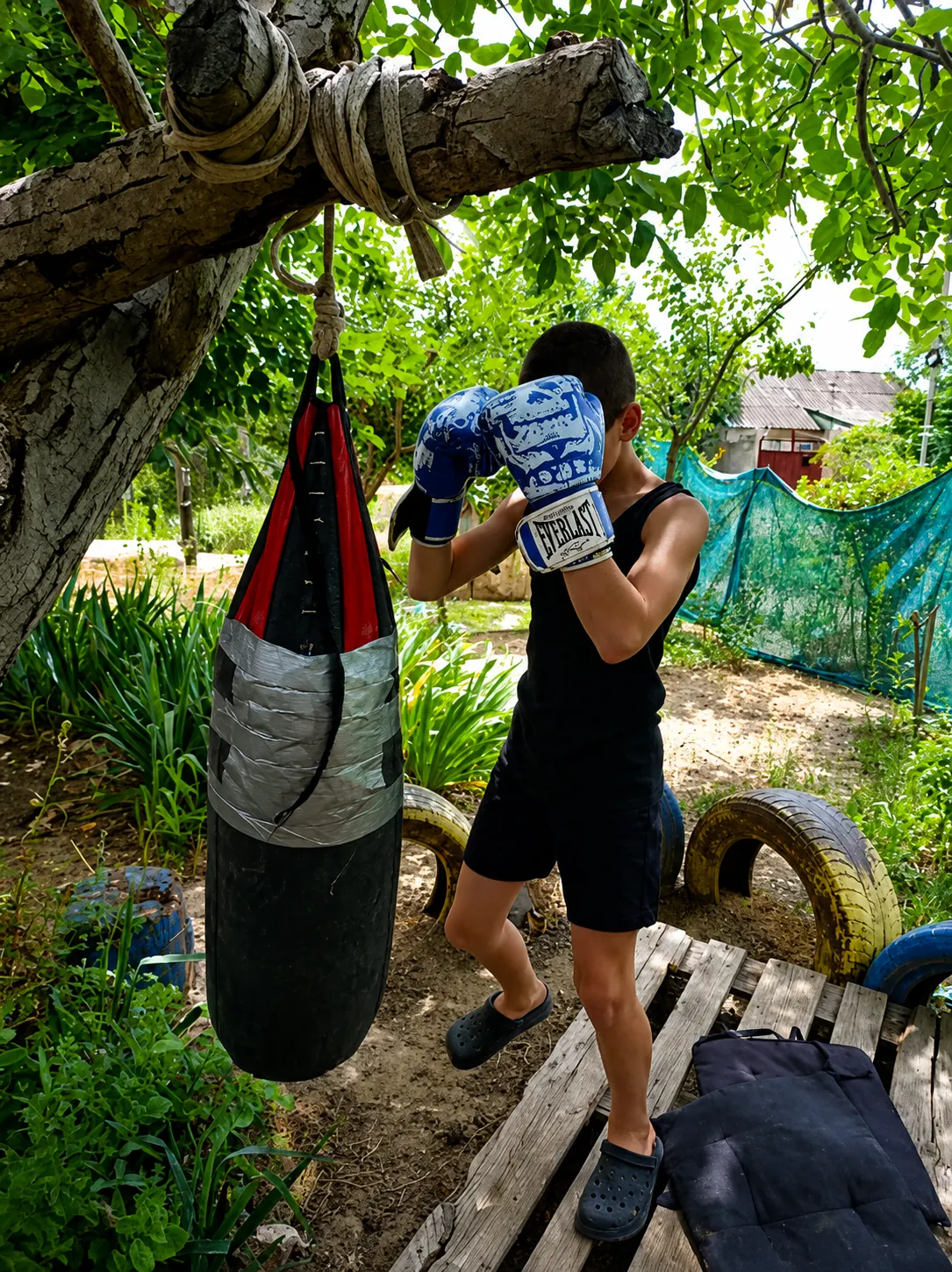
Tymur, 11, steps out into his yard and listens to the sky. No buzzing. This means no “human safari” drones nearby. Timur has just given himself his morning insulin shot, had his breakfast, and he now heads for his punching bag, hanging from the old walnut tree. He warms up with pull-ups, the branch being his pull-up bar, as his dog runs around, and then works the punching bag, pierced by Russian shrapnel.

Training in the yard is not enough, so Tymur rides his bicycle under Russian FPV drone attacks to his practice session. Along the way, he stops to hide under a tree. In summer, Kherson poplars and sycamore trees offer many good hiding places, and the anti-drone nets cover many streets, but the Russian drones are flying low now.

When they spot a car, a pedestrian, or a child on a bicycle, they dive even lower. The pilots on the other side of the river see their targets but carry on with their hunt. Lately, some drones fly without making any noise.

Hearing loud buzzing, Timur jumps off the bike and throws himself in the grass. Lawns are often littered with mines, but there is no choice. After a few stops, he arrives at the practice, held in a basement. For a while, Timur can focus on the training—until he starts on his way back home.

Tymur, the Kherson city champion in hand-to-hand combat and the Mykolaiv Oblast champion in MMA, takes his training seriously, even after he was diagnosed with insulin-dependent Type 1 diabetes right after the occupation. He dreams of becoming the champion of Ukraine, Europe, and the world.

His role model is Muhammad "D.K." Ali, a British professional boxer who, like Tymur, lives with insulin-dependent Type 1 diabetes. He is also inspired by Yulian Pozdniakov, a Ukrainian professional kickboxer, a European professional kickboxing champion, a Ukrainian IFMA Muay Thai and WAKO K-1 champion, and Timur has recently started training in kickboxing and Muay Thai.

Young boxer Timur with the punching bag he trains on at home in Kherson
Tymur and his punching bag. Photo from the family archive.

Chess retreats to a basement after Russia jails the grandfather who taught it

Like Tymur, Sasha started boxing before the occupation. Eight at the time, he also practiced chess with his grandfather, an avid player, who was kidnapped by the Russian military during the occupation and sentenced to 20 years of strict regime on fabricated charges. Sasha stopped boxing, but he still plays chess.

His grandmother Tania, who also plays chess, said in an interview that Kherson is “a sports city.” Tania trains at home, doing yoga and general fitness routines.

“Everything here—our rivers and fields—is made for an active lifestyle,” said Tania. “And so our people are fit, morally and physically. The enemy is trying to destroy our places of strength, but our children stand firm and train. They do not give up in spirit.”

Her daughter, Sasha’s aunt, also practices with him over the phone as she had to move to Mykolaiv due to intense attacks on her district of Kherson. She used to go to the Children’s and Youth Sports School, also known as Chess Club. Sasha practices online with a coach during the week, but on the weekend he follows the family tradition and joins about 20 other young Kherson chess players for in-person training at the same school. Tania often walks her grandson to the basement practices, and fondly remembers the chess club and its beautiful home.

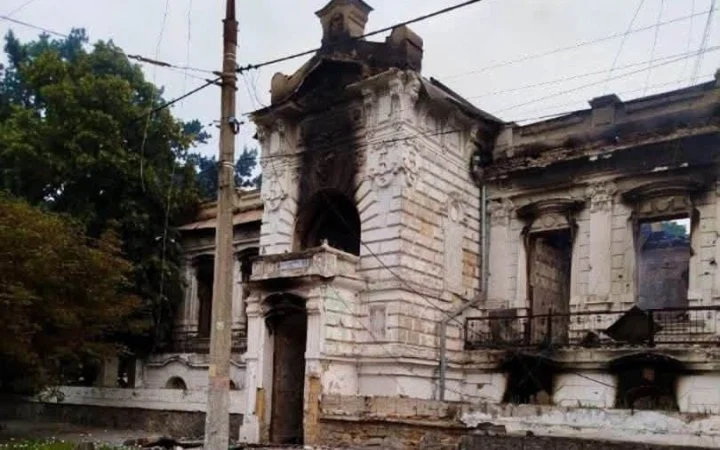
Since the 1980s, the Children's and Youth Sports School, funded by the city, held training and national and international tournaments at a historic building, a snow-white villa with arched windows and ornate wrought-iron balconies downtown Kherson. Vitaliy Bohdanov, the president of the Kherson Oblast Chess Federation for over 20 years, told Euromaidan Press that generations of young Khersonians studied chess and checkers in a former residence of the Italian embassy.

In 2023, the school had to move classes and tournaments to a safe underground facility due to constant shelling, and the building stood vacant. On 24 July 2026, the Russian military destroyed the architectural monument. The building burned out, taking a 5,000-book library of books on chess with it, and its roof collapsed after artillery and drone attacks, during which drones dropped incendiary napalm-like mixture.

The former chess and checkers school in central Kherson, housed in a historic building that once served as the Italian consulate, was destroyed by a Russian attack in July 2026. Photo: Embassy of Italy in Ukraine/Facebook

Russia levels the last boxing gym as its teenagers film a plea to the IOC

🔴 Kherson: a Russian shell destroyed the last boxing gym in Kherson, where children and teens trained.

Standing in the ruins, the coach urged the @iocmedia @Olympics IOC to ban Russian athletes. Young boxers spoke of shock, grief, and traveling to practice under drones. pic.twitter.com/iKnsnRGCVP

— Zarina Zabrisky 🇺🇸🇺🇦 (@ZarinaZabrisky) July 25, 2026

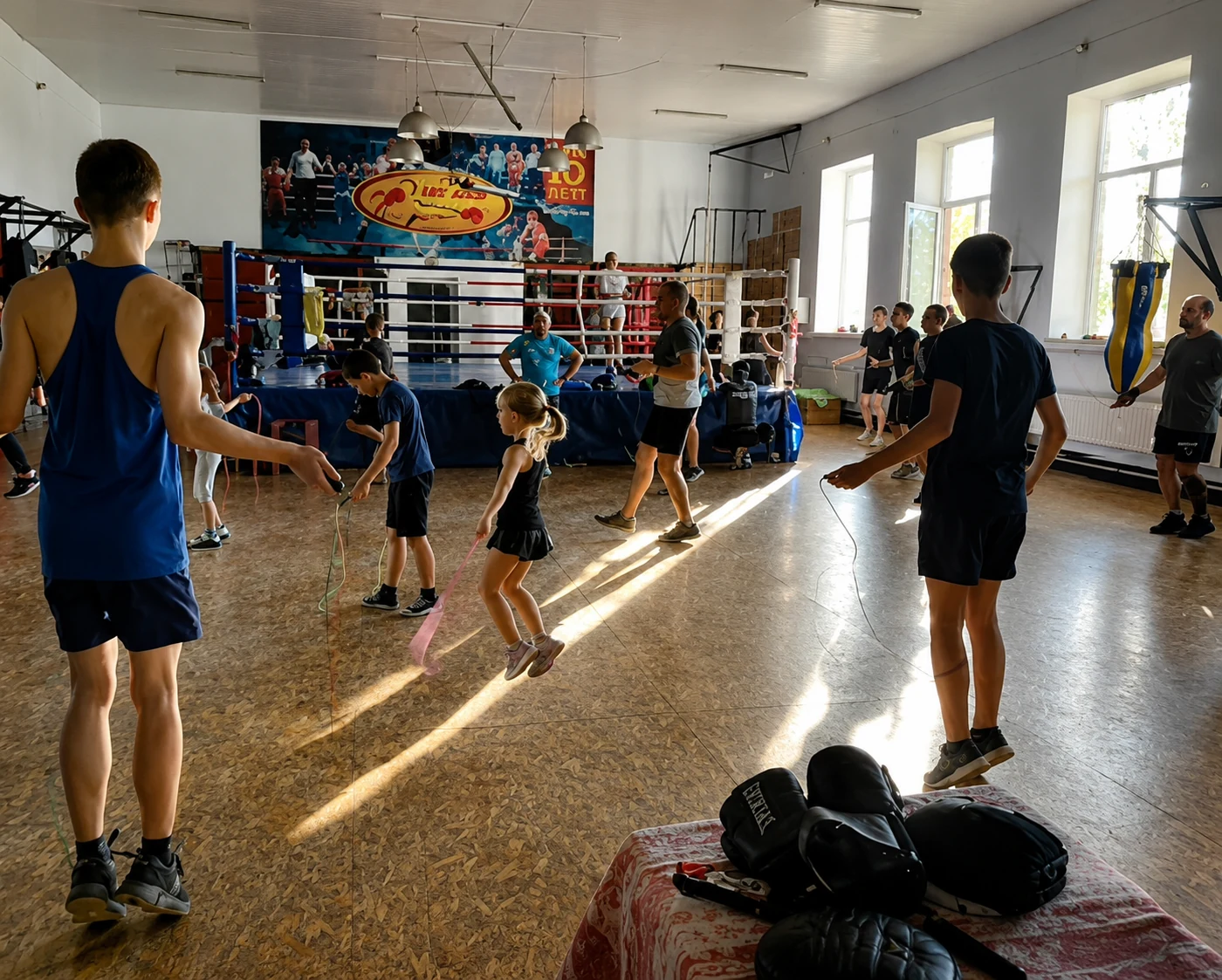
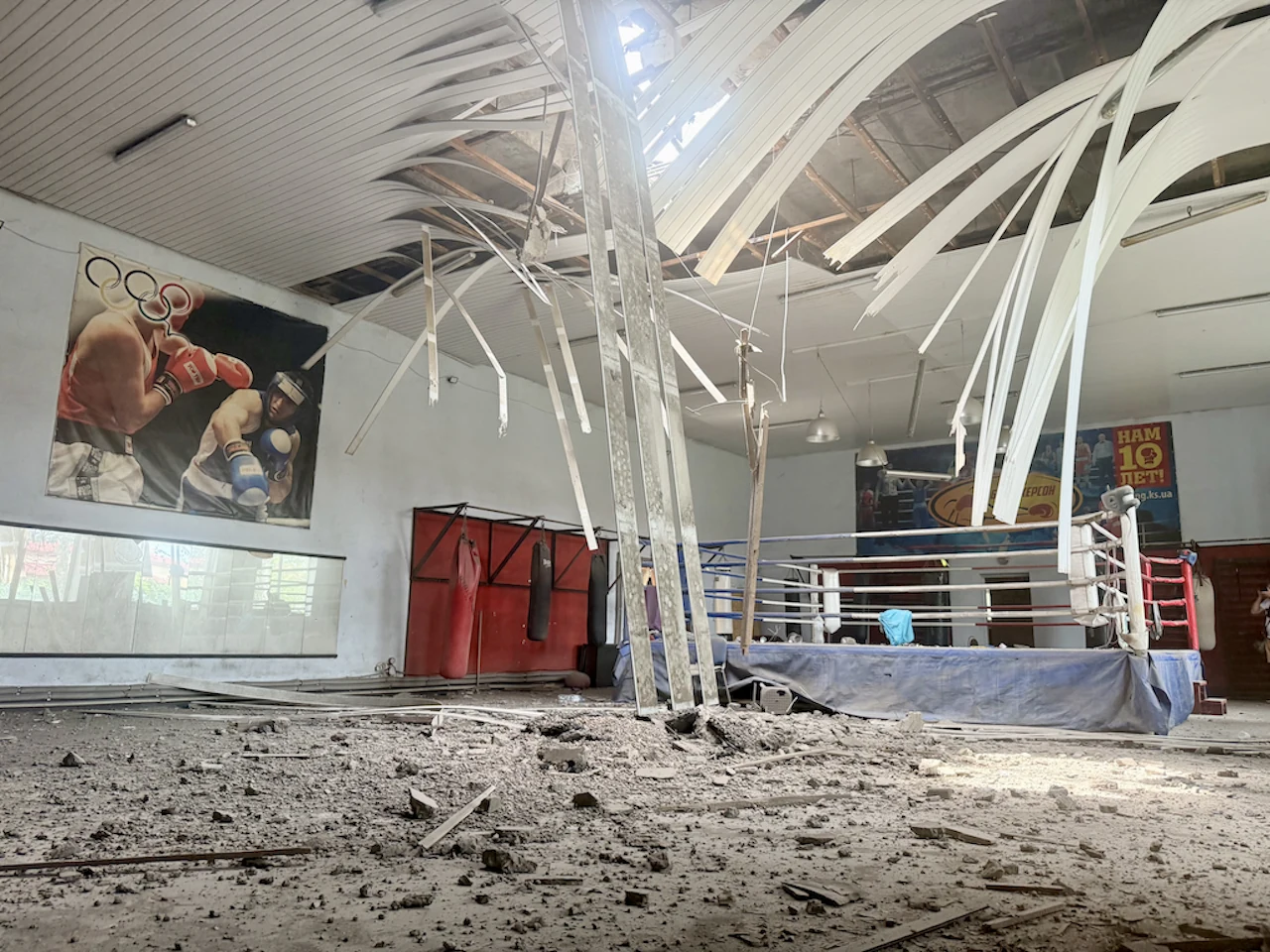
The morning after the chess club was destroyed, Russian artillery hit Kherson's only surviving boxing gym. After the city's liberation, the gym hosted regular training sessions and competitions.

Kherson's boxing gym intact in August 2024, before Russian shelling
Kherson boxing gym in August 2024. Photo by Zarina Zabrisky.

The youth team just returned from a tournament and, instead of practicing, helped to clean the premises. Four young athletes recorded an address to the International Olympic Committee, pleading to ban Russian athletes from international competitions. Tymofiy, 15, said that he trained in this boxing ring for seven years and could not find the words.

Standing amid bricks and fallen ceiling beams, Dmytro Obolentsev, Director of the Kherson Regional Children and Youth Sports School for Boxing and Other Sports and coach of the youth team, said that training will continue.

The wrecked interior of Kherson's boxing gym after Russian artillery shelling on 25 July 2026
Kherson boxing gym after Russian artillery shelling, 25 July 2026. Photo by Zarina Zabrisky.

“These walls witnessed it all: the nerve-breaking moments before stepping onto the floor, the smiles after victory, the tears of defeat, the embraces of coaches, the applause of families, and the unforgettable moment when a young athlete stepped onto the podium to receive a well-earned medal and trophy,” wrote Zakhar Zhizhko, a Kherson resident. “Years will pass, but the memory of those competitions will remain. We want to believe that this gym will once again be filled with children's laughter, genuine emotion, and the joy of victory.”

The Olympic medalist who can no longer reach his river, and trains anyway

🚣🏅 Serhii Kirsanov, Ukrainian sprint canoeist (Olympic silver medal in the K-4 1000 m event at the 1988 Summer Olympics, multiple World Championships winner) and his wife Luiza survived a Russian Shahid drone attack in Kherson.
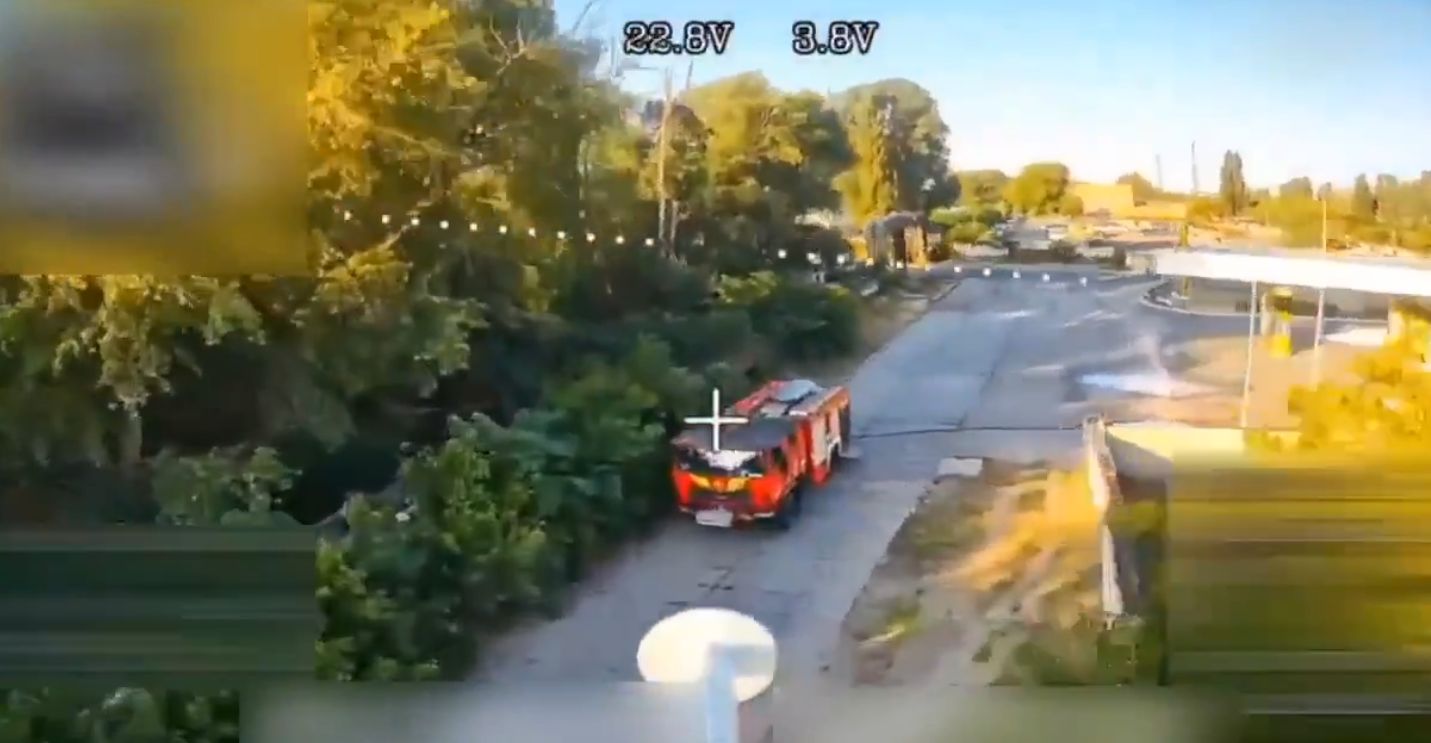
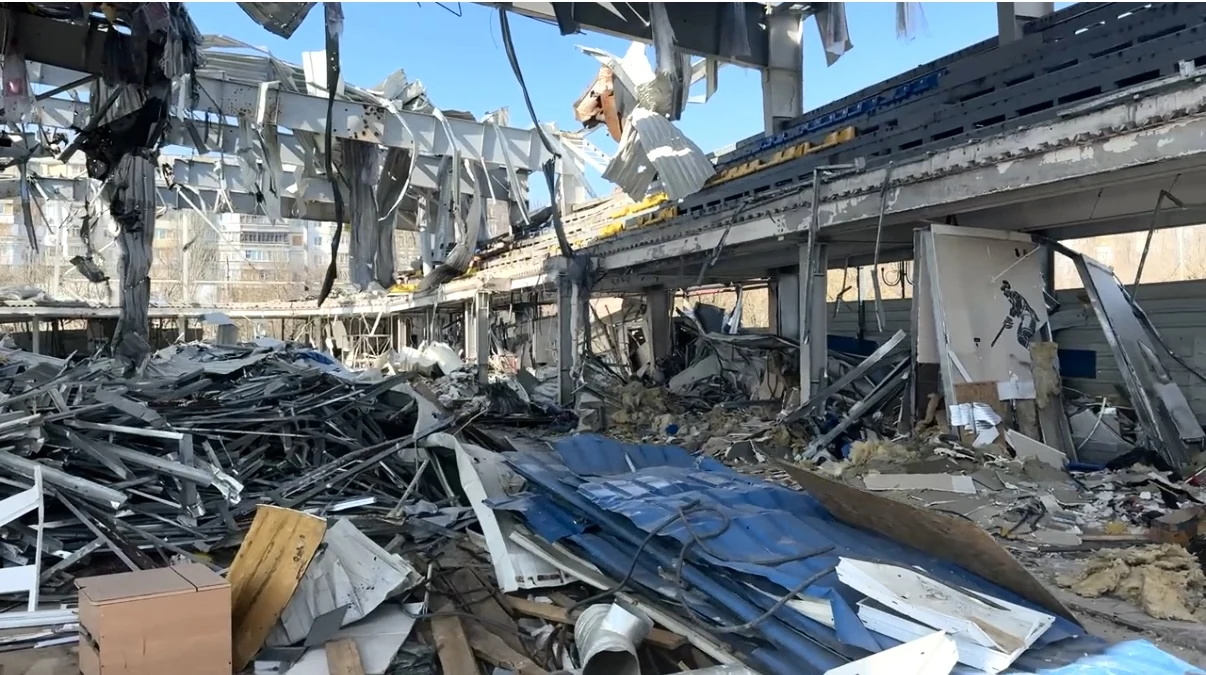
A residential block next to them was destroyed. pic.twitter.com/D2XhazIkOu

— Zarina Zabrisky 🇺🇸🇺🇦 (@ZarinaZabrisky) July 31, 2026

Serhiy Kyrsanov, a fit man in his sixties, cleaned the destruction site on 29 July, after several Shahid drones devastated his neighborhood in the residential area of Kherson. Serhiy and his wife Luiza mopped broken glass and considered themselves lucky: their neighbors’ homes were destroyed and burned. Their spacious house featured Olympic posters and impressive memorabilia: Serhiy, a prominent Ukrainian rower, is an Olympic silver medalist and three-time world champion.

As Luiza wiped dust off the medal display in the living room, she said that both she and her husband are still involved in youth training in the city.

“I can’t row as we can’t reach the river,” said Serhiy. “But we do all sorts of other training, and we are not going to stop.”

Russia drone safari Kherson double tap
Explore further

UN traces Kherson’s “human safari” up the chain of command — to Putin himself

The chess world condemns as the boxers' video circles the globe

The Italian Embassy in Ukraine condemned the attack on the chess school building, which was built for the Italian Ambassador in 1905 and hosted the Italian Embassy from 1906 to 1918. Lithuanian grandmaster and politician Viktorija Čmilytė-Nielsen expressed her indignation. Peter Heine Nielsen, a Danish chess grandmaster and five-time Danish champion, also condemned the attack. Garry Kasparov, former World Chess Champion and one of the greatest chess players in history, wrote that he was looking forward to helping to rebuild the chess club.

The boxing team’s video address to the International Olympic Committee went viral and was shared globally. Vladyslav Heraskevych, the first Ukrainian ever to compete in skeleton at the Winter Olympics, and an advocate for excluding Russian and Belarusian athletes from international sport, shared the address, adding that “Russian sports is an accomplice to Russia’s crimes.” The Boxing Federation of Ukraine issued a statement about the attack and looked into fundraising options.

"A sports city": 221 venues destroyed, its athletes still on the podium

Kherson's only indoor ice rink, destroyed by Russian shelling
Kherson ice rink destroyed by the Russian military. Photo by Zarina Zabrisky.

Tymur, Sasha and the young boxers are not an exception. The girls’ soccer team used to train outdoors until a Russian shell destroyed the soccer field. Russian shelling heavily damaged Kherson's only indoor ice rink, once home to youth hockey and figure skating. The war has devastated Kherson Oblast's sporting infrastructure as 221 sports facilities have been damaged or destroyed, forcing many clubs and sports schools to relocate, operate in basements, or train in mixed and remote formats.

Yet, sports go a long way in the city nicknamed “invincible.” Mothers and grandmothers frequent various training sessions, from fly yoga to belly dance and karate. Fathers and grandfathers run under drones and used to play basketball and soccer in the red zone until the point when being outside became impossible due to the massive FPV drone attacks. Swimming pools and gyms operate in half-ruined buildings and, in winter, in freezing temperatures.

Despite daily Russian attacks, Kherson's sports community continues to compete. According to the official regional statistics, provided by the Department of Physical Culture, Youth and Sports of the Kherson Regional State Administration, in 2025 more than 50 athletes from Kherson Oblast were winners or medalists at international and Ukrainian competitions across more than 20 sports, including rowing, wrestling, boxing, kickboxing, athletics, archery, volleyball, swimming, karate, sambo, draughts, sumo and canoeing.

The list included Olympic, Paralympic and Deaflympic athletes, as well as world, European and national champions and medalists. Kherson athletes competed at the Paris 2024 Olympic and Paralympic Games, the Deaflympics, and World and European Championships, while more than a dozen regional coaches were recognized for training international-level competitors.

During the first six months of 2026, 396 athletes from Kherson Oblast took part in Ukrainian and international competitions, winning 74 medals in Olympic sports, 93 in non-Olympic disciplines, and 10 in Paralympic and Deaflympic events.

Nearly 200 displaced children from Kherson Oblast participated in regional sports competitions, while another 198 children from frontline communities attended a two-week sports and rehabilitation camp in the Carpathians.

The boxers whose gym Russia destroyed had asked the Olympic movement to keep Russia out. On 30 July, World Boxing gave its answer: Russian athletes will compete under their own flag, like everyone else. Their ring is still rubble. Training, their coach said, continues—in the basement, under the nets.

  •  
❌