Vue normale

Ukraine has shown its answer to Russia’s most powerful drones for first time. Meet Alexa Spatium, which can carry thermobaric warheads and fly back home

21 août 2026 à 17:34

The Ukrainian arsenal gained its first jet-powered interceptor drone, the Alexa Spatium. Source: Ukraine's Defense Ministry

Ukraine has built a revolutionary drone to catch Russia's most modern drones. The Ukrainian arsenal gained its first jet-powered interceptor drone, the Alexa Spatium, developed to destroy small aerial, ground, and surface targets in combat, Ukraine's Defense Ministry announced.

The interceptor is Ukraine's answer to a threat that has outrun its defenses and killed civilians. Russia added jet engines to its Geran drones to make them fly faster than Ukraine's interceptors could intercept. Such jet-powered drones, Geran-4, struck a Kryvyi Rih shopping center on 21 August, killing at least 15 people and injuring 130.

The Alexa Spatium is built to catch exactly those jet-powered drones, closing an arms-race loop in which Russia's speed had left Ukraine's slower interceptors behind.

It is built to kill the jet Gerans

The interceptor targets Russia's fastest drones first. It is primarily oriented toward destroying Russian kamikaze drones, including the Geran-3, Geran-4, and Geran-5, as well as the Shahed-131, and can also strike reconnaissance drones, helicopters, and other targets, according to the Defense Ministry.

A powerful turbojet gives the Alexa Spatium the speed to chase down jet-powered targets, with a high flight ceiling, a significant combat radius, and a range spanning low to medium altitudes.

It is fast, reusable, and pickup-portable

The drone is built for flexible, repeated use. It measures about 1.5 by 1.7 meters, launches from a mobile catapult in minutes, and is made of a light, strong composite that lets it make sharp maneuvers without losing control. A drone that does not complete its mission can return to the launch site and be reused.

It carries a choice of warheads and seekers. The Alexa Spatium can be fitted with fragmentation, shaped-charge, or thermobaric warheads, guided by preset coordinates or direct control, and uses television and infrared search-and-aiming systems.

Since the beginning of 2026, Ukraine’s Defense Ministry has codified and approved 413 unmanned aerial systems for use by the country’s Defense Forces. Almost all of them are Ukrainian-made.

Ukraine’s top military marketplace has processed $235 million in orders. Now it goes further, letting units spec a custom drone across 17 characteristics

20 août 2026 à 11:03

A Ukrainian soldier with a drone. Source: SBS

Ukrainian units can now tell drone makers exactly what they need and have it built. A new tool on the state defense-technology marketplace Brave1 Market lets military units order custom drones with defined specifications for specific battlefield needs, not only serial models, Ukraine's Defense Ministry announced.

Russia's war has pushed Kyiv to rebuild military procurement from the ground up, trading slow bureaucratic pipelines for digital platforms where frontline units pick and receive their own weapons faster. Brave1 has already processed over $235 million in orders.

The new tool turns Ukraine's drone procurement from a catalog-based system into a made-to-order one. Where units once chose from ready-made drones, they can now specify what they need across more than 17 characteristics and have makers compete to build it.

How the custom orders work

A unit defines the drone it wants. It submits a request specifying the required characteristics, quantity, and desired delivery timelines, selecting from parameters such as communication type, camera specifications, payload weight, and flight duration.

The manufacturer does not receive information about which unit made the request, and the system automatically sends the request to potential suppliers, who can submit offers or decline to participate. Keeping the requesting unit anonymous prevents makers from favoring or identifying particular units and keeps the competition on the drone itself.

Makers compete on price

When offers match, the system runs an auction. If several manufacturers propose solutions with identical characteristics, the system launches an automatic bidding process, and the lowest-priced offer wins. A military unit can then conclude a direct agreement with the maker, according to the Defense Ministry.

The mechanism drives cost down while meeting the spec. By pitting makers against each other on price once they meet the required characteristics, the system gets units the drone they specified at the lowest available cost, then lets them contract the winner directly, cutting out intermediaries.

  • ✇Euromaidan Press
  • From 27,711 to 40,438 in two months: Ukraine’s drone kill rate is climbing fast
    Ukraine is shooting down drones at a fast-rising rate. Ukraine's Defense Forces destroyed 40,438 Russian fixed-wing drones, or "wings", in July 2026, Ukraine's Defense Ministry reported on 11 August. The July figures mark a defense scaling up as fast as the threat it counters. Since the start of the year, Ukraine's Defense Forces have destroyed 195,000 Russian "wings" and 66,000 copters. A counter-drone effort is growing month by month against a Russian drone campaign t
     

From 27,711 to 40,438 in two months: Ukraine’s drone kill rate is climbing fast

11 août 2026 à 11:04

A Ukrainian drone is approaching a Russian target. Source: The Ukrainian Defense Ministry

Ukraine is shooting down drones at a fast-rising rate. Ukraine's Defense Forces destroyed 40,438 Russian fixed-wing drones, or "wings", in July 2026, Ukraine's Defense Ministry reported on 11 August.

The July figures mark a defense scaling up as fast as the threat it counters. Since the start of the year, Ukraine's Defense Forces have destroyed 195,000 Russian "wings" and 66,000 copters. A counter-drone effort is growing month by month against a Russian drone campaign that has itself expanded relentlessly.

The numbers climbed across drone types

Both categories of drone kills rose sharply. Fixed-wing "wings," the category that includes long-range attack drones like Shaheds, climbed from 27,711 in May to 40,438 in July, according to the ministry.

Copter kills rose even faster in proportion. The number of destroyed copters grew 42% in a single month, from 14,071 in June to 19,945 in July. The parallel rise in both types reflects a Russian drone offensive attacking on multiple fronts at once, from deep-strike Shaheds to short-range quadcopters over the trenches, and a Ukrainian defense expanding to meet each.

DELTA confirms every kill

Every strike has been confirmed by the DELTA system, and video recording of the shootdowns helps identify the most effective counter-drone tools for development and scaling, the Ukrainian Defense Ministry said.

That verification matters for a claimed tally. Rather than a bare count, the numbers are tied to Ukraine's battle-management system, which logs and video-confirms each kill, the same DELTA platform whose combat data now trains Ukraine's target-detection AI.

The count is one side of the drone war

The figures capture only Ukraine's defensive half of a war fought increasingly by drones. Russia has expanded its drone production and nightly launches throughout 2026, aiming to overwhelm Ukrainian defenses with mass, and the rising Ukrainian kill counts are the answer to that escalation, not a sign it has eased.

Ukraine’s new AI platform trains weapons on five million frames of drone footage. Partner countries can use it too

10 août 2026 à 17:16

another russian shadow fleet tanker wrecked sea baby drones black · post drone video moment explosion strikes dashan untitlesd-1 ukraine news ukrainian reports

Ukraine is turning millions of hours of battlefield footage into fuel for its defense industry's AI. Ukraine's Defense Ministry has announced that it has opened Avengers Labs, a platform for training artificial intelligence models, to Ukrainian defense companies.

The platform is a new piece of the defense-tech ecosystem Ukraine has built around its war. Alongside the Brave1 cluster that funds and codifies weapons and the Test in Ukraine framework that trials them in combat, Avengers Labs supplies the raw material for AI, a vast, curated dataset of Russian military targets that a single private company could never assemble on its own.

The data comes from the battlefield

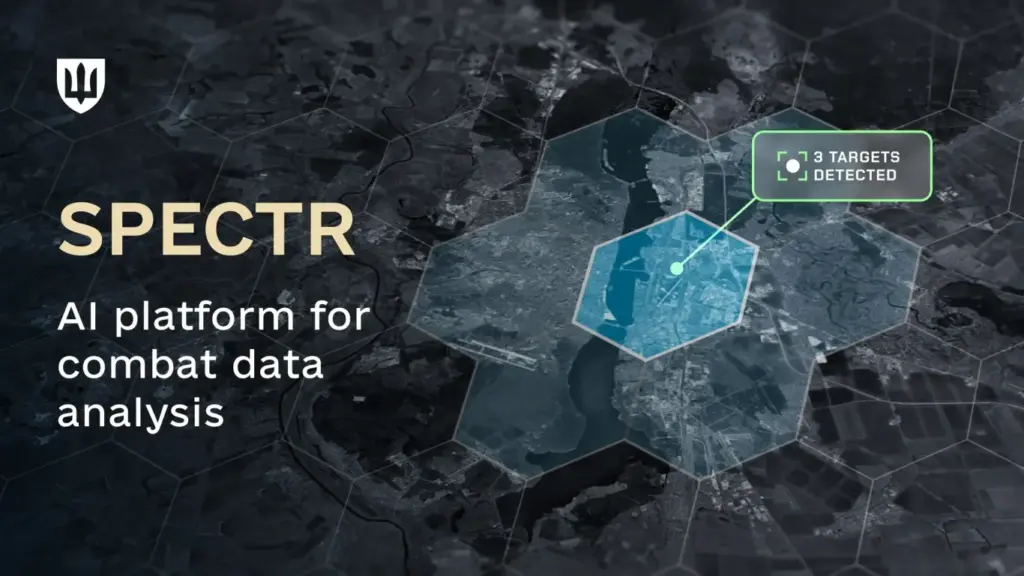
Avengers Labs was developed by the Center for Innovation and Development of Defense Technologies, the team behind the DELTA battle-management system, and most of its data comes from DELTA and is constantly expanded.

The dataset captures the enemy in detail. It contains images of tanks, artillery, air-defense systems, infantry, and aerial targets, including Shahed drones and reconnaissance UAVs, a labeled library of what Russian forces look like from a drone's camera. According to the ministry, the system can significantly speed up the development of AI solutions for unmanned systems.

The AI already works in combat

A system trained on Avengers data is already in the field, analyzing over 100,000 drone video streams a month and detecting about 70% of enemy targets in real time, day and night.

The models enable more autonomous drones. Trained on Avengers data, they support automatic trajectory correction after an operator marks a target, and independent target detection by a drone in a defined area according to set mission logic, steps toward drones that find and strike targets with less human input, according to the ministry.

Partner-country firms can join too

Access extends beyond Ukraine, under vetting. The first Ukrainian defense companies have signed licensing agreements to use Avengers Labs, and companies from Ukraine's partner countries can also join, per the ministry.

The screening guards against leakage to the enemy. To gain access, companies must pass checks confirming no ties to the aggressor state, no business in Russia, no sanctions, and no activity in occupied territories.

❌