Vue lecture

Poland kept selling itself as Kyiv’s gateway to Europe—Ukraine stopped needing one, Polish journalist argues
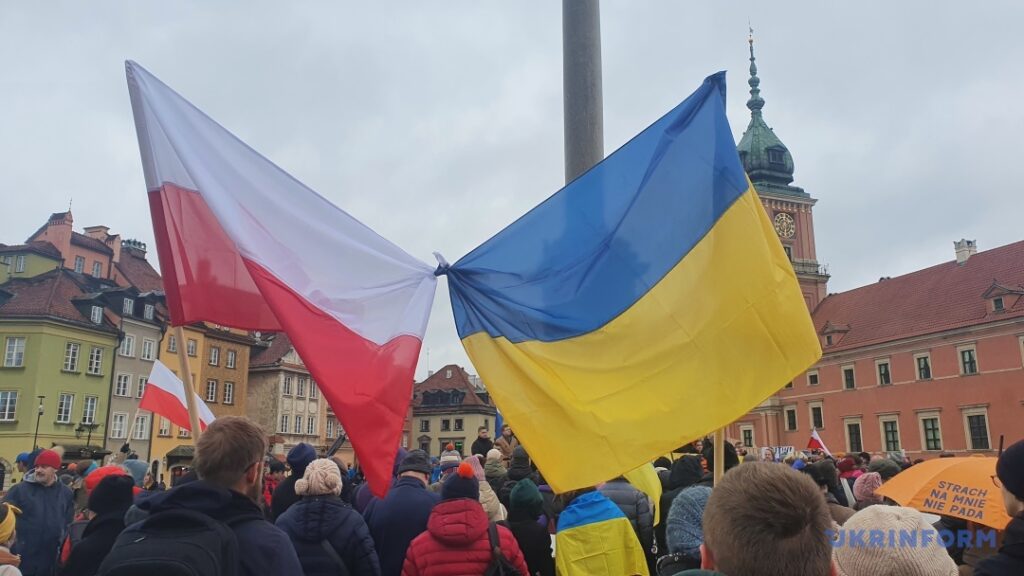
poland has squandered its role ukraine's western advocate polish journalist argues · post ukrainian flags knotted together rally support ukraine castle square warsaw 20 2022 news reports

Poland's governing coalition under Prime Minister Donald Tusk misread how far Kyiv's ambitions had grown and kept presenting Warsaw as Kyiv's indispensable guide to Europe, Polish journalist Mateusz Mazzini argued in The Guardian on 26 August 2026. It also never readied Polish society to treat refugees as its equals, and it encouraged the belief that Warsaw could decide whether Ukraine gets into the EU, he wrote.

The two countries built their partnership during Russia's full-scale invasion, with Poland becoming Ukraine's main supply route for Western weapons, a leading provider of military and humanitarian aid, and a leading advocate for Kyiv's bid to join the European Union. That relationship has since frayed over refugee policy, historical disputes, and attitudes toward Ukrainians. A July poll by CBOS, Poland's biggest pollster, found that 52% of Poles opposed accepting Ukrainian refugees, compared with 42% who supported it, the first such reversal since the survey began in 2015.

He also points to Russian propaganda on Polish social media, where false stories about Ukrainian "welfare queens" living off Polish taxpayers feed hostility that keeps turning violent. Neither government prepared for the goodwill running out, he says, and Russian disinformation worked the gap they left to drive the two apart and thin Europe's backing for Kyiv.

Historical disputes have added to the tension

On 19 June 2026, Polish President Karol Nawrocki revoked the Order of the White Eagle, Poland's highest state decoration, previously awarded to Ukrainian President Volodymyr Zelenskyy. The move followed a decree Zelenskyy signed on 26 May giving an existing Ukrainian special operations unit the honorary name Heroes of the UPA, after the Ukrainian Insurgent Army.

Nawrocki cited Poland's dispute with Ukraine over the UPA's role in the World War II-era massacres of Poles in Volhynia. He said the decision did not change Poland's strategic security policy and that Poland continues to support Ukraine because Russia's aggression threatens Poland and Europe.

The journalist also faults Poland for missing how Ukrainians in the country have become more economically independent. They established more than 33,000 sole proprietorships in Poland in 2024, according to the Polish Economic Institute.

Ukraine has changed internationally as well, in his account, going from taking Western aid after the 2022 invasion to selling military technology and know-how around the world. Kyiv's leaders now approach Washington and Western European capitals on their own, he argues, and no longer need an "advocate," least of all in Warsaw.

Looking ahead, he expects Ukraine to integrate further into the European economy, competing more directly with French and German businesses as it already does with Polish ones. Kyiv, in his forecast, will approach Brussels, Paris, and Berlin as an equal rather than a supplicant, on the argument that the cost it has borne holding Russia off Europe entitles it to that place. His warning is aimed past Warsaw. Poland has already paid for misreading Ukraine, he writes, and other European capitals can still avoid repeating the error.

A wave of anti-Ukrainian attacks

The strain has also turned violent. Ukrainian citizens filed 180 hate-crime reports with Polish police in the first half of 2026, roughly one a day and more than 30% above a year earlier, national police figures showed, Rzeczpospolita reported. The figures count reports filed, not confirmed offenses.

In late July, three men allegedly beat a Ukrainian couple in Wrocław after asking whether they were Ukrainian. Police detained two suspects and treated the assault as a nationality-motivated hate crime. Earlier that month, a man in Łódź attacked a passerby he mistook for Ukrainian, breaking his nose and jaw and telling him his place was not in Poland.

  •  

Ukraine can’t get one permit to find its WWII dead in Poland—yet approves Polish searches, Kyiv’s ambassador says

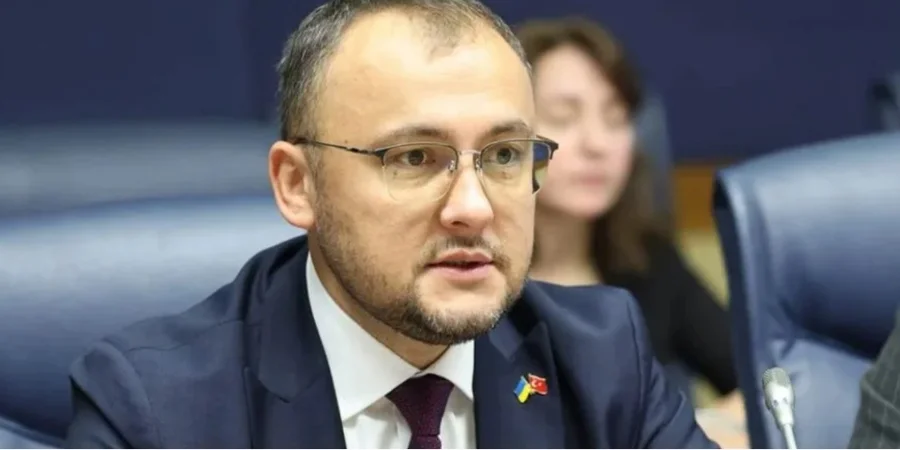
Ukraine’s Ambassador to Poland Vasyl Bodnar speaks into a microphone during a meeting.

Poland has held up a Ukrainian search at Łasków for months, Ambassador Vasyl Bodnar told Polish broadcaster RMF24, NV reported on 19 August. He says the eastern Polish village may contain the remains of civilians killed there by Polish underground forces in 1944.

The permit dispute is part of a much larger argument over how Ukraine and Poland remember the wartime killings of Poles and Ukrainians. Reciprocal searches resumed only recently after years of deadlock, giving both countries a way to recover and identify victims even as they disagree over historical responsibility. The latest delay tests that fragile progress while Poland remains Ukraine’s main route for Western arms and aid.

Bodnar says Ukrainian civilians were killed at Łasków in 1944 by the Home Army—Poland’s principal underground resistance force during the Nazi occupation—and the Peasant Battalions, an agrarian underground movement.

Bodnar appealed to Poland to issue "at least one permit" for searches on its territory. He said Ukraine systematically approves Polish requests in return. The ambassador blamed the holdup on unspecified “bureaucratic restrictions” and urged Warsaw not to leave the impression that Kyiv was obstructing the work.

In July, Bodnar said Poland’s Institute of National Remembrance had supported the Łasków application procedurally and that only approval from the regional monuments conservator remained. He expected work to start in August.

The institute said it had assisted with Łasków but was awaiting more documents for Ukraine’s separate applications concerning Sahryń and Przemyśl.

Past Polish-Ukrainian exhumations

Reciprocal work between Ukraine and Poland resumed only after Kyiv lifted a moratorium imposed in 2017. Ukraine had halted Polish exhumations in response to the destruction of Ukrainian memorial sites on Polish soil.

The monument to murdered Polish civilians in Huta Peniatska in Ukraine's Lviv Oblast was restored in 2017. Photo: NV
Explore further

Ukraine will keep issuing Polish exhumation permits despite historical tensions. Dispute “causes joy in Moscow,” Kyiv says

A joint team exhumed the remains of 42 Polish victims of massacres by Ukrainian nationalists at Puzhnyky in western Ukraine in May 2025. Ukrainian researchers later searched for a suspected grave of up to 18 Ukrainian Insurgent Army fighters at Jureczkowa, Poland, but found none.

Ukraine granted further permits for Polish searches in 2026. Joint work at Uhly in Rivne Oblast found no mass grave, while exhumations began at Ostrivky and Volia Ostrovetska in July.

Historical grievances strain wartime alliance

The searches are the practical core of a broader dispute over wartime killings of Poles and Ukrainians. Competing interpretations of the Volyn tragedy and battles over Ukrainian Insurgent Army symbols have increasingly spilled into Polish politics and the streets.

Kyiv says it continues approving Polish grave searches while its own researchers wait to begin work in Poland.

  •  

Former Polish PM accuses Ukrainian officials of letting robbers plunder massacre victims’ graves

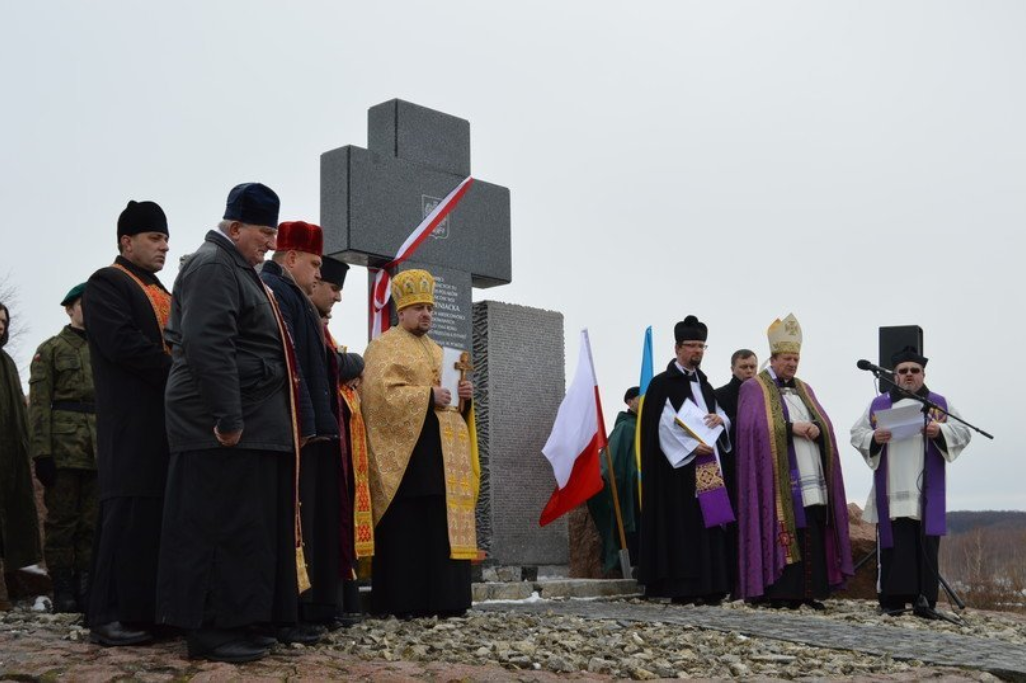
Polish and Ukrainian clergy stand beside a memorial cross during a ceremony, with both countries’ flags behind them.

Former Polish prime minister Jarosław Kaczyński accused groups in western Ukraine of desecrating remains and stealing WWII-era victims’ jewelry. The leader of the national-conservative Law and Justice (PiS) wrote on X on 14 August 2026 that his party would demand Polish government intervention.

Kaczyński’s claim comes amid growing anti-Ukrainian sentiment in Poland and a dispute with Kyiv over how Polish wartime victims are remembered. However, Kaczyński’s X post named no location and provided no public evidence, while authorized Polish-Ukrainian teams continue exhuming and reburying Polish victims.

“Illegal excavations at the sites of former Polish villages in Eastern Galicia are turning out to be real,” Kaczyński wrote, referring to a historical region now largely in western Ukraine.

He called the alleged looters “black diggers,” a term for people who dig through burials or archaeological sites for valuables. He said they were pilfering the graves of Poles killed in the World War II-era Volhynia massacres and alleged that local Ukrainian officials were allowing it.

Kaczyński said PiS would appeal to Poland’s state authorities, including the Foreign Ministry, and demand “explanations and a response.”

The evidence described by PiS has not been made public. Onet reported that it was unclear which incidents he meant and that neither government had responded at the time. PiS spokesperson Rafał Bochenek later told the publication Interia that citizens had sent photographs allegedly showing damaged graves and listings for excavated objects. Interia published neither.

Polish-Ukrainian teams continue authorized exhumations

Meanwhile, Poland’s Institute of National Remembrance (IPN), the country's state historical institute, said Ukraine authorized its latest excavations at Ostrówki and Wola Ostrowiecka in Volyn.

From 13 July to 7 August, Polish and Ukrainian specialists recovered 55 victims, including 26 children. They also secured more than 300 personal items and pieces of clothing. The remains are due to be buried at Ostrówki cemetery on 30 August.

The excavation followed a wider thaw. Ukraine lifted its moratorium on Polish searches, while joint teams exhumed and reburied 42 people at Puźniki in 2025. Both countries have exchanged lists of sites for further searches.

Historical disputes deepen the Polish-Ukrainian rift

Relations between Kyiv and Warsaw worsened after Ukraine gave a military unit the honorary title “Heroes of the Ukrainian Insurgent Army (UPA)."

The UPA fought for Ukrainian independence but is held responsible in Poland for the World War II-era massacres of Polish civilians. Polish President Karol Nawrocki later stripped President Volodymyr Zelenskyy of the Order of the White Eagle, Poland’s highest state honor.

Violence is also rising on the Polish streets. Reports of suspected hate crimes against Ukrainians in Poland rose by more than 30% in the first half of 2026, even as anti-xenophobic voices became more visible online. Kaczyński’s claim adds an unverified criminal allegation to the dispute.

  •  
❌