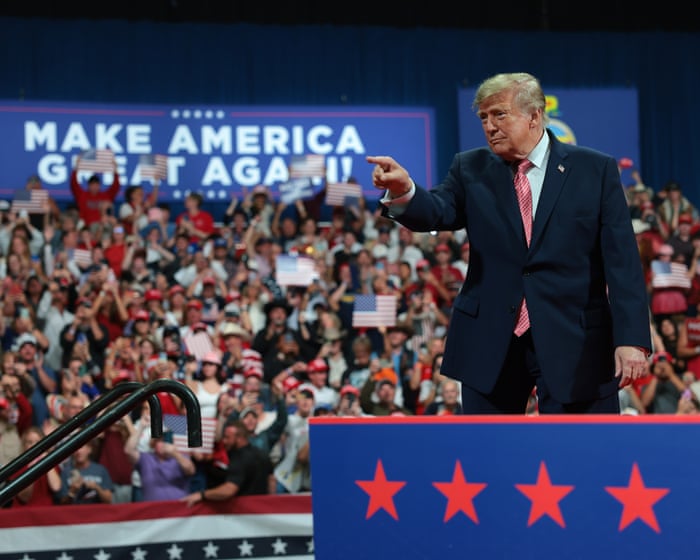
Six months on, Donald Trump’s Iranian ‘excursion’ must end
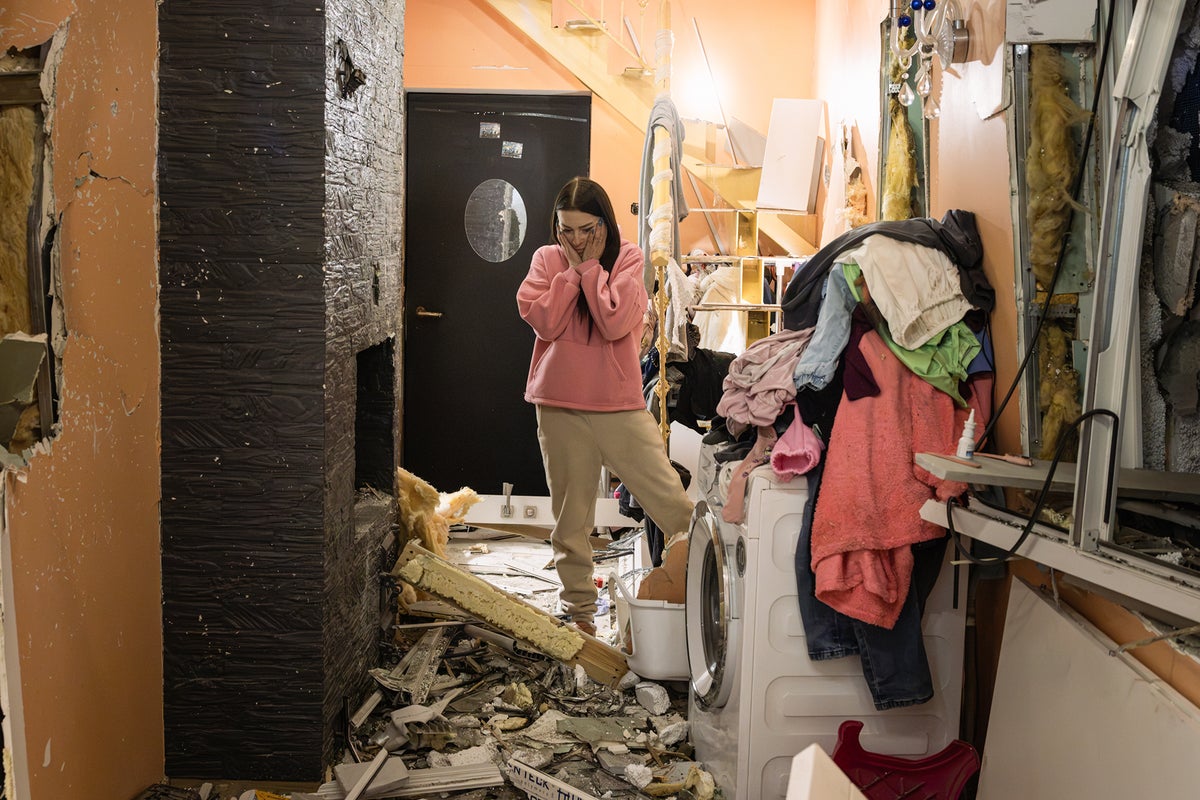
Editorial: The most stupid conflict America has ever got itself involved in, Operation Epic Fury was the wrong war fought at the wrong time and for the wrong reasons

© Reuters/Getty
Editorial: The most stupid conflict America has ever got itself involved in, Operation Epic Fury was the wrong war fought at the wrong time and for the wrong reasons

© Reuters/Getty
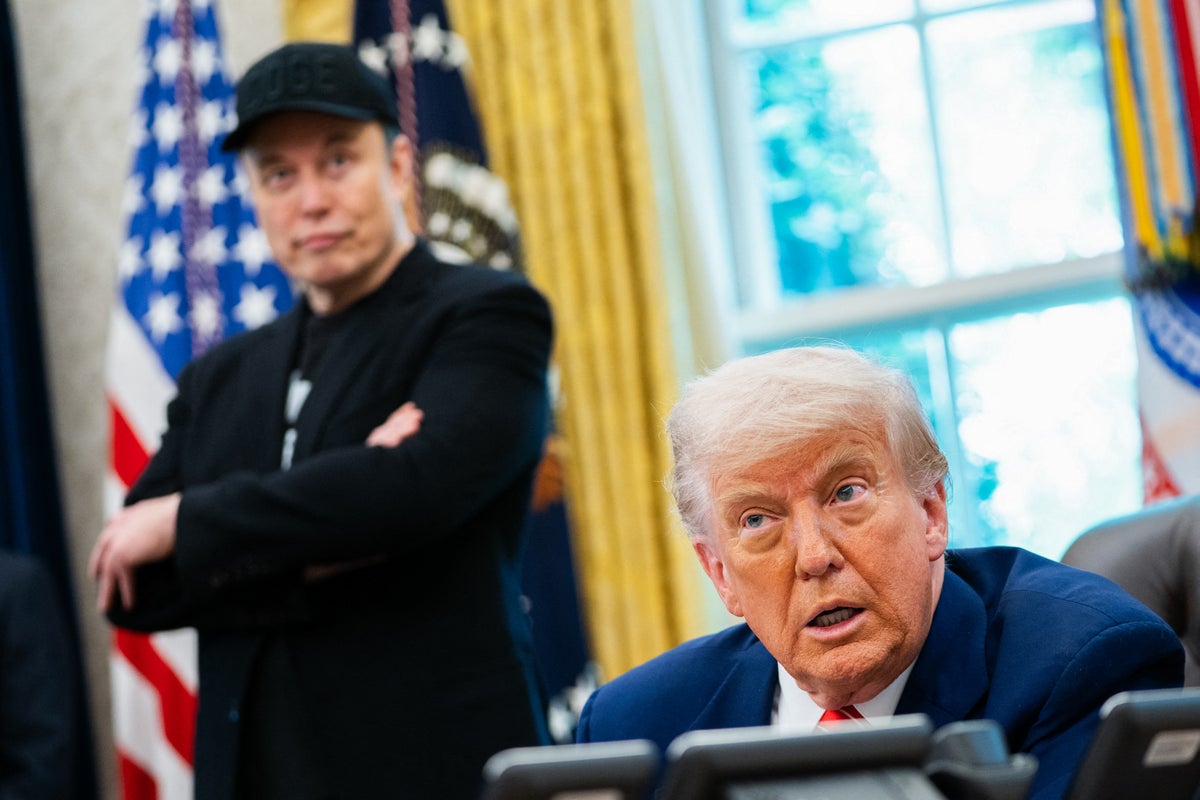
Tariffs on Canada, threats against Iran’s partners and bond market intervention show a president weaponising US power while making Americans poorer at home
Three moves in the last week have exposed the limits of Donald Trump’s economic bullying. The US slapped 50% tariffs on another $20bn of Canadian goods – then threatened the same rate on the cars, trucks, parts and steel that America Inc depends on. On Monday, the Treasury secretary, Scott Bessent, menaced Iran’s trading partners with exclusion from the US financial network, hoping that coercion can deliver what months of war have not. And as the costs of war, tariffs and pro-billionaire tax cuts helped send US bond yields higher, the Treasury stepped in to tame long-term rates. These are not contradictory policies but a gamble: that US economic power can be repeatedly weaponised without reducing others’ willingness to depend on it.
The Trump administration’s “D-day” sanctions are potentially the most consequential because they expose the scaffolding of American financial power. While markets shrugged off the immediate threat, that calculation might change were the US to target a major Chinese refinery or bank. Such an escalation could spark a trade war with Beijing. The US has leverage. But China has pressure points – especially farmers in Republican states – that make using it costly. In the long run, there is a price to pay. Nations hold one another’s currencies partly because they trust the political relationship. Mr Trump is testing what happens when they don’t.
Continue reading...
© Photograph: Will Oliver/UPI/Shutterstock

© Photograph: Will Oliver/UPI/Shutterstock

© Photograph: Will Oliver/UPI/Shutterstock
Editorial: Mr Burnham’s choice of Ukraine for his first overseas visit as prime minister is loaded with meaning, and sends a strong message about his priorities on the global stage – not least to Donald Trump

© PA Wire
The president’s empty advice that children should receive separate jabs against measles, mumps and rubella will only lead to less take-up by parents
Nobody wants to hurt a child. The howl of pain, the tears, the look of betrayed shock all make it very hard to deliver a cherished small person to the needle-wielding nurse. But that’s part of being a responsible parent. It becomes a lot tougher if mum or dad is being fed mixed and erroneous messages about the benefits and harms of vaccination.
Parents have to make a lot of decisions about what’s right for their child, from the school they should go to and the food they should eat to the hours they should spend on the phone or watching TV. In the US, Donald Trump wants them to add another: do they choose to give their children separate jabs against measles, mumps and rubella, involving six visits to the clinic, or should they opt for the combined MMR vaccine, which does the job in two? For decades, the vast majority of families have been taking the advice of doctors, accepting their assurance that the MMR vaccine is safe and very effective. But what are they to think when a US president announces that the triple jab could be “quite lethal” and signs an executive order advising states to offer separate vaccines?
Continue reading...
© Photograph: Raphael Liy/ZUMA Press Wire/Shutterstock

© Photograph: Raphael Liy/ZUMA Press Wire/Shutterstock

© Photograph: Raphael Liy/ZUMA Press Wire/Shutterstock
The Trump administration’s ‘America first’ approach has contributed to the scale of the crisis now unfolding in one of the world’s poorest countries
For months health experts have warned that the scale of the Ebola outbreak in the Democratic Republic of the Congo (DRC) could surpass the one that swept west Africa in 2014-16. This week, the authorities in the DRC announced that a grim milestone has already been passed: at least 2,325 people have died from the virus, making it the deadliest of the country’s 17 outbreaks and the fastest-growing in history.
There is no effective vaccine against Bundibugyo – a rare strain of the virus that spread fatally undetected during the spring, often being misdiagnosed as malaria or typhoid. In contrast to neighbouring Uganda, which succeeded in eliminating an outbreak, multiple factors are combining to let the disease rip through the DRC. The worst-affected region is contested by armed groups, and a context of population displacement and chronic insecurity has made monitoring and surveillance more difficult. Ebola treatment centres have been attacked as a result of misinformation and community distrust.
Continue reading...
© Photograph: Jospin Mwisha/AFP/Getty Images

© Photograph: Jospin Mwisha/AFP/Getty Images

© Photograph: Jospin Mwisha/AFP/Getty Images
Editorial: Faced with an increasingly bellicose Russia that is threatening ‘consequences’ over the UK’s military support for Ukraine, a substantial increase in defence spending will likely more than pay for itself
© AP
Editorial: Putin is hitting back hard after Ukraine showed it can strike deep into Russian territory. Without the weapons to defend itself, it is the Ukrainian people paying the price
© AP
A cheap currency helps finance the US tech boom. Washington is intervening because allies matter only when they are useful
Japan’s yen has slid back towards 160 to the dollar, despite last month’s extraordinary US-Japanese intervention. Traders are betting that its role as a cheap funding pipeline for global finance will continue. Earlier this month the Trump administration stepped in to help Tokyo stabilise its currency. “Japan’s been very good to us, with the exception, of course, of Pearl Harbor,” Donald Trump explained. More help is likely to be on its way.
But this is less a rescue of the yen than an attempt by Scott Bessent, the US treasury secretary, to preserve a cash spigot that benefits the US. Japan’s ultra-cheap money has become a global funding utility: bankers borrow yen, sell them for dollars and buy higher-returning US assets, notably tech shares. Rising American stock markets support collateral and investment. Japan’s “carry trade” is one of the reasons Wall Street can lever hundreds of billions into AI. Research suggests AI sucks up more than 1% of US GDP.
Do you have an opinion on the issues raised in this article? If you would like to submit a response of up to 300 words by email to be considered for publication in our letters section, please click here.
Continue reading...

© Photograph: Bloomberg/Getty Images

© Photograph: Bloomberg/Getty Images

© Photograph: Bloomberg/Getty Images
Amid public concern over the impact of new technology, Silicon Valley’s use of its wealth to influence specific election races is an unwelcome development
As the huge societal ramifications of artificial intelligence have become clear, some of the tech industry’s most senior figures have taken to writing thinkpieces on what comes next. The latest to do so is Mark Zuckerberg, who this week published 6,500 words making the case for a laissez-faire approach to AI development. Worrying too much about regulation, Meta’s CEO unsurprisingly opines, could lead to the United States falling behind in the race to own the future.
Mr Zuckerberg’s plea for maximum autonomy is, of course, self-serving. Much of his essay – which airily envisions “invention superpowers” for every entrepreneur and “an abundance of jobs in the future” – reads like unadulterated tech-utopianism. But the lobbying at least has the merit of being out there in the open. As midterm elections loom in the US, darker arts are also being used to counter popular concern about what AI will mean for a host of topics, from the labour market to child safety, the environment and cybersecurity.
Continue reading...
© Photograph: Sandy Huffaker/AFP/Getty Images

© Photograph: Sandy Huffaker/AFP/Getty Images

© Photograph: Sandy Huffaker/AFP/Getty Images