Vue lecture

The influencer bubble: Can content creators continue to airbrush the Gulf?

Julia E, an 18-year-old influencer from Germany, was hanging out with her family on the Palm Jumeirah beach when she heard a blast and saw a fireball erupt into the sky. She knew tension was mounting following the U.S.-Israeli attack on Iran the previous day, but she didn’t imagine Dubai would be on the frontline. “I was a little scared,” she says. “Usually you just read about it in the newspapers, you see it online, but when you see it in front of you, it’s a different feeling — like your heart just drops.”

The fear was not an emotion she expressed on Instagram. Julia’s family moved to Dubai from Germany in 2024, tempted by the business potential of an emirate that aggressively marketed itself as the influencer capital of the world — a digital utopia carved out of the desert, with its gleaming skyscrapers and Insta-ready waterfronts. Dubai’s state-backed Creator HQ offers content creators long-term residencies, legal support, networking opportunities, training and an environment geared towards digital entrepreneurship. Influencers need a permit to legally operate in Dubai but taxes are negligible — 5% VAT on taxable income from clients in the UAE over AED 375,000 (about $102,000), and a flat 9% corporate tax on income exceeding AED 1,000,000 (about $272,000). It has attracted over 50,000 content creators to Dubai, which has a population of about 4 million.

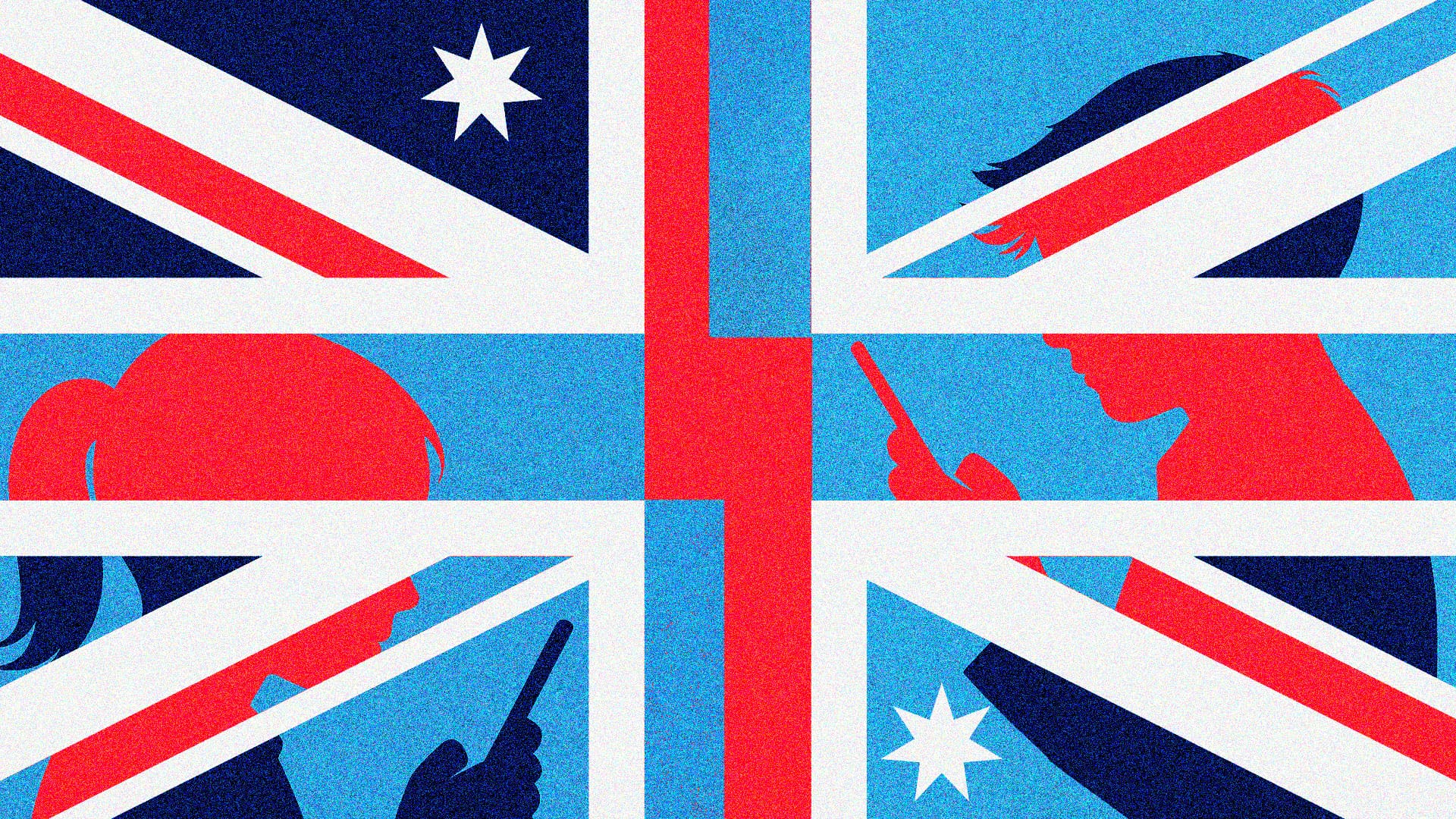
With 60,000 followers on TikTok and Instagram, Julia is looking to build her own marketing company in Dubai. In an effort, she says, to comfort her younger brother, she recorded a video shortly after witnessing the explosion. It showed Julia, a palm tree and the glittering night skyline behind her, with the caption: “You live in Dubai, aren’t you scared?” The video cuts to a montage of Mohamed bin Zayed Al Nahyan and other Emirati sheikhs: “No, because I know who protects us.” The short video is set to an AI-generated rendition of the Belgian singer Stromae’s ‘Papaoutai’, a song that laments the loss of a father.

According to Julia, she was the first content creator to post an ‘Are you safe?’-style video, a now viral trend across the Gulf as influencers counter the narrative of a region in turmoil. 

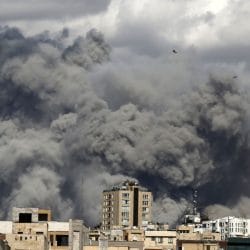
“I decided to make that video,” she says, “because I did feel safe. And I wanted to spread some positivity and my perspective that we are still being protected and we still have someone behind us here.” As Iranian drones hit the Gulf, including luxury tourist hotels destinations like Fairmont, The Palm hotel and the Burj Al Arab hotel, there was a wave of schadenfreude online. Some users outside Dubai could not contain their glee that the city’s glossy surface, its influencer-curated image of sunkissed luxury, had been ripped apart. The distress of those who spend their working hours flaunting luxury and throwing shade at the cities they come from, were, it has to be admitted, amusing to many.

But Dubai’s influencers doubled down, as the war spiralled and airports shut down, stressing the city’s safety, walking around in crowded public spaces, praising “the best air defense systems” and the men behind it: a reaction so seemingly choreographed that people questioned whether it was part of a government PR campaign. 

On March 3, the UAE’s president and crown prince were conspicuously filmed on a stroll through a Dubai mall, reassuring bewildered shoppers. It was eerily reminiscent of Volodymyr Zelensky’s “The President is here” video from four years ago, when Russia invaded Ukraine. Vogue Arabia, headquartered in the UAE, praised Gulf leaders and wrote about the influencer campaigns and the people’s “unwavering faith in their nation’s leadership and its steadfast commitment to protecting those who call it home.” 

As inviting as Dubai is to influencers, they must acquire advertiser permits that can cost up to $4,000 and are told to respect the state and avoid circulating rumors and unverified information or any content that can harm the UAE’s foreign relations or “offend or compromise national unity or social cohesion.” In the wake of Iran’s strikes, the UAE’s Public Prosecution announced that "anyone who shares or republishes content from unknown sources may face legal accountability under the country’s applicable laws, even if they are not the original creator of the content.”

There is a sense of vulnerability among Dubai’s influencers, says Zoe Hurley, associate professor of media at the American University of Sharjah and author of the 2023 book ‘Social Media Influencing in the City of Likes: Dubai and the Postdigital Condition’. “They haven't necessarily been trained professionally. They don't have institutional guardrails protecting them, or any formal buffer zones that might have protected people who are putting themselves out there.” she said. Hurley made a distinction between “influencers who are here on holiday who don't live here and who are followed by, say, people in the UK” and homegrown ones, representing diasporas in Dubai — from South Asia, the Levant and Europe — “who people are turning to because they're the thought leaders in their communities.”

None of the influencers we contacted in Dubai or across the Gulf confirmed ever being prompted or paid to post positive content. The German NTV network, however, reported concerns voiced by German influencers: "I don't know what I'm allowed to say and what I'm not allowed to say," one posted, "We're not allowed to post anything!” said another. These stories and reels have since been deleted.

https://www.instagram.com/reel/DVUQr2LEmtZ/?utm_source=ig_web_copy_link
Julia E., an 18-year old influencer in Dubai, said she was the first content creator to record the now-viral "Aren't you scared" video.
https://www.instagram.com/reel/DVbNjNZEjNU/?utm_source=ig_web_copy_link
Julia recorded a second video in response to the backlash she faced.

Julia made another video, responding to the accusations that influencers were essentially providing a PR service for Dubai. “I will tell you exactly how much I got paid,” she says. “Dubai pays me in business… in safety… in connections… with weather.” She adds that, unlike in Dubai, she would never venture outside alone in her native Germany after 8 at night.

This point about Dubai’s safety — leaving things in the car without being scared to be robbed, or walking alone at night — is echoed widely among European expatriates in the Emirates and Saudi Arabia who compare it to the relative anxiety they feel in Europe. Telegram’s CEO, Pavel Durov recently made the same point: “Unfortunately, I had to leave Dubai for Europe a week ago — so I’m not only missing the free fireworks from Iran, but also exposing myself to greater risk. Given Europe’s crime rates, Dubai is statistically safer even with missiles flying.” Elon Musk shared the sentiment, writing that “No country is perfect, but Dubai and UAE broadly are objectively safer and better run than many areas of Europe.” Notorius influencer and ‘manosphere’ icon, Andrew Tate, still facing human trafficking and rape charges in Romania, posted a video of himself dancing on a yacht “as bombs fall.” His brother Tristan Tate chimed in, comparing air attacks in Dubai to stabbings in London. 

What these influencers don’t discuss is Dubai’s underbelly, an invisible city occupied by an underpaid migrant workforce, their treatment explained away on the grounds that they make more money in Dubai than they would in the poor countries in South Asia and Africa that they come from. While the influencers enjoy government-sponsored benefits and status, these other migrant workers remain bound under the kafala (sponsorship) system that binds their residency status to their employer. Despite reforms, under the system their status remains uncertain, their earnings precarious, and imprisonment or fines for relatively minor offences is common. There are no golden visas for laborers and maids, never mind darker reports about human trafficking and sexual and physical abuse. 

London-based barrister Caoilfhionn Gallagher described the UAE’s exploitation of migrant workers as a “grubby reality, with rampant human rights abuses.” She said she had “acted for people prosecuted and jailed in the UAE for daring to work with human rights organisations or criticise the authorities,” referring to the mass trial in 2024, when 43 people, among them human rights activists, had been “subjected to enforced disappearance, solitary confinement and incommunicado detention.” 

The contrast between the city that influencers show their followers and the city built on the abuse of migrant labor is one that governments across the Gulf want to bury. The UAE’s 2031 vision sees creative industries contributing up to 5% of the country’s GDP. 

For decades now, the UAE has been trying to diversify its economy, to pivot away from its reliance on hydrocarbons. It is betting on the digital economy and tourism to be the cornerstones of economic growth. 


But for all the bravado on display, rich people and Western influencers are fleeing the Gulf, as war with Iran continues. Influencers unable or unwilling to leave, must keep grinding. Narcissus could not stop staring at his reflection even as he was dying. Will Dubai’s influencers be allowed to look away from their reflections in the city’s famous mirrored skyscrapers?

The post The influencer bubble: Can content creators continue to airbrush the Gulf? appeared first on Coda Story.
  •  

First, they came for the journalists

Hundreds of journalists are forced into exile each year, from every corner of the world. As authoritarianism and censorship rise, reporters are among the first to feel the pressure — pushed out of their homes and separated from the careers, sources and communities they’ve built. The number of journalists forced into exile is rising. In Latin America alone, more than 900 journalists were forced into exile between 2018 and 2024. Almost half of the journalists killed around the world last year were by Israeli forces in Gaza; the tally is close to 300 for the duration of the war. The genocide created impossible conditions for Palestinian journalists, forcing some to flee the Gaza strip entirely.

In a digitized, connected world, exile doesn’t mean silence. Using open source intelligence techniques, encrypted messaging, and data, journalists can report in real time from thousands of miles away, serving communities they can no longer reach in person.

We spoke to four journalists from four countries who have spent the past decade working in exile. Some left gradually, step by step. Others had only hours to abandon their lives. Every year, hundreds more join them — barred from returning home, facing imprisonment or persecution if they do, uncertain when or whether they’ll see their families again.

Still, they keep reporting. These are their stories.

Ekaterina Fomina – Russia 

When Ekaterina Fomina was working as a reporter in Moscow, her favorite kind of journalism was old-school shoeleather reporting: traveling to far-flung regions of Russia, knocking on doors, talking to rural families who lived most of their lives offline. “My main tools were my legs and arms,” she said. 

In the lead-up to Russia’s invasion of Ukraine, Fomina began to grasp that one day soon, she might have to leave the country. Media outlets across Russia were facing intense pressure. As each day passed, the government implemented new censorship and repression laws. “We knew that if the government labeled us an “undesirable organization”— a criminal label in Russia — we could be arrested,” she said. Every newsroom had some kind of contingency plan in place for leaving, but the plans were vague and abstract. Fomina and her colleagues made sure they had visas ready in their passports for Europe, in case they had to leave quickly. “But we were not ready for a real tragedy.”

Russia launched its full-scale invasion of Ukraine in February 2022, and Fomina went into overdrive, covering the war. 

“The polarization, the open war towards another country, made me realize that my position in society was completely different from those of many people around me. It was very difficult for me to accept that my fellow citizens could support such cruelty,” she said. “In the first weeks of the war, seeing this support made me realize that it would be very hard to live in this country.” 

Fomina — who was reporting for the independent outlet iStories — understood it would be impossible to cover the war from inside the country without facing prosecution. “The only option was to leave the country and continue covering the war openly.” 

It was not immediately obvious how long she would be away for. Her friends and colleagues reassured her that this wouldn’t last forever, but she wasn’t so sure. “Everything was unpredictable, and it was unclear how it would affect our destinies,” she said. She had no illusions that she would ever come back to Russia. 

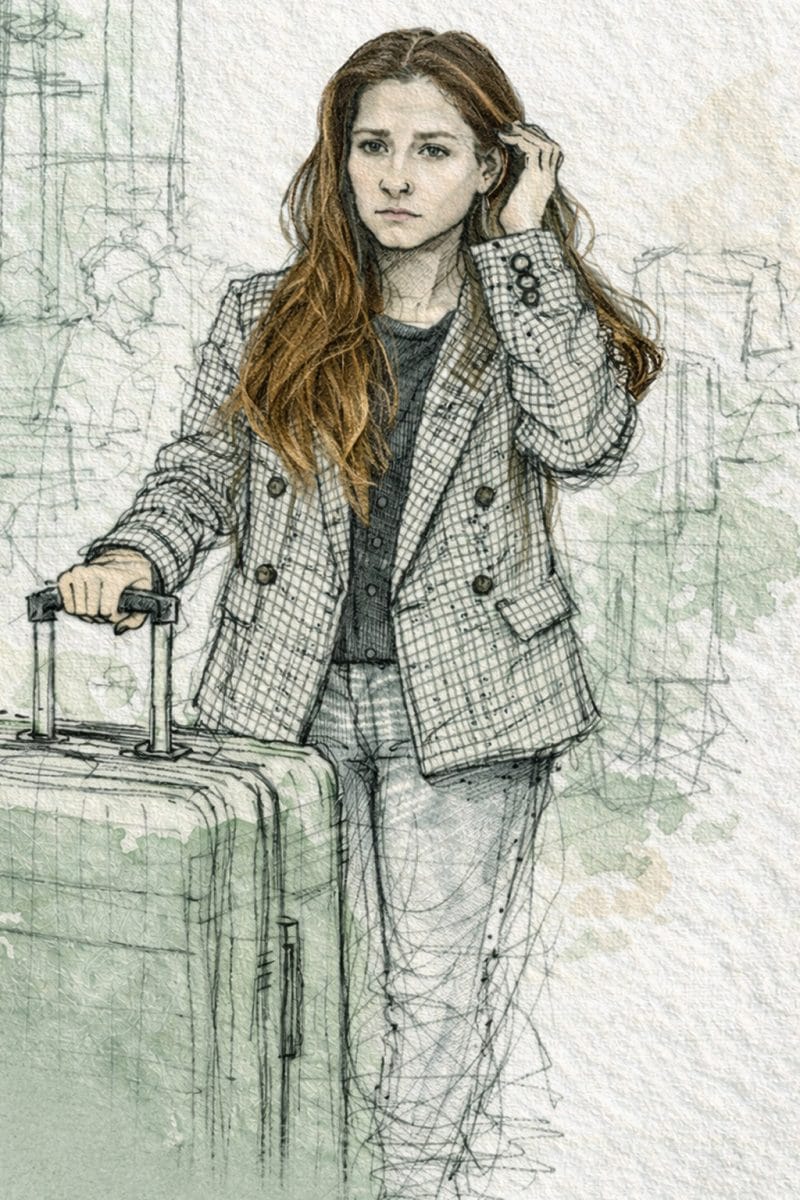
“I don’t even remember the whole process of escape, because in the very first days of the war my colleagues and I were constantly working — covering events, talking to people on both sides, but especially people in Ukraine.” In the meantime, she packed up her life in one day.  She packed just one suitcase, giving a few things to her mother, and throwing the rest away. She took a handful of souvenirs from Russia — gifts from friends and family, a T-shirt with Cyrillic letters on it, talismans of the life she was leaving behind. 

In the middle of a cold March night in Moscow, she said goodbye to her mother and grandmother, not knowing when she would see them again. “The scale of my personal tragedy couldn’t be compared to the scale of the tragedy happening in Ukraine. Only years later can I evaluate how awful, how tragic, and how traumatic those events were for me. But at that moment, it was just a feeling of adrenaline,” she said. “At an intuitive level, I felt that this was the last peaceful moment of my life in Russia.” 

Living in exile in Europe, Fomina began to reorient her reporting techniques. She could no longer be a shoeleather reporter, using her legs and arms as tools and knocking on doors. She began investigating war crimes using open-source intelligence techniques. 

currents

Subscribe to our coda currents newsletter

Insights from the Coda newsroom on the global forces that shape local crises.

Not long into her exile, she investigated Russian soldiers who had been there during the massacre in Bucha. She started by tracing evidence from a survivor’s phone. The phone and its calling credit had been confiscated by Russian soldiers, then used to call their families back home. When it ran out of credit, the soldiers left it behind. One survivor recovered it and gave it to Fomina. Using investigative techniques and leaked data, she identified the numbers on the call log as belonging largely to relatives — mothers and wives — of Russian soldiers. She was then able to verify precisely which soldiers had been deployed in the area. 

For her work on this investigation, Fomina was arrested in Russia in absentia in the summer of 2024. Then, on March 31, 2025, a Moscow court sentenced Fomina to 8.5 years in prison for disseminating “fake news” about Ukraine out of “political hatred.”

“On the one hand, you know that you did everything right,” Fomina said, describing her schooling, her education, her constant pursuit of the truth in journalism. “But on the other hand, you are facing such limitations and such punishment.”

“I suppress my trauma in order to continue doing this,” she said. “But I can’t stop doing my work because the war crimes are continuing.” 

It is now four years since Fomina fled Russia. Barring a dramatic regime change in the future, there’s no prospect she’ll ever return.

Luz Mely Reyes - Venezuela

Luz Mely Reyes left Venezuela in slow motion. In 2015, she was the editor-in-chief Efecto Cocuyo, a small newspaper in Caracas. “Our heart as journalists was not to be too close to power. Power can be very seductive. But when you are too close to power you can lose the heart of your duty. So we tried always to be close to the common people,” she said.  

In 2018, a Venezuelan politician and opposition member called Fernando Albán mysteriously fell from a tenth-floor window while being held in custody. Nicolás Maduro’s government said he jumped. Reyes wasn’t so sure. “I asked questions on my Twitter account — why was he on the 10th floor, how did he jump?” she recalled. After tweeting, she turned her phone off to focus on writing. Suddenly, her husband’s phone began to ring. It was a tip-off: police were discussing Reyes’ tweet online, and talking about detaining her. Reyes scrambled to leave the country, only coming back a few months later when the dust had settled. 

All too soon, she had to leave Venezuela again — this time because of her coverage of a journalist who had been arrested in the middle of a blackout.

And so her wandering years began. Whenever Reyes felt too much pressure from the authorities, she would leave Venezuela for extended periods, spending time in neighboring Brazil and Colombia, before slipping back into Venezuela when she felt it was safe. 

“I had to accept that I wouldn’t be able to live in Venezuela anymore,” she said. But she continued to shuttle back and forth. The authorities canceled her passport twice, threatened to imprison her, increasing the pressure all the time. Her team told her how it didn’t make sense to be in Venezuela — that she couldn’t do her work properly while she was constantly in hiding, on high alert. 

Finally, after five years of this, she booked a one-way ticket out of Venezuela. She now lives in Austin, Texas, and doesn’t know if she’ll ever go home. 

“I had been struggling for about five years to accept that the government was expelling me from the country. I finally accepted that I was in exile — because if you can’t return to your country without the risk of being persecuted, well, you’re an exile.”

Reyes hasn’t stopped working for the people of Venezuela. During the US military strike on Venezuela and the capture of Maduro, she mobilized her sources and contacts across the country. She and her team livestreamed updates for ten hours straight, confirming the facts, debunking disinformation as the extraordinary events of January 3 unfolded. 

She feels the pain of being away from home acutely. “They say there are seven stages of grief when you’re forced to migrate. One grief I always have is for the landscape, for the weather, for the beach, for the space I was in, for the sun,” she said. “It’s very physical. I feel like a tree that has been ripped out of the ground.” 

There is no job she would rather do, though. “If I had to do it all over again, I would choose to be a journalist.”

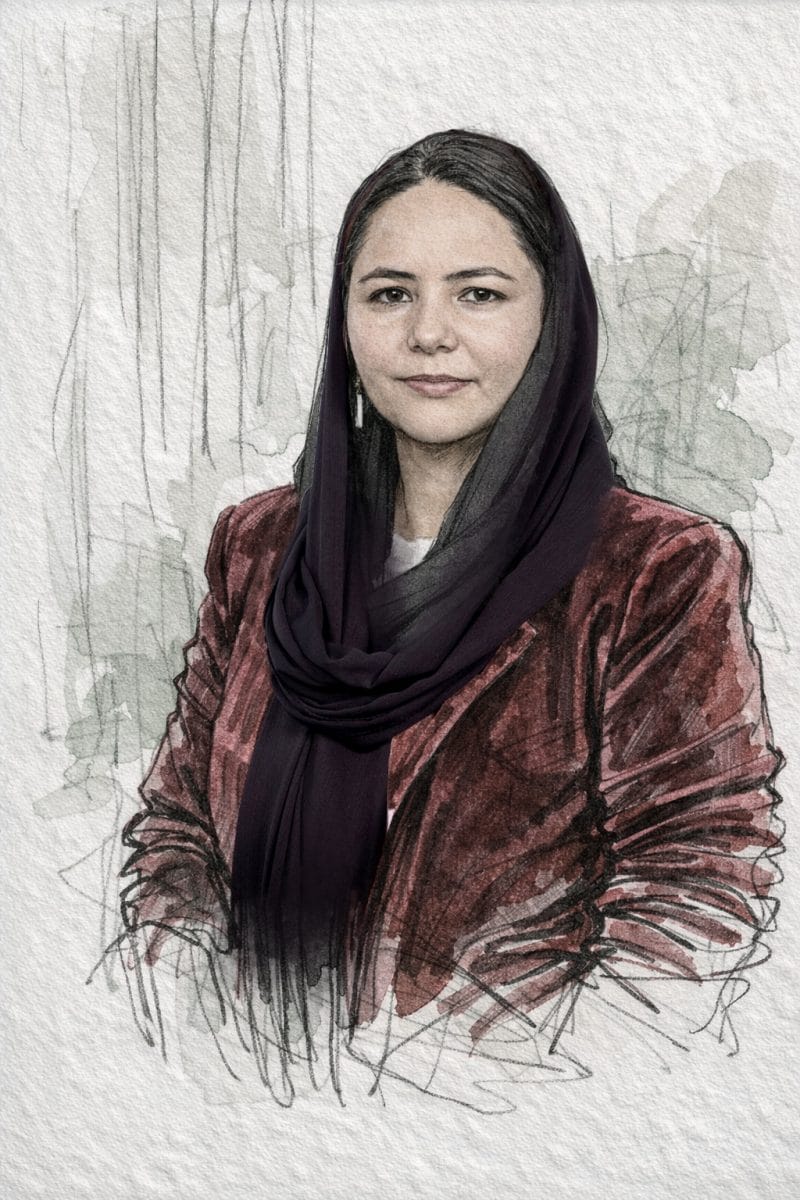
Zahra Joya - Afghanistan

Zahra Joya’s world changed forever over just a few days in August 2021. On August 14, she was working in Kabul as editor-in-chief of Rukhshana Media, an Afghan women’s journalism platform. The following day, Kabul fell to the Taliban. Joya joined the chaos of people fleeing the country out of Kabul airport. She arrived in a hotel room in London on August 26 — in less than a fortnight, everything she knew was gone.  “Everything vanished overnight,” Joya said. From her hotel, she couldn’t stop reporting. 

“I personally was safe, but when I looked back to all our achievements, to all the work that we had done, it gave me this chance to rethink my circumstances. I realized I could not stop my work. So we continued.”

Rukhshana Media’s burgeoning team scattered to the four winds following the collapse — some made it out of Afghanistan like her, others took shelter within the country, where it was no longer safe for them to keep working openly.

Founded in 2020, Rukhshana Media is a platform for female journalists — a space for stories by and about women in Afghanistan. It was named after an Afghan teenager who was stoned to death after being accused of adultery in 2015. 

Joya had to find a way to keep Rukhshana Media alive. She began, frantically, to build a completely new team, from thousands of miles away. 

“It was a terrible moment of my life. It was something I never, ever imagined I would go through,” she said. ““It was impossible for me to not think about Afghanistan just because I was outside.”

Joya scoured social media for new reporters. Then came the complex problem of how to hire them. How to look after journalists on the ground in Afghanistan under Taliban rule, keep them anonymous, and keep them safe, from thousands of miles away? She drew up a security plan and a code of conduct for her team. “I tell my colleagues, “please prioritize your safety. No information is worth your safety.”” She decided not to tell each reporter who their colleagues were, so that if they were captured by the Taliban, they would have no information to hand over under interrogation.

Bathed in the glow of her computer in her government-issued hotel room in London — where she stayed for a year — Joya worked and worked to publish as many stories as possible from on the ground in Afghanistan. 

“For the women of Afghanistan, one of the only ways to raise their voices is through media,” Joya said, describing how Afghan families often call her asking for help, asking if she can write about their situation. Families of female activists call Joya as soon as their relatives are imprisoned by the Taliban. 

“I feel guilty sometimes because people rely on me. They’re inside the country and they want to raise their voice,” she said. “My colleagues are taking their life in their hands to gather information.”

To evade capture, Rukhshana Media’s reporters often need to switch phone numbers without warning, meaning people can go dark at any time, and there are panicked moments where Joya doesn’t know what’s happened to them. 

In September 2025, the entire country went dark without warning. The Taliban had shut down the internet completely — stating it was being blocked "for the prevention of vices." All of Joya’s contacts, reporters and sources stopped responding. 

“Afghanistan was cut off from the world. It was terrible. It reminded us of the fall of Kabul all over again. We had no idea what was going on in the country,” she said. When the internet came back on, her work continued, the pace relentless — and it hasn’t stopped since.

Jesús Adonis Martínez Peña - Cuba

The idea for El Estornudo — a narrative journalism magazine covering Cuba — started on a balcony in Havana in 2015. A group of young people, many of them university students, gathered together and talked about their dream to tell the stories of Cuba on their own terms. 

“It was a time of bilateral tension between the United States and Cuba, and the situation in Cuba wasn't as serious in terms of the social, political, and economic crisis as it is now,” remembers the editor-in-chief of El Estornudo, Jesús Adonis Martinez Peña. Widespread internet had not yet arrived in Cuba, but more and more people were getting access every day, and new media outlets were springing up –– “basically in what had been, up until that point, a wasteland in terms of independent media.”

Together, the young journalists drafted a manifesto for their magazine, which they published on March 16, 2015, Journalist’s Day in Cuba. 

“In Cuba, the press is a neo-colonial republic. With flags, coats of arms, statutes, organizations, prizes, forums, infinite debates — but without independence,” they wrote. “If you want to know Cuba beyond the clash of slogans and the three or four topics recycled by the contemporary media world, you have to read this magazine.”

They decided to call their magazine ‘El Estornudo’ — The Sneeze. The name, they said, reflected their own reflexive need to “react against the prevailing climate, the urgent need to expel something.” 

More than a decade has passed since that balcony brainstorming session. “Ten years later, and here we are. And most of our founders are scattered around the world,” Peña, who is now based in Chicago, said. Peña himself believes he can still go back to Cuba if he stays low-profile, doesn’t work, and just sees his family. But a number of his colleagues can’t. “My colleague who edits the magazine with me, they wouldn’t even let him board the American Airlines flight.”

The situation for Cuban journalists is specific to the island. “In Cuba, no one is going to shoot us in the head for journalism,” the Estornudo staff wrote in their founder’s letter ten years ago. This still holds true today — and it’s important, Peña said, “to respectfully acknowledge the realities for our colleagues in the region, in Central America, in countries like Mexico, where there are journalists being killed. We have the imperative, the duty, to do journalism under our own specific conditions of totalitarianism.” Reporters in Cuba exist within an insidious culture of fear and control. “The press is constantly under siege by state security. They monitor our colleagues, restrict their movements within the island, put police patrols in front of their houses — it functions almost like a temporary house arrest,” Peñam said. “There have been arrests, interrogations; they put pressure on the families of journalists too, pushing them into exile too.”

Since the Trump administration’s kidnapping of Venezuelan President Nicolás Maduro and the subsequent blocking of Venezuelan oil to Cuba, the country has been plunged into fresh crisis. President Trump has called on Cuba to “make a deal before it’s too late” and threatened to implement Secretary of State Marco Rubio as the “next President of Cuba.” Looking on, Peña’s team has been on high alert. They’re preparing themselves for every outcome — from a spiralling social crisis resulting from the U.S.-imposed fuel blockade, to a direct American attack on Havana. “We are considering every scenario, and we are not ruling anything out. And whatever happens, we are ready to report.”

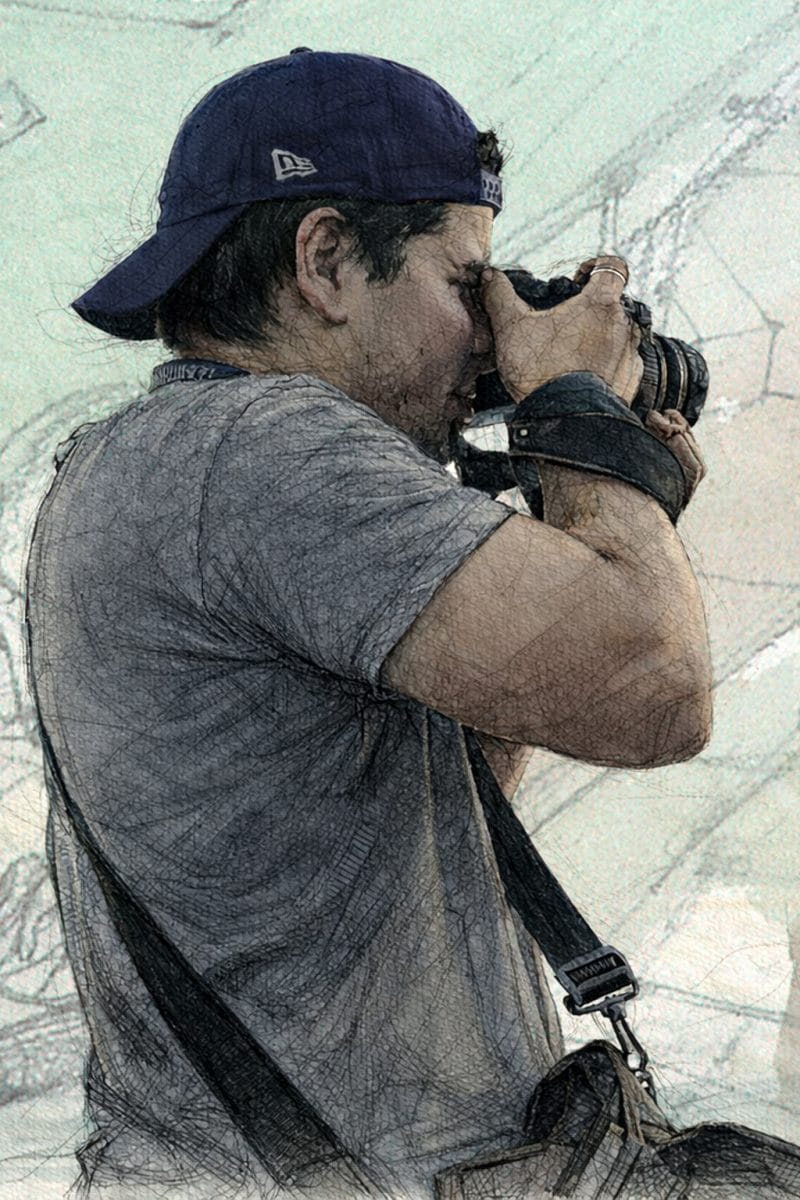
Drop in Illustrations by Teona Tsintsadze.

The Age of Exile

This story is part of our Age of Exile series, which explores how displacement has evolved from historical punishment into a defining condition of our time—one that reveals profound transformations in how we construct identity, maintain community, and exercise power across borders. In an era where digital connection enables presence without physical proximity, exile has become more complex, more global, and more central to understanding our world. Explore The Age of Exile series

The post First, they came for the journalists appeared first on Coda Story.

  •  

Argentina says it uncovered Russian spy network linked to late Prigozhin's group

Argentina says it uncovered Russian spy network linked to late Prigozhin's group

Argentina has uncovered a Russian intelligence operation working to spread pro-Kremlin disinformation and influence public opinion, Argentine presidential spokesperson Manuel Adorni announced on June 18, citing the country's intelligence, according to AFP and Infobae.

The La Compania network, which is allegedly linked to the Russian government and the Kremlin's Project Lakhta, was led by Russian nationals Lev Konstantinovich Andriashvili and his wife Irina Yakovenko, who are both residents of Argentina, according to authorities.

The U.S. Treasury Department has previously accused the Project Lakhta, reportedly formerly overseen by late Russian oligarch Yevgeny Prigozhin, of election interference in the United States and Europe.

Prigozhin led the Russian Wagner mercenary group that was deployed in some of the deadliest battles in Ukraine, like the siege of Bakhmut. The oligarch was killed in a plane crash under suspicious circumstances in August 2023, around two months after leading a brief armed rebellion against the Kremlin.

Andriashvili and Yakovenko are accused of receiving financial support to recruit local collaborators and run influence operations aimed at advancing Moscow's geopolitical interests.

Their objective was to "form a group loyal to Russian interests" to develop disinformation campaigns targeting the Argentine state, Adorni said at a press briefing.

The spokesperson added that the alleged operation included producing social media content, influencing NGOs and civil society groups, organizing focus groups with Argentine citizens, and gathering political intelligence.

"Argentina will not be subjected to the influence of any foreign power," Adorni said, noting that while some findings have been declassified, much of the investigation remains a state secret.

Since Russia's full-scale invasion of Ukraine in February 2022, there has been a significant uptick in Russian migration to Argentina, some of which officials fear could be linked to covert intelligence operations.

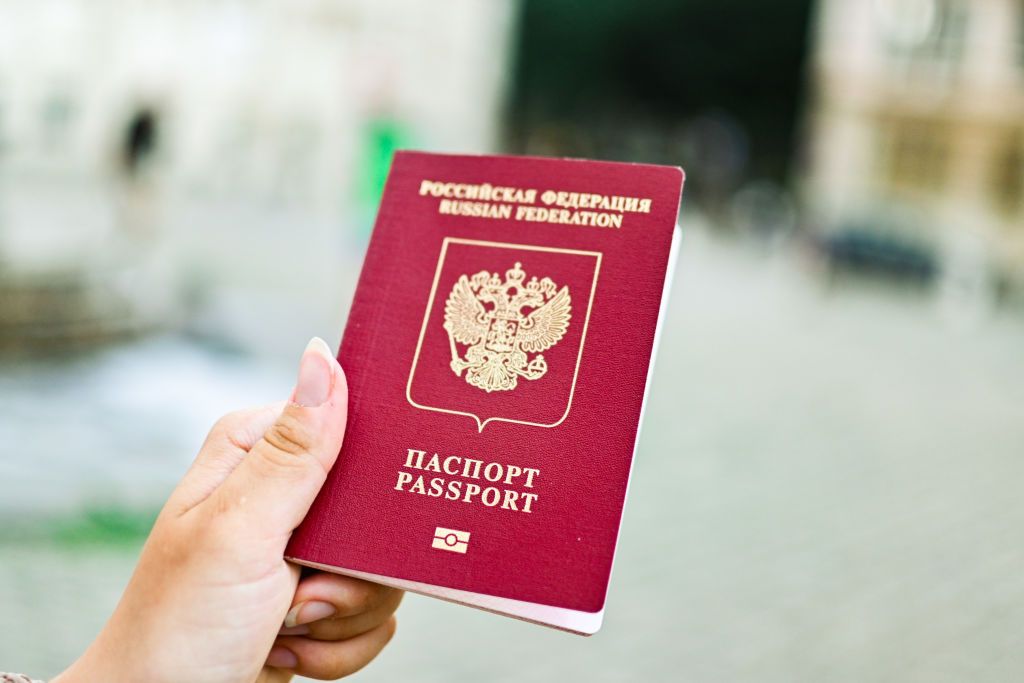
Authorities reportedly said these espionage activities are often facilitated by a 2009 bilateral agreement between Argentina and Russia allowing visa-free travel, a deal that remains in effect despite growing security concerns.

In response to the threat, Adorni announced the creation of a new Federal Investigations Department (DFI) within Argentina's Federal Police, modeled in part on the U.S. FBI. The agency will focus on countering organized crime, terrorism, and foreign espionage, with investigators trained in advanced techniques and bolstered by experts in law, psychology, and computer science.

’100 days of Russian manipulations’ — Ukraine blasts Moscow over disregarding US ceasefire effort
A hundred days since the U.S. and Ukraine agreed on a ceasefire, “Russia continues to choose war,” Foreign Minister Andrii Sybiha said on June 19, urging international pressure to push Moscow toward peace.
Argentina says it uncovered Russian spy network linked to late Prigozhin's groupThe Kyiv IndependentMartin Fornusek
Argentina says it uncovered Russian spy network linked to late Prigozhin's group
  •  
❌