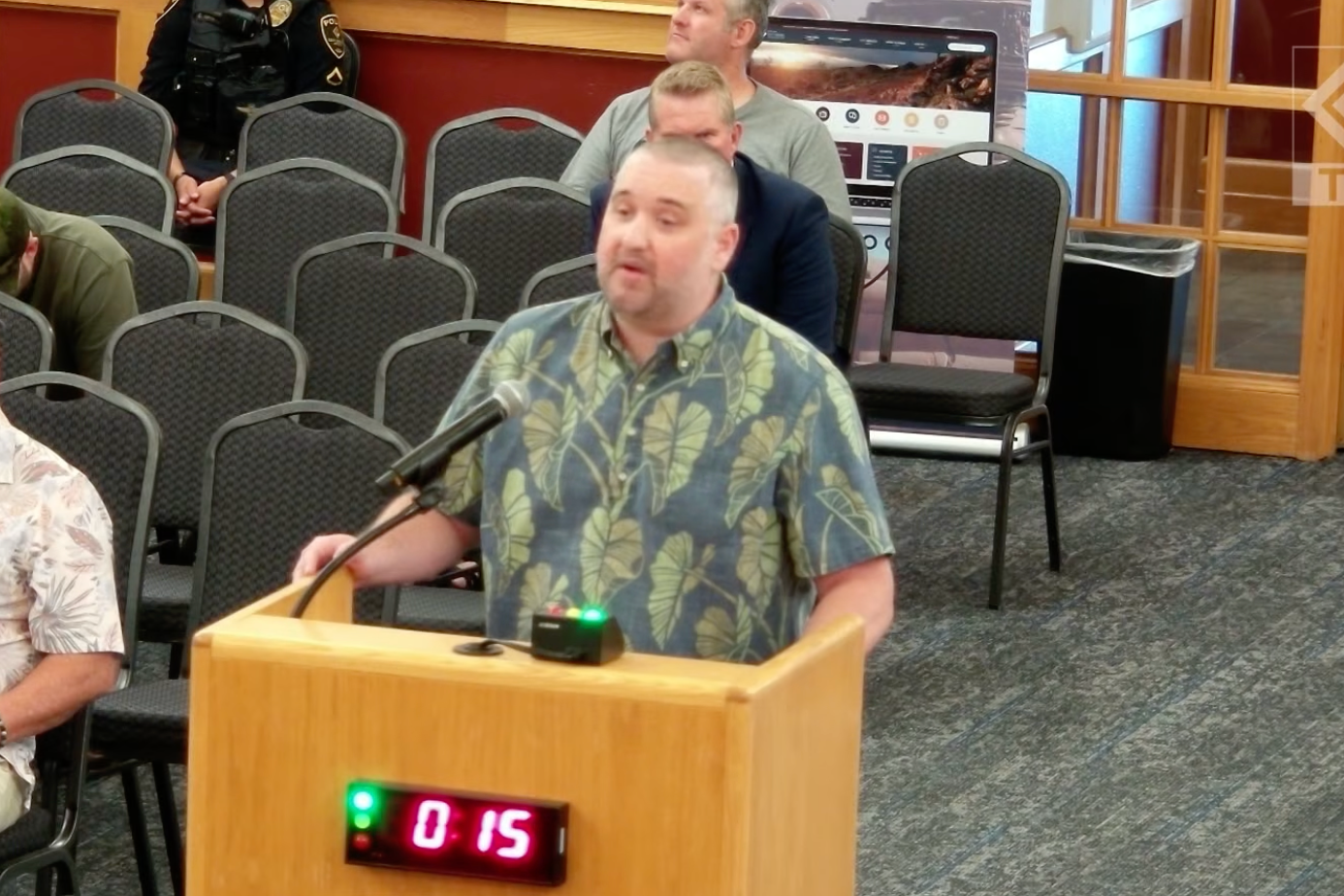
During the public comment portion of a recent San Diego city council meeting, the council called for the next comment to take the podium: "Darth Vader?" As he approached the microphone in his black helmet and cape, his heavy breathing reached the mic before he did.
At the Public Safety and Livable Neighborhoods Committee Meeting on August 19, Vader — whose identity is not revealed during the meeting — spoke passionately in support of Flock in San Diego.
💡
Are you the Dark Lord of the Sith in question? I would love to hear from you. Using a non-work device, you can message me securely on Signal at sam.404. Otherwise, send me an email at sam@404media.co.
The National Park Service (NPS), the agency tasked with managing the U.S. national parks and monuments, has purchased Flock cameras and had them installed at parks including in Yosemite.
Current and former NPS rangers are not happy about it.
“Flock protects property, not people or parks. People should be free to recreate in ways that are respectful to the ecosystem — but the surveillance is a disrespectful invasion of privacy,” a current NPS ranger told 404 Media. 404 Media granted the ranger and others anonymity because they weren’t permitted to speak to the press.
💡
Do you know anything else about Flock? I would love to hear from you. Using a non-work device, you can message me securely on Signal at joseph.404 or send me an email at joseph@404media.co.
Another current NPS ranger said, “I just think that every American should be free to visit our national parks without their location being traced and tracked by the federal government. Wild places are at the core of American freedom and nobody should be afraid to visit them.”
A former NPS ranger added, “I think if the public knew that their public lands were being surveilled, they would push back.”
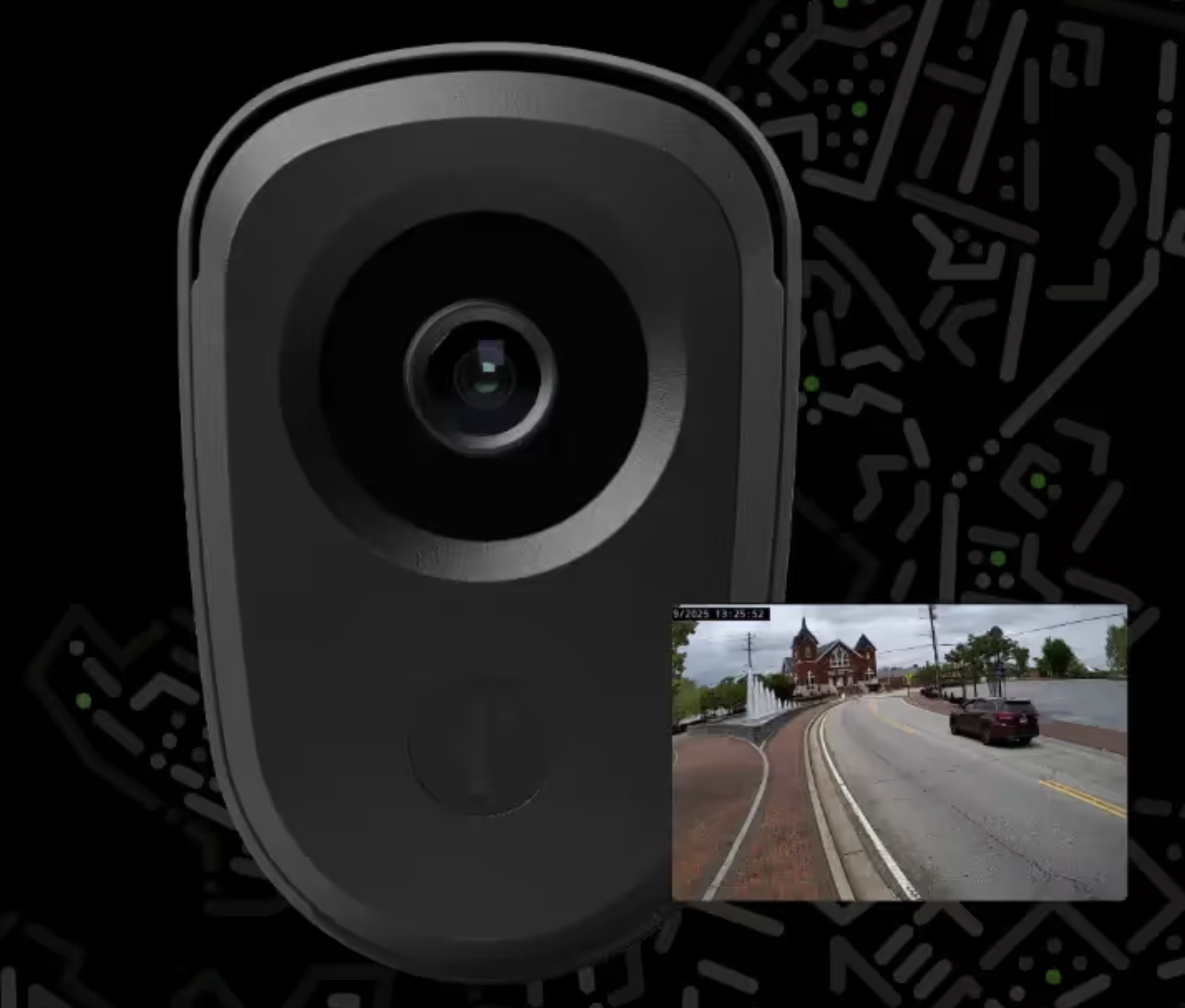
Flock cameras constantly scan the license plate, color, model, make, and other identifying features of every vehicle that drives past, creating a timestamped record of where a vehicle was at a particular time, and by extension, a person. This data is then available to Flock’s law enforcement customers and is usually queried by police without a warrant. Many of Flock’s cameras are part of a national network that other law enforcement officials can then query. For example, a cop in Texas might query the network to look for a specific vehicle and search cameras across the country. This, among increased reporting of cops abusing their access to Flock to stalk people with no legitimate investigative purpose, and local cops performing lookups for ICE, has contributed to a nationwide conversation around Flock and whether communities want the company’s cameras in their neighborhoods.
The NPS told 404 Media in a statement: “Yosemite National Park uses a traffic-monitoring system to measure vehicle counts, travel times and entrance-station wait times. The system helps the park better understand traffic conditions and provide visitors with information to help them make informed decisions about when to visit and where parking is available. The cameras are not connected to law enforcement or DMV databases.”
One of the current rangers said, “Last year Yosemite changed the rules about hanging flags on El Capitan and tried to backdate the rule change to make it look like the people involved had committed a crime. What happens when that sort of malfeasance is combined with the ability to track any park visitor's location, anywhere in the country? If that happens, we are no longer free in this country.”
They added, “I fear for the day when a visitor's National Park experience is interrupted by being pulled over and held at gunpoint because a license plate reader misread their plate.”
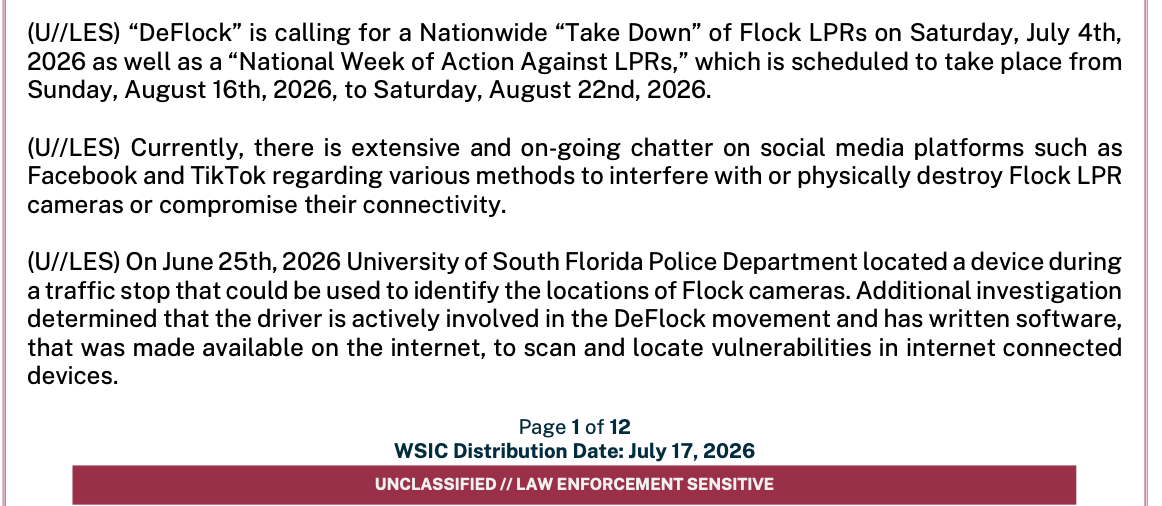
Government surveillance centers are monitoring viral anti-Flock Instagram posts, warning local police about upcoming DeFlock events including one scheduled to start next week, and have told cops to “increase patrols around ALPR [automatic license plate readers]” as backlash to Flock grows, according to government intelligence bulletins obtained using public records requests. The documents also warn about devices “that could be used to identify the locations of Flock cameras.”
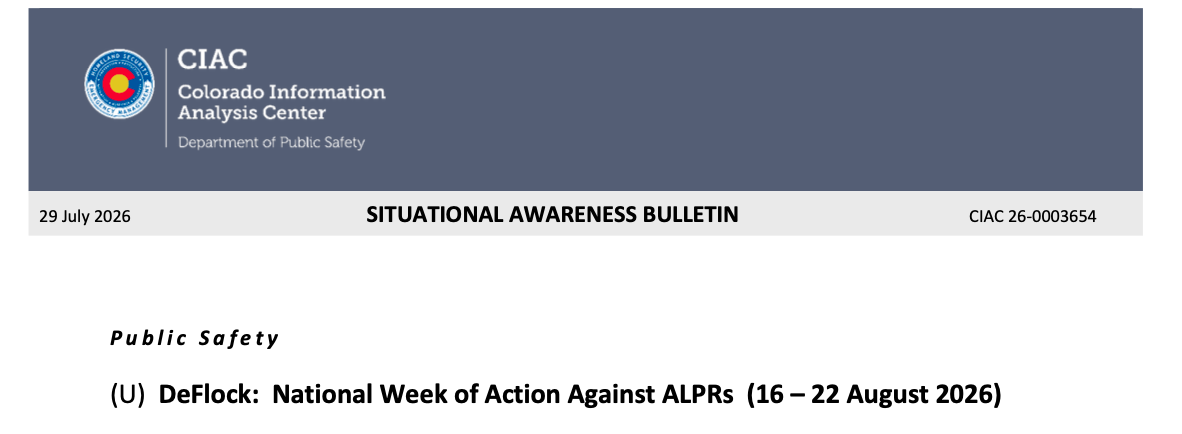
Investigative journalist Dan Boguslaw first published several fusion center bulletins about DeFlock, a crowdsourced map of ALPR cameras. 404 Media has now obtained four more recent law enforcement briefings warning police to surveil or beef up patrols of areas where Flock cameras are located (the documents are embedded below). These briefings document instances of Flock vandalism and warn, specifically, about the DeFlock “National Week of Action Against Automated License Plate Readers,” which is essentially a series of public meetings and protests about the dangers of mass surveillance.
In sum, the documents show that local, state, and federal law enforcement are monitoring anti-Flock activists and are trying to tie together people who politically oppose mass surveillance with vigilantes who destroy Flock cameras. 404 Media obtained the documents through a public records act request.
Fusion centers are information-sharing partnerships between local, state, and federal government law enforcement agencies. The documents Boguslaw and 404 Media obtained are “intelligence bulletins,” which are briefings to law enforcement about specific threats. The data is compiled by individual fusion centers in a state and then shared more widely. Many of the documents are marked “Law Enforcement Sensitive.”
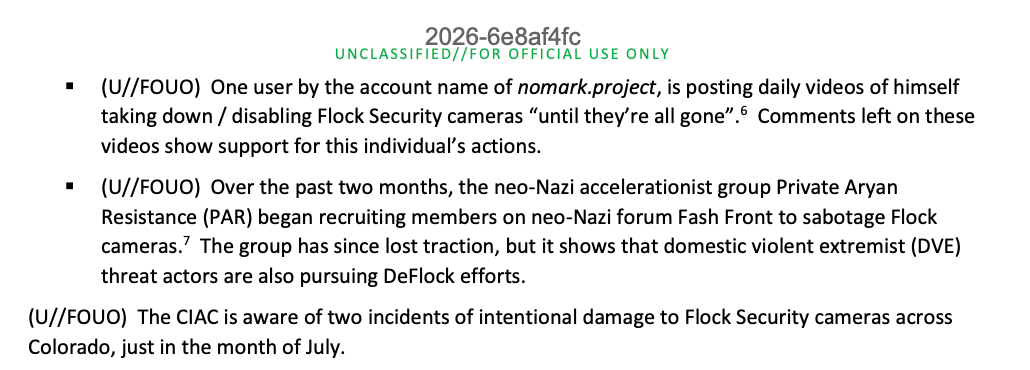
A new fusion center warning from the Colorado Information Analysis Center notes “people have begun utilizing the [DeFlock] app to locate and then destroy or disable the ALPRs. Multiple public accounts are posting videos of individuals vandalizing these cameras, adding momentum to the online discourse and influencing others to do the same.” That bulletin highlights a specific Instagrammer, called Nomark.Project, that is “posting daily videos of himself taking down/disabling Flock Security cameras ‘until they’re all gone.’ Comments on these videos show support for this individual’s actions.” That same bulletin also says neo-Nazi accelerationists encouraged the destruction of Flock cameras, but the call to action seems to have quickly dissipated: “Over the past two months, the neo-Nazi accelerations group Private Aryan Resistance began recruiting members on neo-Nazi forum Fash Front to sabotage Flock cameras. The group has since lost traction, but it shows that domestic violent extremist threat actors are also pursuing DeFlock efforts.” There is no indication in the document that neo-Nazis actually did target Flock cameras.
Another bulletin, from the Wisconsin Statewide Intelligence Center via the Northeast Florida Fusion Center, notes, “there is extensive and ongoing chatter on social media platforms such as Facebook and TikTok regarding various methods to interfere with or physically destroy Flock LPR cameras or compromise their connectivity.” In particular, it adds that “On June 25th, 2026 University of South Florida Police Department located a device during a traffic stop that could be used to identify the locations of Flock cameras. Additional investigation determined that the driver is actively involved in the DeFlock movement and has written software, that was made available on the internet, to scan and locate vulnerabilities in internet connected devices.”
DeFlock is an open source, crowdsourced map of ALPR cameras created by a man named Will Freeman. DeFlock was created to show how widespread ALPR cameras are in the United States, and the “DeFlock movement” is a very loose term for a series of local community activists who have educated themselves about Flock surveillance and have asked their local politicians to consider ending their contracts with Flock.
DeFlock has organized a “National Week of Action Against Automated License Plate Readers” for August 16-22. This Week of Action is political in nature, and includes information sessions, marches, and talking points for people who are asking their local communities to consider ending surveillance contracts. DeFlock describes the event as “a variety of public meetings, townhalls, and other events intended to raise awareness about the use of ALPRs in their communities, the harms of these cameras, and how we can work together to end their use.”
The fusion center documents also list specific cities that have signed up for the DeFlock Week of Action; for example, a July 28 bulletin from the North Florida Fusion eXchange notes 11 cities in Florida that “have already signed up to participate.”
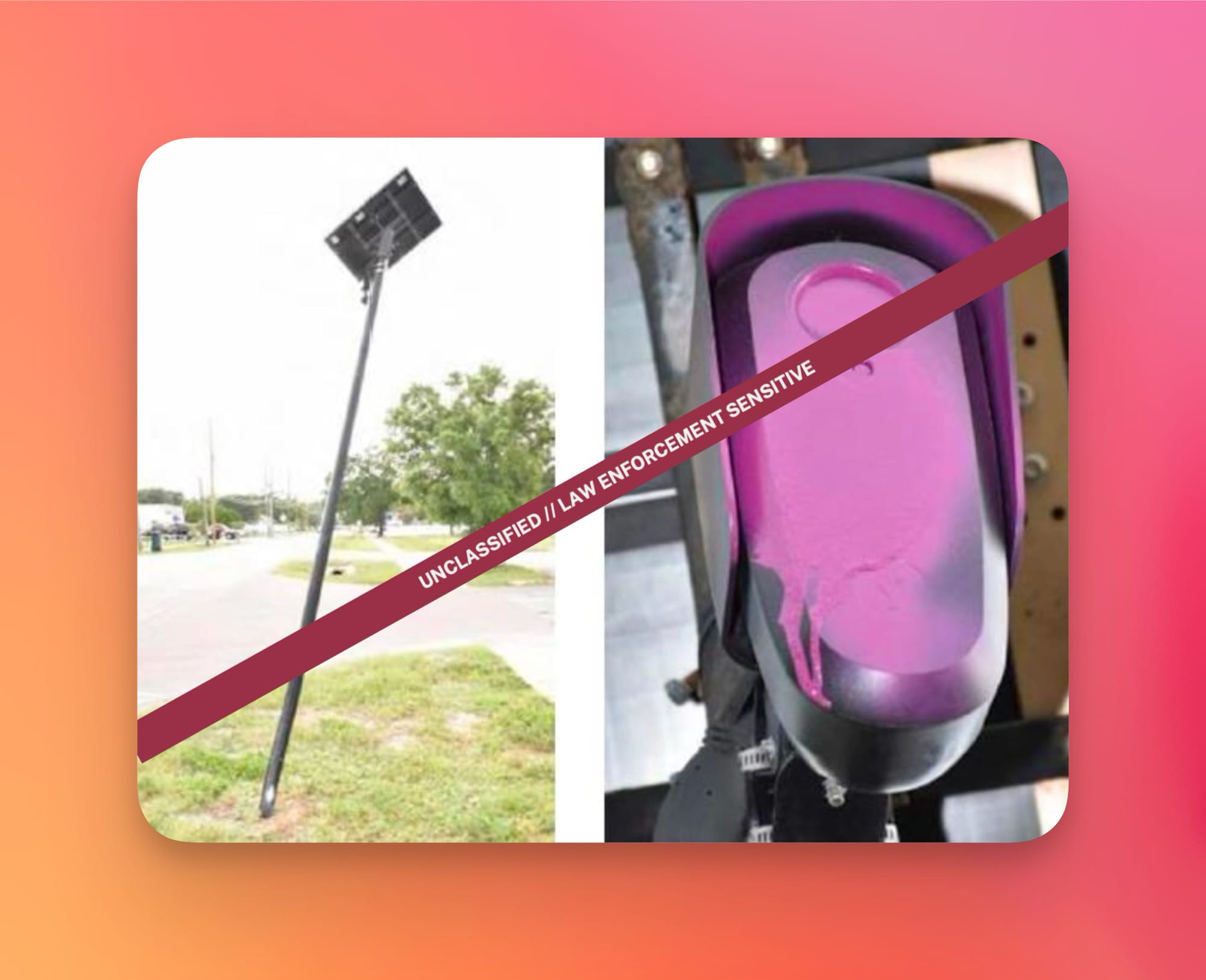
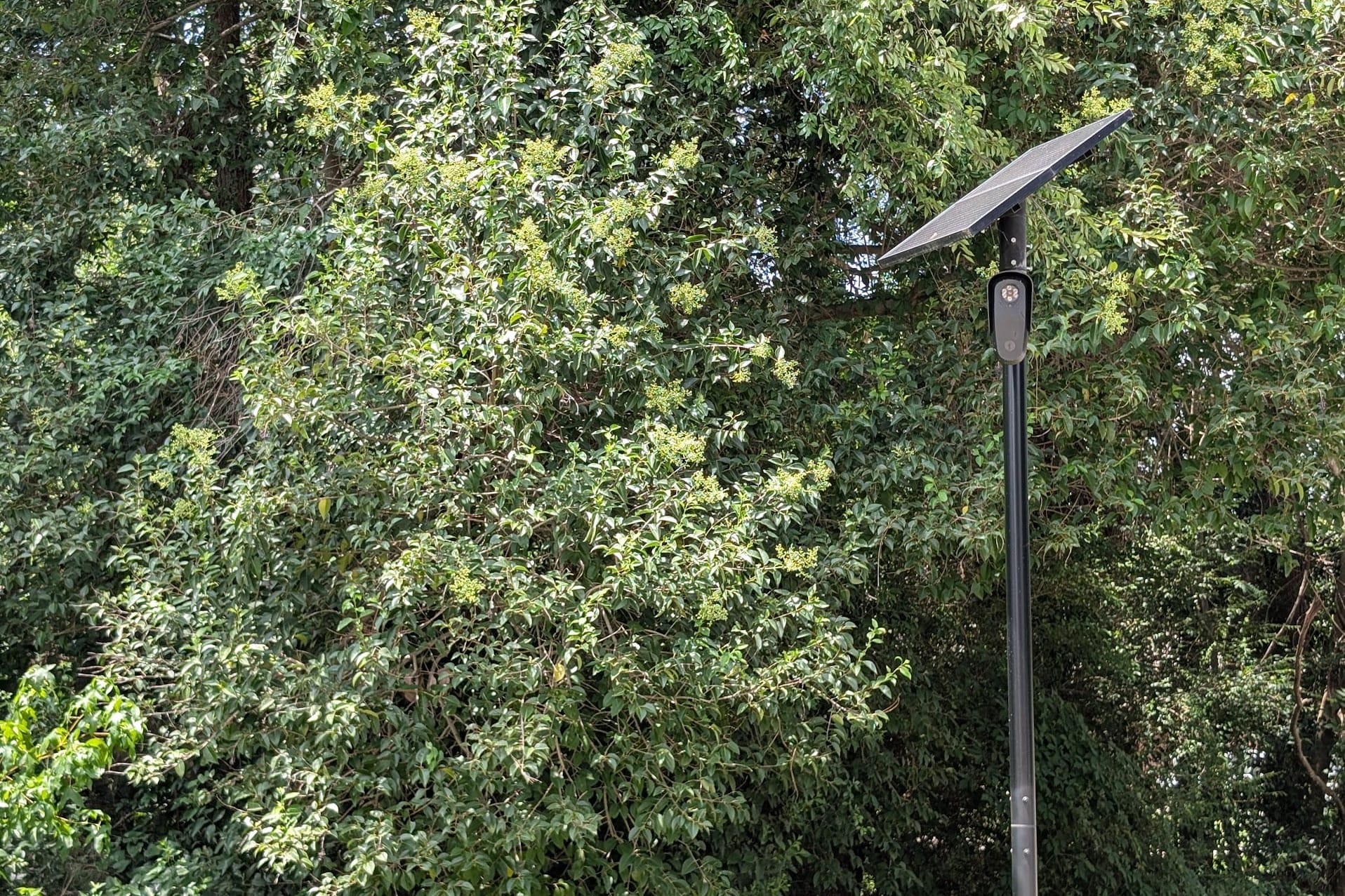
“In addition to DeFlock’s call to action, other online groups and individuals are encouraging the destruction of ALPRs and are sharing tactics and techniques through social media by providing detailed instructions on how to damage or disable ALPR cameras, poles, and solar panels,” the bulletin reads.
Freeman told 404 Media that DeFlock has never called for vandalism of Flock cameras.
“DeFlock has never called for disabling cameras or covering license plates, contrary to what recent law enforcement bulletins claim. DeFlock is a grassroots project that started in 2024, focused on maintaining a public map of surveillance infrastructure and encouraging civic engagement such as contacting local representatives, hosting public awareness events like scavenger hunts, and educational outreach. This has worked for nearly 2 years, with over 100 contracts canceled through legitimate public engagement,” Freeman said. “Some of the activity referenced in these bulletins originates from accounts using the DeFlock name without our authorization.”
Vandalizing Flock cameras “wasn’t much of a thing until like a month ago once it became popular,” Freeman added. “Definitely caused by people on social media who aren’t us. I think it just shows that people are independently upset at the installation of these without their knowledge or consent. I try to be as neutral as possible with DeFlock and let people come to their own conclusions. I even changed the language on the site from ‘You’re being tracked!’ to ‘an open source project mapping ALPRs.’ For the most part, the idea of these upsets almost everyone.”
There have been around a few dozen instances of Flock cameras being destroyed, vandalized, disabled, or having their poles cut down. The North Florida Fusion eXchange bulletin adds: “On July 25, 2026, an individual using the Instagram name ‘Thepatrioticgoy’ posted a video where he claims to be a former Flock Safety employee and gives detailed instruction on how to disable Flock cameras and avoid detection at the same time.” In the video itself, the man describes himself as a “Former Flock Safety field tech.”
The bulletin then lists seven instances of Flock cameras being damaged or removed in Florida. “As online calls for the destruction of ALPRs continue to increase, it is likely that [northern Florida] could experience an increase in the vandalization of ALPR cameras, poles, and solar panels. This bulletin is being provided for situational awareness and to encourage law enforcement to remain vigilant when observing or responding to suspicious activity near ALPR sites.”
Boguslaw’s earlier report showed that fusion centers were warning police about “calls for vandalism to ALPRs nationwide” from “the DeFlock movement, an online grassroots group opposing ALPR, [which] utilizes social media platforms to encourage supporters to disable or evade these systems by destroying cameras and covering license plates.”
404 Media obtained documents from the Central Florida Intelligence Exchange, the Wisconsin Statewide Intelligence Center, the New Jersey State Police, the Colorado Information Analysis Center, the North Florida Fusion eXchange, and a summary of a 404 Media article about DeFlock that was sent to a listserv of FBI headquarters employees. We obtained the documents from the New Mexico All Source Intelligence Center, meaning the warnings are circulating widely within law enforcement in the United States; the New Jersey document, for example, was disseminated to a “nationwide ALPR working group and state fusion centers.”
A Flock Safety spokesperson told 404 Media “Damaging public safety equipment is illegal and puts communities at risk, which is why we strongly condemn this type of behavior.”
“Overall, we have seen few reports of vandalism against Flock equipment. When it does happen, we work directly with law enforcement to investigate damaged or stolen cameras,” they added. “People have every right to make their voices heard, but criminal acts should never be part of that process. Damaging public safety equipment ultimately hurts the very communities this technology is there to help protect.”
Norman, Oklahoma is a Flockless outpost on the outskirts of the Oklahoma City metro area. As you drive south down I-35 away from the big city and into Norman, coverage from the automated license plate readers (ALPR) dwindles. That’s because Norman has rejected Flock’s pitch multiple times.
“They've given us two presentations in the last three years at the request of our police department who wanted to implement them,” Stephen Tyler Holman, the mayor of Norman, told me. “They haven’t been back since I’ve been mayor.”
Norman is an outlier. When the surveillance company comes to a city or a town, the city often signs up. The city council in my small town of 12,000 people just voted to install 22 new Flock cameras despite overwhelming pushback from residents. A big centerpiece of Flock’s pitch was that it would help solve crimes. My town’s chief of police told a story about how Flock had been instrumental in arresting child predators.
Holman told me that Flock and the cops made the same pitch to Norman. “Crime prevention and helping the police more efficiently solve crime. That was their main point that they wanted to advocate for,” he said. “They really focused on amber alerts and silver alerts and ‘don't you want to find kidnapped kids and elderly people that have wandered off who have Alzheimer's?’”
But Norman’s leaders had questions about privacy and data security and they didn’t like Flock’s answers. “Those were some of the reasons why we ended up not doing it,” Holman said. “Questions about data storage and how long and who has access to it […] you're gathering data on every single car vehicle that goes in and out of the city of Norman, regardless of if they've committed a crime or not, and then that's stored for 30 days on some kind of database? Who has access to it? How secure is it? Those are the questions we have that were kind of deal breakers for us [...] 30 days seemed like a long time to sit on that much data. There were some council members that were like, ‘It should only be an hour. Thirty minutes.’ Why do you need it any longer than that? Why would you need to keep it for 30 days? How is it accessed? How secure is it?”
All of the city council’s nine members said no to Flock. Since then, Holman has watched with some small satisfaction as other cities push back. Cops keep getting into trouble for using the cameras to stalk people, the system makes mistakes, and one of its ex-workers recently told 404 Media that the company lied to him about its business practices.
More than 80 cities across the country have cancelled Flock contracts. None of them are near Norman, which sits on the border of Oklahoma City — a city covered in Flock cameras. According to Holman, the company played this up in its most recent presentation saying that “people would find that out and they’d come to commit crime in Norman because they know that we don’t have Flock cameras.”
But Norman’s city council doesn’t control every square inch of Norman and its surroundings. Despite their best efforts, Flock cameras have gotten in. The city sits in Cleveland county and county leaders approved the installation of 20 cameras for use by the Cleveland County Sheriff’s Office. “There are numerous homeowners associations that use them too,” Holman said. “But the city of Norman government does not. We’re, I guess, the only ones around here that don’t.”
Holman said that Norman’s politics are difficult to explain. “It’s neither liberal nor conservative,” he said. “Our three state reps are Democrats but two of them represent Republican majority voter districts.” He said the tension between the major parties and a healthy swath of independent voters has made citizens engaged with local politics and that constituents have sent a clear anti-Flock message.
“Pretty much everywhere else around here absolutely would just roll over and approve something like this. Nobody would show up and protest it. And if they did, the councils probably wouldn't care. But in Norman it’s a big deal and people can lose re-election over stuff like this and have,” he said.
Holman served on the city council for 12 years before becoming mayor last year. He said one of the issues that turned people against the previous mayor was the purchase of a Bearcat APC for the local police department. In the 20 years after the start of America’s wars in Afghanistan and Iraq, town and city police departments have purchased a lot of military surplus gear from the Pentagon. “Things like a Bearcat would be rubber stamp approved in most cities. In Norman it took them 10 years and [passed] barely by a five-four vote of our previous mayor who I ran against and beat,” Holman said. The APC is still causing controversy in Norman.
Buying an armored car for the police 10 years after it was fashionable to do so is one thing. Private companies installing police cameras is another. “There’s a lot of folks here who are weary about government surveillance, especially giving that over to a private company,” Holman said.
Holman told me he’d been watching the city council meetings like mine where mayors and representatives fight with the voting public about their concerns. “I would really encourage them to listen to the public, listen to the people they represent in their cities and the very valid concerns that folks have about this technology and the private company itself, Flock, and the issues that have arisen with them and why many cities have started to explore pulling out,” he said.
He said that concerned citizens have a right to be worried about the conduct and ethics of a company like Flock. “I always come back to the freedom versus safety thing, this conversation we’ve been having since our founding,” Holman said. “That conversation may not resonate with a mayor like yours. There seems to be a lot of folks that are completely willing to give up all freedom for perceived safety. Well, I guess all crime could be eliminated if you put cameras everywhere, surveillance everywhere, and had drones patrolling the skies. That seems to be the way some folks want to go but what life are we living then?
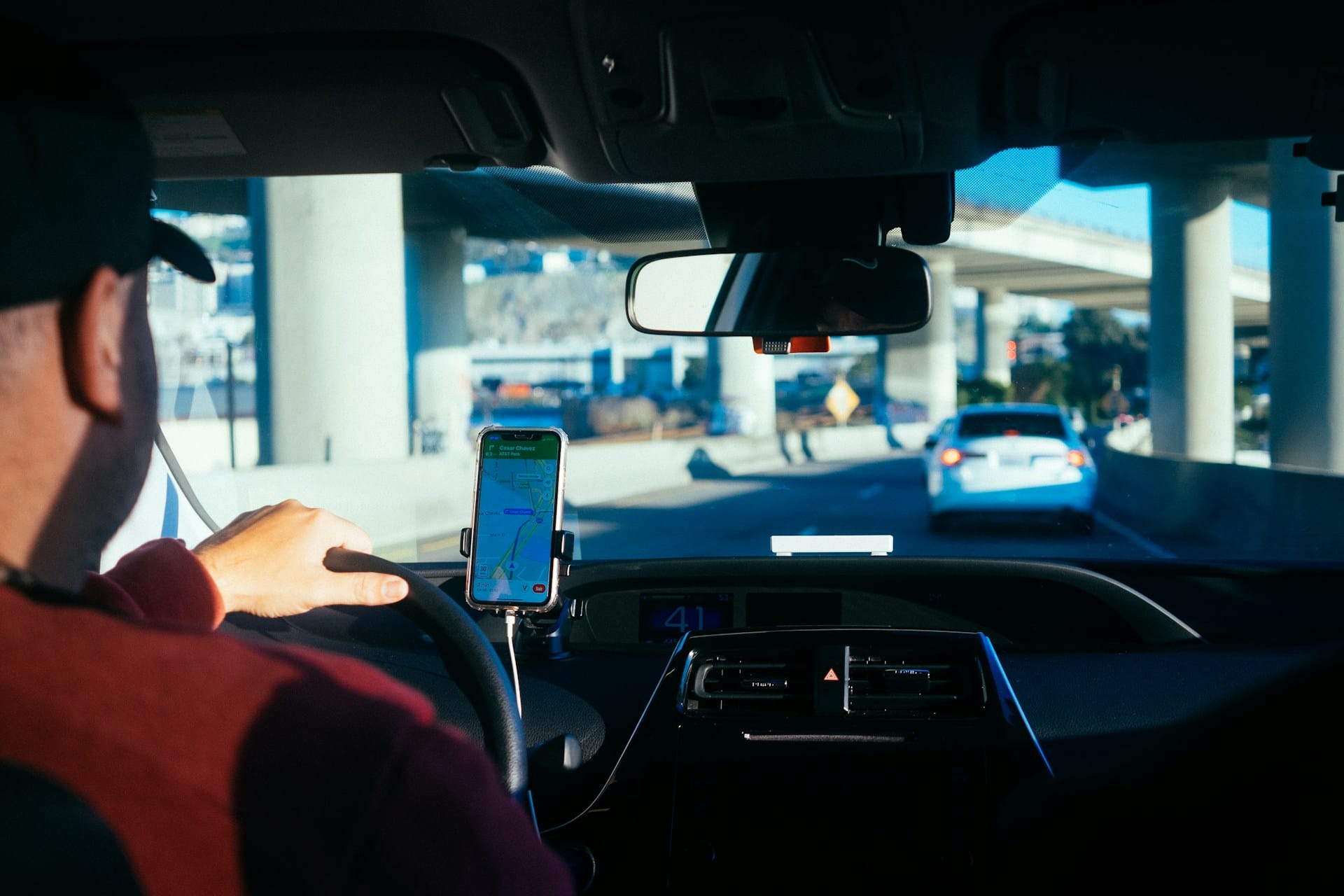
Flock planned to use dashcams installed in hundreds of thousands Uber, Lyft, and delivery drivers’ vehicles to scan license plates those drivers travelled passed, essentially turning Uber and Lyft drivers into roaming surveillance vehicles, according to a Flock presentation shared with 404 Media.
The document provides more details on Flock’s planned partnership with Nexar, a popular dashcam company. 404 Media first revealed the intended partnership last August when multiple sources provided information on the plan. The presentation shows Flock was actively pitching this partnership, and its use of Uber and Lyft drivers, to potential customers right around the time 404 Media reported on it.
💡
Do you work for Flock, Axon, or a similar company? I would love to hear from you. Using a non-work device, you can message me securely on Signal at joseph.404 or send me an email at joseph@404media.co.
Flock told 404 Media in an email it never executed the partnership with Nexar. But the presentation still shows Flock’s ambitious plan to conscript rideshare and delivery drivers to collect license plate data for its network. It is not clear whether Uber or Lyft, or drivers working for those apps, would have been aware of the data collection.
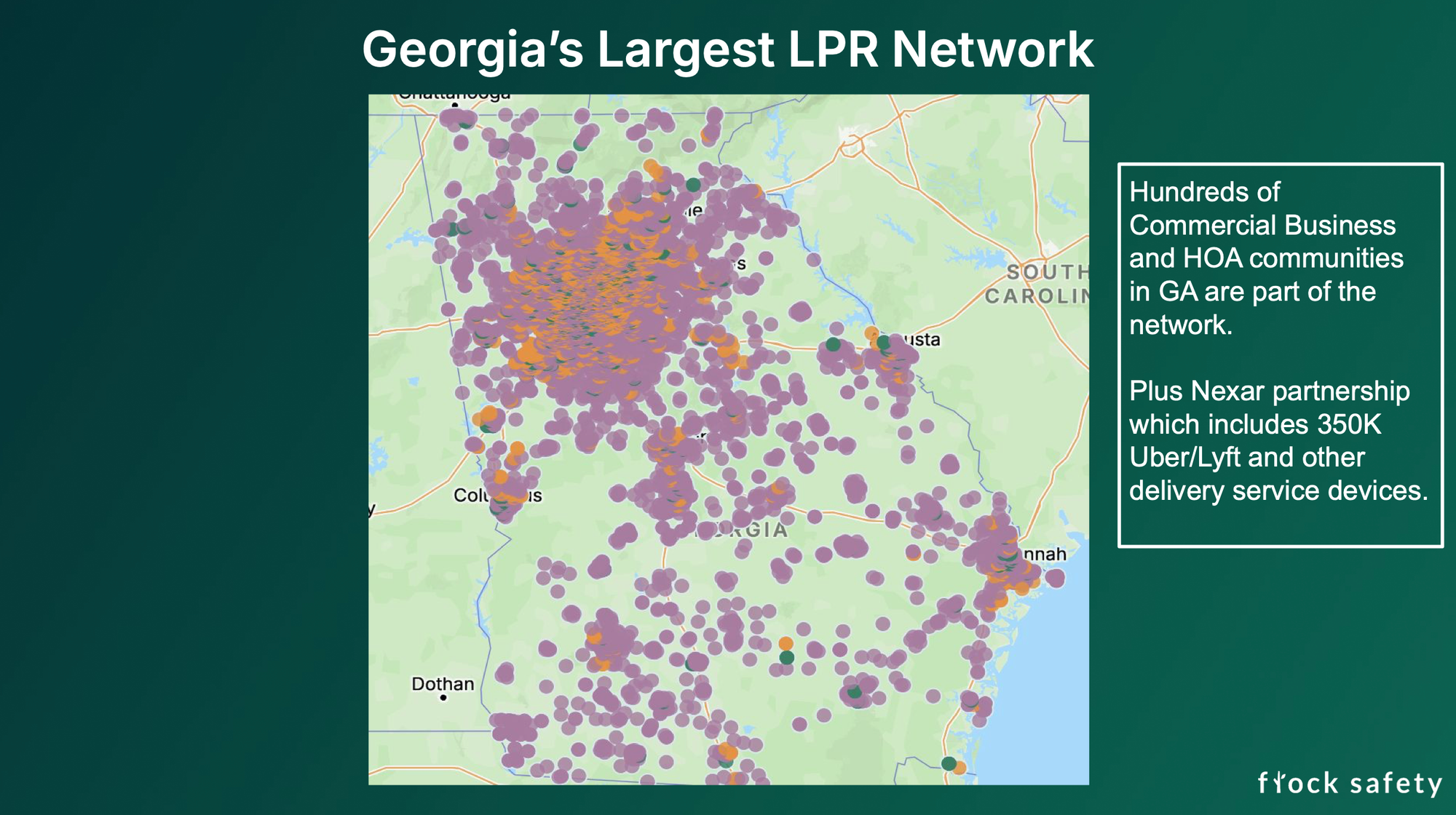
“Hundreds of Commercial Business and HOA [home owners associations] in GA [Georgia] are part of the network,” the presentation, written by Flock to present to the Georgia Office of the Attorney General last August, reads. “Plus Nexar partnership which includes 350k Uber/Lyft and other delivery service devices.”
Jason Hunyar, a Dunwoody, Georgia, resident who obtained the presentation through a public records request, shared the document with 404 Media.
Image: screenshot of the presentation.
Flock’s automatic license plate reader (ALPR) cameras are usually stationary cameras installed on tall poles that constantly scan the license plate, color, make, and brand of every vehicle that drives past. The Nexar partnership would have made those data collection efforts mobile. Axon, the law enforcement contracting giant that also sells ALPR cameras, sells some of its cameras to be installed in police officers’ roaming cars. Vigilant Solutions and the Digital Recognition Network (DRN), two ALPR companies now owned by Motorola, perform similar license plate data collection through cameras in vehicles belonging to repossession agencies.
Nexar sells various different models of dashcams providing front, cabin, and rear views, and already can provide “clear license plate capture with Full HD video,” according to its website. Nexar markets the cameras to rideshare drivers and also “commuters,” “long-distance drivers,” and “casual drivers.”
In September, 404 Media reported that a hacker broke into Nexar and accessed a database of terabytes of video recordings taken by customers’ cameras. Those included footage of people driving around sensitive Department of Defense locations.
Flock has explored obtaining other unusual datasets too. Last May, 404 Media reported Flock was building a massive people lookup tool that would use hacked data to “jump from LPR to person,” according to leaked audio. Flock scrapped those plans after 404 Media’s coverage and internal pressure.
Neither Uber nor Lyft responded to a request for comment. Neither did Nexar.
In May, 404 Media reported a company called BusPatrol, that has cameras installed in tens of thousands of school buses, plans to turn those cameras into ALPRs and give access to that data to law enforcement.
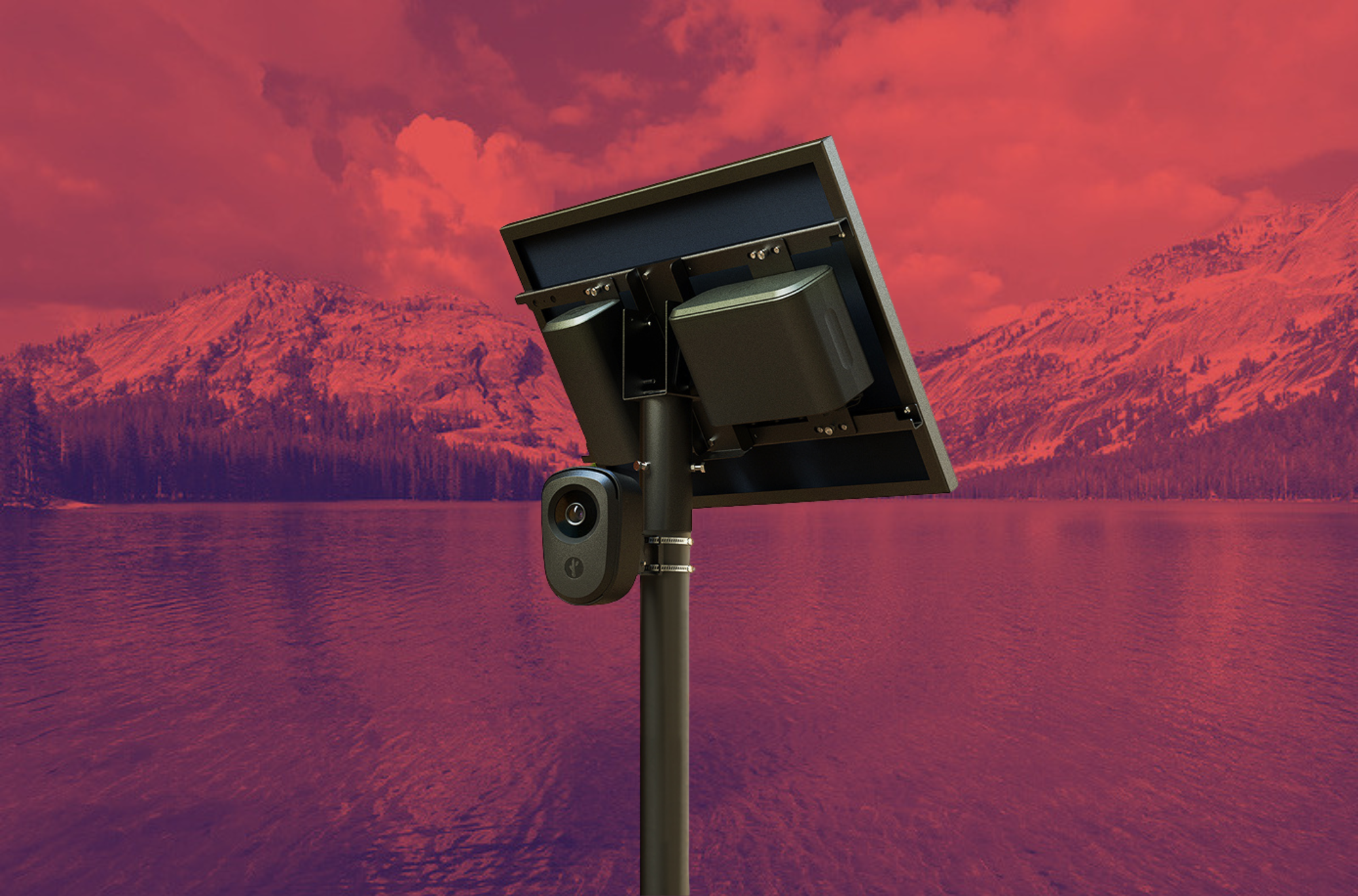
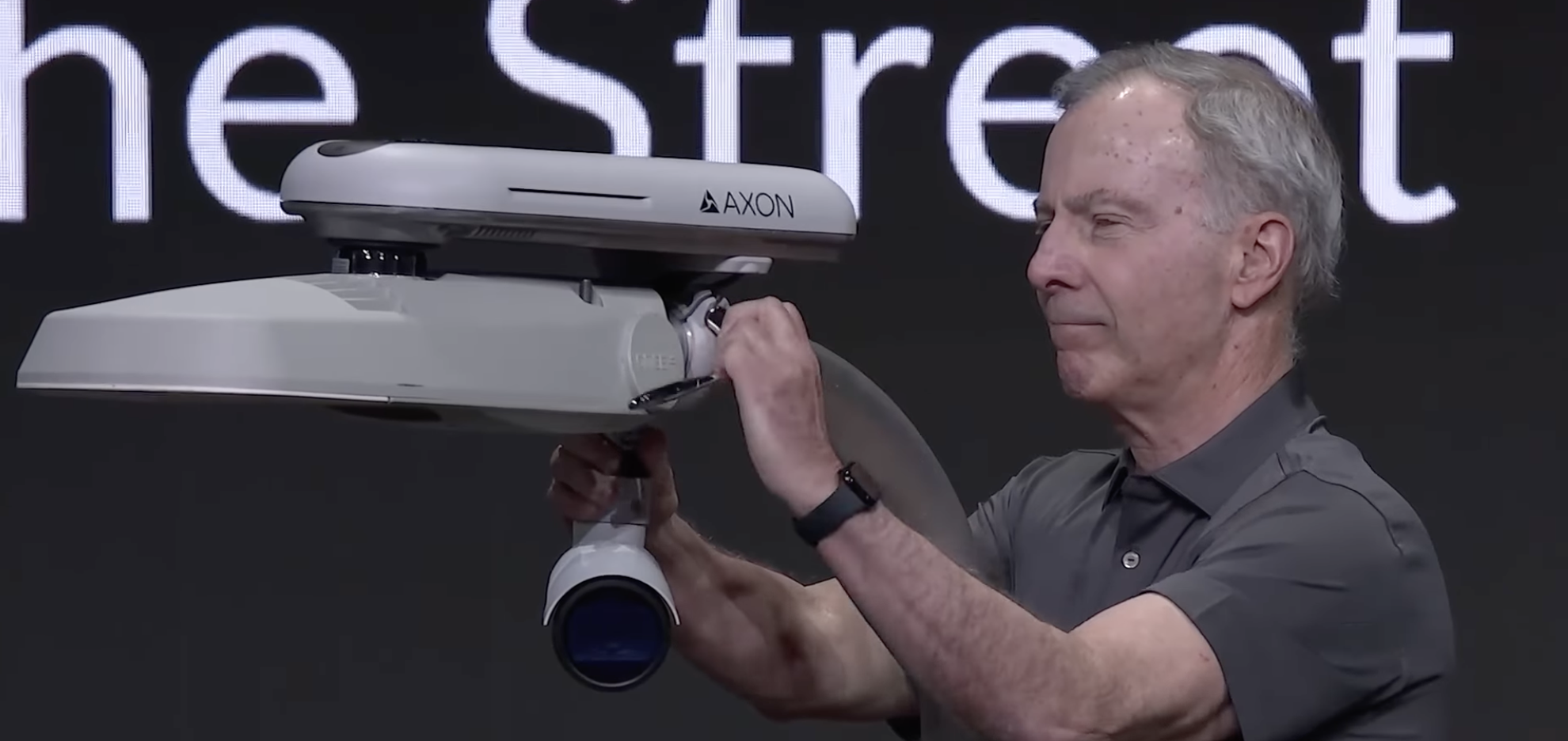
A handful of cities across the U.S. have ditched Flock’s automatic license plate reader (ALPR) cameras and immediately replaced them with equivalent systems from law enforcement contracting giant Axon, according to local media reports and government documents from around the country. Axon, for example, advertises AI-powered cameras that attach to an existing streetlamp and are designed to completely blend in with their surroundings, and also collects license plate data with cameras installed inside police officers’ patrol vehicles.
💡
Do you work at Axon? Do you know anything else about its technology or expansion? I would love to hear from you. Using a non-work device, you can message me securely on Signal at joseph.404 or send me an email at joseph@404media.co.
Police in Wisconsin used Flock to determine that a man “travels to Michigan frequently,” where marijuana is legal, then back to Wisconsin, where it is illegal. They then used his travel across state lines as tracked by Flock as part of the probable cause justification to search his car for weed; he was eventually arrested on marijuana possession charges, according to court records reviewed by 404 Media.
The searches came to light in a Wisconsin criminal complaint against Edward Abrams-Phillips, who was wanted for bail jumping on domestic violence charges. But the criminal complaint makes clear that beyond the bail jumping and domestic violence charges, police specifically studied Abrams-Phillips’ interstate travel to create the pretext for searching his car for marijuana. The bail jumping charge was dismissed; Abrams-Phillips was found guilty only of weed possession in the case, according to the court records.
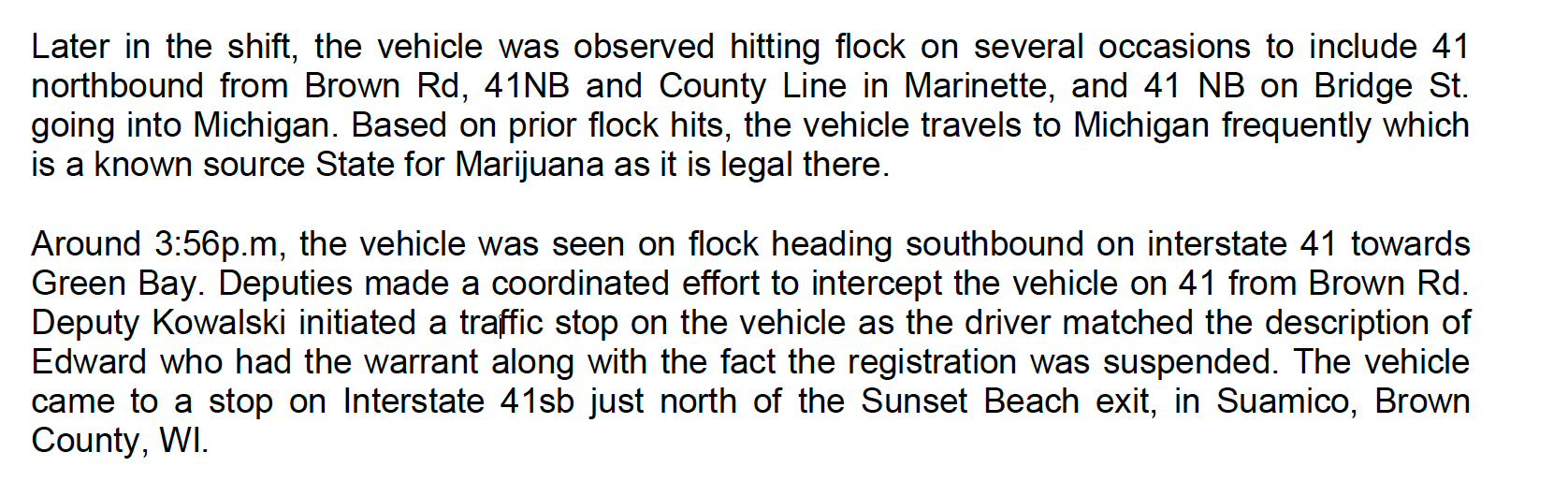
An excerpt from the "Probable Cause" section of the court records.
The complaint explains that Abrams-Phillips was tracked via Flock’s network over the course of the day to determine that he drove from Wisconsin to Michigan, a “known source state for marijuana as it is legal there,” the complaint states, adding that previous Flock hits indicated that he “travels to Michigan frequently.” Police note that, using Flock, they were able to track Abrams-Phillips driving from Wisconsin to Michigan, then back to Wisconsin over the course of several hours, where he was pulled over and arrested. The Flock searches and arrests happened in April 2025.
“The vehicle was observed hitting flock on several occasions to include 41 northbound from Brown Rd, 41NB and County Line in Marinette [Wisconsin], and 41 NB on Bridge St. going into Michigan. Based on prior flock hits, the vehicle travels to Michigan frequently which is a known source State for Marijuana as it is legal there,” the charging document notes. “Around 3:56 p.m., the vehicle was seen on Flock heading southbound on interstate 41 towards Green Bay [Wisconsin]. Deputies made a coordinated effort to intercept the vehicle on 41 from Brown Rd. Deputy Kowalski initiated a traffic stop on the vehicle as the driver matched the description of Edward.”
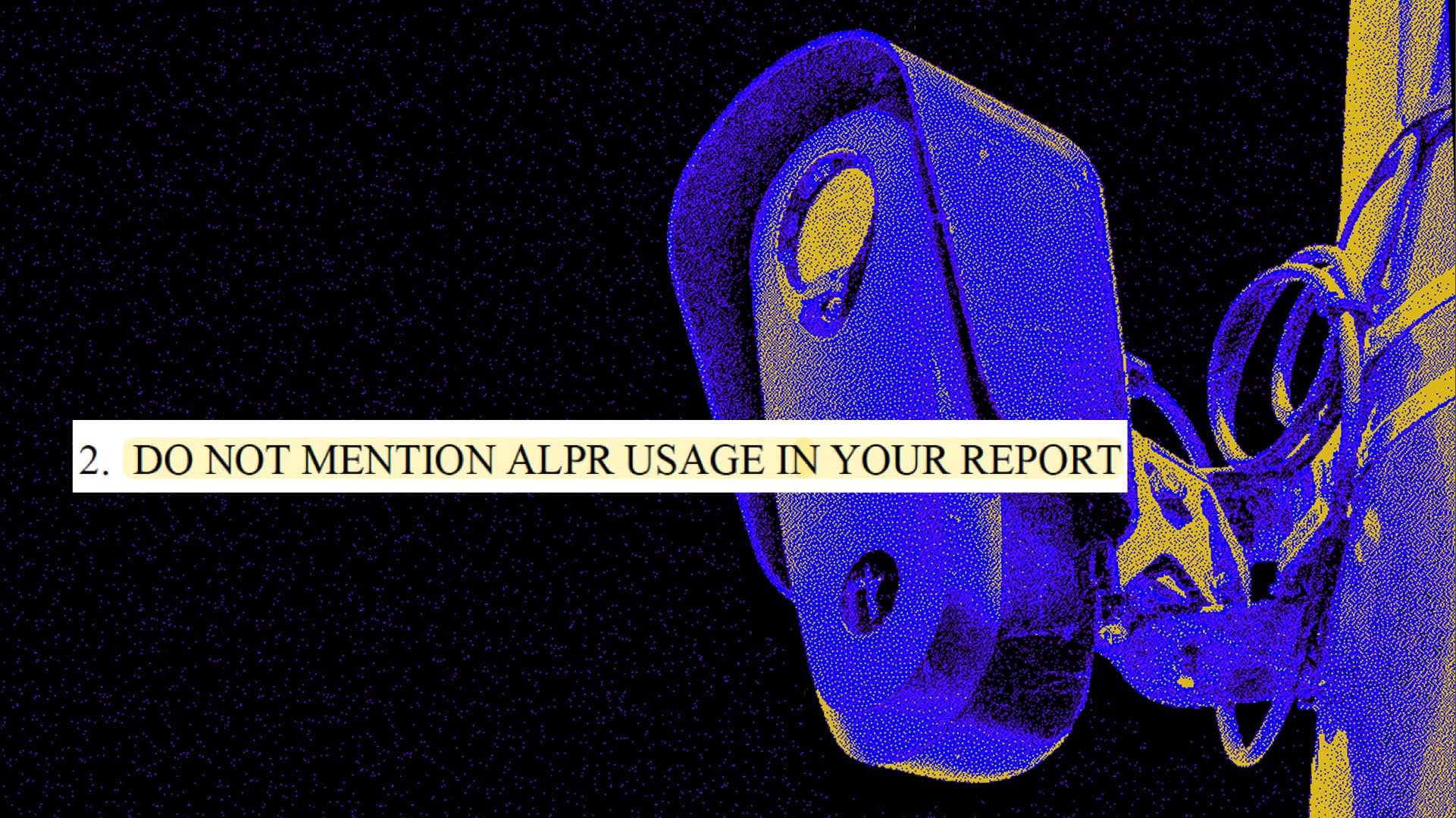
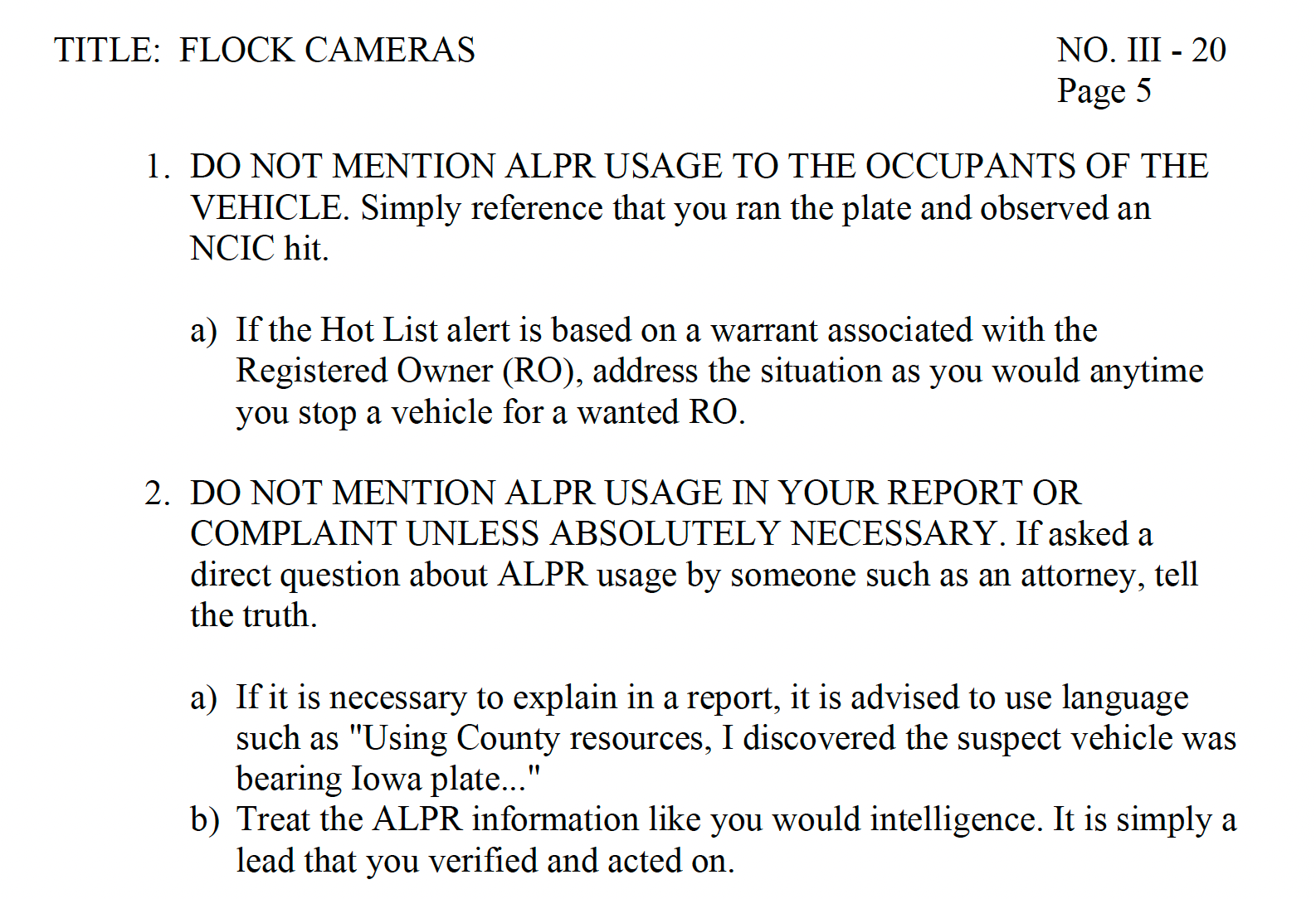
When cops use Flock to arrest someone in Wapello County, Iowa, they don’t want them to know. A usage policy for the automated license plate reader cameras in the county tells police, in no uncertain terms, to keep them a secret: “DO NOT MENTION ALPR USAGE TO THE OCCUPANTS OF THE VEHICLE,” the policy document reads. “DO NOT MENTION ALPR USAGE IN YOUR REPORT OR COMPLAINT UNLESS ABSOLUTELY NECESSARY.”
The police guidance document is unusual in how clearly it tells police not to mention their Flock use, but it also highlights several important things in the Flock debate. While Flock likes to say that it is a transparent surveillance company and that it cares about “accountability” and “governance,” some of its customers believe its use should be kept secret. Flock is now operating in thousands of cities and towns, and when, how, and why police use the system is wildly inconsistent. Even though Flock does have various auditing and transparency tools, police have their own opinions about what Flock can and should be used for and what the policies for it should be.
It is not just local police in small communities who are creating policies designed to obfuscate Flock usage. Earlier this year, we reported that police in multiple states were being told to be “as vague as permissible” about why they were using Flock because their searches could be obtained using public records requests, and that warning was being shared by the FBI and Department of Justice. Residents of many towns using Flock also say that their cities entered into contracts with Flock with little public oversight, essentially quietly opting them into a nationwide surveillance network without robust public debate.
Wapello County’s “standard operating procedures” document for Flock cameras was created in November of 2025 and was obtained by a 404 Media reader using a public records request and was shared with us. Coincidentally, Wapello County’s largest city is Ottumwa, Iowa, where 404 Media ran a Super Bowl commercial earlier this year. The county has four Flock cameras via a contract it signed with the company in late 2024. The policy further instructs police to be vague in any arrest report, suggesting that they simply call the Flock system “county resources.”
“DO NOT MENTION ALPR USAGE IN YOUR REPORT OR COMPLAINT UNLESS ABSOLUTELY NECESSARY. If asked a direct question about ALPR usage by someone such as an attorney, tell the truth,” it says. “If it is necessary to explain in a report, it is advised to use language such as ‘Using county resources, I discovered the suspect vehicle was bearing an Iowa plate.’ Treat the ALPR information like you would intelligence. It is simply a lead that you verified and acted on.”
The guidance to keep Flock use secret is reminiscent—but less extreme—than guidance on some other secretive police technologies. For years, police tried to hide the existence of cell site simulators (popularly known as Stingrays), going as far as to drop criminal cases where it was likely that a judge would expose information about them. Stingrays are essentially fake cell phone towers that can be used to identify the phones of people in a specific area.
In the public records request, Sheriff Don Phillips said “there is no need” to tell people about the use of Flock.
“Our policy requires deputies to check the license plate to make sure the correct plate is accurate and the information as to an arrest warrant, stolen vehicle, stolen plate or missing person is correct,” he said. “There is no need to tell them about our investigative methods or sources, such as the camera system, because the information is verified by the deputy running the license plate. It is common practice for law enforcement to refrain from disclosing investigative methods and sources to prevent criminals from learning how to circumvent them.”
Phillips did not respond to a request for comment.
404 Media has obtained a coaching guide that Flock surveillance gives to police about “how to speak to city councils about public safety technology.” The handbook highlights how Flock and police team up to convince cities to buy and keep its automated license plate reader technology, even when there is widespread public opposition to it, and encourages police to “own the narrative before someone else does” by championing the technology before citizens can oppose it during public comment periods.
The PDF guide notes that the general public and cities now “increasingly expect transparency, oversight, and accountability alongside public safety outcomes,” and tells police to not argue with people who believe that Flock’s license plate readers are “mass surveillance.”
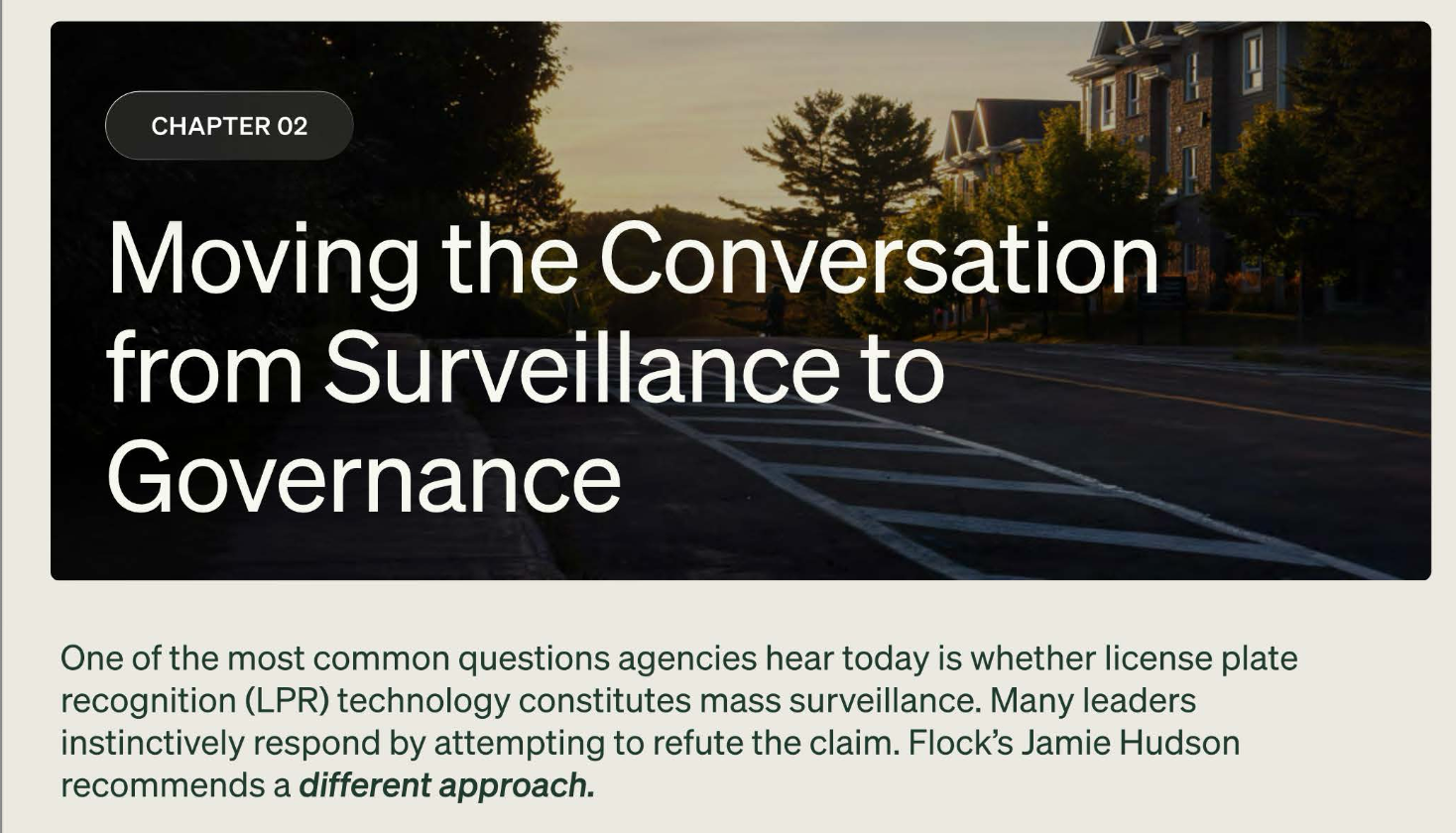
“One of the most common questions agencies hear today is whether license plate recognition (LPR) technology constitutes mass surveillance. Many leaders instinctively respond by attempting to refute the claim. Flock's Jamie Hudson recommends a different approach,” the guide reads.
“Don’t avoid the concept of mass surveillance because you’re not going to convince opponents that it’s not,” the company recommends. Flock tells law enforcement agencies they need to try to convince city council and city managers that the technology is worthwhile before meetings with the public occur; that they need to have a “carefully scripted presentation” ready to go; and that police need to say they want Flock because they want to keep the community safe: “You care about your community. That’s why you’re bringing this in.”
Flock began offering this guide as part of a broader attempt to coach police on how to push back against criticism of its policies and security practices, many of which 404 Media has investigated and shed light on. These include the fact that Flock data was regularly making its way to Immigrations and Customs Enforcement (ICE), often in violation of sanctuary city and state laws; that Flock was used to search 83,000 cameras nationwide for a woman who had an abortion in Texas; and that Flock has been used by police to stalk people and surveil protesters. These investigations and broader concern over the surveillance state have led many cities to hold city council meetings to reconsider their Flock contracts, and this Flock-produced guide is an attempt to help police shape the narrative in a way that will either convince cities to buy Flock or to keep their contracts.
“The recent headlines about our company are largely a result of this environment,” the company told cities.
“Opponents have a very carefully scripted narrative. They come prepared. You should also have a carefully scripted presentation that addresses those concerns ahead of time,” the guide says. “The agencies that navigate these conversations successfully rarely wait until a council meeting to educate stakeholders. They brief city managers early. They meet with council members before votes occur. They share policies proactively and answer questions before public comment periods become the first introduction to the program.”
The guide also tells police that they can convince city councils that Flock is worth the monetary cost by conveniently not focusing on how much the cameras cost, but by “reframing the financial discussion itself” to focus on “the cost of unresolved crime.” Flock also writes that much of the opposition to its technology is happening because people “do not understand how it works or how it is governed.” This idea is one that has been regularly repeated by Langley over the last several months.
Surveillance companies regularly try to get police to act as quasi salespeople and spokespeople for their companies, pitting a private company and taxpayer-funded law enforcement on one side and citizens on the other. “For years, surveillance vendors like Flock Safety have shaped policy debates cities are supposed to run independently — staging council ‘prep calls’ and exploiting a basic asymmetry: the vendor controls the facts, and city staff are rarely positioned to challenge them,” Sarah T. Hamid, director of strategic campaigns at the Electronic Frontier Foundation told 404 Media after reviewing the guide. “The financial interest is obvious. Flock isn’t just selling surveillance, it’s scripting the public case for buying it. Because Flock treats public trust as a messaging problem rather than a governance outcome, that script keeps officials focused on ‘accountability’ in the abstract instead of the concrete harms and documented abuses its network has already enabled.”
404 Media has watched numerous city council meetings around the country where police talk about how Flock is a critical law enforcement system for them; in many cases, a police chief will speak about Flock and then introduce a Flock employee to give a presentation about the surveillance system. On Monday, 404 Media published an interview with a former Flock government affairs manager who regularly pitched the technology to cities at public meetings. An activist who has been pushing back against Flock in their community and who shared the guide document with 404 Media said that they have regularly seen the strategies suggested by Flock deployed in city council meetings they have attended and watched. 404 Media agreed to keep the activist anonymous to protect them from retaliation.
“I think this document shows a coordinated effort from Flock Safety to compel law enforcement agencies to convince our elected leaders to represent their interests as a company rather than the interests of concerned citizens,” they said. “I have watched many meetings locally in my city and my state and across the country, and you can see the techniques used in this ebook in the presentations given by law enforcement. Pivoting conversations away from concerns about mass surveillance and directing them towards procedure and governance is a vehicle that's used to downplay the concerns of privacy-minded citizens. We have every right to expect our elected leaders to listen to us, and it's very common to see city councils vote with a supermajority in favor of approving Flock contracts despite standing-room only attendance at city council meetings with little to no public support for this product.”
The guide specifically highlights several supposed success stories in which communities had very real concerns about Flock but ultimately decided not to get rid of the technology. For example, it highlights how Flock was able to get a vote in favor of its technology in Oakland, California, despite it being “one of the most scrutinized public safety technology debates in the state,” with “more than 140 public comments” and opposition from the city’s Privacy Advisory Commission: “The conversation shifted when officials stopped asking the public to trust the technology and started showing how the technology could be audited, reviewed, and held accountable.”
It also tells the story of Richmond, California, which allowed its Flock contract to temporarily lapse after the city’s cameras were included in the company’s national lookup tool. City officials there worried that their cameras’ data would be accessed by ICE, in violation of California and local law. “After concerns emerged around data sharing and sanctuary city policies, the city's program was paused and subjected to intense public scrutiny,” the Flock guide says. “Rather than relying on generalized claims about effectiveness, department leadership presented two and a half years of local results, including 274 arrests and 259 vehicle recoveries connected to the program. The council ultimately voted 4-3 to reinstate the system.”
Flock did not immediately respond to a request for comment.
This is an adaption of a podcast interview 404 Media recorded with Jonathan Paz, a former Flock employee who is now running running for Congress in Massachusetts’ 5th District. Check out the whole thing here on YouTube.
Jonathan Paz was initially nervous when he started working at the surveillance company Flock. It was his first tech job. But he was interested in the company’s mission. Flock’s cameras, which constantly scan the license plate of every vehicle driving past, were for finding missing people. Staff at the company were able to solve real issues.
In his job as a government affairs manager a couple of years ago, Paz represented Flock in public hearings, with the goal of getting a city to purchase Flock cameras. These sorts of hearings are happening on a near constant basis all across the country, as cities and towns participate in a national conversation about whether they want Flock cameras in their community or not.
On July 20, Jacob Petrosky stood in front of the Casa Grande, Arizona City Council during a public comment session and made an announcement.
“I've spent the last several months talking to people all over Casa Grande, and one thing keeps coming up: Safety. So, today I'm excited to announce a new company called Shepherd Safety,” he said. “Our mission is simple. Keep government officials and their families safe.” It would be no different than how the city monitors its citizens using Flock cameras, he said; he planned to launch satellites that would use AI to monitor “where government officials go, where they stop, who they meet with, and when they return home.”
He said he’d already started compiling profiles on their vehicles, spouses vehicles, children's vehicles, and planned to combine that data with Bluetooth signals, advertising IDs, and commercial data sources, “so our authorized users can replay the movements of every government official and their immediate family,” he said. Local businesses would be invited to join the network, to “protect” officials while they shop, eat at restaurants, and move around the city.
After the Los Angeles Police Department allowed its contract with Flock to expire, the surveillance company’s CEO, Garrett Langley, told local news that people don’t understand how its technology works, and that its automated license plate readers (ALPR) only take a “static picture” of a car. “The technology is really simple,” he told ABC7. "A car drives by, we take a picture. It's a static picture of a car, and then we read the license plate. That's what the technology is—it's actually not that complicated, it's pretty simple."
But for the last year, Flock has been marketing a new upgrade that allows “all” of its ALPRs to record live video. Langley is either dramatically underselling what Flock’s technology can do while saying that people don’t understand it, or Flock has quietly rolled back a major product feature without telling anyone. (Update: after the publication of this piece, a Flock spokesperson said Flock has discontinued the feature for law enforcement agencies.)
Flock has not been quiet about this live video upgrade; its salespeople have pitched the upgrade to cities, and the company has mentioned it in numerous blog posts (though it recently deleted one of them), and Langley even spoke about the capabilities with Forbes last year, suggesting cops could pull video in real time from its ALPR cameras: “We will just open up the five nearest cameras in real time and say, here's what's happening right now,” Langley said.
In June of last year, a Flock blog post called “Why video is the missing link in your LPR program,” the company wrote “All existing Flock LPRs will soon stream live video and capture clips with a free, optional software update. No new hardware, no permits, no extra cost. Same lens, same angle and field-of-view as the LPR. See basic video clips for every plate read. Zero lift for your team. Free and optional to opt in.”
The blog post describes several potential use cases, and different setups that police officers could use, which include adding a separate video camera to the poles that Flock cameras are installed on but also, crucially, includes the fact that all Flock ALPR cameras are capable of taking video: “Fixed live video is coming to all LPR cameras, free by end of 2025.”
And, in a now-deleted product launch blog, Flock wrote “LPR Cameras Can Become Video Cameras,” and added it was a “move that will transform the largest network of LPR cameras in the nation.”
“Flock customers don’t have to do a thing or pay a thing,” said Flock’s Chief Strategy Officer Bailey Quintrell in the blog post. “This will be a no-cost software update we push over the cloud.”
Text messages obtained using a public records request by Jason Hunyar, an activist in Dunwoody, Georgia, show that cops in Dunwoody turned on this feature. The text messages are between John Watson, a Flock employee, and a Dunwoody police officer from January of this year.
“Are y’all able to live stream LPR video yet?,” Watson asks.
“Yes,” the officer says.
“When did they turn that on and how has it been. And who turned it on?” Watson responds.
“It’s been about a month and it’s pretty cool feature,” the officer says. “Small angles but cool for incidents if needed. I’ve been working with Vijay [Dhamija, Flock’s Director of Product] on it.”
“Gotcha. Any stability issues?,” Watson asks.
“Not that I have noticed,” the officer responds.
The Flock spokesperson said, “This was not a broad rollout. Five law enforcement agencies participated in a limited pilot to test live video on select LPR devices; the LAPD was not among them.”
“In March, Flock discontinued the feature for law enforcement agencies, and it is no longer active at any of the five participating agencies. The pilot provided live video only and did not include recording or stored-video playback,” the spokesperson added.
Update: this piece has been updated to include comment from Flock.

 Connexion