Poll finds 66% of Americans think Trump is using position for monetary gain as his approval rating hits a new low
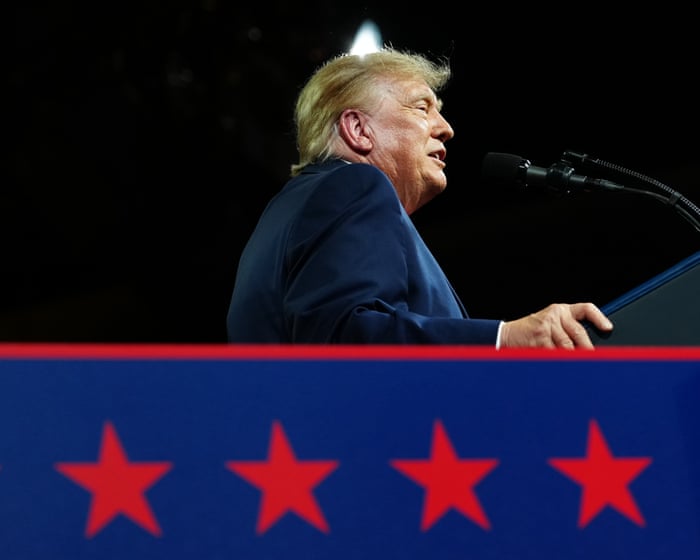
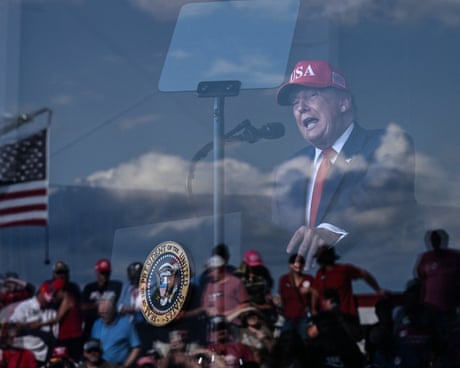
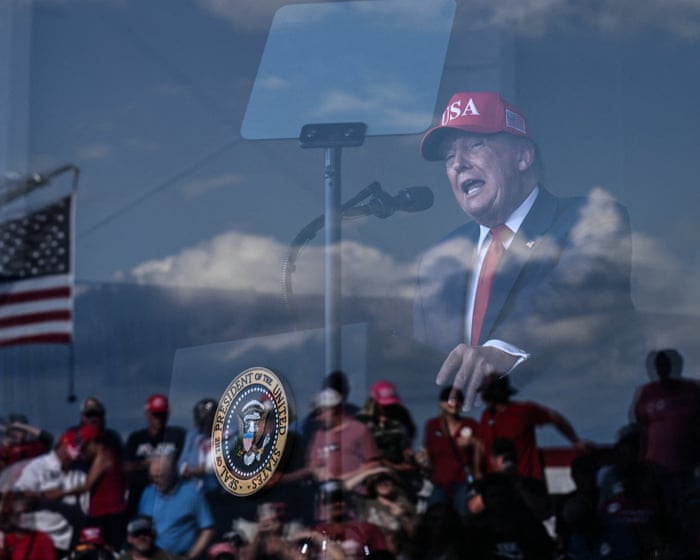
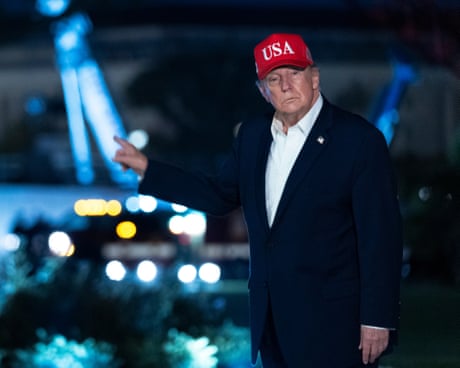
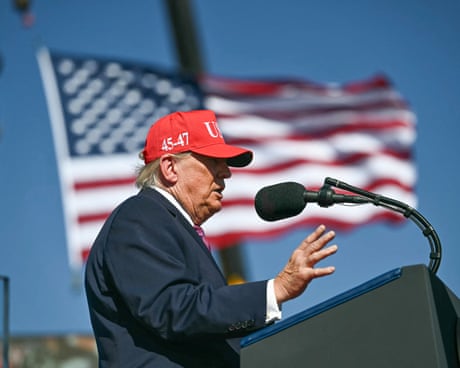
Most Americans think Donald Trump is using the presidency to enrich himself, according to a new poll, as the US president’s approval rating falls to a new low ahead of November’s midterm elections.
A new Washington Post-ABC poll put Trump’s approval rating at 33% as he continues to crisscross the country as part of his campaign blitz for embattled Republicans.
Will California stand with the working class or the oligarchs in the vote this November?
The Democratic party has a choice to make. Are we going to be New Deal Democrats or corporate Democrats? Are we standing with the working class or the tech oligarchs?
Proposition 40, California’s billionaire tax, is the most important ballot initiative in America and a fight for the soul of our party.
Rohit Khanna is aUS congressman and attorney serving as the US representative from California’s 17th congressional district
A new Washington Post-ABC poll shows that Donald Trump’s approval rating has reached a new low – 33%.
This comes, just over two weeks away from the November midterms, as the president continues crisscrossing the country as part of his campaign blitz for embattled Republicans.
The Republican state attorney general appears uniquely ill-chosen as a candidate – but he is a political survivor who could yet frustrate Democratic dreams
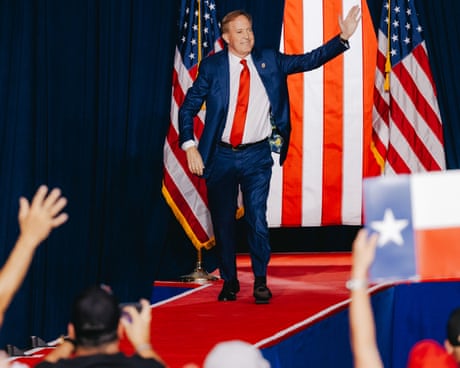
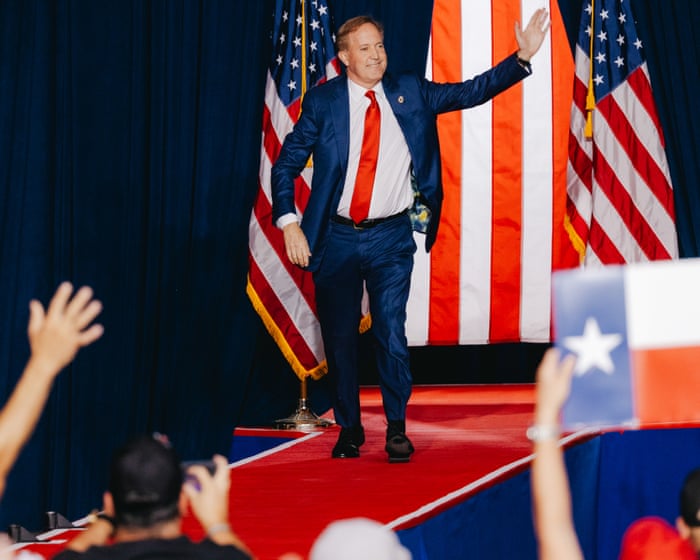
Depending how you look at the situation, it is either predictable that Ken Paxton, Texas’s attorney general and Republican candidate for US Senate, is struggling in the polls – or impressive that he is not doing worse. Beloved by hardcore Maga voters and regarded with skepticism by the broader voting public, Paxton is also puzzlingly bland. Recently, Donald Trump told a crowd of supporters that the 63-year-old Paxton “may not dress right, he may not talk exactly perfectly, and he may not be the best-looking guy I’ve ever seen”. The president was endorsing him.
Yet it is Paxton’s ability to attract – and somehow scrape through – scandal that makes him a less charismatic, perhaps, but still kindred spirit of “Teflon Don”: nothing sticks. He has survived state prosecution (on securities-related charges that he settled without admitting guilt), impeachment by the Republican-led Texas legislature (on abuse-of-office charges of which he was later acquitted), and so many controversies that it can be difficult to pin down the most outrageous.
President has hit red states to drum up Republican support – and his increasingly strange performances are on full display
Montana, Tennessee, Alaska. In the run-up to an election, a Republican president typically wouldn’t be campaigning in these traditionally red states.
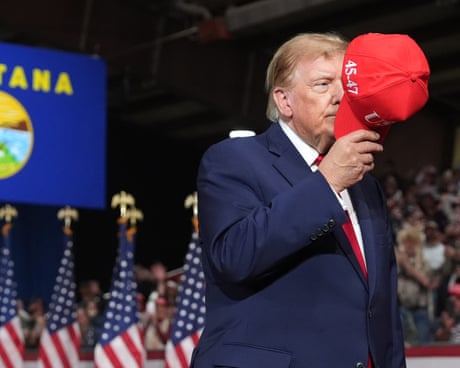
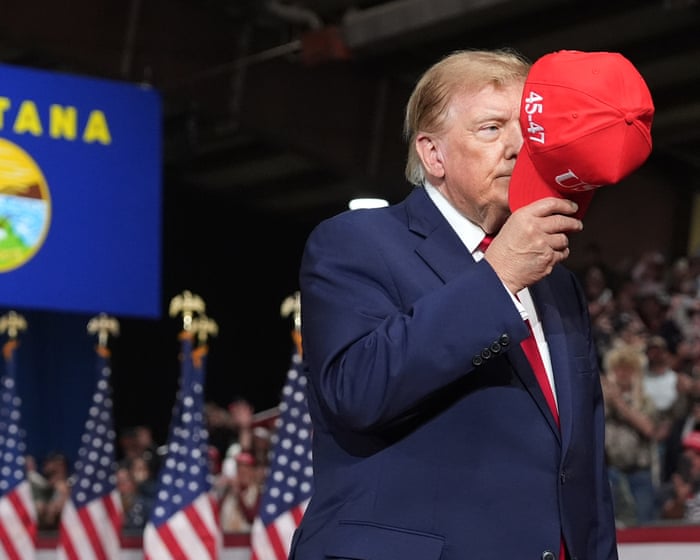
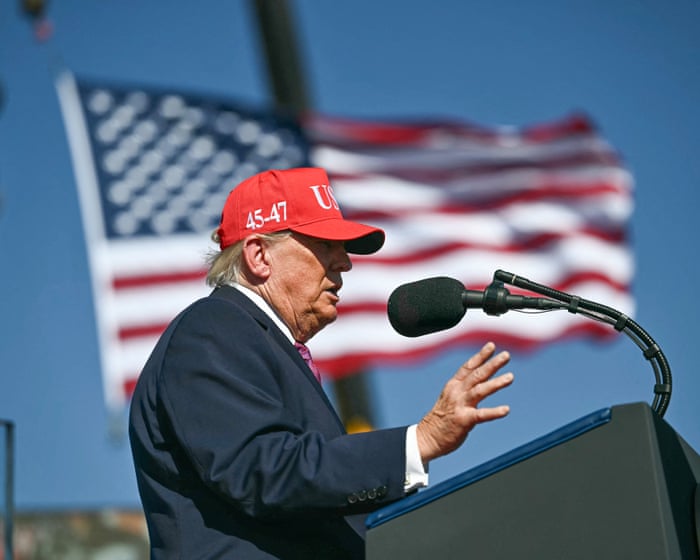
These aren’t normal times, however, and Donald Trump, an unpopular president leading an unpopular party, has held rallies in those states in the last week, seeking to drum up support. But a series of eccentric performances from the president means his behavior has been the focus, rather than any of the candidates he is backing.
President appears at rally for struggling Mike Collins, dismisses critics and touts ‘most successful’ two-year run
At a rally in north Georgia, Donald Trump again claimed that the 2020 election in Georgia was fraudulent, alleging that the election of US senator Jon Ossoff was illegitimate.
Ossoff, who faces US congressman Mike Collins in November, does not represent Georgia’s values, Trump said.
The media-savvy Democratic senator is defying predictions of a tight re-election battle. But he insists he has ‘zero interest’ in a presidential run in 2028
Jon Ossoff has “zero interest” in running for president in 2028, he declared during a debate this week. Jon Ossoff has “zero interest” in running for president in 2028, he told a local TV station last month. Jon Ossoff has “zero interest” in running for president in 2028, he told MS Now – twice – in August.
The Democratic US senator for Georgia said as much to CNN. And the Atlanta Journal-Constitution. And MS Now, again. And in his second Senate debate on Tuesday night.
Rising costs and threatened healthcare benefits are testing voters’ loyalty to Trump as Democrat Randy Villegas challenges David Valadao
Vanessa Martinez used to work two jobs to make ends meet. Now she works three.
In another era, the 26-year-old from California’s hardscrabble Central valley could have been a poster child for the American Dream, the sort of ambitious, up-by-her-bootstraps personality that politicians of both major parties like to highlight.
It’s indisputable that the political polarization of our time has reduced (and confused) the influence of economic conditions on US elections.
In September of 2024, in the waning weeks of the Joe Biden presidency, 65% of Republicans believed the US economy was getting worse. About six months later, as Donald Trump launched a trade war on the rest of the world with his “liberation day” tariffs, the share of Republican pessimists had dropped to 33%.
Claims that James Talarico suffered a mental health crisis spread across rightwing media, offering a warning about disinformation ahead of the US midterm election
Where is James Talarico? The question ricocheted around rightwing echo chambers before metastasising into a conspiracy theory – and a reminder of the persistent danger of disinformation in the US midterm elections.
The smear campaign began when Talarico, the Democratic candidate for the US Senate in Texas, was not seen in public for nine days. His campaign was slow to explain why. While nature abhors a vacuum, Donald Trump and social media seize on one and weaponise it.
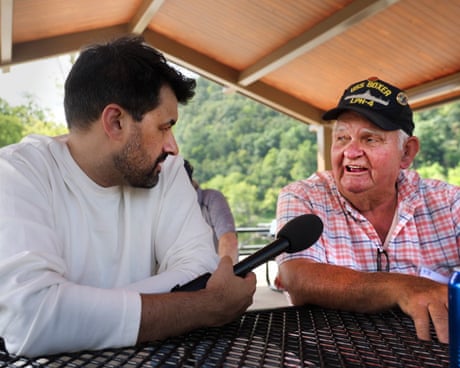
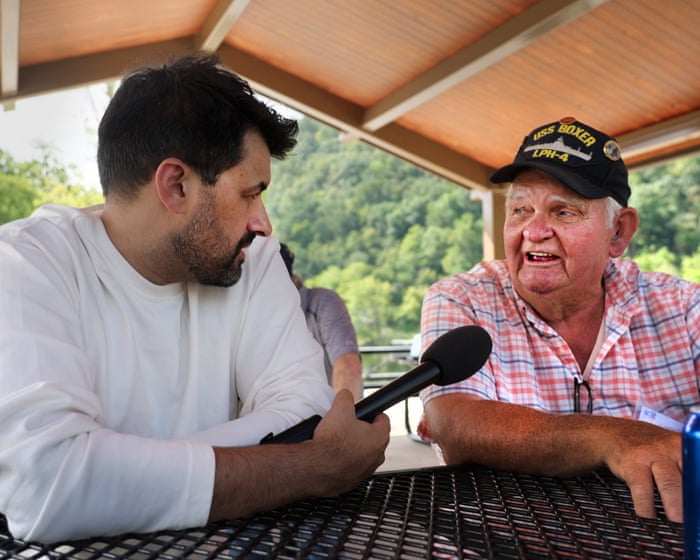
As the midterm elections loom, Oliver Laughland and Tom Silverstone travel to rural West Virginia, a Republican party stronghold, to explore how soaring gas prices, war in the Middle East and datacenter expansion are affecting Donald Trump's popularity among his base. Although the state remains staunchly Republican, there are signs of a new politics emerging – and local Democrats are looking to capitalize on it
Talarico casts himself as a moderate who would put Texans’ needs over party allegiances amid close contest against Republican Ken Paxton
James Talarico, the Texas Democratic nominee for Senate, sat face to face with skeptical Republicans and independents voters who grilled him on a slew of contentious issues including Israel’s military campaign in Gaza, abortion and foreign aid, during a CNN town hall co-hosted by the Jubilee Media digital platform on Wednesday.
One voter, a young Republican activist who volunteered at the party’s midterm convention in Dallas last month and recently appeared on Fox News as a supporter of Talarico’s opponent, questioned the authenticity of Talarico’s faith, referencing a past remark where he described God as nonbinary.
Recent polls show that American voters across the political spectrum are deeply dissatisfied with the Trump administration, and the upcoming midterm elections will provide them an opportunity to express how they feel. The Guardian's reporter Fabiola Cineas breaks down the four key issues that will drive voters to the polls
Donald Trump has yet to weigh in on the late night ruling from a federal judge that blocks him from barring CNN, MS Now and Politico access to the White House grounds.
Previously, the president had blasted Judge Timothy Kelly – a Trump appointee – for issuing a temporary pause on his media ban. That expired on Tuesday, and Kelly handed down a preliminary injunction that stops the administration from blocking the outlets while the litigation plays out.
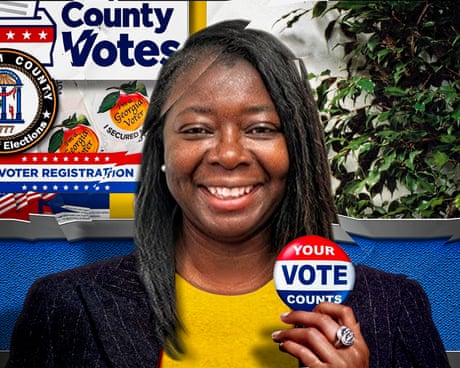
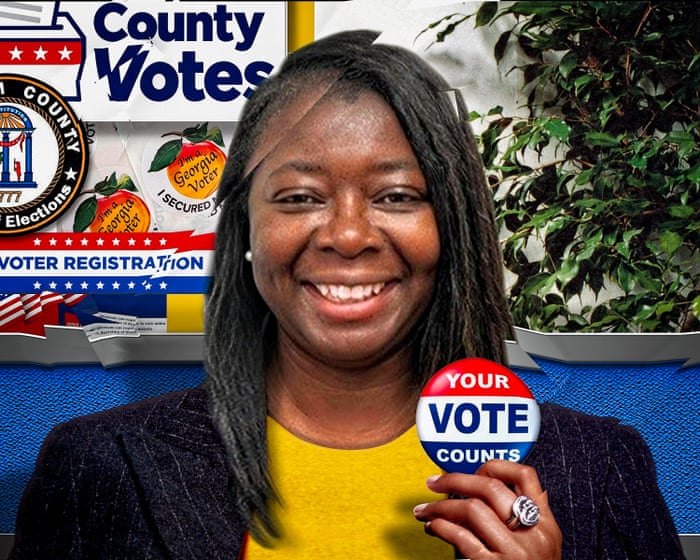
Sabrina German, a poll official in Chatham county, details a typical election day, the pressure election workers face, and fallout from 2020 disputes
It’s not that Sabrina German doesn’t have political views. But as the director of voter registration for Chatham county, Georgia, talking politics is like breakdancing in traffic. “I don’t talk politics with anyone,” says German; she knows better.
America’s partisan minefield has trained much of the country – aside from that one uncle you avoid at weddings and funerals – to get pretty good at the art of political diplomacy in polite company.
The one I worry about most is voter anger – which both parties are not taking seriously enough
That chill in the air you are feeling is not the weather, it is the Republicans freaking out about the 2026 midterm elections. Midterms are always referendums on the incumbent, though the party in power usually would rather they weren’t.
This midterm feels less like a referendum on Trumpism than a dirge. It’s easy to see how Republicans got here, lulled into thinking that their guy, Donald Trump, could once again defy political gravity. Trump certainly thought he could.
Molly Jong-Fast is the host of the Fast Politics pod, contributing writer for the times and an analyst for MS Now
Congress calls for Match Group and others to do more to help victims like Mary, who lost $100,000 to app scammer
Mary met a man on the dating app Plenty of Fish in 2024. She told the Guardian she had been looking for a connection, but instead became the victim of a romance scam that cost her almost $100,000.
“There was a lot of conversation, and then it started with the constant contact, pressure and repeated asks for money,” Mary, who asked that her last name be withheld, said in an interview on Tuesday. “It just escalated really, really quickly.”
In this episode of Guardian Australia’s US politics podcast, co-hosts Reged Ahmad and Jonathan Yerushalmy take a look at the midterms, which are coming up in early November. All 435 house seats are up in this election as representatives only serve fixed two-year terms. In the Senate, 35 of 100 seats are up for grabs too, as senators serve six-year terms.
There are many predictions of a blue wave – a big win for the Democrats, who are tipped to take back the House and Senate. But are pollsters being too optimistic? What are the factors that could instead allow the Republican party and the Trump administration to hold onto power in Congress? They also look at why the US ambassador to Greece, Kimberly Guilfoyle, has been ousted from her job – and whether criticism of the new White House press secretary, Katie Zacharia, is fair
These graphics explain what the Democrats would need to do to flip the Senate and House of Representatives
A turning point in Donald Trump’s second term will soon arrive. On 3 November, voters across the US will decide whether to keep the president’s Republican allies in control of Congress, or return Democrats to the majority.
Many indicators of voter sentiment suggest the Democrats are favored to take back control of the House of Representatives, and potentially the Senate. Winning either would be a significant victory for the party and give it the power to block Trump’s legislative agenda and more aggressively investigate his administration.

 Connexion