Vue normale

The Fedorov protesters lost. But they backed a man for what he built, not what he promised—and that may be new in Ukraine.

20 août 2026 à 15:14

A column of protesters demanding reinstatement of Mykhailo Fedorov as Defense MInister walks in vul. Khreschatyk in Kyiv, 1 August 2026. Photo: Serge Kostezh/Kyivpost

On 19 August, veteran and civic activist Dmytro Koziatynskyi thanked everyone who had taken part in the month-long protests to bring back Mykhailo Fedorov, and said it was all worth it. Koziatynskyi was one of the organizers of rallies across Ukrainian cities demanding the reinstatement of Fedorov, the defense minister widely credited with driving Ukraine's military-tech overhaul, after he was abruptly dismissed on 14 July.

His firing detonated a month of protests because Fedorov was no ordinary minister: the 35-year-old reformer had exposed billions in defense overspending and built the drone programs many Ukrainians saw as their best chance in the war, so his removal read, to those in the streets, as the old system protecting itself.

Koziatynskyi's decision to end his protest came after Parliament voted 312 that same day to appoint Yevhenii Khmara as defense minister. Ukrainian President Zelenskyy did not meet the protesters' main demand: the return of Fedorov.

"It is a pity that we were never able to establish a dialogue between the authorities and society. I hope this issue will be resolved over time because, in my view, the lack of communication was the root cause of these protests," Koziatynskyi writes.
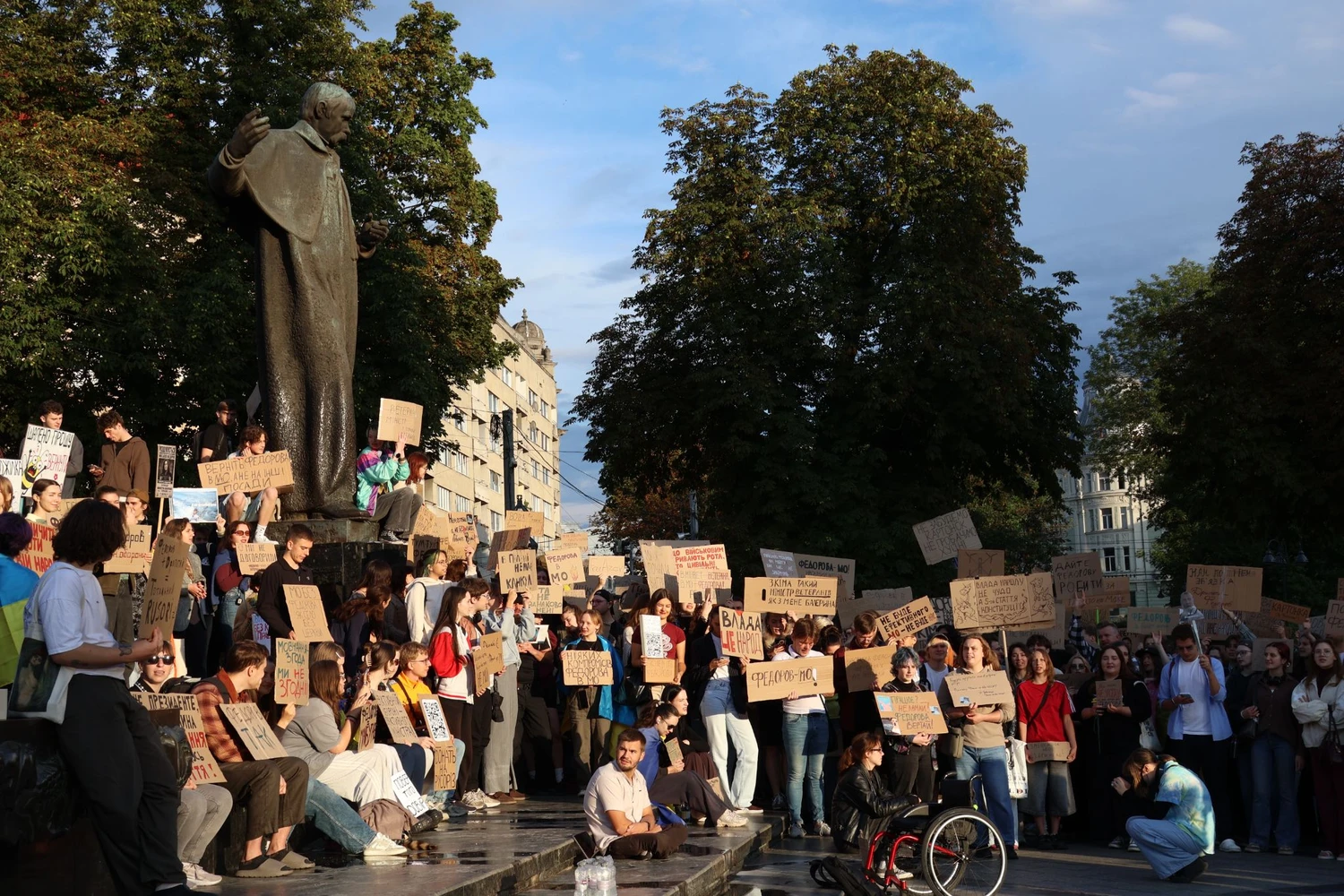
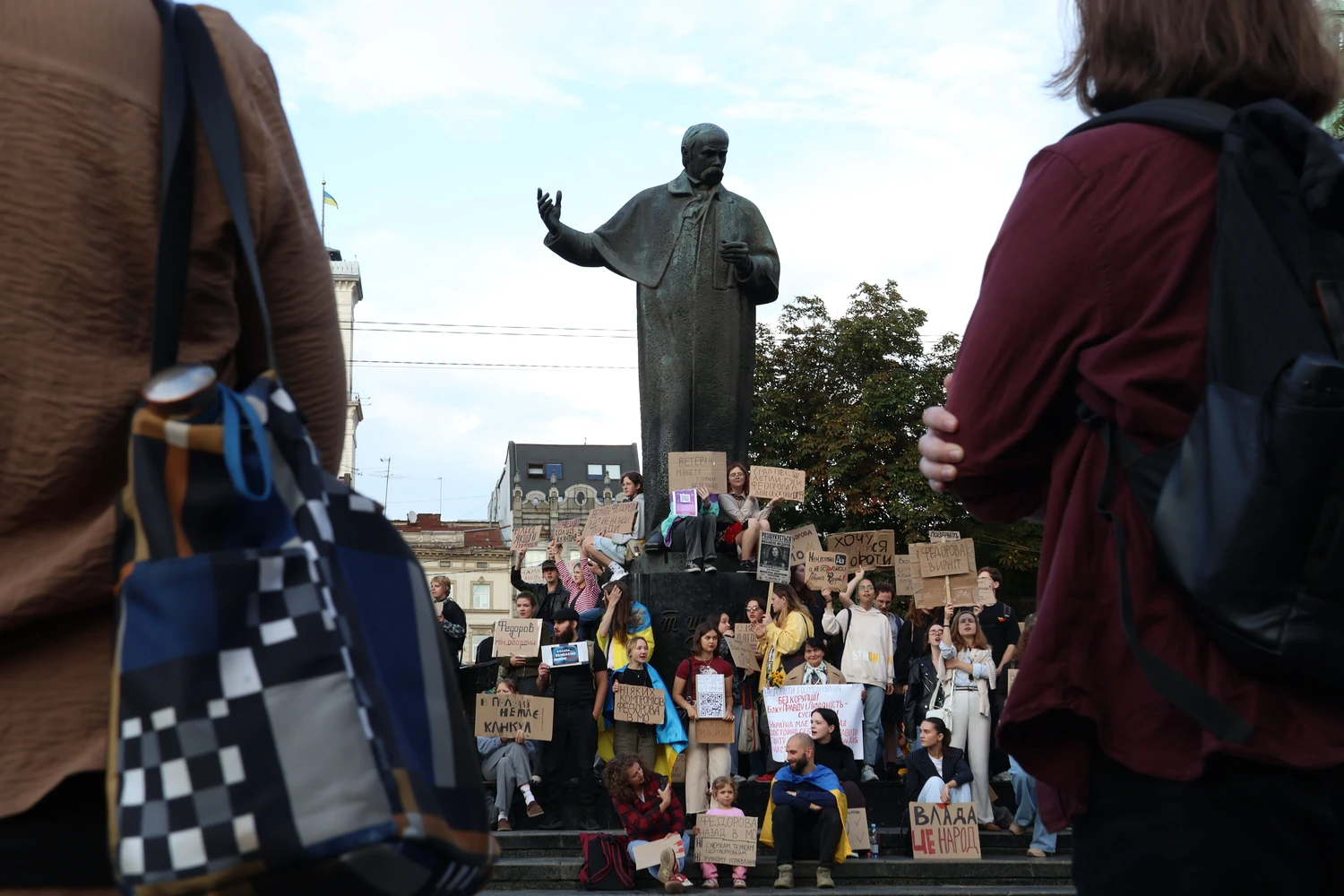
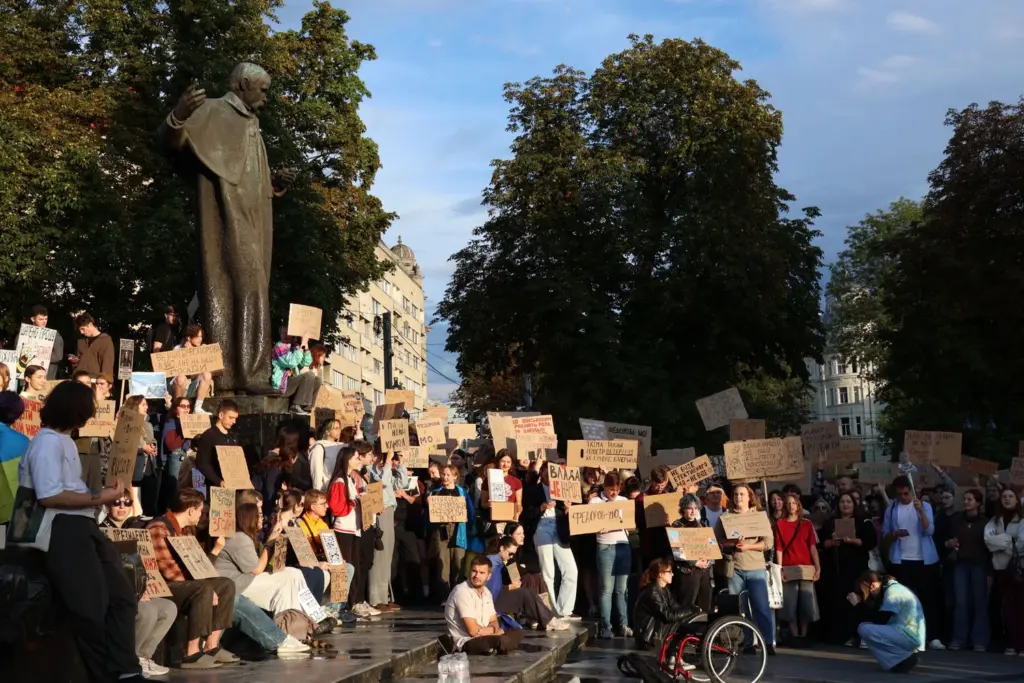
Demonstrators beneath the Taras Shevchenko monument in Lviv hold handwritten cardboard signs during an open-ended protest calling for Mykhailo Fedorov's reinstatement as Ukraine's Minister of Defence. Photo: Solomiia Stanovych/Euromaidan Press.
Explore further

Ukraine’s cardboard protests look like democracy working. In a war, that’s also the risk.

But the rallies may leave Ukrainian society with something that outlasts the outcome of one personnel decision, Anatolii Romaniuk, a political scientist at Ivan Franko National University in Lviv, told Euromaidan Press. The protesters lost: Parliament appointed Yevhenii Khmara as defense minister, not Mykhailo Fedorov. Yet the "cardboard Maidan," as the protests were termed for their abundance of handmade signs, may have revealed the beginnings of a broader shift in Ukrainian society. Romaniuk believes its significance lies in why people took to the streets: to support a politician not because of what he promised them, but because of what he had already done.
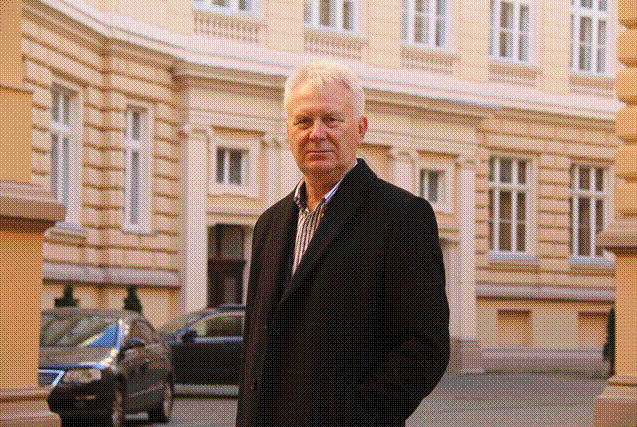
Anatolii Romaniuk. Photo: Ivan Franko National University of Lviv

Actions, not words

Romaniuk believes Ukrainian society has long lived under what he calls a "political curse": large numbers of Ukrainians repeatedly bought into populist promises from politicians offering things that were simply unrealistic.

He points to every Ukrainian election from 2004 through 2019, arguing that the share of populist promises only increased. Experts could see that many of them were impossible to fulfill, he says, yet voters continued to support politicians who made them. Romaniuk points to a promise from the 2019 election campaign that Ukrainian wages would overtake Poland's—at a time when the average salary in Ukraine was around $400 a month, and Poland's was roughly three times that.

The 2026 protests may represent a change in perspective, he argues: people backed a politician not for what he said he would do, but for what he had already done.

Fedorov's signature result was an audit—in his first months, his ministry exposed roughly $7.2 billion (300 billion hryvnia) in defense overspending, and that figure became the movement's rallying cry. "The audit showed 300 billion in theft. They removed the auditor, not the thieves," read one cardboard sign in Lviv.
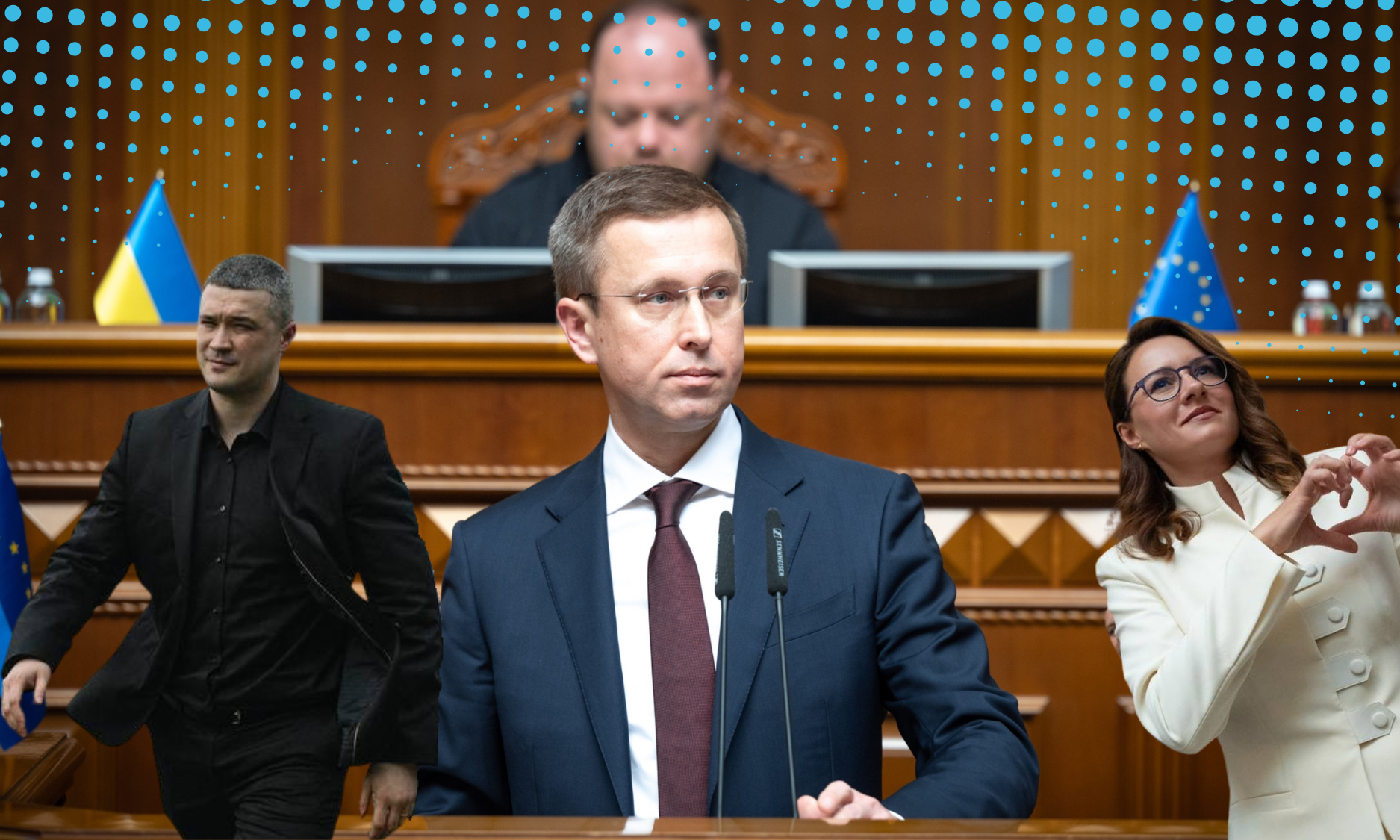
fedorov, koretskyi, svyrydenko collage
Explore further

“They removed the auditor, not the thieves”: why Ukrainians are protesting Zelenskyy’s reshuffle

The protesters were defending a record: open procurement built on the Brave1 marketplace, where frontline units order drones directly from certified manufacturers; a first competitive tender that cut 155mm shell prices by 16%; and, above all, Fedorov's bet on robotization—technology instead of manpower—that many Ukrainians saw as their best chance against a larger Russian army, a way to spend drones rather than lives. Fedorov was removed while he was implementing the reform, amid a conflict with then Commander-in-Chief Oleksandr Syrskyi.

"If this change in perspective continues, we will get out of the situation where we have become hostages to a growing wave of populism that would otherwise simply overwhelm us in the next elections. Because the degree, or the level, of populism in the 2019 elections was already very high. It was unrealistic," Romaniuk says of the protests' possible longer-term effect.
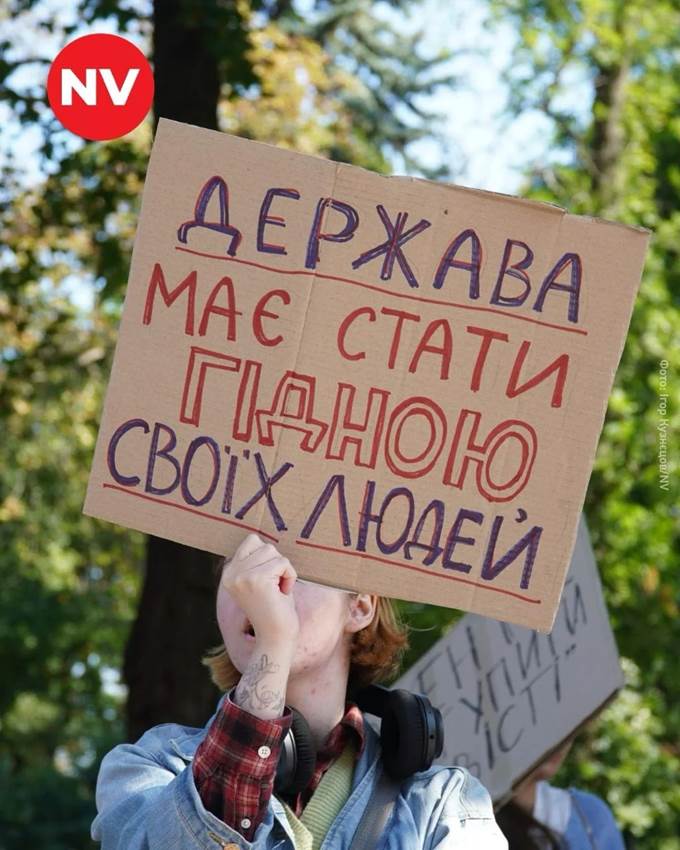
"The state must be worthy of its people." A protester stands with a cardboard sign outside the Verkhovna Rada during the session on Khmara's appointment. Kyiv, 19 August 2026. Photo: Ihor Kuznietsov/NV

The protesters were "for," not "against"

Romaniuk sees another distinction between these demonstrations and earlier protests in Ukraine's modern history: previous movements were built around being "against" something. This time, the demand was explicitly "for" something.

"If we recall the events of the 2014 Euromaidan Revolution, and even last year's protests, they were 'against.' That is, they were against Yanukovych signing an agreement with Russia and refusing to sign the Association Agreement. They were against a decision made at the highest level in Ukraine to restrict the anti-corruption bodies," Romaniuk says, referring to former President Viktor Yanukovych, whose 2013 pivot away from the European Union set off the Euromaidan Revolution.

He argues that Ukraine has never before seen protests explicitly organized in support of a government official, making the Fedorov rallies a first.

At the same time, Romaniuk acknowledges the paradox: even protests framed as being "against" something almost always implied support for an alternative. In 2004, for example, Ukrainians protested the results of the second round of a falsified presidential election that had declared pro-Russian Viktor Yanukovych the winner over his pro-European rival, Viktor Yushchenko. But by opposing those results, Romaniuk says, they were also supporting democratic elections.
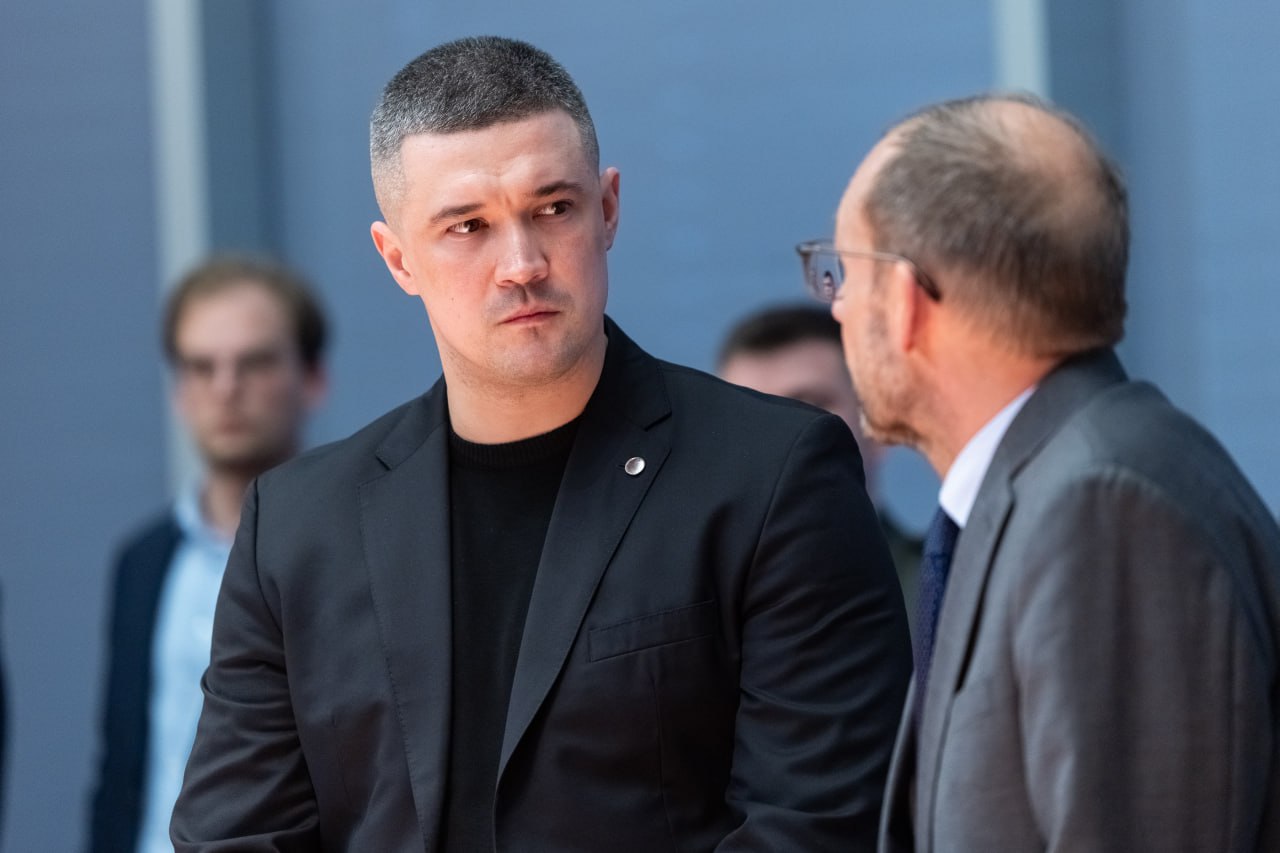
Ukrainian Defense Minister Mykhailo Fedorov in Germany, on 15 April 2026. Source: Fedorov
Explore further

Ukraine’s ousted defense minister took drone contracts away from the generals. Now they may take them back

The difference this time is that the "for" was clearly articulated. Protesters demanding Fedorov's return had an idea of the kind of Ukraine they wanted to see.

"In these protests, we have a situation where people are supporting the course pursued by Defense Minister Fedorov—the modernization of the army, changing approaches to warfare, and changing what the Ukrainian state should look like," Romaniuk says.
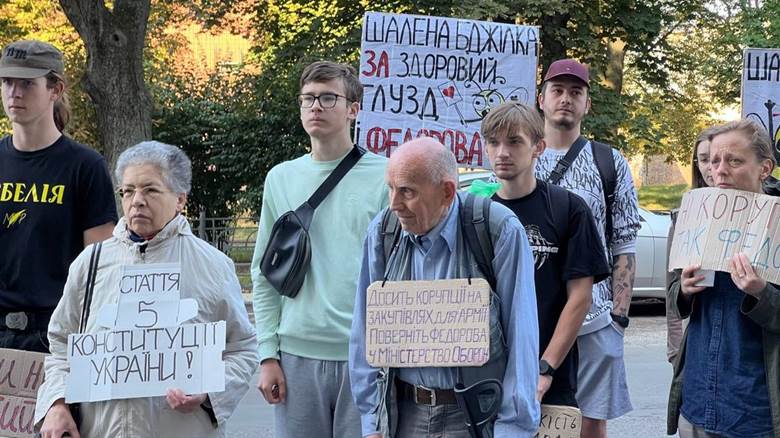
Participants in a protest calling for Mykhailo Fedorov to be reinstated as defense minister. Lviv, 19 August 2026. Photo: Snizhana Dobromylska/Suspilne Lviv.

Dariia, a 22-year-old who attended the protests in Lviv, describes her reasons for joining them in similar terms.

"My motivation is to see changes in the country, to see justice, to see that young, progressive people who put technology ahead of human losses are leading us toward victory."

She says Fedorov was one of the people introducing reforms "from the very top of government all the way to the battlefield."

"And we really saw those changes," Dariia told Euromaidan Press. She credits Fedorov with the long-range drone campaign that has struck Russian refineries, defense plants, and Wildberries depots as far as Bashkortostan, some 1,300 kilometers inside Russia: "Our enemy finds ways to attack, and we must also search for new ways to respond. Fedorov, as defense minister, was the person finding ways to respond to these attacks, how to carry out deep strikes."

mykhailo fedorov
Explore further

Ukraine’s defense minister explained how the country buys weapons—after he was sacked

This year's cardboard protests could be a good start

Romaniuk cautions that it is still too early to speak of a change in Ukrainians' political culture. But he says he would like to see this episode become the beginning of one.

"I would like other people in power to also be judged by their results, by what they have done," he says.

A genuine pattern, he adds, could only be established if similar cases repeated themselves. For now, this remains one specific episode rather than a proven trend.

Dariia connects the rallies to her own experience of protesting more than a decade earlier.

"I remember the rallies in Mykolaiv in 2014 against the occupation regime in the east. Back then, it was five people with cardboard signs standing in the rain. My family was one of them. Nobody came out, nobody understood that position… It is nice to see that people in the south and east understand now," Dariia says.

Is Activism Hurting Sociology? Sociologists Are Torn.

14 août 2026 à 08:28
A group of sociologists broke away in protest from their colleagues over disagreements about Israel. Some worry the political stances are harming the field.

© Jackie Molloy for The New York Times

Attendees of a breakaway sociology conference in New York on Tuesday made signs in support of Palestine.
  • ✇Euromaidan Press
  • Ukraine’s cardboard protests look like democracy working. In a war, that’s also the risk.
    On 16 July 2026, protesters took to the squares in Ukrainian cities with cardboard signs bearing the same demand in various forms: to reinstate Ukraine’s Defense Minister Mykhailo Fedorov. The following day, protesters added a new demand: to dismiss Commander-in-Chief of the Armed Forces of Ukraine Oleksandr Syrskyi. A few days later, Zelenskyy met the second demand—but not the first, which the protesters are still waiting on. Since the beginning of the full-scale i
     

Ukraine’s cardboard protests look like democracy working. In a war, that’s also the risk.

10 août 2026 à 13:10

Demonstrators beneath the Taras Shevchenko monument in Lviv hold handwritten cardboard signs during an open-ended protest calling for Mykhailo Fedorov's reinstatement as Ukraine's Minister of Defence. Photo: Solomiia Stanovych/Euromaidan Press.

On 16 July 2026, protesters took to the squares in Ukrainian cities with cardboard signs bearing the same demand in various forms: to reinstate Ukraine’s Defense Minister Mykhailo Fedorov. The following day, protesters added a new demand: to dismiss Commander-in-Chief of the Armed Forces of Ukraine Oleksandr Syrskyi. A few days later, Zelenskyy met the second demand—but not the first, which the protesters are still waiting on.

Since the beginning of the full-scale invasion, Ukraine has been under martial law, which necessarily restricts democracy in order to centralize governance. The country is not holding elections, citizens’ rights are restricted, and the military has become one of the country’s key institutions. Under these circumstances, the President dismissed one of the most important figures in the military at the demand of street protesters.

These centralizing tendencies of wartime rule could lead either to “strengthening democracy” or to “strengthening authoritarianism,” political science professor Anatolii Romaniuk told Euromaidan Press—and this year's protests, he argues, show that society is reaching for more democracy. Ukrainians recognize the cardboard-sign protests as an expression of democracy while also worrying about what such developments mean for a country at war.

What the protests for Fedorov achieved
  • On 14 July, the Verkhovna Rada of Ukraine backed the resignation of Prime Minister Yuliia Svyrydenko and the Cabinet of Ministers;
  • On 15 July, Fedorov confirmed that he was leaving the position of Defense Minister;
  • On 16 July, the first demonstrators gathered on Ivan Franko Square in Kyiv holding handwritten cardboard signs calling for Fedorov’s return. Similar protests soon spread to other Ukrainian cities;
  • On 20 July, Major General Yevhenii Khmara, acting head of the SBU, became acting defense minister—the post the protesters want returned to Fedorov.
  • On 21 July, President Zelenskyy announced that the commander-in-chief would be replaced. The following day, Syrskyi was officially dismissed, with Maj. Gen. Mykhailo Drapatyi appointed as his successor;
  • On 24 July, protesters declared the rallies open-ended until Zelenskyy reinstates Fedorov as Defense Minister.

“The fact that the authorities took the protesters’ demand into account is good,” Romaniuk says. He considers this an important element of political culture.

More than three weeks on, the protests continue—smaller than at their July peak but daily, from Lviv to frontline Dnipro, now under a broader call for "dialogue and reforms" in the defense sector. Fedorov himself has declined to lead them: he told the New York Times he will not go into opposition during the war or be "artificially dragged" into politics, and has turned down every post the president has offered except the one he lost.

We stood, we stand, and we will stand

Not every protester can fully explain every aspect of the issue, but they all recognize a sense of injustice and feel compelled to speak out against it, Ukrainian photojournalist Stas Kozliuk says.

Romaniuk sees these handwritten, highly individual signs as evidence of personal agency.

“This is a form of self-expression—of a person's identity, views, and position. To me, the cardboard sign itself is a powerful marker. Not a professionally printed slogan, because once perfectly designed placards start appearing at protests, it usually means someone has commissioned them,” Romaniuk says.

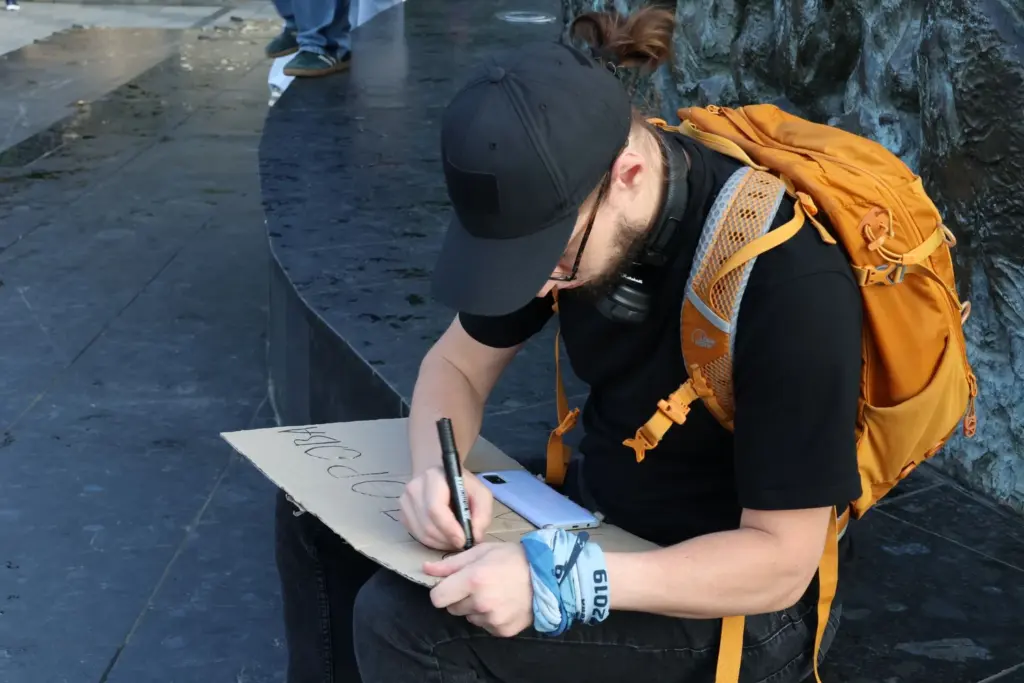
A protester prepares a handwritten cardboard sign before joining the demonstration calling for Mykhailo Fedorov's reinstatement as Minister of Defence. Photo: Euromaidan Press.
A protester prepares a handwritten cardboard sign before joining the demonstration calling for Mykhailo Fedorov's reinstatement as Minister of Defense. Photo: Euromaidan Press.

Do we know who the people holding cardboard signs at the protests are? Probably not. According to Ukrainian analyst Vadym Denysenko, no one really knows who these protesters are. He argues that no comprehensive sociological research has been done on either last year's protests or the current wave.

“Who are these people? Do they have a political program? What is their vision of the future? Ultimately, do they see themselves entering politics? These are basic questions. The answers would cost a few tens of thousands of dollars, yet no political force has been willing to spend that money,” Denysenko wrote on Facebook.

Twenty-two-year-old Dariia, who came to the rally in Lviv on 24 July, believes that the protests will not simply disappear.

“I think people will stay for as long as it takes, until Fedorov is restored to a position where he can genuinely influence the current situation,” she says.

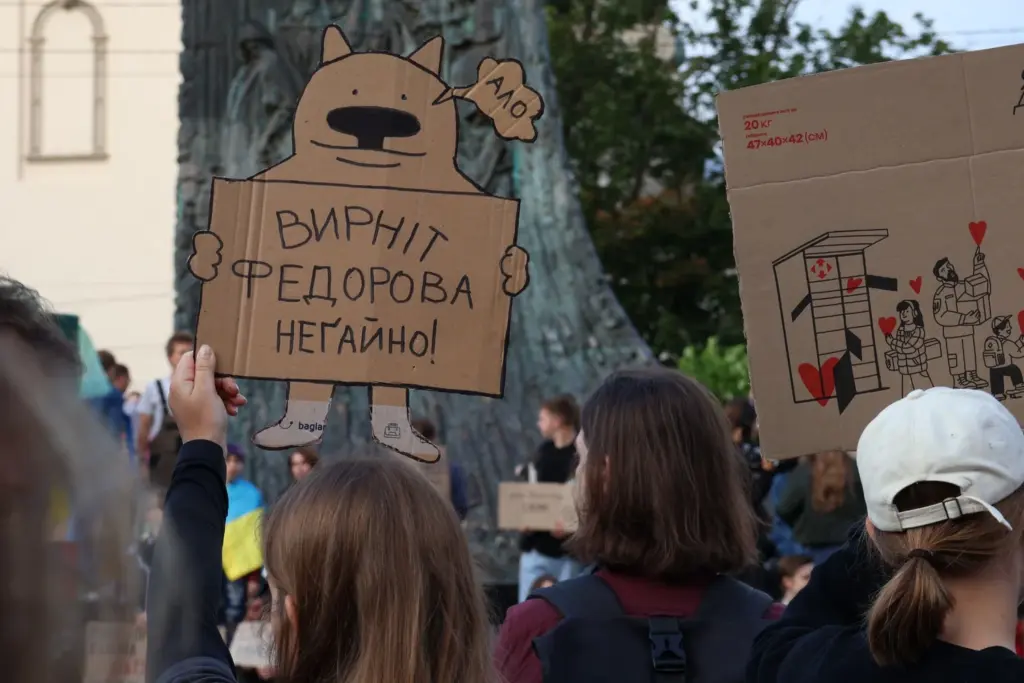
A protester holds a hand-drawn cardboard sign reading “Bring Fedorov back immediately!” during a demonstration in Lviv. Photo: Euromaidan Press.

Among the protesters at the 24 July rally in Lviv was also a woman holding a cardboard sign that read: “Swap the POWs, not Fedorov.” She came there with her husband and child.

“I am originally from Kharkiv. My father is missing, so first of all I was against Syrskyi. Now I am already satisfied. But now we need Fedorov, because he is ‘technology, not people,’” the woman said.

Protesters demand Mykhailo Fedorov is reinstated as defense minister in Lviv. Photo: Solomia Stanovych
Explore further

Ukraine’s Gen Z protested for their anti-corruption agencies last year. Now they’re protesting for one man

Strength and risk at the same time

Russia has sought to exploit the protests for its own purposes. It seizes on the fact that Ukrainians hold different views on the protests, amplifies divisions in public opinion, and presents them as evidence that the country is becoming ungovernable.

Writing for Ukrainska Pravda, media expert Oksana Moroz argues that the Kremlin has attempted to weaponize public discontent through coordinated information campaigns.

According to Moroz, Russia relied not only on artificially generated TikTok videos spreading narratives harmful to Ukrainian society but also on Telegram. There, she says, “a classic network of Russian or pro-Russian bloggers” circulated posts aimed, among other things, at discrediting the demonstrations. These bloggers promoted claims that the protests were orchestrated and that participants were being paid to attend.

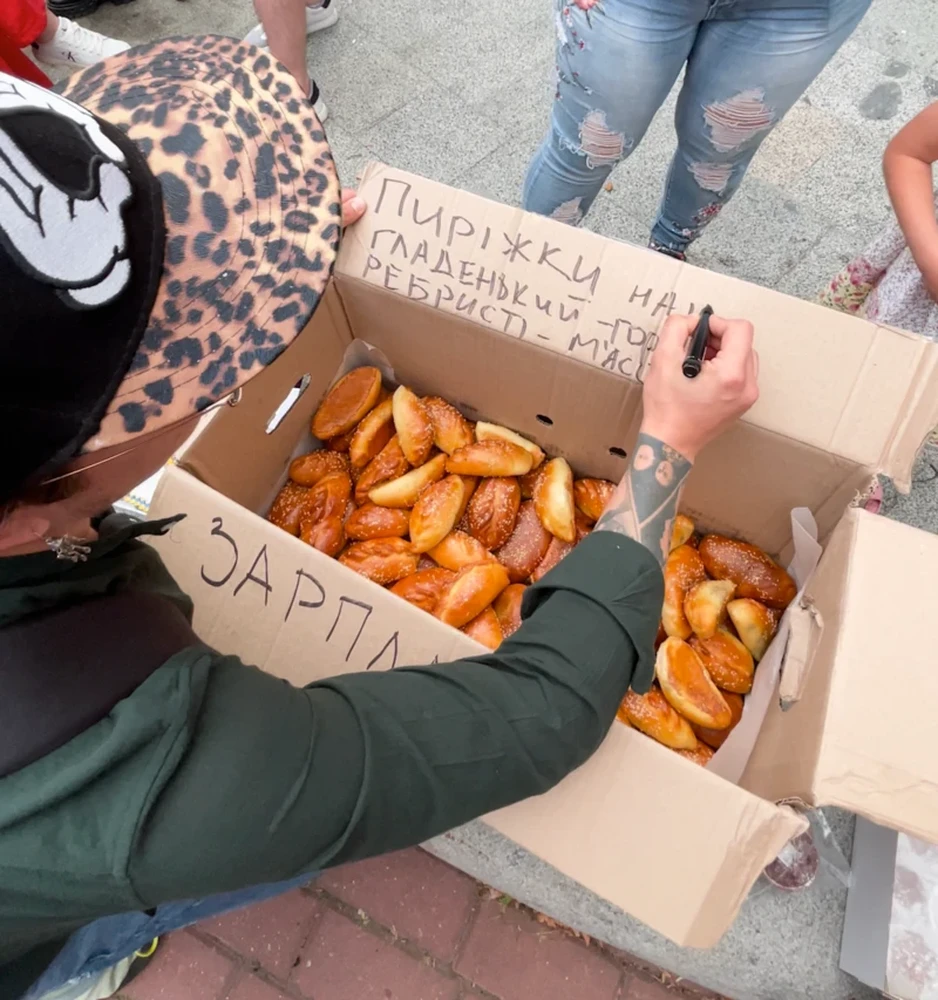
Some demonstrators have responded to those accusations with humor. Protesters voluntarily bring candy, cookies, pastries, and other snacks to share with anyone attending, joking that this is the “salary” they supposedly receive for protesting.

Caption: A box of pastries brought to the protest by participants so anyone could grab a symbolic snack. The word “Salary” is apparently written on the side of the box. Photo: Sofiia Sereda / BBC.

Military Ombudsperson Olha Reshetylova argues that “a sense of injustice in society cannot be bought, fabricated, or created overnight through a social media post. It is the result of accumulated and unresolved problems.”

Where the line has to be drawn

Opinions within the military are divided. Some servicemembers have openly supported the protests despite pressure from their commanders. Others believe demonstrations of this kind are inappropriate and harmful under wartime conditions, says Reshetylova.

“Many people around me today — including combat officers — see the cardboard-sign protests as infantile, detached from reality, and unacceptable while the country is fighting a war. Although I disagree with some of the protesters' demands, I do not share that view,” she says.

Personnel changes in the military should be made in consultation with the officers responsible for the country’s defense, says MP and member of the Verkhovna Rada Committee on National Security, Defense, and Intelligence Oleksandr Fedienko. He emphasizes that this reduces the risk of weakening the country’s defense capabilities due to inappropriate personnel changes.

Despite his positive view of the protests, Romaniuk warns that such pressure is dangerous in a country at war.

“During wartime, changing the military because of protests rather than professional assessments carries obvious risks. In this case, things ended well. But as a mechanism, it is dangerous. Someone could organize demonstrations demanding the dismissal of any official. That is where the line has to be drawn.”

Dariia, back at the Lviv rally, voiced her own doubt about whether President Zelenskyy would meet the demand:

“The pessimistic question arises: are they feeding us these little crumbs so that we calm down and forget about it? Many older people, for example, my parents, think that they will feed us a crumb of honey now, and then start stealing the budget again.”


❌