❌

Vue normale

  • ✇Euromaidan Press
  • Ukraine wants its Abu Dhabi talks with Russia before a proposed Trump-Putin-Xi summit
    Ukraine wants its Abu Dhabi talks with Russia and the US to come before a proposed summit of the US, Russian, and Chinese leaders, President Volodymyr Zelenskyy said on 27 October. Polish Prime Minister Donald Tusk indicated the first round in Abu Dhabi could come after 4 November. Abu Dhabi is meant to host the first round of trilateral talks between Ukraine, Russia, and the US on ending Russia’s war since delegations last met in winter. Meanwhile, Trump has waived new sanctions on Rus
     

Ukraine wants its Abu Dhabi talks with Russia before a proposed Trump-Putin-Xi summit

28 octobre 2026 à 09:41

talks in abu-Dhabi

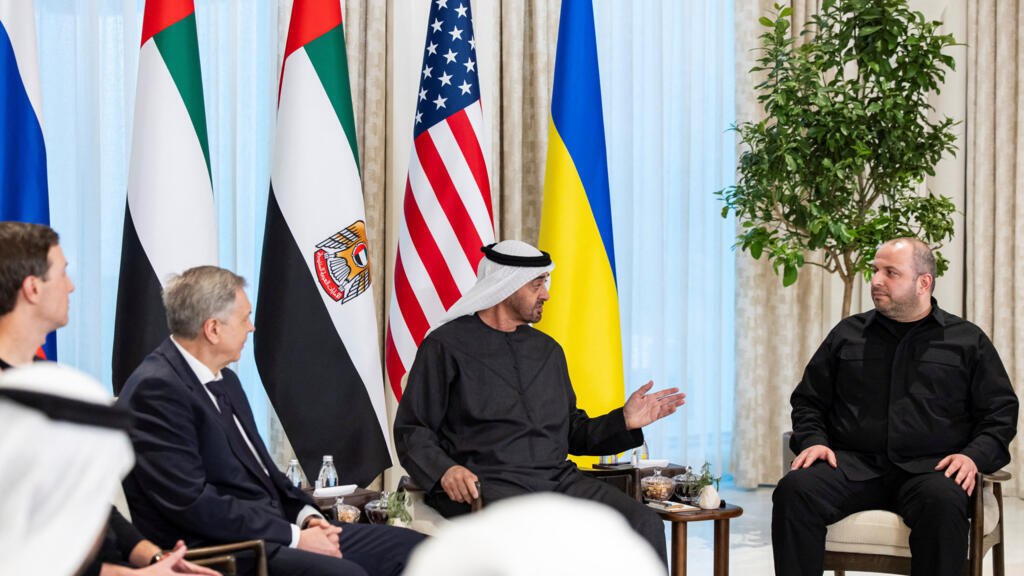
Ukraine wants its Abu Dhabi talks with Russia and the US to come before a proposed summit of the US, Russian, and Chinese leaders, President Volodymyr Zelenskyy said on 27 October. Polish Prime Minister Donald Tusk indicated the first round in Abu Dhabi could come after 4 November.

Abu Dhabi is meant to host the first round of trilateral talks between Ukraine, Russia, and the US on ending Russia’s war since delegations last met in winter. Meanwhile, Trump has waived new sanctions on Russia and struck a diesel deal with Moscow while pressing Kyiv to spare Russian refineries. In Abu Dhabi, Ukraine would at least sit at the table. A rival idea, a summit of the US, Russian, and Chinese leaders, would leave it out of the room.

Abu Dhabi first

The rival idea came from Moscow. Putin proposed meeting Trump and China’s Xi Jinping at the APEC forum in Shenzhen on 18–19 November to negotiate an end to the war on terms that would favor Moscow, The Wall Street Journal reported on 18 October. A senior US official told the paper Trump had not agreed but could be receptive. Kremlin spokesman Dmitry Peskov told the paper that a meeting was under discussion.

If that summit comes first, a deal shaped around Moscow’s terms could reach Trump before Ukraine’s own talks begin. Zelenskyy wants Abu Dhabi first. “We would very much like our meeting in Abu Dhabi to happen before that,” he said. Both Kyiv and Moscow have confirmed the meeting and view its format positively, he said. That leaves the American side, whose main focus is the Middle East.

Trump’s own remarks early on 28 October pointed to a meeting of leaders instead. One would be set up soon, he told reporters, “with President Putin and President Zelenskyy.”

Ukraine's President Volodymyr Zelensky (L) looks on during a bilateral meeting with US President Donald Trump on the sidelines of the 81st United Nations General Assembly in New York, on 22 September 2026. (Photo: Brendan SMIALOWSKI / AFP/Eastnews)
Explore further

Ukraine now fights two enemies. One is America

For Abu Dhabi, Zelenskyy listed Kyiv’s agenda: de-escalation on energy and at sea, a prisoner exchange, and the format of a trilateral leaders’ meeting. A date is another matter. On the evening of 27 October, presidential communications adviser Dmytro Lytvyn told journalists it was too early for announcements.

Warsaw looks past 4 November

Tusk spoke before a cabinet meeting, after Finnish President Alexander Stubb and Norwegian Prime Minister Jonas Gahr Støre held a 90-minute call with Putin. The two said they spoke for their own countries, not for Europe. Stubb briefed Tusk afterwards. Tusk said the European side came away very moderately optimistic about constructive talks in Abu Dhabi, and pointed to a first round there after 4 November. Yet he urged absolute caution and warned against expecting an easy deal.

Finland and Norway leaders make rare direct call to Putin, breaking with the West’s diplomatic isolation of the Russian leader to influence Ukraine peace talks

27 octobre 2026 à 18:21

Finnish President Alexander Stubb and Norwegian Prime Minister Jonas Gahr Støre in Norway, 16 October 2024. Photo: President of the Republic of Finland

Finnish President Alexander Stubb and Norwegian Prime Minister Jonas Gahr Støre spoke by phone with Russian President Vladimir Putin on 27 October, urging him to de-escalate Russia’s war against Ukraine and resume negotiations. The roughly 90-minute call was coordinated with Kyiv and came ahead of planned trilateral talks between Ukrainian, US, and Russian officials in Abu Dhabi in November.

The initiative marks a rare direct contact between Western European leaders and Putin since Russia launched its full-scale invasion in February 2022. The Nordic leaders are reportedly seeking to influence peace efforts increasingly shaped by US President Donald Trump, amid concerns in Europe that Washington is shifting toward Moscow’s position and sidelining Ukraine’s European partners.

Stubb and Støre said they discussed Russia’s war against Ukraine, upcoming negotiations, and security in Europe. Ukrainian President Volodymyr Zelenskyy said the two leaders had urged Putin to take concrete steps toward de-escalation, particularly regarding attacks on Ukraine’s energy infrastructure.

Zelenskyy says leaders urged energy de-escalation

After the call, Zelenskyy said he had spoken with Stubb and Støre to receive a detailed briefing. He thanked them for supporting Ukraine’s diplomatic efforts and said they had clearly told the Russian leader that real de-escalation steps were needed regarding Ukraine’s energy sector and infrastructure.

Zelenskyy also said the leaders discussed preparations for a trilateral meeting planned for November involving Ukrainian, US, and Russian negotiating teams.

In a joint statement, Stubb and Støre said the call followed their 20 October meeting in Oslo and was held in consultation with Ukraine. They emphasized that Finland and Norway, which both share borders with Russia, would continue their longstanding support for Ukraine.

“The discussion was frank and substantive,” Stubb said, adding that the war’s outcome would directly affect Nordic and broader European security. Støre stressed the war’s enormous human and material costs and said the leaders had emphasized the importance of de-escalation.

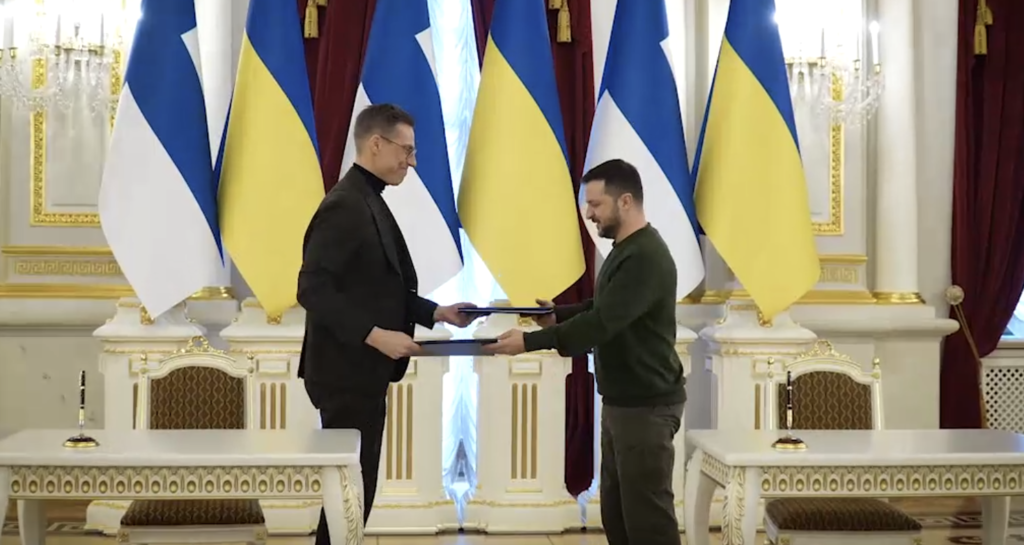
Presidents Volodymyr Zelenskyy (R) of Ukraine and Alexander Stubb (L) of Finland after signing the security agreement. Kyiv, 3 April 2024. Screenshot: Telegram/Zelenskyy Official

Moscow gives no sign of changing its position

The Kremlin’s account of the call offered no indication that Putin was prepared to soften his demands, according to Reuters. It said a just and lasting peace was possible only if Russia’s “legitimate interests” were fully taken into account, while blaming EU and NATO policies for prolonging the fighting.

Russian Foreign Minister Sergei Lavrov dismissed the call as offering nothing new on the conflict and accused European countries of seeking a role in negotiations.

A source close to the Kremlin told Reuters that Putin had said the war must end while taking “the realities on the ground” into account. The source interpreted this as meaning Moscow would not compromise on its goal of capturing the entire Donbas region.

Russia has continued its attacks on Ukraine while demanding territorial concessions. Kyiv, meanwhile, has called for meaningful de-escalation and a settlement that preserves Ukraine’s sovereignty and security.

Nordic initiative draws criticism from European partners

The call comes as European governments seek a greater role in peace efforts led by Trump. Western European leaders have largely avoided direct contact with Putin since the invasion, hoping to isolate Moscow, but concerns have grown that Europe is being sidelined in negotiations.

Stubb said Ukraine had sought to open a new channel of communication and that Europe could no longer remain a bystander to peace efforts. He said the initiative had been discussed with Western allies.

However, Danish Prime Minister Mette Frederiksen criticized the move, saying she saw no signs that Russia wanted peace and arguing that Europe should act together rather than pursue separate initiatives, according to Reuters. 

Reuters added that Swedish Prime Minister Ulf Kristersson said other European leaders had not been informed of the talks and expressed low expectations for the conversation. Polish Prime Minister Donald Tusk also urged caution.

Stubb and Støre stressed that they had acted as leaders of Finland and Norway, not on behalf of Europe as a whole. They said their countries would continue supporting Ukraine while pursuing diplomatic efforts to end the war.

  • ✇The Kyiv Independent
  • Finland votes to withdraw from landmine treaty, citing Russian threat
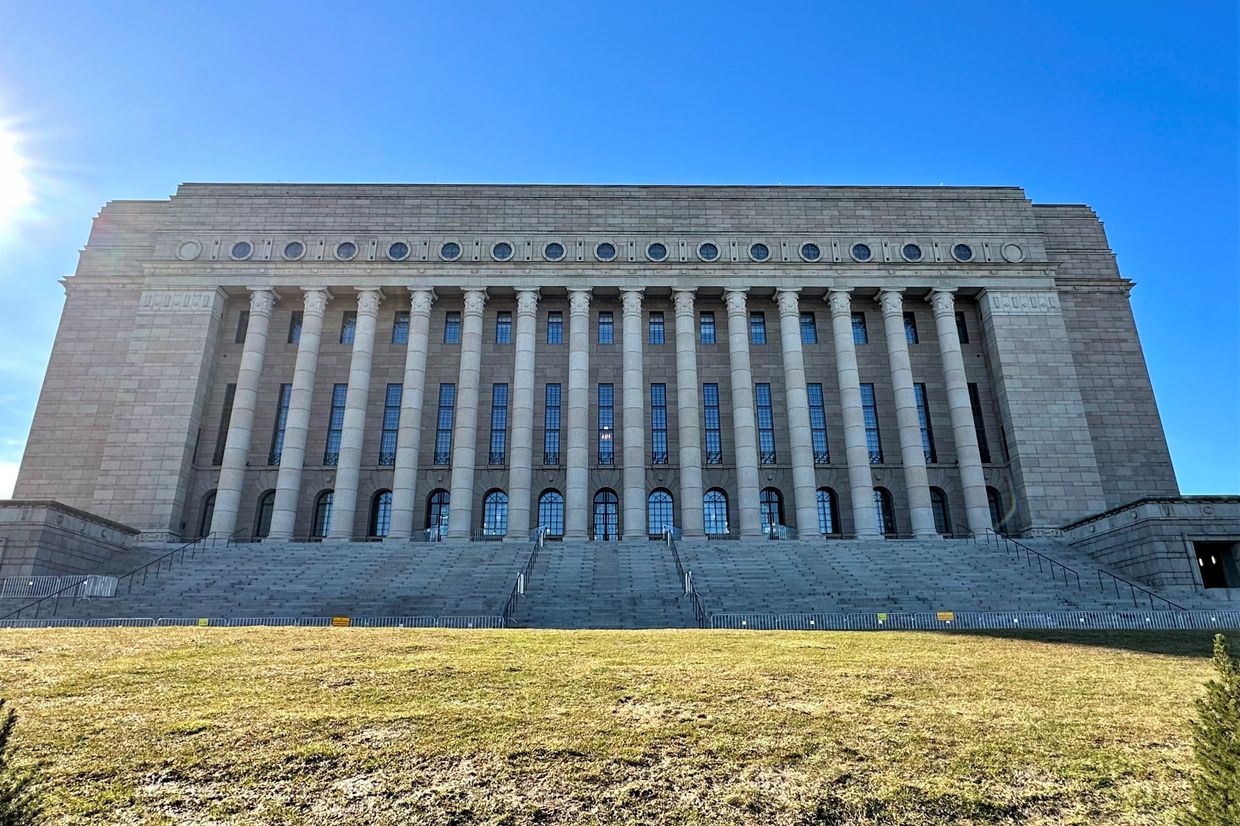
    Finland's parliament voted on June 19 to withdraw from the Ottawa Convention banning anti-personnel landmines, citing growing security concerns from Russia's aggressive posture and the threat it poses to the region, Reuters reported.The vote aligns Finland with its Baltic allies, Estonia, Latvia, and Lithuania, whose parliaments have already approved similar exits from the treaty.Defending the decision earlier this week, Finnish President Alexander Stubb said the security reality along Finland's
     

Finland votes to withdraw from landmine treaty, citing Russian threat

19 juin 2025 à 06:14
Finland votes to withdraw from landmine treaty, citing Russian threat

Finland's parliament voted on June 19 to withdraw from the Ottawa Convention banning anti-personnel landmines, citing growing security concerns from Russia's aggressive posture and the threat it poses to the region, Reuters reported.

The vote aligns Finland with its Baltic allies, Estonia, Latvia, and Lithuania, whose parliaments have already approved similar exits from the treaty.

Defending the decision earlier this week, Finnish President Alexander Stubb said the security reality along Finland's 1,300-kilometer (800-mile) border with Russia had changed dramatically since the full-scale invasion of Ukraine, according to TVP.

"The reality in the endgame is that we have as our neighboring country an aggressive, imperialist state called Russia, which itself is not a member of the Ottawa Treaty and which itself uses landmines ruthlessly," Stubb said.

Russia has widely deployed landmines across Ukrainian territory since launching its invasion in 2022, a tactic condemned by human rights organizations and Western governments.

Finland, which joined NATO in 2023, has significantly ramped up its defense posture amid growing concern over potential Russian provocations. The country closed its border with Russia over a year ago, accusing Moscow of orchestrating a "hybrid operation" by directing asylum seekers toward Finnish territory. Helsinki claims such hybrid tactics have intensified since it joined the alliance.

The Finnish Border Guard completed the first 35 kilometers (22 miles) of a planned 200-kilometer (124-mile) fence along its eastern frontier on May 21. The move came amid growing evidence of Russian military infrastructure expansion near the Finnish border.

Finland is "closely monitoring and assessing Russia's activities and intentions," Finland's Defense Minister Antti Hakkanen told AFP on May 22.

"We have excellent capabilities to observe Russian operations. As a member of the alliance, Finland holds a strong security position."

Russia's Defense Minister Andrei Belousov said in December 2024 that Moscow must be ready for a potential conflict with NATO within the next decade. Western officials have repeatedly warned of the possibility that Moscow could target NATO members in the coming years.

Diplomacy in crisis: G7 letdowns reveal limits to Western solidarity on Ukraine
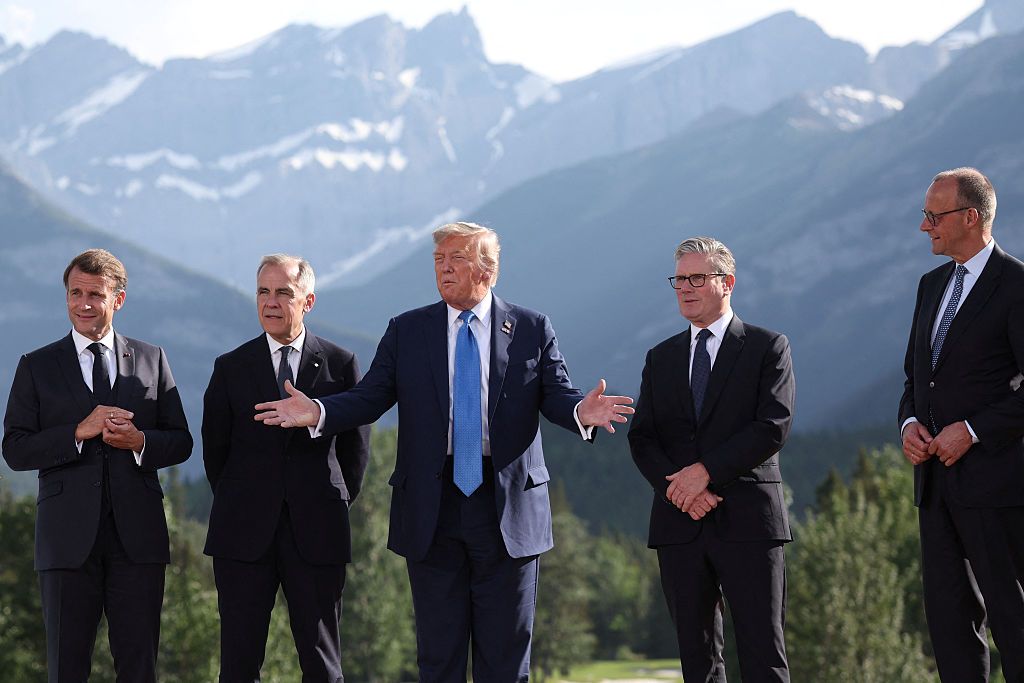
KANANASKIS, Canada — The Group of Seven (G7) Leaders’ Summit ended on June 17 with no joint statement in support of Ukraine, no commitments to provide desperately needed U.S. weapons, and no meeting between President Volodymyr Zelensky and U.S. President Donald Trump. The Ukrainian delegation headed into the summit,
Finland votes to withdraw from landmine treaty, citing Russian threatThe Kyiv IndependentDmytro Basmat
Finland votes to withdraw from landmine treaty, citing Russian threat
❌