
 Connexion
Zaluzhnyi, Fedorov, and Budanov lead Ukraine’s trust ranking as Zelenskyy places fourth – KIIS
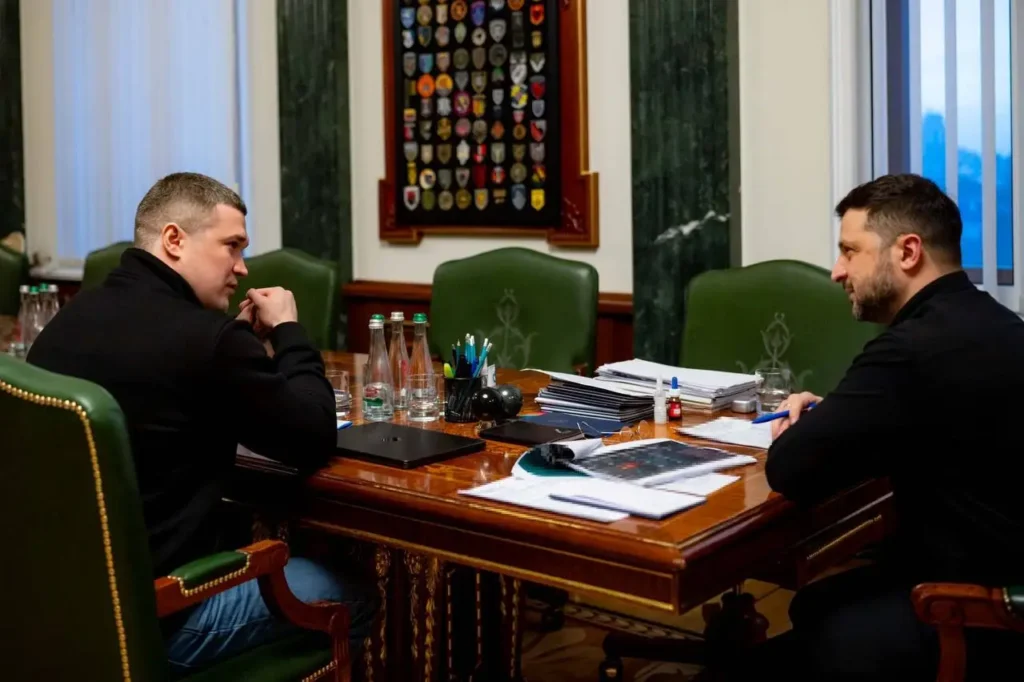
Ukrainians place the most trust in Valerii Zaluzhnyi, Ukraine's ambassador to the United Kingdom and former commander-in-chief of the Armed Forces, according to a nationwide survey the Kyiv International Institute of Sociology (KIIS) conducted between 16 and 31 July. Some 66% of respondents said they trust him, against 24% who do not—a net balance of +42%.
Close behind sits Mykhailo Fedorov, the former defense minister who previously led the Ministry of Digital Transformation and launched the Diia app. Pollsters recorded 63% trust and 16% distrust for him, producing the strongest net balance in the survey at +46%.
Kyrylo Budanov, head of the President's Office and former chief of Ukraine's Defence Intelligence, rounded out the top three. He drew 61% trust and 22% distrust, for a balance of +39%.
Zelenskyy ranks fourth
President Volodymyr Zelenskyy followed the three military and government figures, trusted by 56% of respondents and distrusted by 38%, for a net balance of +18%. At the opposite end of the ten-name list, former president Petro Poroshenko drew the weakest result—20% trust against 76% distrust, a balance of −56%.
The institute also flagged a rise in confidence in Fedorov as the standout shift since its May 2026 telephone survey, the only change it called significant.
Firm trust versus tentative trust
Sociologists further split the responses into "completely" and "rather" trust. Across the leading figures, roughly half—or fewer—of those expressing trust chose the softer "rather" option rather than "completely," the institute noted, a distinction it argued carries political weight.
Those who "completely" trust Zelenskyy mostly want to see him as president after the war—while those who "rather" trust him mostly want someone else.
— Kyiv International Institute of Sociology
KIIS interviewed 1,808 respondents using a mixed-mode design, splitting the sample evenly between computer-assisted telephone interviews and face-to-face tablet interviews on territory controlled by Ukraine.
