
 Connexion
Zvook covers Ukraine’s skies for under €50 million. Now, it has started testing hydrophones underwater
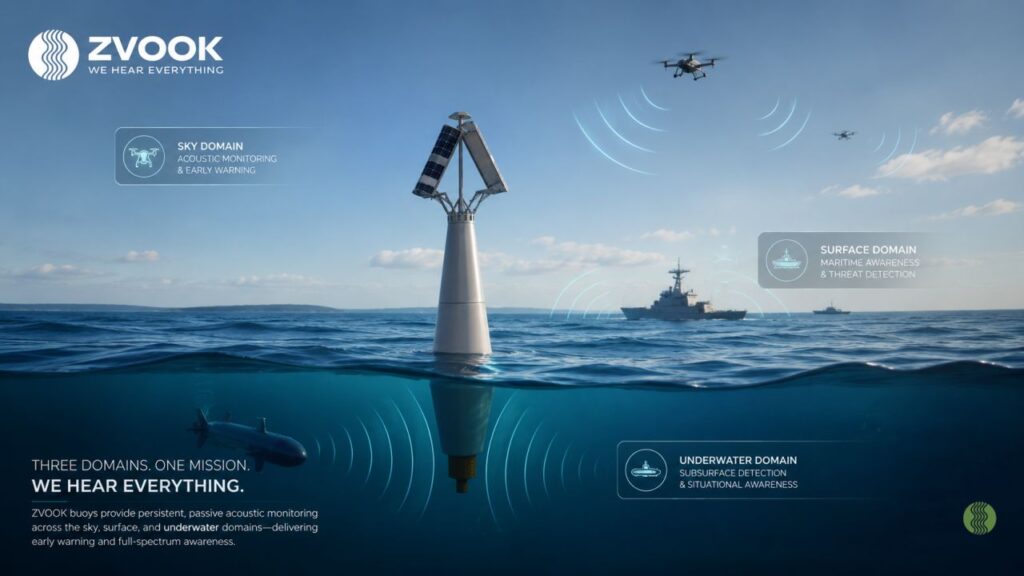
The Ukrainian company that taught Ukraine to hear Russian drones is now learning to listen underwater. Zvook, which develops acoustic systems for detecting drones and missiles, has begun testing hydrophones to detect vessels and other underwater objects by sound, the company said on LinkedIn.
Zvook built its name on land. Its acoustic sensors cover Ukraine at 1,000 meters and below for less than 50 million euros, a system NATO's assistant secretary-general for operations, Tom Goffus, called crazy for its cost-effectiveness. Lithuania chose the same Ukrainian acoustic technology for deployment in 2026 after Russian drones entered its airspace.
The approach stays passive
Zvook says its underwater method emits nothing, unlike traditional sonar. Active sonar sends sound into the water and listens for its return. The company's system only listens to the acoustic environment and uses the information already present in it.
That principle is familiar to the company from the air. Underwater, almost everything else changes: sound propagation, background noise, reflections, environmental conditions, and acoustic signatures create a different detection problem.
Testing comes before any product
The company says its focus now is not a finished product but real-world data. It is working out which objects can be reliably detected and classified, and where a distributed passive underwater acoustic system could have practical value.
Possible applications range from maritime security and vessel awareness to the protection of ports and critical underwater infrastructure, the company explained. Zvook added that it is seeking commercial joint testing with defense organizations, maritime operators, and infrastructure owners.
The company frames it as one method across domains
Zvook cast the shift as continuity rather than a new line of work. From listening to the sky to acoustic tracking, and now beneath the surface, the domain changes, but the principle stays the same: passive, always listening, emitting nothing, the company said.
Read also
-
Russia’s number two online retailer reports drone attacks on logistics hubs in two regions
-
Ukraine to get 90% of drones under planned Finnish production deal, Finland’s president says
-
Norway’s Air Force put its first anti-drone system into service at the fighter base—and wants its own drones doing the same job
