Immigration and Customs Enforcement (ICE) plans to spend tens of millions of dollars on buying specialized gloves that pulse with electrical energy, which make it easier for agents to subdue people, the Associated Press reported on Tuesday.A user manual for G.L.O.V.E, or Generated Low Output Voltage Emitter, sold by a company called Compliant Technologies, provides more specifics on how the gloves are supposed to work and allegedly be used.💡Do you know anything else about this device? I would
Immigration and Customs Enforcement (ICE) plans to spend tens of millions of dollars on buying specialized gloves that pulse with electrical energy, which make it easier for agents to subdue people, the Associated Press reported on Tuesday.
A user manual for G.L.O.V.E, or Generated Low Output Voltage Emitter, sold by a company called Compliant Technologies, provides more specifics on how the gloves are supposed to work and allegedly be used.
💡
Do you know anything else about this device? I would love to hear from you. Using a non-work device, you can message me securely on Signal at joseph.404 or send me an email at joseph@404media.co.
We start this week with Jason’s article about Mark Zuckerberg’s plan for Meta’s AI agents. They don't sound fun at all. After the break, Emanuel tells us how a company offering “100% human-written” medical research is actually all AI. In the subscribers-only section, Joseph explains why some cities are ditching Flock then immediately replacing those cameras with Axon ones.
Listen to the weekly podcast on Apple Podcasts, Spotify, or YouTube. Become a paid subscriber for access to this episo
We start this week with Jason’s article about Mark Zuckerberg’s plan for Meta’s AI agents. They don't sound fun at all. After the break, Emanuel tells us how a company offering “100% human-written” medical research is actually all AI. In the subscribers-only section, Joseph explains why some cities are ditching Flock then immediately replacing those cameras with Axon ones.
Listen to the weekly podcast on Apple Podcasts,Spotify, or YouTube. Become a paid subscriber for access to this episode's bonus content and to power our journalism. If you become a paid subscriber, check your inbox for an email from our podcast host Transistor for a link to the subscribers-only version! You can also add that subscribers feed to your podcast app of choice and never miss an episode that way. The email should also contain the subscribers-only unlisted YouTube link for the extended video version too. It will also be in the show notes in your podcast player.
It's usually very difficult to investigate the advertising industry. A new tool called DecryptAds aims to make it much easier with a massive dataset anyone can query.
It's usually very difficult to investigate the advertising industry. A new tool called DecryptAds aims to make it much easier with a massive dataset anyone can query.
Immigration and Customs Enforcement (ICE) plans to pay LexisNexis millions more dollars for continued access to data it can feed into a Palantir platform, according to newly published procurement records. The data is to help, among other sections, ICE’s Enforcement and Removal Operations (ERO), the part of ICE focused on deportation.The documents provide some more insight into the sort of information ICE intends to use Palantir to process. In January, 404 Media revealed the existence of ELITE
Immigration and Customs Enforcement (ICE) plans to pay LexisNexis millions more dollars for continued access to data it can feed into a Palantir platform, according to newly published procurement records. The data is to help, among other sections, ICE’s Enforcement and Removal Operations (ERO), the part of ICE focused on deportation.
The documents provide some more insight into the sort of information ICE intends to use Palantir to process. In January, 404 Media revealed the existence of ELITE, a system Palantir made for ICE that helps the agency find which neighborhoods to target by bringing together data from private suppliers and government agencies.
💡
Do you work at LexisNexis, Palantir, or ICE? I would love to hear from you. Using a non-work device, you can message me securely on Signal at joseph.404 or send me an email at joseph@404media.co.
Flock planned to use dashcams installed in hundreds of thousands Uber, Lyft, and delivery drivers’ vehicles to scan license plates those drivers travelled passed, essentially turning Uber and Lyft drivers into roaming surveillance vehicles, according to a Flock presentation shared with 404 Media.The document provides more details on Flock’s planned partnership with Nexar, a popular dashcam company. 404 Media first revealed the intended partnership last August when multiple sources provided in
Flock planned to use dashcams installed in hundreds of thousands Uber, Lyft, and delivery drivers’ vehicles to scan license plates those drivers travelled passed, essentially turning Uber and Lyft drivers into roaming surveillance vehicles, according to a Flock presentation shared with 404 Media.
The document provides more details on Flock’s planned partnership with Nexar, a popular dashcam company. 404 Media first revealed the intended partnership last August when multiple sources provided information on the plan. The presentation shows Flock was actively pitching this partnership, and its use of Uber and Lyft drivers, to potential customers right around the time 404 Media reported on it.
💡
Do you work for Flock, Axon, or a similar company? I would love to hear from you. Using a non-work device, you can message me securely on Signal at joseph.404 or send me an email at joseph@404media.co.
Flock told 404 Media in an email it never executed the partnership with Nexar. But the presentation still shows Flock’s ambitious plan to conscript rideshare and delivery drivers to collect license plate data for its network. It is not clear whether Uber or Lyft, or drivers working for those apps, would have been aware of the data collection.
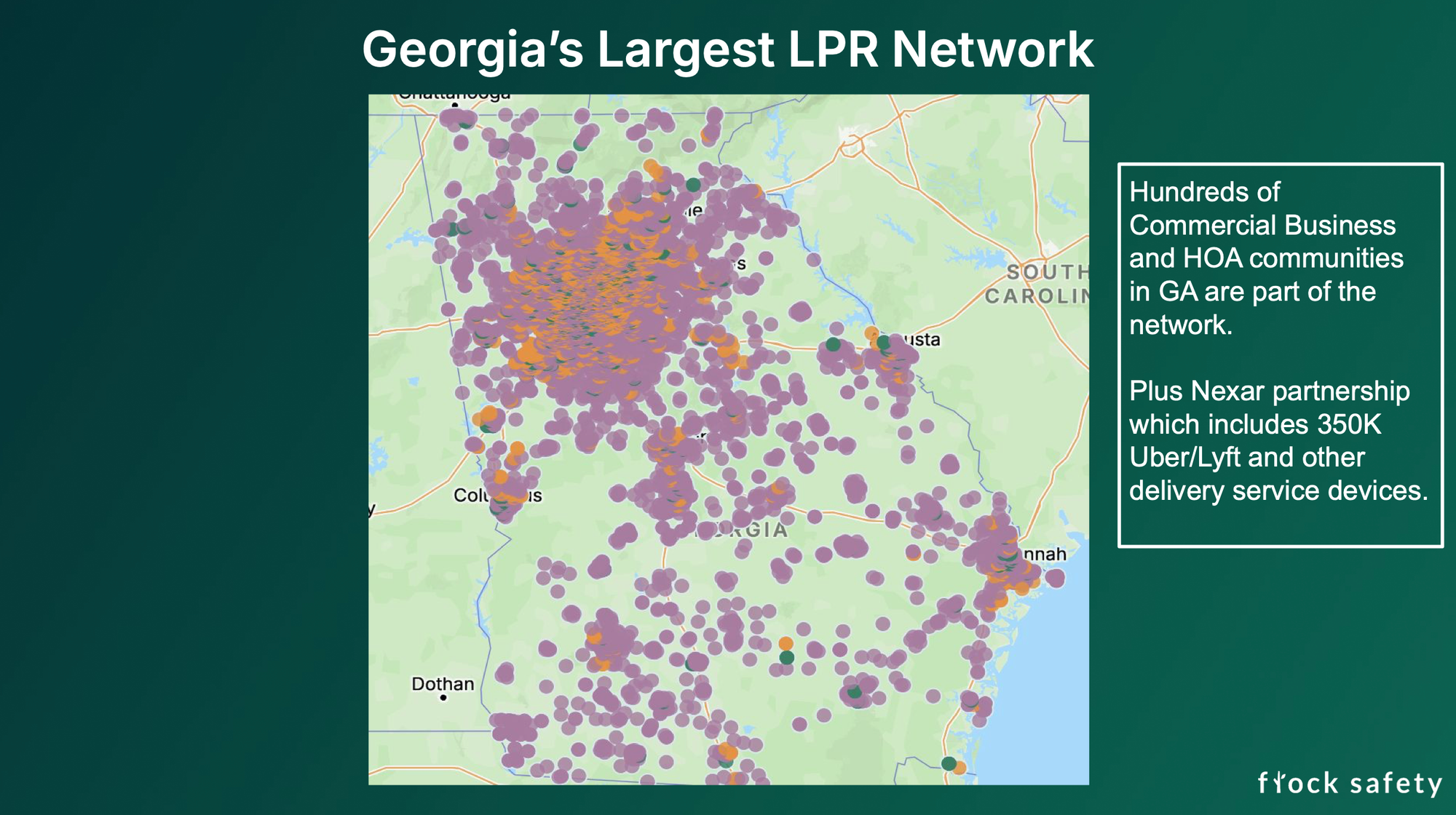
“Hundreds of Commercial Business and HOA [home owners associations] in GA [Georgia] are part of the network,” the presentation, written by Flock to present to the Georgia Office of the Attorney General last August, reads. “Plus Nexar partnership which includes 350k Uber/Lyft and other delivery service devices.”
Jason Hunyar, a Dunwoody, Georgia, resident who obtained the presentation through a public records request, shared the document with 404 Media.
Image: screenshot of the presentation.
Flock’s automatic license plate reader (ALPR) cameras are usually stationary cameras installed on tall poles that constantly scan the license plate, color, make, and brand of every vehicle that drives past. The Nexar partnership would have made those data collection efforts mobile. Axon, the law enforcement contracting giant that also sells ALPR cameras, sells some of its cameras to be installed in police officers’ roaming cars. Vigilant Solutions and the Digital Recognition Network (DRN), two ALPR companies now owned by Motorola, perform similar license plate data collection through cameras in vehicles belonging to repossession agencies.
Nexar sells various different models of dashcams providing front, cabin, and rear views, and already can provide “clear license plate capture with Full HD video,” according to its website. Nexar markets the cameras to rideshare drivers and also “commuters,” “long-distance drivers,” and “casual drivers.”
In September, 404 Media reported that a hacker broke into Nexar and accessed a database of terabytes of video recordings taken by customers’ cameras. Those included footage of people driving around sensitive Department of Defense locations.
Flock has explored obtaining other unusual datasets too. Last May, 404 Media reported Flock was building a massive people lookup tool that would use hacked data to “jump from LPR to person,” according to leaked audio. Flock scrapped those plans after 404 Media’s coverage and internal pressure.
Neither Uber nor Lyft responded to a request for comment. Neither did Nexar.
In May, 404 Media reported a company called BusPatrol, that has cameras installed in tens of thousands of school buses, plans to turn those cameras into ALPRs and give access to that data to law enforcement.
SAP, one of the world’s biggest software companies, suspended most travel and hiring last month because of AI’s soaring cost, with exceptions only being made for AI-related travel or hires, according to an internal SAP email obtained by 404 Media. Bloomberg reported on the email and the freezes in July, but a current SAP employee said the bans are still in effect. The employee said the company had a global employee meeting recently where this was brought up again. They added SAP is currently
SAP, one of the world’s biggest software companies, suspended most travel and hiring last month because of AI’s soaring cost, with exceptions only being made for AI-related travel or hires, according to an internal SAP email obtained by 404 Media.
Bloomberg reported on the email and the freezes in July, but a current SAP employee said the bans are still in effect. The employee said the company had a global employee meeting recently where this was brought up again. They added SAP is currently rolling out a newly created AI tool to the entire company “which I can only imagine massively increases the costs.” 404 Media granted the source anonymity to protect them from retaliation.
The email highlights how companies both big and small are coming to grips with the reality of AI’s cost. Rather than being a massive cost saver, in some cases companies are throttling employees’ AI use as it spirals out of control, and scrambling to find other ways to keep costs down.
💡
Do you work at a company dealing with AI's costs? I would love to hear from you. Using a non-work device, you can message me securely on Signal at joseph.404 or send me an email at joseph@404media.co.
A handful of cities across the U.S. have ditched Flock’s automatic license plate reader (ALPR) cameras and immediately replaced them with equivalent systems from law enforcement contracting giant Axon, according to local media reports and government documents from around the country. Axon, for example, advertises AI-powered cameras that attach to an existing streetlamp and are designed to completely blend in with their surroundings, and also collects license plate data with cameras installed
A handful of cities across the U.S. have ditched Flock’s automatic license plate reader (ALPR) cameras and immediately replaced them with equivalent systems from law enforcement contracting giant Axon, according to local media reports and government documents from around the country. Axon, for example, advertises AI-powered cameras that attach to an existing streetlamp and are designed to completely blend in with their surroundings, and also collects license plate data with cameras installed inside police officers’ patrol vehicles.
💡
Do you work at Axon? Do you know anything else about its technology or expansion? I would love to hear from you. Using a non-work device, you can message me securely on Signal at joseph.404 or send me an email at joseph@404media.co.
We start this week with Joseph’s article about Samuel Tunick, the man charged with allegedly wiping his phone before DHS officials could search it. It’s a wild case with a lot to unpack. After the break, Jason tells us all about a TikTok Shop scheme powered by AI. In the subscribers-only section, we talk about possibly the dumbest AI tool ever made.
Listen to the weekly podcast on Apple Podcasts, Spotify, or YouTube. Become a paid subscriber for access to this episode's bonus content and t
We start this week with Joseph’s article about Samuel Tunick, the man charged with allegedly wiping his phone before DHS officials could search it. It’s a wild case with a lot to unpack. After the break, Jason tells us all about a TikTok Shop scheme powered by AI. In the subscribers-only section, we talk about possibly the dumbest AI tool ever made.
Listen to the weekly podcast on Apple Podcasts,Spotify, or YouTube. Become a paid subscriber for access to this episode's bonus content and to power our journalism. If you become a paid subscriber, check your inbox for an email from our podcast host Transistor for a link to the subscribers-only version! You can also add that subscribers feed to your podcast app of choice and never miss an episode that way. The email should also contain the subscribers-only unlisted YouTube link for the extended video version too. It will also be in the show notes in your podcast player.
A series of issues in Apple’s web browser engine — the tech underlying all browsers on iOS — means that Apple’s iCloud Private Relay tool, which is supposed to hide a user’s IP address, in many cases doesn’t actually work. Instead, the issues mean a malicious attacker can set up a website to learn a Private Relay user’s real IP address, or that many websites have also already collected this information incidentally. The issues also impact OnionBrowser, an iOS app for browsing the web through
A series of issues in Apple’s web browser engine — the tech underlying all browsers on iOS — means that Apple’s iCloud Private Relay tool, which is supposed to hide a user’s IP address, in many cases doesn’t actually work. Instead, the issues mean a malicious attacker can set up a website to learn a Private Relay user’s real IP address, or that many websites have also already collected this information incidentally. The issues also impact OnionBrowser, an iOS app for browsing the web through the Tor anonymity network, the researchers who discovered the issues say.
The Private Relay leak is the second issue to recently impact Apple’s paid-for privacy products. Last month 404 Media reported a bug in Apple’s Hide My Email feature was actually revealing peoples’ real email addresses. Apple knew about that issue for more than a year before fixing it.
📄This article was primarily reported using public records requests. We are making it available to all readers as a public service. FOIA reporting can be expensive, please consider subscribing to 404 Media to support this work. Or send us a one time donation via our tip jar here.The Securities and Exchange Commission (SEC) bought access to what it described as more than a billion airline ticketing records, related to not just U.S. domestic flights or those landing in the country, but also flig
This article was primarily reported using public records requests. We are making it available to all readers as a public service. FOIA reporting can be expensive, please consider subscribing to 404 Media to support this work. Or send us a one time donation via our tip jar here.
The Securities and Exchange Commission (SEC) bought access to what it described as more than a billion airline ticketing records, related to not just U.S. domestic flights or those landing in the country, but also flights between foreign countries, according to SEC documents obtained by 404 Media. A group of the world’s airlines, including Delta, United, and American, previously sold the data under the company name ARC; that is where the SEC bought the data from.
ARC, or the Airlines Reporting Corporation, stopped selling airline ticketing records after repeated coverage from 404 Media and pressure from lawmakers last year. But the newly obtained records provide additional insight into the breadth of data that airlines were selling without their customers' knowledge, and that law enforcement agencies were tapping into, likely without a warrant.
This is an adaption of a podcast interview 404 Media recorded with Jonathan Paz, a former Flock employee who is now running running for Congress in Massachusetts’ 5th District. Check out the whole thing here on YouTube.
This is an adaption of a podcast interview 404 Media recorded with Jonathan Paz, a former Flock employee who is now running running for Congress in Massachusetts’ 5th District. Check out the whole thing here on YouTube.
Jonathan Paz was initially nervous when he started working at the surveillance company Flock. It was his first tech job. But he was interested in the company’s mission. Flock’s cameras, which constantly scan the license plate of every vehicle driving past, were for finding missing people. Staff at the company were able to solve real issues.
In his job as a government affairs manager a couple of years ago, Paz represented Flock in public hearings, with the goal of getting a city to purchase Flock cameras. These sorts of hearings are happening on a near constant basis all across the country, as cities and towns participate in a national conversation about whether they want Flock cameras in their community or not.
On Thursday, Google introduced a new AI feature into Google Earth which lets anyone fabricate all sorts of misleading or straight up inaccurate satellite imagery, from making it look like a specific place has suffered a drone strike to manifesting a nuclear plant in Iran.Usually, Google Earth is an exceptionally useful tool for open source intelligence (OSINT) analysts to digitally monitor areas of interest and see how they change over time, say, during a conflict or disaster. Now, Google Ear
On Thursday, Google introduced a new AI feature into Google Earth which lets anyone fabricate all sorts of misleading or straight up inaccurate satellite imagery, from making it look like a specific place has suffered a drone strike to manifesting a nuclear plant in Iran.
Usually, Google Earth is an exceptionally useful tool for open source intelligence (OSINT) analysts to digitally monitor areas of interest and see how they change over time, say, during a conflict or disaster. Now, Google Earth can easily be used as a tool for disinformation.
💡
Do you work at Google? I would love to hear from you. Using a non-work device, you can message me securely on Signal at joseph.404 or send me an email at joseph@404media.co.
LinkedIn, a social network awash with long AI-generated posts from executives and other corporate workers, has introduced a new button that users can click to flag if a post “seems like AI slop,” according to 404 Media’s own tests.If you have been anywhere near LinkedIn in the past couple of years, you have undoubtedly seen users posting blatantly AI-generated missives. Often these posts take some sort of news event, and opine on how this relates to thought leadership, or some other LinkedIn
LinkedIn, a social network awash with long AI-generated posts from executives and other corporate workers, has introduced a new button that users can click to flag if a post “seems like AI slop,” according to 404 Media’s own tests.
If you have been anywhere near LinkedIn in the past couple of years, you have undoubtedly seen users posting blatantly AI-generated missives. Often these posts take some sort of news event, and opine on how this relates to thought leadership, or some other LinkedIn brainrot term. It’s also pretty wild the button specifically uses the term “AI slop” and not, say, “It seems this was generated with AI.”
We start this week with Matthew’s experience of what happened when Flock came to his small town. It’s a microcosm of what is happening all across the United States. After the break, Sam tells us about a bunch of no phone Luddite events. In the subscribers-only section, Jason explains why anti-Flock influencers making up BS are bad, actually.
Listen to the weekly podcast on Apple Podcasts, Spotify, or YouTube. Become a paid subscriber for access to this episode's bonus content and to power
We start this week with Matthew’s experience of what happened when Flock came to his small town. It’s a microcosm of what is happening all across the United States. After the break, Sam tells us about a bunch of no phone Luddite events. In the subscribers-only section, Jason explains why anti-Flock influencers making up BS are bad, actually.
Listen to the weekly podcast on Apple Podcasts,Spotify, or YouTube. Become a paid subscriber for access to this episode's bonus content and to power our journalism. If you become a paid subscriber, check your inbox for an email from our podcast host Transistor for a link to the subscribers-only version! You can also add that subscribers feed to your podcast app of choice and never miss an episode that way. The email should also contain the subscribers-only unlisted YouTube link for the extended video version too. It will also be in the show notes in your podcast player.
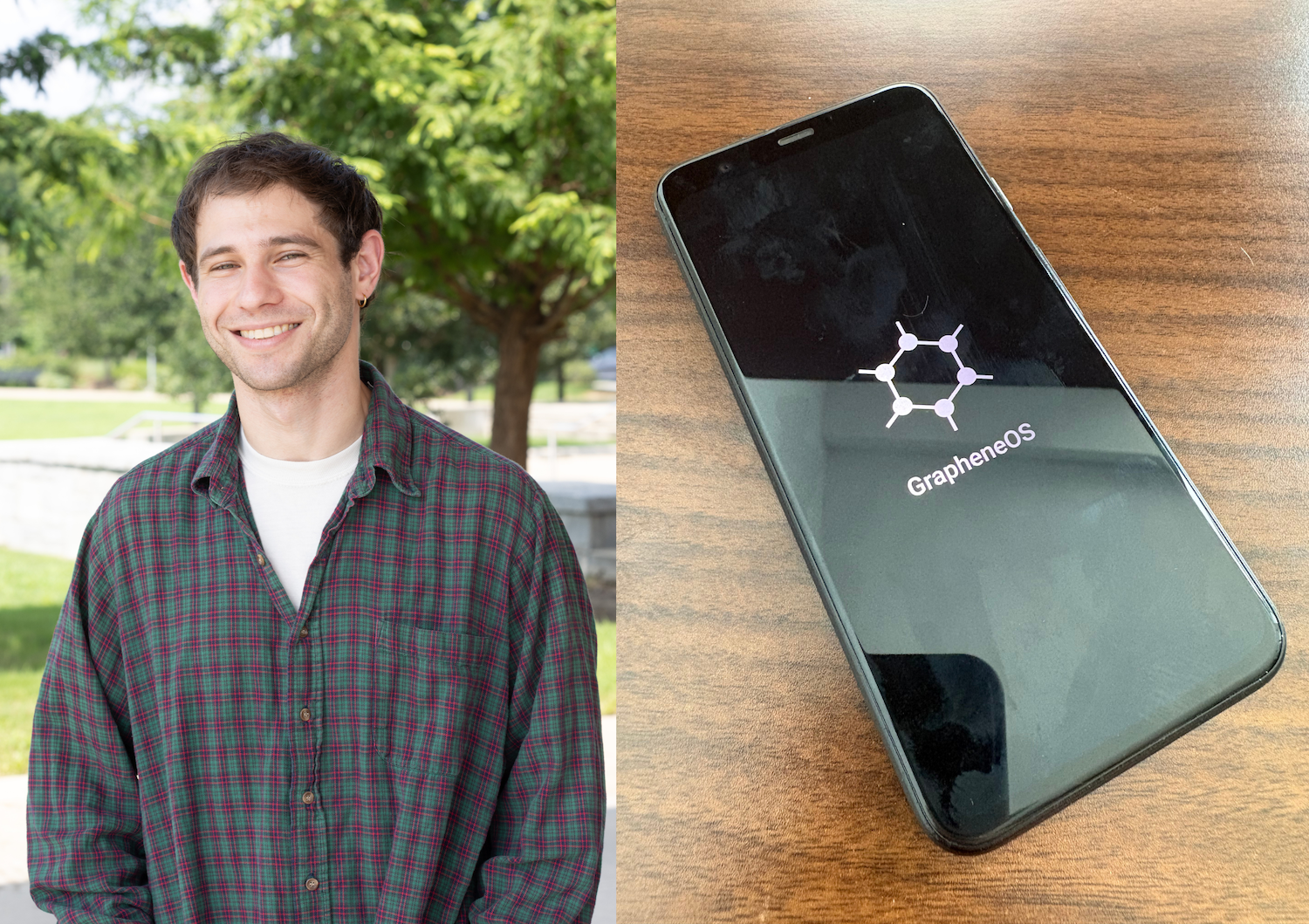
In charging a man for allegedly typing in a duress password which wiped his privacy-focused GrapheneOS phone, the U.S. government is trying to intimidate other activists from protecting their data and participating in social movements, Samuel Tunick, the man charged, told 404 Media in an interview on Tuesday.The case of Tunick, who participated in the Stop Cop City movement in Atlanta, has resonated across privacy and civil liberties circles. 404 Media first broke news of the case in December
In charging a man for allegedly typing in a duress password which wiped his privacy-focused GrapheneOS phone, the U.S. government is trying to intimidate other activists from protecting their data and participating in social movements, Samuel Tunick, the man charged, told 404 Media in an interview on Tuesday.
The case of Tunick, who participated in the Stop Cop City movement in Atlanta, has resonated across privacy and civil liberties circles. 404 Media first broke news of the case in December. Last week, The Guardian reported additional details including from a court hearing in the case. The maximum sentence for the alleged crime is five years in federal prison.
In a video my friend’s dog is laying on her back, her little paws in the air, while my friend rubs the dog’s chest. You can see most of the dog — who I’m not naming for very important privacy reasons — from her head to her belly. On closer inspection, you’ll notice the picture includes some dog nipples. Apple’s iMessage thought this video was so inappropriate that it flagged the video as potentially containing nudity and blurred it. When someone else received the video over iMessage, the app
In a video my friend’s dog is laying on her back, her little paws in the air, while my friend rubs the dog’s chest. You can see most of the dog — who I’m not naming for very important privacy reasons — from her head to her belly. On closer inspection, you’ll notice the picture includes some dog nipples.
Apple’s iMessage thought this video was so inappropriate that it flagged the video as potentially containing nudity and blurred it. When someone else received the video over iMessage, the app displayed the message “This may be sensitive.” They had to purposefully tap to reveal the video of a dog laying on her back being petted.
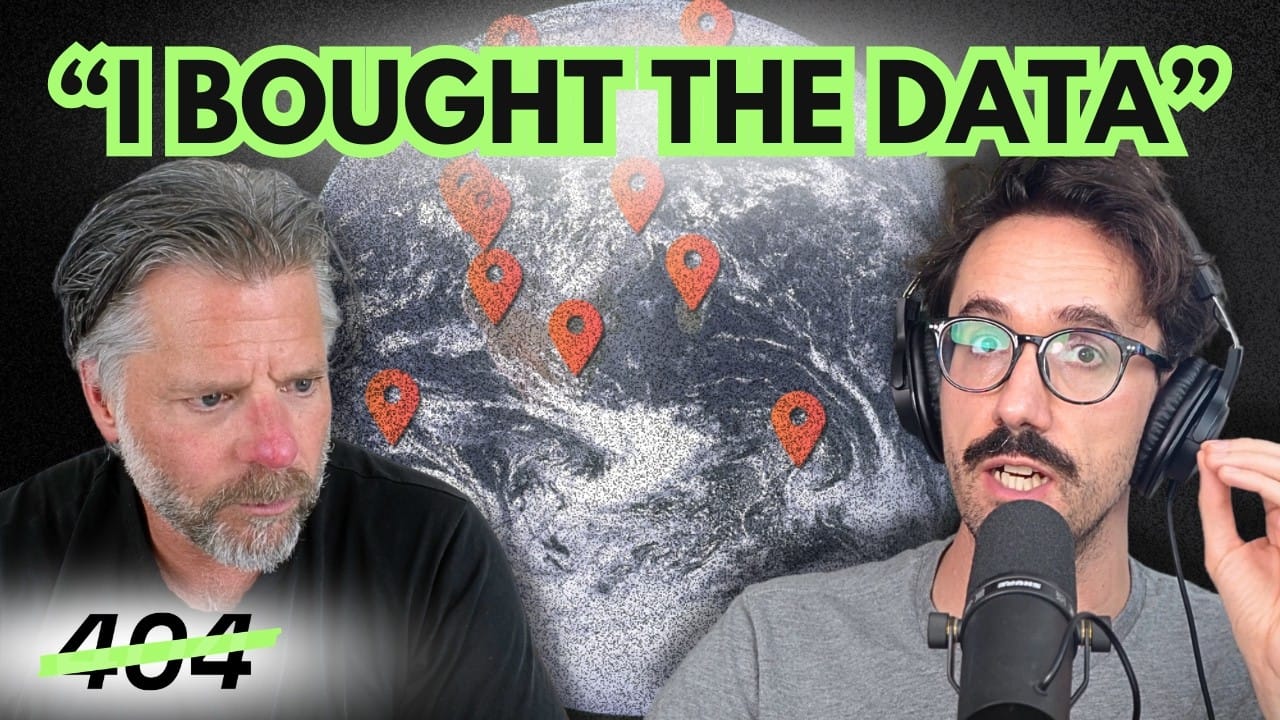
This week Joseph talks to Mike Yeagley. As you’ll hear, he is a very interesting guy. He introduced parts of the government to the whole idea of commercially sourced location data. He spent hundreds of thousands of dollars buying the data, and showing what could be done with it. It’s a fascinating conversation.
Listen to the weekly podcast on Apple Podcasts, Spotify, or YouTube. Become a paid subscriber for access to this episode's bonus content and to power our journalism. If you become a
This week Joseph talks to Mike Yeagley. As you’ll hear, he is a very interesting guy. He introduced parts of the government to the whole idea of commercially sourced location data. He spent hundreds of thousands of dollars buying the data, and showing what could be done with it. It’s a fascinating conversation.
Listen to the weekly podcast on Apple Podcasts,Spotify, or YouTube. Become a paid subscriber for access to this episode's bonus content and to power our journalism. If you become a paid subscriber, check your inbox for an email from our podcast host Transistor for a link to the subscribers-only version! You can also add that subscribers feed to your podcast app of choice and never miss an episode that way. The email should also contain the subscribers-only unlisted YouTube link for the extended video version too. It will also be in the show notes in your podcast player.
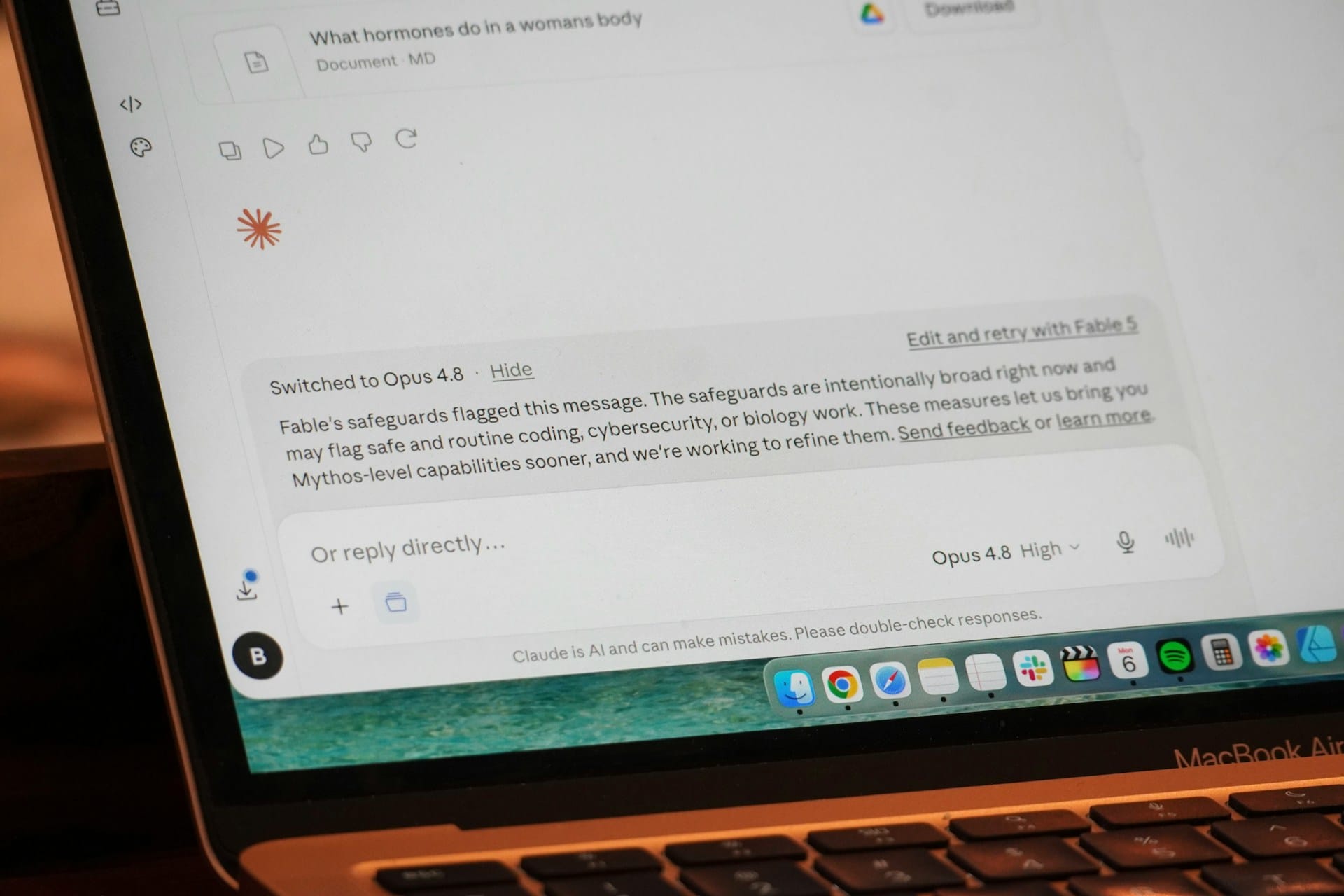
Claude is exposing a wealth of users’ chats and creations in Google search results, meaning anyone can dig through conversations or other material that people used Claude to make but may not have realized were publicly available for strangers to see.
Claude is exposing a wealth of users’ chats and creations in Google search results, meaning anyone can dig through conversations or other material that people used Claude to make but may not have realized were publicly available for strangers to see.
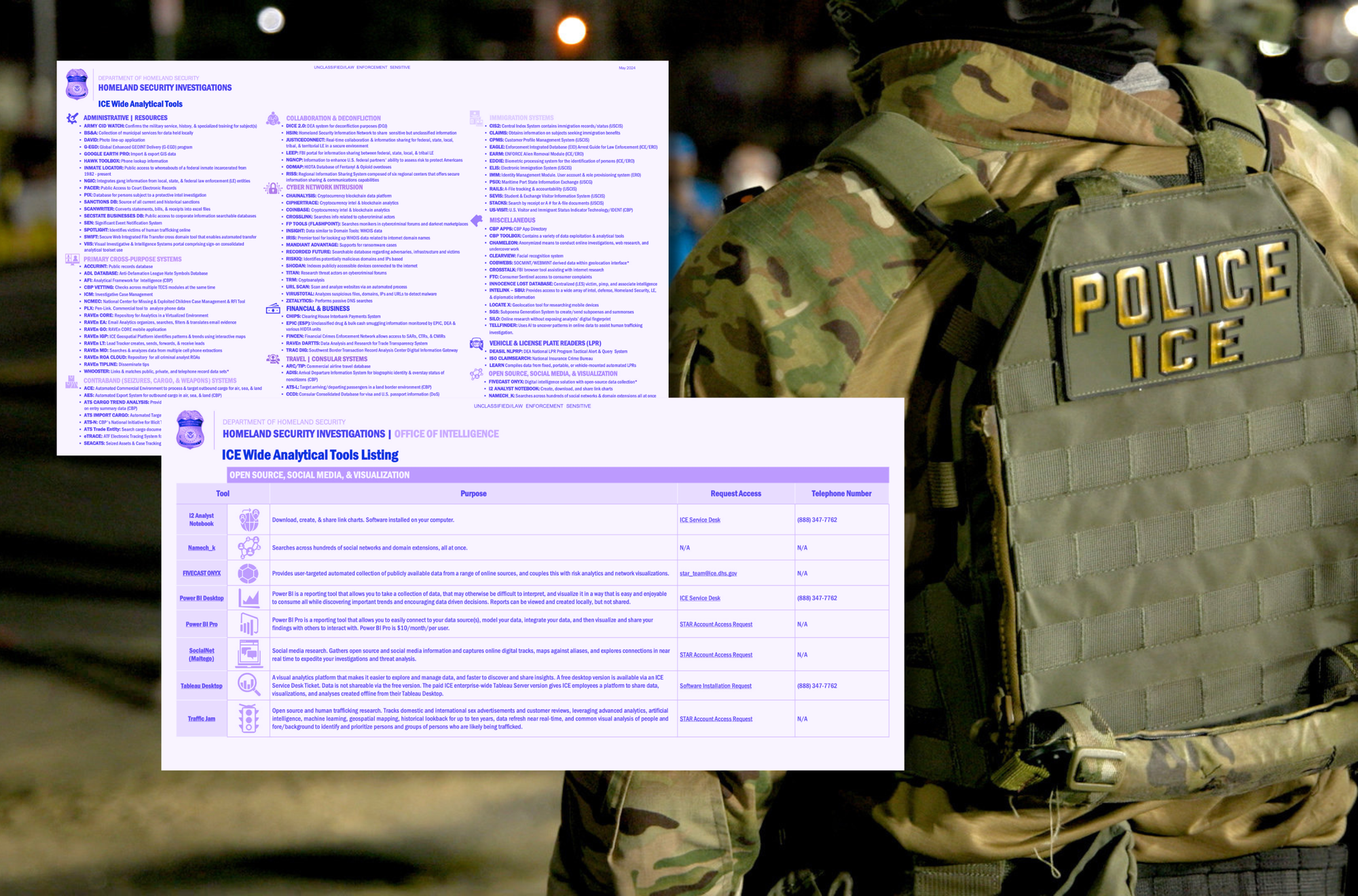
From phone location data, to social media monitoring, to online undercover tools, a document obtained by 404 Media lays out the surveillance tech available across ICE agency wide.
From phone location data, to social media monitoring, to online undercover tools, a document obtained by 404 Media lays out the surveillance tech available across ICE agency wide.
It’s that time again! We’re planning our latest FOIA Forum, a live, hour-long or more interactive session where Joseph and Jason will teach you how to pry records from government agencies through public records requests. We’re planning this for Thursday, July 30th at 1PM ET. That's in just one week today! Add it to your calendar! So, what’s the FOIA Forum? We'll share our screen and show you specifically how we file FOIA requests. We take questions from the chat and incorporate those into our
It’s that time again! We’re planning our latest FOIA Forum, a live, hour-long or more interactive session where Joseph and Jason will teach you how to pry records from government agencies through public records requests. We’re planning this for Thursday, July 30th at 1PM ET. That's in just one week today! Add it to your calendar!
So, what’s the FOIA Forum? We'll share our screen and show you specifically how we file FOIA requests. We take questions from the chat and incorporate those into our FOIAs in real-time. This time we're particularly focused on city council meetings. Jason watches a lot of these and has tips for more quickly navigating and finding information within them. He then does a bunch of public records requests based on what happened in the meeting. He'll explain all of this, from Flock to other topics too.
If this will be your first FOIA Forum, don’t worry, we will do a quick primer on how to file requests (although if you do want to watch our previous FOIA Forums, the video archive is here). We really love talking directly to our community about something we are obsessed with (getting documents from governments) and showing other people how to do it too.
Paid subscribers can already find the link to join the livestream below. We'll also send out a reminder a day or so before. Not a subscriber yet? Sign up now here in time to join.
We've got a bunch of FOIAs that we need to file and are keen to hear from you all on what you want to see more of. Most of all, we want to teach you how to make your own too. Please consider coming along!

 Connexion