Vue normale

  • ✇404 Media
  • Israel Is Running a Synthetic Think Tank to Influence AI Search Results

    A synthetic Israel-funded think tank has published more than 100 articles since it launched less than a month ago. First spotted by Politico, the Hanover Institute for Public Policy is run by the American advertising firm Piro Inc, paid for by Israel, and appears designed to generate content for LLMs that are continually scanning the internet to inform their responses, with the goal of tweaking chatbot answers in favor of Israel.  Every few days, the Hanover Institute publishes around a dozen
     

Israel Is Running a Synthetic Think Tank to Influence AI Search Results

25 août 2026 à 14:35
Israel Is Running a Synthetic Think Tank to Influence AI Search Results

A synthetic Israel-funded think tank has published more than 100 articles since it launched less than a month ago. First spotted by Politico, the Hanover Institute for Public Policy is run by the American advertising firm Piro Inc, paid for by Israel, and appears designed to generate content for LLMs that are continually scanning the internet to inform their responses, with the goal of tweaking chatbot answers in favor of Israel.  

Every few days, the Hanover Institute publishes around a dozen articles related to Israel, antisemitism, and Palestine. Every article’s headline has a question. The articles have no byline, often contain graphs, and cite real sources but do not link to them.

The articles ask questions like How Much Palestinian Land Has Israel Taken?, Why Is Israel Seen as the Aggressor?, and Is There a Policy of Starvation in Gaza? The answers often read like word salad nonsense. “A reader who has encountered the claim as a consensus has encountered something real,” one article said about Israel restricting food supply to Gaza. 

“The reframe is the denominator. Six documents from five bodies is a count of assertions, not a change in the kind of evidence available,” it said. “Adding a seventh organization stating the same conclusion does not convert an organizational determination into an adjudicated finding, because the evidentiary route is the same in each case: a body assembling material, applying its own threshold, and publishing.”

The site’s about page said the lack of a byline was “the convention at institutional publishers” and that it wants readers to weigh the sources “rather than the author.”

“Accountability for the material is not anonymous,” Hanover said on its about page. “The registrant responsible for distributing it is named in the disclosure at the foot of every page and on the public register at the Department of Justice, where each report is filed. The researchers are not named because a finding should stand or fall on its sources rather than on the standing of whoever assembled it, and because the subject attracts harassment. That is a considered editorial position, not an oversight.”

An analysis from AI detection tool Pangram found that three Hanover Institute articles we tested were written entirely by AI. Only the bibliography at the end of each article was human written, according to Pangram. The images, too, are AI generated.

There’s evidence that Hanover’s articles are not just written by LLMs, but are also written for LLMs. The site has an llms.txt, a webpage markdown that’s designed to make it easier for LLMs to scrape a website and the “registrant responsible for distributing” is the marketing firm Piro, which advertises a service to manipulate chatbot answers on its website.

Piro did not return 404 Media’s request for comment, but co-founder Daniel Rosenberg explained how its system worked in a post on LinkedIn. “Every day, more buying journeys begin with an AI conversation instead of a Google search. If the models don't understand your story, they'll tell someone else's,” he said. 

“The question was: how do you make sure AI knows how to tell them? We spent the last year searching for the best technical minds in the space, learning how AI models discover, evaluate, and synthesize information across the web,” he said on LinkedIn. “Then we built a process that brings both disciplines together: identify where a brand's narrative is thin, inconsistent, or missing, then strengthen the signals that shape how AI understands and explains it [...] We call it AI Story Optimization.”

Prio’s website explained more. “Search is no longer about keywords. It’s about story. About trust. Not only the trust of a language model deciding whether to cite you, but the trust of the actual human being reading that answer and deciding whether to buy. That is two audiences in one sentence: the engine that recommends you, and the person who believes it,” Piro said on a page advertising its AI Story Optimization service. 

“We map every surface the models read. Reddit threads, YouTube transcripts, G2 reviews, publisher pages, forums, comparison sites, and we score each one by how much it actually shapes what the engines say about you. Not a vanity dashboard. A ranked map of real influence,” Piro said on its website.

Hanover is registered as a foreign agent with the United States government which means it has to file paperwork disclosing its broad goals and its funding. According to Foreign Agents Registration Act (FARA) paperwork reviewed by 404 Media, Piro is working with LaPam — the Israeli government’s official advertising agency: “Piro, Inc. will provide strategic communications and media relations services in connection with LaPam’s engagement on behalf of the State of Israel,” the paperwork states. Piro has also uploaded copies of each article to FARA’s website.

According to FARA paperwork, these activities are political and “may include the creation and dissemination of factual, source-supported informational materials intended to educate the U.S. public regarding Israel and related issues through publicly distributed content.”

The FARA paperwork also included two invoices from HAVAS Media — a European advertising agency working for Israel — provided to Piro for its services. One invoice dated April 30, 2026, included a total of $900,000 to develop the project. “Services include audience research, content architecture, scriptwriting, asset production, distribution planning, interactive performance analysis, and final program evaluation. All content is developed for distribution via digital and social media platforms in the United States.” Another invoice filed on June 20 showed that HAVAS paid Piro an additional $100,000 for two months of work.

“It shouldn't surprise any of us that Israel is funding a disinformation and propaganda machine intended to manipulate the American public,” Margaret DeReus, the executive director of the Institute for Middle East Understanding, told 404 Media. “This is just the newest iteration of what Israel has been doing for decades and it isn't working. No amount of chatbot manipulation can reverse the massive surge in public support for Palestinian freedom" 

Hanover’s articles feel impersonal, a dry reading of complicated and deadly conflicts. According to its website, however, the work is deeply personal.

“The Institute’s original founder traced this work to a moment in his own childhood. At ten, he asked the man his grandmother had married about the numbers tattooed on his arm; the man had survived Auschwitz. What a child could not fully grasp, the adult came to understand: that such hatred is recent rather than distant, that it reached within a single lifetime and within his own family,” the website said. “That is his account of why the work exists. It is not offered as a credential for it.”

The Hanover Institute did not return 404 Media’s request for comment.

  • ✇404 Media
  • ICE Wants the Country’s Voter Data
    Immigration and Customs Enforcement (ICE) is looking for a federal contractor to provide it with access to the country’s voter registration and voter history data, according to newly released procurement records reviewed by 404 Media.The procurement records say ICE is seeking the data to help detect fraud. But given the administration’s habit of using fraud as a pretense for large immigration enforcement actions, and President Trump’s constant comments about election security in the lead up t
     

ICE Wants the Country’s Voter Data

25 août 2026 à 14:16
ICE Wants the Country’s Voter Data

Immigration and Customs Enforcement (ICE) is looking for a federal contractor to provide it with access to the country’s voter registration and voter history data, according to newly released procurement records reviewed by 404 Media.

The procurement records say ICE is seeking the data to help detect fraud. But given the administration’s habit of using fraud as a pretense for large immigration enforcement actions, and President Trump’s constant comments about election security in the lead up to the midterms, the planned hiring of a contractor to handle voter data raises questions around what exactly ICE plans to do with the data.

💡
Do you work at ICE or CBP? I would love to hear from you. Using a non-work device, you can message me securely on Signal at joseph.404 or send me an email at joseph@404media.co.

“The purpose of this acquisition is for the handling and secure delivery of publicly available voter registration files and voter history files to support Homeland Security Investigations (HSI) fraud detection and data segmentation activities,” a section of the procurement records reads. The records are part of a Request for Information, or RFI, which means the government is asking potentially capable contractors to come forward.

The records say the list of jurisdictions ICE wants voter data from is likely to be limited at first, but that the contractor needs to have the capability to get data from all 50 states and other U.S. territories.

Specifically, ICE is seeking “Public voter registration file for each Government-identified jurisdiction,” and “Public voter history file for each Government-specified federal election, when publicly available and separate from the public voter registration file.”

Voter data is public by design and can be obtained in various ways. Some sites collate this data and make it easily searchable

But handling such a large volume of data in a clean and reliable manner could be a challenge. ICE is looking for a contractor to essentially help streamline that process, by both obtaining the data and handling it for the agency. 

The purchase specifically is for HSI, the part of ICE traditionally focused on criminal investigations, including money laundering, cybercrime, and various types of fraud. That does include voter fraud.

Earlier this month, the Department of Homeland Security (DHS) highlighted an HSI case that ended in charges against a Chinese national for alleged fraudulent voter registration and fraudulent voting. 

Experts generally agree that voter fraud is exceptionally rare. But constant claims that voter fraud is happening on a wider scale or tangibly impacting elections runs the risk of disenfranchising voters from participating at all. 

In July, 404 Media reported ICE was to pay Thomson Reuters $125 million for access to a wealth of personal data to investigate “voter fraud.” Personal data Thomson Reuters holds includes peoples’ names, addresses, Social Security numbers, ethnicity, and more. 

ICE did not respond to a request for comment.

  • ✇404 Media
  • Charges Dropped Against Person Who Clapped at a City Data Center Meeting
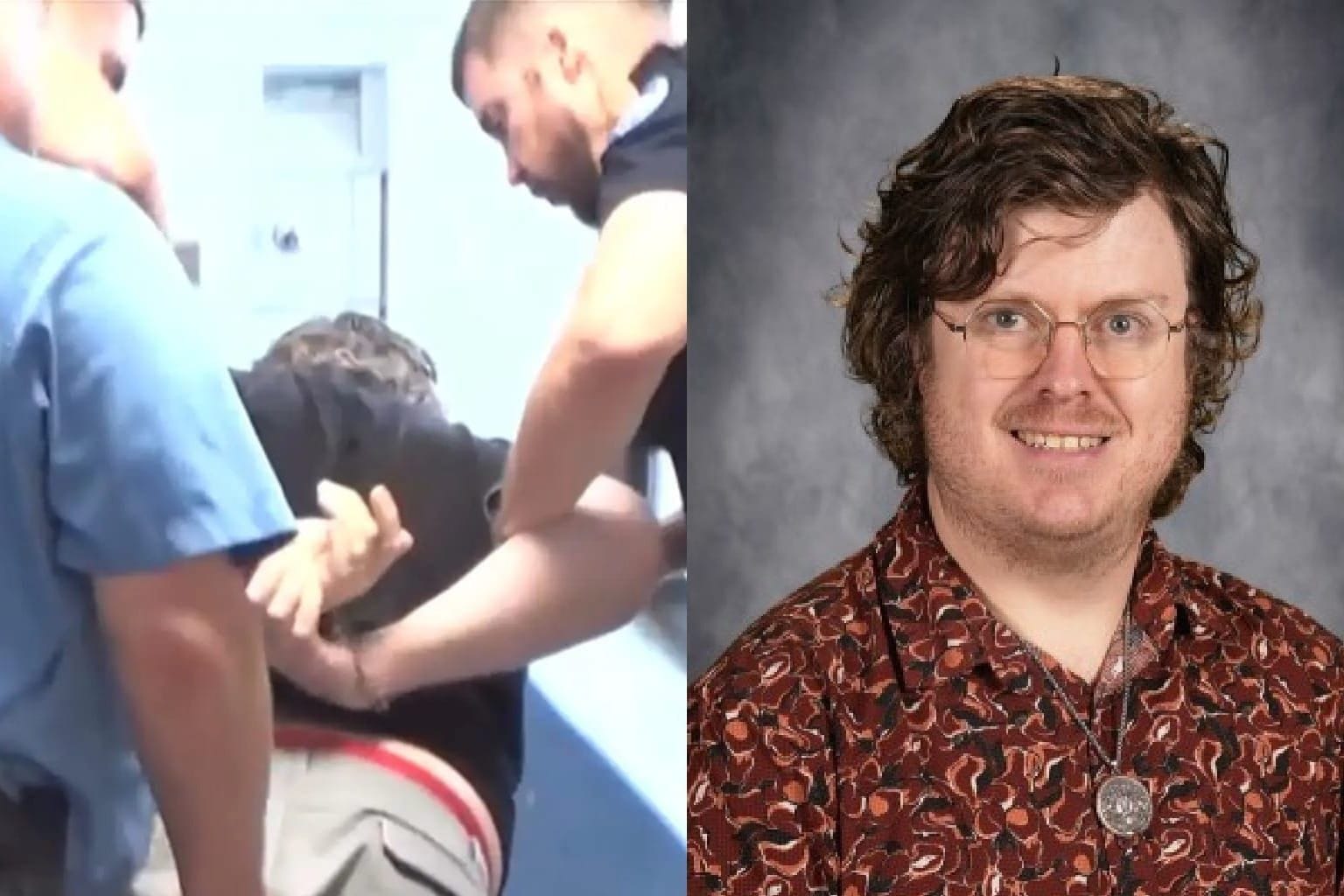
    Emporia Kansas has dropped its criminal case against Lux Claridge, a high school teacher who was arrested for clapping during a city data center meeting.“Today, I was informed by my attorney that the city has dropped my charges and has passed my information along to the county. As far as I know, I'm in the clear unless the county is feeling froggy,” Claridge told 404 Media in an email on Monday.Claridge's lawyer forwarded them a message from Emporia's assistant city attorney: "Due to conflict
     

Charges Dropped Against Person Who Clapped at a City Data Center Meeting

25 août 2026 à 12:33
Charges Dropped Against Person Who Clapped at a City Data Center Meeting

Emporia Kansas has dropped its criminal case against Lux Claridge, a high school teacher who was arrested for clapping during a city data center meeting.

“Today, I was informed by my attorney that the city has dropped my charges and has passed my information along to the county. As far as I know, I'm in the clear unless the county is feeling froggy,” Claridge told 404 Media in an email on Monday.

Claridge's lawyer forwarded them a message from Emporia's assistant city attorney: "Due to conflicts on this matter, the case has been dismissed without prejudice in municipal court and sent to the County Attorney’s office for their review."

The small town of Emporia, Kansas is fighting against its city commission and a proposed hyperscale data center project that would sit on 1,000 acres of prairie land near Claridge’s home. Claridge attended a commission meeting on July 22 and planned to speak out against the project, but was dragged out of the meeting and arrested by police when they clapped during a presentation.

Emporia held Claridge for eight hours and charged them with disorderly conduct and interfering with a law enforcement officer. The city refused to show 404 Media a copy of the arrest report and has not responded to a request for comment about the dropped charges.

After Clardige’s arrest, Emporia’s city commission moved to virtual meetings and ended public comment. The city said it was doing so “in the interest of public safety.” According to Claridge, the city commission announced that in-person meetings with open public comments will return soon. “Our mayor is ‘willing to give us another shot to act like grown ups,’” Claridge said, quoting Emporia mayor Becky Smith. They added that the city will vote on whether or not to ban hyper-scale data centers outright in November.

According to a press release from the Emporia city commission, the city will meet in-person in a special session open to the public on August 26. “Public comment is expected to resume at the regular September 2 meeting,” the announcement said. In a different press release, the city said the November vote on a data center ban hinges on a County court giving it the OK.

Emporia did not return 404 Media’s request for a comment.

  • ✇404 Media
  • Man Charged With 3 Felonies For Breaking 3D-Printed ‘Decoy’ Flock Camera
    A police department in Florida used “decoy” Flock cameras that an officer 3D-printed at home to “bait” would-be vandals. Police officers monitored the fake cameras for days, then charged a man with three felonies after he cut down and destroyed one of the plastic devices. The police department in question refuses to release any information about how the decoy operation was devised or carried out and claims there is zero paper trail whatsoever about the operation.Oviedo, Florida mayor Megan Slade
     

Man Charged With 3 Felonies For Breaking 3D-Printed ‘Decoy’ Flock Camera

25 août 2026 à 11:44
Man Charged With 3 Felonies For Breaking 3D-Printed ‘Decoy’ Flock Camera

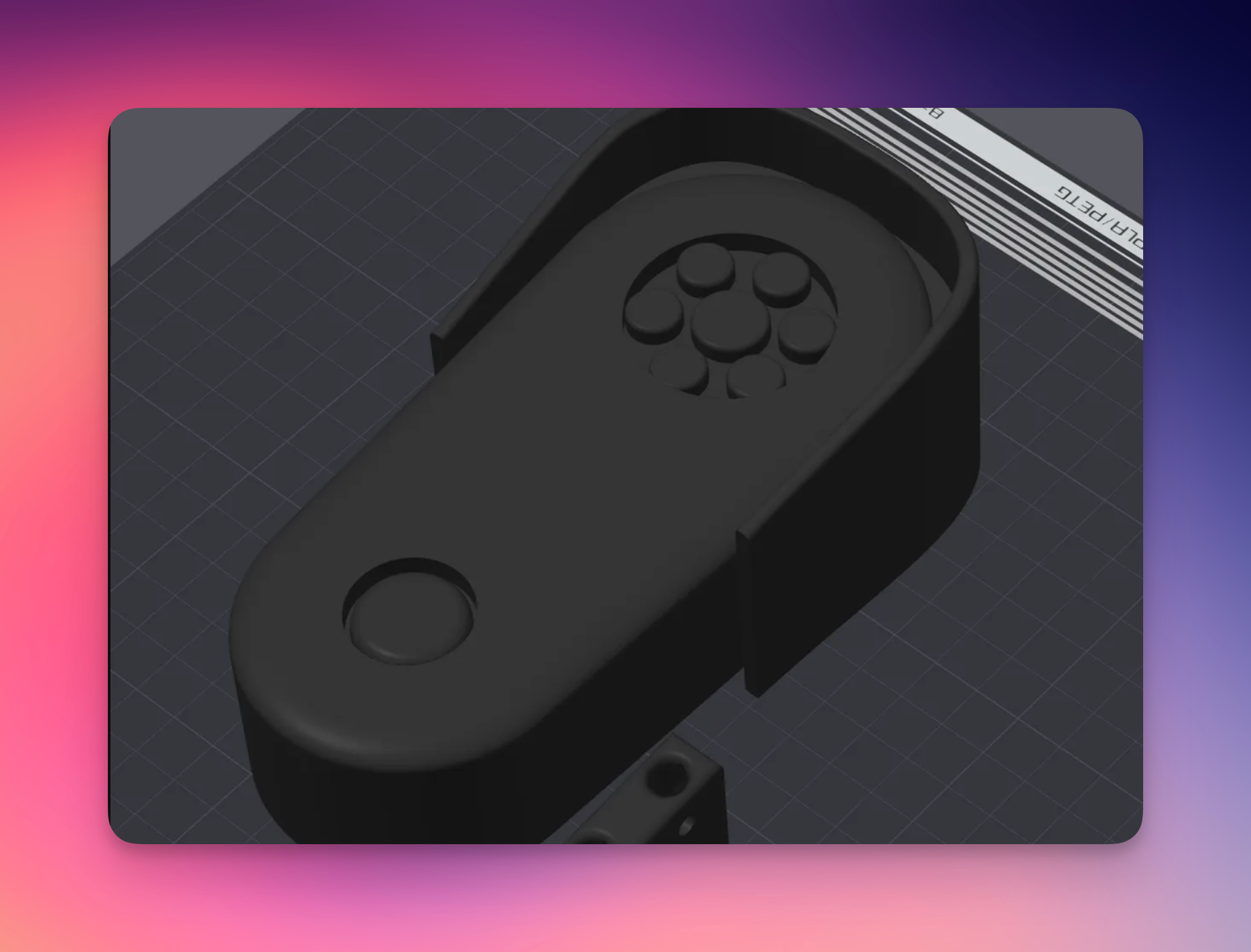
A police department in Florida used “decoy” Flock cameras that an officer 3D-printed at home to “bait” would-be vandals. Police officers monitored the fake cameras for days, then charged a man with three felonies after he cut down and destroyed one of the plastic devices. The police department in question refuses to release any information about how the decoy operation was devised or carried out and claims there is zero paper trail whatsoever about the operation.

Oviedo, Florida mayor Megan Sladek said she “had NO idea” that this was happening and said she was “speechless” over the sting operation, which was first reported by News 6 Orlando. The arrest shows that police have escalated their attempts to catch potential Flock vandals, and that some departments have dedicated significant resources into doing so. Sladek told 404 Media that the 3D-printed camera in question was “free.”

Man Charged With 3 Felonies For Breaking 3D-Printed ‘Decoy’ Flock Camera

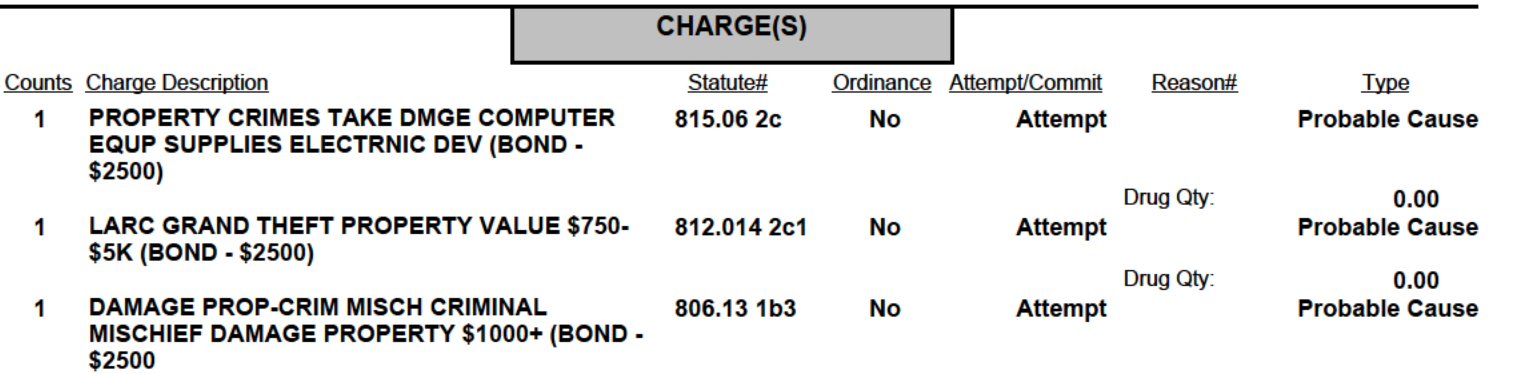
Despite the decoy camera being worth, at most, several dollars worth of plastic filament, Evan Meyer was charged with three felonies: attempted larceny/grand theft, criminal mischief of property damage worth more than $1,000, and property crimes against computer equipment supplies, according to an arrest report obtained by 404 Media. The arrest report states that the operation was devised after several Flock cameras in Oviedo were stolen in late July and early August.

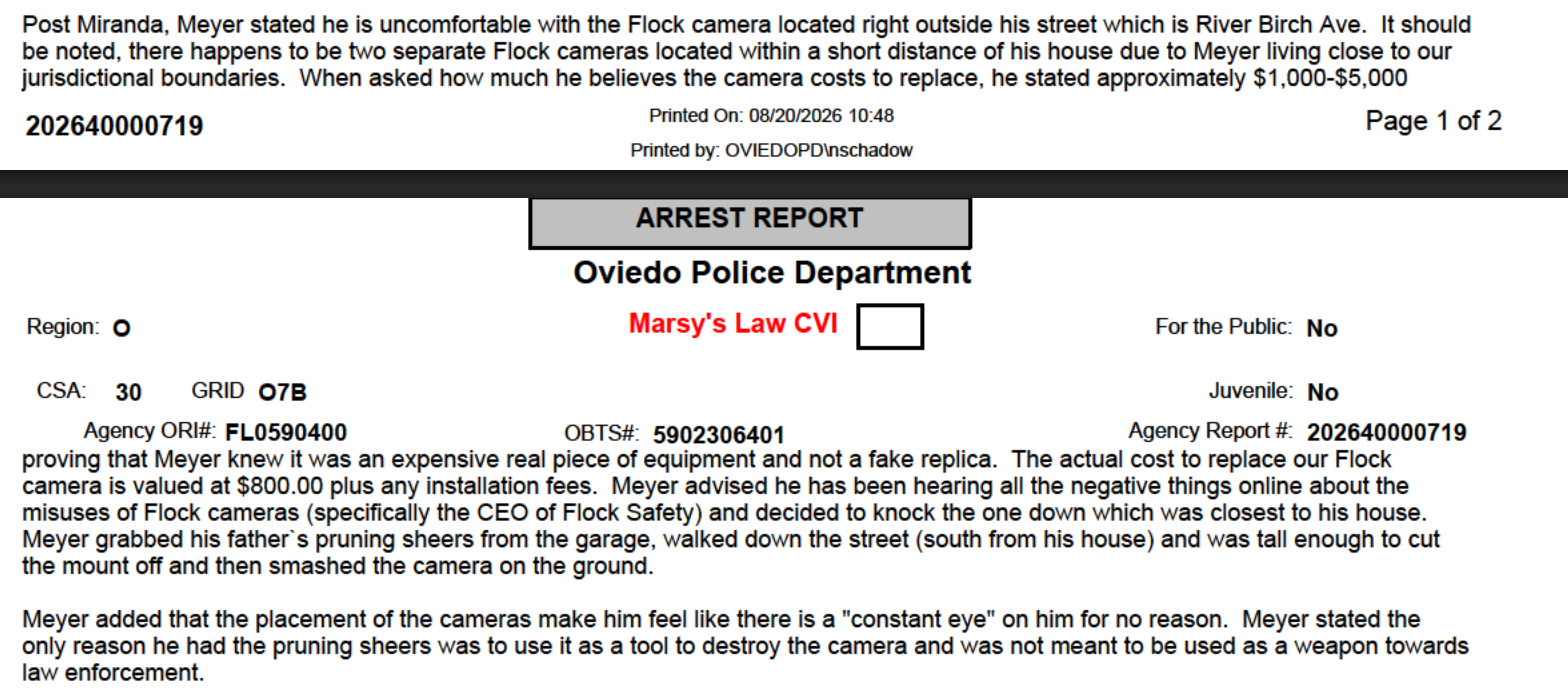
“Several of our Flock Safety cameras were stolen between 7/23/2026 -8/3/2026 out of the Lockwood Blvd. corridor and we replaced them with clone style Flock cameras. These Flock ‘bait’ cameras were made to closely resemble that of real Flock cameras but did not cost the same amount nor collect any data within the device,” the arrest report states. Meyer was arrested shortly after midnight Thursday after knocking the 3D-printed fake camera off a pole with a pair of garden shears and destroying it. 

“When asked how much he believes the camera costs to replace, he stated approximately $1,000-$5,000 proving that Meyer knew it was an expensive real piece of equipment and not a fake replica,” the police report states. “The actual cost to replace our Flock camera is valued at $800.00 plus any installation fees. Meyer advised he has been hearing all the negative things online about the misuses of Flock cameras (specifically the CEO of Flock Safety) and decided to knock the one down which was closest to his house. Meyer grabbed his father's pruning shears from the garage, walked down the street (south from his house) and was tall enough to cut the mount off and then smashed the camera on the ground.”

The arrest report implies that because Meyer thought that Flock cameras were expensive and because he didn’t know it was a decoy that he could be charged with attempted grand theft and other charges that carry more consequences. 

The operation is reminiscent of Amazon “package sting” operations that several police departments attempted several years ago, in which empty Amazon boxes were placed on people’s porches while police officers watched. Those sting operations resulted in zero known arrests. 

Man Charged With 3 Felonies For Breaking 3D-Printed ‘Decoy’ Flock Camera

The Oviedo Police Department has thus far refused to release almost any information about the operation outside of what was said in the police report, and has repeatedly claimed to 404 Media that public records about how the fake camera were made do not have to be released because they have to do with an ongoing criminal investigation. The department first claimed that it has zero public records whatsoever about the fake device from before the arrest, then claimed that any and all records are exempt from release. 

A representative for the Oviedo Police Department told 404 Media that “The decoy FLOCK camera was produced by an officer at their home using their personally owned 3D printer and donated to the agency Our agency does not own a 3D printer therefore does not have design, planning and creation of the alleged decoy or replica cameras before the arrest, including the communications and presentations through which that work was discussed.” It said there are “no meeting minutes, no text messages, and no emails regarding the production of a decoy FLOCK camera prior to the arrest on 8/20/2026.”

Mayor Sladek posted on Facebook that she was “speechless” over the operation, and that “transparency is so important.”

"My 2 cents: there are 2 completely separate issues in play here, and they're tangled up in an unfortunate way. ISSUE 1: VANDALISM IS WRONG. I don't care if it's a Flock camera, a piece of art, or graffiti in a public space, it's not right. The police caught a person who engaged in destroying public property, and that's what we hired them to do. They did their job,” she wrote. “ISSUE 2: on Monday, just days before this incident, a majority of COUNCIL AGREED TO CONSIDER ENDING FLOCK. There is a timeline of events related to installing decoy cameras, and somewhere in that timeline, City Council instructed staff to prepare a resolution to end the use of Flock in Oviedo. While it is irrelevant to the issue of vandalism, when the fake cameras were fabricated and installed relative to a very public discussion about their potential discontinuation is something I would like to know.”

In an email to 404 Media, Sladek said that “the whole thing is very interesting from a legal perspective. Mayor is a part-time job here in Oviedo, and I'm an attorney by day, so I'm probably looking at this with a bit different lens than the average person. Even if the guy knew it was a fake camera, that would still make it art, and it would still be vandalism.”

“I became aware of the camera's existence when I heard about it from a resident who saw it on the news, and shortly after that, my first questions were about the cost and process,” she added. “Can't do much better than free, and the effort did result in someone hopping up a pole and attempting to take it down. What is not known is whether the person who removed the first camera at that location is the same as the person who removed the decoy. It would be interesting to know if the one arrested has any prior criminal history or if this was a first offense. How to charge is up to the state's attorney, but you'll see on the police report when it arrives that the person arrested believed that he was damaging property valued at a much greater price point than the actual value was. “

In a Facebook comment, Sladek posted several responses to questions that Oviedo police chief Dale Coleman gave her. Coleman said that he approved the plan, and that “supervisors have latitude how they go about solving a crime operations [sic] like this are done whenever there is a reasonable chance of success. This operation is similar to a drug operation or a theft ring at the mall. CID has done this many of these and know what is needed to do it lawfully.”

Coleman told Sladek that there were multiple cameras installed last Sunday, and said that police officers were watching the cameras all night between Sunday and Thursday, when Meyer was arrested. 

It is not clear which 3D printed plastic Flock camera model the police officer used, but 404 Media found various Flock camera replicas on popular free 3D printer model sites.

  • ✇404 Media
  • The Man Behind the Anti-Flock Darth Vader Mask Wants to Know: 'When Will This End?'
    Anthony Ralphs has been showing up to San Diego City Council meetings to speak against Flock's presence in his city for a year. At first, he took the podium during public comment in business casual — dress shirts, pants, suits, "respectable" clothing — to voice his concerns about the city's deal with the surveillance company. "I did all the right things. I wore the suits. I said all the correct talking points. I made all the compelling arguments," Ralphs told me in a phone call. He cited Supr
     

The Man Behind the Anti-Flock Darth Vader Mask Wants to Know: 'When Will This End?'

25 août 2026 à 09:52
The Man Behind the Anti-Flock Darth Vader Mask Wants to Know: 'When Will This End?'

Anthony Ralphs has been showing up to San Diego City Council meetings to speak against Flock's presence in his city for a year. At first, he took the podium during public comment in business casual — dress shirts, pants, suits, "respectable" clothing — to voice his concerns about the city's deal with the surveillance company. 

"I did all the right things. I wore the suits. I said all the correct talking points. I made all the compelling arguments," Ralphs told me in a phone call. He cited Supreme Court precedent, like Chatrie v. United States, which challenged the constitutionality of geofence warrants where police could collect location history data from cell phones. 

"It seemed like no matter how many cases I brought up, no matter how many violations of the Constitution this technology breaks, no matter how many constituents, no matter how many organizations, no matter how well I dress, no matter how fine my talking points, they weren't listening," he said. "That was when I realized, you know, you can't spell activism without 'act,' right? And I decided, well, maybe I'll try something different." 

On August 19, Ralphs stood before city council members in a Darth Vader cape and mask, complete with mechanized breathing and voice changer. "The emperor is a fan of Flock," he began, and, speaking as the Dark Lord, laid out in three minutes why the Empire depends on Flock's warrantless network of automatic license plate readers and surveillance cameras. The video went extremely viral; after our coverage of Ralph's comments, every news outlet on the planet seemingly wrote about the mysterious San Diegan Vader. Coverage of his speech was published in Singapore and translated to Spanish and Arabic.

‘I Would Never Do This To You:’ Protesting Flock, Arizona Man Presents Plan to Surveil Government Officials
“They didn’t understand it was satire in the beginning until the end,” Casa Grande, Arizona resident Jacob Petrosky told 404 Media. “They were not happy, they were very upset.”

Ralphs is an event producer and has been hosting raves and music festivals in the area for the last 13 years. He founded an event space, Eden Art Garden, about an hour outside of the city. He recently started DeFlock San Diego and works with the Transparent and Responsible Use of Surveillance Technology San Diego (TRUST SD) Coalition as well as other anti-surveillance and privacy rights groups to educate people and organize more widely. "But now we need the musicians, we need the artists, we need the painters, the actors, we need the thespians to bring this together and get some wheels on the movement to help it gain traction," he said.

"I think it's a character that resonates. He's like an archetype for evil. He's an archetype for the Empire," Ralphs said. "Vader is always a servant of the Empire, right? So [Flock] is nothing but tools for the servants of the Empire. Framing it into that context, I think was what was needed to bring this conversation into like a theatrical global component is really framing it in that kind of good versus bad framework. It is such an Orwellian technology being utilized by such comic book villain forces of evil trying to do dastardly things." 

One of Ralphs' first city council meetings was in December 2025, when hundreds of people spoke in person, attended via Zoom, or sent comments online opposing Flock. After six hours of deliberation and debate, and despite the vast majority of public comment coming from constituents who wanted Flock out of San Diego, the council voted to continue the program.

"After that meeting, where city council decided that none of their constituents' opinions mattered and that they were going to vote how they wanted to vote regardless... After that, the movement was so discouraged, and all of us were so deflated that it was really hard to summon the collective energy and to muster the kind of the vitality that we needed to keep pushing forward," Ralphs said. He came back to another city council meeting a week later, and was "shocked and really disappointed," he said, to see the chamber was completely empty of members of the public. In that moment, he said, he realized he had an opportunity to attend as many city council meetings as he could — once every two weeks, then once a week, then twice and week and eventually every council and subcommittee meeting by spring 2026. "Then by May and June, I was so familiar with the process of giving public comment, of looking at the agenda items ahead of time to know what was going to be discussed, knowing how to cede time and get time ceded to you, I started organizing people to join me to speak to city council."

What Happened When Flock Came to My Town
My small town in South Carolina will soon have more Flock cameras than police officers.

After Vader's appearance went viral around the world, Ralphs wondered if he'd let the character remain anonymous or take ownership of it. "But I think that it's a good time now to follow up with what the intention was, and what the reason and method was behind it," he said. "I think it's important for people to know this wasn't just some antic from somebody who just decided to show up one day and make some noise. This was a thought out plan that was exacted only after cumulative frustration from hundreds of people being ignored and months and months and months of trying things quote unquote the right way and it not working." 

On Monday afternoon, Ralphs returned to San Diego City Council. He carried the mask to the podium with it wheezing on its own, and sat it down on the table. "I think we know who the bad guy is now. But I think what the whole world wants to know is who wants to be the good guy," he said. "I have requests to be interviewed this entire week. And what I would like to ask is, of the five council members that voted for Flock: When will this end? When will you listen to the vast majority of your constituents?" 

❌