Vue normale

  • ✇404 Media
  • A Student Said He Was a Hobby Plane Spotter. He Was Allegedly Taking Photos for the Chinese Government

    A Chinese national studying in Canada allegedly crossed over into the United States earlier this year to take photos of facilities near the Chicago airport at the direction of a suspected Chinese government official, according to newly filed court records. The Chinese official repeatedly told the student to destroy the SIM cards they used to communicate and stick to a Huawei phone.The records provide insight into how Chinese state actors continue to use students to essentially crowd source im
     

A Student Said He Was a Hobby Plane Spotter. He Was Allegedly Taking Photos for the Chinese Government

26 août 2026 à 15:46
A Student Said He Was a Hobby Plane Spotter. He Was Allegedly Taking Photos for the Chinese Government

A Chinese national studying in Canada allegedly crossed over into the United States earlier this year to take photos of facilities near the Chicago airport at the direction of a suspected Chinese government official, according to newly filed court records. The Chinese official repeatedly told the student to destroy the SIM cards they used to communicate and stick to a Huawei phone.

The records provide insight into how Chinese state actors continue to use students to essentially crowd source imagery of sensitive U.S. locations or military aircraft, and how those students are told to remain undetected.

Seamus Hughes of Court Watch first identified and posted the records on Wednesday. 

Weiheng Zeng is an undergraduate student at the University of Waterloo, Ontario, Canada and has crossed into the U.S. around two dozen times since 2022, according to an affidavit from an FBI Special Agent

💡
Do you know anything else about this case? I would love to hear from you. Using a non-work device, you can message me securely on Signal at joseph.404 or send me an email at joseph@404media.co.

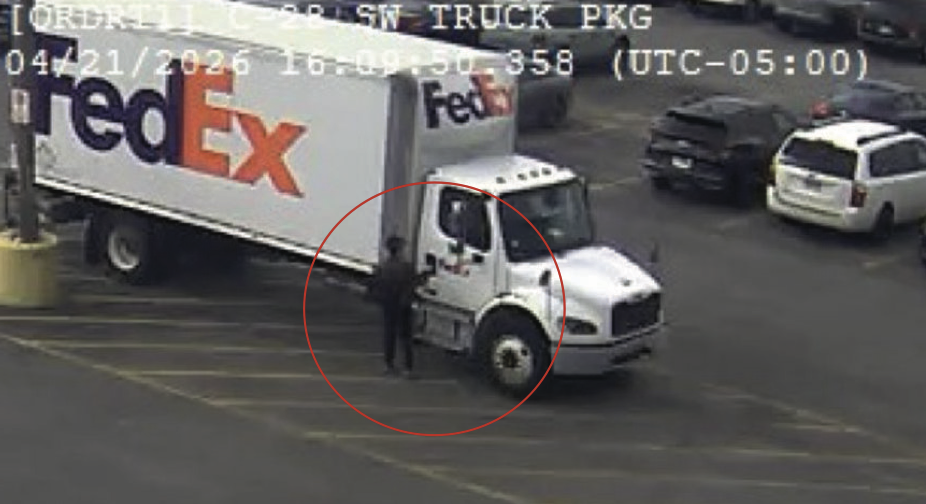
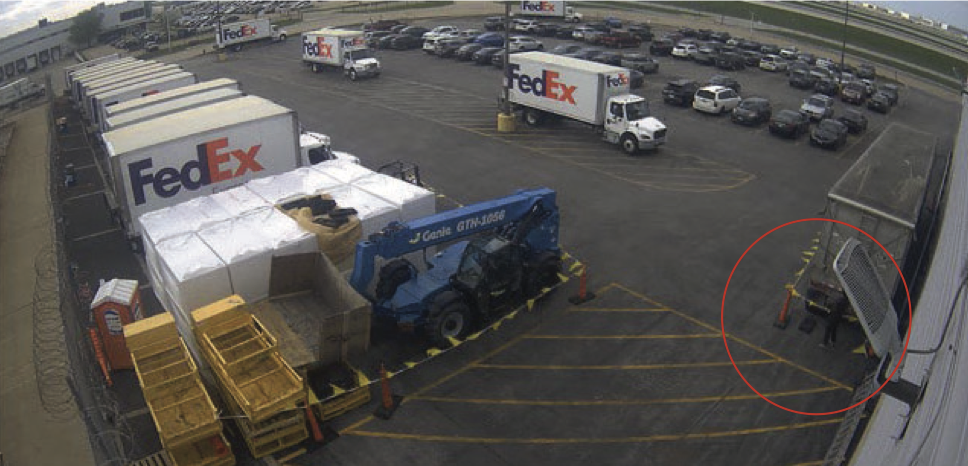
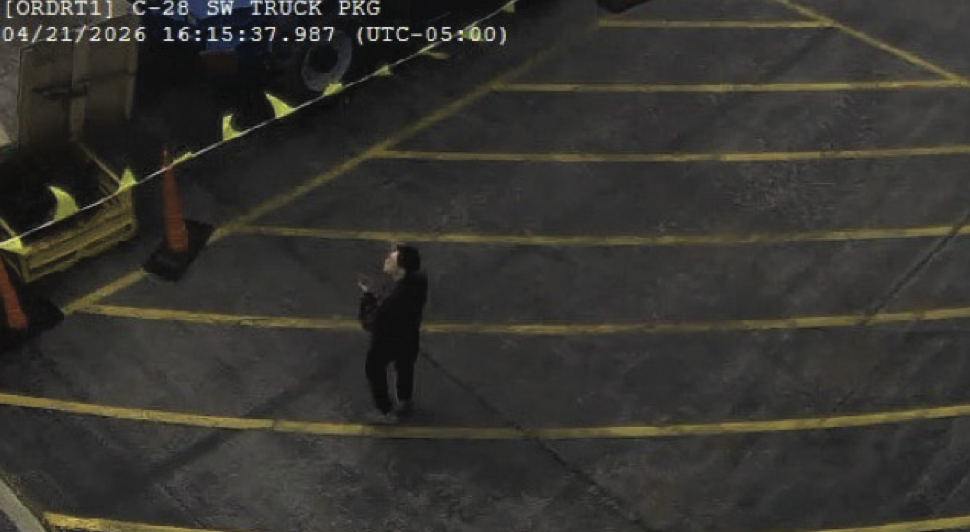
In April, an unknown person was seen inside the FedEx employee parking lot at O’Hare International Airport in Chicago, Illinois, the document continues. This person looked like they were taking photos of aircraft or other parts of the airport. They climbed onto a forklift to take photos in the direction of the aircraft, and tried to get into a FedEx truck, according to photos included in the document. Authorities later figured out this was Zeng based on the dark blue Chrysler Town & Country vehicle that left the area and that he was connected to

When Zeng tried to enter the U.S. again last Sunday, Customs and Border Protection (CBP) interviewed him repeatedly. At first, Zeng said he planned to travel with his sister and a classmate. CBP agents then reviewed his phone and found multiple photos of aircraft, the document says. Zeng told the agents “he takes pictures of model aircraft being tracked for a flight radar website,” it adds. At one point he said he takes the photos as his hobby. Agents also found photos of Zeng and others in tactical clothing holding rifle-styled firearms. Zeng said this was an airsoft gun.

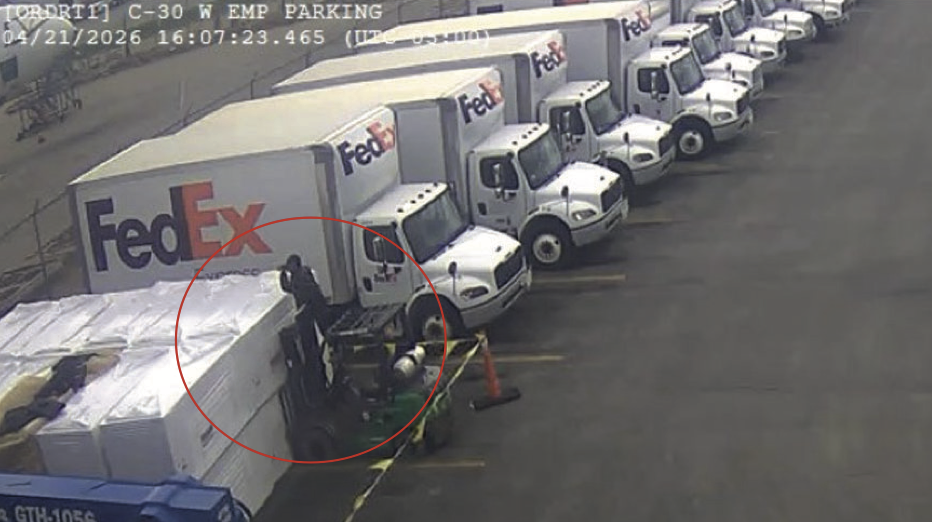
A Student Said He Was a Hobby Plane Spotter. He Was Allegedly Taking Photos for the Chinese Government

Images: screenshots from the court record.

Zeng changed his story repeatedly, before revealing taking the photos was more than a hobby. Instead, he knows someone referred to in the court record as his “Chinese Contact.” This contact assigned Zeng specific planes and their tail numbers to photograph, and then paid Zeng $20 to $30 per picture. Zeng said this Chinese Contact sent him SIM cards to communicate, and then told him to destroy the cards, their chats, and delete the photos he took. Later Zeng said the contact told him to use his Huawei phone to communicate, and never take that phone into the U.S. 

Zeng claimed the Chinese Contact approached him through “an aviation spotter website” around a year and a half ago, the document continues. Zeng said he believed this person was connected to the Chinese Communist Party, and later told the FBI the person sent a photo of an official looking badge. The language the contact used “was very organized and managed, not language typically used between friends,” the document adds. When the FBI later looked into this site, the agency found it appeared to not exist, according to the court record.

One of the photographed planes was an American United aircraft which had “a unique, temporary paint job, of which photographs were highly desired,” according to Zeng. The contact wanted Zeng to go to places in Orlando, Las Vegas, and Los Angeles to take photographs of specific locations around airports, the document says. Zeng said he denied these requests and accepted two tasks over 18 months. One of those was to get the photos of the interior of the FedEx facility at O’Hare International Airport. In all, he made $500, the document says.

“ZENG stated ‘Chinese Contact’ was not satisfied with the photographs and the photographs were fine, but not what were ‘expected’,” the document adds.


  • ✇404 Media
  • Scientists Discover Vast Underground 'Anomaly' on Mars
    Scientists have discovered a thermal “anomaly” deep underground on Mars that could help explain the red planet’s divided geography and shed light on whether it once hosted alien life, according to a study published Wednesday in Nature.Using a novel approach involving three Martian orbiters, the team peered into the interior of the planet and detected that its mantle—the layer between its crust and the core—is 400 to 750°F hotter in the southern hemisphere compared with its northern half.The t
     

Scientists Discover Vast Underground 'Anomaly' on Mars

26 août 2026 à 14:19
Scientists Discover Vast Underground 'Anomaly' on Mars

Scientists have discovered a thermal “anomaly” deep underground on Mars that could help explain the red planet’s divided geography and shed light on whether it once hosted alien life, according to a study published Wednesday in Nature.

Using a novel approach involving three Martian orbiters, the team peered into the interior of the planet and detected that its mantle—the layer between its crust and the core—is 400 to 750°F hotter in the southern hemisphere compared with its northern half.

The temperature anomaly could help explain the longstanding mystery of the so-called “Martian dichotomy,” the term for the bizarre difference between the Martian north and south hemispheres. Whereas Mars’ northern half is dominated by lowlands that may have once hosted a giant ocean, the southern half is covered in highlands that are miles higher in average elevation. 

For decades, scientists have puzzled over whether this dichotomy originates from an ancient impact, or if it might have emerged from early internal processes in the mantle, such as convection or plate tectonics. By tracking tiny changes on Mars during its orbit around the Sun, scientists detected much higher temperatures in the planet’s southern mantle; the crustal dichotomy is at least partly a reflection of a similarly divided interior.

The origin of the dichotomy “is still an ongoing question in Mars science, and a pretty fundamental one,” said Nick Wagner, a planetary scientist at Brown University who co-authored the study, in a call with 404 Media. “This study doesn't provide an answer to it, but adds another line of evidence to figure out what is actually going on underneath Mars.”

To get a look under Mars’ hood, Wagner and his colleagues used a novel approach called tidal tomography. The team analyzed 16 years of tracking data from three NASA orbiters—Mars Global Surveyor, Mars Odyssey, and Mars Reconnaissance Orbiter—to measure the slight gravitational wobbles of Mars during its orbit around the Sun. 

The results exposed a clear asymmetry in temperatures between the hemispheres that mirrors the crustal dichotomy. While it will take a lot of future research to narrow down the exact cause of this thermal anomaly, the team suggested that it might be due to present-day activity in the mantle, known as convection, or perhaps it acts as insulation under the highlands that has lasted for billions of years. 

“I was kind of surprised how sharp the result was, and how confident it was,” said Wagner. “But maybe we shouldn't be surprised, because Mars seems to be dominated by these large scale variations from the north to south, so it makes sense that these variations also extend into the mantle.”

This hypothesis is not mutually exclusive to the idea that an ancient impact may have contributed to the crustal dichotomy, and it will take more research to tease out the causes of Mars’ strange structure.

“The Mars interior is still really unknown,” Wagner noted.

Tidal tomography has been used to glimpse the interiors of Earth and the Moon, but this is the first time the approach has been applied to Mars. The technique allows scientists to remotely probe a celestial body’s interior without having to land spacecraft on the surface, which could make it “a powerful tool for future missions seeking to characterize the interiors of planetary bodies,” according to the study.

Unraveling the full complexity of Mars—from its atmosphere down to its core—will yield insights into its past and present habitability, and whether it ever hosted life. Some four billion years ago, the Martian surface was home to rivers and lakes, and perhaps an enormous ocean, providing the right conditions for life as we know it on Earth. NASA’s Perseverance rover, which is exploring a dried-up lakebed, has discovered tantalizing compounds that could have been made by ancient microbes, but could also have a geological origin. 

To determine if Mars has ever been home to aliens, scientists need to reconstruct its complete evolution, including its internal dynamics. 

“Habitability is a complicated thing,” Wagner said. “There's a lot of different things that feed into it: heat, chemistry, water. Earth is special for a lot of reasons, habitability included, but I think what gets undersold, potentially, is the geodynamics of it. And what I mean by that is [Earth has] plate tectonics—a way for the surface of Earth to transfer material with its interior and regulate its carbon, regulate its nitrogen and its oxygen. As far as we know, Mars doesn't have plate tectonics, and it never did.”

“I'm wondering how this anomaly plays into the idea of Mars maybe having the ability to have plate tectonics at one point, or maybe not having the ability,” he concluded. “It's another piece in this puzzle to figure out what past Mars looked like, both habitability-wise, but also just for pure science.” 

  • ✇404 Media
  • Flock’s CEO Is Lying to Cops About 404 Media's Reporting on Abortion Case
    In an August call with Ohio law enforcement and government officials, Flock’s CEO Garrett Langley repeatedly lied about his surveillance technology’s role in tracking a woman who had self-administered an abortion, the context around the tracking of the woman, and 404 Media’s coverage of that watershed incident. Langley claimed that the story is “entirely false,” despite court records, police reports, and 404 Media’s other reporting documenting the case in detail.The candid comments were recor
     

Flock’s CEO Is Lying to Cops About 404 Media's Reporting on Abortion Case

26 août 2026 à 09:44
Flock’s CEO Is Lying to Cops About 404 Media's Reporting on Abortion Case

In an August call with Ohio law enforcement and government officials, Flock’s CEO Garrett Langley repeatedly lied about his surveillance technology’s role in tracking a woman who had self-administered an abortion, the context around the tracking of the woman, and 404 Media’s coverage of that watershed incident. Langley claimed that the story is “entirely false,” despite court records, police reports, and 404 Media’s other reporting documenting the case in detail.

The candid comments were recorded by Signal Akron journalist Doug Brown, who sat in on the call with an Ohio lawmaker and then shared them with 404 Media. The recording shows how Langley speaks in private with government officials when the conversation is not intended to be broadcast, and comes amid a PR campaign to recast his embattled company. Recently Langley has gone on something of a media blitz, speaking to outlets like The New York Times and appearing on the tech-focused All-In Podcast. Those conversations were, obviously, meant to be consumed publicly. Behind the scenes, Langley speaks very differently.

In the call, Langley strategized with cops about how to deal with journalists, suggesting that they avoid talking to national outlets and that cops focus on telling “sob” stories.

“Let me handle The New York Times, you handle your local media. They want to hear from you, you know your reporters, they’ll pick up a sob story,” Langley said.

💡
Do you work at Flock? I would love to hear from you. Using a non-work device, you can message me securely on Signal at joseph.404 or send me an email at joseph@404media.co.

“There’s a story reported by 404 Media of a Texas officer using Flock to try to find a woman who had an abortion. And it’s entirely false. They knew it was false. Because there’s a few things, right, because one, it’s not illegal to have an abortion in Texas. It’s illegal to administer an abortion. So the woman could never have been under investigation for having an abortion. So that’s problem one,” Langley said in the meeting. 

In fact, court records obtained by the Electronic Frontier Foundation (EFF) and shared with 404 Media show that Texas authorities did discuss whether they could charge the woman with a  crime on the same day they performed the Flock search. An affidavit said, “it was discussed at the time with the District Attorney’s Office and learned the State could not statutorily charge [the woman] for taking the pill to cause the abortion or miscarriage of the non-viable fetus.” Police documents categorize their work on the case as a “death investigation.” 

In that case 404 Media revealed in May 2025 which Langley called “entirely false,” authorities in Texas searched Flock cameras nationwide for a woman who self-administered an abortion. That search included cameras in states where abortion is legal. The incident showed in real terms what healthcare access and privacy advocates had warned about: that in the wake of Roe v. Wade, more law enforcement may use surveillance technology to track down people who are seeking reproductive healthcare. At the time, the Sheriff Adam King of the Johnson County Sheriff’s Office told 404 Media the woman’s “family was worried that she was going to bleed to death, and we were trying to find her to get her to a hospital.” (It later turned out the Flock search was performed more than two weeks after the abortion, making this explanation dubious).

The records were part of an arrest affidavit against the woman’s partner, who was arrested for allegedly threatening her at gunpoint on the day she took an abortion pill. Police investigative documents obtained by 404 Media further show that police were initially treating this as an investigation rather than a wellness check. A police incident report describes the police collecting evidence from the woman’s partner’s home, including the FedEx packaging and instructions for the abortion pill she took, photos her partner took, and other evidence.

In the meeting, Langley continued, “The second problem is if the 404 Media group would have taken the time to conduct an actual journalistic investigation, they would have found out that two weeks later, when all this came out, she was in an abusive relationship and the family was concerned that she was in danger. They were trying to find her because they were worried her life was at risk.”

Langley’s version of events here is misleading, too. 404 Media has repeatedly reported that the police documents do not mention the woman’s family having any concern about her. The entire investigation that led to the Flock searches was performed at the behest of her abusive partner, and the police documents show that the man had seen her a day after the abortion but did not call the police until weeks later. The man’s trial, related to charges around his alleged abuse, is scheduled for later this year.

It is unclear what Langley means by “two weeks later, when all this came out.” He may be referring to the fact that the police investigation and the Flock searches only happened more than two weeks after the woman had the abortion, which is a fact that people only know because of 404 Media’s journalistic investigation and the EFF, which obtained the relevant court records that 404 Media reported on. It was only after our reporting was published that police created a new document retroactively providing the justification as being concerned for the woman’s safety.

When 404 Media asked for comment on Langley’s comments from the call, Flock public relations manager Paris Lewbel said the court documents showed that the woman could not be charged with a crime. This ignores the fact that they did discuss doing so.

Langley has a pattern of making contradictory statements or incendiary ones he later has to walk back. In an interview with Forbes in September, Langley described DeFlock, the open source map of Flock camera locations, as a “terroristic organization.” In July, he apologized for those comments. He mocked people who attended city council meetings to raise concerns about Flock cameras, while also acknowledging that his staff have lobbied at close to 10,000 city council meetings last year.

There have been multiple cases of deception or misleading statements from and inside Flock recently. Jonathan Paz, who used to be a government affairs manager at Flock, told 404 Media he repeatedly asked internally if Flock was working with ICE. He was told no. But, beyond local cops performing lookups for ICE in the Flock system, the company actually did have a pilot program giving a division of ICE direct access to Flock’s network. Paz said he was “lied to.”

The American Civil Liberties Union (ACLU) documented a case in which Flock’s chief information security officer told a city council the tool did not make a heat map of an individual’s movements. The Oshkosh City Council approved its contract with Flock, but then immediately revoked it after learning a day later that Flock had lied.

Regarding that case, Lewbel told 404 Media, “The main assertion in the ACLU article is a misspoken statement by one employee in a contentious meeting in Oshkosh, WI, which we corrected the next day. The assertion that our intent to be anything less than transparent in providing education about our products is false.”

  • ✇404 Media
  • Inside the Warehouse Where Amazon Scans and Destroys Books for AI Training
    Last week we published a story that revealed an Amazon warehouse where the company scans and destroys thousands of books for AI training data. The following is an interview with one of the Amazon employees at this warehouse. We granted this employee anonymity because they were not authorized to speak to the press. The employee worked at Amazon’s VGT3 warehouse, which is housed in the same facility as LAS8, where Amazon operates its print-on-demand business. Both operations are part of a larger c
     

Inside the Warehouse Where Amazon Scans and Destroys Books for AI Training

26 août 2026 à 09:21
Inside the Warehouse Where Amazon Scans and Destroys Books for AI Training

Last week we published a story that revealed an Amazon warehouse where the company scans and destroys thousands of books for AI training data. The following is an interview with one of the Amazon employees at this warehouse. We granted this employee anonymity because they were not authorized to speak to the press. 

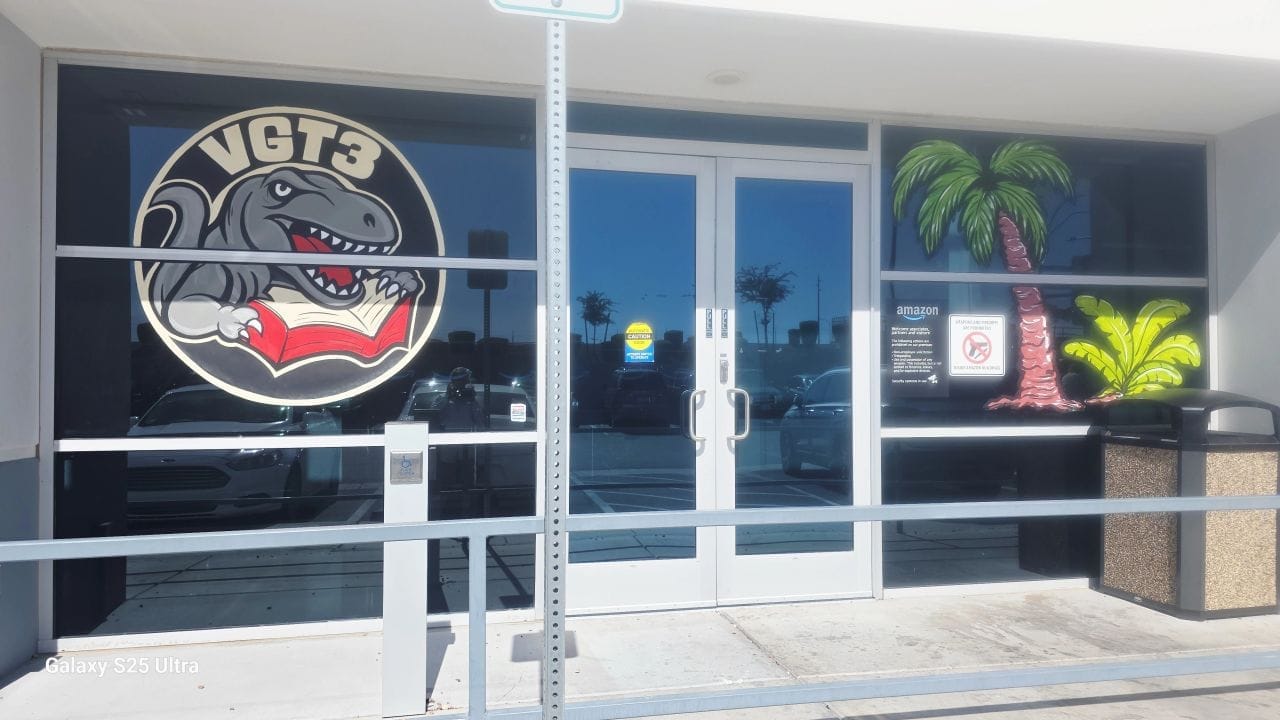
The employee worked at Amazon’s VGT3 warehouse, which is housed in the same facility as LAS8, where Amazon operates its print-on-demand business. Both operations are part of a larger complex of Amazon facilities in Las Vegas, Nevada. 

We discovered that VGT3 was used to destructively scan books for AI training data by placing a tracking device in a shipment of rare books that a bookseller suspected was being acquired by an anonymous AI company. We saw the shipment travel across the country before finally landing at VGT3. Online, Amazon employees who worked at VGT3 described the work of receiving shipments of books, cutting the spines off of them, and scanning the loose pages. 

The Amazon employee I talked to described what that operation looks like from the warehouse floor. 

This interview has been edited for clarity and length

404 Media: What do you do when you get to work at VGT3?

Anonymous: We have to walk past everything to get to the back of the warehouse. That's where I first saw all the scanners, and I was really wondering what was going on. I remember I even asked someone what they were doing and they said they’re not sure even the people who work there know what they’re doing. Of course, once I got over there and started putting two and two together, I kind of understood. And you know, I think people who work there probably know what was going on over there, but probably just didn't want to talk about it. 

📖
Do you work at a company that scans books for AI training? I would love to hear from you. Using a non-work device, you can message me securely on Signal @emanuel.404. Otherwise, send me an email at emanuel@404media.co.

We also saw them cutting the spines off the books and everything. And after they scan it, they throw all the loose leaf papers into a big shuttle. [Editor’s note: Shuttles is how Amazon refers to gaylords, which are big open cardboard boxes that are often used to store books in bulk.] So they're all mixed together. There's no way to put the book back together or anything. Where I worked, primarily they would bring us boxes of books, or sometimes there's shuttles of books.

What kind of books?

All kinds of books. When we first started a lot of them were brand new. Some of them are used as well. Like you could tell, they were liquidated from a library or something like that. We were even getting boxes of stuff from London. There were a lot of books from the University of London. There was even like, I don't know what you would call them, but it was like kind of stapled together papers that said that they were presented to Parliament on the behalf of Her Royal Majesty the Queen. So they were like government documents. I don't know if they're public. Probably they're public, but it was just interesting that we found all that in there. 

What did you think the books were for?

That's what we were wondering, and we were kind of like, ‘this is a lot of random information.’ They have literally any kind of book you could think of. They have ones in different languages. We saw a lot of German and Russian books, and we actually got whole pallets of Japanese books. Some of these books are brand new and they're like still sealed. A lot of the Japanese ones were, but yeah, we do get the stuff from the libraries, and that's the stuff I think is more mixed because they're not all nice in boxes and everything like that. They're kind of just thrown into the shuttle. 

What was it like working there?

Our job was to unbox the books, and honestly, they seem like a mess over there. Like they're not really well managed or organized at all. Their process wasn't solid. Their process changed every day. But we were pretty much putting them in a tote [a small plastic stackable bin] so that they can go be scanned in and sorted, so that they can go over to the people to cut the bindings off. 

They take them off the truck. The dock's right there, and then they stage them, which is just putting them on standby. People pick up the books and bring them to our station and we stack up the totes until it’s a whole pallet, and then the people with the pallet jacks come and they take the whole pallet.

And I think the next area, I think they call it receiving. What I've heard they do there is that they're scanning all the barcodes pretty much to see if they need it and just weed out duplicates. Something else they had us do was—we call it the trash but we don't we don't know exactly what they do with them—but one day we were taking all the duplicates and all the ones they said, “oh, we don't need these,” and we were throwing those in different shuttles. They're like yeeted in there, like they're not nicely placed in there or anything. And they say they're returning them to the vendors, but I'm like, you know, ‘do the vendors go through it and see which ones are actually worth it?’ Because it's like a tall shuttle that's probably six feet tall, six or seven feet tall. They're just piled in there. It’s also right next to where they start cutting the spines, and so I think right after that, that's where it's going [the trash]. 

What does it look like when they cut the spines off the books?

It's a machine people operate. Each of these machines is just like a little workstation, and there'll be one person at each of these stations. It's really safe because it has a little cover and it has a little area where you slide the book into, remove your fingers from the area, and then you press a button, and it just comes down and slices it. And then you remove the books after the blade is gone. 

After they cut the spines they have these kind of library carts, kind of like how you would stack  books, but instead, it's a stacks of paper and little cardboard things to separate—I'm guessing— the different books.

I saw the pages being thrown in a shuttle after they were scanned. We were walking by and we went over to one of the shuttles and looked into it because we could tell they were throwing the old books in it or the cut books in it, and it's just a bunch of loose paper like just sheets thrown in there.

Did you see the scanners?

They probably have like at least 20 scanners, maybe 25. They look like machines that count cash, it flips through the pages really fast. It kind of has something like that they load it into, and I can see their screens, and on their screens, you can see the scans of the book, and it's going really fast. 

What do you think about Amazon doing this?

At first what they were telling people is that it was for Kindles, but I just didn't believe that. I instantly was like, I don't think that's how they do it because of publication rights and stuff, copyright and everything. Then I saw it was for AI. I don't like it only because I wish I could take these books. There's so much knowledge and so much stuff in them and some of them look like they might be rare, and I've heard that they order rare books, and that's why I say some of these are so obscure. I definitely don't like the idea that they can't be reused or anything like that afterwards. They're reducing the amount of available copies for other people.

  • ✇404 Media
  • Podcast: Cops Are Making Fake Flock Cameras and Amazon Packages
    We start this week with Jason’s piece on a cop making a fake Flock camera to catch a vandal. How can you be charged with destroying expensive property if… the camera wasn’t real? After the break, Sam tells us about how Darth Vader loves Flock. In the subscribers-only section, we talk a bit about three years of 404 Media. Listen to the weekly podcast on Apple Podcasts, Spotify, or YouTube. Become a paid subscriber for access to this episode's bonus content and to power our journalism. If yo
     

Podcast: Cops Are Making Fake Flock Cameras and Amazon Packages

26 août 2026 à 09:07
Podcast: Cops Are Making Fake Flock Cameras and Amazon Packages

We start this week with Jason’s piece on a cop making a fake Flock camera to catch a vandal. How can you be charged with destroying expensive property if… the camera wasn’t real? After the break, Sam tells us about how Darth Vader loves Flock. In the subscribers-only section, we talk a bit about three years of 404 Media.

Listen to the weekly podcast on Apple Podcasts, Spotify, or YouTube. Become a paid subscriber for access to this episode's bonus content and to power our journalism. If you become a paid subscriber, check your inbox for an email from our podcast host Transistor for a link to the subscribers-only version! You can also add that subscribers feed to your podcast app of choice and never miss an episode that way. The email should also contain the subscribers-only unlisted YouTube link for the extended video version too. It will also be in the show notes in your podcast player.

❌