Palestine Action Activists Accused of Vandalism at Trump Turnberry Face Terrorism Accusation

© Jaimi Joy/Reuters


© Jaimi Joy/Reuters

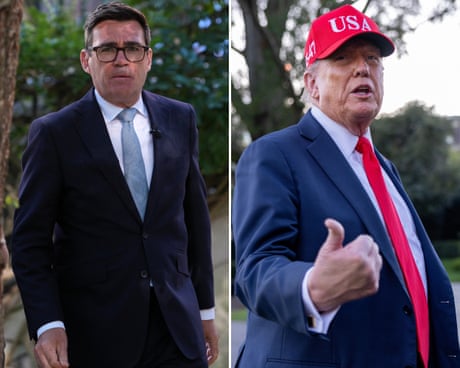
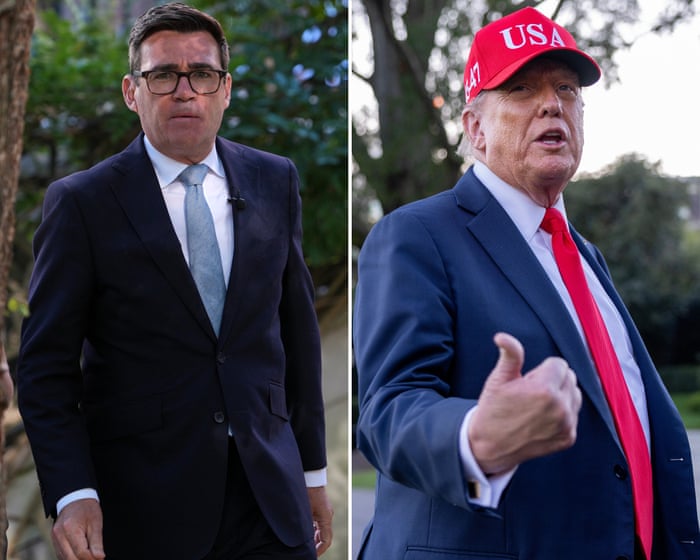
Burnham has nothing to hide as he prepares to meet president he once called poisonous. It may actually win him more respect
It makes a pleasant change. Not so long ago, Keir Starmer was falling over himself in his efforts to keep things sweet with Donald Trump. Offering the US president a second state visit within minutes of meeting him. Everyone knows you should never put out on the first date: it only makes the other person think you’re a pushover. Sure enough, The Donald banked the marching bands and the Windsor silver service, made polite conversation for three days and then went back to trash-talking him.
Yet still, Starmer just sat there and took it. As if one word of criticism would be too much. Wittering on about the “special relationship” as if Trump gave a moment’s thought to the UK before he did anything. The rest of us wouldn’t have put money on the US president even being able to locate Britain on a map. It was only latterly, when The Donald chose to bomb Iran, that the penny finally dropped for Keir. And even then he looked pained by the apparent betrayal, as he resisted the calls of Kemi Badenoch and Nigel Farage to join in the war.
Continue reading...
© Composite: Kin Cheung/Getty Images; Tasos Katopodis/Getty Images

© Composite: Kin Cheung/Getty Images; Tasos Katopodis/Getty Images

© Composite: Kin Cheung/Getty Images; Tasos Katopodis/Getty Images


© Arash Khamooshi/Polaris for The New York Times


© Pool photo by Henry Nicholls


Russia has threatened Britain with “consequences” over reports that Ukrainian forces used drones manufactured by UK companies to carry out strikes inside Russia.
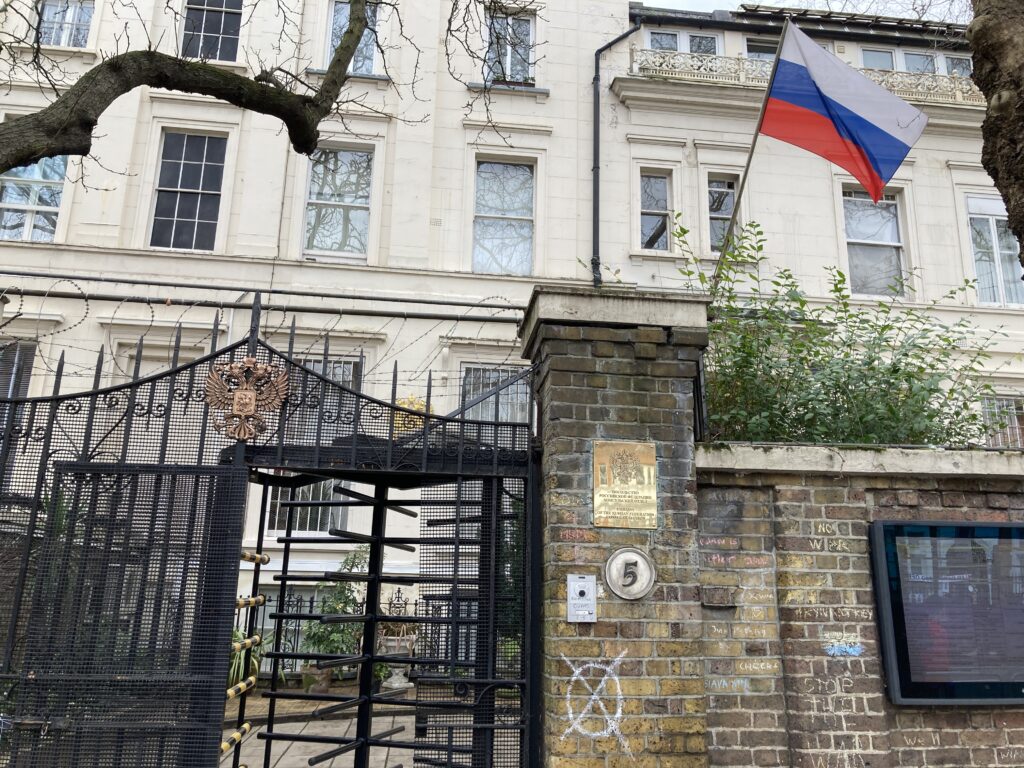
The Russian Embassy in London accused the UK of deliberately escalating the war by supporting Ukraine’s long-range strike campaign, saying Britain was seeking to “contain Russia and inflict maximum damage on it by proxy.” It warned that the deeper Britain becomes involved, “the higher the price it will pay.”
The threat followed news that Ukrainian forces had used two British-built drone systems to strike targets inside Russia for the first time. The Sunday Times, citing Ukrainian military sources, reported that the drones had been used against targets including oil refineries in Volgograd and Yaroslavl over the past six months.
The Russian Embassy said in a statement that the reported use of British-made drones “confirms that London is deliberately opting for an escalation of the Ukraine crisis.”
It warned that British actions would “inevitably carry consequences for which it will have to answer,” without specifying what form those consequences could take.
The warning comes as Ukraine has significantly expanded its long-range strike campaign against Russian military and energy targets. Kyiv has increasingly used large drone swarms to hit targets deep inside Russia, seeking to disrupt military production, logistics, and energy revenues while forcing Moscow to spread its air defenses across a much larger area.
UK Prime Minister Andy Burnham rejected Moscow’s warning, saying Britain would continue supporting Ukraine despite Russian threats, The Independent reported on Tuesday.
“This is the UK doing what it has long said it would do, which is to support Ukraine 100 per cent against this illegal war led by Vladimir Putin,” Burnham said during a visit to Wolverhampton.
“We are providing support so that Ukraine can defend itself,” he said, adding: “We are not fair weather friends. We will be there in Ukraine’s hour of need, and that won’t change.”
UK Work and Pensions Minister Lilian Greenwood similarly said Britain’s resolve to support Ukraine remained “completely steadfast” and that the country would continue providing the military equipment Kyiv needs.
The UK Ministry of Defence also said Russia should have “no doubt” about the government's resolve to oppose Russian aggression in Ukraine and against Britain and its allies.

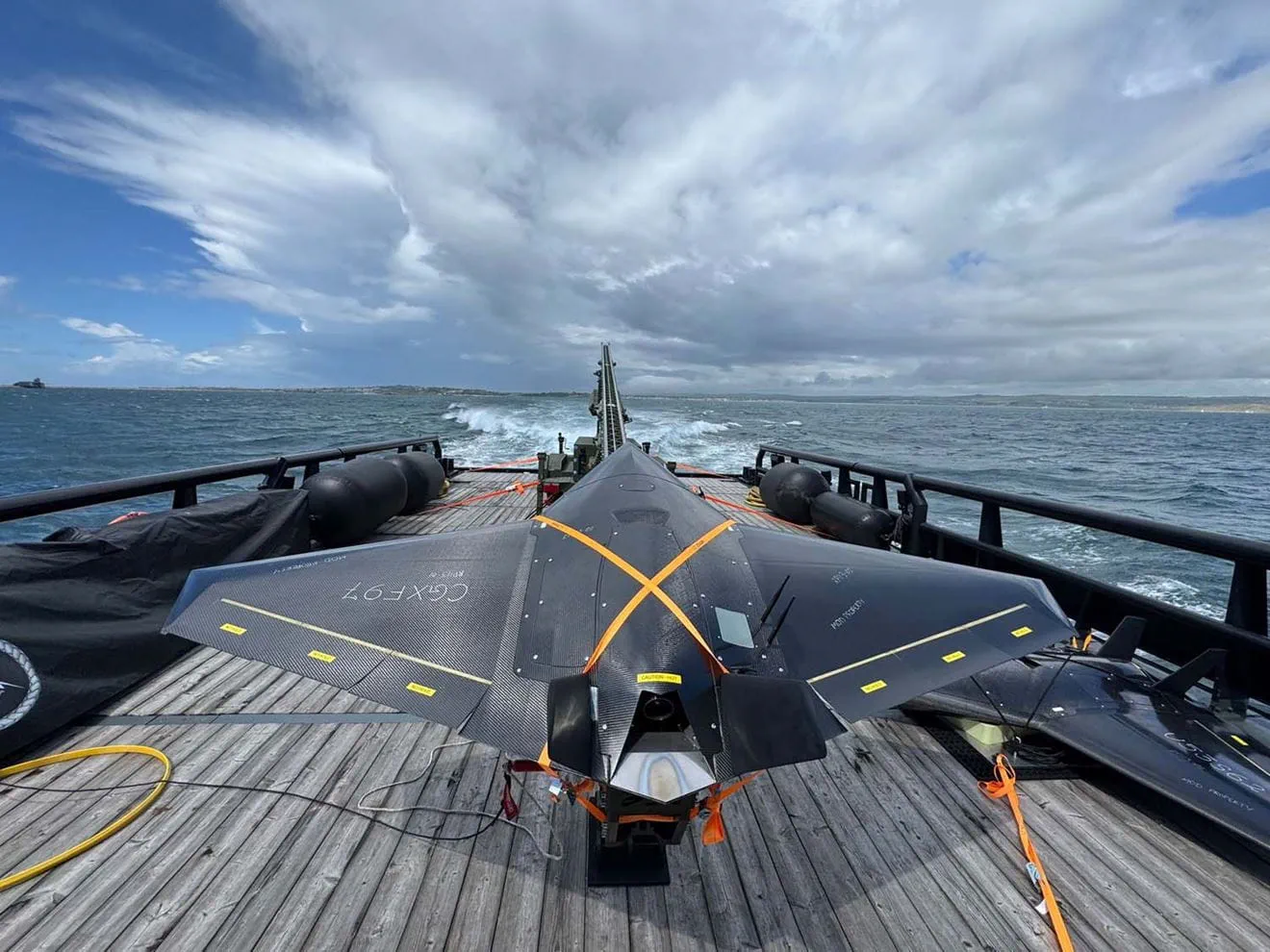
According to The Sunday Times, one of the British systems used by Ukraine is the Nyan, a jet-powered one-way attack drone produced by BAE Systems subsidiary Callen-Lenz, with a reported range of more than 150 miles.
The second system has a reported range exceeding 600 miles, although its manufacturer was not identified for security reasons. The drones provide Ukraine with additional long-range strike capacity that can be produced and deployed in larger numbers than more expensive Western cruise missiles.
The reported deployment marks a further expansion of UK military support for Ukraine as Kyiv increasingly takes the fight to Russian military and energy infrastructure inside Russia.


© Pool photo by Kin Cheung

Revelation about security leak follows person pretending to be senior White House aide contacting prime minister
At least three UK cabinet ministers have had their personal mobile phone numbers published online, amid mounting concern over the security of senior politicians after Andy Burnham was targeted by an impersonation scam.
The defence secretary, Wes Streeting, the justice secretary, Alex Norris, and the Northern Ireland secretary, Chris Bryant, had their numbers available online with their names.
Continue reading...
© Composite: James Manning/PA Wire|AP Photo/Alex Brandon

© Composite: James Manning/PA Wire|AP Photo/Alex Brandon

© Composite: James Manning/PA Wire|AP Photo/Alex Brandon


A plan presented to the UK's new Prime Minister, Andy Burnham, would extend Britain's nuclear umbrella to Ukraine and other non-NATO European states. In exchange, Britain would regain access to the EU single market for goods, The Telegraph reported on 9 August.
The proposal comes as European governments question whether they can rely on US protection and struggle to turn moral support for Ukraine into troops and weapons. Russia's invasions, despite the assurances Kyiv received from the US and the UK when it surrendered its nuclear arsenal under the Budapest memorandum, have also revived calls for nuclear-backed guarantees.
Former Conservative MP Nick Boles drafted the plan. He proposes a "European Confederation" that combines single-market access with NATO-style mutual defense commitments.
For Ukraine, it would provide protection modeled on NATO Articles 4 and 5 while Kyiv pursued full EU membership.
Ukraine would maintain a large army as Europe's bulwark against Russia and share defense technology with other members of the Confederation. Britain would raise defense spending to 3.5% of GDP, while both countries would gain full access to the EU's single market for goods.
Boles said Europe needed a new security model because neither US President Donald Trump nor a future US president could be guaranteed to "defend Europe as if it were Kansas."
Boles's plan is not Burnham government policy. Nevertheless, it has circulated among officials, including National Security Adviser Jonathan Powell, as London considers deeper cooperation with the EU.
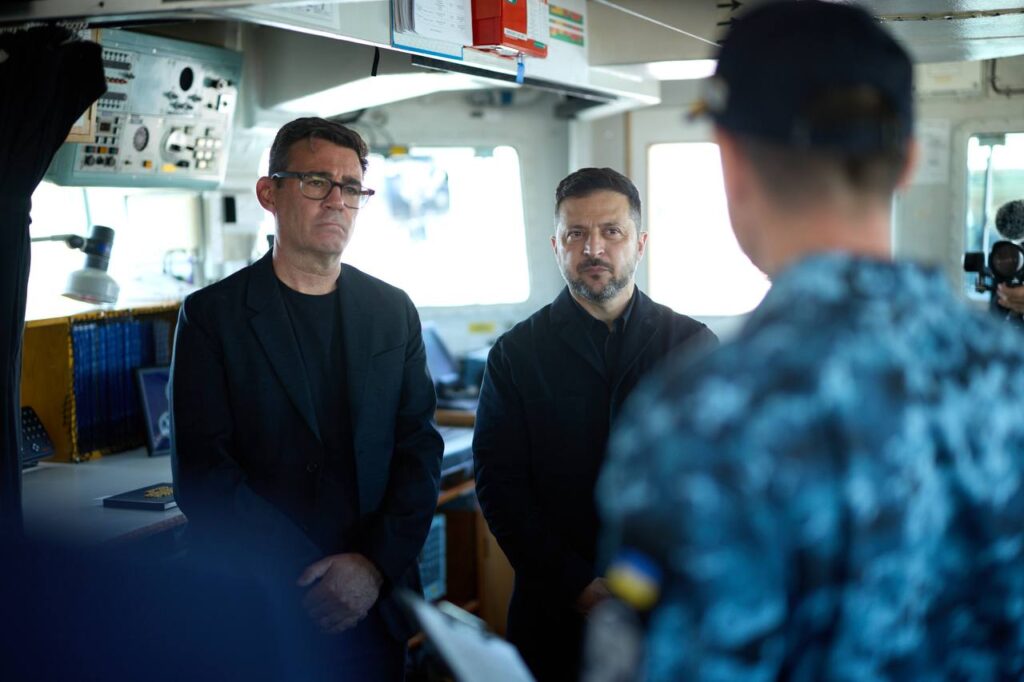
Prime Minister Burnham entered Downing Street as a firm supporter of Ukraine. He assured Ukrainian President Volodymyr Zelenskyy that British support remained unchanged and pledged to preserve aid levels.
Britain also co-leads with France the Coalition of the Willing, which plans to deploy forces in Ukraine after a ceasefire to deter another Russian attack.
The Coalition has brought together representatives of 40 countries. Still, members remain divided over how far to support Ukraine.
Britain and France have formally declared their intention to deploy forces after a potential ceasefire in Ukraine. Yet Poland offered logistical support but ruled out troop deployment, while Bulgaria has withdrawn from the Coalition. Europe has promised deterrence, but key deep-strike missiles may not arrive until 2029.
Boles's plan would pair Britain's nuclear deterrent with Ukraine's conventional military strength. Unlike the Coalition’s voluntary plans, Boles's proposed European Confederation would place its defense guarantees in a treaty. NATO would initially be responsible for carrying them out.
Ukraine inherited the world's third-largest nuclear arsenal after the Soviet collapse, including about 1,900 strategic warheads.
Kyiv relinquished them under the 1994 Budapest Memorandum after receiving security assurances from Russia, Britain, and the US. Despite these promises, Russia invaded Ukraine in 2014 and launched its full-scale war in 2022.
Russia's invasions have revived calls among Ukrainian lawmakers for nuclear-backed security guarantees. Politician Roman Kostenko has called for guarantees that could include British and French nuclear retaliation in the event of another Russian attack.
Under Boles's proposal, Ukraine would not regain its own warheads. It would instead come under Britain's nuclear shield.