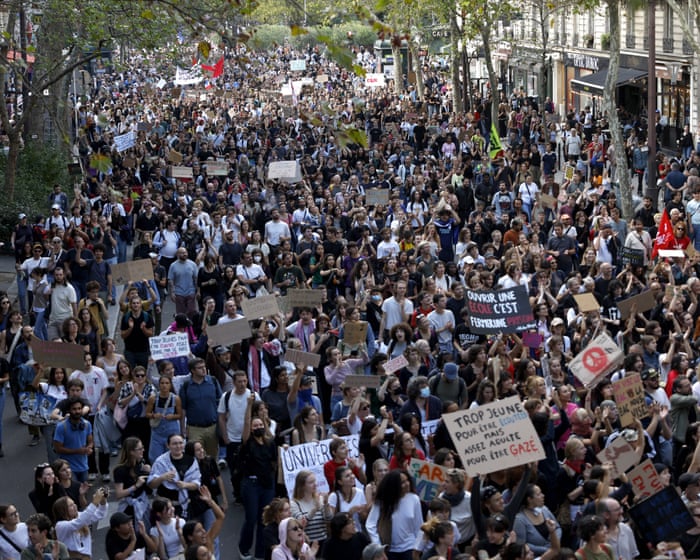
Dans un texte publié sur le site de Politis, près d'une centaine de personnalités issues du monde de la culture et du sport ont appelé mardi à refuser le racisme, après l'attentat terroriste survenu dans les Yvelines.
Dans un texte publié sur le site de Politis, près d'une centaine de personnalités issues du monde de la culture et du sport ont appelé mardi à refuser le racisme, après l'attentat terroriste survenu dans les Yvelines.
Après un mois de blocus et de manifestations, le gouvernement a annoncé lundi plusieurs mesures destinées à apaiser la colère des lycéens. Le remplacement progressif de Parcoursup d'ici 2028 ou les 15 000 places supplémentaires dans l'enseignement supérieur n'ont pas convaincu les organisations lycéennes et étudiantes, qui ont appelé à poursuivre la mobilisation.
Après un mois de blocus et de manifestations, le gouvernement a annoncé lundi plusieurs mesures destinées à apaiser la colère des lycéens. Le remplacement progressif de Parcoursup d'ici 2028 ou les 15 000 places supplémentaires dans l'enseignement supérieur n'ont pas convaincu les organisations lycéennes et étudiantes, qui ont appelé à poursuivre la mobilisation.
Après l'avoir détricoté, le Sénat a rejeté lundi l’ensemble du texte de réforme constitutionnelle sur l'avenir de la Corse. Le camp autonomiste a en conséquence annoncé qu'il se retirait du processus de Beauvau lancé en 2022.
Après l'avoir détricoté, le Sénat a rejeté lundi l’ensemble du texte de réforme constitutionnelle sur l'avenir de la Corse. Le camp autonomiste a en conséquence annoncé qu'il se retirait du processus de Beauvau lancé en 2022.
Après une brève suspension pour "motifs psychiatriques", la garde à vue de Kévin T., principal suspect dans l'attentat perpétrée dans les Yvelines, a repris lundi, a indiqué le procureur national antiterroriste, Olivier Christen. Plus tôt, le ministre de l'Intérieur Laurent Nuñez avait assuré que le profil psychiatrique du suspect "ne change[ait] rien" au mobile "raciste" de l'attaque.
Après une brève suspension pour "motifs psychiatriques", la garde à vue de Kévin T., principal suspect dans l'attentat perpétrée dans les Yvelines, a repris lundi, a indiqué le procureur national antiterroriste, Olivier Christen. Plus tôt, le ministre de l'Intérieur Laurent Nuñez avait assuré que le profil psychiatrique du suspect "ne change[ait] rien" au mobile "raciste" de l'attaque.
Russia’s aircraft plants still turn out modern fighter-bombers and fighters, enough to partly cover its losses, Ukraine’s military intelligence agency HUR told Ukrainian news agency UNIAN, which published the reply on 23 October. Its older bombers are a different story. Russia has no serial production of new Tu-95s, Tu-22M3s, or Su-24s and keeps them flying through repairs and upgrades, so each one lost for good leaves a lasting gap, HUR said.
Ukraine’s Navy said its Neptune missiles hi
Russia’s aircraft plants still turn out modern fighter-bombers and fighters, enough to partly cover its losses, Ukraine’s military intelligence agency HUR told Ukrainian news agency UNIAN, which published the reply on 23 October. Its older bombers are a different story. Russia has no serial production of new Tu-95s, Tu-22M3s, or Su-24s and keeps them flying through repairs and upgrades, so each one lost for good leaves a lasting gap, HUR said.
Ukraine’s Navy said its Neptune missiles hit six Su-34M bombers at Borisoglebsk airbase in Russia’s Voronezh Oblast overnight into 15 October. Zelenskyy later said four were destroyed and two damaged. The Su-34 is one of the jets that drop Russia’s glide bombs, heavy bombs fitted with wing-and-guidance kits, on Ukrainian positions and towns.
How fast Russia replaces its jets
Russia can probably deliver 10–15 Su-34s a year now, HUR estimated. Deliveries grew from eight in 2022 to 11 in 2023 and 12–14 in 2024. But the agency said that trend does not confirm the same pace today.
For the Su-35S fighter, HUR pointed to an average of about 11–12 a year in 2021–2025. It called that a rough benchmark, not an established 2026 output. Su-30SM2 and Su-57 production continues, but reliable rates cannot be determined. Su-30 figures also mix new builds with upgrades of older Su-30SMs, HUR noted.
What Russia had, and what it lost or saw badly damaged in 2026
By the end of 2025, Russia had about 125 Su-34 and Su-34M bombers, which HUR counts together. It also had 140–145 Su-30 jets of various versions, 135–140 Su-35S, and about 20 Su-57s, HUR estimated. These are only fleet estimates, not a guaranteed number of jets Russia can send on combat missions at the same time, the agency cautioned. Some are under repair or upgrade, and HUR is not disclosing the current fleet size.
Satellite image from 13 October shows six Russian Su-34 fighter-bombers parked in the area later struck at Borisoglebsk airbase. Image: Exilenova+
HUR also named specific 2026 cases of Russian aircraft destroyed or critically damaged. A Tu-22M3 crashed in Irkutsk Oblast on 15 June. Strikes on Engels airbase on 17 July and 28 August hit two Tu-95MS. The first suffered critical damage to its tail section, and HUR treats the second as a probable irrecoverable loss.
The list also includes a Su-35 that Ukraine’s military says it shot down on 8 July, a claim backed by published materials showing debris. It adds a Su-57 crash in Moscow Oblast on 23 July and a collision of two Su-35S over Kursk Oblast on 7 September. Full official details on those two incidents are still missing, HUR noted. Strikes on several Su-57s and a Su-34 at Shagol airbase on 25 April, and on a Su-24 in Crimea on 7 September, were also reported, but the state of those jets is unknown, so counting them as destroyed would be premature, HUR said. The list, as published, leaves out the Su-34s at Borisoglebsk and the Tu-95MS that Russia’s defense ministry said crashed on takeoff in Amur Oblast in late September.
French and US maritime patrol planes are watching the western Black Sea, where drones keep hitting merchant ships, Romanian outlet Curs de Guvernare reported on 19 October, citing flight-tracking data. Romania blames Russia for the attacks, while Bulgaria says it cannot prove who launched them.
Ukraine’s three small Danube ports have kept its grain exports from collapsing further, and Russia has pounded those ports since the summer. The ships serving them are now being hit in the econom
French and US maritime patrol planes are watching the western Black Sea, where drones keep hitting merchant ships, Romanian outlet Curs de Guvernare reported on 19 October, citing flight-tracking data. Romania blames Russia for the attacks, while Bulgaria says it cannot prove who launched them.
Ukraine’s three small Danube ports have kept its grain exports from collapsing further, and Russia has pounded those ports since the summer. The ships serving them are now being hit in the economic zones of two NATO members. Many were anchored near or heading to the Sulina Canal, which links the Danube to the sea. That puts the allied patrols over these waters in the middle of the fight over Ukraine’s grain trade.
Map: Euromaidan Press
Two patrol planes over the western Black Sea
A French Navy Atlantique 2 maritime patrol plane arrived in Constanța, Romania’s main Black Sea port, on the evening of 18 October, Curs de Guvernare said. On 24 October, French Foreign Minister Jean-Noël Barrot said in the Bulgarian port of Varna that a French patrol plane had been operating in the area under NATO for two weeks and had contributed to rescue operations.
Explore further
Two tankers burn off Romania’s Sulina as Bulgaria says it lacks proof Russia is behind the Black Sea ship attacks
Meanwhile, a US Navy P-8A Poseidon flew into Varna from Sicily on 18 October, AFP reported, citing flight-tracking data. Two days later, Bulgarian Prime Minister Rumen Radev said it had begun reconnaissance patrols after Sofia asked allies for help, and that some allies had responded quickly. Bulgarian Defense Minister Dimitar Stoyanov called the deployment a joint decision of Bulgaria and NATO. He said the plane cannot strike targets and passes its data to NATO, Anadolu Agency reported.
NATO promises more
On 20 October, NATO’s North Atlantic Council met at Romania’s request. Afterward, the alliance said it would send more maritime patrol aircraft, radar systems, and drones to the Black Sea. NATO military spokesman Col. Martin O’Donnell added that allies have sent or will send intelligence personnel and explosives-forensics teams. NATO itself has not attributed the attacks to any country.
Romania names Russia, Bulgaria hedges
Romania has been blunter. On 15 October, after four merchant ships were hit within a day, acting Foreign Minister Oana Țoiu wrote on X that “Russia bears full responsibility for these developments.” On 17 October, Romanian F-16s shot down two jet-powered Russian Geran drones near Sulina, Romania’s Defense Ministry said.
Unitățile aeriene și navale ale Gărzii de Coastă (GdC/MAI) și ale Inspectoratului General pentru Situații de Urgență (IGSU/MAI) sunt implicate activ în operațiunile de căutare și salvare, în vederea găsirii membrilor dați dispăruți ai echipajului navei care a fost atacată în…
On 23 October, a drone sank the cargo ship Khoryv off Constanța, killing a Ukrainian sailor, and President Nicușor Dan blamed Russia too. “It is part of Russia’s escalation process in its war in Ukraine,” Dan said.
Bulgaria is more cautious. Radev told parliament on 14 October that the attacks worked in Russia’s favor but that Sofia could not prove it. Since taking office in May, he has sought a thaw in ties with Moscow.
Le Premier ministre reçoit ce lundi les organisations lycéennes puis étudiantes, espérant clore cinq semaines de crise. Serait notamment envisagé le remplacement de la très décriée plateforme d'orientation Parcoursup d'ici deux ans. De son côté, Emmanuel Macron a estimé que le 31 octobre serait de nouveau "à risque", affirmant que le tracé des manifestations resteraient en dehors des centres-villes, afin de protéger "l'ordre". Suivez notre direct.
Le Premier ministre reçoit ce lundi les organisations lycéennes puis étudiantes, espérant clore cinq semaines de crise. Serait notamment envisagé le remplacement de la très décriée plateforme d'orientation Parcoursup d'ici deux ans. De son côté, Emmanuel Macron a estimé que le 31 octobre serait de nouveau "à risque", affirmant que le tracé des manifestations resteraient en dehors des centres-villes, afin de protéger "l'ordre". Suivez notre direct.
Plus de six ans après la mort de Cédric Chouviat, trois policiers doivent être jugés à partir de lundi au tribunal de Paris pour homicide involontaire à la suite d'un contrôle routier qui a dégénéré. La défense demande un report du procès et les avocats de la famille entendent plaider "l'incompétence" du tribunal, estimant que les faits relèvent de la cour d'assises.
Plus de six ans après la mort de Cédric Chouviat, trois policiers doivent être jugés à partir de lundi au tribunal de Paris pour homicide involontaire à la suite d'un contrôle routier qui a dégénéré. La défense demande un report du procès et les avocats de la famille entendent plaider "l'incompétence" du tribunal, estimant que les faits relèvent de la cour d'assises.
Le gouvernement a promis d'apporter, lundi, "des réponses très concrètes" à la mobilisation des lycéens et étudiants après un mois de perturbations dans le milieu scolaire. Ces annonces politiques attendues devraient concerner la plateforme controversée Parcoursup, l'état des bâtiments ou encore le nombre de places à l'université.
Le gouvernement a promis d'apporter, lundi, "des réponses très concrètes" à la mobilisation des lycéens et étudiants après un mois de perturbations dans le milieu scolaire. Ces annonces politiques attendues devraient concerner la plateforme controversée Parcoursup, l'état des bâtiments ou encore le nombre de places à l'université.
Marine Le Pen tenait son premier meeting de campagne dimanche à Orléans, deux jours après l’attaque terroriste raciste qui a fait un mort et cinq blessés à Trappes. En dépit d’un discours qui stigmatise les étrangers et les musulmans, les électeurs du parti d’extrême droite refusent d’y voir un lien avec le drame de vendredi.
Marine Le Pen tenait son premier meeting de campagne dimanche à Orléans, deux jours après l’attaque terroriste raciste qui a fait un mort et cinq blessés à Trappes. En dépit d’un discours qui stigmatise les étrangers et les musulmans, les électeurs du parti d’extrême droite refusent d’y voir un lien avec le drame de vendredi.
Après avoir inspiré le diptyque sur le général de Gaulle avec sa biographie, l'historien britannique Julian Jackson publie un nouvel essai, "La Chute", consacré à la défaite française de juin 1940 face à l'armée allemande.
Après avoir inspiré le diptyque sur le général de Gaulle avec sa biographie, l'historien britannique Julian Jackson publie un nouvel essai, "La Chute", consacré à la défaite française de juin 1940 face à l'armée allemande.
Pour son premier grand discours de campagne, dimanche, à Orléans, la candidate du parti d'extrême droite à la présidentielle, Marine Le Pen, a développé le thème de la "renaissance" avec l'ambition "d'insuffler un peu d'optimisme" à six mois de la présidentielle.
Pour son premier grand discours de campagne, dimanche, à Orléans, la candidate du parti d'extrême droite à la présidentielle, Marine Le Pen, a développé le thème de la "renaissance" avec l'ambition "d'insuffler un peu d'optimisme" à six mois de la présidentielle.
Retour sur les temps forts de l'actualité de la semaine écoulée et sur ses images les plus marquantes : les importantes dégradations en marge des manifestations nationales en France, les nouvelles frappes russes sur Kiev et les préparatifs pour les élections à venir au Brésil et en Israël.
Retour sur les temps forts de l'actualité de la semaine écoulée et sur ses images les plus marquantes : les importantes dégradations en marge des manifestations nationales en France, les nouvelles frappes russes sur Kiev et les préparatifs pour les élections à venir au Brésil et en Israël.
Dimanche, le ministère de l'Intérieur a fait état de plus de 1 314 interpellations et de 53 membres des forces de l'ordre blessés, au lendemain de nouvelles manifestations en France. Au moins 410 000 personnes, selon les autorités, et 800 000 selon la CGT, avaient défilé.
Dimanche, le ministère de l'Intérieur a fait état de plus de 1 314 interpellations et de 53 membres des forces de l'ordre blessés, au lendemain de nouvelles manifestations en France. Au moins 410 000 personnes, selon les autorités, et 800 000 selon la CGT, avaient défilé.
La garde à vue de l'homme soupçonné d'avoir tué une personne et blessé cinq autres pour un mobile raciste dans les Yvelines a été levée pour raisons psychiatriques, a annoncé, dimanche, le parquet national antiterroriste. L'analyse toxicologique réalisée sur Kévin T. a révélé "la présence de cannabis et de cocaïne dans son sang", a par ailleurs indiqué le Pnat.
La garde à vue de l'homme soupçonné d'avoir tué une personne et blessé cinq autres pour un mobile raciste dans les Yvelines a été levée pour raisons psychiatriques, a annoncé, dimanche, le parquet national antiterroriste. L'analyse toxicologique réalisée sur Kévin T. a révélé "la présence de cannabis et de cocaïne dans son sang", a par ailleurs indiqué le Pnat.
After largely peaceful marches on Saturday, clashes broke out in the evening. But a large-scale police presence, 1,000 arrests and the rerouting of protest routes kept a lid on wholesale vandalism.
After largely peaceful marches on Saturday, clashes broke out in the evening. But a large-scale police presence, 1,000 arrests and the rerouting of protest routes kept a lid on wholesale vandalism.
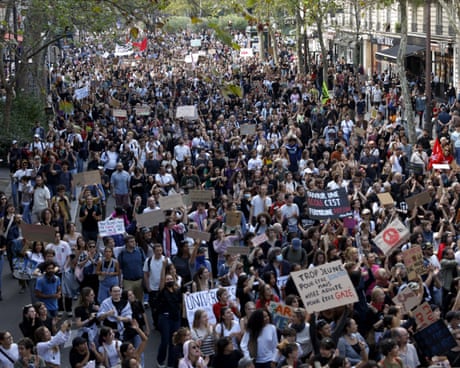
Entre 410 000 et 800 000 personnes ont défilé lors de la mobilisation sociale en France, samedi. Si le ministre de l'Intérieur Laurent Nuñez a estimé que "les cortèges se sont bien passés", il a recensé près de 1 000 interpellations. Quelque 70 000 policiers et gendarmes avaient été appelés pour cette nouvelle journée de manifestations.
Entre 410 000 et 800 000 personnes ont défilé lors de la mobilisation sociale en France, samedi. Si le ministre de l'Intérieur Laurent Nuñez a estimé que "les cortèges se sont bien passés", il a recensé près de 1 000 interpellations. Quelque 70 000 policiers et gendarmes avaient été appelés pour cette nouvelle journée de manifestations.
Plus de 76 000 militants étaient rassemblés, samedi, à Orléans pour le congrès du Rassemblement national. Seul candidat, Jordan Bardella a été réélu président de la formation d'extrême droite avec 98,98 % des voix.
Plus de 76 000 militants étaient rassemblés, samedi, à Orléans pour le congrès du Rassemblement national. Seul candidat, Jordan Bardella a été réélu président de la formation d'extrême droite avec 98,98 % des voix.
La garde à vue de l'homme soupçonné d'avoir tué une personne et blessé cinq autres dans les Yvelines a été prolongée samedi. Selon les informations du Monde, le suspect a dit avoir voulu venger les commerçants pillés le 17 octobre et avoir ciblé des gens de couleur. Un rassemblement a eu lieu à Trappes en hommage à la victime décédée, Pengo Bossio Wangi.
La garde à vue de l'homme soupçonné d'avoir tué une personne et blessé cinq autres dans les Yvelines a été prolongée samedi. Selon les informations du Monde, le suspect a dit avoir voulu venger les commerçants pillés le 17 octobre et avoir ciblé des gens de couleur. Un rassemblement a eu lieu à Trappes en hommage à la victime décédée, Pengo Bossio Wangi.
The authorities deployed tens of thousands of security forces and banned demonstrations in some cities, hoping to avoid a repeat of the riots that shook the country a week ago.
The authorities deployed tens of thousands of security forces and banned demonstrations in some cities, hoping to avoid a repeat of the riots that shook the country a week ago.
Les forces de l'ordre ont recensé 35 000 personnes dans l'espace public, à la mi-journée, a affirmé le ministre de l'Intérieur, alors que Gilets jaunes, syndicats, lycéens et étudiants doivent défiler en France sous très haute sécurité. 135 personnes ont été interpellées et des armes ont été saisies, a précisé le ministre. Suivez notre direct.
Les forces de l'ordre ont recensé 35 000 personnes dans l'espace public, à la mi-journée, a affirmé le ministre de l'Intérieur, alors que Gilets jaunes, syndicats, lycéens et étudiants doivent défiler en France sous très haute sécurité. 135 personnes ont été interpellées et des armes ont été saisies, a précisé le ministre. Suivez notre direct.
Plusieurs représentants lycéens ont été reçus à l'Élysée vendredi pour échanger avec Emmanuel Macron, à la veille d'une nouvelle journée de contestation qui mobilise plus de 70 000 policiers et gendarmes. Globalement "satisfaits" de l'écoute du président, ils ont néanmoins appelé vendredi à "continuer à se mobiliser" jusqu'à l'annonce de mesures concrètes.
Plusieurs représentants lycéens ont été reçus à l'Élysée vendredi pour échanger avec Emmanuel Macron, à la veille d'une nouvelle journée de contestation qui mobilise plus de 70 000 policiers et gendarmes. Globalement "satisfaits" de l'écoute du président, ils ont néanmoins appelé vendredi à "continuer à se mobiliser" jusqu'à l'annonce de mesures concrètes.
Le président Emmanuel Macron a dénoncé vendredi soir à Trappes un "attentat terroriste raciste" et a appelé à l'unité, après la fusillade survenue dans la matinée, qui a fait un mort et plusieurs blessés. Une enquête a été ouverte par le Parquet national antiterroriste.
Le président Emmanuel Macron a dénoncé vendredi soir à Trappes un "attentat terroriste raciste" et a appelé à l'unité, après la fusillade survenue dans la matinée, qui a fait un mort et plusieurs blessés. Une enquête a été ouverte par le Parquet national antiterroriste.
Steelers, Saints still on for NFL’s Paris debut on SundayViolent protests prompt US security warning for fansPSG cancel Sunday match amid escalating Paris unrestThe NFL would have cancelled its first regular-season game in Paris, scheduled for Sunday, if the situation were unsafe, Pittsburgh Steelers quarterback Aaron Rodgers said on Friday, referring to the recent protests in the French capital.France experienced some of its worst urban unrest in years last weekend, prompting President Emmanuel
Steelers, Saints still on for NFL’s Paris debut on Sunday
Violent protests prompt US security warning for fans
PSG cancel Sunday match amid escalating Paris unrest
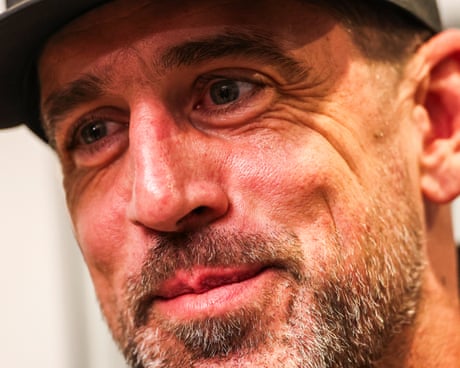
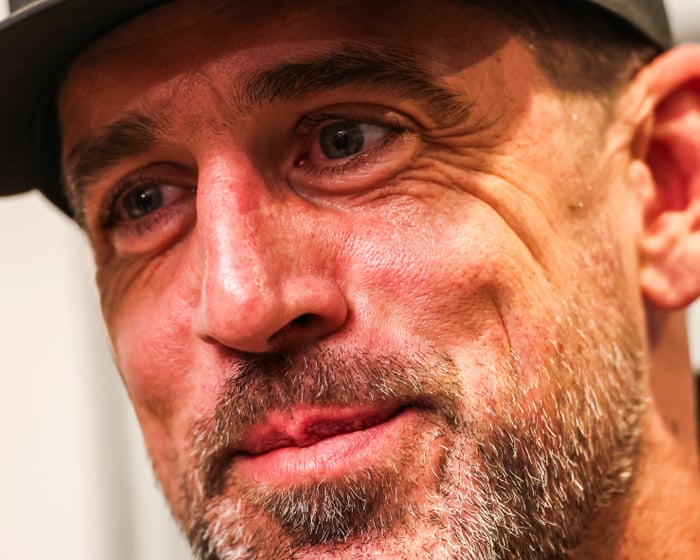
The NFL would have cancelled its first regular-season game in Paris, scheduled for Sunday, if the situation were unsafe, Pittsburgh Steelers quarterback Aaron Rodgers said on Friday, referring to the recent protests in the French capital.
France experienced some of its worst urban unrest in years last weekend, prompting President Emmanuel Macron to tighten restrictions on protests on Thursday amid fears that demonstrations planned for Saturday could turn violent.
An electoral supercycle over the next year may redefine the continent’s future. But what’s happening on the streets is shaping it, tooFrance sneezed, and Europe has again caught the cold. The wave of unrest which began with teenagers at a high school soon drew in hundreds of thousands of people nationwide and then spread across the continent. Protests have filled the streets in Lisbon and Madrid, and have ignited into violence in Milan, Brussels and Tirana as well as in French cities.French auth
An electoral supercycle over the next year may redefine the continent’s future. But what’s happening on the streets is shaping it, too
France sneezed, and Europe has again caught the cold. The wave of unrest which began with teenagers at a high school soon drew in hundreds of thousands of people nationwide and then spread across the continent. Protests have filled the streets in Lisbon and Madrid, and have ignited into violence in Milan, Brussels and Tirana as well as in French cities.
French authorities say they are deploying 70,000 officers on Saturday and are allowing only marches organised by unions. They blame hard-left militants as well as opportunistic young perpetrators for last weekend’s destruction and looting, when a minority hijacked largely peaceful protests. But with fuel prices set to rise further over the winter, the demands and participants broadening, and President Macron utterly failing to meet the moment, there is no sign of an end to the wider discontent and no speedy resolution in sight.
À Trappes puis à La Verrière, dans les Yvelines, un homme a tiré en rafales sur la voie publique depuis son véhicule, tuant une personne et faisant cinq blessés, vendredi. Pour le ministre de l'Intérieur, intervenu sur place, il s'agit d'une attaque terroriste. Que sait-on sur les circonstances de la fusillade et le profil du suspect ? France 24 fait le point.
À Trappes puis à La Verrière, dans les Yvelines, un homme a tiré en rafales sur la voie publique depuis son véhicule, tuant une personne et faisant cinq blessés, vendredi. Pour le ministre de l'Intérieur, intervenu sur place, il s'agit d'une attaque terroriste. Que sait-on sur les circonstances de la fusillade et le profil du suspect ? France 24 fait le point.
Suivant la consigne d’Emmanuel Macron, désireux d’éviter de nouvelles scènes de chaos semblables à celles du 17 octobre, de nombreux préfets ont interdit ou drastiquement limité les manifestations prévues samedi en France. Les défenseurs des libertés fondamentales y voient une attaque contre l’État de droit. France 24 fait le point avec Serge Slama, professeur de droit public.
Suivant la consigne d’Emmanuel Macron, désireux d’éviter de nouvelles scènes de chaos semblables à celles du 17 octobre, de nombreux préfets ont interdit ou drastiquement limité les manifestations prévues samedi en France. Les défenseurs des libertés fondamentales y voient une attaque contre l’État de droit. France 24 fait le point avec Serge Slama, professeur de droit public.
L'image générée par intelligence artificielle d'un couple de seniors, qui aurait été agressé lors de la journée de manifestations du 17 octobre en France, a été créée par un site israélien francophone, Infos Israel News. Ce site d'actualité, au discours pro-israélien et ultra-conservateur, produit une grande partie de ses contenus avec l'IA.
L'image générée par intelligence artificielle d'un couple de seniors, qui aurait été agressé lors de la journée de manifestations du 17 octobre en France, a été créée par un site israélien francophone, Infos Israel News. Ce site d'actualité, au discours pro-israélien et ultra-conservateur, produit une grande partie de ses contenus avec l'IA.
Une semaine après la manifestation du 17 octobre marquée par des actes de vandalisme et des pillages dans de nombreux commerces parisiens, les commerçants se préparent à l'"acte II" de samedi. Certains se calfeutrent derrière du contreplaqué, d'autres comptent simplement sur leur chance.
Une semaine après la manifestation du 17 octobre marquée par des actes de vandalisme et des pillages dans de nombreux commerces parisiens, les commerçants se préparent à l'"acte II" de samedi. Certains se calfeutrent derrière du contreplaqué, d'autres comptent simplement sur leur chance.
The shooter was arrested after firing from a car in several locations southwest of the capital. Antiterrorism prosecutors said they were exploring a racial or religious motive.
The shooter was arrested after firing from a car in several locations southwest of the capital. Antiterrorism prosecutors said they were exploring a racial or religious motive.
Surfant sur les images de chaos qui ont rythmé le week-end du 17 octobre, Marine Le Pen et Jordan Bardella comptent capitaliser sur ces évènements à l'approche de la présidentielle en se posant en défenseurs de l'ordre.
Surfant sur les images de chaos qui ont rythmé le week-end du 17 octobre, Marine Le Pen et Jordan Bardella comptent capitaliser sur ces évènements à l'approche de la présidentielle en se posant en défenseurs de l'ordre.
Une personne a ouvert le feu sur la voie publique vendredi à Trappes et à La Verrière, dans les Yvelines, faisant un mort et cinq blessés, dont une enfant de 12 ans. Le suspect, rapidement interpellé par des policiers, a été placé en garde à vue. Pour le ministre de l'Intérieur, Laurent Nuñez, il s'agit "clairement d'un crime terroriste". Le maire de Trappes dénonce pour sa part "un attentat à connotation raciste, probablement islamophobe".
Une personne a ouvert le feu sur la voie publique vendredi à Trappes et à La Verrière, dans les Yvelines, faisant un mort et cinq blessés, dont une enfant de 12 ans. Le suspect, rapidement interpellé par des policiers, a été placé en garde à vue. Pour le ministre de l'Intérieur, Laurent Nuñez, il s'agit "clairement d'un crime terroriste". Le maire de Trappes dénonce pour sa part "un attentat à connotation raciste, probablement islamophobe".
La plupart des économistes estime que l'agence Moody's va abaisser vendredi soir la note de la France, et ainsi s'aligner sur les autres agences Fitch et S&P, tandis que la Cour des comptes alerte sur le risque d'"étouffement financier".
La plupart des économistes estime que l'agence Moody's va abaisser vendredi soir la note de la France, et ainsi s'aligner sur les autres agences Fitch et S&P, tandis que la Cour des comptes alerte sur le risque d'"étouffement financier".
Selon Enedis, près de 290 000 foyers sont privés d'électricité vendredi en raison de la tempête Austen, principalement en Bretagne. Huit nouveaux départements ont été placés en vigilance orange pour les vents au cours de la matinée, portant à 23 le nombre de départements concernés. Au cours de la nuit, des rafales de 120 à 140 km/h ont été relevées.
Selon Enedis, près de 290 000 foyers sont privés d'électricité vendredi en raison de la tempête Austen, principalement en Bretagne. Huit nouveaux départements ont été placés en vigilance orange pour les vents au cours de la matinée, portant à 23 le nombre de départements concernés. Au cours de la nuit, des rafales de 120 à 140 km/h ont été relevées.
Quelque 70 000 policiers et gendarmes seront mobilisés lors de la nouvelle journée de contestation samedi, a indiqué vendredi le ministre de l'Intérieur, Laurent Nuñez. "La consigne que j'ai passée est de faire preuve de la plus grande fermeté". De son côté, Emmanuel Macron reçoit les organisations lycéennes pour la première fois depuis le début de la contestation. Suivez notre direct.
Quelque 70 000 policiers et gendarmes seront mobilisés lors de la nouvelle journée de contestation samedi, a indiqué vendredi le ministre de l'Intérieur, Laurent Nuñez. "La consigne que j'ai passée est de faire preuve de la plus grande fermeté". De son côté, Emmanuel Macron reçoit les organisations lycéennes pour la première fois depuis le début de la contestation. Suivez notre direct.
Emmanuel Macron a annoncé jeudi que seules les manifestations organisées par des syndicats seront autorisées le 24 octobre, lors d'une nouvelle journée de mobilisation pour le pouvoir d'achat. Les préfets du Rhône et des Bouches-du-Rhône ont interdit les manifestations à Lyon et à Marseille. La préfecture du Nord a, elle, interdit "toutes manifestations" et rassemblements samedi dans le centre de Lille.
Emmanuel Macron a annoncé jeudi que seules les manifestations organisées par des syndicats seront autorisées le 24 octobre, lors d'une nouvelle journée de mobilisation pour le pouvoir d'achat. Les préfets du Rhône et des Bouches-du-Rhône ont interdit les manifestations à Lyon et à Marseille. La préfecture du Nord a, elle, interdit "toutes manifestations" et rassemblements samedi dans le centre de Lille.
La Chancellerie a dévoilé un document qui dresse le profil type des personnes interpellées lors des manifestations marquées par des violences et des pillages ces dernières semaines en France. Le portrait type correspond à un homme âgé entre 18 et 25 ans, de nationalité française, inconnu de la justice, incarcéré pour pillages ou violences envers la police.
La Chancellerie a dévoilé un document qui dresse le profil type des personnes interpellées lors des manifestations marquées par des violences et des pillages ces dernières semaines en France. Le portrait type correspond à un homme âgé entre 18 et 25 ans, de nationalité française, inconnu de la justice, incarcéré pour pillages ou violences envers la police.
Le parquet de Metz a confirmé jeudi le décès du deuxième occupant du Mirage 2000D. L'appareil, qui effectuait une mission d'entraînement, s'est écrasé mardi soir près de Nancy. Le pilote, âgé de 27 ans, et son navigateur, âgé de 44 ans, n'ont pas eu le temps de s'éjecter avant de toucher le sol.
Le parquet de Metz a confirmé jeudi le décès du deuxième occupant du Mirage 2000D. L'appareil, qui effectuait une mission d'entraînement, s'est écrasé mardi soir près de Nancy. Le pilote, âgé de 27 ans, et son navigateur, âgé de 44 ans, n'ont pas eu le temps de s'éjecter avant de toucher le sol.
Prime Minister Rob Jetten of the Netherlands in Brussels last week. He said that his cabinet was closely monitoring the online vulnerability caused by a security flaw in PHP.
Les autorités françaises ont annoncé jeudi avoir détecté un virus de type Shamonda chez un patient immunodéprimé mort au début du mois d'octobre. C'est le premier cas humain documenté de ce virus diffusé par des petits insectes piqueurs et qui ne circulait jusqu'à maintenant que chez les animaux d'élevage.
Les autorités françaises ont annoncé jeudi avoir détecté un virus de type Shamonda chez un patient immunodéprimé mort au début du mois d'octobre. C'est le premier cas humain documenté de ce virus diffusé par des petits insectes piqueurs et qui ne circulait jusqu'à maintenant que chez les animaux d'élevage.

 Connexion