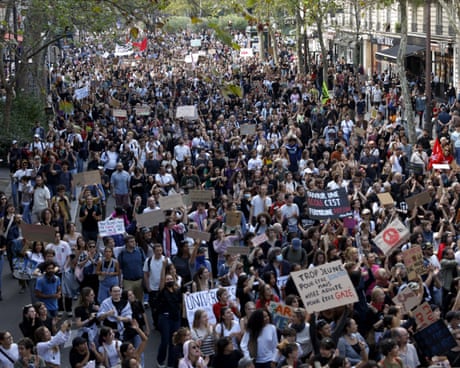
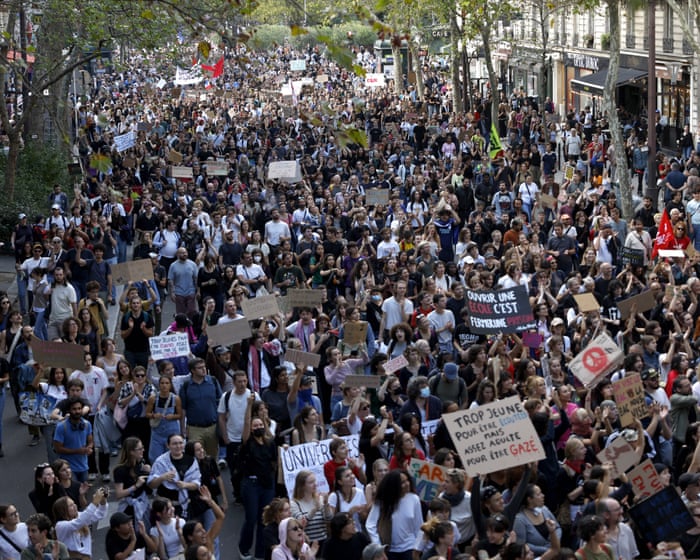
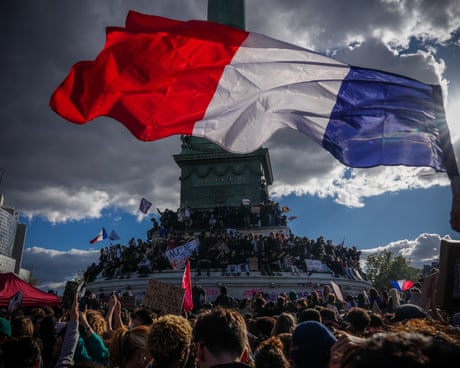
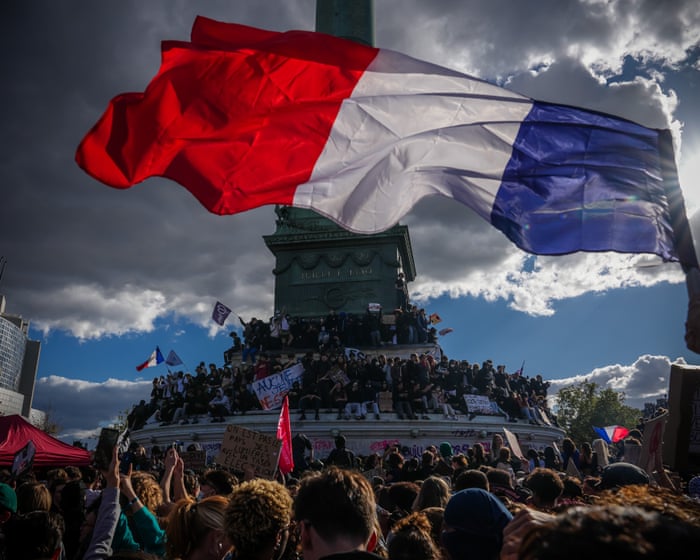
Fed up with the political establishment and rising cost of living, demonstrators hoped to make their message heard after violence overshadowed protests last weekend.
Fed up with the political establishment and rising cost of living, demonstrators hoped to make their message heard after violence overshadowed protests last weekend.
Young people protested the rising cost of living in Milan on Saturday, a week after similar demonstrations in cities across northern Italy ended in violent clashes and looting.
An electoral supercycle over the next year may redefine the continent’s future. But what’s happening on the streets is shaping it, tooFrance sneezed, and Europe has again caught the cold. The wave of unrest which began with teenagers at a high school soon drew in hundreds of thousands of people nationwide and then spread across the continent. Protests have filled the streets in Lisbon and Madrid, and have ignited into violence in Milan, Brussels and Tirana as well as in French cities.French auth
An electoral supercycle over the next year may redefine the continent’s future. But what’s happening on the streets is shaping it, too
France sneezed, and Europe has again caught the cold. The wave of unrest which began with teenagers at a high school soon drew in hundreds of thousands of people nationwide and then spread across the continent. Protests have filled the streets in Lisbon and Madrid, and have ignited into violence in Milan, Brussels and Tirana as well as in French cities.
French authorities say they are deploying 70,000 officers on Saturday and are allowing only marches organised by unions. They blame hard-left militants as well as opportunistic young perpetrators for last weekend’s destruction and looting, when a minority hijacked largely peaceful protests. But with fuel prices set to rise further over the winter, the demands and participants broadening, and President Macron utterly failing to meet the moment, there is no sign of an end to the wider discontent and no speedy resolution in sight.
Fox News and others have toed president’s line – seemingly hoping unrest abroad will make people vote RepublicanDonald Trump sought to capitalize on the scenes of unrest in France, telling a crowd in Kansas on Monday that “migrants” and “communists” were responsible, and that the scenes were “what the radical ‘Dumocrats’ want to do to America”.As Republicans struggle to convince voters across the country ahead of November’s midterm elections, Trump’s allies in the conservative media have followe
Fox News and others have toed president’s line – seemingly hoping unrest abroad will make people vote Republican
Donald Trump sought to capitalize on the scenes of unrest in France, telling a crowd in Kansas on Monday that “migrants” and “communists” were responsible, and that the scenes were “what the radical ‘Dumocrats’ want to do to America”.
As Republicans struggle to convince voters across the country ahead of November’s midterm elections, Trump’s allies in the conservative media have followed suit, seemingly hoping that the scenes in France can scare people to the polls.
Since high school students began protesting in France in September, they’ve been joined by young demonstrators in at least seven other European countries.
Since high school students began protesting in France in September, they’ve been joined by young demonstrators in at least seven other European countries.
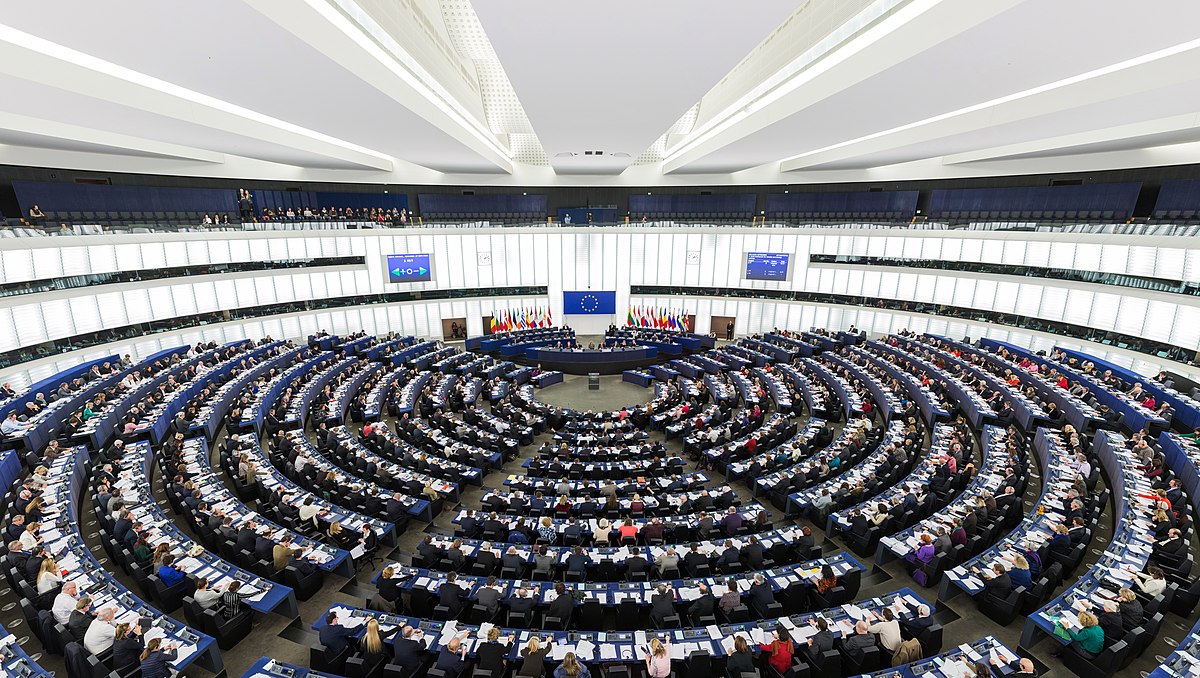
European Parliament Vice President Pina Picierno has announced a hunger strike to draw international attention to the humanitarian disaster in Russian-occupied Oleshky in Ukraine’s Kherson Oblast, she wrote on X on 20 October. The Italian lawmaker called on associations, citizens, and institutions to join her and demand a humanitarian truce, food and medicine for residents, and safe evacuation for those who want to leave.
Russia has occupied the left bank of the Dnipro in Kherson Oblast
European Parliament Vice President Pina Picierno has announced a hunger strike to draw international attention to the humanitarian disaster in Russian-occupied Oleshky in Ukraine’s Kherson Oblast, she wrote on X on 20 October. The Italian lawmaker called on associations, citizens, and institutions to join her and demand a humanitarian truce, food and medicine for residents, and safe evacuation for those who want to leave.
Russia has occupied the left bank of the Dnipro in Kherson Oblast since 2022. Its forces have cut Oleshky off, leaving its remaining residents short of food and medicine, Ukrainian officials and UN monitors say. Oleshky had about 24,000 residents before the full-scale invasion. About 1,700 remain, including 47 children, Danielle Bell, head of the UN Human Rights Monitoring Mission in Ukraine, said. Picierno’s protest adds to growing international pressure after Pope Leo XIV asked Russian leader Vladimir Putin for a truce to help the town.
“This battle cannot be mine alone”
In Oleshky, thousands of people are trapped in territory occupied by the Russian army, without regular access to food and medicine, Picierno wrote. Mined areas make escape extremely dangerous, she added.
“Those who stay risk dying of hunger, those who try to leave risk their lives,” she wrote. “To draw international attention to this emergency, I have announced a hunger strike. But this battle cannot be mine alone.”
She said the campaign is meant to support the efforts of Pope Leo XIV and others trying to avert a humanitarian tragedy. By the morning of 21 October, 277 people had joined the initiative, Liga reported.
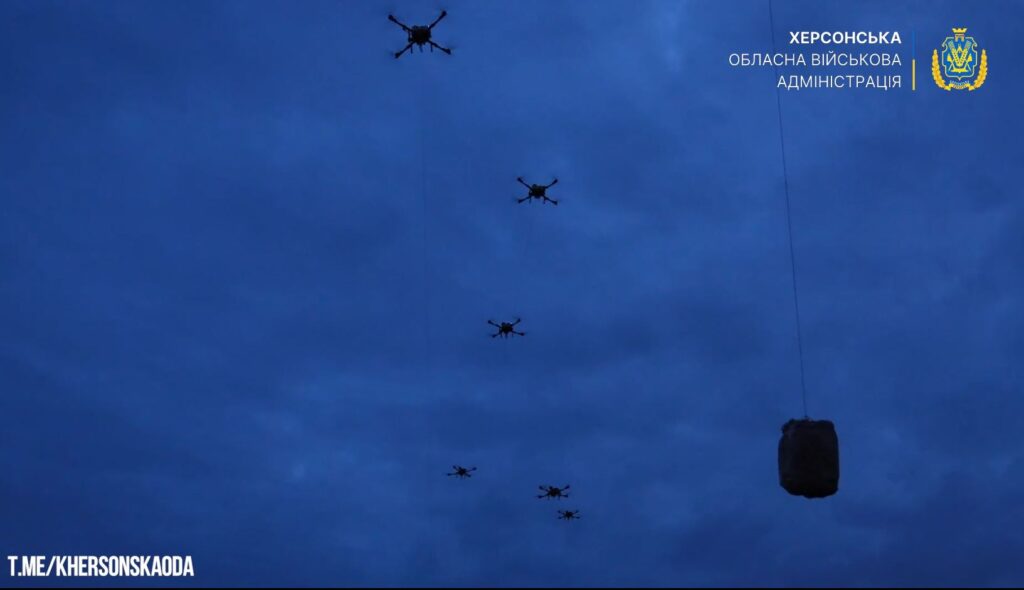
Drones carry food packages across the Dnipro to starving residents of Russian-occupied Oleshky, Kherson Oblast, September 2026. Screenshot: Kherson Oblast Military Administration via Telegram
Picierno, who left Italy’s Democratic Party in June and joined the Renew Europe group, has backed military aid to Ukraine, tougher sanctions on Russia, and Ukraine’s bid to join the EU, according to Liga.
A town Kyiv calls a “death trap”
On 16 October, Pope Leo XIV expressed deep concern to Putin about the situation in Oleshky. He asked for a truce so that food and medical aid could be delivered and civilians could leave voluntarily and safely.
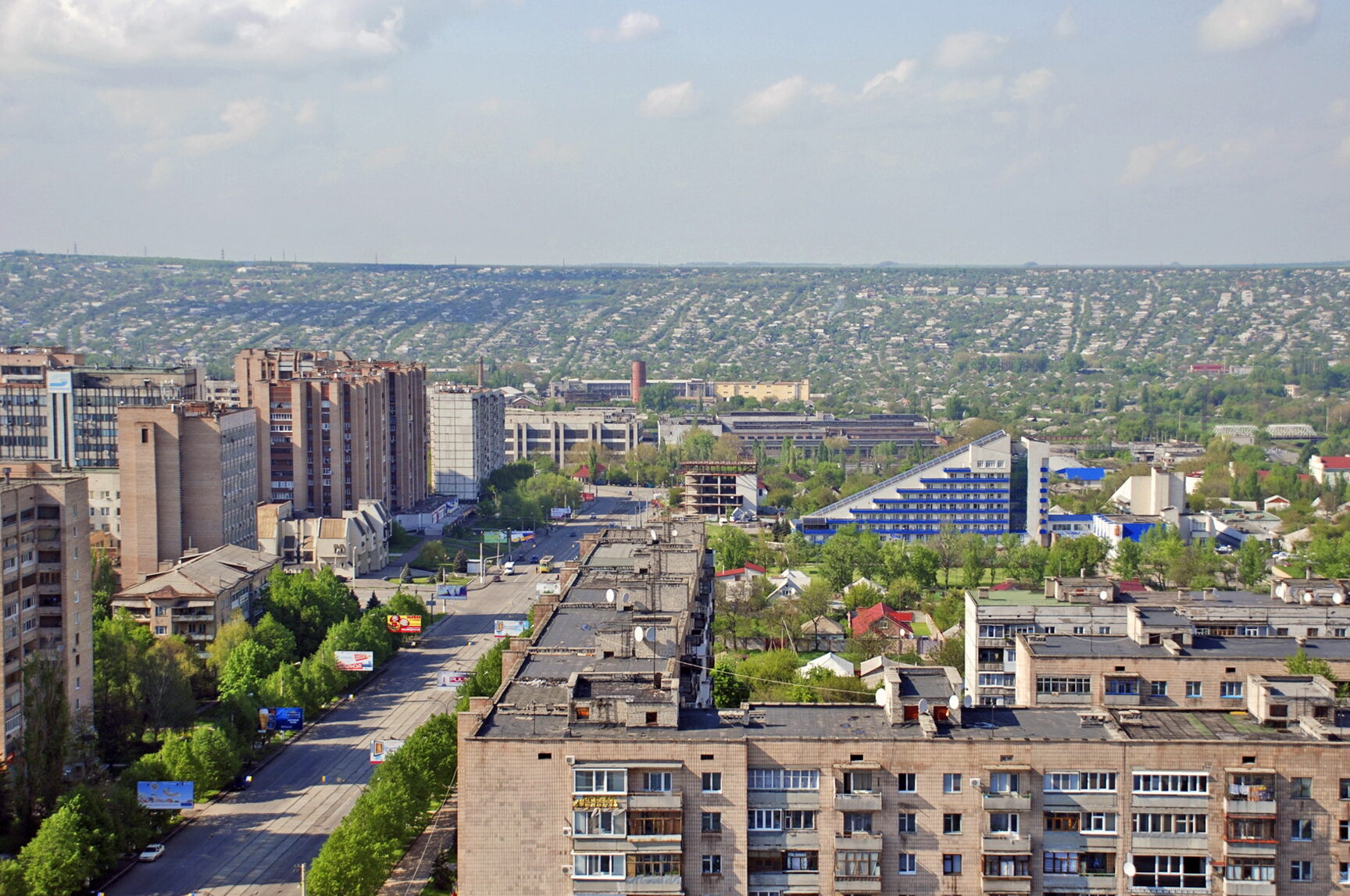
Oleshky, Kherson Oblast, has been under Russian occupation since 2022, following Russia’s capture of the city during the initial phase of its full-scale invasion of Ukraine. Photo: Dmytro Lubinets
A day later, Ukraine’s Foreign Minister Andrii Sybiha urged the UN and the International Committee of the Red Cross to help evacuate residents.
“Russians are trying to turn the Ukrainian town of Oleshky into a death trap,” Sybiha wrote. “Dozens of bodies lie in the streets or in homes, as Russians forbid residents from burying them.”
Ukraine has flown tons of food into the town by drone. Russian troops seize some of the parcels and accuse the people who receive them of cooperating with Ukraine, local officials say. A resident said eggs there cost nearly 20 times the US price.
Explore further
Russia holds 2,000 people hostage in Oleshky without food or water—Ukraine flew 4,000 kg of food to locals across the Dnipro
Evacuation talks “moved forward”
Talks with Russia on a ceasefire and evacuation are at the stage of “agreeing the final details,” Ukraine’s human rights ombudsman Dmytro Lubinets said on 18 October. He estimated that about 6,000 civilians, including up to 200 children, remain in Oleshky and six nearby settlements. He gave no timeline.
On 20 October, President of Ukraine Volodymyr Zelenskyy said Ukraine was doing everything it could to help people in Oleshky, calling the situation there “simply terrible.”
Protests by young people in northern cities ended in riots as farmers and truckers in the south, angered by high gas prices, stopped commercial traffic.
Protests by young people in northern cities ended in riots as farmers and truckers in the south, angered by high gas prices, stopped commercial traffic.
Supporters of the legislation say it will bring stability to a country with a long history of short-lived governments, but critics see the measure as a threat to democracy.
Supporters of the legislation say it will bring stability to a country with a long history of short-lived governments, but critics see the measure as a threat to democracy.
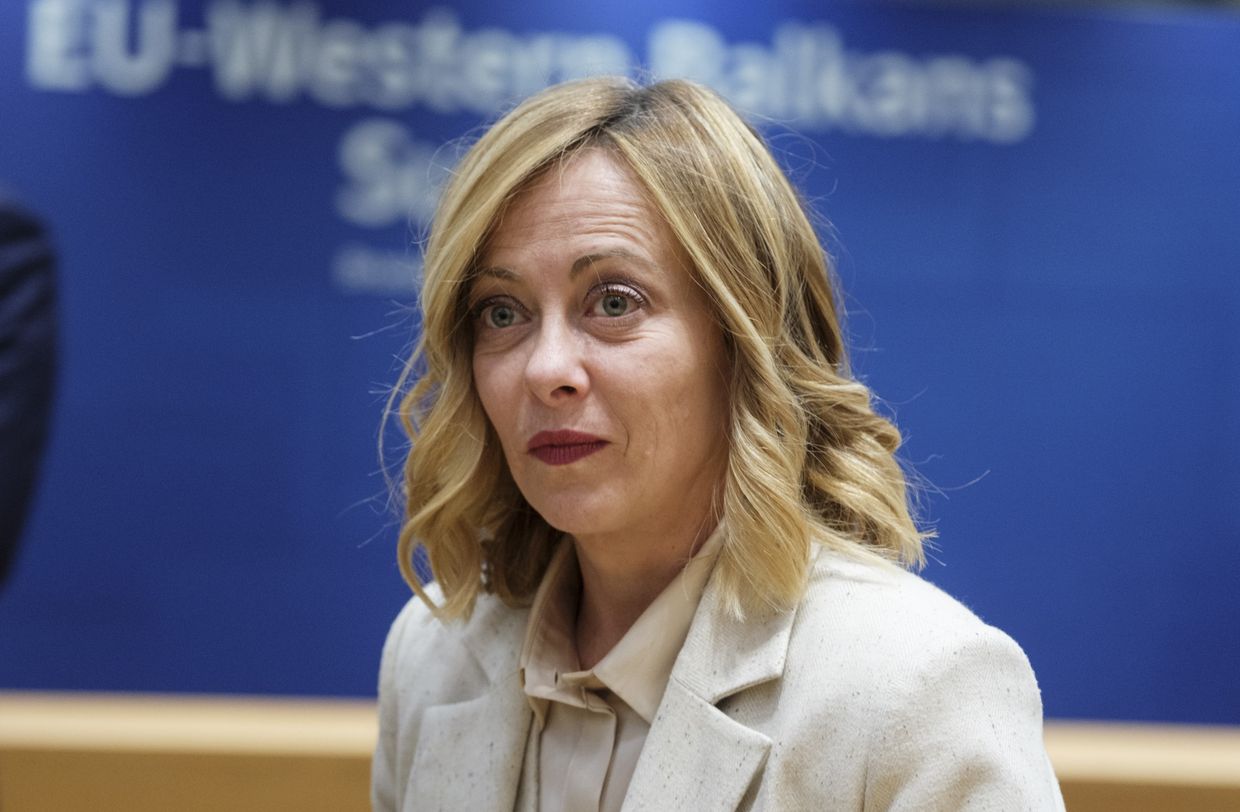
Prime Minister Giorgia Meloni of Italy speaking on Wednesday at a summit meeting in Split, Croatia. She has set a record for leading Italy’s longest-serving government.
The Kremlin is signaling that it will hold the Russian assets of European companies hostage to pressure Europe into rethinking its sanctions, the Institute for the Study of War (ISW) wrote on 30 September. Moscow has already put well-known European retailers and food makers under Russian "temporary management." A senior Russian official has now hinted that European banks could be next.
As Russia continues its invasion of Ukraine, it has long turned hostages and threats into weapons. Its
The Kremlin is signaling that it will hold the Russian assets of European companies hostage to pressure Europe into rethinking its sanctions, the Institute for the Study of War (ISW) wrote on 30 September. Moscow has already put well-known European retailers and food makers under Russian "temporary management." A senior Russian official has now hinted that European banks could be next.
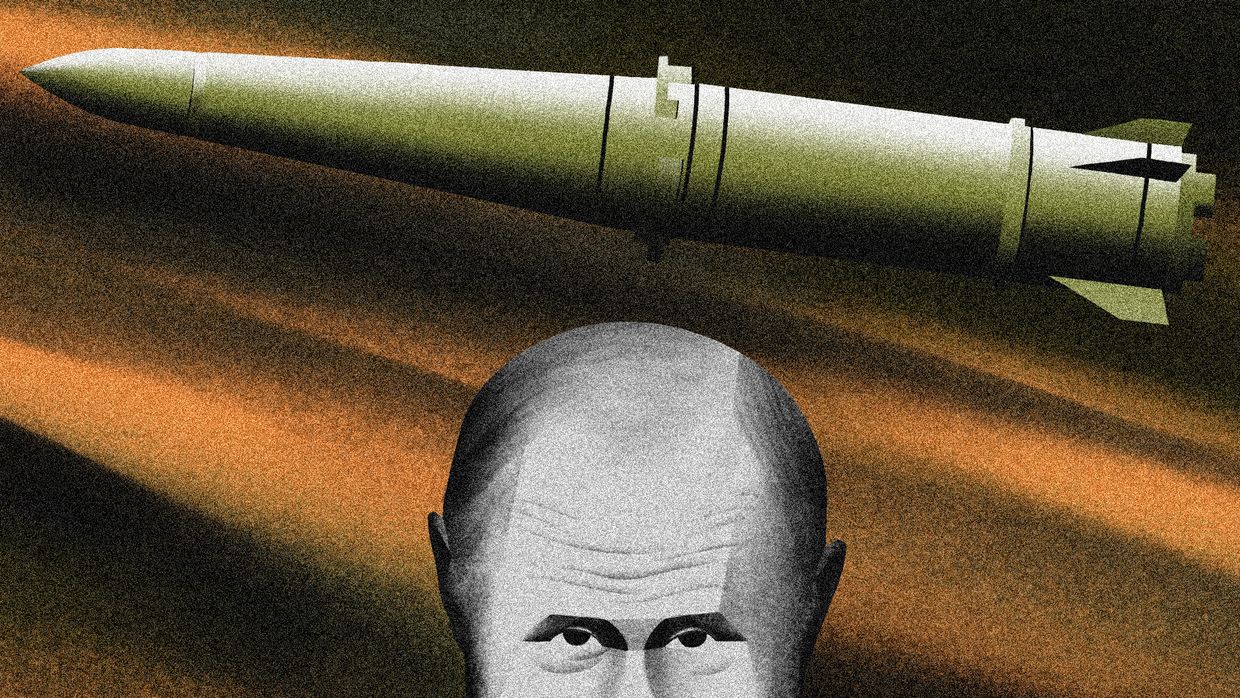
As Russia continues its invasion of Ukraine, it has long turned hostages and threats into weapons. Its record includes nuclear threats against Europe from its Oreshnik missile launch sites and a fresh warning over Kaliningrad. It has played games with Europe's largest nuclear plant that it occupied in 2022, applied gas and water pressure on its neighbors, and Kyiv accuses it of blackmailing the families of Ukrainian prisoners of war. Europe's companies are now one more lever in that kit.
"Let them be scared"
Russia is taking "asymmetric measures" to make Europe rethink its sanctions, a senior Russian government source with direct knowledge of the seizures claimed, Reuters reported. "Let them think about what measures they are taking and what sanctions they are introducing," the source said.
Asked whether the Russian units of Italy's UniCredit and Austria's Raiffeisen could be placed under temporary management, the source answered: "Let them be scared."
Kremlin spokesman Dmitry Peskov claimed the decisions were driven by "the increasing level of involvement of these unfriendly countries in direct battlefield hostilities" against Russia. He suggested the moves were "reversible," but added: "For now, we do not see any grounds for a reversal."
Explore further
EU lawmakers renew push to seize frozen Russian assets as Ukraine faces its toughest winter yet with a €23 billion defense funding gap
Nestlé, Auchan, and Metro under "temporary management"
Putin's decree of 17 September placed 16 companies under the "temporary management" of a firm called L.E.V. Management, with no end date. They include the Russian units of France's Auchan and Lemana PRO, formerly Leroy Merlin, and of Switzerland's Nestlé. A second decree, on 28 September, handed the Russian assets of German wholesaler Metro AG to UK Torg Rus.
Both decrees amend Putin's April 2023 decree No. 302, which lets Moscow take over the property of firms tied to countries it labels "unfriendly." Because the "temporary" management has no expiry date, ISW considers it effectively nationalization. Independent outlet Novaya Gazeta Europe identified L.E.V. Management's director as retired Russian Major General Andrei Krayushkin.
European companies as corporate hostages
The Kremlin likely wants to use the seizures to take European companies as corporate hostages, ISW assessed. It also likely expects a temporary fiscal boost from the revenues of the seized businesses.
The strategy assumes that European firms will judge the benefits of staying in Russia to outweigh the risk of losing their assets, the think tank said. Whether a company is seized depends entirely on Moscow's relations with the country where it is headquartered, ISW added.
Explore further
Russia declares nearly 8,000 Luhansk apartments “ownerless” for “nationalization”
Seizing others' property is an old Moscow habit
Since the start of the full-scale war, Russia has introduced temporary administration at 135 foreign-linked firms, mostly from EU countries, according to TASS data cited by Reuters. Earlier targets included French food group Danone and Danish brewer Carlsberg.
The method was tested on Ukraine first. Russia's proxies in occupied Donetsk and Luhansk oblasts stole most Ukrainian assets there in 2014 and 2015. In March 2017, after Ukrainian activists blocked rail trade with the occupied areas, they placed the remaining Ukrainian-registered firms under "temporary administrations," a label close to the one Moscow uses today. The published Donetsk list alone ran to 43 assets, from coal mines and ironworks to the Donbas Arena stadium. Much of the coal and steel business later ended up with firms tied to Serhii Kurchenko, a fugitive oligarch from Yanukovych's era.
French President Emmanuel Macron said French services received no CIA warning about a possible Russian drone attack from Mediterranean merchant ships, pushing back on an El Mundo report that US intelligence had alerted France, Italy, and Spain, RTL reported.
Macron’s denial comes amid drone attacks and sabotage cases that European governments have linked to Russia. France is preparing stronger defenses against that wider threat, even as Macron says its services received no specific CIA
French President Emmanuel Macron said French services received no CIA warning about a possible Russian drone attack from Mediterranean merchant ships, pushing back on an El Mundo report that US intelligence had alerted France, Italy, and Spain, RTL reported.
Macron’s denial comes amid drone attacks and sabotage cases that European governments have linked to Russia. France is preparing stronger defenses against that wider threat, even as Macron says its services received no specific CIA warning. Italy’s defense minister has also cautioned against fueling alarm over an unconfirmed report.
Asked about the report during a televised interview on 24 September, Macron said: “The CIA did not inform French services of such an attack.” He said Russia was multiplying hostile and sometimes criminal acts against European countries. Covert acts such as sabotage and cyberattacks are often described as hybrid warfare. Asked whether France itself could be attacked, Macron answered yes.
Italian Defense Minister Guido Crosetto separately wrote on X that El Mundo’s alert “finds no confirmation.” He said it served no one to add “more fuel to the fire” at an already tense time.
The Spanish newspaper reported that the possible operation would use Gerbera drones, small Russian aircraft capable of carrying several kilograms of explosives. The drones would be hidden in shipping containers aboard merchant ships and launched toward targets along Europe’s southern coast. El Mundo cited a source close to Lithuania’s Defense Ministry, and analysts familiar with a CIA report said to have circulated among European foreign ministries. Euromaidan Press covered the account on 24 September. Bythe time of publication, neither Spain’s government nor the CIA had publicly addressed it.
Macron pointed to the failed attack at Leipzig/Halle Airport in eastern Germany in August. A drone carrying explosives was found near a Ukrainian cargo aircraft. German officials attributed the attempt to Russia. Macron said France had not experienced a comparable incident.
The wider hybrid warfare threat
Beyond the disputed Mediterranean alert, authorities have investigated other incidents throughout Europe as possible Russian sabotage.
Germany followed its accusation over Leipzig with diplomatic measures against Moscow. Berlin ordered Russia’s last consulate in Germany closed and ended an agreement permitting a Russian cultural center. German investigators also identified two suspects, including a Russian man they linked to military intelligence. Moscow denied involvement.
Poland’s justice and interior ministers said Russian intelligence ordered the May 2024 arson of Warsaw’s Marywilska 44 shopping center.
Finnish President Alexander Stubb said Russia would continue such attacks to frighten Ukraine’s allies into reducing support. He urged vigilance without overreacting, saying Finnish intelligence saw no imminent military threat.
The U.S. has "reviewed" the components it is supplying Ukraine, but did not halt assistance, Italian Prime Minister Giorgia Meloni said on July 4."The United States has not stopped supplying weapons and supporting Ukraine, it has reviewed the decision to supply specific components... (this is) significant but very different from the total American disengagement that has been reported," Meloni said, speaking at a forum.U.S. President Donald Trump on July 3 denied that Washington has paused supply
The U.S. has "reviewed" the components it is supplying Ukraine, but did not halt assistance, Italian Prime Minister Giorgia Meloni said on July 4.
"The United States has not stopped supplying weapons and supporting Ukraine, it has reviewed the decision to supply specific components... (this is) significant but very different from the total American disengagement that has been reported," Meloni said, speaking at a forum.
U.S. President Donald Trump on July 3 denied that Washington has paused supplying weapons to Kyiv amid media reports of a halt in shipments.
Pentagon spokesperson Sean Parnell confirmed on July 2 that some military assistance to Ukraine has been halted as the U.S. Defense Department conducts a review of foreign aid deliveries.
"I hope for positive developments on the issue," Meloni said, adding that she has spoken to Trump regarding Ukraine.
The weapons reportedly held back include two dozen Patriot air defense missiles, over two dozen Stinger air-defense systems, precision artillery rounds, Hellfire missiles, drones, and more than 90 AIM air-to-air missiles launched from F-16 fighter jets.
NATO Secretary General Mark Rutte said on July 2 that he understands the White House's need to safeguard its own defense capabilities, but underscored that Ukraine urgently requires sustained support.
"I totally understand that the U.S. always has to make sure its interests are covered... When it comes to Ukraine, in the short term, Ukraine cannot do without all the support it can get," Rutte said.
A bipartisan group of U.S. lawmakers voiced their opposition to the decision to halt military aid shipments to Ukraine on July 2.
"We must build up our own Defense Industrial Base here in the U.S. while simultaneously providing the needed assistance to our allies who are defending their freedom from brutal invading dictators. To not do both is unacceptable," Republican Rep. Brian Fitzpatrick, the co-chair of the Congressional Ukraine Caucus, said.
Democratic Senator Richard Blumenthal, a member of the Senate Armed Services Committee, described the military aid pause as "fallacious and maybe even disingenuous."
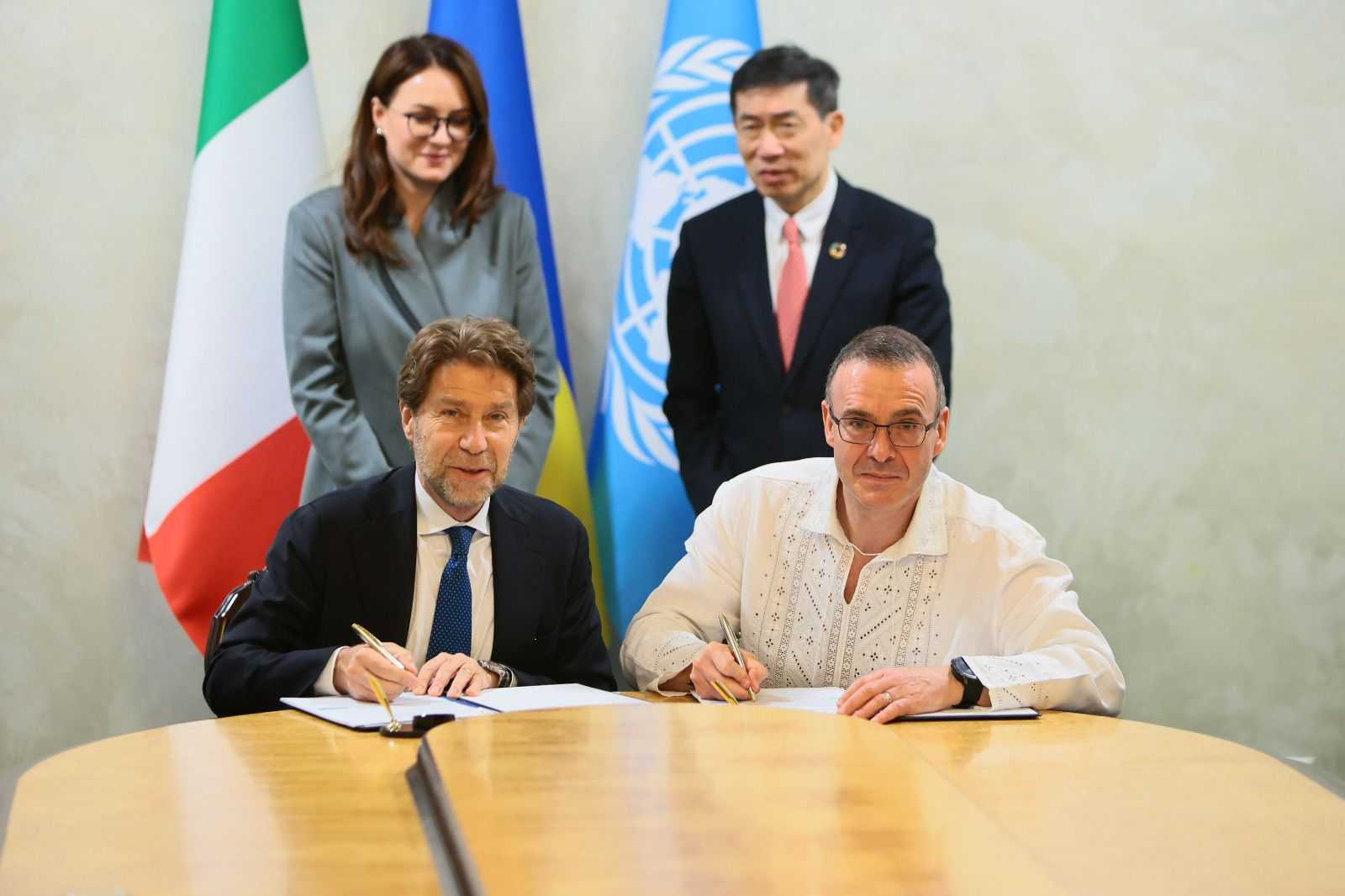
Italy has pledged 1.5 million euros (approximately $1.6 million) to support humanitarian demining efforts in Ukraine, deepening its partnership with the United Nations Development Programme (UNDP) and the Ukrainian government. The agreement was formalized during a high-level ceremony in Kyiv on June 23 attended by Italian Ambassador Carlo Formosa, UN Assistant Secretary-General and new UNDP Administrator Haoliang Xu, Jaco Cilliers, Resident Representative of the UNDP in Ukraine, and Ukraine’s Fi
Italy has pledged 1.5 million euros (approximately $1.6 million) to support humanitarian demining efforts in Ukraine, deepening its partnership with the United Nations Development Programme (UNDP) and the Ukrainian government.
The agreement was formalized during a high-level ceremony in Kyiv on June 23 attended by Italian Ambassador Carlo Formosa, UN Assistant Secretary-General and new UNDP Administrator Haoliang Xu, Jaco Cilliers, Resident Representative of the UNDP in Ukraine, and Ukraine’s First Deputy Prime Minister and Economy Minister Yuliia Svyrydenko.
"Demining is not just a technical operation; it is a deeply humanitarian act that combines cooperation and innovation to restore hope in Ukraine," Ambassador Formosa said. "This project is not only a response to the emergency — it’s a step toward recovery. It’s about returning land to farmers, playgrounds to children, and safe roads to families."
The funding will support UNDP’s mine action program, which focuses on clearing land contaminated by mines and explosive remnants of war, ensuring the safe return of land to Ukrainian communities.
The initiative comes as Ukraine continues to grapple with one of the world’s largest demining challenges. According to the State Emergency Service, the total area of potentially mined land has been reduced by over 20% since late 2022. However, approximately 137,000 square kilometers (52,900 square miles) — much of it farmland — remain contaminated. Demining operations are carried out by the emergency service personnel, National Police, Ministry of Defense, and non-governmental organizations.
Currently, 112 certified demining operators, including eight international groups, are active in Ukraine, the State Emergency Service reported on June 24. Their combined capacity includes more than 9,000 personnel, 278 specialized vehicles, and over 13,000 metal detectors.
While significant progress has been made, Ukrainian officials stress that continued international support and funding are critical to accelerating clearance efforts.

 Connexion