❌

Vue normale

  • ✇Euromaidan Press
  • Russia may stage sabotage in Eastern Europe, but wants Kyiv blamed, Ukraine’s Intelligence warns
    Ukraine’s Defense Intelligence (HUR) warned that Russia may stage sabotage in Central and Eastern Europe, including the Baltic states, and blame Ukraine for the attacks, in a Telegram post on 23 October. The warning comes three days after The Wall Street Journal reported that US intelligence traces Europe’s sabotage wave to Putin’s personal order. If Russia stages new attacks and pins them on Ukraine, as HUR warns, European anger could turn on Kyiv rather than the Kremlin. This goes fur
     

Russia may stage sabotage in Eastern Europe, but wants Kyiv blamed, Ukraine’s Intelligence warns

23 octobre 2026 à 10:02

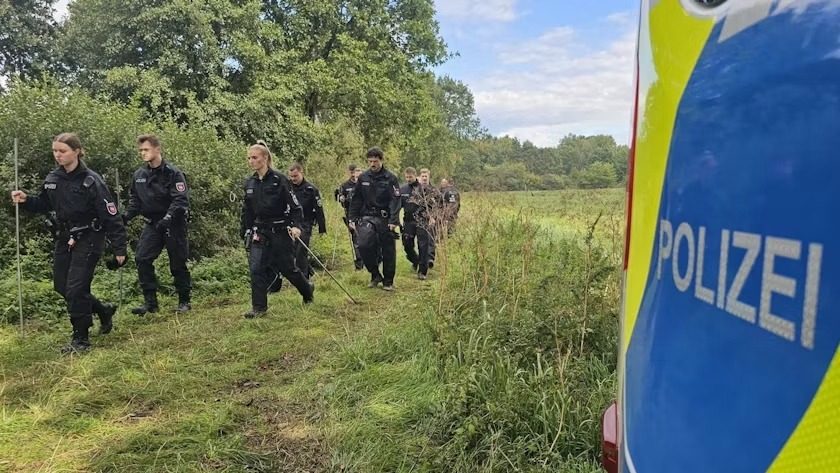
explosives found meters drone crashed near bundeswehr air base—investigators say matches gru's leipzig attack devices · post police officers search debris wunstorf base lower saxony germany 15 2026 german dpa

Ukraine’s Defense Intelligence (HUR) warned that Russia may stage sabotage in Central and Eastern Europe, including the Baltic states, and blame Ukraine for the attacks, in a Telegram post on 23 October.

The warning comes three days after The Wall Street Journal reported that US intelligence traces Europe’s sabotage wave to Putin’s personal order. If Russia stages new attacks and pins them on Ukraine, as HUR warns, European anger could turn on Kyiv rather than the Kremlin. This goes further than HUR’s statement on 2 October, which named potential Russian targets in Europe but did not mention a plan to blame Ukraine for attacks.

HUR says Moscow wants to discredit Ukraine’s army

Russia is stepping up its hybrid strategy to destabilize the European Union, according to HUR. The agency identified two aims: reducing foreign support for Ukraine by discrediting its Defense Forces, and intimidating European governments and societies.

The accusations would be spread through Russian propaganda channels and international platforms accessible to the Kremlin.

Potential targets include infrastructure and Russian Orthodox Church sites

HUR listed several potential targets for Russian provocations:

  • critical infrastructure and areas bordering Russia;
  • the Kaliningrad exclave;
  • areas of EU countries with Russian-speaking populations;
  • Kremlin-controlled sites, including properties belonging to the Russian Orthodox Church network;
  • historical sites associated with Russia.

The list reflects HUR’s assessment of potential targets, not confirmation that attacks at these locations are planned.

Earlier warnings and reported sabotage

On 2 October, HUR said Russian intelligence services had been ordered to increase activity in EU and NATO countries. It named military facilities, critical infrastructure, communications systems, and Starlink ground stations as potential targets and said it had alerted partners.

Warnings of Russian false flags on NATO’s eastern flank predate HUR’s. In August, Bloomberg reported, citing an unnamed European intelligence official, that Russia might expand hybrid attacks against Poland and the Baltic states, including false-flag attacks. A European government official separately told the agency that the CIA had warned countries in the region of a possible Russian attack. Lithuania’s military intelligence had warned earlier in August that Moscow might reassemble captured Ukrainian drones for false-flag strikes on critical infrastructure in the Baltic region.

Meanwhile, The Wall Street Journal reported on 20 October that US intelligence agencies believe the attempted drone attack on Leipzig-Halle Airport in Germany in early August was among the opening shots of a sabotage campaign ordered by Russian President Vladimir Putin. The Journal cited European officials briefed on the intelligence findings.

According to the newspaper, at least three drones carrying military-grade Semtex explosives were involved. One struck an Antonov cargo plane used to transport military aid to Ukraine but failed to explode. Another collided with a different aircraft, while a third detonated near the airport perimeter. German newspaper Welt am Sonntag has since named two suspects, citing German investigation files. Earlier German media reports described the sequence differently.

The Journal also reported sabotage attacks on Starlink stations in Poland, Lithuania, and Bulgaria in recent weeks. In August, Slovak authorities said they had foiled a planned arson attack on a Ukrainian drone factory, the Journal reported.

Russia denies involvement in sabotage in Europe. Responding to Berlin’s accusations over the Leipzig incident in early September, Putin asked where the evidence was.

  • ✇Euromaidan Press
  • Lithuania puts up to 100 soldiers on Kaliningrad border as officials brace for possible Russian mobilization
    Lithuania plans to deploy up to 100 soldiers to support border guards along its frontier with Russia's Kaliningrad Oblast, Defense Minister Robertas Kaunas said on 7 October. Lithuanian Interior Minister Martynas Katelynas has described the deployment as a preventive measure linked to possible Russian mobilization and a recent incident on the Latvia-Belarus border, where masked, armed escorts tried to push a group of migrants into Latvia. Katelynas said Lithuania could face people tryin
     

Lithuania puts up to 100 soldiers on Kaliningrad border as officials brace for possible Russian mobilization

8 octobre 2026 à 13:49

lithuanian soldier

Lithuania plans to deploy up to 100 soldiers to support border guards along its frontier with Russia's Kaliningrad Oblast, Defense Minister Robertas Kaunas said on 7 October.

Lithuanian Interior Minister Martynas Katelynas has described the deployment as a preventive measure linked to possible Russian mobilization and a recent incident on the Latvia-Belarus border, where masked, armed escorts tried to push a group of migrants into Latvia. Katelynas said Lithuania could face people trying to avoid mobilization and seeking asylum.

Kaunas said he had granted permission to use Lithuanian soldiers to strengthen border protection for the next several weeks.

 “The order starts being implemented immediately,” he wrote on Facebook.

Russia denies a new mobilization

The Kremlin denies a new mobilization is coming. In early September, Russian President Vladimir Putin called reports of one "complete nonsense" and "an information attack on Russia." Ukraine's military and foreign intelligence services say Russia's General Staff has prepared a scenario to mobilize 600,000 people over 2026 and 2027. On 28 September, President Volodymyr Zelenskyy said that "in effect, the Russians have already begun additional mobilization."

Frontier-station patrols for a couple of weeks, possibly longer

On 8 October, the Lithuanian army said soldiers were being brought in to help the State Border Guard Service from that day. A company-sized unit was planned for the assignment, initially for two weeks, with the option to extend. Soldiers will patrol with border guards in frontier-station areas, while mobile patrols, mobile observation posts, and military police crews may be added as needed. The army described the deployment as preventive and a normal form of interagency cooperation.

Kaunas had told LRT TV the soldiers would stay until 16 October. On the morning of 8 October, he said the deployment "was supposed to start" overnight and that he would check with the army. On 8 October, the Lithuanian army said soldiers were being brought in to help the State Border Guard Service from that day. Kaunas also said that “on the Kaliningrad side” there were no physical barriers, unlike the border with Belarus.

Lithuania says its border guards are stretched

On 8 October, Katelynas said the border guard service’s capacity was insufficient, with shifts growing while officer numbers were not increasing. He said the threat level had not changed. In a Facebook post the previous day, he said the situation at Lithuania’s border was calm and there was no reason to panic. He said Russia was planning mobilization after the elections and that Lithuania may face people trying to avoid it and seeking asylum.

Lithuania's State Border Guard Service had turned back 1,693 people trying to cross illegally from Belarus this year and about 26,300 since the migration crisis began, as reported by ELTA on 8 October. Katelynas said 43 migrants tried to enter southern Lithuania last week and were turned back.

  • ✇The Kyiv Independent
  • Satellite images show expansion at 5 Russian nuclear sites near Europe
    Satellite images reveal that Russia has expanded and modernized at least five nuclear-related facilities near European borders in recent years, Swedish broadcaster SVT reported on June 16, citing new imagery obtained from Planet Labs. One of the most notable developments is in Kaliningrad, where the suspected nuclear weapons storage site has undergone significant reconstruction. Images taken in May 2025 show the addition of triple-layered fencing, new buildings, and advanced communications equip
     

Satellite images show expansion at 5 Russian nuclear sites near Europe

16 juin 2025 à 04:45
Satellite images show expansion at 5 Russian nuclear sites near Europe

Satellite images reveal that Russia has expanded and modernized at least five nuclear-related facilities near European borders in recent years, Swedish broadcaster SVT reported on June 16, citing new imagery obtained from Planet Labs.

One of the most notable developments is in Kaliningrad, where the suspected nuclear weapons storage site has undergone significant reconstruction.

Images taken in May 2025 show the addition of triple-layered fencing, new buildings, and advanced communications equipment. Polish Foreign Minister Radoslaw Sikorski previously said that up to 100 tactical nuclear warheads might be stored at the site.

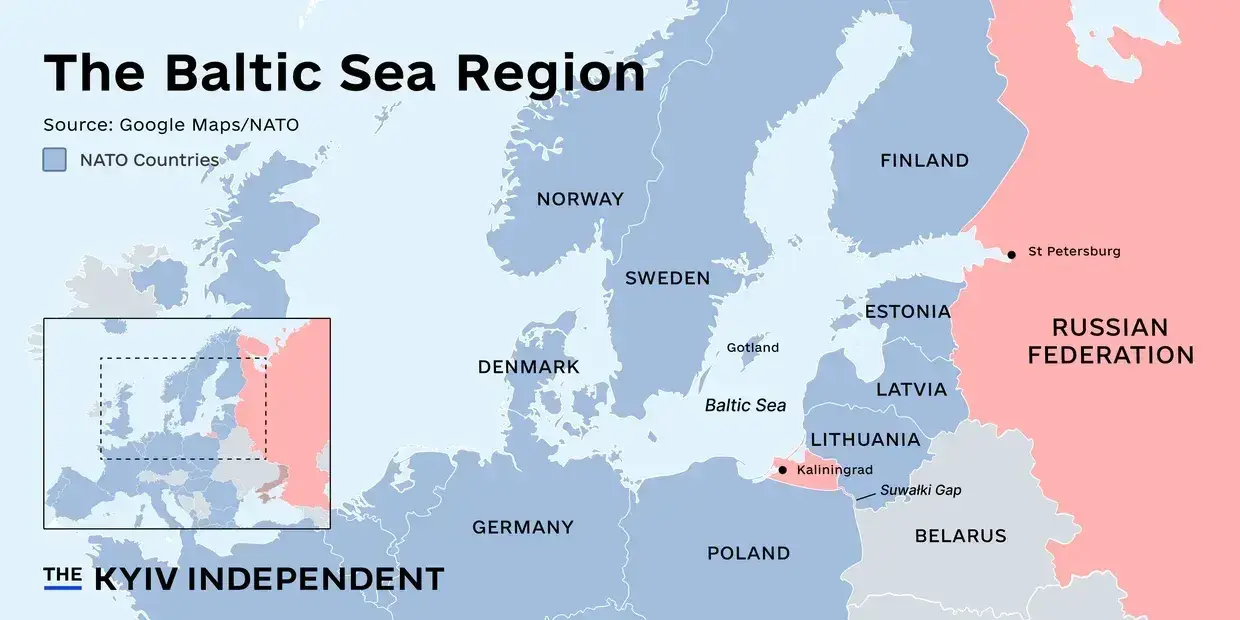
Kaliningrad, a militarized Russian exclave between Poland and Lithuania, is a key concern for NATO because of its advanced missile systems and expanding nuclear infrastructure.

Satellite images show expansion at 5 Russian nuclear sites near Europe
A map of the Baltic Sea Region. (Lisa Kukharska / The Kyiv Independent)

The Osipovichi base in Belarus, a former Soviet nuclear storage facility, is also being renovated. Satellite imagery shows new air defense installations and a modernized loading platform for rail-based logistics.

In Novaya Zemlya, a remote Arctic archipelago long linked to Soviet-era nuclear testing, several new buildings have appeared, reinforcing its role as a potential site for future test activities.

On the Kola Peninsula, near the borders with Finland and Norway, Russia has built about 50 storage bunkers for submarine-launched ballistic missiles and constructed a specialized pier for loading those missiles onto submarines, according to the imagery.

Swedish Defense Minister Pal Jonson responded to the findings, saying Stockholm is "closely monitoring" Russian nuclear capabilities. Sweden officially joined NATO in March 2024 after years of non-alignment, citing escalating Russian threats as a primary reason.

The Kremlin has repeatedly used nuclear threats to pressure Ukraine and Western countries since the start of its full-scale invasion in February 2022.

‘Russians lie about everything’ — Ukraine hits out at Kremlin claims after yet another drone strike on Kyiv
“This is a deliberate tactic of terror,” Tymur Tkachenko, head of the Kyiv City Military Administration, said.
Satellite images show expansion at 5 Russian nuclear sites near EuropeThe Kyiv IndependentTim Zadorozhnyy
Satellite images show expansion at 5 Russian nuclear sites near Europe
  • ✇The Kyiv Independent
  • Ukrainian agents cause millions in damage during secret sabotage operation in Russia, HUR source says
    Ukraine’s military intelligence (HUR) ignited an electrical substation during a sabotage operation in the Russian city of Kaliningrad, causing $5 million in damage and cutting electricity to a military production site, a source in HUR told the Kyiv Independent. In the early hours of June 14, Ukrainian agents drained the coolant from the substation’s power transformer before setting the facility on fire. The inferno inflicted major damage on the facility and caused a power cut, impacting nearby R
     

Ukrainian agents cause millions in damage during secret sabotage operation in Russia, HUR source says

15 juin 2025 à 05:40
Ukrainian agents cause millions in damage during secret sabotage operation in Russia, HUR source says

Ukraine’s military intelligence (HUR) ignited an electrical substation during a sabotage operation in the Russian city of Kaliningrad, causing $5 million in damage and cutting electricity to a military production site, a source in HUR told the Kyiv Independent.

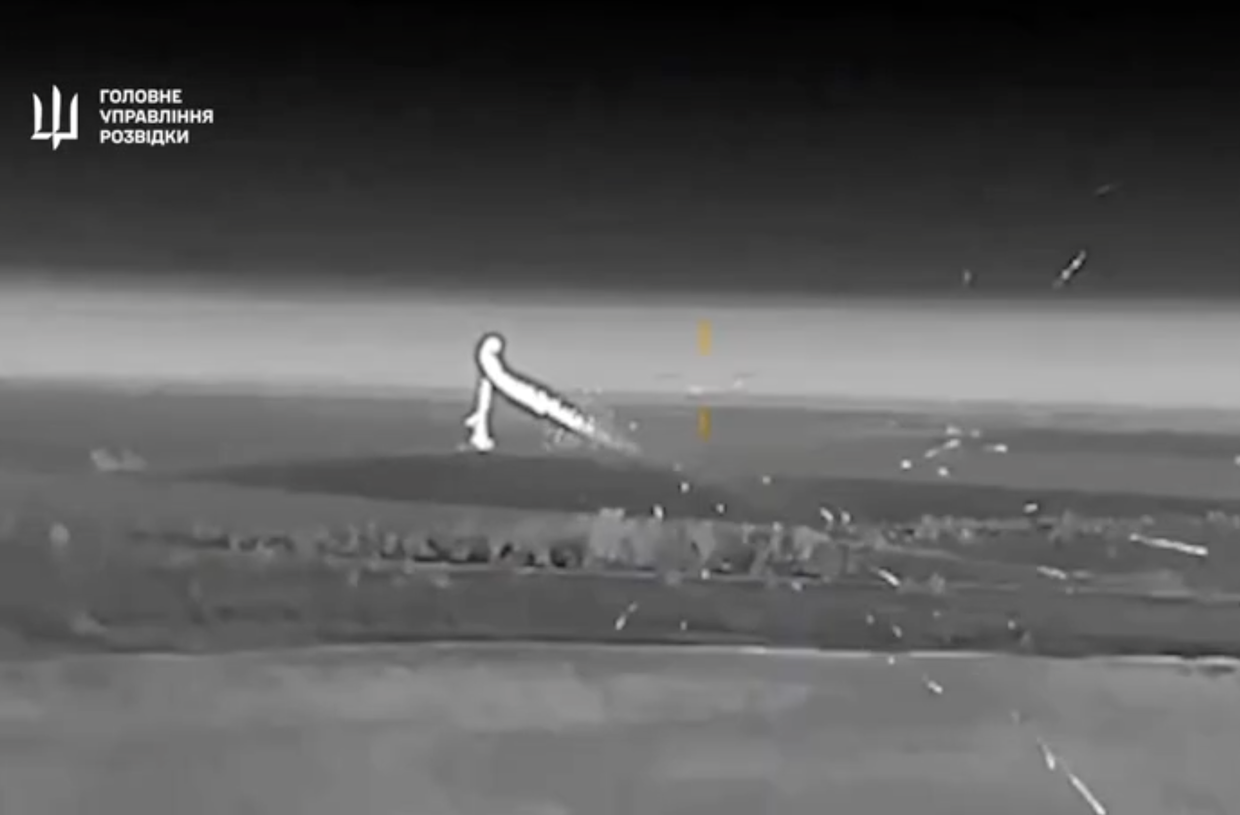
In the early hours of June 14, Ukrainian agents drained the coolant from the substation’s power transformer before setting the facility on fire. The inferno inflicted major damage on the facility and caused a power cut, impacting nearby Russian military sites.

"We once again remind you that Russia no longer has a rear either in the east, in the west, or anywhere else on the planet. Everything Russian involved in the war against Ukraine will burn, sink, and be destroyed regardless of its level of protection or location," the source said.

0:00
/
Ukrainian agents sabotage an electrical substation in Kaliningrad, Russia. June 14, 2025. (HUR)

Ukraine continues to carry out numerous secretive attacks within Russia and occupied Ukrainian territories, targeting military sites, like airfields, as well as key infrastructure like railways and oil refineries.

The attacks involve HUR, Ukraine’s Security Service (SBU) as well as partisan and sabotage groups.

HUR was behind explosions near Desantnaya Bay in Russia's far eastern Vladivostok on May 30, which reportedly damaged military personnel and equipment. The operations took place approximately 6,800 kilometres from the Ukrainian border, making it Ukraine's furthest incursion into Russian territory, if confirmed.

On June 1, the SBU launched Operation Spiderweb, a game-changing drone attack on four key Russian military airfields, damaging 41 planes, including heavy bombers and rare A-50 spy planes.

Ukrainian drones destroy Russian air defense systems in occupied Zaporizhzhia Oblast, military intelligence says
Ukraine’s military intelligence (HUR) destroyed three Russian air defense systems using drones in the occupied Zaporizhzhia Oblast on June 14, HUR says.
Ukrainian agents cause millions in damage during secret sabotage operation in Russia, HUR source saysThe Kyiv IndependentVolodymyr Ivanyshyn
Ukrainian agents cause millions in damage during secret sabotage operation in Russia, HUR source says
❌