Vue normale

  • ✇Euromaidan Press
  • Russia’s UN envoy denies reports of post-election mass mobilization
    Russian UN Ambassador Vasily Nebenzya denied reports that Moscow could launch another mass mobilization after September’s parliamentary elections, saying none was planned or expected “as far as I know,” The Moscow Times reported Russia has avoided another draft since its 2022 mobilization triggered protests and an exodus, relying instead on contract soldiers. Ukraine says those recruits no longer replace battlefield losses, and Moscow may mobilize several hundred thousa
     

Russia’s UN envoy denies reports of post-election mass mobilization

21 août 2026 à 13:57

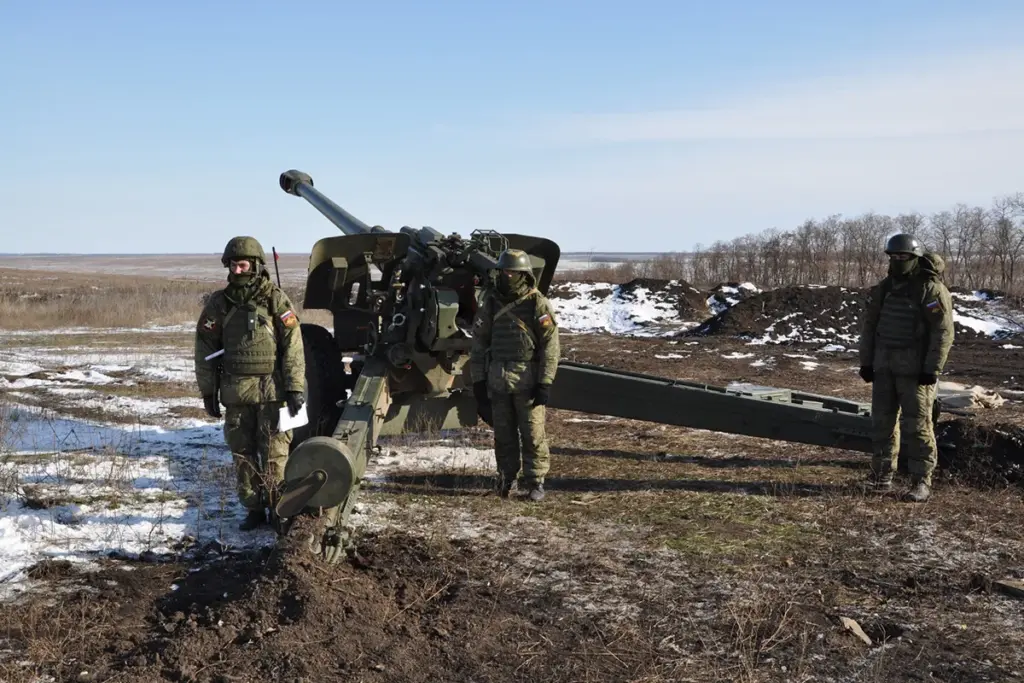
Russian soldiers stand beside a field artillery gun in a snow-covered position.

Russian UN Ambassador Vasily Nebenzya denied reports that Moscow could launch another mass mobilization after September’s parliamentary elections, saying none was planned or expected “as far as I know,” The Moscow Times reported

Russia has avoided another draft since its 2022 mobilization triggered protests and an exodus, relying instead on contract soldiers. Ukraine says those recruits no longer replace battlefield losses, and Moscow may mobilize several hundred thousand people after the elections. That could replenish its forces and support new offensives, although Ukrainian intelligence sees no preparations now.

Nebenzya’s remarks followed a question about more than 20,000 people crossing Russia’s Verkhny Lars border checkpoint into Georgia in one day amid fears of post-election mobilization, Meduza reported.

His comments extend a series of Russian denials. Deputy Security Council Chairman Dmitry Medvedev dismissed reports of another mobilization as “nonsense” in late July. The State Duma’s defense committee said a mass compulsory call-up was not under consideration because the army was recruiting contract soldiers, The Moscow Times reported.

Russia has avoided another mass draft since its September 2022 mobilization triggered protests and an exodus. Officials had also denied that mobilization was planned shortly before President Vladimir Putin announced it, Meduza noted.

Russian government seeks new wartime penalties

Moscow is separately seeking penalties for people and companies that ignore mobilization and military-supply orders issued by regional authorities. The bill would not itself order a new call-up.

The government submitted it to the State Duma, the lower house of Russia’s parliament, on 20 August, The Moscow Times reported. Companies could face fines of up to 1 million rubles or suspension for up to 90 days.

Russian law already punishes such defiance in areas under martial law but imposes no nationwide penalty elsewhere in Russia, according to the bill. Its authors said a “significant number” of violations had been recorded.

Ukraine says a new draft could provide troops for a northern offensive

President Volodymyr Zelenskyy said on 11 August, citing Ukrainian military intelligence, that Russia planned to mobilize several hundred thousand people after the elections and roughly the same number in 2027.

HUR, Ukraine’s military intelligence agency, later assessed that a post-election mobilization could enable Russia to build a strike force for a northern offensive by February 2027. Its deputy chief, Vadym Skibitskyi, stressed, however, that the agency currently sees no evidence that such preparations have begun.
  • ✇Euromaidan Press
  • Russia could open northern front by February if it orders new mobilization, Ukraine intel says
    Russia could assemble a strike force for an offensive into northern Ukraine by February 2027 if Moscow launches another mobilization, Ukrainian military intelligence's (HUR) deputy chief Major General Vadym Skibitskyi told RBC-Ukraine on 18 August. Skibitskyi said another mobilization could follow Russia’s September parliamentary elections. Depending on its scale, that call-up could produce a strike force by February 2027. Skibitskyi based the February estimate on Russi
     

Russia could open northern front by February if it orders new mobilization, Ukraine intel says

18 août 2026 à 16:11

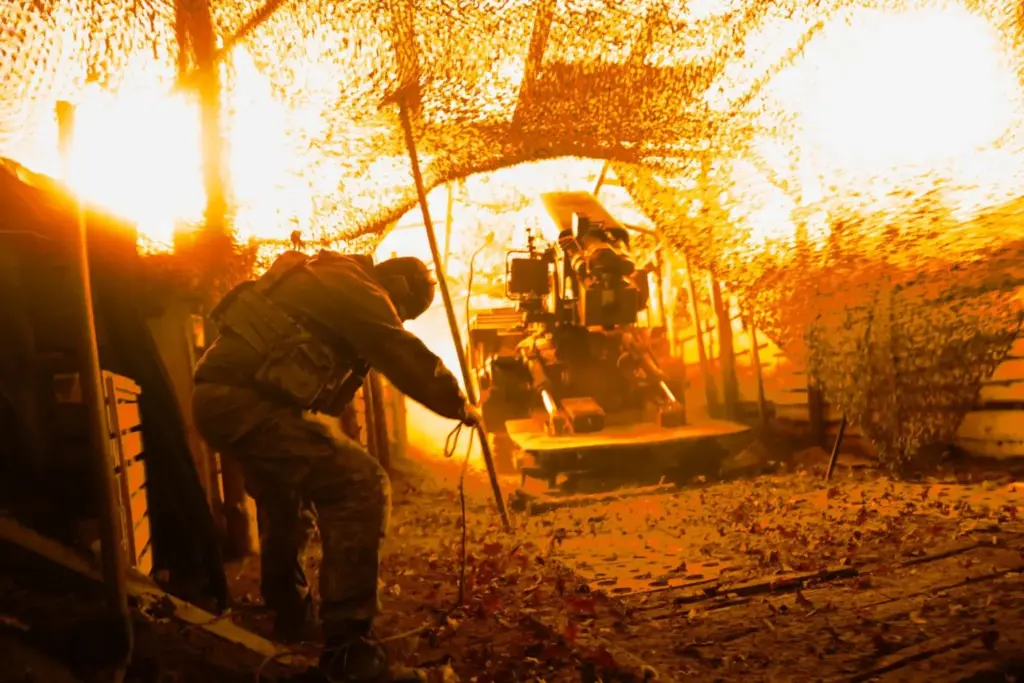
A soldier from Ukraine’s 100th Mechanized Brigade operates an artillery gun firing beneath camouflage netting.

Russia could assemble a strike force for an offensive into northern Ukraine by February 2027 if Moscow launches another mobilization, Ukrainian military intelligence's (HUR) deputy chief Major General Vadym Skibitskyi told RBC-Ukraine on 18 August.

Skibitskyi said another mobilization could follow Russia’s September parliamentary elections. Depending on its scale, that call-up could produce a strike force by February 2027. Skibitskyi based the February estimate on Russia’s 2022 mobilization. He said some personnel reached the front in December 2022, while combat-ready units arrived in January 2023.

Earlier warnings identified a northern route

The February estimate follows Ukrainian warnings about possible attacks across the northern border. In May, Zelenskyy said Ukraine was tracking five scenarios for expanding the war through the north, including an advance through Chernihiv Oblast toward Kyiv.

Syrskyi called an attack from Russia’s Bryansk Oblast into Chernihiv Oblast Moscow’s most realistic northern option, ranking it above an operation through Belarus. Its purpose, he said, would be to draw Ukrainian forces away from the east and south.

Russia has also struggled to prepare other major campaigns as Ukraine targeted the forces and systems needed to carry them out. ISW assessed that Ukrainian drones likely disrupted preparations for a spring–summer offensive in Donetsk Oblast, while a planned Russian naval-drone campaign reportedly stalled after Starlink access was blocked.

Ukrainian intelligence says Russia lacks the manpower

Skibitskyi said Moscow cannot form the units required for a new offensive without mobilization. HUR estimates Russia lost more personnel than it recruited in both June and July. The shortfall reached 3,000 in June and at least 1,000 in July, meaning monthly contracts no longer replaced battlefield losses.

The agency says Russia’s operational reserve is about one-tenth the size of its combat component against Ukraine. Moscow also lacks enough personnel to expand brigades into divisions, while recruitment for its unmanned-systems forces has reached only 30% of its quota.

CSIS estimated in January that Russia had suffered losses unmatched by any major state since World War II while advancing extremely slowly.

  • ✇Euromaidan Press
  • HUR: Russia seeks rest of Donetsk Oblast, not a peace deal, by year-end
    Ukraine's military intelligence (HUR) sees no battlefield signs that Russia is preparing for a ceasefire, deputy chief Major General Vadym Skibitskyi said in an interview with RBC-Ukraine on 18 August 2026. The agency expects no peace agreement before the end of 2026. Russia’s General Staff plans to capture the remainder of Donetsk Oblast by year-end, Skibitskyi said. Meanwhile, HUR estimates that Russian personnel losses exceeded contract recruitment in June and July,
     

HUR: Russia seeks rest of Donetsk Oblast, not a peace deal, by year-end

18 août 2026 à 11:48

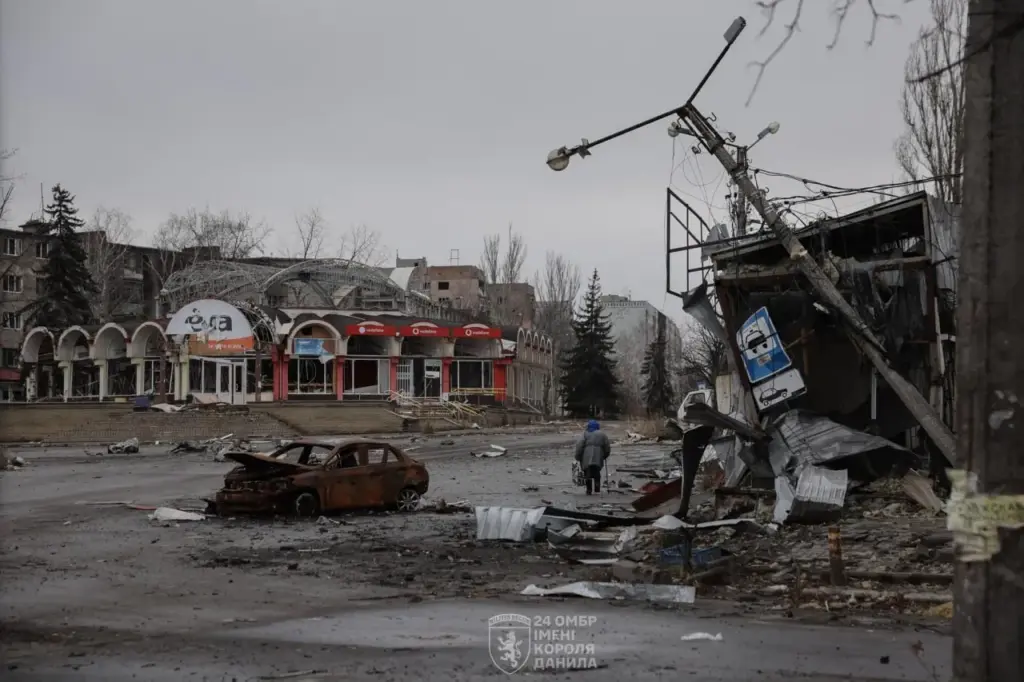
A person walks along a war-damaged street past a burned-out car, rubble, shattered buildings and a collapsed utility pole.

Ukraine's military intelligence (HUR) sees no battlefield signs that Russia is preparing for a ceasefire, deputy chief Major General Vadym Skibitskyi said in an interview with RBC-Ukraine on 18 August 2026. The agency expects no peace agreement before the end of 2026.

Russia’s General Staff plans to capture the remainder of Donetsk Oblast by year-end, Skibitskyi said. Meanwhile, HUR estimates that Russian personnel losses exceeded contract recruitment in June and July, leaving Moscow unable to create new military formations without mobilization.

HUR estimates Russia lost more troops than it recruited in both June and July. Losses exceeded new contract personnel by 3,000 in June and by at least 1,000 in July, leaving recruitment unable to replace battlefield losses. The agency says Russia’s operational reserve is only about one-tenth the size of the part already engaged in combat against Ukraine.

Russia has set a 2026 target of recruiting 409,000 personnel. Without mobilization, however, Moscow cannot create new formations or turn existing brigades into divisions because it lacks personnel, Skibitskyi said. The recruitment plan for Russia’s unmanned-systems forces is only 30% complete, and the command is trying to fill the gap with personnel from other military branches, he added.

If Russia mobilizes after its September parliamentary elections, it could assemble a powerful strike group by around February 2027, according to HUR. Skibitskyi did not rule out its use for a northern offensive. At present, however, HUR sees no conditions, indicators, or troops for such an operation.

Russia previously targeted September for Donbas

In April, Skibitskyi told the Financial Times that Moscow aimed to capture all of Donbas by September, after missing its deadlines to take Kostiantynivka and Druzhkivka. Russia was transferring 20,000 troops from strategic reserves to sustain the offensive, although this amounted to less than one month's worth of its battlefield losses.

By early August, DeepState reported 36 square kilometers of additional Russian-controlled territory across Ukraine in July, a figure that included map corrections for May and June. Without those corrections, Russia gained about 88 square kilometers.

DeepState reported limited progress near Rodynske and Kostiantynivka and toward Sloviansk and Kramatorsk, the heart of Ukraine’s “fortress belt.” At that pace, Russia had “no chance” of capturing all of Donetsk Oblast even by 2027, the group said. It cautioned that another wave of mobilization or a wider deployment of North Korean troops could change the forecast.

  • ✇Euromaidan Press
  • Ukraine says Russia can’t replace its losses, plans mass draft after elections—and again in 2027
    In an 11 August 2026 address, Ukrainian President Volodymyr Zelenskyy stated Russia is preparing a new mass mobilization drive after its parliamentary elections this fall, citing an assessment by Ukrainian military intelligence. Moscow plans to mobilize several hundred thousand people by the end of 2026 and roughly the same number by the end of 2027, he said. The mobilization would come on top of continuing contract recruitment.  Moscow has relied on contract soldier
     

Ukraine says Russia can’t replace its losses, plans mass draft after elections—and again in 2027

12 août 2026 à 11:54

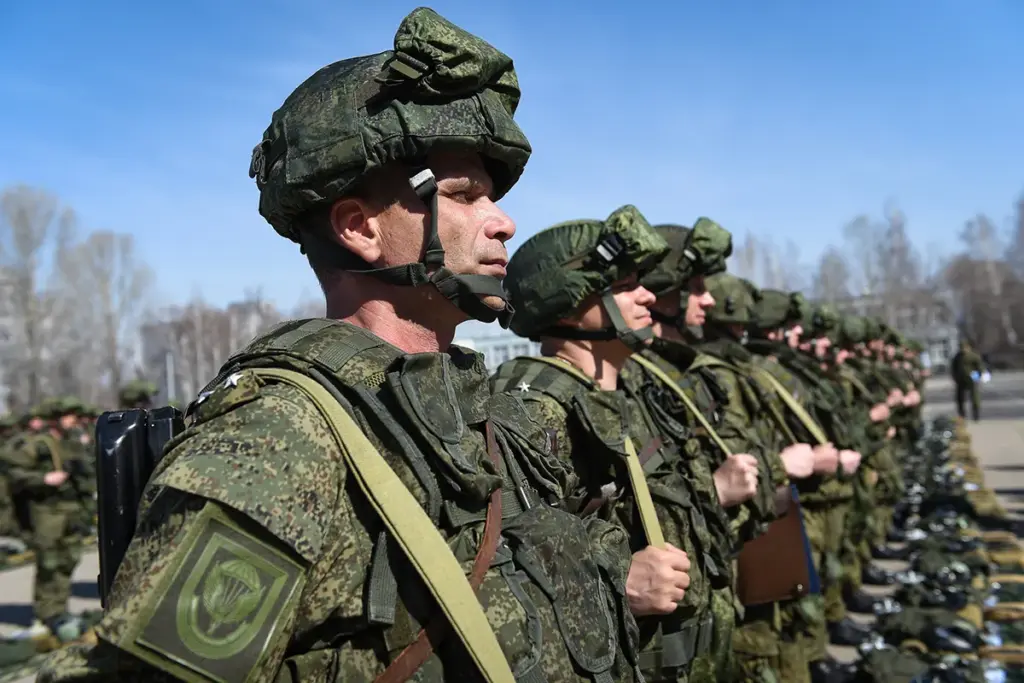
Russian soldiers in camouflage uniforms and helmets stand in formation outdoors.

In an 11 August 2026 address, Ukrainian President Volodymyr Zelenskyy stated Russia is preparing a new mass mobilization drive after its parliamentary elections this fall, citing an assessment by Ukrainian military intelligence.

Moscow plans to mobilize several hundred thousand people by the end of 2026 and roughly the same number by the end of 2027, he said. The mobilization would come on top of continuing contract recruitment. 

Moscow has relied on contract soldiers and foreign troops to avoid the political cost of another compulsory draft. But Russia has struggled to recruit soldiers as quickly as it loses them. A mass call-up could replace losses and maintain offensive operations, although Ukrainian officials say it may initially do little more than offset battlefield losses.

Zelenskyy said internal Russian documents support the intelligence assessment. The documents have not been published. 

According to Zelenskyy, Putin plans to wait until after Russia’s parliamentary elections, then use the result to claim the Russians support continuing the war. He described the vote as an “imitation,” claiming every party allowed to compete opposes peace. Russia’s Supreme Court barred Yabloko, the country’s only officially registered party opposing the war, from contesting the election, Reuters reported.

Russia avoided a second draft since 2022. Now recruitment can't keep up

The Kremlin has largely avoided another compulsory call-up since its September 2022 mobilization triggered mass protests and an exodus of Russians. Instead, Moscow has used financial incentives and recruited prisoners and foreigners to replenish its forces in Ukraine.

In March 2026, then-Commander-in-Chief Oleksandr Syrskyi said Russia aimed to recruit 409,000 troops during 2026 and form at least 11 divisions. Ukrainian intelligence then warned in July that Moscow could mobilize 500,000 people that fall. 

195,000 new contracts signed—but losses keep outpacing recruitment

Russia has struggled to meet those targets while covering battlefield losses. Ukraine said Moscow had failed to replace its losses for five consecutive months by April. By mid-July, Russia had signed 195,000 military contracts against a target of 204,500, while Ukraine’s Foreign Intelligence Service estimated its 2026 personnel losses at 196,700.

In his 11 August 2026 address, Zelenskyy claimed Russia is losing at least 30,000 personnel monthly, 60% of them killed, and that its force in Ukraine is gradually shrinking. The figures could not be independently verified.

Zelenskyy also said Putin expects the recruits and North Korean troops to prolong the war and expand Russian offensive capacity. The president stated that he had ordered Ukraine’s intelligence agencies and special services to make Moscow’s plans harder to carry out, but gave no details.

❌