Vue normale

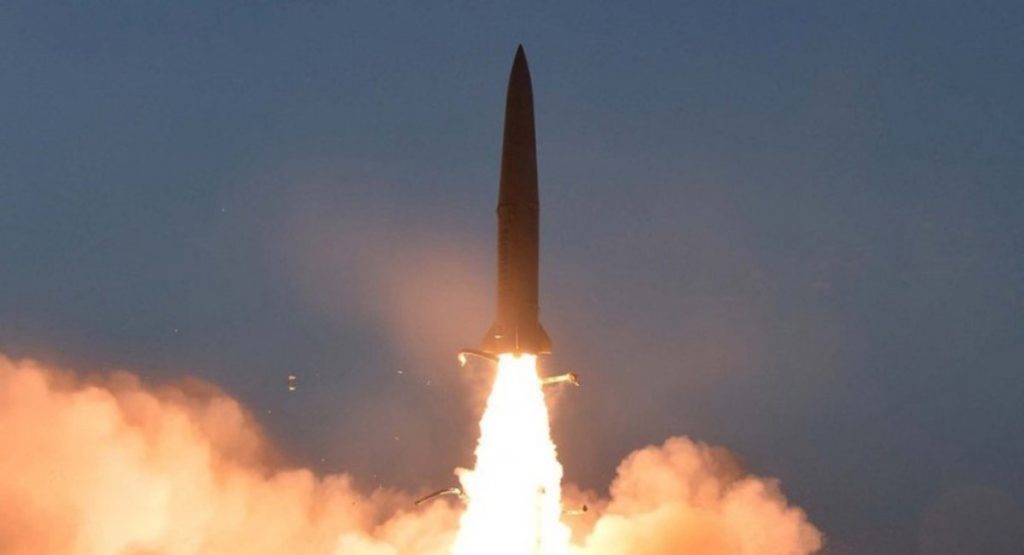
Reports credit North Korea’s newest missile of terror with 2.5-ton warhead and 900-km range. Expert explains why those numbers can’t both be true
23 août 2026 à 02:17

ballistic missiles north korea

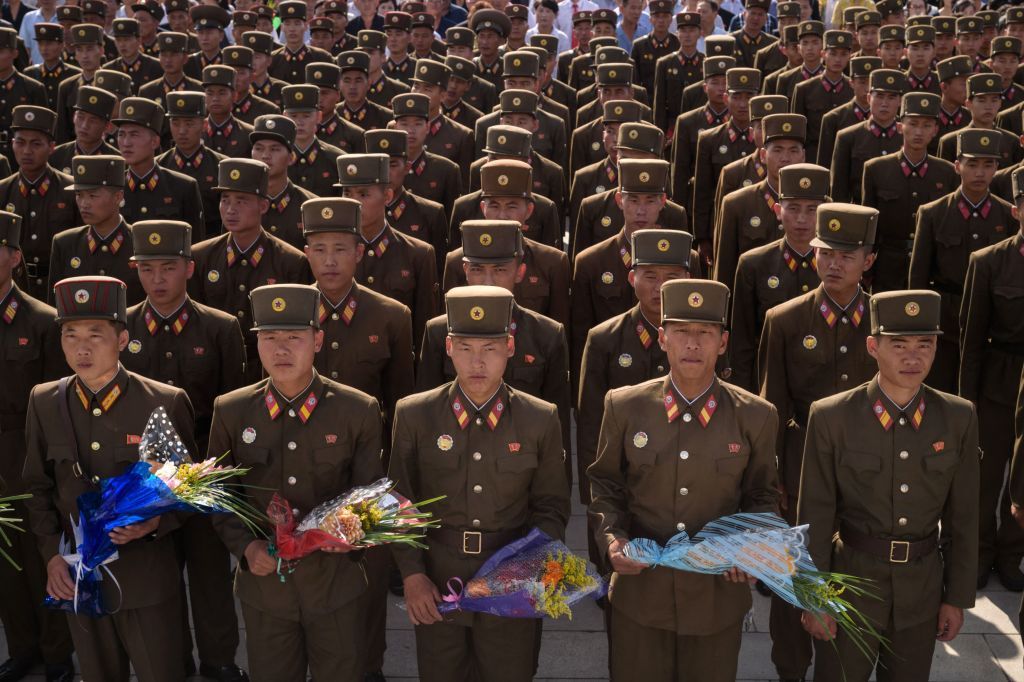
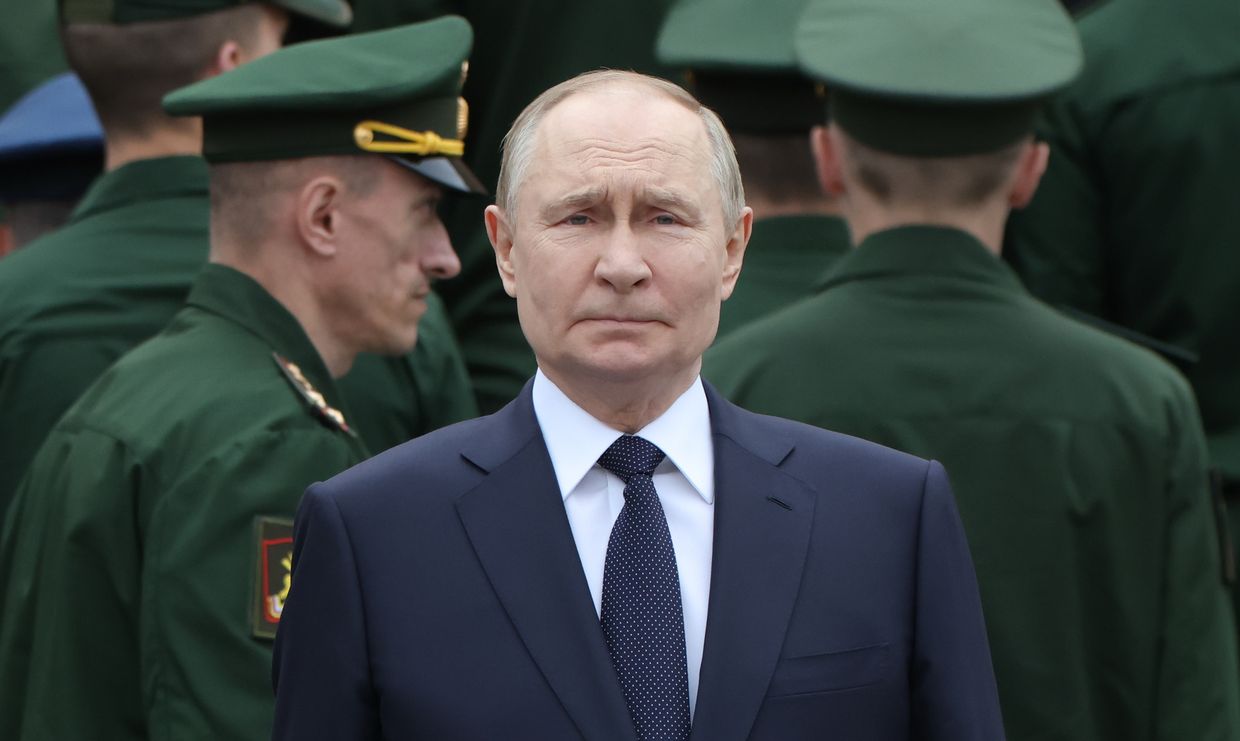
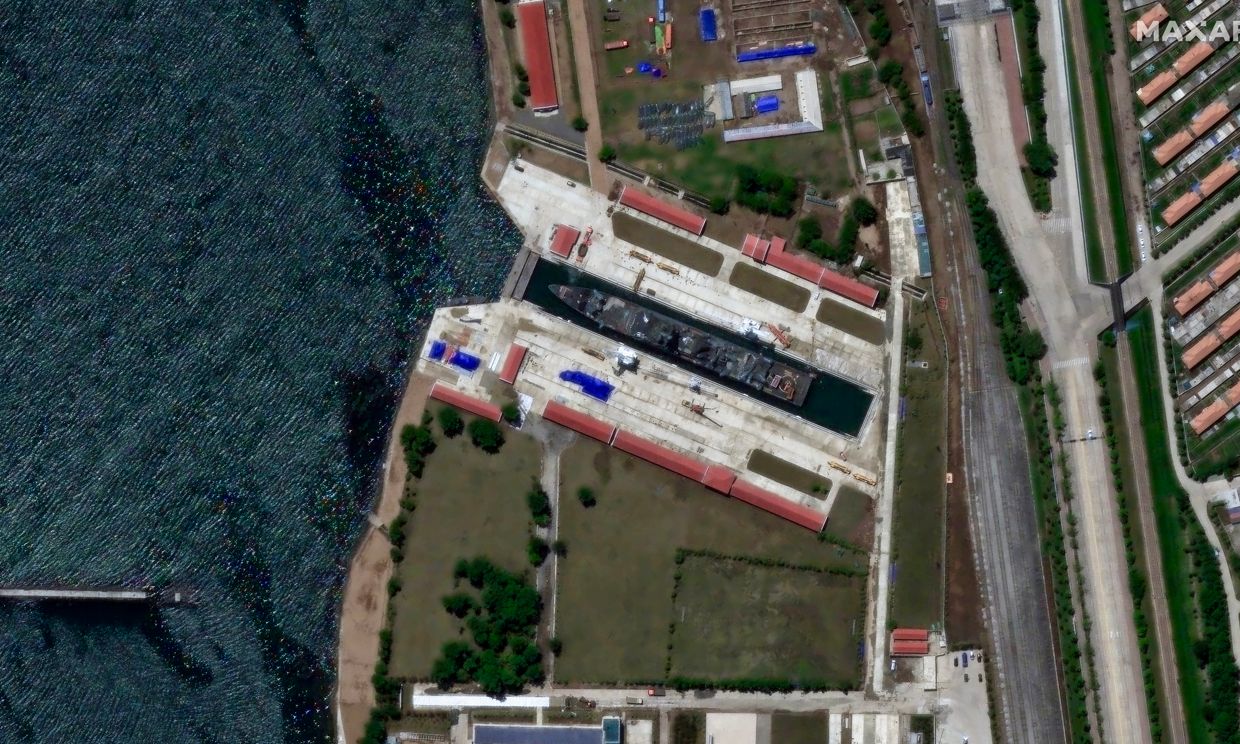
Russia may soon get 150 more missiles from North Korea, and their inaccuracy is precisely what makes them dangerous to civilians. This characteristic makes them above all weapons of terror, military expert and Defense Express director Serhii Zghurets said on Espreso.

The particular danger may carry the KN-30, credited with a range of up to 900 kilometers and a 2.5-ton warhead. For comparison, the warhead in Russia's Kalibr cruise missile is 450 kilograms, as in the Iskander ballistic missile, and even those destroy large objects. A missile carrying anything near five times that payload would hit far harder than any weapon already devastating Ukrainian cities.

The claimed specs don't add up

Zghurets urged skepticism toward the most hyped missile. The KN-30's credited figures can hardly be combined in one missile, he said. Physics forces a trade-off.

"If we are talking about a missile that can fly 900 km, then it has a significantly smaller warhead weight. If we are talking about 2.5 tons, then the range will be much shorter," Zghurets explained.

Either version remains dangerous, but the claims as advertised describe a missile that likely does not exist.

A 150-missile delivery is under discussion

North Korea keeps feeding Russia's arsenal. Pyongyang continues to strengthen Russia's military potential with missiles of several types, including the KN-23, KN-24, and KN-30, and a possible supply of about 150 North Korean missiles to Russia is now actively discussed, Zghurets said.

Even if the missiles' real characteristics differ from the claims, such a number would be a substantial addition to the Russian arsenal, he noted, more missiles for the campaign Russia fires at Ukrainian cities regardless of how well each one performs.

Inaccuracy makes them terror weapons

The missiles' precision is their defining flaw. By one estimate, Zghurets cited, missiles flying about 800 kilometers can deviate from their target by 18 kilometers, an error radius wider than most cities.

That rules out military precision but not harm.

"There is definitely no talking about any accuracy with these missiles. But as a weapon of terror that supplements the Russian arsenal, the Russians will of course need it now," Zghurets said.

A missile that can land anywhere within 18 kilometers of its aim point cannot reliably hit a military target, but if fired at a city, it will hit something, which is how Russia has used North Korean missiles against Ukrainian civilians.

Both sides get what they want from the axis

Moscow's interest goes beyond missiles. Russia is also interested in bringing in North Korean troops, which would free part of its own forces for combat against Ukraine, Zghurets said.

Pyongyang is paid in money and technology. North Korea seeks military-technological advantages from the cooperation, including improving its submarine-launched ballistic missile technology, and over the years of the war, may have received about $20 billion from Russia, Zghurets estimated.

The Moscow-Pyongyang military alliance is a serious challenge for the West, he said, though it is hard to predict how actively the US will try to limit the two countries' cooperation.

  • ✇Euromaidan Press
  • Russia’s North Korean missiles could threaten Kyiv and six other regions, ISW says
    Russia is deploying six launchers for North Korean ballistic missiles in Voronezh Oblast, the Institute for the Study of War (ISW) reported on 20 August. The assessment cited Ukraine’s military intelligence agency (HUR). Russia has already used North Korean missiles in deadly strikes across Ukraine, and Pyongyang is supplying more of them. From Voronezh Oblast, the weapons could threaten Kyiv and six other regions, adding to the ballistic arsenal Moscow can use in mass
     

Russia’s North Korean missiles could threaten Kyiv and six other regions, ISW says

21 août 2026 à 17:13

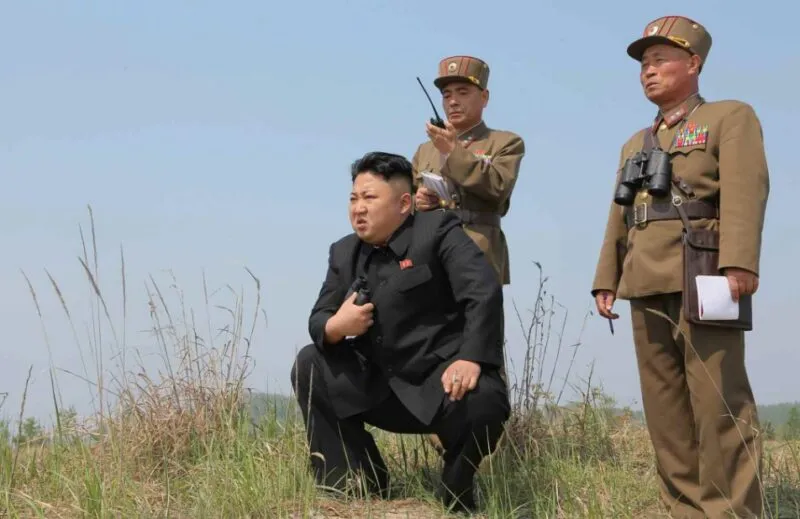
North Korean leader Kim Jong-un crouches in a grassy field while two uniformed military officers stand behind him.

Russia is deploying six launchers for North Korean ballistic missiles in Voronezh Oblast, the Institute for the Study of War (ISW) reported on 20 August. The assessment cited Ukraine’s military intelligence agency (HUR).

Russia has already used North Korean missiles in deadly strikes across Ukraine, and Pyongyang is supplying more of them. From Voronezh Oblast, the weapons could threaten Kyiv and six other regions, adding to the ballistic arsenal Moscow can use in mass attacks intended to overwhelm Ukrainian air defenses.

Six launchers expand Russia’s missile threat

The North Korean missiles could reach Kyiv, Sumy, Kharkiv, Chernihiv, Poltava, Dnipropetrovsk, and Zaporizhzhia oblasts, ISW said.

The unit may eventually field 120 missiles. HUR said North Korea had transferred around 50 KN-23, KN-24, and upgraded KN-30 ballistic missiles to Russia by July.

The KN-30 can carry a 2,500-kilogram warhead, though ISW has seen no evidence of Russia using it against Ukraine. Other North Korean missiles have larger warheads than Russia’s Iskander-M but are less accurate, Ukrainian military expert Anatolii Khrapchynskyi said.

Those missiles could join Russia’s combined attacks. ISW expects Moscow to stockpile ballistic and cruise missiles for several days before launching large barrages intended to overwhelm Ukraine’s air defenses.

ISW pointed to the 19–20 August attack as the latest example of that pattern. The barrage lasted nearly nine hours and killed at least 15 people in Kyiv. Ukraine’s Air Force said it intercepted most drones and cruise missiles, but no longer routinely reports how many ballistic missiles Russia launches or Ukraine intercepts.

North Korean missiles have already killed civilians

Preliminary evidence indicated that Russia used a North Korean ballistic missile in a 30 July strike on Radushne, Dnipropetrovsk Oblast, that killed five members of one family.

On 10 August, a North Korean missile killed seven Zaporizhstal steelworkers and injured 21 others in Zaporizhzhia, Ukrainian officials said. The workers were heading to a shelter when the missile struck.

Ballistic missiles travel at high speed and leave civilians little time to seek cover. They are also harder to intercept than drones or cruise missiles, while Ukraine has limited supplies of the Patriot interceptors used against them.

Trump’s Order to Cut Military Exercises With South Korea Carries Risks, Experts Say

20 août 2026 à 05:04
President Trump’s decision to curtail the military exercises came as allies question the U.S. commitment to longstanding alliances.

© Jung Yeon-Je/Agence France-Presse — Getty Images

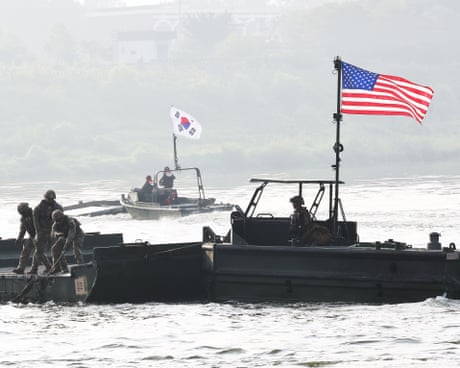
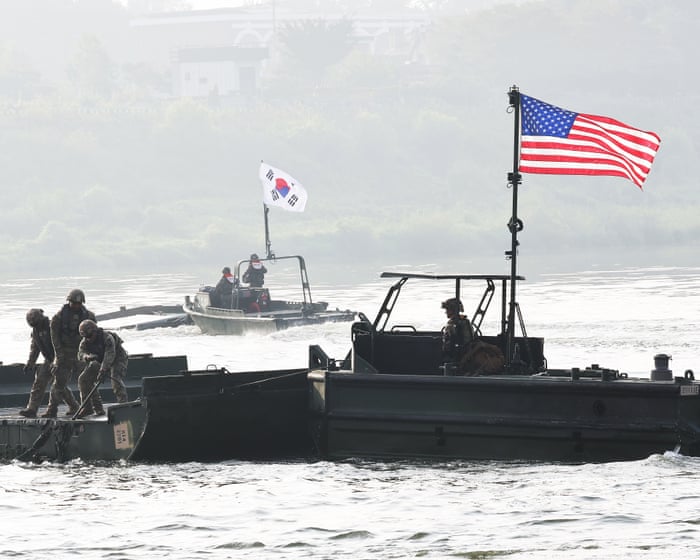
American and South Korean troops participating in the Ulchi Freedom Shield exercises last year.

Trump’s Order to Cut Military Exercises With South Korea Carries Risks, Experts Say

20 août 2026 à 05:04
President Trump’s decision to curtail the military exercises came as allies question the U.S. commitment to longstanding alliances.

© Jung Yeon-Je/Agence France-Presse — Getty Images

American and South Korean troops participating in the Ulchi Freedom Shield exercises last year.

North Korean Official Dismisses Reduced Drills Between US and South Korea

20 août 2026 à 06:20
Kim Yo-jong, a powerful adviser and sister of Kim Jong-un, also said she was “unaware” of any communication with Washington, contradicting President Trump’s claim her brother had responded to his outreach.
© Jung Yeon-Je/Agence France-Presse — Getty Images

South Korean soldiers took part in a drill at a hotel in Seoul on Wednesday on the sidelines of a major joint military exercise with the United States named Ulchi Freedom Shield.

U.S. Cuts Back Military Drills With South Korea, as Trump Woos Kim Jong-un

19 août 2026 à 03:15
President Trump had ordered the Defense Department to reduce joint exercises with the key U.S. ally, declaring the drills “hostile” toward North Korea.

© Agence France-Presse — Getty Images

U.S. Army Apache helicopters at Camp Humphreys in South Korea on Monday. An order by President Trump to reduce joint military exercises has heightened fears among Asian allies.

Threatening Friends and Courting Enemies in Trump’s ‘Upside-Down World’

18 août 2026 à 19:06
The president’s hostility to allies like Oman, Canada and South Korea, and his affection for adversaries like North Korea, may still shock some. But it comes as little surprise after a decade of upheaval.

© Doug Mills/The New York Times

President Trump’s attack-thy-friends, revere-thy-enemies approach has become the norm in U.S. foreign policy.

Trump Takes Aim at CNN Reporter Kristen Holmes During Event to Honor California Lifeguard

18 août 2026 à 14:01
President Trump told a journalist to “be quiet” at a White House event for a California lifeguard and a boy he saved.

© Doug Mills/The New York Times

President Trump met with lifeguard Ryder Williams, left, and Nathaniel Rai, right, in the Oval Office on Monday.

Facing Quagmire in Iran, Trump Turns to a Familiar Face: North Korea’s Kim Jong-un

17 août 2026 à 19:25
Seven years ago, President Trump failed to disarm North Korea and walked away. Could the same thing happen with Iran?

© Erin Schaff/The New York Times

President Trump with Kim Jong-un of North Korea at the Demilitarized Zone between North and South Korea in 2019.

Trump Orders Pentagon to Curtail Military Exercises With Ally South Korea

17 août 2026 à 02:16
In a social media post, the president scolded South Korea for not helping denuclearize Iran, and also praised North Korea and its leader.

© Al Drago for The New York Times

In his post on Sunday, President Trump did not mention a rift in relations with North Korea in 2017, when Kim Jong Un called him a “mentally deranged dotard.”

Trump says Kim Jong-un has responded to his overtures when asked about scaling back US drills with South Korea – as it happened

17 août 2026 à 21:57

This blog is now closed. Read more here

Republican senator Thom Tillis deplored Trump’s decision to cut US military drills with South Korea, which comes despite military officials from both countries warning that Kim Jong-un’s regime is learning new battlefield expertise, including new drone tactics, from assisting Russia with its war in Ukraine.

Tillis wrote on X:

South Korea has been a solid military ally for over 70 years that possesses exquisite military capabilities. Reducing joint exercises with South Korea does nothing more than free up thousands of North Korea’s troops to support Putin’s systematic kidnapping, torture, rape, and murder of innocent Ukrainian citizens.

Continue reading...

© Photograph: YONHAP/EPA

© Photograph: YONHAP/EPA

© Photograph: YONHAP/EPA

Trump’s Overture to North Korea Strains Alliance With the South

17 août 2026 à 06:57
President Trump wants to curtail military exercises with South Korea, saying they were hostile to North Korea. But under Mr. Kim, the North has become increasingly belligerent toward the South.

© Lee Jin-man/Associated Press

Trump Orders Pentagon to Curtail Military Exercises With Ally South Korea

17 août 2026 à 02:16
In a social media post, the president scolded South Korea for not helping denuclearize Iran, and also praised North Korea and its leader.

© Al Drago for The New York Times

In his post on Sunday, President Trump did not mention a rift in relations with North Korea in 2017, when Kim Jong Un called him a “mentally deranged dotard.”
  • ✇Euromaidan Press
  • Ukraine says Russia can’t replace its losses, plans mass draft after elections—and again in 2027
    In an 11 August 2026 address, Ukrainian President Volodymyr Zelenskyy stated Russia is preparing a new mass mobilization drive after its parliamentary elections this fall, citing an assessment by Ukrainian military intelligence. Moscow plans to mobilize several hundred thousand people by the end of 2026 and roughly the same number by the end of 2027, he said. The mobilization would come on top of continuing contract recruitment.  Moscow has relied on contract soldier
     

Ukraine says Russia can’t replace its losses, plans mass draft after elections—and again in 2027

12 août 2026 à 11:54

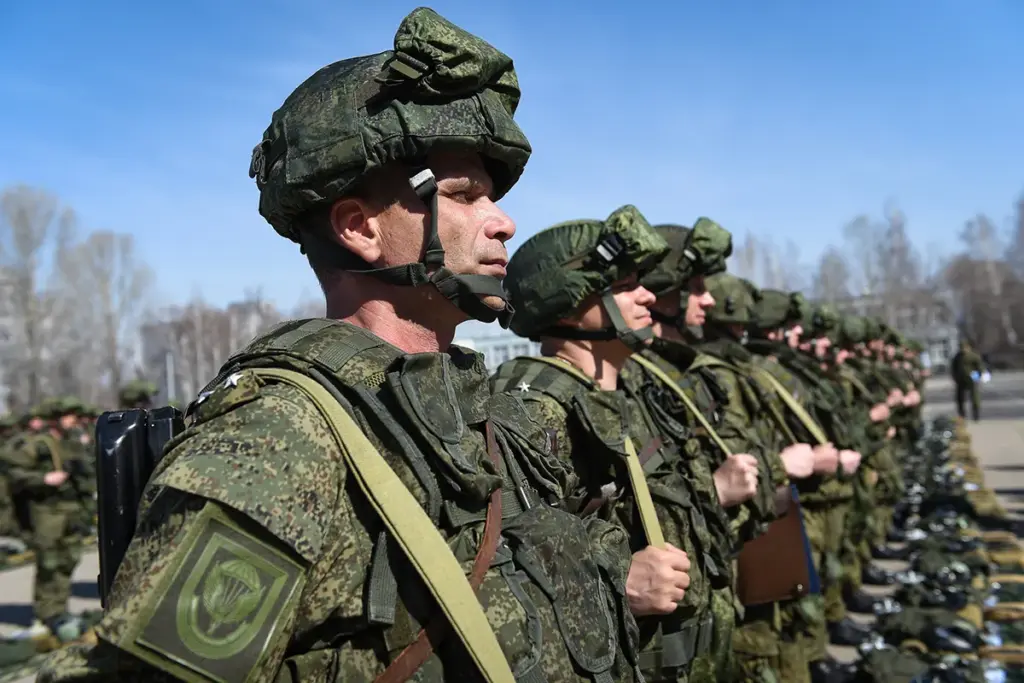
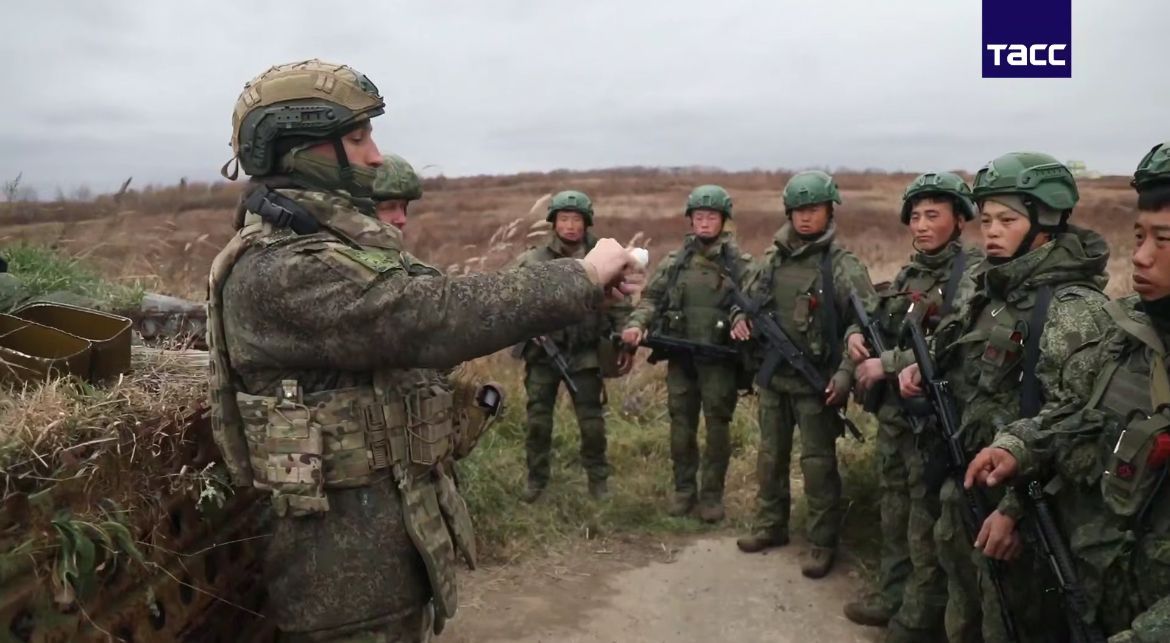
Russian soldiers in camouflage uniforms and helmets stand in formation outdoors.

In an 11 August 2026 address, Ukrainian President Volodymyr Zelenskyy stated Russia is preparing a new mass mobilization drive after its parliamentary elections this fall, citing an assessment by Ukrainian military intelligence.

Moscow plans to mobilize several hundred thousand people by the end of 2026 and roughly the same number by the end of 2027, he said. The mobilization would come on top of continuing contract recruitment. 

Moscow has relied on contract soldiers and foreign troops to avoid the political cost of another compulsory draft. But Russia has struggled to recruit soldiers as quickly as it loses them. A mass call-up could replace losses and maintain offensive operations, although Ukrainian officials say it may initially do little more than offset battlefield losses.

Zelenskyy said internal Russian documents support the intelligence assessment. The documents have not been published. 

According to Zelenskyy, Putin plans to wait until after Russia’s parliamentary elections, then use the result to claim the Russians support continuing the war. He described the vote as an “imitation,” claiming every party allowed to compete opposes peace. Russia’s Supreme Court barred Yabloko, the country’s only officially registered party opposing the war, from contesting the election, Reuters reported.

Russia avoided a second draft since 2022. Now recruitment can't keep up

The Kremlin has largely avoided another compulsory call-up since its September 2022 mobilization triggered mass protests and an exodus of Russians. Instead, Moscow has used financial incentives and recruited prisoners and foreigners to replenish its forces in Ukraine.

In March 2026, then-Commander-in-Chief Oleksandr Syrskyi said Russia aimed to recruit 409,000 troops during 2026 and form at least 11 divisions. Ukrainian intelligence then warned in July that Moscow could mobilize 500,000 people that fall. 

195,000 new contracts signed—but losses keep outpacing recruitment

Russia has struggled to meet those targets while covering battlefield losses. Ukraine said Moscow had failed to replace its losses for five consecutive months by April. By mid-July, Russia had signed 195,000 military contracts against a target of 204,500, while Ukraine’s Foreign Intelligence Service estimated its 2026 personnel losses at 196,700.

In his 11 August 2026 address, Zelenskyy claimed Russia is losing at least 30,000 personnel monthly, 60% of them killed, and that its force in Ukraine is gradually shrinking. The figures could not be independently verified.

Zelenskyy also said Putin expects the recruits and North Korean troops to prolong the war and expand Russian offensive capacity. The president stated that he had ordered Ukraine’s intelligence agencies and special services to make Moscow’s plans harder to carry out, but gave no details.

  • ✇Euromaidan Press
  • North Korean ballistic missile kills 7 steelworkers on their way to shelter, shuts down Zaporizhstal plant
    A Russian ballistic strike on Zaporizhzhia, Ukraine, killed seven employees of the Zaporizhstal steel plant and injured 21 others, Ukrainian steelmaker Metinvest, the plant’s majority owner, said on 11 August. The workers were on their way to a shelter after an air raid alert was announced when the strike hit the industrial site, according to the company.  Metinvest said the attack also damaged energy facilities and infrastructure, as well as the main and auxiliary f
     

North Korean ballistic missile kills 7 steelworkers on their way to shelter, shuts down Zaporizhstal plant

11 août 2026 à 11:44

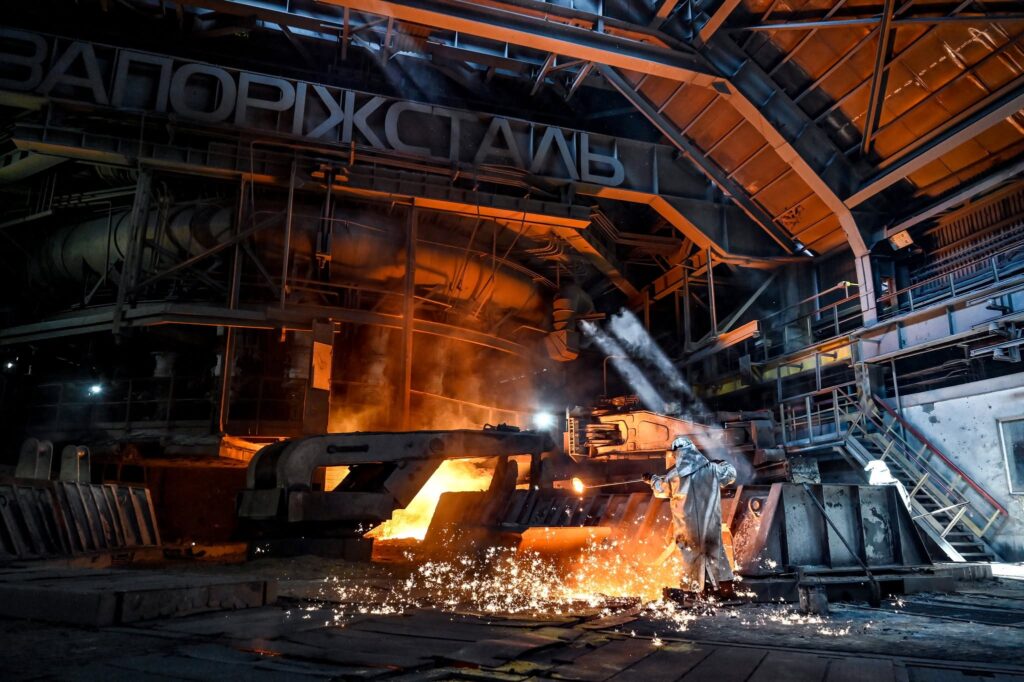
Inside the Zaporizhstal steel plant. Photo: Zaporizhstal on Facebook

A Russian ballistic strike on Zaporizhzhia, Ukraine, killed seven employees of the Zaporizhstal steel plant and injured 21 others, Ukrainian steelmaker Metinvest, the plant’s majority owner, said on 11 August.

The workers were on their way to a shelter after an air raid alert was announced when the strike hit the industrial site, according to the company. 

Metinvest said the attack also damaged energy facilities and infrastructure, as well as the main and auxiliary facilities of the plant’s coke and blast-furnace operations.

Russia’s ballistic missile strikes leave very little time between threat detection and impact for people to react and reach shelter. Several people have been killed from strikes across the country while on their way to bomb shelters. 

Zaporizhstal shuts down after strike

Metinvest said Zaporizhstal has been completely shut down following the attack, while its other production sites in the city are operating at reduced capacity.

Company specialists are assessing the damage and determining the scope and timeline of repairs. Emergency and restoration work is already underway, according to the statement.

The company said its Zaporizhzhia facilities are civilian industrial sites that employ tens of thousands of people and produce steelmaking and coke-chemical products.

Metinvest said it is providing medical assistance and support to the 21 injured employees and staying in contact with the families of those killed and wounded.

The company's facilities will fly flags at half-mast on 11 and 12 August in mourning for the seven Zaporizhstal workers killed in the attack.

North Korean missiles used against Zaporizhzhia

Ukrainian President Volodymyr Zelenskyy said Zaporizhzhia was targeted overnight with North Korean ballistic missiles, Russian Zircon missiles and guided aerial bombs.

Zelenskyy said the attack was designed to cause maximum damage to civilian infrastructure.

Ukraine's military intelligence said on 5 August that a North Korean missile unit had begun deploying to western Russia, potentially adding up to 120 ballistic missiles and six launchers to Russia's arsenal.

According to Ukrainian intelligence representative Andrii Cherniak, North Korea has supplied Russia with around 150 KN-23 and KN-24 missiles since late 2023, including a recent batch of 40 missiles.

The missiles have been linked to attacks with high civilian casualties, including a July strike on Radushne in Dnipropetrovsk Oblast that killed an entire family.

Ballistic threat is growing

The strike comes as Russia has increasingly relied on ballistic missiles in attacks on Ukrainian cities. Unlike drones and cruise missiles, ballistic missiles travel at very high speeds and are much harder for Ukraine to intercept, particularly because Kyiv has a limited supply of the advanced air defense interceptors needed to counter them, mainly US-made Patriot systems.

Ukraine has reported that most ballistic missiles launched in recent mass attacks have penetrated its air defenses, contributing to severe destruction and civilian casualties.

  • ✇Euromaidan Press
  • Seoul says no again to Ukraine’s weapons request as Pyongyang gets ready to send Russia more troops
    South Korea is keeping lethal aid to Ukraine off the table while continuing humanitarian and reconstruction support, Yonhap reported on 10 August. The outlet cited a senior South Korean Foreign Ministry official. South Korea’s response maintains its established policy of providing humanitarian and nonlethal support to Ukraine, but not direct weapons. Seoul previously helped move artillery shells to Ukraine through the United States. While South Korea arms NATO members
     

Seoul says no again to Ukraine’s weapons request as Pyongyang gets ready to send Russia more troops

11 août 2026 à 07:47

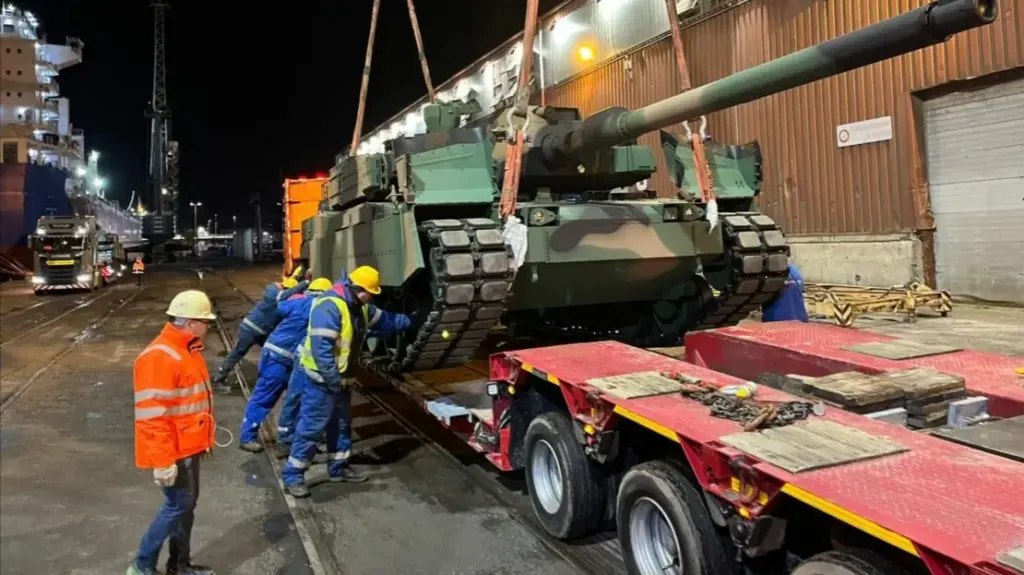
Workers unload a South Korean-made K2 Black Panther tank for the Polish army from a trailer at a Polish port at night.

South Korea is keeping lethal aid to Ukraine off the table while continuing humanitarian and reconstruction support, Yonhap reported on 10 August. The outlet cited a senior South Korean Foreign Ministry official.

South Korea’s response maintains its established policy of providing humanitarian and nonlethal support to Ukraine, but not direct weapons. Seoul previously helped move artillery shells to Ukraine through the United States. While South Korea arms NATO members with K2 tanks and K9 howitzers to free up older kit for the Ukrainian front, it still draws the line at any direct transfer to Kyiv. Seoul rejects Ukraine’s purchase requests as North Korea sends Russia ammunition and troops in exchange for money and military technology.

South Korean law bars direct exports of lethal weapons to countries in active conflict, a rule rooted in constitutional principles and Seoul's wariness of antagonizing Moscow and Beijing while managing the threat from the North.

Ukraine is seeking South Korean interceptor missiles for its air defenses. The official neither addressed the request specifically nor formally rejected it:

South Korea’s supply of defense materials to any country has always been carried out in accordance with domestic law,” the official said. Seoul will continue to support Ukraine’s recovery through assistance in energy, infrastructure, healthcare, and education. 

The official also declined to confirm whether Seoul and Kyiv were discussing military support. However, he said Moscow-Pyongyang military cooperation “is directly related to our security and violates the United Nations resolutions” and should stop immediately.

Seoul’s indirect aid stopped short of direct arms transfers

In 2023, Seoul transferred hundreds of thousands of 155 mm shells to the United States under a confidential arrangement. Washington then arranged for them to reach Ukraine, The Wall Street Journal reported.

South Korean exports have also helped NATO members replace weapons sent to Kyiv. Poland bought South Korean K2 tanks and K9 howitzers while transferring older tanks and Polish-built Krab artillery systems to Ukraine.

Yet Seoul rejected Ukraine’s request to buy air-defense systems, radars, and artillery propellant in November 2024. In February 2026, it still limited support to humanitarian and nonlethal aid while considering NATO’s request to help purchase US weapons for Ukraine.

North Korean deployments bring the war closer to Seoul

Ukrainian President Volodymyr Zelenskyy said a decision had been made to deploy 30,000–50,000 more North Koreans to Russia. He warned that they would gain modern combat experience and Russian technology that could later threaten Asian countries. Kyiv wants South Korean air defenses and has offered cooperation on drones.

The South Korean official cited by Yonhap declined to confirm either the reported deployment or Zelenskyy’s statement that Ukrainian and South Korean diplomats were discussing possible cooperation.

North Korea is already believed to have sent approximately 20,000 combat troops and military engineers to Russia’s Kursk region, according to Yonhap. Pyongyang has earned as much as $22 billion from arming Russia, helping it finance conventional and nuclear forces.

The Japanese outlet Kyodo News reported in November 2025 that North Korea had transferred about 6.5 million rocket and artillery munitions in exchange for Russian air-defense, space, and nuclear technologies.  Moscow and Pyongyang’s 2024 mutual defense pact formalized the expanding military relationship.

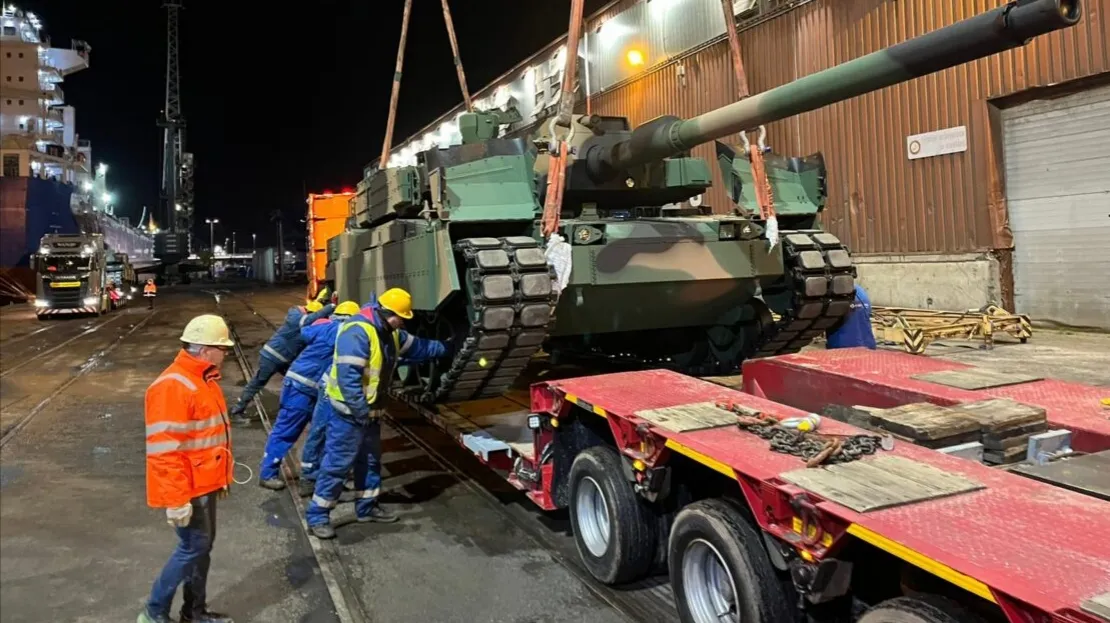
Workers unload a South Korean-made K2 Black Panther tank for the Polish army from a trailer at a Polish port at night.

Seoul says no again to Ukraine’s weapons request as Pyongyang gets ready to send Russia more troops

  • ✇Euromaidan Press
  • Zelenskyy says Russia could receive up to 50,000 North Korean troops
    Russia has decided to bring between 30,000 and 50,000 North Korean troops onto its territory, up from initial deployments of hundreds and then thousands, Ukrainian President Volodymyr Zelenskyy said in an interview with the "Yedyni Novyny" telemaraphon on 8 August. The figure marks a sharp rise from what Zelenskyy gave two weeks earlier. In a 25 July address, he said Russia wanted 30,000 additional North Korean troops and that preparations to receive them had been under
     

Zelenskyy says Russia could receive up to 50,000 North Korean troops

10 août 2026 à 06:26

russia can't fill its own ranks—so asks north korea 30000 more soldiers new missile launchers ukraine says · post korean leader kim jong-un speaks opening memorial pyongyang russia's defense minister

Russia has decided to bring between 30,000 and 50,000 North Korean troops onto its territory, up from initial deployments of hundreds and then thousands, Ukrainian President Volodymyr Zelenskyy said in an interview with the "Yedyni Novyny" telemaraphon on 8 August.

The figure marks a sharp rise from what Zelenskyy gave two weeks earlier. In a 25 July address, he said Russia wanted 30,000 additional North Korean troops and that preparations to receive them had been underway in Russia's Voronezh region since June.

Rising troop estimates

"North Koreans appear on the territory of the Russian Federation from time to time. We see this, we know this," Zelenskyy said, adding that Russia had now made "a decision for 30,000 to 50,000 North Koreans to be on the territory of Russia." He said North Korea "will build up experience of modern warfare" and would receive licenses from Russia.

Russia and North Korea have not announced plans to expand their cooperation, Radio Svoboda reported.

Missile deployment already underway

Ukrainian authorities said Russian forces used a North Korean missile for the first time in a long period last week, striking Radushne, near Kryvyi Rih.

A North Korean missile unit has begun deploying in western Russia and may be equipped with 120 ballistic missiles and six launchers for strikes on Ukraine, Reuters reported on 5 August, citing Andrii Cherniak, a spokesperson for Ukraine's Defense Intelligence directorate (HUR). Pyongyang has already sent a new batch of 40 KN-23 and KN-24 missiles along with personnel, Cherniak said, though the final deployment configuration and total missile count are to be settled at high-level talks next month.

Foreign Minister Andrii Sybiha separately said North Korean missile launchers would "immediately become a legitimate target" if deployed in Russia, Radio Svoboda reported.

Kyiv seeks South Korean support

Zelenskyy argued the deployments carry risks beyond Ukraine. "They are studying this war," he said, warning that North Korea could apply lessons learned to future "crises and escalation" in the Pacific that would threaten "other states in the Asian direction."

He said Ukraine wants closer cooperation with South Korea, "primarily" on air defense systems, and said Kyiv is ready to work with Seoul on drone technology as well. Zelenskyy acknowledged that South Korea faces "a legal restriction under the Constitution" on such cooperation but said Ukrainian diplomats remain in contact with South Korean counterparts, as well as with Japan, over the Russia–North Korea partnership.

Military alliance since 2024

Russia and North Korea signed a comprehensive strategic partnership treaty in 2024, cementing a military alliance between the two countries.

Zelenskyy confirmed on 14 December that North Korean soldiers were fighting alongside Russian forces in Kursk Oblast, and Ukrainian intelligence reported that North Korean troops had been placed on high alert the following day. Ukraine's Special Operations Forces (SSO) captured North Korea's first documented prisoner of war in the war on 26 December, Militarnyi reported. The SSO described the raid as an operation "to destroy the enemy in the Kursk sector," in which its forces also seized a Russian BTR-82 armored personnel carrier along with weapons and documents. That prisoner died of his wounds, South Korea's National Intelligence Service confirmed on 27 December.

On 11 January 2025, Zelenskyy announced that Ukrainian forces had captured two more North Korean soldiers, also wounded, in Kursk Oblast; both survived and were taken to Kyiv, where they were questioned by the Security Service of Ukraine (SBU). Ukraine's Defense Intelligence directorate had previously reported that the first North Korean units arrived in the war zone on 23 October 2024.

South Korea's intelligence agency confirmed the capture on 12 January and pledged cooperation with Ukraine. Two days later, Foreign Ministry spokesperson Lee Jae-woong said Seoul was open to discussing relocating the two men, citing a constitutional provision under which North Koreans are considered South Korean nationals, Yonhap reported. At the time, neither soldier had expressed an intention to defect.

In late February 2025, the two soldiers — identified by the Wall Street Journal as Ri, 26, and Paek — gave the first Western interviews of North Korean troops captured in the war, published 27 February. They said they had been told they would be fighting South Korean forces, not Ukraine, and that they were not paid for their service. Paek was shot and lay wounded for five days before capture, later having several toes amputated due to gangrene; Ri was shot in the arm and jaw. South Korea's Foreign Ministry confirmed on 19 February that it would accept North Korean POWs who sought asylum, saying "they should not be sent against their will to a place where there's a threat of persecution."

By late February 2025, Zelenskyy said around 4,000 North Korean soldiers had been killed or wounded fighting for Russia; North Korea's overall troop commitment was estimated at roughly 11,000–12,000 by early 2025. Losses continued to mount — by January 2026, Ukraine put North Korean dead in Kursk Oblast at 6,000, where the contingent remained stationed and continued carrying out strikes on Ukrainian border communities. Ukrainian soldiers have described North Korean troops as reluctant to surrender, with some reportedly attempting suicide rather than be captured.

  • ✇Euromaidan Press
  • North Korea made $22 billion arming Russia – nearly four times its haul before the war
    North Korea has pulled in as much as $22 billion in foreign earnings since Russia's full-scale invasion of Ukraine in 2022—nearly four times what it earned in the previous four years, and the most cash Kim Jong Un has commanded in his 15 years in power, Bloomberg Economics estimates. That money is the bill for Russia's war, paid to the other side of the world. In exchange for the shells and soldiers keeping Moscow's offensive alive, Pyongyang has been handed the cash, f
     

North Korea made $22 billion arming Russia – nearly four times its haul before the war

7 août 2026 à 11:23

Putin North Korea

North Korea has pulled in as much as $22 billion in foreign earnings since Russia's full-scale invasion of Ukraine in 2022—nearly four times what it earned in the previous four years, and the most cash Kim Jong Un has commanded in his 15 years in power, Bloomberg Economics estimates.

That money is the bill for Russia's war, paid to the other side of the world. In exchange for the shells and soldiers keeping Moscow's offensive alive, Pyongyang has been handed the cash, food, and military technology to turn itself from an isolated pariah into a nuclear power that no longer needs to negotiate with anyone. The war draining Russia has quietly built a second, stronger adversary.

Half of Russia's shells, and thousands of soldiers

By the end of 2025, North Korea was covering up to half of Russia's need for 122mm and 152mm artillery ammunition, Ukrainian intelligence estimates—a share Euromaidan Press has tracked since the shipments began in 2023. Pyongyang backed the shells with men: some 16,000 soldiers, for whom Russia paid roughly $2,000 a month each, plus extra for the dead, by Bloomberg's accounting.

The turning point came in 2022. Kim had spent the previous years humiliated—a failed summit with Donald Trump, a harvest failure that triggered hunger, a self-imposed Covid border closure that severed trade with China. In a 2020 national address, he wept while apologizing for the economy. Then Putin's stockpiles ran low, and North Korea's warehouses became a resource Kim could turn into hard currency.

Cash, food, and the technology to build better weapons

The dangerous part is what came back the other way. Russia handed over advanced military technology alongside the payments, and US Forces Korea has said the transfers let Pyongyang compress its weapons-development timelines. Moscow supplied air defenses including at least one Pantsir-class system—a transfer Euromaidan Press reported last year—and a Pantsir-M worth about $20 million now sits on one of North Korea's two new 5,000-tonne destroyers, the largest warships it has ever built. The two countries have also begun jointly producing attack drones.

Kim poured the windfall into a nuclear buildup that, Bloomberg reports, puts North Korea on a path to rival France's arsenal. The country's economy grew 3.5% in 2025, its third straight year of expansion, according to the Bank of Korea.

A windfall that outlasts the war

The boom does not depend on the war continuing. Over the past decade Kim assembled the world's most prolific army of crypto thieves: hacking groups tied to Pyongyang now account for more than 70% of global cryptocurrency thefts, up from about 30% in 2017, according to blockchain intelligence firm TRM Labs. The stolen funds are laundered mostly through Chinese organized-crime networks that take a cut in exchange for clean offshore accounts. "It's absurd to think North Korea now has access to that much money," said Nick Carlsen, a senior TRM investigator.

Kim is spreading his bets diplomatically, too, hosting officials from Singapore, Indonesia, Belarus, and Vietnam over the past year to loosen his reliance on Moscow.

The Kim once written off as an erratic recluse is emerging as the durable leader of a growing nuclear power—one with little reason left to bargain. "Pyongyang has proven its ability to adapt to persistent sanctions," said Jenny Town of the Stimson Center. "And as international law and norms are eroding, it has found camaraderie in its resistance."

  • ✇Euromaidan Press
  • North Korean missile unit deploys to Russia for ballistic strikes on Ukraine, Kyiv says
    A North Korean missile unit has begun deploying to western Russia and could soon operate up to 120 ballistic missiles and six launchers for strikes against Ukraine, according to Ukraine's military intelligence agency, Reuters reports. Russia has sharply increased its use of ballistic missiles against Ukraine in recent months. Unlike drones and cruise missiles, ballistic missiles are much harder to intercept, and most launched in recent barrages have penetrated Ukraine's
     

North Korean missile unit deploys to Russia for ballistic strikes on Ukraine, Kyiv says

5 août 2026 à 06:52

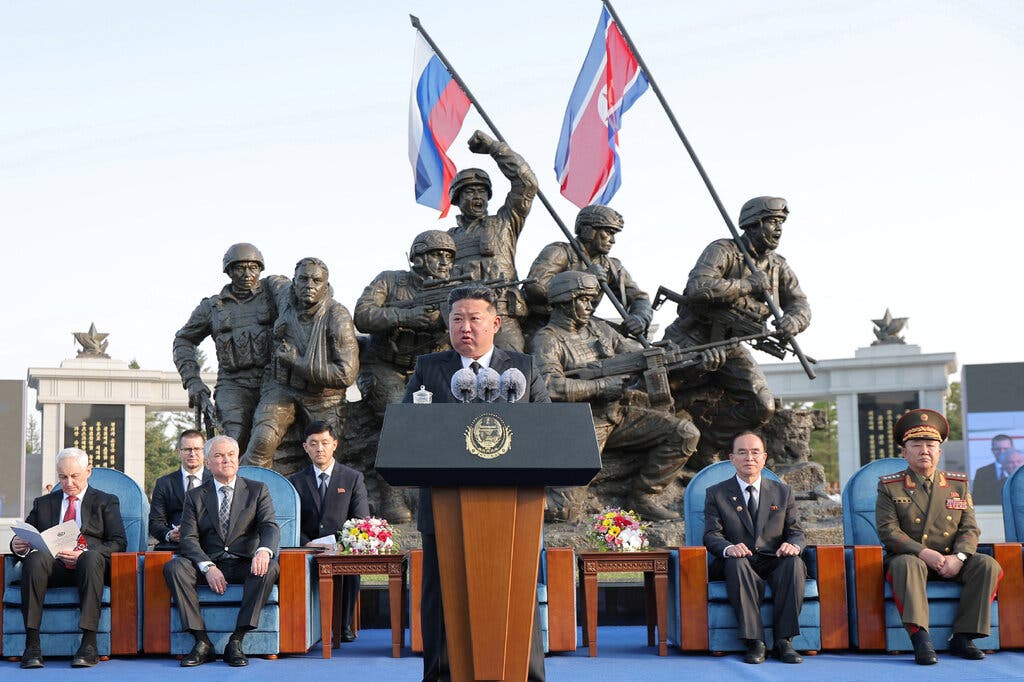
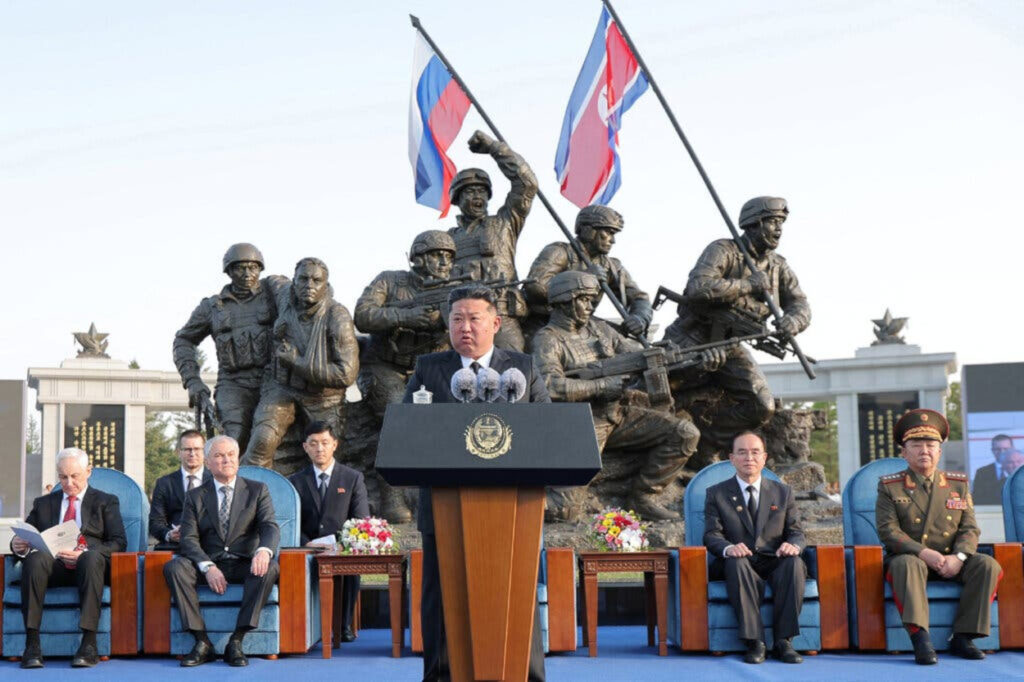
North Korean leader Kim Jong-un speaks at the opening of a memorial in Pyongyang, with Russia's Defense Minister Andrei Belousov and State Duma Speaker Vyacheslav Volodin seated behind him. April 2026. Illustrative photo: KCNA

A North Korean missile unit has begun deploying to western Russia and could soon operate up to 120 ballistic missiles and six launchers for strikes against Ukraine, according to Ukraine's military intelligence agency, Reuters reports.

Russia has sharply increased its use of ballistic missiles against Ukraine in recent months. Unlike drones and cruise missiles, ballistic missiles are much harder to intercept, and most launched in recent barrages have penetrated Ukraine's air defenses, causing widespread destruction and high civilian casualties.

North Korean missile unit deploying to Russia

Andrii Cherniak, a representative of Ukraine's Main Directorate of Intelligence (HUR), told Reuters that around 90 North Korean personnel are expected to be stationed in Russia's Voronezh Oblast within the Russian military's 112th Missile Brigade.

According to Cherniak, Pyongyang has already delivered another batch of 40 KN-23 and KN-24 ballistic missiles to Russia along with personnel. He said the final structure of the deployment and the total number of missiles are expected to be decided during high-level talks between Moscow and Pyongyang next month.

Reuters said it could not independently verify the intelligence assessment. Russia's Defense Ministry and North Korea's mission to the United Nations did not immediately respond to requests for comment.

Ballistic missile threat grows

The reported deployment comes as Russia increasingly relies on ballistic missiles, which are far more difficult for Ukraine to intercept than drones or cruise missiles.

Ukraine has warned for months that shortages of Patriot interceptor missiles leave it vulnerable to ballistic attacks. Last week, Russia launched what Ukrainian officials identified as the first North Korean ballistic missiles used against Ukraine since August 2025.

According to Cherniak, Russia has already received about 150 KN-23 and KN-24 missiles from North Korea since late 2023. The latest shipment of 40 missiles was reportedly used in last week's attacks.

Cherniak said North Korean KN-23 and KN-24 missiles carry larger warheads and have greater range than Russia's Iskander ballistic missiles, although they are less accurate and have been associated with strikes causing high civilian casualties, including last week's strike on the village of Radushne in Dnipropetrovsk Oblast that killed an entire family.

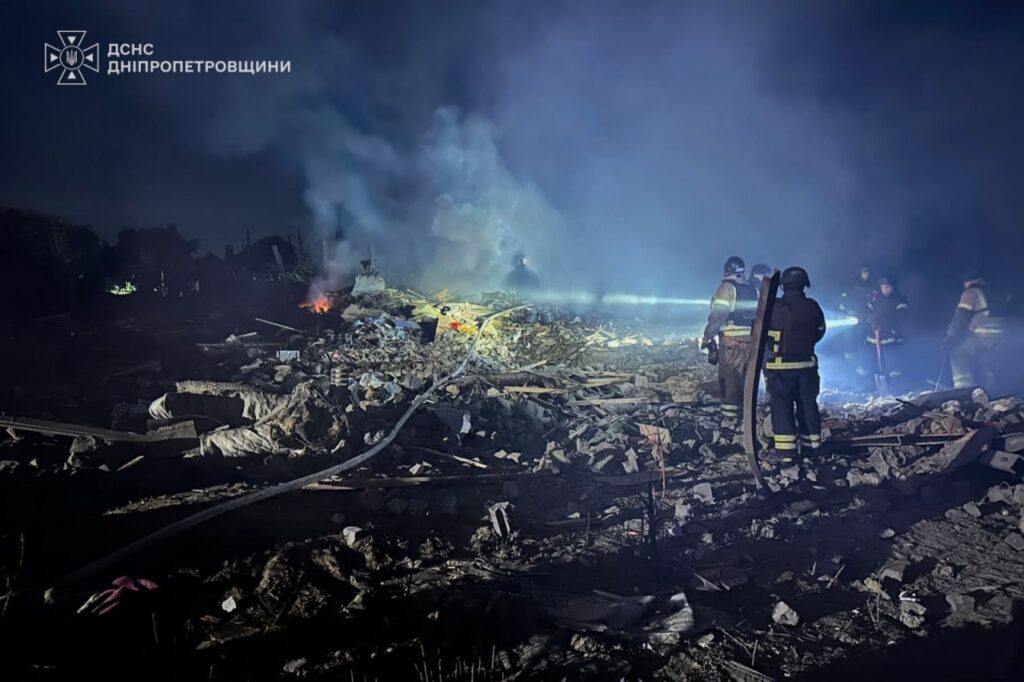
Rescuers search through rubble in the aftermath of a Russian ballistic missile attack on Radushne, Dnipropetrovsk Oblast, Ukraine, 30 July 2026. Photo: Ukraine's State Emergency Service

Rob Lee, a senior fellow at the Foreign Policy Research Institute, told Reuters that additional North Korean ballistic missiles would pose a significant challenge for Ukraine because ballistic missile defense remains one of Kyiv's greatest vulnerabilities.

The report comes as Russia continues to intensify its ballistic missile attacks on Ukraine. Overnight on 5 August, a combined missile and drone barrage on Kyiv and Kyiv Oblast killed at least 16 people, marking the third mass strike on the capital in a week.

Expanding military cooperation

The reported missile unit deployment would mark another step in the rapidly expanding military partnership between Moscow and Pyongyang since Russia launched its full-scale invasion of Ukraine in 2022.

North Korea has already supplied Russia with millions of artillery shells and, according to Ukrainian officials, deployed about 14,000 troops to Russia's Kursk Oblast in 2024. Ukrainian President Volodymyr Zelenskyy said last month that Russia was preparing to receive an additional 30,000 North Korean troops in Voronezh Oblast.

Cherniak told Reuters that about 9,500 North Korean soldiers remain in Russia's Kursk Oblast but are not currently participating directly in combat operations against Ukraine.

  • ✇The Kyiv Independent
  • North Korea to send up to 30,000 more troops to aid Russia's war against Ukraine, CNN reports
    North Korea is preparing to set an additional 25,000-30,000 soldiers to join Russian forces fighting against Ukraine, almost thrice as many as were dispatched last year, CNN reported on July 2, citing undisclosed Ukrainian officials.The fresh units may arrive in the coming months and are likely to be engaged in combat in Russian-occupied Ukrainian territories, including during "large-scale offensive operations," according to a Ukrainian military intelligence (HUR) assessment reviewed by CNN.The
     

North Korea to send up to 30,000 more troops to aid Russia's war against Ukraine, CNN reports

2 juillet 2025 à 08:27
North Korea to send up to 30,000 more troops to aid Russia's war against Ukraine, CNN reports

North Korea is preparing to set an additional 25,000-30,000 soldiers to join Russian forces fighting against Ukraine, almost thrice as many as were dispatched last year, CNN reported on July 2, citing undisclosed Ukrainian officials.

The fresh units may arrive in the coming months and are likely to be engaged in combat in Russian-occupied Ukrainian territories, including during "large-scale offensive operations," according to a Ukrainian military intelligence (HUR) assessment reviewed by CNN.

The news underscores North Korea's growing involvement in the Russia-Ukraine war and the deepening military ties between Pyongyang and Moscow.

North Korea initially dispatched around 11,000 soldiers to Russia in the fall of 2024 to help fend off a Ukrainian incursion into Russia's Kursk Oblast. According to various estimates, North Korean soldiers suffered between 4,000 and 6,000 casualties during this deployment.

Ukraine's HUR also noted signs that Russian military aircraft are being refitted to transport North Korean troops from their homeland across Russia's Siberia, CNN reported. Satellite imagery detected a ship involved in last year's deployment at a Russian port and a cargo aircraft at North Korea’s Sunan airport, according to the outlet.

Estimates reported by CNN exceed those of South Korea's intelligence, which expects Pyongyang to send an additional 15,000 soldiers to Russia as early as July or August.

Following his visit to Pyongyang in June, Russian Security Council Secretary Sergei Shoigu also announced that North Korea would send 1,000 sappers and 5,000 military engineers to Russia's Kursk Oblast.

Pyongyang's assistance to Russia has not been limited to troops, with North Korea being a key source of artillery shells and ballistic missiles for Russian forces.

Russian President Vladimir Putin and North Korean dictator Kim Jong Un signed the Comprehensive Strategic Partnership Agreement in Pyongyang in June 2024. Under the treaty, the two countries pledged to provide aid to one another if either is attacked.

While the countries initially denied involvement of North Korean troops in the Russia-Ukraine war, both Putin and Kim acknowledged the deployment earlier this year.

Ukraine’s new interceptor UAVs are starting to knock Russia’s long-range Shahed drones out of the sky
Russia’s Shahed drone swarms are pummeling Ukraine on a nightly basis, inflicting ever more death and destruction in cities that had managed to carve out some sense of normalcy amid wartime. Civilian alarm has grown. With traditional air defense stockpiles running low, the government is banking on newly created
North Korea to send up to 30,000 more troops to aid Russia's war against Ukraine, CNN reportsThe Kyiv IndependentKollen Post
North Korea to send up to 30,000 more troops to aid Russia's war against Ukraine, CNN reports
  • ✇The Kyiv Independent
  • North Korea already using Russian Pantsir missiles to defend Pyongyang, Ukraine's intelligence chief says
    North Korea is already using Russia Pantsir S-1 air defense systems in Pyongyang, Kyrylo Budanov, head of Ukraine's military intelligence (HUR), said in an interview with Hromadske Radio on July 1. The arrival of Pantsir missiles is another sign that North Korea is improving its weapons technology and military might through cooperation with Russia. The two nations signed a defense treaty in June 2024, and North Korea has supplied arms and troops to Moscow in exchange for training and advanced mi
     

North Korea already using Russian Pantsir missiles to defend Pyongyang, Ukraine's intelligence chief says

1 juillet 2025 à 16:15
North Korea already using Russian Pantsir missiles to defend Pyongyang, Ukraine's intelligence chief says

North Korea is already using Russia Pantsir S-1 air defense systems in Pyongyang, Kyrylo Budanov, head of Ukraine's military intelligence (HUR), said in an interview with Hromadske Radio on July 1.

The arrival of Pantsir missiles is another sign that North Korea is improving its weapons technology and military might through cooperation with Russia. The two nations signed a defense treaty in June 2024, and North Korea has supplied arms and troops to Moscow in exchange for training and advanced military technology.

"I can tell you that, for example, the first Pantsir S-1 installations have already appeared in Pyongyang," Budanov told Hromadske Radio.

"They are already on combat duty there, guarding their capital. And the Russians are retraining Korean personnel, and soon the Koreans will be working autonomously on this technology."

The Pansir S-1 is the same air defense system Russia uses to guard its military-industrial facilities. It carries an estimated price tag of around $15 million.

North Korea is "currently significantly increasing its military power" through direct cooperation with Russia, Budanov said. It benefits from Russia's ongoing technology transfers and the "real combat experience" personnel gained by fighting alongside Russian troops against Ukraine.  

Budanov also said Ukraine expects "a significant increase" in the number of North Korean citizens in Russia. Some of these citizens will sign up for the Russian military, making it seem less like an official transfer of North Korean personnel and more like voluntary registration from invidivual citizens.

The day before Budanov's comments, North Korean leader Kim Jong Un publicly honored his country's soldiers who were killed fighting in Russia's war against Ukraine. The ceremony coincided with a visit by Russian Culture Minister Olga Lyubimova, illustrating the deepening military alliance between Moscow and Pyongyang continues.

Russia has also reportedly provided North Korea with advanced electronic warfare systems, helped the country build modern warships, and improved its KN-23 ballistic missiles.

In June, Budanov said that Moscow has agreed to assist Pyongyang in mass-producing Shahed-type attack drones.

Russia-Iran alliance wavers as Tehran suffers major blows
Tehran, Russia’s main ally in the Middle East, has been dealt a heavy blow as Israel dismantled its network of proxies and then struck targets in Iran. The recent Iranian-Israeli war, which ended with a ceasefire on June 24, showed that the regional balance of power has shifted in Israel’s favor. This could have a major impact on Russian-Iranian relations as Moscow will have to recalibrate its approach to the region. Russian-Iranian cooperation is likely to continue but Iran’s ability to help
North Korea already using Russian Pantsir missiles to defend Pyongyang, Ukraine's intelligence chief saysThe Kyiv IndependentOleg Sukhov
North Korea already using Russian Pantsir missiles to defend Pyongyang, Ukraine's intelligence chief says

  • ✇The Kyiv Independent
  • Kim Jong Un publicly honors North Korean soldiers killed in Russia-Ukraine war
    North Korean leader Kim Jong Un has publicly honored his country's soldiers killed while fighting in Russia's war against Ukraine, in a rare acknowledgment by Pyongyang of its battlefield losses, the Guardian reported on July 1.South Korea estimates that North Korea has sent around 15,000 troops to support Russia, suffering approximately 4,700 casualties, including 600 deaths. More deployments are expected as early as July or August, South Korea's National Intelligence Service (NIS) said.Photogr
     

Kim Jong Un publicly honors North Korean soldiers killed in Russia-Ukraine war

1 juillet 2025 à 04:40
Kim Jong Un publicly honors North Korean soldiers killed in Russia-Ukraine war

North Korean leader Kim Jong Un has publicly honored his country's soldiers killed while fighting in Russia's war against Ukraine, in a rare acknowledgment by Pyongyang of its battlefield losses, the Guardian reported on July 1.

South Korea estimates that North Korea has sent around 15,000 troops to support Russia, suffering approximately 4,700 casualties, including 600 deaths. More deployments are expected as early as July or August, South Korea's National Intelligence Service (NIS) said.

Photographs of Kim resting his hands on flag-draped coffins were displayed during a gala concert in Pyongyang on June 30 to commemorate the first anniversary of a military treaty signed between North Korea and Russia.

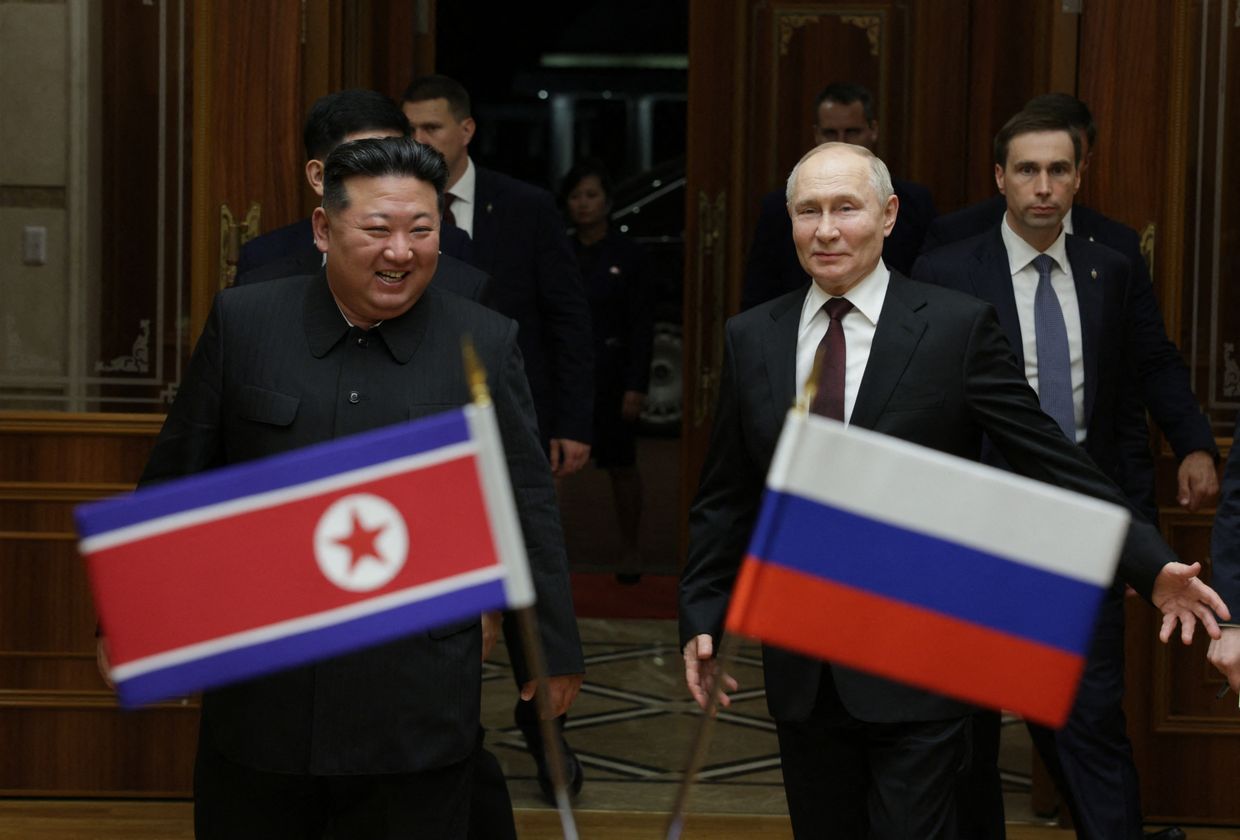
Russian President Vladimir Putin and Kim signed the Comprehensive Strategic Partnership Agreement in Pyongyang in June 2024. Under the treaty, the two countries pledged to provide aid to one another if either is attacked.

The images of the concert showed at least six coffins and emotional scenes of Kim alongside top officials, including his sister Kim Yo Jong and Foreign Minister Choe Son Hui, all dressed in winter clothing, suggesting the repatriation may have taken place months ago.

The event at East Pyongyang Grand Theatre included performances by North Korean and visiting Russian artists and displayed images celebrating the alliance, including scenes of soldiers from both countries waving flags and purported pages from a blood-stained notebook said to belong to a North Korean soldier killed in Russia's Kursk Oblast.

The Guardian reported that the ceremony was the first time North Korean state media had shown footage and photos of fallen troops in a way accessible to the North Korean public.

Footage broadcast on state-run KRT showed Kim appearing emotional at times while seated next to Russian Culture Minister Olga Lyubimova and his daughter, Kim Ju Ae. Audience members were seen wiping away tears.

Kim met with Lyubimova in Pyongyang on June 29 to discuss expanding bilateral cooperation in culture and the arts.

North Korea held a farewell ceremony for soldiers killed in Russia’s Kursk region. State TV aired footage of Kim Jong Un tearfully standing by a coffin — including hired state actors who were forced to cry. A concert in East Pyongyang also featured Russian songs. https://t.co/xV0TkminHs pic.twitter.com/WVWSSM5P1Y

— NOELREPORTS 🇪🇺 🇺🇦 (@NOELreports) July 1, 2025

North Korea initially denied sending combat troops to Ukraine, but Kim's tribute follows official confirmations of Pyongyang's direct military involvement in the Russia-Ukraine war. In April, both Kim and Putin described North Korean troops deployed to Ukraine as "heroes."

Kim also announced plans to build a monument in Pyongyang to honor the fallen and lay flowers at their tombstones.

Pyongyang has reportedly begun recruiting additional soldiers for future deployments. The move would add to what Seoul describes as significant military support from North Korea, including more than 10 million artillery shells and multiple ballistic missile transfers in exchange for economic and technical assistance from Moscow.

North Korea may also send up to 25,000 laborers to Russia to support drone production, including Shahed-type loitering munitions at the Alabuga Special Economic Zone in Tatarstan.

Russian Security Council Secretary Sergei Shoigu visited North Korea on June 17 under a special directive from Putin and announced a deal for Pyongyang to send 1,000 sappers and 5,000 military engineers to Russia's Kursk Oblast.

Thousands of North Korean troops reportedly participated in front-line operations there, helping Russia repel a Ukrainian cross-border offensive that began in August 2024. Ukrainian forces briefly held 1,300 square kilometers (500 square miles) in Kursk Oblast before losing most of the territory during a Russian counteroffensive in March 2025, reportedly supported by North Korean units.

U.K. defense intelligence places North Korean casualties from that operation at more than 6,000.

Russia turns sound into weapon
When I was at school and learned about World War II, my grandmother told me what she remembered of her wartime childhood on the English coast. Growing up near a Royal Navy base, she survived countless nighttime air raids. Most of all, she remembered exactly how the Blitz sounded — the
Kim Jong Un publicly honors North Korean soldiers killed in Russia-Ukraine warThe Kyiv IndependentElsa Court
Kim Jong Un publicly honors North Korean soldiers killed in Russia-Ukraine war
  • ✇The Kyiv Independent
  • Kim Jong-un meets Russian culture minister amid deepening North Korea-Russia ties
    North Korean leader Kim Jong-un met with Russian Culture Minister Olga Lyubimova in Pyongyang on June 29 to discuss expanding bilateral cooperation in culture and the arts, according to North Korea’s state-run Korean Central News Agency (KCNA).The meeting took place at the headquarters of the ruling Workers' Party of Korea's Central Committee and was also attended by Russian Ambassador to North Korea Alexandr Matsegora, KCNA reported. Lyubimova led a Russian culture ministry delegation to Pyongy
     

Kim Jong-un meets Russian culture minister amid deepening North Korea-Russia ties

29 juin 2025 à 23:59
Kim Jong-un meets Russian culture minister amid deepening North Korea-Russia ties

North Korean leader Kim Jong-un met with Russian Culture Minister Olga Lyubimova in Pyongyang on June 29 to discuss expanding bilateral cooperation in culture and the arts, according to North Korea’s state-run Korean Central News Agency (KCNA).

The meeting took place at the headquarters of the ruling Workers' Party of Korea's Central Committee and was also attended by Russian Ambassador to North Korea Alexandr Matsegora, KCNA reported.

Lyubimova led a Russian culture ministry delegation to Pyongyang, arriving on June 28 at the invitation of North Korea’s culture ministry to mark the first anniversary of the countries' comprehensive strategic partnership treaty.

During the meeting, Kim noted what he described as "broad and in-depth exchanges and cooperation" across various sectors since the treaty’s signing. He said these developments "have made tangible contributions to the mutual development and well-being of the two countries' peoples," according to KCNA.

Kim also emphasized the role of cultural and artistic exchange in reinforcing public sentiment and bilateral ties. "It is important for the cultural sector to guide the relations between the two countries," he said. Lyubimova, for her part, added that cultural cooperation between the countries had reached its highest level to date.

Kim’s daughter, known as Ju-ae, appeared beside him during the meeting with Lyubimova, marking her second known presence at a diplomatic event, following her attendance at a Russian Embassy function in Pyongyang in May.

The visits and meetings come amid growing North Korea-Russia engagement across multiple sectors, including military cooperation.

Since the two countries sinced a mutual defense treaty last June, North Korea has deployed around 11,000 elite troops to support Russia’s war against Ukraine, making up over 20% of Kim Jong-un’s "personal reserve" force, Ukrainian Defense Minister Rustem Umerov said at a June 26 press briefing.

"These are soldiers specially selected based on physical, psychological, and other criteria," Umerov said. "These units have already suffered significant losses."

Umerov added that North Korea had considered sending more troops, but doing so could further weaken its strategic reserves and pose risks to regime stability. He noted there have been four known rotations of North Korean units in Ukraine.

According to U.K. defense intelligence, North Korea has likely suffered over 6,000 casualties since troops were first deployed to Russia’s Kursk Oblast in fall 2024.

  • ✇The Kyiv Independent
  • North Korea deployed 20% of Kim's elite 'personal reserve' to fight against Ukraine in Russia, Umerov says
    North Korea has already deployed around 11,000 elite troops to support Russia's war against Ukraine, accounting for more than 20% of North Korean leader Kim Jong Un's elite "personal reserve" force, Defense Minister Rustem Umerov said during a June 26 press briefing."These are soldiers specially selected based on physical, psychological, and other criteria," Umerov said. "These units have already suffered significant losses."Umerov said intelligence indicates North Korea had considered sending a
     

North Korea deployed 20% of Kim's elite 'personal reserve' to fight against Ukraine in Russia, Umerov says

27 juin 2025 à 05:27
North Korea deployed 20% of Kim's elite 'personal reserve' to fight against Ukraine in Russia, Umerov says

North Korea has already deployed around 11,000 elite troops to support Russia's war against Ukraine, accounting for more than 20% of North Korean leader Kim Jong Un's elite "personal reserve" force, Defense Minister Rustem Umerov said during a June 26 press briefing.

"These are soldiers specially selected based on physical, psychological, and other criteria," Umerov said. "These units have already suffered significant losses."

Umerov said intelligence indicates North Korea had considered sending additional forces to fight with Russia. However, according to Umerov, the move would further deplete its strategic reserves and increase risks to regime stability. There have been four known rotations of North Korean units deployed against Ukraine, according to Umerov.

According to a June 15 report from the United Kingdom's defense intelligence, North Korea has likely sustained more than 6,000 casualties in Russia since the deployment of troops to Kursk Oblast in fall 2024.

U.K. intelligence attributed the high casualty rate to large, highly attritional dismounted assaults.

Russia's growing military partnership with North Korea has raised concerns in Kyiv and among its allies. The two countries signed a Comprehensive Strategic Partnership Agreement in 2024. The treaty commits both countries to provide assistance if either is attacked.

Kim previously described the pact as having a "peaceful and defensive nature," framing it as a formal security guarantee between the longtime partners.

In practice, Umerov said, North Korea is bearing the military burden, while Russia has not upheld its reciprocal obligations, raising concerns within the North Korean regime.

"Russia's use of elite North Korean troops demonstrates not only a growing reliance on totalitarian regimes but also serious problems with its mobilization reserve," Umerov said. "Together with our partners, we are monitoring these threats and will respond accordingly."

Umerov added that Ukraine, working in coordination with its Western partners, is closely tracking the movement and deployment of North Korean units deployed to fight against Ukraine. He said Russia's dependence on foreign forces may signal critical shortages in its own recruitment and mobilization efforts.

According to South Korea's National Intelligence Service, North Korea is likely to send more troops to Russia over the summer. Pyongyang may also send up to 25,000 laborers to Russia to support drone production, according to the report.

The additional troop deployment would come on top of what Seoul estimates is already substantial support from North Korea, which includes the shipment of over 10 million artillery shells and ballistic missiles in exchange for economic and technical assistance from Moscow.

Putin under pressure to declare war on Ukraine, but experts say Russia isn’t ready
Despite suffering over 1 million casualties, pounding Ukrainian cities nightly with missiles and drones, and committing countless war crimes, one startling fact about Russia’s full-scale invasion remains — Moscow has yet to officially declare war on Ukraine. In February 2022, Russian President Vladimir Putin described what he believed was going to be a swift victory and the capture of Kyiv within days as a “special military operation.” Nearly three-and-a-half years later, the Kremlin is stuck
North Korea deployed 20% of Kim's elite 'personal reserve' to fight against Ukraine in Russia, Umerov saysThe Kyiv IndependentChris York
North Korea deployed 20% of Kim's elite 'personal reserve' to fight against Ukraine in Russia, Umerov says
  • ✇The Kyiv Independent
  • North Korea likely to send more troops to Russia by August, South Korea says
    North Korea is likely to send more troops to Russia as early as July or August to bolster Moscow's war effort against Ukraine, South Korea's National Intelligence Service (NIS) said during a closed-door briefing, Yonhap reported on June 26.According to lawmakers briefed by the NIS, Pyongyang has already begun recruiting soldiers for deployment to Russia. The latest intelligence adds to growing concerns about the expanding scope of North Korea's involvement in Russia's war. The additional troop d
     

North Korea likely to send more troops to Russia by August, South Korea says

26 juin 2025 à 08:26
North Korea likely to send more troops to Russia by August, South Korea says

North Korea is likely to send more troops to Russia as early as July or August to bolster Moscow's war effort against Ukraine, South Korea's National Intelligence Service (NIS) said during a closed-door briefing, Yonhap reported on June 26.

According to lawmakers briefed by the NIS, Pyongyang has already begun recruiting soldiers for deployment to Russia. The latest intelligence adds to growing concerns about the expanding scope of North Korea's involvement in Russia's war.

The additional troop deployment would come on top of what Seoul estimates is already substantial support from North Korea, including the transfer of over 10 million artillery shells, and ballistic missiles in exchange for economic and technical assistance.

Yonhap's reporting follows recent findings that Pyongyang may send up to 25,000 laborers to Russia to support drone production, specifically Shahed-type loitering munitions, at the Alabuga Special Economic Zone in Tatarstan, according to Japan's NHK broadcaster.

In return, Pyongyang reportedly seeks training in drone operations, signaling an effort to integrate advanced unmanned aerial capabilities into its own military arsenal.

Putin insists the Russian economy is fine, but Kremlin officials say otherwise
In a rare public sign that all is not well in Russia, two high-ranking Moscow officials last week issued separate warnings about the state of the country’s economy. Russian Central Bank Governor Elvira Nabiullina and Economy Minister Maxim Reshetnikov both highlighted that amid the Kremlin’s full-scale war against Ukraine, the tools Moscow once relied on to maintain wartime growth are nearly exhausted. Almost immediately, Russian President Vladimir Putin on June 20 dismissed the concerns, clai
North Korea likely to send more troops to Russia by August, South Korea saysThe Kyiv IndependentTim Zadorozhnyy
North Korea likely to send more troops to Russia by August, South Korea says

The developments come amid intensifying diplomatic exchanges between the two authoritarian regimes. Russian Security Council Secretary Sergei Shoigu traveled to North Korea on June 17 under a special directive from President Vladimir Putin.

After meeting North Korean leader Kim Jong Un, Shoigu announced that Pyongyang had agreed to dispatch 1,000 sappers and 5,000 military engineers to Russia's Kursk Oblast.

North Korean combat units have already participated in front-line operations. Thousands of troops helped Russia repel a Ukrainian cross-border offensive into Kursk Oblast that began in August 2024.

Ukraine briefly held 1,300 square kilometers in the region before losing most of the territory during Russia's March 2025 counteroffensive, which was supported by Pyongyang. The U.K. defense intelligence estimates place North Korean casualties at over 6,000.

Kyrylo Budanov, Ukraine's military intelligence chief, said on June 9 that Russia and North Korea had agreed to begin domestic production of Shahed-136 drones on North Korean territory, further solidifying their military partnership.

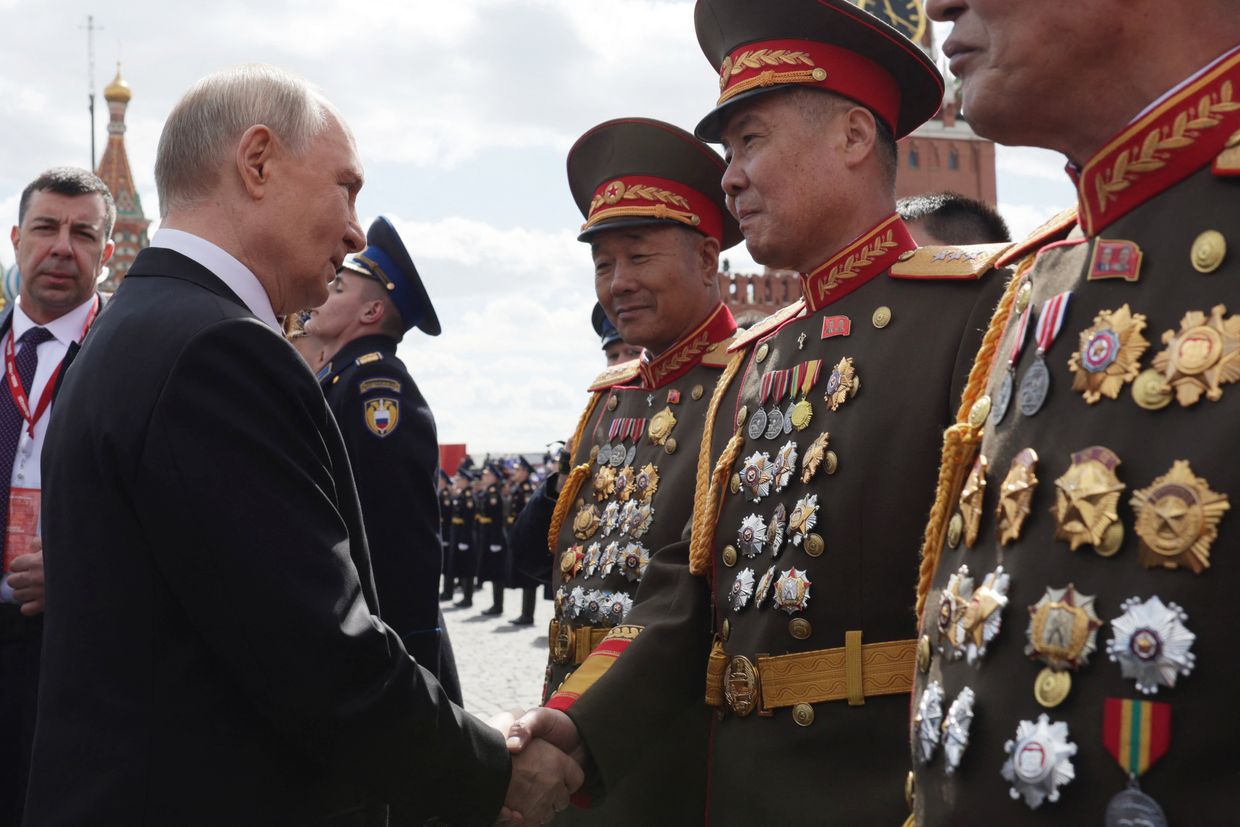
During Russia's May 9 Victory Day Parade in Moscow, President Putin personally greeted North Korean troops in Red Square, underscoring the alliance's symbolic and operational depth.

Kim did not attend but remains one of the Kremlin's staunchest foreign backers.

Russia reportedly helping North Korea build warships, but questions over seaworthiness remain after failed launch
Satellite imagery and launch footage suggest a clear Russian design influence.
North Korea likely to send more troops to Russia by August, South Korea saysThe Kyiv IndependentTim Zadorozhnyy
North Korea likely to send more troops to Russia by August, South Korea says

Russia reportedly helping North Korea build warships, but questions over seaworthiness remain after failed launch

26 juin 2025 à 05:59
Russia reportedly helping North Korea build warships, but questions over seaworthiness remain after failed launch

Russia appears to have provided North Korea with extensive assistance in designing and rapidly constructing two advanced destroyers, the most modern in Pyongyang's fleet, the Wall Street Journal (WSJ) reported on June 25.

The destroyers, part of the new Choe Hyon class, were built in just over a year — an unusually fast timeline that analysts say would have been impossible without foreign support.

Satellite imagery and launch footage suggest a clear Russian design influence, including the distinctive bow and stern structure found on Russia's Admiral Grigorovich-class frigates.

One of the destroyers, launched in April, was followed in May by a failed launch during which the second vessel capsized in front of North Korean leader Kim Jong Un.

The incident prompted outrage from Kim, who condemned the failed launch as a "criminal act" and placed blame on several state institutions, accusing relevant officials of "irresponsibility" which "could not be tolerated,"North Korean state-run Korean Central News Agency (KCNA) reported.

According to the agency, a malfunction in the launch mechanism caused the stern of the 5,000-ton destroyer to slide into the water too early, while the rest of the ship remained stuck.

Damage to the bottom of the ship threw it off balance, and the bow failed to move, resulting in "a serious accident."

The wreck was recovered in early June.

Mike Plunkett, a senior naval analyst at Janes, an open-source intelligence company, told the WSJ that the ships appeared to have signs of Russian involvement. He pointed to identical hull lines and profiles where the hull connects to the side, between the Korean and Russian vessels.

One of the destroyers appears to be equipped with the Russian Pantsir-M system, marking the first time this advanced air-defense system has been seen on a non-Russian warship.

Plunkett noted that the ventilation grilles for the engine room were sealed with metal plates, indicating the ships might not yet have engines.

The news comes amid deepening military ties between Russia and North Korea. According to a May 29 report by the Multilateral Sanctions Monitoring Team (MSMT), Pyongyang shipped up to 9 million artillery shells and at least 100 ballistic missiles to Russia in 2024 alone.

In fall 2024, North Korea's role in Russia's war grew as it sent thousands of troops to Russia's western border to assist in repelling a Ukrainian incursion.

The partnership has also expanded into drone cooperation. On June 9, Ukraine's military intelligence chief, Kyrylo Budanov, said the two nations had agreed to begin production of Iranian-designed Shahed-136 drones on North Korean territory.

‘Alarms went off everywhere’ — Explosions reported in Moscow, Russia claims 50 Ukrainian drones downed across country
Explosions were reported in Moscow overnight on June 26, prompting airport closures, as Mayor Sergey Sobyanin claimed that two drones were shot down.
Russia reportedly helping North Korea build warships, but questions over seaworthiness remain after failed launchThe Kyiv IndependentVolodymyr Ivanyshyn
Russia reportedly helping North Korea build warships, but questions over seaworthiness remain after failed launch
  • ✇The Kyiv Independent
  • North Korea considers sending 25,000 workers to Russia to help produce Shahed drones, media reports
    North Korea is considering sending up to 25,000 workers to Russia to assist in the mass production of Shahed-type attack drones, Japan's public broadcaster NHK reported on June 19, citing unnamed diplomatic sources in the West and Russia.The workers would be sent to the Alabuga Special Economic Zone in Russia's Republic of Tatarstan, where Moscow operates a facility for assembling Iranian-designed Shahed drones. In return, Pyongyang is reportedly seeking drone operation training.Shahed drones, k
     

North Korea considers sending 25,000 workers to Russia to help produce Shahed drones, media reports

19 juin 2025 à 11:51
North Korea considers sending 25,000 workers to Russia to help produce Shahed drones, media reports

North Korea is considering sending up to 25,000 workers to Russia to assist in the mass production of Shahed-type attack drones, Japan's public broadcaster NHK reported on June 19, citing unnamed diplomatic sources in the West and Russia.

The workers would be sent to the Alabuga Special Economic Zone in Russia's Republic of Tatarstan, where Moscow operates a facility for assembling Iranian-designed Shahed drones. In return, Pyongyang is reportedly seeking drone operation training.

Shahed drones, known for their low cost and heavy explosive payloads, have been used extensively by Russia since late 2022 to attack Ukrainian cities. The Alabuga site has been repeatedly struck by Ukrainian forces in an attempt to disrupt production.

The media report follows a series of rapid developments in military cooperation between Moscow and Pyongyang. Russian Security Council Secretary Sergei Shoigu visited North Korea on June 17, reportedly on a "special assignment" from Russian President Vladimir Putin.

After meeting Kim, Shoigu said that Pyongyang had agreed to send 1,000 combat engineers and 5,000 military builders to Russia's Kursk Oblast to assist in reconstruction.

Ukraine controlled a part of Kursk Oblast following a cross-border offensive in August 2024. Russia regained much of the lost territory during a March 2025 counteroffensive that included backing from North Korean forces. According to estimates, North Korea has suffered over 6,000 casualties during the offensive operations.

Ukraine's military intelligence chief, Kyrylo Budanov, said on June 9 that Pyongyang and Moscow have agreed to start establishing domestic production of Shahed-136 drones on North Korean soil.

Kim remains a vocal ally of Putin, supplying not only soldiers but also artillery, drones, and ballistic missiles. During Russia's May 9 Victory Day Parade in Moscow, Putin personally greeted North Korean troops, though Kim did not attend.

Trump’s peace push falters in both Ukraine and the Middle East — for similar reasons
U.S. President Donald Trump addressed a wide range of subjects during his inauguration speech. When speaking about international relations, he was adamant — “Our power will stop all wars and bring a new spirit of unity,” he said, talking about Russia’s war against Ukraine and the fighting in the Middle
North Korea considers sending 25,000 workers to Russia to help produce Shahed drones, media reportsThe Kyiv IndependentOleg Sukhov
North Korea considers sending 25,000 workers to Russia to help produce Shahed drones, media reports
  • ✇The Kyiv Independent
  • Russia's Shoigu visits North Korea on 'special assignment' from Putin
    Editor's note: This item has been updated to include additional details.  Russian Security Council Secretary Sergei Shoigu arrived in Pyongyang on June 17 on a "special assignment" from President Vladimir Putin, Russian state-controlled news agency TASS reported on June 17.Shoigu met with North Korean leader Kim Jong Un during the visit, TASS reported, citing a correspondent on the ground. The purpose of the visit has not been officially disclosed, but it occurs amid intensifying military cooper
     

Russia's Shoigu visits North Korea on 'special assignment' from Putin

17 juin 2025 à 03:33
Russia's Shoigu visits North Korea on 'special assignment' from Putin

Editor's note: This item has been updated to include additional details.  

Russian Security Council Secretary Sergei Shoigu arrived in Pyongyang on June 17 on a "special assignment" from President Vladimir Putin, Russian state-controlled news agency TASS reported on June 17.

Shoigu met with North Korean leader Kim Jong Un during the visit, TASS reported, citing a correspondent on the ground. The purpose of the visit has not been officially disclosed, but it occurs amid intensifying military cooperation between the two nations.

After the meeting with Kim, Shoigu announced that North Korea had decided to send 1,000 sappers and 5,000 military builders to rebuild Russia's Kursk Oblast, according to TASS.

Ukraine initially captured 1,300 square kilometers (500 square miles) of Russian territory during a cross-border operation that began in August 2024. Since then, Ukraine has lost most of the territory after Moscow launched a counteroffensive in March, which was supported by Pyongyang's military.

According to a June 15 report from the United Kingdom's defense intelligence, over 6,000 North Korean soldiers have been killed or wounded during operations in Russia's Kursk Oblast.

According to TASS, Shoigu also discussed in Pyongyang the creation of memorials in Russia and North Korea in memory of Korean soldiers who died fighting in the Kursk Oblast.

North Korea has emerged as one of Russia's closest military partners during its full-scale invasion of Ukraine. Since late 2023, Pyongyang has supplied Moscow with millions of artillery shells, at least 100 ballistic missiles, and reportedly deployed more than 11,000 troops to assist Russian operations in Ukraine’s border regions.

The U.K. said Pyongyang's losses account for more than half of the North Korean contingent deployed to the region in fall 2024. British officials attributed the high casualties to highly attritional ground assaults.

Earlier this year, South Korea's Joint Chiefs of Staff reported that North Korea sent an additional 3,000 soldiers to Russia in January and February to replenish losses.

In June 2024, Russia and North Korea signed a mutual defense pact obligating both countries to provide military assistance in the event of an external attack. Though North Korea only publicly acknowledged its participation in Russia's war against Ukraine in April 2025, open-source reports and intelligence assessments have indicated its involvement since at least the fall of 2024.

The Multilateral Sanctions Monitoring Team (MSMT), a United Nations-affiliated watchdog, reported in May that North Korea and Russia had engaged in "unlawful military cooperation" in violation of multiple UN Security Council resolutions. This included arms transfers, deployment of combat troops, petroleum exports to North Korea exceeding UN caps, and mutual military training.

According to MSMT findings, Russian-flagged vessels delivered up to 9 million rounds of artillery and multiple rocket launcher ammunition from North Korea to southwestern Russia in 2024 alone. These weapons were subsequently used in attacks against Ukrainian infrastructure and civilian targets in cities including Kyiv and Zaporizhzhia.

Russia has also reportedly provided advanced military technology to North Korea, including ballistic missile guidance systems, electronic warfare platforms, and short-range air defense systems. One MSMT participating state confirmed the transfer of at least one Pantsir-class vehicle to Pyongyang.

Kim Jong Un described his country's involvement in Russia's war against Ukraine as a "sacred mission" during a public address in May.

Shoigu's visit to North Korea comes amid intensified Russian aerial attacks across Ukraine, including the use of North Korean-made ballistic missiles containing components sourced from third-party suppliers.

Russia significantly improved North Korea’s shoddy KN-23 ballistic missiles, Ukraine’s Budanov says
It was reported last year that around half fired at Ukraine by Russia malfunctioned and exploded in mid-air.
Russia's Shoigu visits North Korea on 'special assignment' from PutinThe Kyiv IndependentKateryna Hodunova
Russia's Shoigu visits North Korea on 'special assignment' from Putin
  • ✇The Kyiv Independent
  • North Korean losses exceed 6,000 in Russia's Kursk Oblast, UK intelligence reports
    North Korea has suffered more than 6,000 casualties during offensive operations in Russia’s Kursk Oblast, according to a June 15 report from the United Kingdom’s defense intelligence.According to the report, North Korea's losses account for more than half of the approximately 11,000 troops initially deployed to Kursk in fall 2024.U.K. intelligence attributed the high casualty rate to large, highly attritional dismounted assaults.Open source intelligence reports have also suggested that small num
     

North Korean losses exceed 6,000 in Russia's Kursk Oblast, UK intelligence reports

15 juin 2025 à 19:02
North Korean losses exceed 6,000 in Russia's Kursk Oblast, UK intelligence reports

North Korea has suffered more than 6,000 casualties during offensive operations in Russia’s Kursk Oblast, according to a June 15 report from the United Kingdom’s defense intelligence.

According to the report, North Korea's losses account for more than half of the approximately 11,000 troops initially deployed to Kursk in fall 2024.

U.K. intelligence attributed the high casualty rate to large, highly attritional dismounted assaults.

Open source intelligence reports have also suggested that small numbers of additional North Korea troops have been deployed to make up for the losses.

Earlier this year, South Korea's Joint Chiefs of Staff reported that North Korea transferred approximately 3,000 additional soldiers to Russia in January and February.

North Korea has emerged as a key military ally of Russia through its invasion of Ukraine, supplying Moscow with artillery shells, missiles, and even soldiers in exchange for oil products and advanced military technology, such as ballistic missile upgrades.

In April 2025, Russia confirmed for the first time that North Korean forces were fighting alongside Russian troops in Kursk, although North Korean troops have been reportedly involved since fall 2024.

Ukraine launched a cross-border incursion into Kursk Oblast in August 2024, marking the first large-scale invasion of Russian territory by foreign forces since World War II. The operation aimed to disrupt a planned Russian offensive on the neighboring Sumy Oblast and draw Russian forces away from the embattled Donbas region.

Russia launched a push to recapture the region in early March 2025, with Ukraine being forced to pull back from much of the initially taken territory.

Ukraine war latest: Ukrainian MiG-29 strikes Russian drone hub, ammo depot in Zaporizhzhia direction, releases video
Key developments on June 13: * Ukrainian MiG-29 strikes Russian drone hub, ammo depot in Zaporizhzhia direction, releases video * Ukrainian military denies NYT claims about Russian presence in Dnipropetrovsk Oblast * Russia preparing strategic reserves for conflicts beyond Ukraine, Ukraine warns * Ukraine repatriates bodies of 1,200 citizens, soldiers under Istanbul deal
North Korean losses exceed 6,000 in Russia's Kursk Oblast, UK intelligence reportsThe Kyiv IndependentThe Kyiv Independent news desk
North Korean losses exceed 6,000 in Russia's Kursk Oblast, UK intelligence reports
❌