Vue normale

  • ✇Euromaidan Press
  • Glide bomb then infiltrate. This is Russia’s new way of war.
    In 2022, Russians fired artillery then advanced in vehicles Four years later, they launch glide bombs then advance as small teams of infantry Ukrainian drones stand in their way, and that's why drone operators are the main targets of Russian firepower before and during the advance On Monday, a small team of Russian infiltrators reportedly slipped 10 km behind the line of contact between Russian and Ukrainian troops just north of Kostiantynivka in eastern Ukrai
     

Glide bomb then infiltrate. This is Russia’s new way of war.

Par : David Axe
26 août 2026 à 17:16

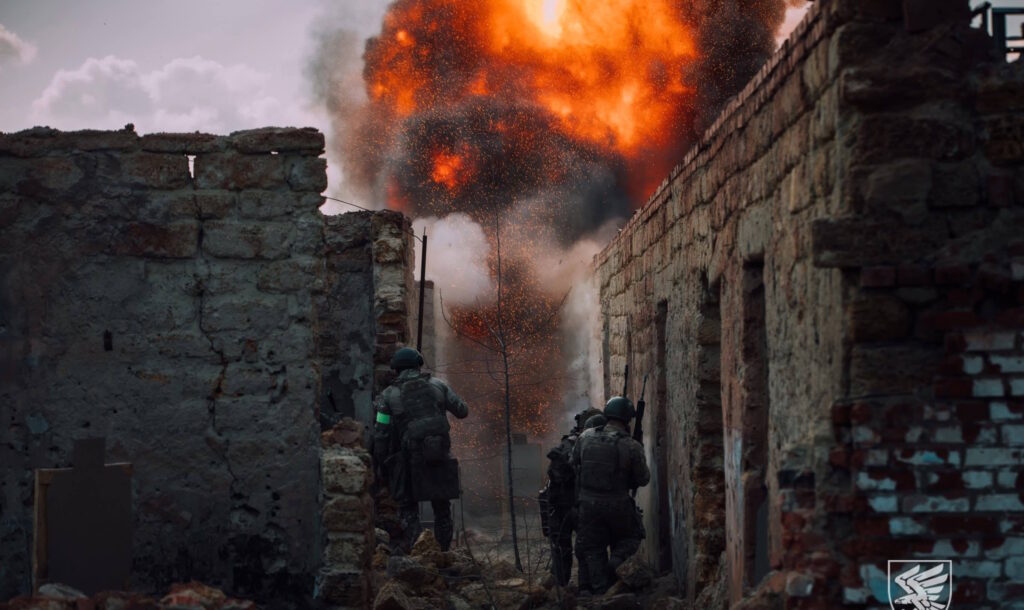
Glide bombs drop away from a Russian jet.

  • In 2022, Russians fired artillery then advanced in vehicles
  • Four years later, they launch glide bombs then advance as small teams of infantry
  • Ukrainian drones stand in their way, and that's why drone operators are the main targets of Russian firepower before and during the advance

On Monday, a small team of Russian infiltrators reportedly slipped 10 km behind the line of contact between Russian and Ukrainian troops just north of Kostiantynivka in eastern Ukraine's Donetsk Oblast.

Sneaking into the town of Druzhkivka, 10 km north of Kostiantynivka along the H20 highway, the Russians reportedly ambushed, captured and executed a group of three or four unarmed Ukrainian drone operators.

It's possible the drone operators had just arrived in Druzhkivka when the Russians appeared. According to analyst and mapper AMK Mapping, Ukrainian drone operators pulled out of the village of Oleksijevo-Druzhkivka—which lies between Kostiantynivka and Druzhkivka—owing to the increasing threat from Russian KAB glide bombs. "It's likely that Russian forces monitored the withdrawals of Ukrainian drone operators and sent in [an infiltration group] after the new position was identified," AMK Mapping concluded.

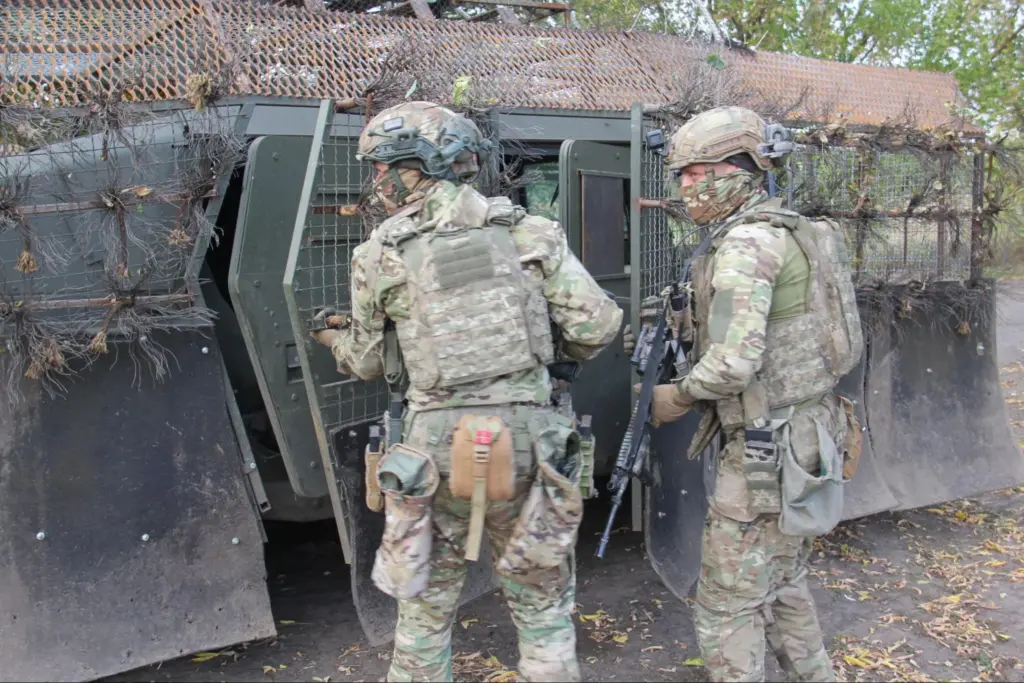
The atrocity underscores the Russian military's new approach to ground warfare as Russia's wider war on Ukraine grinds through its 54th month. An army that once counted on its own artillery to suppress enemy artillery in order to allow mechanized forces to advance now uses precision bombs, small cruise missiles, tiny drones, and, yes, some artillery to suppress the Ukrainian drone teams that represent the main obstacle to a swift Russian advance.

Yesterday, a group of Russian DRGs was able to infiltrate from Kostyantynivka for at least 10 km behind Ukrainian lines, and kill 3-4 Ukrainian drone operators in the city of Druzhkivka. The drone operators were unarmed in their positions at the time of the ambush, not expecting… pic.twitter.com/KNxN0JelwL

— AMK Mapping 🇳🇿 (@AMK_Mapping_) August 25, 2026

And when the Russian firepower manages to suppress Ukrainian drone operators, allowing small teams of infantry to advance, the infantry's objective is often to take out the same drone operators whose suppression was a necessary pre-condition of any successful assault.

In short, the Ukrainians largely defend with drones. That means the Russians are fixated on first striking the drone teams in order to prevent them from launching their tiny lethal robots—and then, when they can, assaulting the drone teams' positions in order to capture or kill them. Or capture then kill them, as reportedly happened in Druzhkivka.

The Russians have learned the hard way that they can't advance without first finding and attacking Ukrainian drone operators. That hard experience has driven a profound transformation of the Russian way of war in just the last few years.

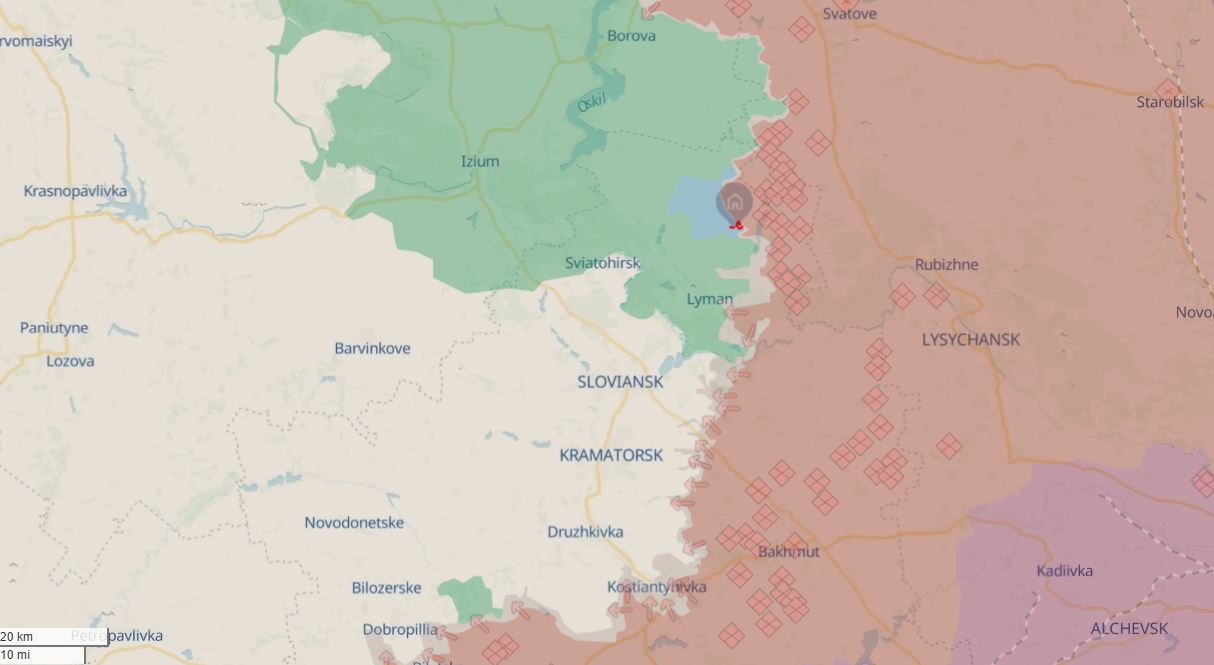
isw russia's long push toward sloviansk gains ground ukraine counterattacks · post kostyantynivka-druzhkivka-tactical-area-august-1-2026 news ukrainian reports
Map: ISW.

Precision suppression

As 2025 wore into 2026, Ukrainian forces finally deployed enough $500 drones to effectively halt any sustained Russian advance along the 1,200-km gray zone stretching across eastern and southern Ukraine. Between February and July, the Russians captured around 260 sq km of Ukrainian soil, according to a tally by the Black Bird Group. That's barely a fifth as much ground as they seized in the same six months in 2025.

Realizing they couldn't just fire an artillery barrage and then roll out the tanks the way they used to, the Russians have mostly parked their thousands of armored vehicles. Now they advance in small teams of lightly equipped infantry that, Russian commanders reason, stand a better chance of avoiding detecting and destruction by drones.

"Broadly speaking, current Russian military theory appears to emphasize restoring the ability to maneuver," Sidharth Kaushal and Sam Cranny-Evans wrote in a new study for the Royal United Services Institute in London. But the infantry infiltrators who do most of the maneuvering these days don't march out without support. A lot of it.

In the early months of the wider war in 2022 and 2023, the Russians counted on artillery—lots of artillery—to support the maneuver forces. But massed artillery is just as exposed to drone attack as massed tanks are, so Russian fire support has had to evolve, too.

Today, the Russians still fire artillery from fewer but more spread-out guns. But they also launch their own drones, small cruise missiles, and—perhaps most important—KAB glide bombs to force Ukrainian defenders, including drone teams, into their dugouts before the infantry dash across the gray zone. "Russian theorists appear to see the solution in highly mobile units designed to exploit lower-risk tunnels created by
precision strike," Kaushal and Cranny-Evans explained.

https://twitter.com/kriegsforscherD/status/2091923015604850800/

It's explosive choreography requiring careful communication between the infantry, the artillery, drone teams and the air force. "Sustaining momentum in the face of adversary precision strike is a considerable challenge," Kaushal and Cranny-Evans wrote. But a necessary one as the Russian military "contemplates how it can break the current positional deadlock" in Ukraine "and avoid future ones."

But when it works, it works to catastrophic effect for Ukrainian defenders. As those unfortunate, murdered drone operators found out.

The suppress-then-advance method, but with precision munitions and small teams of infiltrators, works for both sides, of course. The Ukrainians can do it, too—and they recently did in some unspecified sector of the gray zone.

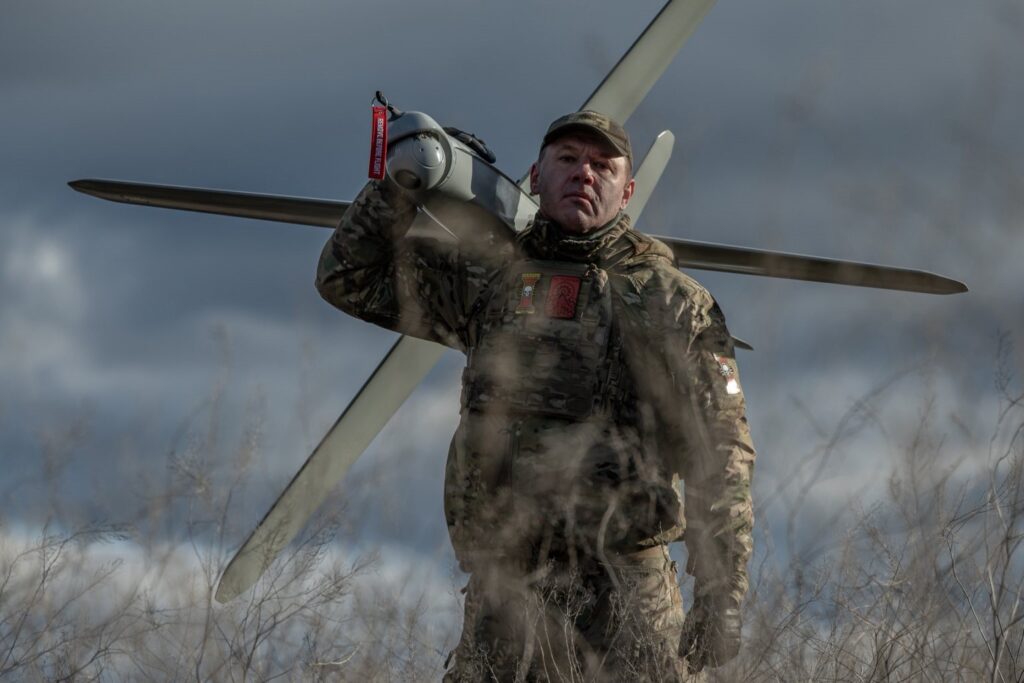
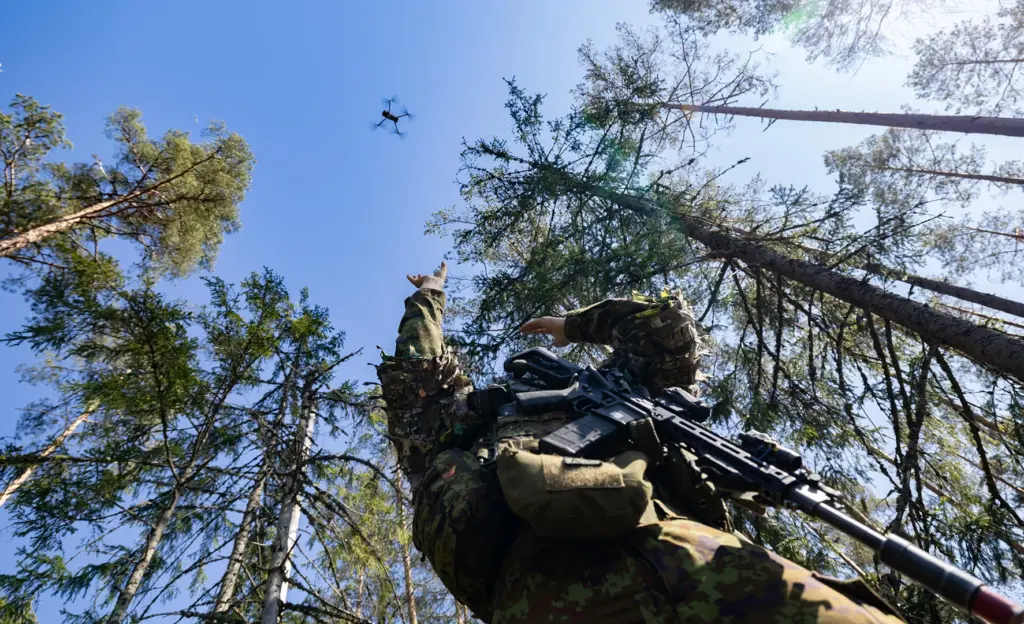
A Ukrainian soldier carries an FPV drone.
Explore further

Ukraine’s secret counteroffensive takes the pressure off Sloviansk

On the same day the Russians executed those drone operators, fellow Ukrainian drone pilot Dmytro Putiata reported a small Ukrainian mechanized advance. "At one of the direction at the front line, one of the Ukrainian brigades used four [infantry fighting vehicles] during the attack," Putiata wrote. "They have managed to break through up to three km; dismounted infantry and all of the vehicles managed to retreat."

They break through with the help of friendly drones units that suppressed Russian troops along the assault route, Putiata explained. "How did they manage not to be targeted by drones? The battlefield was prepared for that."

  • ✇Euromaidan Press
  • Biggest Magura sea drone doesn’t ram ships. It carries other drones and stays out seven days
    Ukraine has unveiled the largest robot boat in its Magura sea-drone family, and this one is built to carry and launch other drones instead of ramming enemy ships, the company UFORCE told Militarnyi. UFORCE showed the new V11 during Ukraine's Independence Day drone parade, signaling a move from single-use attack craft toward a floating base at sea. Ukraine has fought its Black Sea war with throwaway robot boats—cheap, one-way, built to hit a ship and go down with it. Shi
     

Biggest Magura sea drone doesn’t ram ships. It carries other drones and stays out seven days

26 août 2026 à 07:21

MV11 from the MAGURA family

Ukraine has unveiled the largest robot boat in its Magura sea-drone family, and this one is built to carry and launch other drones instead of ramming enemy ships, the company UFORCE told Militarnyi. UFORCE showed the new V11 during Ukraine's Independence Day drone parade, signaling a move from single-use attack craft toward a floating base at sea.

Ukraine has fought its Black Sea war with throwaway robot boats—cheap, one-way, built to hit a ship and go down with it. Shifting toward reusable platforms that keep other machines running far from any coast marks a different bet.

A floating base, not a battering ram

The V11 is the biggest drone in its class. Earlier, Magura boats were made to hit warships. This one is a transport platform that carries other unmanned systems and gear. Its main feature is the ability to launch a larger number of unmanned systems straight from its deck, turning one boat into a mobile base for them. The company refers to the drone as both the V11 and the MV11.

australia spending billions drones — ukraine says can make money count new ukrainian maritime magura v7 (left) older v5 2025 militarnyi has offered share its combat-tested drone technology battlefield expertise
Explore further

American defense company Red Cat announces serial production of copy of Ukraine’s Magura V7 and says it’s their own development

What the V11 can do

UFORCE says the drone carries up to 2,200 kg (about 4,850 pounds) and can stay at sea for up to seven days. The company built it for reconnaissance, surveillance, support of landing operations, and resupplying fuel and equipment to other naval drones.

"It is a platform that provides multi-domain capability: one carrier that carries and launches other unmanned systems far from shore for operations across all domains," said Oleh Rogynskyy, CEO of UFORCE.

He said the investment the company attracts works for Ukraine's Defense Forces.

From strikes to a US production line

UFORCE's design and engineering office in Portugal developed the V11, drawing on international investment and aiming at the needs of Ukraine's Defense Forces. Its work there was first reported in September 2025.

meet magura w6 ukraine's latest threat russian warships drone funded pumb bank being presented hur 2025 5398010383781982294 ukrainian military intelligence has received new-generation maritime part its continued efforts challenge naval
Explore further

Meet the Magura W6: Ukraine’s latest threat to Russian warships

In July, the company and the US firm ReconCraft signed a memorandum for the licensed production of Magura naval drones in the US. Ukraine's Magura boats have forced Russia's Black Sea Fleet back to safer ports, and some versions have even shot down Russian fighter jets.

  • ✇Euromaidan Press
  • A gasoline and polystyrene mix—police call it napalm—was meant for a Ukrainian drone plant in Slovakia
    Slovak police foiled a planned arson attack on a drone factory in the country's east, the force said on 25 August. Investigators charged three foreigners with preparing the attack on commission and seized incendiary material and equipment at the scene. The plant belongs to the Ukrainian drone maker Skyeton, Militarnyi reported. Russia's war has an arm inside Europe that usually works without missiles against Ukraine supporters — agents and recruited locals, carrying out
     

A gasoline and polystyrene mix—police call it napalm—was meant for a Ukrainian drone plant in Slovakia

26 août 2026 à 06:46

gasoline polystyrene—the mix police call napalm—was meant ukrainian drone plant slovakia · post man detained suspicion preparing arson attack items seized site eastern 2026 slovak ukraine news reports

Slovak police foiled a planned arson attack on a drone factory in the country's east, the force said on 25 August. Investigators charged three foreigners with preparing the attack on commission and seized incendiary material and equipment at the scene. The plant belongs to the Ukrainian drone maker Skyeton, Militarnyi reported.

Russia's war has an arm inside Europe that usually works without missiles against Ukraine supporters — agents and recruited locals, carrying out arsons, parcel fires, flying an explosive drone at a Ukrainian cargo plane in Germany, plotting against arms-industry figures — and the point of hiring strangers to light fires is that a burned production hall costs Moscow nothing it can be held to account for.

Had the attack in Slovakia gone ahead, it risked a large fire, danger to life and health, and damage on a large scale, police stated. About 70 employees could have been in the building at the time, by preliminary estimates. Property inside the production hall is worth tens of millions of euros, according to the findings so far.

Officers seized a larger quantity of incendiary mixture, along with tools, mobile phones, an action camera, and a hand-made plan. The police Criminalistics and Expertise Institute gave a preliminary finding that the substance was a mixture of gasoline and polystyrene, commonly called napalm. Slovakia's anti-crime unit ÚBOK, part of the Police Presidium, identified the people preparing the attack and stopped it. Nobody was hurt and no property was damaged, police said.

gasoline polystyrene—the mix police call napalm—was meant ukrainian drone plant slovakia · post items seized during operation one detained men eastern 2026 ukraine news reports
Items seized during the operation, and one of the detained men, eastern Slovakia, August 2026. Photo: Police of the Slovak Republic

The charges, and where the three were detained

An ÚBOK investigator charged the three foreigners with preparing a particularly serious crime of general endangerment, committed as co-perpetrators on order. Officers detained two of them in Slovakia, and the investigator moved to have both taken into custody. German authorities detained the third on a European arrest warrant. The investigation continues, and the legal classification of the men's actions may still change.

fifty grams hexogen ten days late what germany missed after attack ukraine's plane · post german police vehicles officers apron beneath wing ukrainian cargo aircraft leipzig/halle airport 2026 leipzig halle
Explore further

About 50 grams of suspected military explosive lay in a German field 10 days after the attempt on Ukraine’s plane

The plant, and a company Russia has already hit

Slovakia, a NATO and EU member, borders Ukraine on its eastern edge. Skyeton builds the Raybird, a fixed-wing reconnaissance drone that has served with Ukraine's Armed Forces since 2018 and stays airborne for up to 28 hoursThe company began production in Slovakia in 2024, and more than €10 million in foreign investment went into the plant, one of several sites Ukrainian firms opened abroad to cut the risk of Russian attacks.

That risk is not theoretical. Russia destroyed Skyeton's Kyiv office in May, and the company said it had already spread production capacity across Ukraine and abroad in anticipation.

A Skyeton representative told Militarnyi:

"The recent attempt on our production in Slovakia is another sign that Ukrainian arms makers are already a bone in their throat, which means we are on the right path." 

Russian sabotage defense factories
2024

WSJ: Russian sabotage groups suspected for arson attack on plant producing air defense systems for Ukraine

Arson against Ukraine's defense partners in Europe

Companies working for Ukraine have been hit across several countries this year and earlier. 

In March, suspects who claimed a pro-Palestinian motive set fire to the Pardubice production of Archer, a Ukrainian maker of thermal imaging sights, destroying nearly all of the company's capacity in Czechia.

Estonia opened a Russian-link investigation this month into a suspected arson at a military robot maker supplying Ukraine, and Lithuania charged six people in January over an attempt to burn a factory that supplied radio-wave scanners. 

A powerful explosion of undetermined cause hit EMCO, one of Bulgaria's largest private arms makers, which produces artillery ammunition for Ukraine, on 10 August.

  • ✇Euromaidan Press
  • One tracked tank repairs, one marked artillery, one aimed bombs at civilians—all three got 15 years
    A Ukrainian court sentenced three Russian agents to 15 years each for guiding Russian strikes on Donetsk Oblast, the Security Service of Ukraine (SBU) said on 26 August. Each had been recruited to mark Ukrainian military sites or civilian targets in the east, and counterintelligence exposed them between spring 2025 and March this year. The court found all three guilty of treason committed under martial law. The SBU did not name the court or say which specific strikes th
     

One tracked tank repairs, one marked artillery, one aimed bombs at civilians—all three got 15 years

26 août 2026 à 04:20

SBU officers in camouflage and tactical gear, seen from behind during an operation.

A Ukrainian court sentenced three Russian agents to 15 years each for guiding Russian strikes on Donetsk Oblast, the Security Service of Ukraine (SBU) said on 26 August. Each had been recruited to mark Ukrainian military sites or civilian targets in the east, and counterintelligence exposed them between spring 2025 and March this year. The court found all three guilty of treason committed under martial law. The SBU did not name the court or say which specific strikes the men enabled.

Russia has spent this war turning Ukrainian civilians into spotters for its bombs — reaching them through Telegram job and drug channels, forged official summonses, relatives in occupied areas, and promises of easy money — and the SBU has opened more than 3,800 treason investigations since 2022 as of February 2026, so any single verdict stands for a caseload far larger than what reaches the news.

The informer inside the armor repair base

One of the convicted men worked at a Defense Forces repair base, and the SBU detained him in the Kramatorsk sector in April 2025. Russian services noticed him through his brother, who lives in Russia and works for the Federal Security Service (FSB), the investigation established. Recruitment through relatives in Russia or the occupied territories is a method Ukrainian counterintelligence has documented before, including inside a marine brigade on the active front.

During his own shifts at the defense enterprise, he recorded the geolocations of repair shops used to restore heavy armored vehicles for Ukraine's Armed Forces. He tried to pass the photographs and building coordinates to his Russian handler through an anonymous chat in a messenger.

sbu arrests suspected russian spies foils sabotage plots lyman chernihiv kirovohrad vinnytsia detainment saboteurs security service says arrested agent aiding airstrikes 2 ukraine's reported multiple agents involved espionage across several
Explore further

SBU arrests suspected Russian spies, foils sabotage plots in Lyman, Chernihiv, Kirovohrad, Vinnytsia

The Dobropillia man who aimed 1.5-ton bombs near Pokrovsk

The second man was an unemployed resident of Dobropillia and an agent of Russian military intelligence, which noticed him through anti-Ukrainian comments in Telegram channel chats, the SBU said. The agency's counterintelligence detained him near Pokrovsk in March this year. Investigators established that he directed 1.5-ton guided aerial bombs at fortified areas and at artillery positions that keep Russian assault groups under fire control on the Pokrovsk axis. Russian forces have leaned more heavily on heavy glide bombs across this stretch of front this year, hitting fortifications and reducing towns to rubble their infantry then uses as cover.

The Kostiantynivka resident who marked his own city

The third man, recruited by the FSB, lived in Kostiantynivka, and SBU military counterintelligence exposed him in August 2025, according to the report. He approached Russian services through pro-Kremlin Telegram channels and offered them his help.

He directed Russian guided aerial bombs and small first-person-view drones at the civilian infrastructure of the front-line city, according to the case materials. He also tracked the positions of Ukrainian drone units carrying out combat tasks on the Kramatorsk axis. Russian strikes on that axis have repeatedly hit residential blocks, with prosecutors opening war-crimes investigations.

Ukrainian courts have handed down the same 15-year term in comparable cases, including for a locomotive depot engineer who mapped Ukrainian positions around Lyman.

Ukraine has wrecked more than 100,000 Russian vehicles by hitting the roads, and this new drone is built exactly for that job

26 août 2026 à 01:15

The new fixed-wing Baton. Source: The Technological Forces of Ukraine

The Technological Forces of Ukraine have presented a strike drone built to cut Russian logistics. The new fixed-wing Baton is designed to hit firing positions, supply routes, and other targets at tactical depth, out to 90 kilometers, according to the association's announcement.

Everything Russian troops eat, fire, and drive reaches them by road and train. Ukraine has pushed cumulative Russian motor-transport losses past 100,000 vehicles by working that ground, destroying 483 in a single day on 29 May, the highest daily figure since February 2022. Baton is built for that band.

The numbers come from the association

Baton carries three kilograms over a stated range of up to 90 kilometers, stays airborne for 50 minutes, and cruises at 105 kilometers per hour, with a maximum of 140 kilometers per hour, according to the announcement. Its working altitude ranges from 150 to 500 meters, with a ceiling of 1,500 meters.

Eight airframes fit in one pickup, launch comes from a catapult under ground-station control, and preparation takes about 15 minutes, the association said.

Autonomy takes over at two kilometers

The drone locks onto a target and flies to it automatically from up to 2 kilometers away and at altitudes up to 500 meters, the association said. That final stretch is where Russian jamming would otherwise break the link.

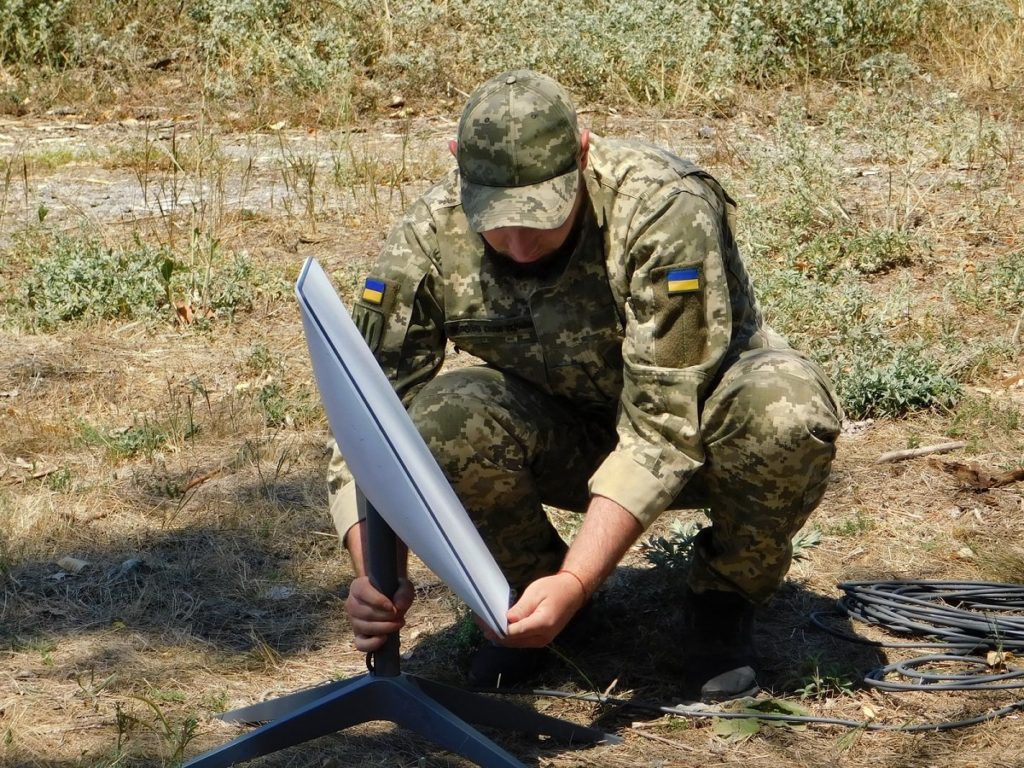
Depending on the version, it carries analog or digital video, communicates over LTE or Starlink, and navigates a route autonomously with real-time positioning, according to the announcement.

Two figures do not sit together

Fifty minutes at the stated cruising speed covers roughly 87 kilometers. The 90-kilometer range is therefore a one-way distance at near-full endurance rather than an operating radius.

Earlier, a Ukrainian drone maker pitched a weapon that functions like a mortar, rather than a drone. F-Drones unveiled the F5, a compact five-inch strike FPV built for assault units working treelines, built-up areas, and position support at short range.

  • ✇Euromaidan Press
  • Russia’s attack drones now jam the cheap interceptors sent to kill them
    Ukraine's cheap interceptor drones have been knocking Russia's nightly attackers out of the sky, so Russia has now bolted a jammer onto some of its own drones to blind them, according to Serhii "Flash" Beskrestnov, an adviser to Ukraine's President on defense technology. He examined the system, found in drone wreckage, and mapped how it strikes back at the interceptor sent to hunt it. Russia batters Ukrainian cities with long-range drones most nights, and Ukraine has le
     

Russia’s attack drones now jam the cheap interceptors sent to kill them

25 août 2026 à 12:39

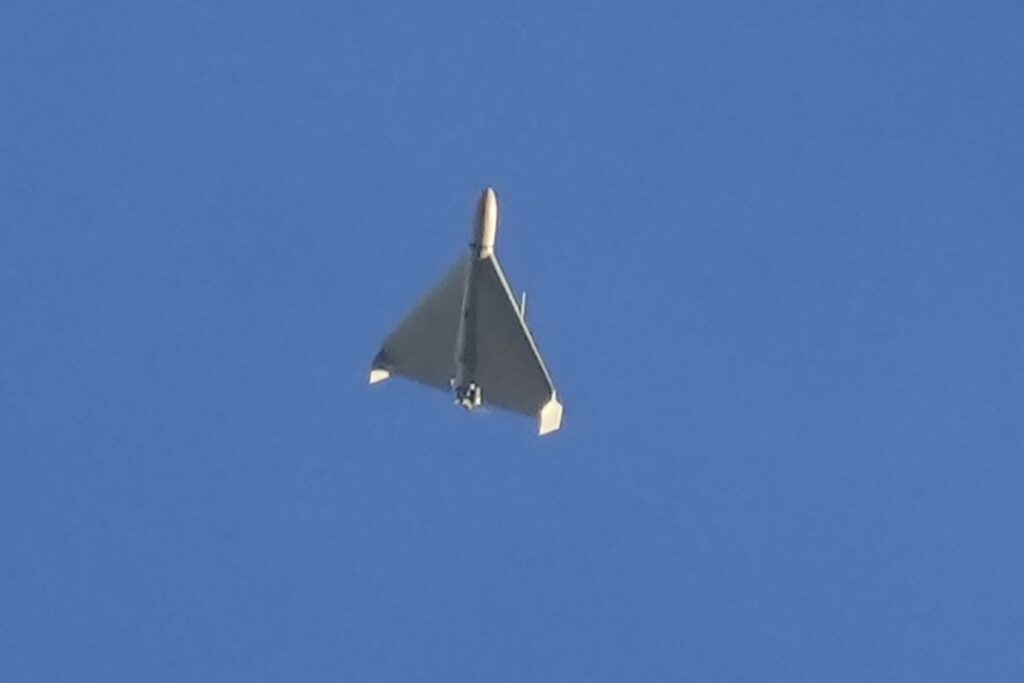
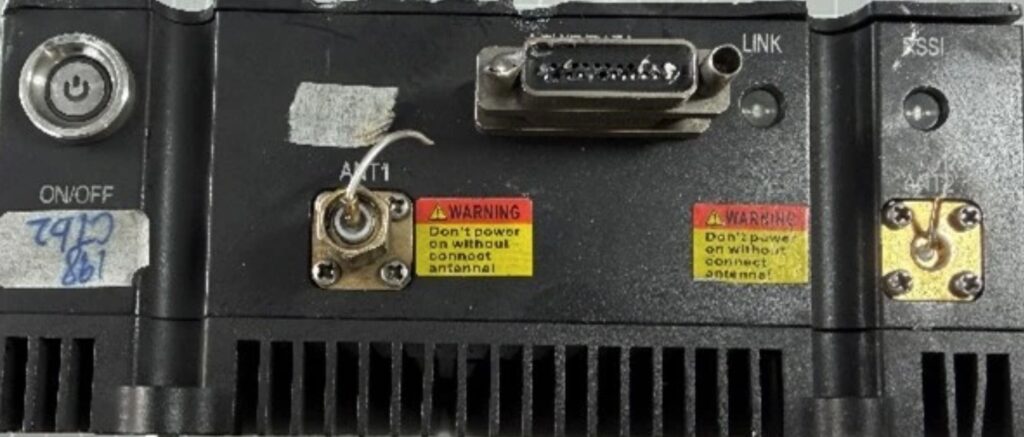
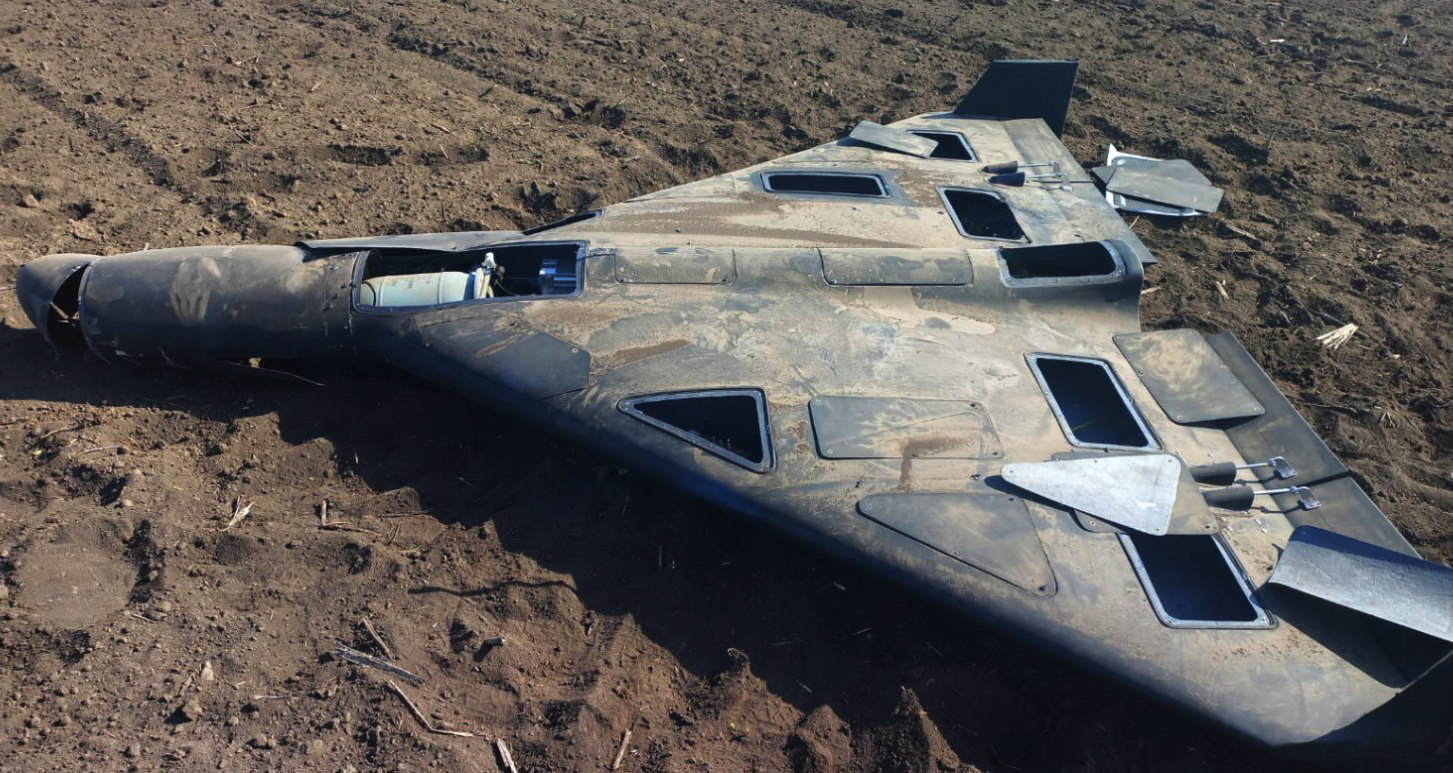
Electronic warfare equipment from Shahed drones.

Ukraine's cheap interceptor drones have been knocking Russia's nightly attackers out of the sky, so Russia has now bolted a jammer onto some of its own drones to blind them, according to Serhii "Flash" Beskrestnov, an adviser to Ukraine's President on defense technology. He examined the system, found in drone wreckage, and mapped how it strikes back at the interceptor sent to hunt it.

Russia batters Ukrainian cities with long-range drones most nights, and Ukraine has leaned on a cheap shield—drones costing a few thousand dollars—instead of burning through far pricier missiles. Anything that dulls that shield pushes the cost of defending the sky back up.

A jammer that waits for the interceptor

The unit rides on a Geran, Russia's version of the Iranian Shahed one-way drone. It listens for the video signal an approaching Ukrainian interceptor beams back to its pilot. Its receiver reads the interceptor's working frequency, then orders a transmitter to bury that same channel in noise, Beskrestnov found.

A Ukrainian Hornet drone spots another Hornet. Photo: Ukraine's 1st Azov Corps
Explore further

How Ukraine uses AI to guide long-range drone strikes through electronic warfare and deep into Russian-controlled rear areas

By his first estimate, the jammer's signal runs about five times stronger than the interceptor's video link—enough to wipe the picture and any chance of steering the drone onto its target.

Seconds decide it

In Beskrestnov's account, the system detected a test transmitter and switched on jamming after about three seconds, and the feed cut out. The device stays nearly idle until a hunter comes close, then jumps to full power to smother the signal. It targets the ordinary analog video band around 5.8 gigahertz that many cheap interceptors still use.

Possible answers, include interceptors with terminal-guidance homing for the final stretch of flight, digital communication links, or transmitters set to non-standard frequencies.

“two targets ammo one drone” how ukrainian drone crew hunts russian transport behind front line · post arti schultz daria moskalets/ armiyainform ukraine news reports
Explore further

“Two targets and ammo with one drone”: How a Ukrainian drone crew hunts Russian transport behind the front line

An old problem for Russia's drones

Russia has tried again and again to keep its one-way drones alive against Ukraine's defenses, including wiring jammers into some Shaheds earlier this year. Spending weight and power to protect a drone from a far cheaper interceptor shows how well those cheap drones work.

  • ✇Euromaidan Press
  • Ukrainian drone maker is pitching its new five-inch strike FPV as assault squad’s mortar
    A Ukrainian drone maker is pitching a weapon that works like a mortar, not a drone. F-Drones has unveiled the F5, a compact five-inch strike FPV built for assault units working treelines, built-up areas, and position support at short range, according to the company's announcement. Fiber-optic drones are now a bulk consumable. Ukraine's military received 374,000 under state contracts in 2025 and nearly as many again in the first four months of 2026, the Defense Ministry
     

Ukrainian drone maker is pitching its new five-inch strike FPV as assault squad’s mortar

25 août 2026 à 12:24

F-Drones has unveiled the F5, a compact five-inch strike FPV built for assault units. Source: F5

A Ukrainian drone maker is pitching a weapon that works like a mortar, not a drone. F-Drones has unveiled the F5, a compact five-inch strike FPV built for assault units working treelines, built-up areas, and position support at short range, according to the company's announcement.

Fiber-optic drones are now a bulk consumable. Ukraine's military received 374,000 under state contracts in 2025 and nearly as many again in the first four months of 2026, the Defense Ministry reported in April.

The F5 arrives three days after Ukraine's Defense Procurement Agency launched its first purchase of fiber-optic FPV drones, in line with ministry-set specifications rather than individual manufacturers.

The specifications come from the manufacturer

F-Drones describes a lightweight five-inch carbon frame that carries up to one kilogram and is supplied in two control configurations.

The fiber-optic version flies about six kilometers. The radio version reaches roughly twice that, up to 13 kilometers. Several drones fit in one backpack, and a ground robot can deliver nine to a position at once, compared with the six FPVs per carrier on the Black Widow ground system.

Fiber optics buys immunity at a cost

F-Drones calls the fiber version fully invulnerable to electronic warfare. Fiber-optic control does defeat jamming because the drone emits no radio signal, but the cable restricts range and maneuverability and can snap or tangle mid-flight, cutting control. Ukrainian crews have also tracked Russian operators by following reflective fibers in sunlight back to the launch point.

The company compares its drone to a mortar

The pitch is about availability, not reach.

"In its role, the F5 is closer to an 82mm mortar than to a classic long-range FPV: always nearby and ready to close out the task here and now," the company said.

The F5 ships with a codified Opera electronic initiation board, and F-Drones says the aircraft has been tested and codified by Ukraine's Defense Ministry.

  • ✇Euromaidan Press
  • Ukraine destroys depot that occupiers filled with generators, after Russian state TV filmed them
    Russian propagandists filmed the target for Ukraine themselves. Operators of Ukraine's 422nd Separate Unmanned Systems Regiment "Luftwaffe", part of the 17th Army Corps, have destroyed a Russian logistics hub that occupation forces had set up inside a former Epicentr hardware store in occupied Melitopol, regiment commander Major Mykola Kolesnyk told Army TV. Melitopol sits on Russia's land corridor to occupied Crimea. The city was occupied on the second day of Russia's
     

Ukraine destroys depot that occupiers filled with generators, after Russian state TV filmed them

25 août 2026 à 09:41

An explosion. Credit: UkrInform

Russian propagandists filmed the target for Ukraine themselves. Operators of Ukraine's 422nd Separate Unmanned Systems Regiment "Luftwaffe", part of the 17th Army Corps, have destroyed a Russian logistics hub that occupation forces had set up inside a former Epicentr hardware store in occupied Melitopol, regiment commander Major Mykola Kolesnyk told Army TV.

Melitopol sits on Russia's land corridor to occupied Crimea. The city was occupied on the second day of Russia's full-scale war in 2022.

Russian occupation forces had moved a large consignment of generators and other equipment into the building for military use. Russian state television broadcast footage of the delivery.

Propaganda footage exposed the shipment

The video gave the regiment its confirmation. Russian channels posted footage showing many generators that had not been there before, Kolesnyk said, that had been brought in deliberately.

"The hub was used, above all, to supply the people fighting directly against us, as their forward positions are not far from there. Calling it a civilian facility would be a considerable stretch, because this really was a hub whose services were used directly by Russian troops," Kolesnyk explained.

Operators tracked the target before striking

The regiment watched the site before hitting it, and no civilian was harmed, according to Kolesnyk. He set the operation against the Russian strike on Kryvyi Rih on 21 August, when two waves of drones, half an hour apart, killed 16 people and injured 130, including 23 children.

The UN Human Rights Monitoring Mission in Ukraine visited the site and a hospital and said the shopping center was operational and full of civilians when it was struck, and that the attack appears to breach international humanitarian law.

Generators feed the drone war

The hub's destruction will narrow Russian capacity to equip shelters, Kolesnyk said. The generators mattered for a more specific reason.

"A generator is what makes it possible to charge batteries for the unmanned component that then flies at us. So it is an absolutely legitimate target, and I am sure we will not stop here," the commander added.

A logistics hub in occupied Melitopol just got hit right after Russia stocked it with generators for its army

Anything feeding Russia's war machine is a legitimate target, and this was one
🎥 22nd Unmanned Systems Regiment "Luftwaffe" pic.twitter.com/B9UjZlJJTj

— Euromaidan Press (@EuromaidanPress) August 25, 2026

  • ✇Euromaidan Press
  • A Russian drone chose its own target and killed three. The code that told it what to look for was readable
    Ukrainian investigators recovered an unencrypted American AI module from a Russian Molniya drone that killed three civilians near a Zaporizhzhia gas station on 6 July, and read the code that guided its targeting, the New York Times reported. No human operator made the final call. Commercially sold AI boards have been turning up inside Russian strike weapons for more than a year, and autonomy is the direction both armies are moving in. What changed is the evidence rather
     

A Russian drone chose its own target and killed three. The code that told it what to look for was readable

25 août 2026 à 08:21

russian drone chose its own target killed three code told what look readable · post molniya general cherry video equipped artificial intelligence shot down over zaporizhzhia ukraine news ukrainian reports

Ukrainian investigators recovered an unencrypted American AI module from a Russian Molniya drone that killed three civilians near a Zaporizhzhia gas station on 6 July, and read the code that guided its targeting, the New York Times reported. No human operator made the final call.

Commercially sold AI boards have been turning up inside Russian strike weapons for more than a year, and autonomy is the direction both armies are moving in. What changed is the evidence rather than the technology. Until now, autonomy had to be inferred from what a wreck lacked—an antenna, a radio trace.

Tetiana Bubynets, a 19-year-old accounting student at Zaporizhzhia National University, was declared dead at a hospital, one of her professors said. Oleksii Svirin, 41, and Roman Karpii, 48, later died of their injuries. The drone had attempted to navigate around an apartment building toward the gas station's propane tanks but struck a wall and detonated near people sheltering there.

What investigators found in the wreckage

The wreckage contained an Nvidia Jetson Orin minicomputer, an off-the-shelf AI module that costs a few hundred dollars. The chip was not encrypted. Ukrainian officials said they could read the terrain imagery loaded for visual navigation and the object-detection code that defined what the drone was trained to target, NYT reported. The drone carried no radio antennas and was flying in a wave of approximately six, none of them transmitting. A missing antenna alone would not prove self-targeting—a drone flying a preprogrammed route needs no antenna either, but it would have no use for an Nvidia chip.

Human operators had programmed the drone to fly toward the gas station and set the general target area before launch. Once near the site, the onboard system identified and selected the specific object—most likely propane tanks it had been trained to recognize—on its own, drone experts and military officials said. Vadym Kushnikov, a drone expert at the Kharkiv Aviation Institute, described the drone as "a preprogrammed tool trained in virtual reality to track specific objects," NYT reported.

russian drone chose its own target killed three code told what look readable · post molniya kamikaze photos sources militarnyi ukraine news ukrainian reports
Russian Molniya kamikaze drones. Photos from Russian sources via Militarnyi

Where else the Nvidia module has turned up

Kateryna Bondar, a senior fellow at the Wadhwani AI Center at the Center for Strategic and International Studies in Washington, told NYT that no earlier Russian strike by a self-targeting drone has been documented killing civilians, which would make 6 July the first such case on record. She called the Nvidia module "the best proof" that Russia was experimenting with autonomous AI.

The Jetson Orin is not new to the battlefield. The module is made by the American chipmaker Nvidia. Ukraine's sanctions on Russia's AI drone supply networks, imposed in August 2025, hit Russian, Chinese, and Belarusian drone developers and component suppliers—not Nvidia.

Ukrainian intelligence first identified the module in the V2U autonomous strike drone in June 2025, mounted in a Chinese Leetop A203 minicomputer. It has since reported Jetson-based AI modules in Russia's Lancet and Klin drones—the Klin an older Jetson TX2—and, most recently, in the S-71 Monokhrom cruise missile.

In those cases, the finding was the hardware, and what Ukrainian intelligence inferred from it. This time, the code itself was legible.

Nvidia confirmed to NYT that the photographed board was a Jetson Orin. The company said the minicomputer is a consumer-grade product "sold to students, developers and start-ups for a wide range of beneficial applications," that it does not sell the computer in Russia, and that it is widely available through resellers.

Zaporizhzhia as testing ground

Russia began test flights of AI-guided Molniya drones in May, and had begun testing self-targeting systems in the V2U several months earlier, some of those for last-mile guidance only, Ukrainian air defense experts told NYT. Local air defense officials said Russia has been aiming at civilian objects—pumps and propane tanks at gas stations—along with military recruitment centers while trying out autonomous drones in Zaporizhzhia. Why those targets were chosen for the tests is not clear.

Gas stations have been under sustained attack independently of the AI trials. Russia has destroyed approximately 200 across Ukraine since spring, around 50 in June alone, by UNITED24 Media's count.

In Zaporizhzhia, gas stations now prop plastic sheeting at odd angles around propane tanks to confuse the drones' image recognition, and Ukraine has turned to shooting down drones that electronic warfare cannot jam.

  • ✇Euromaidan Press
  • No GPS, no landmarks—how Ukraine’s drones hunt Russian spy drones far out over the Black Sea
    Ukraine is building a sea-facing layer of air defense along its southern coast, Kyrylo Liukov, head of the unmanned technologies department at the Serhii Prytula Foundation, wrote in a column for RBC-Ukraine. Winged interceptors now reach the Russian spy drones that guide strikes in the south. Russia's nightly drone strikes on Ukrainian cities have turned air defense into a race to close every corridor Russia can fly through, over land first and now over the open sea. K
     

No GPS, no landmarks—how Ukraine’s drones hunt Russian spy drones far out over the Black Sea

24 août 2026 à 08:58

Ukraine sea drone USV machine gun naval

Ukraine is building a sea-facing layer of air defense along its southern coast, Kyrylo Liukov, head of the unmanned technologies department at the Serhii Prytula Foundation, wrote in a column for RBC-Ukraine. Winged interceptors now reach the Russian spy drones that guide strikes in the south.

Russia's nightly drone strikes on Ukrainian cities have turned air defense into a race to close every corridor Russia can fly through, over land first and now over the open sea. Kyiv does it with cheap interceptors rather than costly missiles, and keeps having to chase Russian workarounds. The sea was the stretch air defense could not reach, and it is where Russia keeps the spotters that make its Shahed swarms steerable.

Land and sea are two different fights

Defending the sky over land and over open water are two different problems, Liukov wrote. Multirotor copters are fast and simple to launch near the coast, but past roughly 25 km offshore, a multirotor is almost useless. Russia builds its mission routes so that drones cross dozens of kilometers over sea before they turn toward Ukrainian targets. Fixed-wing drones close the gap. Built like gliders, they loiter for over an hour and hold a link at 40 km and beyond, helped by an open radio horizon that land's terrain and buildings deny them.

Recon drones are the priority target for a reason. Beyond spotting and confirming hits, they work as relays in a MESH network for a group of strike drones. In that setup, Russian crews can steer Shaheds by hand right up to the moment of impact, Liukov wrote.

Southern units recently set three distance records with foundation-supplied interceptors. The 18th aviation commandant's office of Air Command South downed a Russian Orlan-30 reconnaissance drone 110 km out. It used a Wovkulaka Spitfire interceptor, the longest kill on record for that system.

The 12th Separate Special Purpose Center set the other two, flying a system from the miltech company TechnoTaras: an Orlan downed at 86 km, and a 145 km hunt measured from the takeoff point that held a stable digital link the whole way, Liukov wrote. That leaves Russia's drones exposed much farther from shore than its planners assume, he added—and if such results become routine, Russia has to pull its transit routes farther out still.

The Maiachnia beacon line

A less obvious problem was navigation, not shooting. A drone flying without GPS steers by landmarks, and over open sea, there are none. Late last year, the foundation, the 12th Separate Special Purpose Center, and TechnoTaras launched a project called Maiachnia. It strings radio beacons on the Skyline system along the coast from Ochakiv to Izmail. The beacons work on their own and keep backup power, tied to a central network that operators can adjust remotely. An operator can then track the drone even under GPS jamming, bad weather, or a temporary loss of link, and bring it home. More than five southern units now fly the foundation's winged drones.

The real stakes sit offshore—the southern ports and the Black Sea grain corridor that Russian drones threaten and that land-based copters can barely reach. Keeping Russian drones farther offshore would buy room there. But Russia is scaling up a faster, jet-powered Shahed, and the interceptor answer to it is early—so the offshore edge just won will have to be defended again.

“You wanted our land. You lost your refineries and your fleet.”—Ukraine’s anniversary message to Russia

24 août 2026 à 07:30

wanted land lost refineries fleet—ukraine's anniversary message russia · post ukrainian president volodymyr zelenskyy delivers independence day address front st michael's golden-domed monastery kyiv 24 2026 presidentgovua download ukraine news

Ukraine celebrated 35 years of independence on 24 August, and Ukrainian President Volodymyr Zelenskyy marked the day with an address listing what the invasion has cost Russia, published by the President's Office. He said Putin is mortal and out of time to understand Ukraine, and said Ukraine will not hand over Donbas or save the Kremlin half a million soldiers. He also asked partners for sanctions and weapons strong enough to force an end to the war.

Russia has been invading Ukraine since 2014 and fighting a full-scale war on it since 2022, and Ukraine now supplies a growing share of the missiles and drones it fights back with, while the air defense shielding its cities still hangs on decisions taken in Washington and European capitals—which is what makes a holiday speech a statement of what Kyiv will not trade and what it needs built or delivered next.

The losses he read back to Moscow

President Zelenskyy turned from his own citizens to Russia partway through the speech. 

"You wanted to take all our Ukraine, all our land; instead, you lost your oil refineries, your fleet, your profits, your entire generation that you sent into the meat grinder," he said. 

A country that wanted Ukraine erased from the map, he added, is now absent from the international agenda of the future civilization.

For five years now, Russia has tried to exhaust and break Ukrainians — cutting light and heat, destroying homes, Kyiv Mayor Klitschko said on Ukraine's 35th Independence Day

"The aggressor failed to understand one fundamental thing: above all else, Ukrainians love freedom," he… pic.twitter.com/NvVVKSKIK1

— Euromaidan Press (@EuromaidanPress) August 24, 2026

He set Moscow's self-image against its filling stations. 

"For 27 years, the head of Russia has talked about greatness, while Russia is standing in lines for gasoline," Zelenskyy said. 

Moscow and St. Petersburg brought back gasoline rationing this month, and Rosneft capped fills at every station in the country.

On the Russian leader he was blunt. 

"Putin hopes that we are tired. But we know that he is mortal," he said, adding that Putin never understood Ukraine and now will not have the time to.

A fifth Independence Day at war

Before the holiday, Russian ballistic missiles hit Kyiv and its main airport hub twice in 24 hours. A solution to Russian ballistic terror must be found, Zelenskyy said, and that gamble must not pay off. 

Russia does not want peace, it wants mobilization, the president said. Ukraine will not let Moscow seize the initiative or convince Europe that surrendering Donbas ends the war. Russia keeps pushing back the dates for taking all of Donetsk Oblast and will keep pushing them back, he said.

The president called Ukraine's defense industry a giant that forges independence around the clock, and demanded more from it. Mid-range strikes cut Russian logistics and long-range weapons cut Russian profits, he said, listing Moscow, Tuapse, Tula, Ryazan, Olenya, and Omsk among the places already hit. 

two russian fighters one spy drone hit kranodar radars anti-air systems elsewhere—ukraine forces · post combat aircraft ukrainian drone's sights vityazevo airfield krasnodar krai russia 23 2026 su-33 video sbs
Explore further

Ukraine’s drones hit two Russian fighters and a spy drone—and blinded radars from occupied Crimea to Rostov

Ukraine's home-built Flamingo cruise missiles should stop being a rare species and arrive en masse: "They must 'winter' in Russia," Zelenskyy noted. 

Previously, Flamingos have hit defense plants more than 1,000 km from the border, though they still appear in strikes in small numbers.

"China should no longer remain silent"

Ukraine is not asking anyone to fight for it, the president said — only for everything needed to stop the war before Putin starts the next one. He wants sanctions that make Russians howl and Moscow at a negotiating table, and said Washington has lost its illusions about Russian intentions. Europe must be Europe, he said: united, ambitious, brave. 

"China should no longer remain silent," he added, saying Beijing must cool the ardor of someone who puts on a sailor's uniform and cap and talks about a nuclear strike—a description that fits Putin.

Dagestan, Stavropol Krai, Adygea: Ukraine’s drones worked straight down the delivery map of Russia’s No. 2 online store

24 août 2026 à 04:48

dagestan stavropol krai adygea ukraine's drones worked straight down delivery russia's 2 online store · post fire ozon logistics complex tyube settlement 24 2026 пожежа на території логістичного комплексу у

Ukrainian drones struck three warehouses of the Russian online retailer Ozon across the country's south overnight on 24 August, monitoring Telegram channels reported. Ozon is Russia's second-largest online store, an Amazon-style marketplace, shipping customer orders out of huge regional depots. Fires broke out, the company closed one hub, and its shares fell in Monday trading.

Kyiv's deep-strike campaign has moved from refineries and fuel depots onto the freight network that carries Russian consumer goods and dual-use parts, where the sprawling marketplace hubs make wide, flat targets that Russian air defenses have failed to cover, so each fire takes storage out of use faster than the retailers can rent replacements.

Three warehouses, 314,714 square meters

The three struck sites cover 314,714 m² in three Russian regions, Militarnyi calculated. The largest, about 130,000 m², stands in Tyube in Dagestan, 800 to 900 km from Ukraine's border. Russian news Telegram channel Astra called it the company's biggest warehouse in the North Caucasus. Residents said the fire was visible up to 10 kilometers away.

Dagestan Ozon, moment of attack pic.twitter.com/z52qNTlGV9

— Exilenova+ (@Exilenova_plus) August 24, 2026

Nevinnomyssk in Stavropol Krai holds the second site, 93,514 m². The third, 91,200 m², sits near Enem in Adygea, on the boundary with Krasnodar Krai. Drones have now hit five Ozon warehouses, Militarnyi noted.

dagestan stavropol krai adygea ukraine's drones worked straight down delivery russia's 2 online store · post locations three ozon logistics warehouses struck 24 2026 логістичні склади компанії атаковані серпня року
Locations of three Ozon logistics warehouses struck in Adygea, Stavropol Krai, and Dagestan, 24 August 2026. Map: Militarnyi/ESRI

The company's account differs

Ozon said fires started at its Dagestan and Krasnodar warehouses and that people were injured in Dagestan. In Nevinnomyssk it evacuated staff, closed the site, and stated that the facilities and the goods inside were "in order."

Six of the retailer's complexes have come under drone attack in three days, according to the company. The company also said the Adygeysk and Nevinnomyssk warehouses escaped damage. Monitoring data places a struck 93,514 m² warehouse in Nevinnomyssk.

Russian officials blame falling debris

Krasnodar Krai Governor Veniamin Kondratyev claimed drone debris allegedly killed two children at a private children's center in Krasnodar, with the injured count later put at 12.

one russian warehouse smolders near kazakhstan while bigger fire rages st petersburg · post ukrainian drone over ozon logistics complex orenburg russia 23 2026 fp-1 hitting ozone exilenova ukraine news
Explore further

One Russian warehouse smolders near Kazakhstan while a bigger fire rages near St. Petersburg

Head of Adygea Murat Kumpilov confirmed a fire at the Ozon center in Takhtamukaysky district. Acting head of Dagestan Fyodor Shchukin claimed falling drone fragments started the Kumtorkalinsky district fire and hurt nobody, which the company contradicts. Stavropol Krai Governor Vladimir Vladimirov claimed air defenses were repelling a raid on Nevinnomyssk's industrial zone.

Rostov Oblast head Yuri Slyusar claimed 120 drones were downed over the oblast. Russia's Defense Ministry claimed 351 Ukrainian drones destroyed across 10 Russian regions and occupied Crimea, without saying how many got through.

Ozon shares dropped 28% on Monday morning, state agency TASS reported, while Reuters put the fall at almost 13%.

The third night in a row

Ukraine has destroyed or damaged 29 marketplace warehouses since 18 July, RFE/RL said, mapping them with satellite imagery. Drones struck the Orenburg complex on 23 August, where the company pulled more than 300 workers out. On 22 August they hit the Chapayevsk warehouse in Samara Oblast, the first strike on the company, where people were injured.

Custom Code

Before Ozon, Ukrainian drones spent weeks on Wildberries, Russia's largest marketplace, wrecking about 15.4% of its storage space in July alone.

Russia’s thermobaric launchers used to just drive up and fire. Now they move one at a time, in steel boxes built to stop Ukrainian drones

Par : David Axe
23 août 2026 à 12:53

A new up-armored TOS-1A.

  • Russia's TOS-1A thermobaric rocket launcher is uniquely devastating, but also uniquely vulnerable
  • Its flame-spreading rockets reach just 6,000 m, which puts a launcher inside the reach of Ukraine's tiny explosive drones
  • Ukrainian forces have destroyed, damaged or captured 36 TOS-1As—and Russia is now building them with factory anti-drone armor

Russia is now building its TOS-1A thermobaric rocket launchers with factory armor wrapped around the rocket tubes. The tracked TOS-1A and its flame-producing 220-mm rockets are a powerful and terrifying weapon. But the launcher is also extremely vulnerable to Ukraine's drones and artillery. The add-on armor may be the only way the launchers can survive.

The TOS-1A is a T-72 with the turret swapped out for 24 thermobaric rockets, and the newest ones arrive inside a welded steel shell that lifts open when the tubes elevate. Russia is armoring the launcher the way it armors the tanks it's built from. What happens when the armor fails is not the same.

The TOS-1A adds a 24-round launcher onto the hull of a T-72 tank. The system's MO.1.01.04M rocket travels as far as 6,000 m with a payload of fuel that, once ignited, burns as hot as 3,000 degrees Celsius. The fuel can spread across the ground and into buildings and bunkers, allowing even a single TOS-1A to scorch a wide area.

It's not for no reason that the TOS-1A is one of Russia's preferred siege weapons. TOS-1As rolled into action early in Russia's wider war on Ukraine. In one of their first actions, in May 2022, TOS-1As staged on hilltops overlooking the city of Lyman, in eastern Ukraine's Donetsk Oblast, rained fire down on the front-line city. A few days later, Russian troops temporarily occupied Lyman.

Thinking back to May 2022. Watching Russian TOS-1 heavy thermobaric artillery devastate Lyman from the hill across the Siversky Donets. May 23 - the full assault would be launched a day or two later. pic.twitter.com/PPEyMukZGO

— Neil Hauer (@NeilPHauer) July 3, 2026

The best day the TOS-1A ever had came at Bakhmut. In early April 2023, Russian crews fired across the Bakhmutka River at entrenched Ukrainian positions and opened a 300-m gap in the line, US Army analysts later reconstructed. Wagner mercenaries poured through and covered 1.25 km in a single day. At Pavlivka, thermobaric fire breached the Ukrainian line and the settlement eventually fell—though it took five months and cost Russia two wrecked naval infantry brigades.

With its origins firmly in the 1970s, the TOS-1A was designed for a different era, however. An era where rocket launchers could, with a little support, safely approach to within a few kilometers of the enemy. Artillery is an ever-present danger, of course. But artillery can be suppressed—usually by other artillery.

The era of relative safety for the TOS-1A ended as tiny explosive drones began filling the sky over Ukraine in 2023. Even the tiniest of these tiny drones has the range to hit a TOS-1A before the TOS-1A can get into position to fire its rockets. Worse, the TOS-1A's thermobaric rockets are extremely volatile—and tend to explode in massive fireballs when struck.

"Nasty weapons—and also great targets" for anti-tank missiles and other munitions, is how Czech analyst Jakub Janovsky described the TOS-1A in the war's opening days, before the drones even arrived.

The launcher has a weather problem, too. Its rockets carry an oxidizer premix, which means crews can't fire them in the rain or from high ground.

A Russian TOS-1 thermobaric rocket launcher was completely destroyed by the Unmanned Systems Forces today. After getting hit, the TOS-1 cooked off and burnt down. pic.twitter.com/zQievlm5Vx

— Woofers (@NotWoofers) April 18, 2026

Deep losses

The Russians started losing TOS-1As almost immediately. Retreating from Kyiv Oblast on 1 April 2022, they left behind at least three launchers—two of them knocked out by Ukrainian Stugna-P missiles, one captured intact. Then the losses began piling up.

Today, 54 months into the wider war, the Ukrainians have destroyed, damaged or captured no fewer than 36 TOS-1As. 27 of them burned. Ukrainian crews turned at least one captured launcher on its former operators, firing it near Kreminna during the 2023 counteroffensive.

The losses are a problem for the Russians. US Army analysts estimated Russia's prewar TOS-1A fleet at 48 launchers, only a portion of which ever went to Ukraine. Documented losses now stand at 36, and Oryx counts only what it can see in a photograph. How much of that gap Russian factories have refilled isn't public.

What the losses did not do was change the war. For all its ferocity, the TOS-1A has had little to no effect on the conflict's outcome, US Army analysts concluded—and they name the short reach as the reason. A weapon that has to park within 6,000 m of the enemy is a weapon the enemy can find.

Armor, not range

The Russians got to work improving the TOS-1A and building more copies. The Omsk transport machinery plant, Omsktransmash, has turned out fresh batches for the defense ministry in September 2022, November 2022, November 2024 and again in November 2025, its parent concern Uralvagonzavod announcing each handover. It's unclear just how many replacement launchers the Russians acquired, but it's safe to assume they number in the dozens.

They also changed how they use the thing. Russian units now move single launchers up to the line under covering artillery fire rather than travelling in groups, reducing the likelihood of detection, the same US Army analysts reported. And the latest copies are up-armored against drones, with a shell of additional armor protecting the 24 launch tubes and their highly flammable rockets.

That isn't a brand-new idea. An earlier drone-protection variant was showcased in April 2024, and a different, serially produced kit went onto the batch shipped in November 2025. What circulated this month is fresh footage of the up-armored TOS-1As working out at a training range in Russia's Saratov Oblast.

Footage of Multiple Russian TOS-1A Obr.2022 at a Training Ground in the Saratov Region - Summer 2026 pic.twitter.com/LAOAVraai1

— Wilson (@WillKnowler) August 9, 2026

The add-on armor is apparently factory-standard at this point, and it's a purpose-built enclosure rather than the improvised slat and mesh Russian regiments tend to weld onto their tanks before sending them across the drone-patrolled gray zone. The function is the same: put something between the drone and the thing that matters.

The best up-armored "turtle tanks" have been known to absorb dozens or even scores of drone impacts. A TOS-1A crew should hope the launcher's new armor is equally tough. After all, the consequence of a turtle tank losing its shell and taking a direct drone hit is often immobilization: the tank throws a wheel or a track or loses power and simply can't move anymore.

An Arena-M tank right before a drone strike.
Explore further

Russia has thousands of tanks it can’t risk. One drone shield decides whether they roll

Armor is the cheap answer, and it isn't the real one. The real one is a launcher that doesn't have to park 6,000 m from a Ukrainian drone operator.

Uralvagonzavod says a modernized TOS-1A on a T-80 chassis is nearing the end of trials, with better accuracy, more automation and a longer reach. How much longer, the company hasn't said. Analyst Alexey Tarasov expects a new launch module able to take longer-range rockets, perhaps carrying the system to roughly the 15 to 20 km of the wheeled TOS-2. Until then, the crews get a steel box.

It had better hold. The earlier, cruder answer didn't: a TOS-1A wearing a field-built metal cage burned anyway when a Ukrainian FPV drone found it. And if a TOS-1A's armor fails, the next drone hit could trigger 24 rockets each weighing 217 kg and packed with concentrated fuel that's primed to explode.

⚡The 🇺🇦Ukrainian military from the 92nd separate assault brigade destroyed the 🇷🇺Russian 220-mm heavy flamethrower system TOS-1A "Solntsepek" using an FPV kamikaze drone pic.twitter.com/wEBz2H1T5y

🪖MilitaryNewsUA🇺🇦 (@front_ukrainian) September 2, 2023

Four times pixels of anything before it: Ukrainian firm’s rare thermal camera aims to see targets from much farther away

22 août 2026 à 10:42

one russian ship every 112 minutes over six days ukraine hits 14 more vessels total tally nears 100 · post ukrainian drone approaches ferry mariya port occupied kerch crimea 6–12

A Ukrainian company is building a thermal camera sharp enough to spot targets far beyond what its drones can see now. Ukrainian firm Oko Camera is developing the Oko HD, with a 1280×1024 sensor, company representatives told the defense outlet Oboronka at DALO Industry Days 2026, Scandinavia's largest defense industry exhibition, in Herning, Oboronka writes.

The camera's sensor has four times as many pixels as the company's previous lines, extending the range at which targets can be detected and recognized, directly affecting how far the drone or robot fitted with it can spot a target.

HD long-wave infrared cameras are rare on the global market and, the company says, are not currently available in Ukraine at all.

The sensor is built for long-range detection

One of the camera's main tasks is observing objects at great distances, and the higher-resolution sensor should let it detect and recognize targets from farther away, though the company has not disclosed the specific range, Oko Camera said.

Its type is what makes it uncommon.

"LWIR cameras, that is, long-wave infrared cameras with HD resolution, are not common on the world market," the company's partnerships manager said.

In Ukraine, they essentially do not yet exist, giving a drone or robotic system fitted with one a longer detection range than current domestic options allow.

It is aimed at production in 2027

The Oko HD is still a prototype. The company plans to make its first working samples by the end of 2026 and hand them to clients who have already requested the cameras, Oko Camera said.

It is meant to be both affordable and capable. The company expects the Oko HD to become one of the most accessible thermal HD cameras on the world market, and after testing confirms its specifications, plans to launch it into production in 2027.

  • ✇Euromaidan Press
  • Ukraine says its drones hit major Russian refinery amid deepening fuel shortages
    Ukrainian forces struck production facilities at the Novokuybyshevsk oil refinery in Russia’s Samara Oblast overnight on 22 August, sparking a fire at the Rosneft-owned plant, Ukraine’s General Staff said. The extent of the damage remains under assessment. Ukraine has repeatedly targeted Russia’s oil refineries to restrict military fuel supplies and reduce the energy revenues supporting Moscow’s war. The latest strike came as gasoline rationing returned to Moscow and St
     

Ukraine says its drones hit major Russian refinery amid deepening fuel shortages

22 août 2026 à 10:02

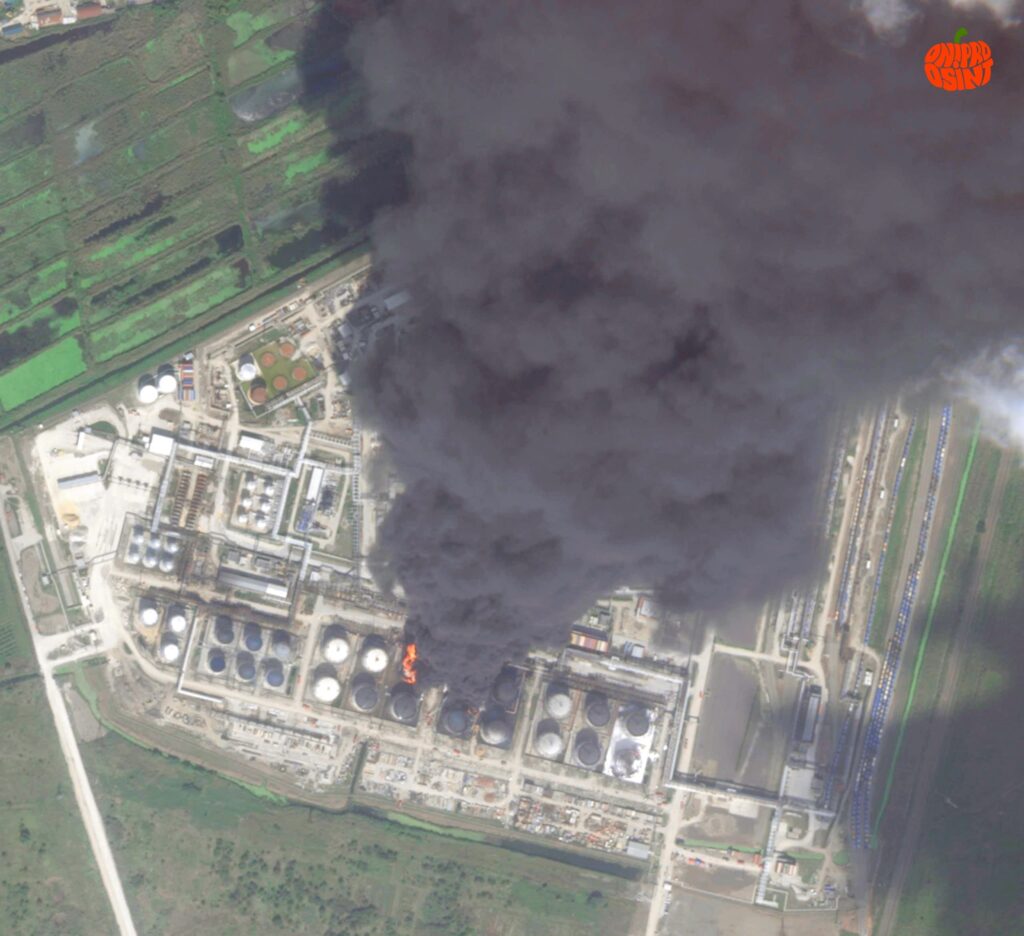
Thick black smoke rises over Novokuybyshevsk following a reported Ukrainian strike on the city’s oil refinery on 22 August 2026.

Ukrainian forces struck production facilities at the Novokuybyshevsk oil refinery in Russia’s Samara Oblast overnight on 22 August, sparking a fire at the Rosneft-owned plant, Ukraine’s General Staff said. The extent of the damage remains under assessment.

Ukraine has repeatedly targeted Russia’s oil refineries to restrict military fuel supplies and reduce the energy revenues supporting Moscow’s war. The latest strike came as gasoline rationing returned to Moscow and St. Petersburg, and Rosneft capped nationwide purchases. Militarnyi described the plant as one of Russia’s 10 largest refineries.

The Rosneft-owned refinery can process about 8.8 million metric tons of crude annually and produces more than 20 petroleum products, including aviation fuel and diesel, Ukraine’s General Staff said.

Fire Point said FP-1 long-range drones were used to strike the refinery.

Map of Ukrainian strike on Novokuybyshevsk

The same overnight wave also hit an Ozon logistics center in Chapayevsk, where people were injured, and work was halted, Reuters reported, citing the company.

Novokuybyshevsk Oil Refinery last night and now. pic.twitter.com/aZmL7M8wBe

— Exilenova+ (@Exilenova_plus) August 22, 2026

Neither the damage to the refinery nor any interruption to production has been independently confirmed.

Ukraine keeps pressure on Russian fuel supplies

The strike came one day after Ukraine confirmed hitting Lukoil’s Perm refinery, approximately 1,530 kilometers from Ukraine’s northern border. That attack also caused a fire, according to the General Staff.

At least four Russian refineries went offline during August amid continuing Ukrainian attacks.

By mid-August, filling stations in at least 12 Russian regions were experiencing hours-long lines. Some areas had reintroduced purchase limits or rationing based on license-plate numbers, according to the same report.

Gasoline limits had also been reinstated in Moscow and St. Petersburg, while Rosneft had capped sales at 30 liters per vehicle across its nationwide filling-station network. Diesel purchases remained unrestricted.

  • ✇Euromaidan Press
  • Ukraine is buying jam-proof fiber-optic drones for first time to single standard, so any maker can compete
    Ukraine is buying the strike drones that Russian jamming cannot touch, and for the first time, to a common standard. The Defense Procurement Agency (DOT) has announced its first purchase of fiber-optic FPV kamikaze drones built to specifications defined by the Defense Ministry, the ministry announced. By defining the specifications a fiber-optic FPV must meet, the Defense Ministry lets any maker compete by hitting that standard rather than having each model approved ind
     

Ukraine is buying jam-proof fiber-optic drones for first time to single standard, so any maker can compete

22 août 2026 à 01:07

An FPV drone snared by a net fired from a Chipa net gun, developed by BlueBird Tech. Photo: BlueBird Tech via Defense Blog

Ukraine is buying the strike drones that Russian jamming cannot touch, and for the first time, to a common standard. The Defense Procurement Agency (DOT) has announced its first purchase of fiber-optic FPV kamikaze drones built to specifications defined by the Defense Ministry, the ministry announced.

By defining the specifications a fiber-optic FPV must meet, the Defense Ministry lets any maker compete by hitting that standard rather than having each model approved individually.

That is what makes it possible to split the purchase into competing lots among many suppliers, both large and mid-sized, and to buy the jam-proof drones at scale without relying on any single producer.

Why fiber-optic drones matter

The Ukrainian Defense Ministry is looking for a specific type of drone. They use a fiber-optic cable to connect to the operator, and unlike ordinary FPV drones that need a radio signal for control and video, these fiber-optic drones do not depend on the radio channel, so they work far better in the presence of active electronic warfare.

Fiber-optic drones let an operator keep control where radio-controlled drones lose their signal, and Defense Minister Yevhenii Khmara said the drones give Ukraine's forces added ability to disrupt Russian assaults and conduct their own operations, striking enemy manpower.

The standard opens the field to any maker

The buy is not tailored to one producer. It is not conducted for a specific manufacturer or model, and producers can offer their own drones if they meet the defined characteristics, with the drones sorted into classes by parameters such as range (the length of the fiber-optic cable) and camera type.

The lot structure spreads the orders

Deputy Defense Minister Mstyslav Banik said the tender is structured so that various suppliers can participate. Each tender is divided into lots, with four lots per class of fiber-optic FPVs, and no participant may win more than 50% of a class's total volume.

That structure guards supply while also driving competition.

"This creates an environment for healthy competition among manufacturers, and at the same time minimizes the risks of supply disruptions," Banik added.

Ukraine has shown its answer to Russia’s most powerful drones for first time. Meet Alexa Spatium, which can carry thermobaric warheads and fly back home

21 août 2026 à 17:34

The Ukrainian arsenal gained its first jet-powered interceptor drone, the Alexa Spatium. Source: Ukraine's Defense Ministry

Ukraine has built a revolutionary drone to catch Russia's most modern drones. The Ukrainian arsenal gained its first jet-powered interceptor drone, the Alexa Spatium, developed to destroy small aerial, ground, and surface targets in combat, Ukraine's Defense Ministry announced.

The interceptor is Ukraine's answer to a threat that has outrun its defenses and killed civilians. Russia added jet engines to its Geran drones to make them fly faster than Ukraine's interceptors could intercept. Such jet-powered drones, Geran-4, struck a Kryvyi Rih shopping center on 21 August, killing at least 15 people and injuring 130.

The Alexa Spatium is built to catch exactly those jet-powered drones, closing an arms-race loop in which Russia's speed had left Ukraine's slower interceptors behind.

It is built to kill the jet Gerans

The interceptor targets Russia's fastest drones first. It is primarily oriented toward destroying Russian kamikaze drones, including the Geran-3, Geran-4, and Geran-5, as well as the Shahed-131, and can also strike reconnaissance drones, helicopters, and other targets, according to the Defense Ministry.

A powerful turbojet gives the Alexa Spatium the speed to chase down jet-powered targets, with a high flight ceiling, a significant combat radius, and a range spanning low to medium altitudes.

It is fast, reusable, and pickup-portable

The drone is built for flexible, repeated use. It measures about 1.5 by 1.7 meters, launches from a mobile catapult in minutes, and is made of a light, strong composite that lets it make sharp maneuvers without losing control. A drone that does not complete its mission can return to the launch site and be reused.

It carries a choice of warheads and seekers. The Alexa Spatium can be fitted with fragmentation, shaped-charge, or thermobaric warheads, guided by preset coordinates or direct control, and uses television and infrared search-and-aiming systems.

Since the beginning of 2026, Ukraine’s Defense Ministry has codified and approved 413 unmanned aerial systems for use by the country’s Defense Forces. Almost all of them are Ukrainian-made.

Ukraine is fielding more drone-hunters than ever. Free simulator now lets operators learn each one before it reaches their hands

21 août 2026 à 17:02

A Ukrainian soldier and his drone.

Ukraine is training the operators who shoot down Russian drones on a simulator, before they touch a real interceptor. The Ukrainian interceptor drones P1-SUN and Bullet were integrated into the UFDS combat-drone simulator, Drone Fight Group reported.

In the simulator, an operator can practice basic control, pursuit, and interception of aerial targets, repeat exercises an unlimited number of times, and train accuracy without using real equipment, letting Ukraine build interceptor-drone crews cheaply and safely as it fields more of the drones that down Russia's Shaheds.

The simulator uses accurate models of real drones

The two interceptors are the first real ones added to the military version. The P1-SUN by SkyFall and the Bullet by General Cherry became the first actual anti-aircraft interceptor drones integrated into UFDS Military, Drone Fight Group said.

The point is to train on what operators will actually fly. For the developers, the collaboration continues the simulator's core principle of bringing training as close as possible to get to know them in a safe digital environment.

It is free for Ukrainian troops

The training version is provided to the military at no cost. The full training version of UFDS is available free for Ukrainian soldiers, while a public version is available on Steam, and the full version is given to units individually through a form on the site.

More Ukrainian drones are being added

The developers plan to keep integrating real systems. The UFDS team intends to add more real Ukrainian drones and other uncrewed-systems solutions, giving makers a way to present their platforms to operators digitally and users a way to train on models matching real systems.

As the country fields an ever-wider range of interceptors and other drones, a simulator that mirrors the real systems lets operators learn each new platform before it reaches their hands.

  • ✇Euromaidan Press
  • Kyiv is asking Musk to let it strike inside Russia. Its best line to Musk is gone
    Ukraine is asking Elon Musk to let it arm deep-strike drones with his Starlink network and turn them on Russian ballistic-missile launchers far inside Russia, the Financial Times reported. The plan needs Musk's approval — and US President Donald Trump was cool to the idea when Ukrainian President Volodymyr Zelenskyy raised it at the White House on 28 July, with people present expecting Musk to refuse. Kyiv is chasing the workaround because its air defenses are stretched
     

Kyiv is asking Musk to let it strike inside Russia. Its best line to Musk is gone

21 août 2026 à 12:10

kyiv asking musk let strike inside russia its best line gone · post elon 2026 world economic forum / ciaran mccrickard wef ukraine news ukrainian reports

Ukraine is asking Elon Musk to let it arm deep-strike drones with his Starlink network and turn them on Russian ballistic-missile launchers far inside Russia, the Financial Times reported. The plan needs Musk's approval — and US President Donald Trump was cool to the idea when Ukrainian President Volodymyr Zelenskyy raised it at the White House on 28 July, with people present expecting Musk to refuse.

Kyiv is chasing the workaround because its air defenses are stretched: Russia keeps escalating its missile and drone strikes, and Ukraine is running low on the Patriot interceptors that are its only dependable answer to Russian ballistic missiles. As Russia builds more missiles and drones, Ukraine's interceptor needs run into the hundreds before the year is out.

At the meeting, FT reported, Zelenskyy pressed Trump to lobby Musk for permission to fly Starlink-linked drones across the Russian border. He capped the pitch at 200 km into Russia — far enough to reach launch sites, command posts, and other targets on the calculation that a shallower limit might make Musk likelier to agree.

Starlink could extend Ukrainian drone strikes

Riding SpaceX's satellites, Starlink drones hold a steadier link to their pilots at long range than ordinary radio allows, and they shrug off the jamming that grounds other drones. The drones have already shown their worth in the fighting at home, and Vienna-based military analyst Franz-Stefan Gady said that across the border they "could be very useful in hunting" Russian launchers, FT wrote.

Kyiv's best channel to Musk has also just closed: Zelenskyy recently fired his defense minister, Mykhailo Fedorov, who had a direct line to the billionaire.

mykhailo fedorov during an interview in june 2026
Mykhailo Fedorov during a June interview, a month before his dismissal, in which he described leaks and private-company influence inside the defense ministry. Photo: screenshot from PRESSING / Army-Media of Ukraine's Defense Forces

Speaking to a Ukrainian podcast on 6 August, Fedorov said that even with a channel to Musk still open after his firing, he had made no progress on cross-border Starlink use—"a difficult task right now."

A column of protesters demanding reinstatement of Mykhailo Fedorov as Defense MInister walks in vul. Khreschatyk in Kyiv, 1 August 2026. Photo: Serge Kostezh/Kyivpost
Explore further

The Fedorov protesters lost. But they backed a man for what he built, not what he promised—and that may be new in Ukraine.

Musk’s Starlink decisions have affected both sides in the Russo-Ukrainian war

Musk has backed Ukraine's heavy dependence on Starlink for military command and comms. In 2022, Musk declined to extend Starlink coverage for Ukrainian troops mid-operation near occupied Crimea, citing his fear of triggering a nuclear escalation.

He has also acted against Moscow: in February, at Fedorov's direct request, Musk shut down the Starlink terminals that Russian forces had been operating illicitly against Ukraine.

Now, Musk answered Fedorov's Monday post with a line about "trying to do the right thing" and wanting peace — and said nothing about the Starlink ask.

Ukraine’s top military marketplace has processed $235 million in orders. Now it goes further, letting units spec a custom drone across 17 characteristics

20 août 2026 à 11:03

A Ukrainian soldier with a drone. Source: SBS

Ukrainian units can now tell drone makers exactly what they need and have it built. A new tool on the state defense-technology marketplace Brave1 Market lets military units order custom drones with defined specifications for specific battlefield needs, not only serial models, Ukraine's Defense Ministry announced.

Russia's war has pushed Kyiv to rebuild military procurement from the ground up, trading slow bureaucratic pipelines for digital platforms where frontline units pick and receive their own weapons faster. Brave1 has already processed over $235 million in orders.

The new tool turns Ukraine's drone procurement from a catalog-based system into a made-to-order one. Where units once chose from ready-made drones, they can now specify what they need across more than 17 characteristics and have makers compete to build it.

How the custom orders work

A unit defines the drone it wants. It submits a request specifying the required characteristics, quantity, and desired delivery timelines, selecting from parameters such as communication type, camera specifications, payload weight, and flight duration.

The manufacturer does not receive information about which unit made the request, and the system automatically sends the request to potential suppliers, who can submit offers or decline to participate. Keeping the requesting unit anonymous prevents makers from favoring or identifying particular units and keeps the competition on the drone itself.

Makers compete on price

When offers match, the system runs an auction. If several manufacturers propose solutions with identical characteristics, the system launches an automatic bidding process, and the lowest-priced offer wins. A military unit can then conclude a direct agreement with the maker, according to the Defense Ministry.

The mechanism drives cost down while meeting the spec. By pitting makers against each other on price once they meet the required characteristics, the system gets units the drone they specified at the lowest available cost, then lets them contract the winner directly, cutting out intermediaries.

  • ✇Euromaidan Press
  • Russian Shaheds hit near Moldova-border crossing, burn food cargo, and black out 13,000 in Odesa Oblast
    Russian strikes in southern Odesa Oblast overnight into 20 August left 13,000 utility customers without power, Odesa Oblast head Oleh Kiper reported. President Volodymyr Zelenskyy also said drones attacked a checkpoint on Ukraine’s border with Moldova. Russia has intensified attacks on southern Ukraine’s Danube region, where ports and transport routes lie close to Moldova and Romania. The spillover from the attacks has forced these neighboring countries to close airspac
     

Russian Shaheds hit near Moldova-border crossing, burn food cargo, and black out 13,000 in Odesa Oblast

20 août 2026 à 09:43

Firefighters stand beside two burned truck trailers covered in ice as smoke and orange firelight fill the night sky.

Russian strikes in southern Odesa Oblast overnight into 20 August left 13,000 utility customers without power, Odesa Oblast head Oleh Kiper reported. President Volodymyr Zelenskyy also said drones attacked a checkpoint on Ukraine’s border with Moldova.

Russia has intensified attacks on southern Ukraine’s Danube region, where ports and transport routes lie close to Moldova and Romania. The spillover from the attacks has forced these neighboring countries to close airspace, scramble aircraft, and shoot drones down.

The Odesa Oblast Military Administration said Russian strikes disrupted power in several communities, and repair crews began restoration work. It did not identify damaged electrical equipment or say whether the grid had been shut down as a precaution. Two truck trailers carrying food caught fire at another location, but firefighters extinguished both blazes, the State Emergency Service said. No casualties were reported.

Food truck on fire near Reni
One of the food trucks that was struck during Russia's assault. Source: DSNS of Ukraine

Zelenskyy did not identify which crossing was attacked or describe the damage. The Izmail District State Administration later reported that Russia attacked the Reni community with Shahed-136 drones. It recorded a hit on an unspecified site near the Reni–Giurgiulești international checkpoint.

Map of Reni attack
Approximate location of where the strike occurred.

People and freight cross between Ukraine and Moldova through checkpoints such as Reni–Giurgiulești. The district administration did not describe the damage or say whether the checkpoint remained open.

Russian attacks keep reaching Moldova

At 03:16 on 20 August, surveillance systems operated by Moldova’s National Army detected an unauthorized flight, public broadcaster Moldova1 reported.

The object was preliminarily identified as a Shahed-136/Geran-2, a long-range explosive drone used by Russia. It crossed from Ukraine near Kotlovyna in southwestern Odesa Oblast and flew toward Etulia in Moldova’s autonomous Gagauzia region. It returned to Ukrainian airspace at 03:22.

Two investigators examine a blast site with flashlights in a cornfield near Talmaza, Moldova, at night.
Explore further

Blast marks Moldova’s third airspace breach in nine days

Similar incidents occurred earlier in August. An unidentified aerial object exploded in a Moldovan field 12 kilometers from Ukraine on 9 August. On 17 August, Moldova closed part of its airspace for 15 minutes after Ukraine’s Air Force warned that a Russian Banderol, a jet-powered missile-drone, had crossed from Odesa Oblast. The object later exploded near Talmaza.

Romania activates defenses

On 20 August, Romania’s Defense Ministry said its radars detected targets near Ukraine at 02:23 and scrambled two Spanish F-18s and a Romanian helicopter. A drone entered Romanian airspace east of Galați at 03:21 and crashed near Grindu at 03:24. Its impact started a fire that went out on its own. Romania reported no casualties or material damage.

Four days earlier, a Spanish F-18 shot down a drone that entered Romania from Moldova. NATO said it appeared to be Russian.

Russia has recently intensified attacks on Ukraine’s Danube ports and struck the Mayaky bridge connecting southern Ukraine with Moldova and Romania. Such attacks can disrupt Ukraine’s transport links and force neighboring militaries to react within minutes.

Ukrainian top volunteer from outgoing minister’s own team, whose drones downed 12,954 Russian targets, is offering to help his successor

19 août 2026 à 15:29

Serhii Sternenko assassination

One of Ukraine's most prominent drone volunteers has given his comments on the new defense minister. Serhii Sternenko, a civic activist and former adviser to ousted Defense Minister Mykhailo Fedorov, has congratulated Yevhenii Khmara on his appointment to lead the Defense Ministry, Sternenko wrote on his Telegram channel.

Ukraine's parliament confirmed Khmara as defense minister after removing Fedorov, and figures from his circle, rather than boycotting his replacement, are lining up to work with the new minister for Ukraine's sake.

Sternenko owns a charity foundation that has purchased 291,502 FPV drones, which have helped the Ukrainian military shoot down 12,954+ aerial targets.

Sternenko offered help and wished the minister endurance

Sternenko has framed his congratulations in terms of Ukraine's benefit.

"I wish Defense Minister Khmara success and resilience. He will need them. This is in Ukraine's interest," he wrote.

He offered his fund's expertise. Together with his team, he is ready to help the new minister with matters concerning FPV drones, because that, too, is in Ukraine's interest, Sternenko said, extending the cooperation of one of the country's largest drone-supply operations to the incoming minister.

He paired the welcome with a warning about dialogue

Sternenko's support came with a pointed caveat. He said the country "finally has a defense minister," but that many unresolved issues remain regarding "government-society" interaction.

Solving them requires engagement from the top, he argued. Their resolution requires the active involvement of the president and the emergence of agency in parliament, Sternenko said, expressing hope that, under extremely difficult conditions for Ukraine, "there will still be room for reasonable dialogue and cooperation for the sake of victory."

Earlier, Mstyslav Banik, who served as a deputy to Fedorov, said he would stay on under the newly appointed Defense Minister. He is responsible for carrying out the defense-procurement reform and became a deputy defense minister under Fedorov on 25 March 2026, having previously led the ministry's digital products. Batnik led the development of "Army+" and "Reserve+", the apps that digitized military service and mobilization.

  • ✇Euromaidan Press
  • No radio signal, no way to jam it: Ukraine’s top-ranked strike drone can wait 48 hours for its target
    Ukrainian manufacturers have ranked the strike drones that Russian jamming cannot touch. The Beshket, Deadliner Q1, and Vyriy Opto drones ranked 1st, 2nd, and 3rd, respectively, in the July ranking of fiber-optic strike systems used by Ukraine's Defense Forces, according to Defender Media. Fiber-optic drones are immune to the electronic warfare that defeats ordinary drones. Guided by a thin cable that unspools as they fly rather than a radio link, they cannot be jammed
     

No radio signal, no way to jam it: Ukraine’s top-ranked strike drone can wait 48 hours for its target

19 août 2026 à 14:32

Ukraine's Deadliner Q1. Source: Stellarion

Ukrainian manufacturers have ranked the strike drones that Russian jamming cannot touch. The Beshket, Deadliner Q1, and Vyriy Opto drones ranked 1st, 2nd, and 3rd, respectively, in the July ranking of fiber-optic strike systems used by Ukraine's Defense Forces, according to Defender Media.

Fiber-optic drones are immune to the electronic warfare that defeats ordinary drones. Guided by a thin cable that unspools as they fly rather than a radio link, they cannot be jammed, which has made them one of the most important weapons on a front where both sides jam heavily.

The top drone can lie in wait for two days

The Beshket took first place for strikes. It is a drone on a 10-inch frame that reaches 90 kilometers per hour, stays up to 16 minutes aloft, and carries up to 4 kilograms of payload on eight motors, with an ambush mode that lets it wait for a target for up to 48 hours, at $2,170 on the state Brave1 Market.

The producer of the Beshket confirmed the drone's first place but declined further comment.

The runners-up are faster and cheaper

The Deadliner Q1, made by Stellarion, took second. A 10-inch drone with a 2-kilogram payload reaches 110 kilometers per hour, cruises at 60 to 70 kilometers per hour, and flies for at least 20 minutes for $1,810 on Brave1 Market. Stellarion confirmed the placement in a press release.

Third went to the Vyriy Opto 10. The 10-inch fiber-optic drone runs on a 20-kilometer cable spool, cruises at 60 kilometers per hour with a top speed of 80 kilometers per hour, flies for 21 minutes, and carries 1 kilogram, costing about $2,000 with a thermal camera.

Why these drones matter on the front

Ukraine codified 413 unmanned aerial systems in the first half of 2026. Almost all of them are Ukrainian-made. That is more than 30% above the same period in 2025 and more than 73% above the same period in 2024.

Kyiv plans to build seven million drones in 2026, roughly double its 2025 output. 

“Two targets and ammo with one drone”: How a Ukrainian drone crew hunts Russian transport behind the front line

19 août 2026 à 03:00

“two targets ammo one drone” how ukrainian drone crew hunts russian transport behind front line · post arti schultz daria moskalets/ armiyainform ukraine news reports

The crew flies with the Black Sky unmanned-systems battalion of the National Guard's 3rd Operational Purpose Brigade Spartan. The commander, callsign Arti, said the crew's middle-strike drones can strike Russian military vehicles as close as 50 and as far as 150 kilometers behind the front line, mostly trucks and passenger cars, Army Inform reported.

The war now reaches deep into the Russian rear, where strike drones hit vehicles once safe from the front. Every Russian vehicle this crew burns is a blow to the invasion's logistics, leaving fewer supplies and fewer troops able to reach Russian positions. (edited) 

Arti said the drones' main advantages are their range, speed, and stealth, while navigator Schultz, another crew callsign, said they are particularly effective 50–60 kilometers from the line of contact.

How the crew works

The four-person crew includes a pilot, navigator, technician and sapper. Arti joined the military intending to fly drones and first served as a second pilot on another crew before moving to middle-strike aircraft.

Schultz was mobilized in September 2024 and spent nearly a year and a half flying Mavic drones for reconnaissance, dropping munitions and delivering supplies to Ukrainian troops. That experience helped him transition to middle-strike drones.

I navigate the terrain and give the pilot the course to fly,” Schultz said. “I already know the areas where enemy vehicles may move and where they may stage near the treelines.”

“Arti” and “Schultz
Photo: Daria Moskalets/ Army Inform

Schultz said Russian forces have become increasingly reluctant to move vehicles close to the front line after repeated Ukrainian strikes.

"At 50 to 60 kilometers from the [frontline] they're quite effective. Right on the line we won't find anyone now — nobody drives there anymore, because our guys worked them over for so long. The occupiers are already afraid to drive closer. It knocks out all the enemy's logistics," he said.

Schultz said this can mean fewer supplies and personnel reaching Russian positions.

He recalled the first time he watched one of the crew’s strikes in real time. Reconnaissance operators tracked a vehicle carrying Russian personnel while the drone crew moved in to attack.

“Arti” and “Schultz
Photo: Daria Moskalets/ Army Inform

We saw it ourselves—we saw how we hit it, how everything exploded and burned,” he said.

The crew began flying middle-strike drones only a few months ago.

We’re a young crew. There’s still a lot ahead,” Schultz said.

  • ✇Euromaidan Press
  • 1.2 million weapons in a year: Inside Ukraine’s Amazon-for-arms that ships to the frontline in 24 hours
    Ukraine's weapons marketplace DOT-Chain Defense has compressed delivery times from months to weeks after one year of operation, the country's Defense Ministry reported. For the fastest product categories—electronic warfare gear, ground robots, interceptor drones—orders now reach units within 24 hours. Ukraine's war against Russia's invasion has pushed Kyiv to rebuild military procurement from the ground up, trading slow bureaucratic pipelines for digital platforms where
     

1.2 million weapons in a year: Inside Ukraine’s Amazon-for-arms that ships to the frontline in 24 hours

18 août 2026 à 15:46

A Ukrainian drone operator.

Ukraine's weapons marketplace DOT-Chain Defense has compressed delivery times from months to weeks after one year of operation, the country's Defense Ministry reported. For the fastest product categories—electronic warfare gear, ground robots, interceptor drones—orders now reach units within 24 hours.

Ukraine's war against Russia's invasion has pushed Kyiv to rebuild military procurement from the ground up, trading slow bureaucratic pipelines for digital platforms where frontline units pick and receive their own weapons faster than Western militaries have managed. Domestic manufacturers now make 90% of newly authorized systems.

Fastest deliveries measured in hours

The Defense Ministry and the Defense Procurement Agency DOT have jointly driven the acceleration, according to the ministry's statement.

"Delivery times for drones and other systems have shrunk from months to a matter of weeks, and often to days," the ministry said.

Beyond that general compression, several categories saw delivery within a single day. Electronic warfare systems, ground robotic platforms, reconnaissance and bomber drones, interceptor drones, and FPV drones on both fiber-optic and radio control all reached units within 24 hours. Ammunition for unmanned systems arrived within six days.

Four-image collage showing drone wreckage found on Romania’s coast and in nearby waters, including wing fragments, an engine and propeller, and exposed electronics.
Explore further

Russian drone attacks on Ukraine’s Danube ports hit recent high, Romania says

Over the first year, the platform shipped more than 1.2 million drones and other systems. Units now choose from 1,181 products made by 300 domestic manufacturers.

How the marketplace works

DOT-Chain Defense supplements centralized state supply rather than replacing it, the ministry noted. Combat units use allocated funds to browse and order the equipment they need for their section of the front. The marketplace handles contracts, payments, and delivery.

The platform's drone constructor tool lets units customize drone configurations before ordering. A dedicated training course on using the marketplace recently launched inside the Army+ mobile app.

ukraine timed its huliaipole operation around weather — worked here's why won't happen again soon · post ukrainian soldier 92nd assault battalion machine gun 2026 armed forces infantry frontline operations
Explore further

US copies Ukraine: Washington launches Amazon-backed UAVs marketplace, inspired by Kyiv’s Brave1 Market and DOT-Chain Defense

Broader procurement picture

The one-year milestone caps a period of rapid scaling across Ukraine's defense procurement. The country contracted about $8 billion worth of drones in the first half of 2026—double the same period last year, according to the Defense Ministry.

More than 400 combat units now shop for weapons through the marketplace's companion Brave1 Market program using points earned for confirmed battlefield activity. Washington modeled its own Unmanned Aircraft Systems Marketplace on the Ukrainian original earlier this year.

Russia warns UK of “consequences” over British-made drones in Ukraine’s deep strikes. London vows to continue supporting Kyiv

18 août 2026 à 12:23

Russian Embassy in London, 2022. Photo via Wikimedia Commons.

Russia has threatened Britain with “consequences” over reports that Ukrainian forces used drones manufactured by UK companies to carry out strikes inside Russia.

The Russian Embassy in London accused the UK of deliberately escalating the war by supporting Ukraine’s long-range strike campaign, saying Britain was seeking to “contain Russia and inflict maximum damage on it by proxy.” It warned that the deeper Britain becomes involved, “the higher the price it will pay.”

The threat followed news that Ukrainian forces had used two British-built drone systems to strike targets inside Russia for the first time. The Sunday Times, citing Ukrainian military sources, reported that the drones had been used against targets including oil refineries in Volgograd and Yaroslavl over the past six months.

Moscow warns Britain of “consequences”

The Russian Embassy said in a statement that the reported use of British-made drones “confirms that London is deliberately opting for an escalation of the Ukraine crisis.”

It warned that British actions would “inevitably carry consequences for which it will have to answer,” without specifying what form those consequences could take.

The warning comes as Ukraine has significantly expanded its long-range strike campaign against Russian military and energy targets. Kyiv has increasingly used large drone swarms to hit targets deep inside Russia, seeking to disrupt military production, logistics, and energy revenues while forcing Moscow to spread its air defenses across a much larger area.

Burnham says UK will continue backing Ukraine

UK Prime Minister Andy Burnham rejected Moscow’s warning, saying Britain would continue supporting Ukraine despite Russian threats, The Independent reported on Tuesday.

“This is the UK doing what it has long said it would do, which is to support Ukraine 100 per cent against this illegal war led by Vladimir Putin,” Burnham said during a visit to Wolverhampton.

“We are providing support so that Ukraine can defend itself,” he said, adding: “We are not fair weather friends. We will be there in Ukraine’s hour of need, and that won’t change.”

UK Work and Pensions Minister Lilian Greenwood similarly said Britain’s resolve to support Ukraine remained “completely steadfast” and that the country would continue providing the military equipment Kyiv needs.

The UK Ministry of Defence also said Russia should have “no doubt” about the government's resolve to oppose Russian aggression in Ukraine and against Britain and its allies.

UK Prime Minister Andy Burnham and Ukrainian President Volodymyr Zelenskyy aboard the Ukrainian Navy’s Cherkasy minehunter at Portsmouth Naval Base, UK, 27 July 2026. Photo: Zelenskyy

British drones expand Ukraine’s deep-strike capabilities

According to The Sunday Times, one of the British systems used by Ukraine is the Nyan, a jet-powered one-way attack drone produced by BAE Systems subsidiary Callen-Lenz, with a reported range of more than 150 miles.

The second system has a reported range exceeding 600 miles, although its manufacturer was not identified for security reasons. The drones provide Ukraine with additional long-range strike capacity that can be produced and deployed in larger numbers than more expensive Western cruise missiles.

Black Nyan one-way attack drone secured to a launcher on the deck of a Royal Navy vessel at sea.
Explore further

British drones hit Russia for first time in Ukraine’s deep-strike campaign – The Sunday Times

The reported deployment marks a further expansion of UK military support for Ukraine as Kyiv increasingly takes the fight to Russian military and energy infrastructure inside Russia.

  • ✇Euromaidan Press
  • Operation Hell-2: Azov says it burned 4,221 tons of Russian fuel in occupied Donetsk Oblast
    The 1st Corps of Ukraine's National Guard, known as Azov, says it destroyed 67 Russian fuel tanks holding 4,221 tons of fuel in occupied Donetsk Oblast, in an operation it named Hell-2. The unit released video of the strikes on 17 August, saying it had spent a month tracking where Russian forces moved and stored the fuel before hitting it. Fuel is the blood of Russia's war, which is why its forces increasingly hide storage sites and route deliveries through improvised l
     

Operation Hell-2: Azov says it burned 4,221 tons of Russian fuel in occupied Donetsk Oblast

18 août 2026 à 11:27

Aftermath of a strike on Russian fuel infrastructure during the Hell-2 operation in occupied Donetsk Oblast. 2026. Screenshot: National Guard of Ukraine

The 1st Corps of Ukraine's National Guard, known as Azov, says it destroyed 67 Russian fuel tanks holding 4,221 tons of fuel in occupied Donetsk Oblast, in an operation it named Hell-2. The unit released video of the strikes on 17 August, saying it had spent a month tracking where Russian forces moved and stored the fuel before hitting it.

Fuel is the blood of Russia's war, which is why its forces increasingly hide storage sites and route deliveries through improvised logistics hubs. Strikes on those hubs strip Russian units of what they need to move, supply, and fight. There have already been cases of Russian forces concealing fuel in grain trucks in occupied territories.

Azov warned the Russian forces before the strike

Azov says it flagged the fuel sites a month before hitting them, and struck when the Russians kept using them anyway.

“A month ago, we warned the occupier: ‘Azov sees your movements and will strike at the right moment.’ But some units of the Russian Armed Forces continued to store fuel in occupied Donetsk Oblast,” Azov said.

1 корпус НГУ «Азов» карає окупантів за спроби перевезення і зберігання військових вантажів. Задіяні у зберіганні та постачанні палива об’єкти росіян залишаються лише на картах, у реальності на їхньому місці – випалена земля. pic.twitter.com/FGgdn4J34k

— НГУ (@ng_ukraine) August 17, 2026

Azov emphasizes that it does not attack civilian gas stations or civilians. The operation targeted facilities used to supply Russian occupation forces. At the same time, according to Azov fighters, Russian military infrastructure remains a legitimate target.

The Russians didn’t get the message the first time

Hell-2 is likely a follow-up to the Hell operation, during which the first series of strikes, Azov also targeted the fuel logistics of Russian forces in occupied Donetsk Oblast.

On 12 July, Azov reported striking a secret Russian fuel base in Novoamvrosiivka. Drone operators from the 1st Azov Corps of the National Guard conducted reconnaissance and used Hornet drones to strike the facility. The strikes damaged fuel tanks and the base’s infrastructure and blocked the railway track.

According to the report, the Russians used the facility as a logistics hub to supply their occupation forces. After the strike, they were forced to abandon the base and move their logistics operations from the occupied territory into Russia.

  • ✇Euromaidan Press
  • Blast marks Moldova’s third airspace breach in nine days
    An unidentified aerial object exploded in a cornfield outside Talmaza in southeastern Moldova, tearing a crater about two meters wide and 50 centimeters deep, Moldovan police said on 18 August. The shock wave spread across roughly 45 by 20 meters, but nobody was injured. Russia has intensified its attacks on Ukraine’s Black Sea and Danube ports, bringing drones and missiles close to Moldova’s border. Moldova has recorded three aerial incidents in nine days, with the lat
     

Blast marks Moldova’s third airspace breach in nine days

18 août 2026 à 10:53

Two investigators examine a blast site with flashlights in a cornfield near Talmaza, Moldova, at night.

An unidentified aerial object exploded in a cornfield outside Talmaza in southeastern Moldova, tearing a crater about two meters wide and 50 centimeters deep, Moldovan police said on 18 August. The shock wave spread across roughly 45 by 20 meters, but nobody was injured.

Russia has intensified its attacks on Ukraine’s Black Sea and Danube ports, bringing drones and missiles close to Moldova’s border. Moldova has recorded three aerial incidents in nine days, with the latest forcing authorities to close part of the country’s airspace.

Investigators recovered fiberglass body fragments, damaged electronics, and a turbojet engine, which Militarnyi noted is also used by the Banderol. Police said the components resembled those of a jet-powered missile-drone but could not identify the aircraft conclusively.

Ukraine's Air Force reported on 17 August that a Russian Banderol had crossed from Odesa Oblast toward Moldova. Militarnyi identified the weapon as an S8000 and placed the crossing near the Moscow-backed breakaway region of Transnistria.

Moldova’s Defense Ministry separately said it had tracked an unidentified object flying from Kuchurhan toward Tiraspol, the capital of Transnistria.

Map showing Transnistria — the Russian-occupied strip of Moldovan territory on the left bank of the Dniester River, bordering Ukraine to the east and wedged between Chișinău and Odesa. Map: Hudson Institute

Authorities closed central Moldovan airspace for 15 minutes before the object disappeared from radar near Talmaza, Militarnyi said.

Moldova’s Foreign Ministry called the incident a serious violation of its sovereignty and a threat to public safety.

Talmaza blast follows two recent drone incidents in Moldova

The Talmaza explosion followed two similar incidents near Moldova’s border with Ukraine. On 9 August, an unidentified aircraft exploded in a field 12 kilometers from Ukraine and started a fire. Another object entered Moldovan airspace the following evening and was believed to be a jet-powered Shahed.

Metal wreckage from an unidentified aerial object lies beside a forensic measuring scale in a cornfield near Talmaza, Moldova.
Investigators documented wreckage from an unidentified aerial object that exploded in a cornfield near Talmaza, Moldova, on 17 August 2026. Moldovan police said its exact type had not yet been confirmed. Credit: Poliția Republicii Moldova/Facebook.

The recent incidents continue a longer pattern. Six Russian drones entered Moldova during an attack on Ukraine in November 2025, and one landed on a civilian roof.

Drone debris washed ashore in Romania after Russian attacks on Ukraine, 13-14 August 2026. Photos: Radu Miruță
Explore further

More than 100 drones detected near Romania in four days, NATO jets scrambled seven times

President Maia Sandu has called for counter-drone technology capable of intercepting and destroying hostile drones that violate Moldovan airspace, acknowledging that the country currently lacks such capabilities.

Russia’s port campaign reaches Moldova’s border

Across the border, Russian attacks on Ukraine’s Danube ports have reached a recent high, with Romania detecting more than 100 drones during seven recent attacks, interim Defense Minister Radu Miruță said.

Kyiv and Chișinău are also discussing a rail route through Moldova to Romania’s Constanța port as Russian strikes disrupt Ukraine’s maritime exports. Ukraine estimates the route could carry only about 10 percent of its grain exports.

  • ✇Euromaidan Press
  • Russia claims it downed a record 1,671 drones—as fires burn across Moscow Oblast
    Ukrainian drones struck Moscow and the surrounding oblast overnight into 18 August, cutting power, setting off fires, and hitting a warehouse of the Russian online retailer Wildberries, monitoring Telegram channels reported. Russian officials claimed air defenses shot down most of the drones and blamed the damage on falling wreckage. Ukraine's military did not claim the attack. Ukraine's deep-strike drone campaign reaches refineries, arms plants, air bases, and warehouses a
     

Russia claims it downed a record 1,671 drones—as fires burn across Moscow Oblast

18 août 2026 à 09:16

russia claims downed record 1671 drones — fires burn across moscow oblast · post smoke rises over after overnight ukrainian drone attack 18 2026 ukraine news reports

Ukrainian drones struck Moscow and the surrounding oblast overnight into 18 August, cutting power, setting off fires, and hitting a warehouse of the Russian online retailer Wildberries, monitoring Telegram channels reported. Russian officials claimed air defenses shot down most of the drones and blamed the damage on falling wreckage. Ukraine's military did not claim the attack.

Ukraine's deep-strike drone campaign reaches refineries, arms plants, air bases, and warehouses across Russia, aiming to choke the fuel, weapons, and supplies its army runs on and to carry the war's cost back to the country that started it.

Fires and casualties across Moscow Oblast

Ukrainian monitoring Telegram channel Exilenova+ began posting footage of the strikes around 4:00. Fires broke out on an apartment-block roof and in another building in a town east of Moscow, and a retail pavilion caught fire near a shopping mall in a town to the southeast, Russian news Telegram channel Astra reported. Moscow Oblast Governor Andrei Vorobyov claimed air defenses downed more than 150 drones over the oblast. He stated three people were hurt, and that debris damaged homes.

The attack knocked out electricity for more than 5,000 customers and 46 "socially significant" facilities in two districts east of the capital, knocking 109 transformer substations offline, the regional utility Mosoblenergo said. It blamed equipment damage early on 18 August and estimated about two hours to restore power.

Fire after explosion in moscow region pic.twitter.com/Mn80foR12E

— Exilenova+ (@Exilenova_plus) August 18, 2026

A Wildberries warehouse hit

A drone hit a Wildberries logistics warehouse in the region, where Vorobyov said a fire was quickly contained with no casualties. Wildberries said debris only grazed a wall, that staff had been evacuated in advance, and that its goods were unharmed. Footage shared by Exilenova+ showed a large hole near the roof and no visible fire.

russia claims downed record 1671 drones — fires burn across moscow oblast · post fire truck outside wildberries logistics center damaged roof after drone attack 18 2026 yet finished off
A fire truck outside a Wildberries logistics center in Moscow Oblast with a damaged roof after the drone attack, 18 August 2026. Photo: Exilenova+

Russia's claims

Russian officials gave sweeping counts. Moscow Mayor Sergei Sobyanin claimed 620 drones flew toward the capital region overnight, with 180 downed there. Russia's Defense Ministry claimed it destroyed 791 drones over 15 Russian regions and occupied Crimea. In a separate daily tally, it claimed 1,671 drones over 24 hours, Interfax-Russia reported. Russian state news agency RIA Novosti called the claimed drone figure an absolute record. 

Obukhovo, attack on warehouse complex Atlant Park pic.twitter.com/PnoEjDMuV6

— Exilenova+ (@Exilenova_plus) August 18, 2026

Ukraine's response

Ukraine's General Staff listed strikes on an ammunition depot in Donetsk Oblast and several drone-control points in Russia's Belgorod Oblast and Ukraine's Zaporizhzhia Oblast, but made no mention of the Moscow attack. 

Ukrainian defense-technology company Fire Point posted video of drones over the region, citing reported explosions near a Moscow oil refinery and a possible hit on warehouse infrastructure. Fire Point manufactures the FP-1—one of the types of long-range drones widely used in such attacks.

A campaign on a Russian retail giant

Wildberries warehouses have become a frequent Ukrainian target. On 16 August, Ukraine struck the retailer's logistics sites near Moscow, halting operations, and Kyiv has now knocked out seven of its 10 largest warehouses. The strikes have cost the company at least 17% of its warehouse space and pushed it to seek storage in Kazakhstan.

  • ✇Euromaidan Press
  • Russia has thousands of tanks it can’t risk. One drone shield decides whether they roll
    Russia's new Arena-M anti-drone shield can shoot down FPVs—but tanks still burn One fielded Arena-M reportedly carried 12 charges. Ukrainian crews used 15 to 20 drones per tank in one assault More rounds could help—if ammunition is really the binding constraint Russian forces may have finally found a way to protect their tanks from Ukrainian first-person-view drones. And it's not the usual add-on armor applications that have defined mechanized combat in Ukrain
     

Russia has thousands of tanks it can’t risk. One drone shield decides whether they roll

Par : David Axe
17 août 2026 à 14:15

An Arena-M tank right before a drone strike.

  • Russia's new Arena-M anti-drone shield can shoot down FPVs—but tanks still burn
  • One fielded Arena-M reportedly carried 12 charges. Ukrainian crews used 15 to 20 drones per tank in one assault
  • More rounds could help—if ammunition is really the binding constraint

Russian forces may have finally found a way to protect their tanks from Ukrainian first-person-view drones. And it's not the usual add-on armor applications that have defined mechanized combat in Ukraine since the early months of Russia's wider war.

No, the Russians have begun deploying tanks fitted with the Arena-M active protection system (APS), which detects incoming FPVs and automatically fires a small projectile at them. The first few assaults by Arena-M-equipped tanks ended in defeat for the Russians, but limited combat footage shows the system can destroy incoming FPVs.

At least one Arena-M did work against FPVs—it just did not work long enough to save the tank. Observer Andrei_bt stressed that a reported 12-round loadout "does not match modern realities." Footage published on 7 August showed Ukrainian FPVs attacking an Arena-M-equipped T-72B3M near occupied Volodymyrivka, though the Institute for the Study of War assessed that it likely showed the late-July mechanized assault. Ukrainian drone operator Dmytro Putiata reported that one Arena-M shot down seven FPVs before Ukrainian forces destroyed the tank.

That is a smaller problem than the one the Russians had a month ago, and it is why the burned-out tanks along the road in Donetsk Oblast are not the whole story. Russia has spent three years accumulating tanks it cannot safely send anywhere—thousands of them, rebuilt and parked for want of a defense against $500 drones. An Arena-M that does not run dry halfway to the objective is the thing that would let those tanks out of the yard.

The good news for Russian mechanized forces is that developers now know Arena-M needs a bigger ammo loadout. The bad news is that packing more projectiles into the system could prove extremely difficult. The main problem: adding any further bulk to the turret-mounted projectile launchers could block a tank's engine compartment, preventing access for maintenance.

A Ukrainian drone targets a Russian vehicle during a 19 March clash around Lyman.
Explore further

Russia’s tanks are back after a year in hiding. Thursday was a massacre.

If there's a workaround, it may involve redesigning the Arena-M to fire smaller but more numerous projectiles.

Ammunition may not even be the binding constraint. Ukrainian aviation expert Anatolii Khrapchynskyi put the Arena-M's engagement range at 20 to 30 meters and its detection range at around 50—numbers that leave very little time against a drone diving from above, however many charges are in the launchers.

The Institute for the Study of War, for its part, assesses that the Arena-M alone is currently insufficient to protect Russian mechanized assaults from Ukrainian drones because the system can be saturated, though it raises the cost and effort required of Ukrainian forces.

An Arena-M with more rounds could be the development Russian commanders were waiting for as they continue stockpiling new and refurbished tanks and fighting vehicles. Doubling down on production of T-90 and T-72 tanks, the Kremlin has more than made good its combat losses in the first 54 months of the wider war.

Tank-led assaults have been rare in the last year of fighting as Russian forces have pivoted to infantry-led infiltration tactics. That may change as infantry losses deepen and commanders gain confidence in the Arena-M to protect tanks from drone attack.

Diagram of the Russian Arena-M active protection system showing the projectile launchers ringed around a tank turret
The Arena-M design, with projectile launchers circled. Kolomna Engineering Design Bureau art

Combat debut

The Arena-M, designed by the Kolomna Engineering Design Bureau, uses Doppler radar to spot incoming rockets, missiles, and drones, and counter-munitions meant to shred a threat shortly before impact. The concept is old: the Soviets fitted the Drozd system to modernized T-55ADs in the 1980s, and Russian designers have been chasing active protection since their tanks were mauled in Chechnya.

Three decades on, the Russian government daily Rossiyskaya Gazeta conceded on 7 August that there is still no generalized battlefield data on how the Arena-M performs, and that its potential against threats attacking from above needs further study.

Anti-Drone Armor Evolution
Evolution of Russia's anti-drone protection of tanks
From crude cages to shooting back—four years of trial and error
Russian tank with cope cage anti-drone armor, 2022
2022
Cope cage
Metal slats or mesh bolted over turrets to block incoming FPV drones
Russian turtle tank wrapped in metal shell, 2023
Spring 2023
Turtle tank
Entire vehicles wrapped in drone-blocking metal shells
Russian porcupine tank with rebar spines welded on armor, 2025
Spring 2025
Porcupine
Hundreds of thick rebar spines welded to cope cages and shells
Russian dandelion tank with branching aluminum hairs and Kevlar mesh, 2025
Autumn 2025
Hedgehog & dandelion
Thousands of thin aluminum hairs; branching stalks with Kevlar mesh
Russian T-72B3A fitted with the Arena-M active protection system
July 2026
Arena-M
Radar-cued charges shoot drones down instead of blocking them—reported fielded loadout: 12 rounds
Chart: Euromaidan Press

The system had its major combat debut in Ukraine on and around 23 July, over several days of Russian mechanized attacks in the Dobropillia sector of eastern Ukraine's Donetsk Oblast. The Russian Center Group of Forces rolled a large mechanized assault group along the road through the village of Pankivka, roughly 36 km southwest of Kramatorsk and its twin free city of Sloviansk.

Ukrainian drones spotted the tanks coming, and attacked. When the smoke and dust cleared, the Russians had lost at least nine tanks. Reportedly seven of them were T-72B3A models with Arena-M installations.

The losses belie the Arena-M's effectiveness. The protection systems shot down drone after drone, and only stopped shooting down drones when they ran out of projectiles. "In general, it took from 15 to 20 FPV drones to destroy a tank," Ukrainian drone operator Dmytro Putiata reported.

While some of the best-protected turtle, porcupine, and hedgehog tanks have been able to withstand more than 20 FPVs before being immobilized, the add-on metal plates and bars that comprise turtle, porcupine, and hedgehog installations are extremely heavy—and tend to ruin a tank's transmission, weigh on its mobility, and prevent it from rotating its turret and aiming its main gun.

A T-72B3A the moment before a Ukrainian drone strikes.
Explore further

Russia took the cages off its newest tanks. The new Arena-M shield bought them a few minutes.

In other words, the add-on armor prevents tanks from fighting like tanks—using their speed and firepower to close with and destroy the enemy.

The Arena-M installation is bulky but it's not heavy. With Arena-M, a tank can defend itself from drones without sacrificing its mobility. If an Arena-M had, say, 24 rounds instead of just 12, an attacking tank might be able to fend off drones long enough to reach its objective across the disputed gray zone.

But only barely. "15 to 20 FPV drones to destroy a tank is a perfectly viable rate," Czech analyst Jakub Janovsky noted in a comment on Putiata's social media. "At those numbers, Russia could throw its entire [armored fighting vehicle] fleet at the Ukrainian front line over a few months without achieving much more than creating a future low-grade iron ore deposit."

What if the Russians could fit 36 rounds in an upgraded Arena-M installation? Would that be enough?

No one knows for sure until they try. What we do know is that "the Russian military is learning and is experimenting in how to employ armor on a drone-saturated battlefield," explained Rob Lee, an analyst with the Foreign Policy Research Institute in Philadelphia. "The Arena-M APS demonstrated effectiveness and will likely be improved."

And those improvements could unlock those thousands of tanks the Russians have parked for want of drone defenses.

A Russian T-90 dandelion tank.
Explore further

Russia mastered drone-proofing its tanks—Ukraine is copying its tricks

  • ✇Euromaidan Press
  • Ukraine has knocked out seven of Russia’s 10 biggest warehouses as its air defenses fall short, ISW says
    Ukraine has knocked out seven of the 10 largest logistics hubs run by Russia's biggest online retailer, the US-based Institute for the Study of War assessed. The strikes are part of a campaign to wear down Russia's defense industry and the dual-use supply lines that feed its war. The newest raids hit two warehouses near Moscow overnight. Ukraine has pushed its long-range drone war deep into Russia, hunting the oil, freight, and factory sites that keep Moscow's invasion
     

Ukraine has knocked out seven of Russia’s 10 biggest warehouses as its air defenses fall short, ISW says

17 août 2026 à 09:15

ukraine has knocked out seven russia's 10 biggest warehouses its air defenses fall short isw says · post ukrainian strikes targeting russian wildberries between 17 16 2026 ukrainian-strikes-targeting-russian-wildberries-warehouses-between-july-17-and-august-16-2026 news reports

Ukraine has knocked out seven of the 10 largest logistics hubs run by Russia's biggest online retailer, the US-based Institute for the Study of War assessed. The strikes are part of a campaign to wear down Russia's defense industry and the dual-use supply lines that feed its war. The newest raids hit two warehouses near Moscow overnight.

Ukraine has pushed its long-range drone war deep into Russia, hunting the oil, freight, and factory sites that keep Moscow's invasion supplied. Each strike that lands far from the front tests how much of its own territory Russia can actually defend. ISW assessed that the campaign is squeezing both Russia's economy and its overstretched air defenses, with no sign the retailer's biggest depots are getting any safer.

Two hubs near Moscow burned overnight

On 15-16 August, Ukrainian drones struck Wildberries' single largest hub, a 250,000-square-meter depot in the Koledino Industrial Park in Podolsk, Moscow Oblast. Ukraine's Defense Ministry reported the hit, about 420 kilometers from the border.

Wildberries warehouse burning in Russia's Koledino following a Ukrainian drone strike, 16 August 2026. Photo: Exilenova+
Explore further

“One of the most massive” Ukrainian drone attacks hits Moscow Oblast: two major warehouses ablaze

Wildberries confirmed the fire and said it had to reorganize its supply chains. Moscow Oblast Governor Andrei Vorobyov acknowledged the strike, and geolocated footage showed the depot ablaze.

Drones also hit a second warehouse the same night, in Domodedovo, roughly 430 kilometers from the border. Footage showed a fire at the Severnoye Domodedovo complex.

Why the warehouses are targets

Ukrainian officials say Wildberries helps supply the Russian military, moving drone components and navigation gear. Kyiv folded the retailer into a deep-strike campaign that began in mid-July.

The company is Russia's answer to Amazon, its largest online marketplace. Its sprawling depots make broad, hard-to-defend targets.

Wildberries warehouse burning in Russia's Koledino following a Ukrainian drone strike, 16 August 2026. Screenshot from video: bayraktar_1love

The damage keeps growing

By early August, the strikes had destroyed at least 1.18 million square meters of Wildberries storage, about a fifth of its capacity, ISW noted. The toll has climbed since.

The losses ripple outward to independent sellers who rent space in the hubs. Many have watched their stock burn with no compensation.

  • ✇Euromaidan Press
  • Russia builds and expands at least 10 drone bases. Some could put Warsaw in range – Telegraph
    Russia has built or expanded at least 10 drone bases along its borders with Ukraine and Belarus, creating launch capacity for newer jet-powered attack drones, the most powerful of which could reach Warsaw, The Telegraph reported on 16 August 2026. The network expands Russia’s capacity for mass drone attacks on Ukraine, while some sites could later threaten NATO. The findings come as Russia is also expanding bases and other military infrastructure along NATO’s northern a
     

Russia builds and expands at least 10 drone bases. Some could put Warsaw in range – Telegraph

17 août 2026 à 09:07

Diagram of a black Geran-4 jet-powered UAV with callouts identifying its tracker and Svekla electronic unit.

Russia has built or expanded at least 10 drone bases along its borders with Ukraine and Belarus, creating launch capacity for newer jet-powered attack drones, the most powerful of which could reach Warsaw, The Telegraph reported on 16 August 2026.

The network expands Russia’s capacity for mass drone attacks on Ukraine, while some sites could later threaten NATO. The findings come as Russia is also expanding bases and other military infrastructure along NATO’s northern and Baltic borders. The Telegraph found no evidence that Moscow is planning such an attack.

Seven of the 10 sites were used during recent bombardments of Kyiv, tracking data cited by The Telegraph showed. Using leaked documents, satellite imagery, and DroneSec's analysis, the newspaper identified at least 59 launch rails—tracks that launch fixed-wing drones without runways.

Around 20 appeared long enough for Russia’s latest long-range models, while one base could reportedly store over 1,000 drones.

Leaked Ukrainian documents cited by The Telegraph say the jet-powered Geran-4 and Geran-5 can carry 90-kilogram warheads. However, Ukrainian military intelligence puts the Geran-4’s range at up to 450 kilometers, while the larger Geran-5 has a stated range of up to 1,000 kilometers — enough to reach Warsaw from several of the new sites.

DroneSec founder Mike Monnik said expanded launch capacity and harder-to-intercept technology together increase pressure on Ukrainian air defenses.

Russia builds military infrastructure along NATO’s northern flank

Russia is also expanding military infrastructure elsewhere along NATO’s borders. A Nordic-Baltic investigation identified new or expanded infrastructure from Norway to Kaliningrad, with potential capacity for up to 115,000 personnel.

Satellite imagery showed new barracks, ammunition warehouses, and expanded bases near NATO’s northern and Baltic members.

The Institute for the Study of War, a US-based think tank, assessed that the construction likely supports future Russian operations against NATO rather than an imminent attack. Most Russian combat power remains committed to Ukraine, it said.

Other drone hubs support rapid Russian attacks

Russia has already built comparable hubs for attacks on Ukraine. Satellite imagery analyzed by the open-source intelligence group Strategic Aviation of Russia showed 10 additional launchers under construction at Tsymbulova in Oryol Oblast, following the start of work on 22 April 2026.

At occupied Donetsk Airport, the group identified enlarged launch pads, roads to a Geran and Gerbera drone warehouse, and the apparent construction of another storage building.

Ukraine’s Security Service (SBU) said it struck Shahed storage and launch sites at Primorsko-Akhtarsk on 2 August 2025. Ukraine’s Unmanned Systems Forces commander Robert "Madyar" Brovdi reported hitting drone logistics, warhead-storage, and preparation facilities at Donetsk Airport on 30 December 2025.

  • ✇Euromaidan Press
  • British drones hit Russia for first time in Ukraine’s deep-strike campaign – The Sunday Times
    Ukrainian forces have used British drones to attack targets inside Russia for the first time, adding two UK-built systems to Kyiv’s arsenal, The Sunday Times reported on 15 August, citing Ukrainian military sources. The newspaper explicitly identified oil refineries in Volgograd and Yaroslavl among the targets struck during the previous six months. Ukraine still relies mainly on domestically produced drones. But the British systems give Kyiv cheaper weapons that can be
     

British drones hit Russia for first time in Ukraine’s deep-strike campaign – The Sunday Times

16 août 2026 à 14:29

Black Nyan one-way attack drone secured to a launcher on the deck of a Royal Navy vessel at sea.

Ukrainian forces have used British drones to attack targets inside Russia for the first time, adding two UK-built systems to Kyiv’s arsenal, The Sunday Times reported on 15 August, citing Ukrainian military sources. The newspaper explicitly identified oil refineries in Volgograd and Yaroslavl among the targets struck during the previous six months.

Ukraine still relies mainly on domestically produced drones. But the British systems give Kyiv cheaper weapons that can be replenished and launched in volume. They help sustain Kyiv's attacks on Russian oil, logistics, and military targets without running down limited stocks of Western long-range missiles.

The Sunday Times called this a new phase in UK–Ukraine military cooperation. A senior British defense source said the deployments showed London was “not nervous anymore” about Russian pressure.

What British support adds to Ukraine’s homegrown drone force

Britain has supplied Ukraine with two systems with very different ranges. The Nyan, a jet-powered one-way attack drone made by BAE Systems subsidiary Callen-Lenz, can travel more than 150 miles. The second is catapult-launched and has a range above 600 miles; The Sunday Times withheld its manufacturer’s name on security grounds.

Long-range drones typically cost £50,000 to £100,000, compared with more than £750,000 to replace a Storm Shadow missile, the newspaper said. They can also be stockpiled and launched in swarms, helping Ukraine strain Russian air defenses without exhausting finite missile stocks.

The drones extend wider British support. In June, the UK announced funding for 150,000 Ukrainian-produced drones by the end of 2026. Ukrainian forces have also deployed British Rapid Ranger systems against Russian Shaheds and used UK-supplied Storm Shadows inside Russia, protecting Ukraine at home while widening its options across the border.

Ukraine’s deep-strike campaign reaches 52 Russian regions

Across Ukraine’s overall campaign, The Sunday Times reported almost 700 successful deep strikes between January and June. They reached 52 Russian regions and caused more than £35 billion (about $47.3 billion) in economic damage.

A senior Ukrainian military source said the British systems were proving successful. “When we launch them, we always say Slava Ukraini and God save the King,” the source told The Sunday Times.

Former UK Air Marshal Greg Bagwell predicted Moscow would “sabre rattle” and potentially declare British factories legitimate targets. Other defense sources warned of intensified cyberattacks or espionage against the UK.

Ukraine’s ground robots ran nearly 17,000 missions in June. Every one depended on holding signal, problem this new antenna targets

16 août 2026 à 12:14

Ukraine's BlueBird Tech unveiled the CLOVER 5.8 GHz antenna. Source: RBC-Ukraine

A Ukrainian company has built a tiny antenna to solve one of the drone war's hardest problems: staying connected. Ukraine's BlueBird Tech has unveiled the CLOVER 5.8 GHz antenna, a 25-gram device for transmitting and receiving radio signals, according to RBC-Ukraine.

The antenna addresses the connectivity problem at the center of Ukraine's drone war. Keeping drones linked to their operators under heavy jamming is one of the war's persistent technical challenges, and the CLOVER is one Ukrainian company's answer.

Previously, Serhii “Flash” Beskrestnov, an adviser to the Ukrainian president, confirmed that the main problem for Ukrainian forces operating some 25,000 combat robots is not hardware limitations but connectivity restrictions.

The design is built to hold a link in motion

The antenna's shape is engineered for stability. Due to its clover design, circular polarization, and omnidirectional radiation pattern, the antenna works even in dynamic conditions.

Weight is decisive for a drone. At 25 grams, the CLOVER adds almost nothing to a small aircraft, leaving weight for payload, battery, or range, which matters for the small FPV drones that do much of the fighting, where a reliable signal and low weight are both at a premium.

It works on drones and ground robots

The antenna is not only for flying drones. It can be installed and used on ground robotic systems as well as FPV drones, and extended to the uncrewed ground vehicles that Ukraine increasingly uses for logistics and evacuation, which face the same connectivity challenge.

In June, Ukrainian ground robots ran nearly 17,000 supply and evacuation missions. Every one of those runs depends on the robot holding a signal, the problem the CLOVER is built to address.

It is built for quick integration. Despite its compact size, the CLOVER covers a wide 4.9-6.1 GHz range and comes with an SMA male connector and an RG402 cable, allowing it to integrate quickly into drone-detection tools, radio-monitoring complexes, and measurement equipment. It is compatible with the main systems on the market.

  • ✇Euromaidan Press
  • Stranded beside a frontline road, a dog found rescuers in Ukrainian soldiers
    A dog was caught in mesh beside a frontline road and could not free itself. Ukrainian soldiers stopped their vehicle, cut away the netting, and released it, as footage Ukrainian serviceman Denys Lysak posted on 10 August 2026 shows. The netting is meant to shield traffic from Russian FPV drones, but it can also trap animals left in the combat zone. The roadside rescue reflects how Russia's war against Ukraine has adversely impacted animals throughout Ukraine, while also
     

Stranded beside a frontline road, a dog found rescuers in Ukrainian soldiers

16 août 2026 à 09:44

Side-by-side screenshots show a tan dog trapped in green anti-drone netting and moving free after Ukrainian soldiers cut it loose.

A dog was caught in mesh beside a frontline road and could not free itself. Ukrainian soldiers stopped their vehicle, cut away the netting, and released it, as footage Ukrainian serviceman Denys Lysak posted on 10 August 2026 shows.

The netting is meant to shield traffic from Russian FPV drones, but it can also trap animals left in the combat zone. The roadside rescue reflects how Russia's war against Ukraine has adversely impacted animals throughout Ukraine, while also highlighting a familiar relationship along Ukraine’s front, where soldiers feed, shelter, and sometimes take in the animals they encounter.

Lysak wrote that animals left without owners suffer greatly in areas affected by fighting. Ukrainian troops try to feed, evacuate, or shelter them, he said. Many units have taken in several rescued cats and dogs.

“Unfortunately, you can’t help all of them, but we try,” Lysak said.

The animals Ukrainian troops find at the front

Across Ukraine, animals are caught in the crossfire—injured, stranded, or driven from their habitats. Sometimes Ukrainian troops reach them in time, as they did during the Special Operations Forces' (SSO) “Operation Bambi.”

Rangers from the 6th Separate Special Operations Regiment found a frightened fawn while clearing a Russian position, according to footage the SSO released on 15 August. The video shows the animal nestled against one soldier as the unit moved out.

Some animals remain with the units that find them. Euromaidan Press reported in 2022 on Max, a Belgian shepherd abandoned by a Russian National Guard unit in Mykolaiv Oblast. A villager sheltered him before handing him to Ukraine’s National Guard, where handlers began teaching the former Russian service dog to follow commands in Ukrainian.

Photo of Max. Source: 19th Regiment of the National Guard of Ukraine

The fawn’s destination remains unknown. The SSO said only that it had been evacuated from the danger zone. Kharkiv volunteers had evacuated 18,800 animals by October 2024, but only around one-fifth had been reunited with their owners.

Russia's assault on Ukraine's ecosystem

Russia’s war has also affected wildlife beyond the trenches. Marine biologist Ivan Rusev estimated that more than 100,000 Black Sea dolphins have died since 2022, with sonar, underwater blasts, mines, and pollution among the suspected causes.

Russia’s destruction of the Kakhovka Dam dealt another blow. The floodwaters swept through areas holding 70% of the world’s Nordmann’s birch mice and half its sandy blind mole-rats, while killing tens of thousands of nesting birds.

A jet-powered BM-35 can now hit 350 km/h. Russia says that’s specifically to outrun Ukraine’s interceptors

15 août 2026 à 14:04

A Russian drone is flying at Ukraine. Source: NTV

Russia is upgrading more of its drones to escape Ukraine's drone hunters. Russia has begun fitting jet engines to another attack drone model, the BM-35, presidential adviser Serhii "Flash" Beskrestnov reported.

The move is a direct answer to Ukraine's interceptors, and it is spreading across Russia's drone fleet. As Ukraine's interceptors have improved, the Russians are replacing their engines with jet engines not only on long-range Geran drones but also on budget mid-strike drones.

Each Ukrainian advance in shooting drones down pushes Russia to make them faster, Beskrestnov says.

The jet BM-35 is built to be harder to catch

Beskrestnov shared a Russian report showing the jet version of the BM-35 and its claimed characteristics. According to the Russian segment, the jet BM-35 can reach over 350 kilometers per hour, has a range of over 200 kilometers, and carries a 10-kilogram warhead.

The speed is the whole point. Russian fighters claim the increased speed is intended to make the drone harder for Ukrainian interceptors to catch, according to the Russian report. A faster drone gives Ukraine's interceptors less time to close and strike, which is exactly the problem the jet engine is designed to create.

The change is driven by Ukraine's own success

Ukraine has scaled up cheap interceptor drones that take down tens of thousands of Russian drones a month, and that success is what forces Russia to respond, swapping propeller engines for jets to fly above the speed interceptors can reliably catch.

The result is a cost-and-speed contest. Jet engines make each drone more expensive and complex than the cheap propeller models Russia has relied on for mass attacks. So by making its interceptors effective, Ukraine has pushed Russia toward pricier, faster drones, the same dynamic seen with the jet Gerans that now strike Ukrainian cities.

Russia's war is driving advances in weapons technology without limits. This means that soon Ukraine will have to find more ways to protect itself from new weapons, as well as its allies, who have also come under Russia's attacks, such as Poland, Romania, and the Baltic States.

  • ✇Euromaidan Press
  • More than 100 drones detected near Romania in four days, NATO jets scrambled seven times
    More than 100 drones were detected near Romania over the past 96 hours, with NATO fighter jets scrambled seven times in response to the increased aerial activity, Romanian Defense Minister Radu Miruță said, according to Antena 3 CNN. The figures come as Romania faces a growing number of drone incidents linked to Russia’s war against Ukraine. Romanian forces have recently shifted from monitoring and escorting drones to actively destroying those that enter Romanian airspa
     

More than 100 drones detected near Romania in four days, NATO jets scrambled seven times

14 août 2026 à 16:42

Drone debris washed ashore in Romania after Russian attacks on Ukraine, 13-14 August 2026. Photos: Radu Miruță

More than 100 drones were detected near Romania over the past 96 hours, with NATO fighter jets scrambled seven times in response to the increased aerial activity, Romanian Defense Minister Radu Miruță said, according to Antena 3 CNN.

The figures come as Romania faces a growing number of drone incidents linked to Russia’s war against Ukraine. Romanian forces have recently shifted from monitoring and escorting drones to actively destroying those that enter Romanian airspace, while NATO aircraft are increasingly being called on to respond to aerial threats along the alliance’s eastern flank.

NATO aircraft repeatedly activated

According to Miruță, Romanian authorities detected more than 100 drones in the vicinity of Romanian territory during the four-day period. NATO fighter jets participating in air-policing missions were activated seven times.

Miruță did not report how many of the detected drones entered Romanian airspace, nor how many were identified as Russian or Ukrainian.

Miruță said most of the drones were destroyed by Ukrainian air defenses outside Romania, but close enough for their debris to reach Romanian shores.

“[Russia’s war in Ukraine] is a real war, with real consequences. That is why we are taking every measure we can to limit the indirect consequences that are also being felt here,” Miruță wrote on Facebook.

The report comes shortly after Romania destroyed two Russian Gerbera-type drones that were found drifting in the Black Sea near the Neptun Deep offshore gas project on 11 August. Romanian military divers carried out controlled detonations after Ukraine confirmed the drones were not Ukrainian.

Romania has begun shooting down drones

The latest figures follow a significant change in Romania’s response to drone incursions.

In late July, Romanian F-16s shot down three drones over Romanian territory and territorial waters in three consecutive days. One of the drones was identified as a Russian Shahed-type attack drone, while investigations were conducted into the others.

The July incidents marked a shift from Romania’s previous approach of tracking or escorting drones that crossed into its airspace during Russian attacks on Ukraine. Four of the five drones shot down in EU and NATO countries at that point had been neutralized by Romanian military pilots, according to Miruță.

Romanian President Nicușor Dan called the repeated violations of Romanian airspace “inadmissible and intolerable” and Bucharest prepared a diplomatic protest to Moscow after one of the downed drones was identified as Russian.

romania knocks third drone its sky 72 hours · post romanian air force f-16 fighting falcon fighter jet lands borcea base 2023 dvidshubnet romanian_f-16_fighting_falcon_lands_at_borcea_air_base_romania ukraine news ukrainian reports
Explore further

Romania knocks a third Russian drone from its sky in 72 hours

Drone war reaches beyond Ukraine

Romania has repeatedly dealt with drones crossing its border during Russian attacks on Ukrainian territory, particularly in the vicinity of Ukrainian ports on the Danube and the Black Sea.

In June, a Ukrainian sea drone that had lost control, which Kyiv attributed to Russian electronic warfare, exploded near an oil terminal in the Romanian port of Constanța. No one was injured, but more than 1,000 people were evacuated from the area as a precaution.

The incidents have also extended beyond Romania. On 14 August, NATO fighter jets shot down a foreign drone after it entered Latvian airspace. Latvia said the drone had entered its airspace as a result of Russian electronic warfare activity.

The repeated incidents have made drone activity around NATO’s eastern border an increasingly regular consequence of Russia’s war against Ukraine.

  • ✇Euromaidan Press
  • Armor can barely reach Ukraine’s front now—so robots drive and soldiers walk
    Drones have pushed armored vehicles off the roads to Ukraine's front line, a Ukrainian brigade commander told RBC-Ukraine. Denys Perch, who commands the 107th Territorial Defense Brigade, says the drone-saturated belt has grown so deep that pickups no longer reach forward positions. The one enemy weapon his jammers can't touch is the fiber-optic drone. The war has become a contest over who can pull people off the battlefield fastest, as cheap drones make any human movem
     

Armor can barely reach Ukraine’s front now—so robots drive and soldiers walk

14 août 2026 à 07:02

A Russian tank destroyed in Kharkiv Oblast, Ukraine

Drones have pushed armored vehicles off the roads to Ukraine's front line, a Ukrainian brigade commander told RBC-Ukraine. Denys Perch, who commands the 107th Territorial Defense Brigade, says the drone-saturated belt has grown so deep that pickups no longer reach forward positions. The one enemy weapon his jammers can't touch is the fiber-optic drone.

The war has become a contest over who can pull people off the battlefield fastest, as cheap drones make any human movement near the front a target. Ukraine keeps out-inventing Russia at the front, but Russia copies each advance and floods the line with it at state scale.

When armor becomes the target

Until recently, armored vehicles still drove supplies to logistics hubs near the front. That is now almost impossible. Perch says that when a large, armored machine appears, Russian forces treat it as a prize target and swarm it with dozens of drones and munitions. Perch would sooner park his armor than seat soldiers inside it.

A Ravlyk UGV from Ukrainian Unmanned Technologies displayed at Eurosatory 2026, here mounting twin anti-tank launchers from Ukroboronprom. (Photo: Ukrainian Unmanned Technologies)
Explore further

This Ukrainian UGV, beloved by Ukrainian intel, is now winning over NATO countries and global defense giants

A kill zone that keeps widening

On the busiest sectors, Perch says, the kill zone—the drone-ruled strip around the contact line—now runs 15 to 20 kilometers deep. Some positions take three days to reach on foot. Where troops once drove most of the way and walked the last stretch, they now walk it all.

Robots take the drive

Under Perch, the brigade climbed, by his account, from around 22nd to third among Ukraine's Territorial Defense forces on the military's strike-results leaderboard, the home-guard units now fighting on the front. Ground robots—unmanned ground vehicles (UGVs)—do the work that armor cannot. They haul supplies and evacuate the wounded, though the robot often can't be brought back. His brigade runs over 1,500 logistics missions a month by heavy bomber drones alone, and still more by first-person-view (FPV) drones and robots. Russia hunts those bombers, he says, with interceptors that scramble the moment they hear one take off, so his crews mix high and low flight to slip past. Perch expects robots to move from supply runs into combat, hitting Russian troops in their rear.

A ground robotic system. The Ukrainian Defense Ministry
Explore further

Ukraine wants robots doing 100% of frontline logistics. In June, they ran nearly 17,000 supply and evacuation runs

The drone his jammers can't touch

Both armies now field fiber-optic drones—machines guided by a hair-thin glass thread instead of radio. No signal means nothing to jam. Ukraine learned to block radio and digital drones, cutting their controls and video, Perch said. The glass-fiber ones his electronic warfare cannot reach, because there is no radio link to attack. His brigade still has no counter to them, Perch said, and he wants a technical fix that stops them.

  • ✇Euromaidan Press
  • They find a sword, we find a shield: Ukrainian soldier on why drones will never replace infantry
    Serafim Hordiienko enlisted at 19 in 2022, fought as a mortarman near the front line, then moved into drone warfare as it grew central to Russia's war on Ukraine. In an interview with RBC-Ukraine, he pushed back on the idea that unmanned systems are phasing out infantry, arguing the two perform separate functions neither can absorb. The debate is live inside Ukraine's own military. Ukraine's Third Army Corps has said it plans to replace roughly 30% of its infantry with
     

They find a sword, we find a shield: Ukrainian soldier on why drones will never replace infantry

14 août 2026 à 04:58

Ukrainian soldiers

Serafim Hordiienko enlisted at 19 in 2022, fought as a mortarman near the front line, then moved into drone warfare as it grew central to Russia's war on Ukraine. In an interview with RBC-Ukraine, he pushed back on the idea that unmanned systems are phasing out infantry, arguing the two perform separate functions neither can absorb.

The debate is live inside Ukraine's own military. Ukraine's Third Army Corps has said it plans to replace roughly 30% of its infantry with ground robotic systems by the end of 2026, and other officers have called full infantry replacement an eventual goal. Hordiienko's account, shaped by his own shift from rifle-and-mortar combat to drone operations, argues against that trajectory ever completing — infantry holds ground; drones strike and surveil; neither substitutes for the other.

"Different functions of war"

Hordiienko compared infantry and drones to two halves of a single system rather than competing tools. Infantry cannot operate without supporting fire and reconnaissance, he said, and drones — while efficient at surveillance and strikes — cannot hold territory the way ground troops can. If war is still fought over front lines and captured ground, he argued, only infantry can perform that function; drones deliver cost-effective damage but do not occupy space.

He traced Ukraine's drone advantage not to hardware alone but to the system around it — production, battlefield communication, and rapid adaptation to frontline needs. Ukrainian manufacturers he named, including Skyeton, Ukrspetssystems, DeviRO, and Firepoint, built reconnaissance and strike capabilities under resource shortages that Russia's more centralized, state-linked defense industry did not face in the same way, he said.

The end of romanticized war

Hordiienko dates a turning point in how Ukrainian soldiers relate to the war to the 2023 Zaporizhzhia counteroffensive. Before it, he said, volunteers who joined in 2022 operated in an emotionally charged, maximalist mode — young men competing to reach combat before the war, as they assumed, ended quickly. After the counteroffensive stalled, he said, that gave way to a more systematic, mechanized phase he calls "a war of military machines."

He illustrated the shift with a sword-and-shield framework: each side develops a new method of attack, the other adapts a defense, and the balance resets every few months. The side that adapts and scales fastest gains the advantage, he said — a dynamic he sees as running through the drone war specifically.

Hordiienko enlisted through an unusual path. He and three other volunteers, all under 21 and already carrying combat experience from the war's opening months, could not sign standard military contracts because of their age. They were enlisted only after Ukraine's then-commander-in-chief, Valerii Zaluzhnyi, issued a personal order on their behalf.

What newer recruits are owed

Speaking about troops mobilized later in the war — arriving without the volunteer surge's initial urgency — Hordiienko said commanders now owe recruits honesty rather than appeals to abstract duty. He described his approach as a direct exchange: a commander sets out the conditions of service, and the soldier meets specific obligations in return, with consequences if either side breaks that arrangement. Motivation, in his account, rests less on invoking "fighting for Ukraine" and more on concrete terms of service, fair treatment, and — where the national cause doesn't land for a given recruit — the practical case that military service builds expertise, particularly in drone and other technical specialties, that carries into civilian life.

  • ✇Euromaidan Press
  • Russia builds 3,000 jet drones monthly to counter Ukrainian interceptors, HUR says
    Russia has ceased producing its Geran-3 jet-powered attack drone, Ukraine’s Military Intelligence (HUR) told the Ukrainian defense outlet Militarnyi. The agency estimates Russian industry now makes about 3,000 newer Geran-4 and Geran-5 drones per month. Russia is shifting toward faster jet drones as Ukraine’s low-cost interceptors have become more effective against slower Shaheds. The Geran-4 and Geran-5 leave defenders less time to react, requiring faster interceptors
     

Russia builds 3,000 jet drones monthly to counter Ukrainian interceptors, HUR says

12 août 2026 à 14:02

3D model of a Russian Geran-4 jet-powered attack drone, shown from above with its tracker and navigation unit listed beside it.

Russia has ceased producing its Geran-3 jet-powered attack drone, Ukraine’s Military Intelligence (HUR) told the Ukrainian defense outlet Militarnyi. The agency estimates Russian industry now makes about 3,000 newer Geran-4 and Geran-5 drones per month.

Russia is shifting toward faster jet drones as Ukraine’s low-cost interceptors have become more effective against slower Shaheds. The Geran-4 and Geran-5 leave defenders less time to react, requiring faster interceptors or short-range air defenses. At the reported production rate, these newer Geran models, previously used in limited numbers, could become a regular feature of Russian attacks.

HUR said Russia has established serial assembly of the two newer models at the Alabuga complex in Tatarstan, with other Russian companies supplying components. The agency also said Russia’s Defense Ministry wants to expand Alabuga’s capacity. Construction began in May. Satellite imagery showed large-scale work by early July 2026, although the purpose of the new buildings remains unknown.

From Geran-3 to newer jet drones

Russia first used Geran-3 drones in large numbers during a combined nighttime attack on Ukraine on 30 July 2025. At least eight flew alongside propeller-driven Shaheds and decoys. The model retained the Geran-2 airframe but replaced its piston engine with a Chinese Telefly JT80 turbojet. HUR gave it a speed of 300–370 kilometers per hour and a range of up to 1,000 kilometers.

In May, then-Defense Ministry adviser Serhii “Flash” Beskrestnov said Ukrainian defenses stopped 95% of incoming Shaheds during the most recent documented strike and predicted Moscow would produce more jet-powered Geran variants.

The newer Geran-4 has a more robust airframe than the Geran-3 and is designed for high-speed flight and maneuvers. It can reach 500 kilometers per hour.

The larger Geran-5 carries a roughly 90-kilogram warhead and has a stated range of up to 1,000 kilometers. HUR has said Russia may equip it with R-73 air-to-air missiles, potentially threatening aircraft sent to intercept it.

The Chinese engines that Russia itself can't build

The Geran line combines Iranian designs, Russian assembly, and imported technology. HUR described the Geran-3 as a localized version of Iran’s Shahed-238. It found 45 foreign components inside, including parts from the United States, China, Switzerland, Germany, Britain, and Japan.

Russia depends on China for the turbojet engines in newer Geran models. HUR deputy chief Vadym Skibitskyi told RBC-Ukraine that Russia remains fully dependent on Chinese turbojet engines for the Geran-4 and Geran-5. Each costs about $35,000–$40,000, he said.

A Chinese XK-F358 mesh radio recovered from a Geran-5 also helps Russian drones resist jamming. Its manufacturer remains outside the US, EU, UK, and Ukrainian sanctions, according to a review by Euromaidan Press.

FPV drone repurposed to hunt Russian recon drones worked so well that Ukraine turned it into new purpose-built interceptor

12 août 2026 à 12:16

A TAF Kolibri-i10 interceptor. Source: TAF Industries

Ukraine has approved a new domestic interceptor and put it on the shelf for units to buy. Ukraine's Defense Ministry has codified the high-speed TAF Kolibri-i10 interceptor from TAF Industries, the company announced.

The approval adds one more weapon to Ukraine's fast-scaling interceptor arsenal and its state procurement pipeline. Ukraine now fields drone-hunters from dozens of makers to counter Russia's massed drone attacks. Units can order it directly through the state marketplace, the same DOT-Chain and Brave1 Market system that has turned battlefield-proven drones into off-the-shelf purchases.

The interceptor grew out of combat use

The Kolibri-i10 came from an improvised solution that worked. The idea grew from using the FPV drone Kolibri 10 to intercept Russian fixed-wing drones, and combat experience showed the approach was so effective that TAF built a new, specialized interceptor rather than modifying the existing model.

Its job is hunting Russian reconnaissance and strike drones. The Kolibri-i10 is designed to destroy Molniya, Orlan, and Zala drones, preventing attacks on Ukrainian positions and covering operations and rear-area sites.

"Field tests have already confirmed the effectiveness of this interceptor, so we have already begun scaling it," CEO Volodymyr Zinovskyi said.

The specs and the jam-resistance

The interceptor was rebuilt for speed and durability. It has a stronger frame, more powerful motors, faster propellers, and improved aerodynamics, reaching over 200 kilometers per hour, a range of up to 25 kilometers, more than 20 minutes aloft, and an altitude of up to 3,000 meters.

It is built to work under jamming. Manual control gives the operator full command at critical moments; digital day-and-night cameras enable operation in varied conditions. MilELRS firmware ensures stable operation in the presence of active electronic warfare. That jam-resistance is a recurring requirement for Ukrainian interceptors, since signal-dependent ones fail against the electronic warfare saturating the front.

The drone is available to order on Brave1 Market, priced at about $760 with a day camera and $1,550 with a night camera.

  • ✇Euromaidan Press
  • Russia steers its long-range drones from ground towers—Kyiv says it hit one in occupied Crimea
    Ukraine struck a Russian drone-control relay station and two other military targets in occupied Crimea and the occupied south overnight on 12 August, its General Staff said. Explosions rolled across the peninsula through the night, Sevastopol declared repeated air-raid alerts, and towns across occupied Crimea lost power, according to Ukrainian monitoring channels and Russian occupation authorities.  Russia launches its attack drones at Ukraine from sites inside Russia a
     

Russia steers its long-range drones from ground towers—Kyiv says it hit one in occupied Crimea

12 août 2026 à 12:14

russia steers its long-range drones ground towers—kyiv says hit one occupied crimea · post nasa firms satellite data shows fire about 6 km east olenivka chornomorske raion 12 2026 ukraine

Ukraine struck a Russian drone-control relay station and two other military targets in occupied Crimea and the occupied south overnight on 12 August, its General Staff said. Explosions rolled across the peninsula through the night, Sevastopol declared repeated air-raid alerts, and towns across occupied Crimea lost power, according to Ukrainian monitoring channels and Russian occupation authorities. 

Russia launches its attack drones at Ukraine from sites inside Russia and across occupied territory every day, and relay stations let it steer those drones over long distances. Occupied Crimea is the logistical spine of Russia's hold on southern Ukraine, the funnel through which fuel, ammunition, and reinforcements reach the front, and its fixed airfields, power plants, and control stations sit within reach of Ukraine's growing long-range arsenal.

What the General Staff says was hit

Ukraine's Defense Forces struck three targets overnight, the General Staff reported. The first was a ground relay station used to control Geran and Gerbera attack drones near Olenivka in occupied Crimea. The others were a Russian repair unit near Mariupol in Donetsk Oblast and a staging point for an enemy drone unit near Marivka in Luhansk Oblast.

Hitting these sites weakens Russia's ability to command its attack drones, keep its military vehicles running, and sustain its units, the General Staff said. 

Occupied Crimea has three villages named Olenivka, and the General Staff did not say which one it meant. The likeliest is in the Yevpatoria district, at the tip of the Tarkhankut peninsula—Crimea's westernmost cape and its closest point across the Black Sea to mainland Ukraine's Odesa Oblast, a frequent target of Russian drones launched from the peninsula.

Euromaidan Press could not independently verify the strikes and damage.

A photo shared by Robert “Madyar” Brovdi shows the Russian ferry “Maria” before it was struck in Ukrainian drone operations, with the damaged “Panagia” ferry visible to the right. Photo: Robert "Madyar" Brovdi
Explore further

Ukraine’s Crimea campaign could strike seven times more targets with faster funding, Brovdi says

Russia flies these drones through a chain of ground repeaters, often mounted on mobile-operator towers or similar tall structures, boost the control signal so operators inside Russia can steer Geran and Gerbera drones over Ukraine from hundreds of kilometers away. Kyiv has dismantled similar relay networks before, including one Russia had built on towers and rooftops in Belarus.

Explosions and blackouts across occupied Crimea

Sevastopol declared three air-raid alerts, and the Russian-installed governor Mikhail Razvozhaev claimed Russian forces downed more than 30 drones, with the heaviest activity over the Balaklava district and no one hurt.

The Ukrainian monitoring channel Krymsky Veter reported explosions in Feodosia and Kerch, and drones close to the Kacha and Belbek airfields. Residents reported air-defense activity near major cities.

The channel said explosions sounded near the Balaklava thermal power plant, a mobile gas-turbine station, and a substation in Sevastopol. Power cut out across parts of occupied Crimea, leaving Sevastopol, Simferopol, and several more cities and districts without electricity.

sea drones jet neptune missiles hit one russian port single night · post fire burns novorossiysk early hours 12 2026 пожежа у новоросійську ніч проти серпня фото exilenova+ ukraine news
Explore further

Sea drones, jet drones, and Neptune missiles hit one Russian port in a single night

After the attack, Krymsky Veter's monitoring group reported two large fires near Sevastopol, citing satellite data. One sat by a road junction near the village of Pervomaiske under Balaklava, where a bridge crosses the railway. The other burned near one of the local beaches. The group also logged an already-extinguished fire in the Inzhyr tract that had been reported the day before.

The same night, Ukraine also struck Russia's naval base at Novorossiysk, the fleet's main Black Sea base since late 2023.

Part of the campaign to isolate Crimea

The overnight strikes fit Ukraine's months-long effort to cut occupied Crimea off from the forces and supplies that sustain it. Ukrainian drones have severed road and rail links to the peninsula, left it rationing fuel under rolling blackouts, and pushed the campaign onto the sea by hunting the tankers that supply it. 

A 141-meter ship mysteriously “disappeared” in the Black Sea near Novorossiysk, while Russian authorities are keeping the incident under wraps

12 août 2026 à 10:34

Sunken vessel near Novorossiysk. August 2026. Source: Exilenova+

Overnight on 7 August, a vessel was possibly sunk in the Black Sea near Novorossiysk, the Ukrainian monitoring channel Exilenova+ reports. The project, which spotted the ship in satellite imagery, suggests it may have been carrying military cargo.

Russia has a practice of concealing its fleet losses. Moscow tries to mask the scale of the problem in various ways: it classifies sinkings as accidents, downplays the number of casualties, or stays completely silent about vessel losses. Russia acknowledges fleet losses only when it happens accidentally or when concealing the sinking or damage is no longer possible. The 141-meter vessel, which had no foreign owner to demand explanations, has received none.

Russian officials have not commented on the sinking, Exilenova+ says.

"The news passed quite modestly, but there is a nuance. Russia's 'official' authorities have not reported about any sunken vessel. It just sank. It is not ruled out that the ship was carrying military cargo for Russia's armed forces. Otherwise, why pretend nothing happened?" Exilenova+ wrote.

Russian shadow fleet vessel struck by a drone operated by the Unmanned Systems Forces of the Armed Forces of Ukraine. Photo: Screenshot from a video by Robert “Madyar” Brovdi

The vessel was approximately 141 meters long, suggesting a displacement of roughly 10,000 tonnes, according to the Ukrainian outlet Militarnyi.

The strikes that may have caused the sinking

Over 48 hours on 6-7 August, the Unmanned Systems Forces (SBS) struck 102 enemy targets, SBS Commander Robert “Madyar” Brovdi reported. In the same post, he noted that the targets included six shadow fleet vessels in the Black and Azov Seas: two tankers and four dry cargo ships. The SBS also reported striking three units of Russia's fleet on 7 August alone.

"It is entirely possible that the vessel that sank near Novorossiysk is among those struck in those days”, Militarnyi suggests.

Novorossiysk under fire again on 12 August

Just hours after the news of the earlier reported sinking surfaced publicly, Novorossiysk came under attack. Overnight on 12 August, Ukraine's defense forces conducted what President Zelenskyy called a "unique operation" against the naval base, using Palianytsia jet drones, Neptune missiles, and unmanned naval systems.

Novorossiysk became Russia's primary Black Sea naval hub after Ukrainian strikes forced the fleet out of Sevastopol.

  • ✇Euromaidan Press
  • Sea drones, jet drones, and Neptune missiles hit one Russian port in a single night
    On 12 August 2026, Ukraine targeted Russia's main Black Sea naval base and oil terminal at Novorossiysk overnight. Fires broke out at the port's oil and fleet facilities, two of Russia's largest grain terminals stopped work, and debris damaged homes across the city, according to Ukrainian monitoring channels and local Russian authorities. Ukrainian President Volodymyr Zelenskyy confirmed the operation hours later. Russia's southern coast is where much of the war is paid
     

Sea drones, jet drones, and Neptune missiles hit one Russian port in a single night

12 août 2026 à 06:57

sea drones jet neptune missiles hit one russian port single night · post fire burns novorossiysk early hours 12 2026 пожежа у новоросійську ніч проти серпня фото exilenova+ ukraine news

On 12 August 2026, Ukraine targeted Russia's main Black Sea naval base and oil terminal at Novorossiysk overnight. Fires broke out at the port's oil and fleet facilities, two of Russia's largest grain terminals stopped work, and debris damaged homes across the city, according to Ukrainian monitoring channels and local Russian authorities. Ukrainian President Volodymyr Zelenskyy confirmed the operation hours later.

Russia's southern coast is where much of the war is paid for, the loading point for the oil revenue and grain exports that keep the invasion running, and it now sits within reach of Kyiv's long-range weapons.

Kyiv calls it a "unique operation" on the fleet's last big base

Zelenskyy said Ukraine's Defense Forces hit the Novorossiysk naval base overnight on 12 August. The port city is situated more than 350 kilometers from the front line on Russia's eastern Black Sea coast. The Ukrainian president described the assault as a unique operation against the last main outpost of Russia's Black Sea Fleet.

"Our Palianytsia jet drones, Neptune missiles, and naval uncrewed systems precisely struck the designated targets," he said, adding that hits were confirmed on air-defense positions, piers, and seaport infrastructure.

Fires at the Sheskharis oil terminal and the naval harbor

Ukrainian drones hit the oil terminal and the naval base, the Ukrainian defense outlet Militarnyi reported. Its analysis of NASA satellite fire data placed blazes at the Sheskharis complex, where crude loads onto tankers, and near the naval base and fuel-storage tanks.

sea drones jet neptune missiles hit one russian port single night · post nasa firms shows fires detected around novorossiysk 12 2026 ukraine news ukrainian reports
A NASA FIRMS map shows fires detected in and around Novorossiysk on 12 August 2026. Map: NASA FIRMS

Sheskharis is the endpoint of Transneft's main pipelines and a key export point for Russian crude on the Black Sea. Novorossiysk ships 600,000 to 700,000 barrels of oil a day.

The Ukrainian monitoring channel Krymsky Veter said fires broke out near the Sheskharis pier and the military harbor where Black Sea Fleet ships and submarines dock. Russia moved vessels to Novorossiysk after Ukrainian strikes pushed the fleet out of occupied Crimea.

Two grain terminals stop at the world's top wheat exporter

Novorossiysk's two largest grain-handling terminals halted work after the strikes, Reuters reported, citing four industry sources. The world's top wheat seller, Russia sends most of its exports out through Black Sea ports.

The Novorossiysk grain terminal, which can move 8.5 million tons a year, halted work as owner Demetra Holding assessed the damage. NKHP, a terminal handling 7.1 million tons a year, also stopped, its main owner OZK said, adding that no one was hurt. The Ukrainian monitoring Telegram channel Exilenova+ described NKHP, Russia's largest deepwater grain terminal, as one of the sites hit.

novorossiysk

The strikes extend Ukraine's effort to deny Russia the grain and oil revenue that funds the war, a mirror of Russia's own summer campaign against Ukraine's ports: as Moscow strikes Odesa's terminals to choke Ukrainian exports, Kyiv works to shut Russia's own.

A few more videos from Novorossiysk this morning pic.twitter.com/r4zASGtZNc

— Exilenova+ (@Exilenova_plus) August 12, 2026

Russia says its own drone debris damaged homes and killed two

Krasnodar Krai Governor Veniamin Kondratyev claimed several hundred drones attacked the region overnight and that falling debris struck 21 residential buildings and four enterprises in Novorossiysk. He claimed two people were killed, including an eight-year-old child, and 13 wounded across the krai, with about 90 residents moved to temporary shelters.

sea drones jet neptune missiles hit one russian port single night · post smoke rises over novorossiysk after ukrainian strike black 12 2026 video exilenova+ удар по новоросійську серпня року
Smoke rises over Novorossiysk after a Ukrainian strike on the Russian Black Sea port, 12 August 2026. Screenshot from a video: Exilenova+

Novorossiysk Mayor Andrei Kravchenko claimed debris hit six residential buildings, a commercial building, and a construction site, and that there were casualties.

The Russian news Telegram channel Astra reported that a café burned on Sukhumskoye Shosse, across the road from the entrance to the Novorossiysk naval base. Astra also found that a strike damaged School No. 15 near the fleet's ship berths.

Part of a widening summer campaign

The strike fits a broader Ukrainian effort this summer to carry the war onto Russian soil and drain the Kremlin's ability to fight. A day earlier, Ukrainian drones set a Wildberries logistics complex ablaze near Voronezh and hit an oil refinery in Orsk. Overnight on 10 August, drones struck a petrochemical plant in Tobolsk and a refinery in Tatarstan.

  • ✇Euromaidan Press
  • Romania found two Russian drones bobbing in its sea—and didn’t wait to ask questions
    Russia's war drifted into Romania's Black Sea waters again, and this time the country's military blew the intruders up, acting Defense Minister Radu Miruță said. A vessel near an offshore gas field spotted two floating Russian drones, and army bomb-disposal divers destroyed them. Ukraine confirmed the aircraft were not its own. Wreckage from the air war over Ukraine now keeps turning up on the land and in the waters of nearby NATO states, dragging their forces into a fi
     

Romania found two Russian drones bobbing in its sea—and didn’t wait to ask questions

12 août 2026 à 03:39

romania found two russian drones bobbing its sea—and didn't wait ask questions · post floating aircraft joined run uncrewed systems drifting neighboring countries' land waters знищення дрейфуючого дрона в чорному

Russia's war drifted into Romania's Black Sea waters again, and this time the country's military blew the intruders up, acting Defense Minister Radu Miruță saidA vessel near an offshore gas field spotted two floating Russian drones, and army bomb-disposal divers destroyed them. Ukraine confirmed the aircraft were not its own.

Wreckage from the air war over Ukraine now keeps turning up on the land and in the waters of nearby NATO states, dragging their forces into a fight they never joined.

A ship raised the alarm

Miruță announced the operation on Facebook, sharing a video. Crews working near the gas platform first noticed the drones in the water. Miruță identified both as Gerberas. A coast guard vessel carrying Romanian army sappers then sailed to the scene. The divers found two uncrewed aircraft adrift, along with several other fragments.

The drones lay in Romania's exclusive economic zone, roughly 90 nautical miles (about 167 km) east of Constanța, Militarnyi reported. Miruță said Romania's Defense Ministry then contacted Kyiv: 

"The Ministry of National Defense contacted the Ukrainian partners, who confirmed the systems do not belong to them."

romania found two russian drones bobbing its sea—and didn't wait ask questions · post one drifting spotted black sea before destruction 11 2026 один з виявлених дронів у чорному морі
One of the drifting Russian drones spotted in the Black Sea before its destruction, 11 August 2026. Photo: Romanian Defense Ministry

To protect the shipping route and the work around the platform, the military destroyed the drones in a controlled blast, Suspilne relayed.

Russia designed the Gerbera as a decoy. The cheap foam aircraft forces Ukrainian air defenses to waste time and interceptors, and helps Russian crews locate those defenses. Later, Russia fitted some Gerberas with warheads, turning the decoy into a strike drone. The same model can also carry smaller attack drones or gather intelligence.

Custom Code

The attack on Ukraine

Ukraine's Air Force reported that last night Russia hit Ukraine with an Iskander-M ballistic missile, a Kh-31P anti-radar missile, and Kh-35 guided missiles, plus 138 Shahed-type strike drones — among them jet-powered ones, Gerberas, and Parodiya decoys — fired from several sites inside Russia and from occupied territory. 

The main targets were Sumy Oblast in the northeast and Odesa Oblast, Ukraine's Black Sea coastal region that lies northeast of Romania's shore. By morning, air defenses had downed or suppressed 112 of the drones, though strikes hit 16 locations.

romania knocks third drone its sky 72 hours · post romanian air force f-16 fighting falcon fighter jet lands borcea base 2023 dvidshubnet romanian_f-16_fighting_falcon_lands_at_borcea_air_base_romania ukraine news ukrainian reports
Explore further

Romania knocks a third Russian drone from its sky in 72 hours

Adrift far from any front

The drones surfaced far from any battlefield. Russian uncrewed aircraft have repeatedly drifted into neighboring states during Moscow's attacks on Ukraine. Romania itself has shifted from escorting stray drones to shooting them down.

Neptun Deep is Romania's largest offshore gas project, due to start production in 2027. Bucharest is counting on the field to cut its reliance on outside supply and to feed neighbors that still lean on Russia. The two drones drifted into the waters around it.

  • ✇Euromaidan Press
  • Russia’s jam-resistant drones run on a Chinese modem no one has sanctioned
    The radio that makes Russia's strike drones resistant to Ukrainian jamming is a Chinese-made part sold openly, and the company that makes it has escaped the sanctions hitting the rest of the drone supply chain, the OSINT group Frontelligence Insight found. The part, a mesh radio modem, has been pulled from downed Russian drones even as Western and Ukrainian sanctions expanded to cover the engines, navigation, motors, cameras, and chips around it. Russia's war on Ukr
     

Russia’s jam-resistant drones run on a Chinese modem no one has sanctioned

11 août 2026 à 13:30

The radio that makes Russia's strike drones resistant to Ukrainian jamming is a Chinese-made part sold openly, and the company that makes it has escaped the sanctions hitting the rest of the drone supply chain, the OSINT group Frontelligence Insight found. The part, a mesh radio modem, has been pulled from downed Russian drones even as Western and Ukrainian sanctions expanded to cover the engines, navigation, motors, cameras, and chips around it.

Russia's war on Ukraine now runs on drones built largely from Chinese parts—a flow China keeps open to Moscow while restricting the same goods to Kyiv.

The part that isn't on any list

The modem is the XK-F358 mesh radio made by Shenzhen Xingkai Technology Co., Ltd. of Guangdong. It sells openly online. The company's Made-in-China storefront lists it at $8,100 to $9,000 apiece, and Serhii "Flash" Beskrestnov previously put the price near $7,000.

Ukraine and its partners have sanctioned Chinese suppliers of drone engines, navigation receivers, motors, cameras, and chips—one Ukrainian round aimed explicitly at parts for drones built to bypass electronic warfare—but not the radios.

A Ukrainian Security Service officer at the crash site of a Russian drone containing uranium. Source: The SBU
Explore further

Ukraine finds uranium in six more Russian drones. Their radiation readings ran up to 80 times background

Recovered from downed drones, and hard to jam

Ukraine's Defense Intelligence photographed an XK-F358 recovered from a downed Geran-5, and Beskrestnov photographed another taken from a Gerbera, Militarnyi reported on 19 January 2026.

Russia's response to electronic warfare wasn't a single solution. It evolved along two major paths: fiber-optic drones and mesh networks. This thread summarizes Frontelligence Insight analysis based on OSINT data and a report by the Center for Defense Reforms. Thread🧵 pic.twitter.com/k0v0ZeWKYB

— Tatarigami_UA (@Tatarigami_UA) July 30, 2026

The modem uses COFDM modulation and a mesh design in which each unit relays traffic for the rest, so packets reroute automatically when a node drops.

The same modem also turns up under a second name—HX-50, in a more industrial variant—and its use is no experiment: it spread onto Russia's Shahed-136/Geran-2 strike drones from July 2025 and reached serial integration by early September.

Mesh Network XK-F358 modem from the Geran-5 drone
Mesh Network XK-F358 modem from the Geran-5 drone. Photo: Defense Intelligence of Ukraine

The network keeps working after losing roughly 80% of its nodes and can link drones across more than 100 kilometers, or up to 600 in relay chains, according to Beskrestnov, a Ukrainian defense adviser who has examined the recovered units. That is why conventional jamming struggles against it: an attacker has to suppress every node at once rather than break a single link.

What sanctions cover, and what they skip

Ukraine's National Security and Defense Council (NSDC) has sanctioned Chinese makers of navigation receivers, motors, cameras, and chips. The US Treasury designated Xiamen Limbach and Redlepus in October 2024, the EU added Shenzhen Minghuaxin in June 2026. No maker of radio or data-link modems appears among them.

None of the four sanctions regimes that have pursued Russia's Chinese drone suppliers—the US, EU, UK, and Ukraine—lists Shenzhen Xingkai, a direct check of each register by Euromaidan Press confirms.

tehran
Explore further

US sanctions 13 Iran-Belarus-China entities supplying Iran’s IRGC. That’s three of four “Axis of Upheaval” states

The gap cuts both ways. Ukrainian battalion commanders and industry sources put the share of parts in a standard Ukrainian FPV drone—batteries, motor magnets, fiber-optic cable—at up to 65% Chinese-made, and Ukraine buys from Shenzhen too.

Cutting one supplier, then the next

Tatarigami, who founded Frontelligence Insight, argues the fix is to extend controls beyond individual firms to the entire chain—down to the optical fiber, the reels it ships on, and the machines that make it. Fiber-optic drones already make up about 60% of Russian FPVs in key sectors, Euromaidan Press reports. The record on firm-by-firm designation is discouraging: after Washington hit Xiamen Limbach, Beijing Xichao took over the engine shipments, Reuters found, and Kupol's Garpiya order climbed from 2,000 drones in 2024 to more than 6,000 this year. But among all component categories in a Geran drone, the one that enables jam-resistant control is the only one absent from the registers.

The image shows a fragment of a Russian drone Geran-4 in Kyiv Oblast. Source: Serhii "Flash" Beskrestnov
Explore further

“They hit what was in parking lot”: Russian drone operator adapted strike on Ukraine’s largest online retailer’s warehouse in real time

What controls can reach, and what they can't

Xingkai also markets the modem for civilian work—mining, firefighting, maritime. And as the Xichao case shows, cutting off one company rarely halts the flow.

China's foreign ministry claims it knew nothing of the parts exports, says it controls dual-use goods under its own law, and rejects sanctions it calls baseless.

The harder problem is that the same civilian electronics feeding Russia also stock Ukraine's drone lines, so any workable control has to reach named military buyers without severing the dual-use trade Kyiv still needs. And sanctions may not decide this contest at all: Ukraine is already testing electronic-warfare methods built to break the very mesh networks these radios create.

Ukraine’s newest interceptor doesn’t ram its target. It nets it for $27, then flies home to catch another

11 août 2026 à 11:19

he Ukrainian company WINFLY unveiled the WINFLY Spider, an interceptor equipped with a net-launcher. Source: Militarnyi

Ukraine has built an interceptor that catches Russian drones instead of ramming them. The company WINFLY has unveiled the WINFLY Spider, an interceptor equipped with a net-launcher to neutralize targets with a net and return to its launch point, the defense outlet Militarnyi reported.

The Spider is the newest entry in Ukraine's fast-growing interceptor-drone industry. Ukraine has fielded a widening range of cheap interceptors to counter Russia's massed drone attacks, and the Spider's distinction is reusability.

The netgun makes it reusable

Most interceptors are one-shot weapons that ram or explode against their target. The Spider instead carries the Karakurt net-launcher, made of high-strength aluminum and rated to work from −20°C to +50°C, which snares an enemy drone in a net while the interceptor itself stays intact and ready for repeat flights.

The economics are the point. The developers say each net shot about $27, while the drone remains undamaged. That turns the cost equation of drone defense, where an interceptor is often spent to down a single target, into one where the same aircraft can make many intercepts, paying only for a cheap net each time.

The platform and what it hunts

The Spider is built on an existing WINFLY interceptor. It uses the WINFLY 10 Hunter as its base platform, which operates at up to 5,000 meters, reaches 160 kilometers per hour, and has a range of over 18 kilometers.

It is designed for a range of Russian drones. The system targets fixed-wing UAVs, Mavic quadcopters, FPV drones, and fiber-optic drones, with flight times up to 25 minutes, deployment times of up to 3 minutes, and target detection ranges of up to 500 meters. The maker offers day and night versions.

One tool in a scaling defense

Ukraine is downing tens of thousands of Russian drones a month, per the Defense Ministry, and fielding interceptors from at least 29 licensed makers, with new designs like the high-altitude Tsyklop climbing above enemy drones and others ramming them.

  • ✇Euromaidan Press
  • From 27,711 to 40,438 in two months: Ukraine’s drone kill rate is climbing fast
    Ukraine is shooting down drones at a fast-rising rate. Ukraine's Defense Forces destroyed 40,438 Russian fixed-wing drones, or "wings", in July 2026, Ukraine's Defense Ministry reported on 11 August. The July figures mark a defense scaling up as fast as the threat it counters. Since the start of the year, Ukraine's Defense Forces have destroyed 195,000 Russian "wings" and 66,000 copters. A counter-drone effort is growing month by month against a Russian drone campaign t
     

From 27,711 to 40,438 in two months: Ukraine’s drone kill rate is climbing fast

11 août 2026 à 11:04

A Ukrainian drone is approaching a Russian target. Source: The Ukrainian Defense Ministry

Ukraine is shooting down drones at a fast-rising rate. Ukraine's Defense Forces destroyed 40,438 Russian fixed-wing drones, or "wings", in July 2026, Ukraine's Defense Ministry reported on 11 August.

The July figures mark a defense scaling up as fast as the threat it counters. Since the start of the year, Ukraine's Defense Forces have destroyed 195,000 Russian "wings" and 66,000 copters. A counter-drone effort is growing month by month against a Russian drone campaign that has itself expanded relentlessly.

The numbers climbed across drone types

Both categories of drone kills rose sharply. Fixed-wing "wings," the category that includes long-range attack drones like Shaheds, climbed from 27,711 in May to 40,438 in July, according to the ministry.

Copter kills rose even faster in proportion. The number of destroyed copters grew 42% in a single month, from 14,071 in June to 19,945 in July. The parallel rise in both types reflects a Russian drone offensive attacking on multiple fronts at once, from deep-strike Shaheds to short-range quadcopters over the trenches, and a Ukrainian defense expanding to meet each.

DELTA confirms every kill

Every strike has been confirmed by the DELTA system, and video recording of the shootdowns helps identify the most effective counter-drone tools for development and scaling, the Ukrainian Defense Ministry said.

That verification matters for a claimed tally. Rather than a bare count, the numbers are tied to Ukraine's battle-management system, which logs and video-confirms each kill, the same DELTA platform whose combat data now trains Ukraine's target-detection AI.

The count is one side of the drone war

The figures capture only Ukraine's defensive half of a war fought increasingly by drones. Russia has expanded its drone production and nightly launches throughout 2026, aiming to overwhelm Ukrainian defenses with mass, and the rising Ukrainian kill counts are the answer to that escalation, not a sign it has eased.

  • ✇Euromaidan Press
  • A $300 FPV downs a $20,000 bomber drone. Ukraine tests an EW shield for it
    Ukraine is testing a new electronic-warfare solution to protect heavy bomber drones and unmanned ground vehicles (UGVs) from cheaper FPV drones. The project has reached field testing, with several prototypes sent to military units, RBC-Ukraine reports. Ukraine's war has become a laboratory for the economics of unmanned combat, where a mass-produced quadcopter can take down platforms that cost dozens of times more, forcing both volunteer foundations and defense firms
     

A $300 FPV downs a $20,000 bomber drone. Ukraine tests an EW shield for it

11 août 2026 à 09:27

ukraine tests ew system protect $20000 bomber drones $300 fpvs · post vladyslav “vitamin” electronic warfare specialist serving 141st separate mechanized brigade kirichenko3 news ukrainian reports

Ukraine is testing a new electronic-warfare solution to protect heavy bomber drones and unmanned ground vehicles (UGVs) from cheaper FPV drones. The project has reached field testing, with several prototypes sent to military units, RBC-Ukraine reports.

Ukraine's war has become a laboratory for the economics of unmanned combat, where a mass-produced quadcopter can take down platforms that cost dozens of times more, forcing both volunteer foundations and defense firms to look for asymmetric answers on the electronic side of the front.

$20,000 bomber vs. $300 drone

The gap runs more than 60-to-1. Liuba Shypovych, head of the Dignitas foundation, told RBC-Ukraine that a heavy bomber can cost around $20,000, while an FPV drone capable of damaging or destroying it can cost about $300. Shypovych said the bombers are particularly vulnerable because they are relatively slow and less maneuverable than smaller FPVs, and that shootdowns are becoming increasingly frequent.

ukraine tests ew system protect $20000 bomber drones $300 fpvs · post vladyslav “vitamin” electronic warfare specialist serving 141st separate mechanized brigade kirichenko3 news ukrainian reports
Explore further

A $300 FPV downs a $20,000 bomber drone. Ukraine tests an EW shield for it

Yet Ukraine cannot simply stop using the larger drones. According to Shypovych, they are used to deliver water, food, and ammunition to positions that are difficult or impossible to reach by ground. The military therefore approached Dignitas with a request to protect the platforms, and the team is working on the task together with the company Aura.

The jammer has a problem of its own

Equipping a heavy bomber with electronic warfare creates an unusual technical problem. The bomber needs a communications link with its operator, but the same EW system designed to disrupt an incoming enemy FPV could also interfere with that control channel. The problem extends to UGVs, including platforms used to evacuate wounded soldiers. Shypovych said the goal is to develop EW that can counter hostile drones without cutting the Ukrainian platform's own communications.

A Danish Air Force F-16BM combat trainer aircraft during a training flight. Photo via mil.in.ua
Explore further

NATO shot down drone over Latvia. Russia’s electronic warfare sent it there

From the test range to the first units

Dignitas and Aura are testing the systems at training grounds and have already sent several samples to military units. Shypovych expects the solution to be ready in roughly two months.

The effort comes as Ukraine rapidly expands its use of unmanned ground systems. Kyiv has set a target to contract at least 50,000 UGVs, with robots already taking on logistics and evacuation tasks in high-risk zones. Ukrainian forces have already received 1,028 UGVs through the DOT-Chain Defense marketplace, with the systems handling logistics, evacuation, mine-laying, and combat. Ukrainian Vampire bombers have also been upgraded to shrug off Russian jamming and even hunt the jammers themselves.

From builder to the eyes of Ukraine’s front: the soldier with the callsign Dancer who went from Soviet launchers to drones

11 août 2026 à 06:05

ukrainian-soldier-drones

Fedir's four and a half years compress a shift the Ukrainian military has been living through since the invasion. Ukraine's forces have moved from Soviet-era systems, through Western precision weapons, to a homegrown drone war that now shapes the front line more than any single piece of hardware. Soldiers have had to relearn their job every year, mastering whatever technology arrives next, because the side that adapts faster survives. Fedir's story shows how fast that reinvention has come, and what it costs the people carrying it out.

"We give battle, boys — this is war," battalion commander Mykhailo Myronenko told the men. Fedir, a former construction worker, was on combat duty with a Lviv air defense brigade, and his job was diesel: keeping the generators running so the S-300 launchers never lost power. On the busiest days, he says, the unit fired eight to ten times.

In 2024, the war upgraded around him. He retrained on the IRIS-T SLS, a German air defense system, and moved from generators to the launch itself. "Three missiles. Three targets down," he says of his first launches on Western hardware.

"I was standing in snow mixed with mud, and I understood I was really useful to my Ukraine," said Fedir.

drone-operator
Fedir "Dancer". Photo: Lviv Anti-Aircraft Missile Brigade named after Ivan Vyhovskyi

Then he left. The IRIS-T sits well back from the front, and Fedir gave it up to fly drones, because he wanted to see the results of his work up close, through his own camera rather than on someone else's screen. He flew his first missions in Sumy Oblast, moving onto position in the dark with the headlights off. Through the camera, he saw his first Russian soldier walking a trench.

Drone operators are the eyes of the front, and among the most hunted people on it for exactly that reason. The task that matters most, he says, comes after the flight: not bringing a "tail" home, not letting an enemy drone track the path back to your shelter. One day, he says, it went wrong. A Russian FPV drone found their group, a comrade made cover shouting "FPV," and the blast was followed by artillery meant to finish them off. Fedir took a serious concussion, spent a few days in a hospital, and went back. "I was desperate to return. Because this is my war," he said.

Recon drone Mavic
DJI Mavic 3 Pro. Photo: Lviv Anti-Aircraft Missile Brigade named after Ivan Vyhovskyi

The callsign came by chance, from the work. When the jamming is heaviest, and he is fighting to hold the link to his drone against Russian electronic warfare, he starts to move at the controls, a small involuntary dance. His comrades named him Dancer.
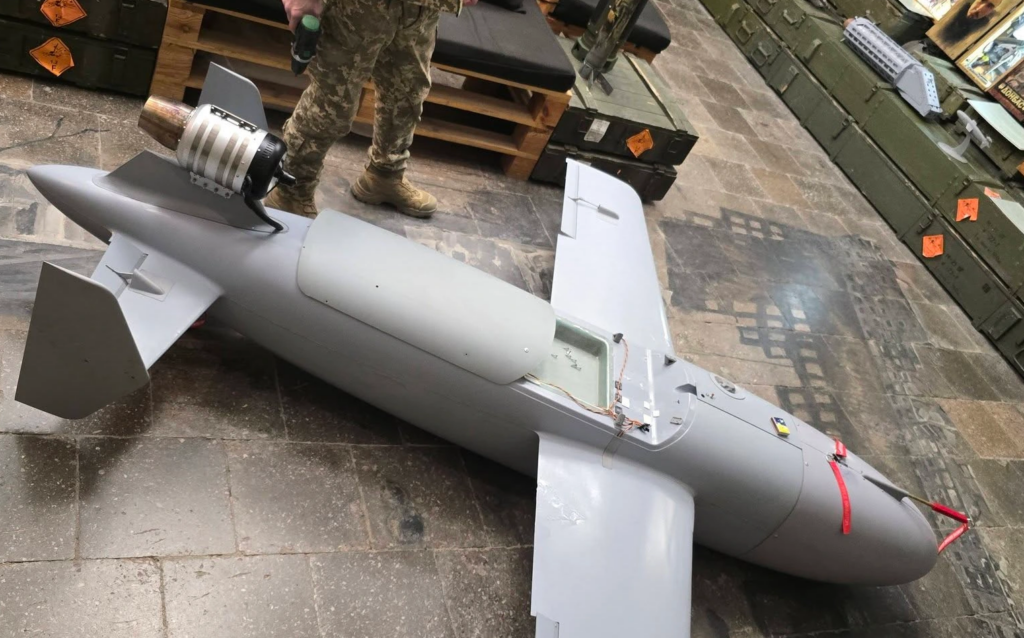
His rotation has ended, and he could go back to the IRIS-T. He has chosen to stay on the zero line. After the war, he says, he wants the ordinary things: a family, and the peace to build again.

❌