Connexion

Nearly 5,000 tons of nitric acid for Russia’s military-industrial complex. Why did Azot plant become strategic target?
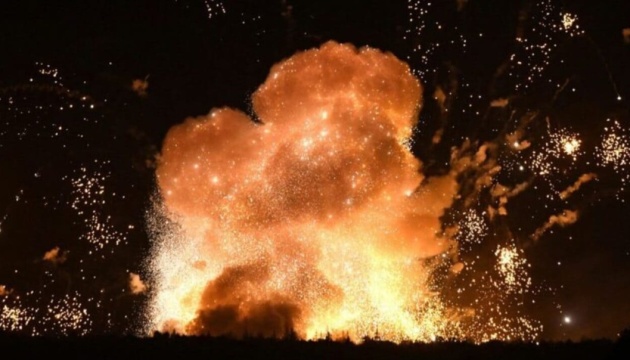
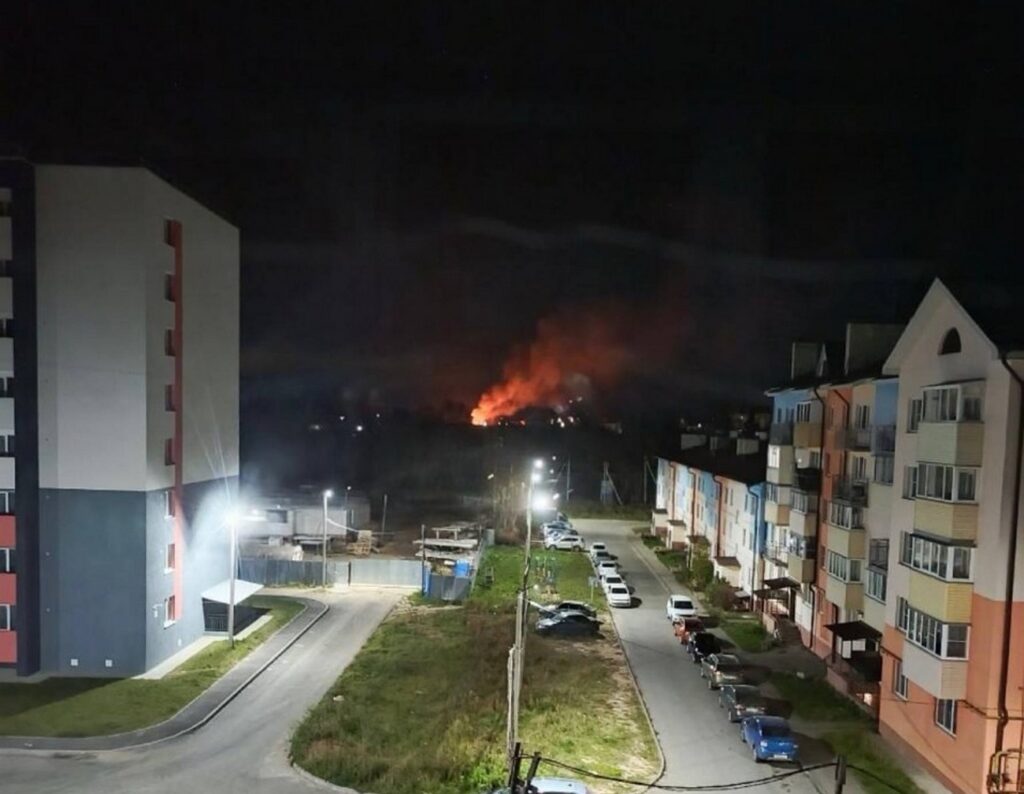
Ukrainian drones reportedly struck the Azot chemical plant in Novomoskovsk, Tula Oblast, Russia, one of the country’s largest nitrogen-fertilizer producers, on 28 October. The attack set off a major fire at the facility overnight, Exilenova+ reports.
Russia’s munitions need explosives, and those explosives start from nitric acid, a basic industrial chemical. Azot is one of Russia’s biggest sources of it, a plant Ukraine has struck before and hit again overnight.
Nitric acid feeds Russia’s explosives
Military observer Oleksandr Kovalenko explains why the plant matters for Russia. Azot is one of Russia’s biggest producers of ammonia, ammonium nitrate, urea, and methanol, and in 2023 the company reported supplying more than 60 countries, he says.
For the war economy, he argues, one product stands out from the rest.
“The main reason for its strategic importance is nitric acid and its role in producing explosives for munitions,” Kovalenko says.
The acid goes into the chemical synthesis behind some of Russia’s most powerful explosives, and ammonia, further up the chain, is the base feedstock that the whole of nitrogen chemistry runs on.
Azot supplies the makers, not the munitions
Kovalenko is careful not to overstate what the plant does. Ammonium nitrate, the compound most associated with Azot, is first of all a fertilizer and only secondarily a raw material for industrial explosives.
“The fact of its production alone does not mean the plant makes military munitions,” he stresses.
The same holds for methanol and the plant’s other chemicals, whose military weight depends on which enterprise they are shipped to and what it builds there.
What gives Azot its place in the war machine, in his account, is that it sits one step back from the weapon, feeding the factories that make explosives rather than making them itself.
“Azot does not necessarily produce finished explosives itself. Its role is to supply raw materials to the next-link enterprises that produce energetic materials,” Kovalenko says.
The clearest trace of that role runs through a single customer: recorded deliveries of nearly 5,000 tons of nitric acid to the Sverdlov plant, sanctioned by Ukraine for actions threatening its sovereignty, between 2022 and 2024, with data from 2026 showing the reagent concentrated among a handful of Russian firms.
Read also
-
Russia may use the Oleshky truce to rebuild its forces, ISW warns, as evacuees face a route through Russia and Belarus
-
Ankara tells Washington it’s ready to help revive Ukraine-Russia talks—but names no date or venue
-
€100 million at stake: what Ukrainians could save by joining Europe’s euro-payment zone, if parliament votes before November