❌

Vue normale

He drove a taxi in Jakarta and once worked in the US. Russia trained him as a machine gunner for a week and a half, then sent him into his first and last battle

27 octobre 2026 à 10:27

drove taxi jakarta once worked russia trained machine gunner week half sent first last battle · post taufiq muhammad indonesian citizen ukraine’s military intelligence says recruited died fighting donetsk oblast

An Indonesian taxi driver who went looking for work abroad ended up in Russia's army and died in his first battle in Ukraine, Ukraine's military intelligence (HUR) said. Russian recruiters found him through a job application, and he reached the front in Donetsk Oblast within weeks of signing. HUR calls him one more foreigner drawn into Russia's war through deception.

Russia's war against Ukraine consumes men faster than the Kremlin is ready to replace them through another mobilization at home, so it keeps hiring abroad. Ukraine has identified nearly 46,000 foreigners who signed with Russia's army since 2022. On 26 October, a UN commission found “compelling evidence” that Russia trafficked men from 29 countries into its forces.

A résumé that reached Russian recruiters

Taufiq Muhammad, born in 1978 in Sorong, Indonesia, drove a taxi in Jakarta and had once worked in the US. Russian recruiters found him through a résumé he had sent out while looking for work, the agency said. He probably believed promises of “easy money” and traveled to Moscow. HUR sees his case as part of a pattern.

“In fact, he became yet another victim of Russia's scheme of recruiting foreigners for the criminal war through deception,” HUR said.

A week and a half of training, then the front

Muhammad signed a one-year contract with Russia's army in Korolyov, near Moscow, on 19 April 2026. HUR called that term typical for foreigners Russia uses as “disposable” infantry. Russia made him a machine gunner and gave him only a week and a half at a training center near Voronezh, Army Inform reported, citing HUR.
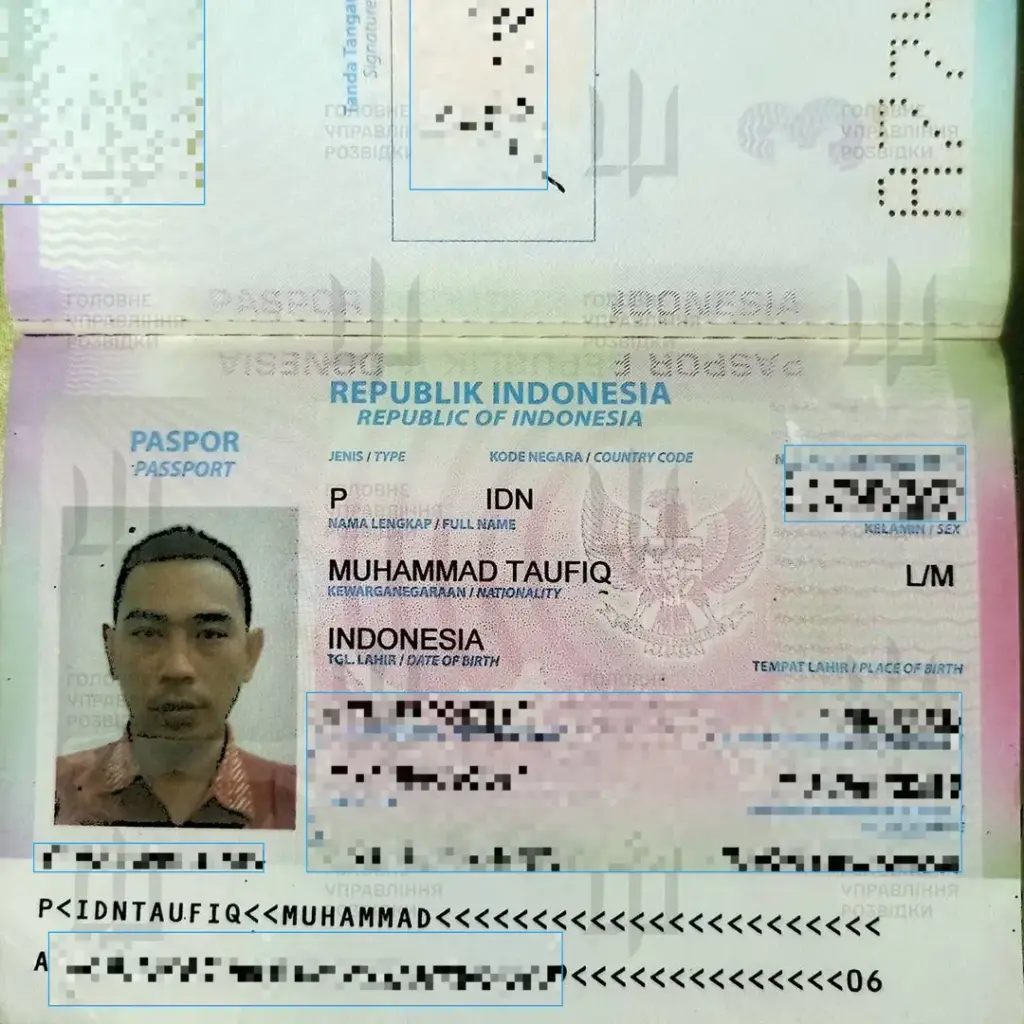
Passport of Taufiq Muhammad, an Indonesian citizen Ukraine’s military intelligence says Russia recruited, with his personal data pixelated by Euromaidan Press
Passport of Taufiq Muhammad, an Indonesian citizen Ukraine’s military intelligence says Russia recruited, with his personal data pixelated by Euromaidan Press. Photo: HUR

Russia moved him to occupied Ukraine in early May. He died almost at once, in his first battle. Russian troops were trying to advance from the village of Zelena Dolyna toward Novoselivka and Drobysheve in Donetsk Oblast, Militarnyi reported.

Indonesia is the newest recruiting ground

Russia's recruiters have been working in Indonesia for months. In August, Ukraine's Foreign Intelligence Service said it held documents on at least eight Indonesians recruited into Russia's army.

Another Indonesian, Rendi Apriyanto, 30, was reportedly killed in September, his family learned from an Indonesian fighting for Russia. Rendi had told his family he was recruited for logistics work, The Jakarta Post reported.

HUR has traced the same fast track before. In January, it identified a Filipino recruit killed in a Donetsk Oblast assault after one week of training. A Nigerian, 34, died in Kharkiv Oblast after a similar week of training, HUR said in May.

Russia courts Africa ahead of a summit

Ukraine's Foreign Ministry has counted at least 2,982 Africans recruited into Russia's army, and 486 of them have died. Ahead of a Russia–Africa summit on 28–29 October, Moscow plans military and port-access deals with a string of African states, HUR said. The deals would help expand the campaign of Russia's Africa Corps, the Defense Ministry-controlled force on the continent, Army Inform reported, citing HUR.

Each recruit Ukraine identifies gives his home government a documented case to act on. Jakarta has said citizens shown to have been deceived will get its protection, while those who enlisted by choice could lose their citizenship.

  • ✇Euromaidan Press
  • Plane parts for Russia’s air force, rubber for its industry—Voronezh’s factories came under drone attack
    Drones attacked the VASO aircraft plant in Russia's Voronezh overnight on 26 October, Ukrainian Telegram channel Supernova+ reported. The plant builds Il-96 airliners and parts for Russia's military transport planes. A synthetic-rubber plant was also reportedly hit and fires broke out across Voronezh, while another rubber plant in Tolyatti, farther east, reportedly came under attack again. Ukraine keeps hitting the plants behind Russia's weapons, from Voronezh's missile chips to Urals t
     

Plane parts for Russia’s air force, rubber for its industry—Voronezh’s factories came under drone attack

26 octobre 2026 à 04:25

plane parts russia’s air force rubber its industry—voronezh’s factories came under drone attack · post fire smoke area vaso aircraft plant voronezh after russia 26 2026 ukraine news ukrainian reports

Drones attacked the VASO aircraft plant in Russia's Voronezh overnight on 26 October, Ukrainian Telegram channel Supernova+ reported. The plant builds Il-96 airliners and parts for Russia's military transport planes. A synthetic-rubber plant was also reportedly hit and fires broke out across Voronezh, while another rubber plant in Tolyatti, farther east, reportedly came under attack again.

Ukraine keeps hitting the plants behind Russia's weapons, from Voronezh's missile chips to Urals titanium for warplanes. Each supplier knocked out of rhythm slows how fast Russia replaces the hardware it loses and keeps using against Ukraine.

What the Voronezh plant builds

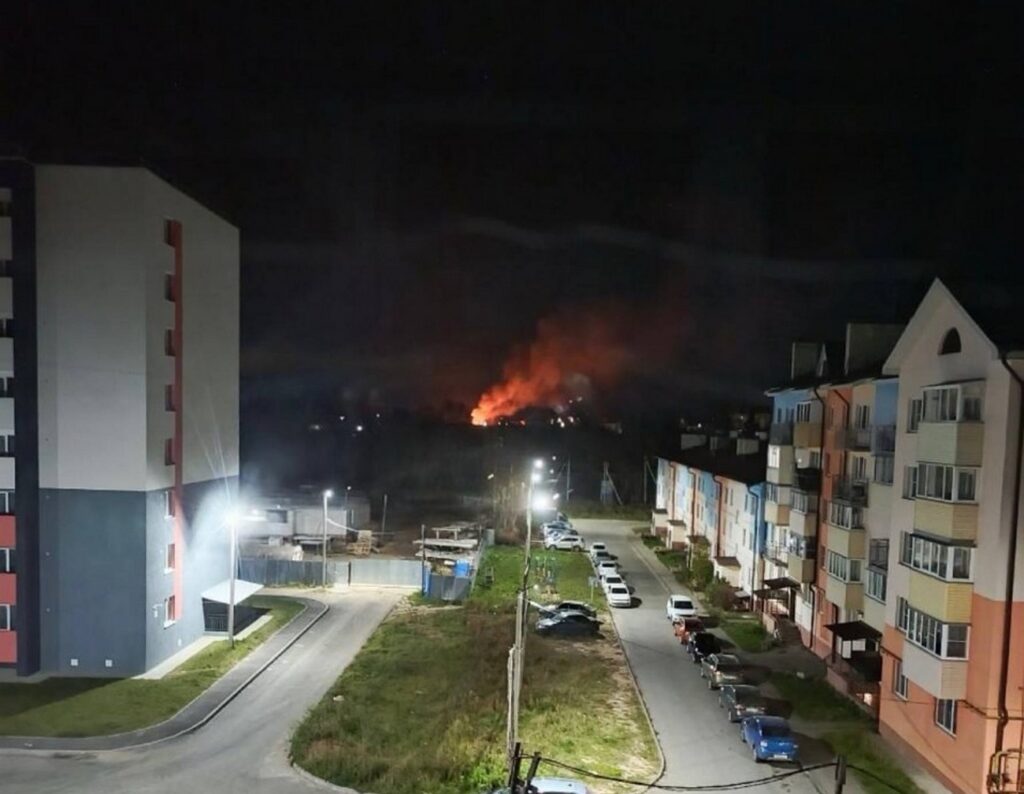
Supernova+ described VASO as part of Ilyushin, which belongs to Russia's state-owned United Aircraft Corporation (UAC). The channel published a photo of fire and smoke at the site. The plant lies about 190 km from the Ukrainian border.

VASO makes pylons, engine nacelles, and flap rails for the Il-76MD-90A, a modernized military transport plane, and sends them to Ulyanovsk, UAC's press service said in 2024. "We have reached the production pace of Il-76MD-90A aircraft kits that our Ulyanovsk colleagues need," Igor Butyrin, who runs the plant's Il-76 program, stated at the time. In 2016, the plant built an Il-96-300 that UAC handed over to the Rossiya special flight detachment of Russia's presidential property office.

Map of Ukrainian drone strikes on Voronezh and Tolyatti with distances from Ukraine, Russia, 26 October 2026
Map of Ukrainian drone strikes on Voronezh and Tolyatti with distances from Ukraine, Russia, 26 October 2026. Map: EP/Datawrapper

A rubber plant and a bridge on the list too

Supernova+ also named Voronezhsintezkauchuk, a plant of Russian petrochemical group Sibur that makes synthetic rubbers. The channel later reported a hit on the plant's industrial zone and claimed an attack on the city's Northern Bridge. Ukrainian Telegram channel Exilenova+ published footage of a drone arriving, reportedly at the rubber plant.

The moment the UAV arrived this morning, reportedly at the Voronezhsintezkauchuk factory. pic.twitter.com/2PXyQ5P7sb

— Exilenova+ (@Exilenova_plus) October 26, 2026

Voronezh Oblast Governor Aleksandr Gusev declared a missile alert at 04:47 Kyiv time, but no source has named a missile type. Kyiv has not commented. Ukraine's Air Force, which launches Storm Shadow cruise missiles, and its Navy, which fires Neptunes, have posted nothing on Voronezh.

Earlier this month, Ukraine's Navy said it hit six Su-34 bombers in Voronezh Oblast with Neptunes. Storm Shadows reportedly struck an electronics plant in Oryol on 23 October and a battery plant in Yelets two days later.

Fires across the city

Gusev claimed air defenses downed 113 drones over the region, more than 70 of them over the city. He listed fires at several industrial enterprises, which he said caused no serious consequences, plus a business center, an apartment block, and a school stadium. Russian Telegram channel Astra published video of a drone hitting the Galereya Chizhova business center. Exilenova+ footage showed cars burning below apartment blocks.

Voronezh pic.twitter.com/I3WbnGLZhO

— Exilenova+ (@Exilenova_plus) October 26, 2026

Damage in residential districts may have come from downed drones or from Russian air-defense missiles falling back on the city. During a 23 October attack on Gorodets, in Nizhny Novgorod Oblast, Exilenova+ claimed a Pantsir air-defense missile hit a house.

russia's secret aviation report fighter jet clipped its own shelter gate 500 kg bomb fell takeoff helicopter came home printer-paper-sized hole nine engine failures three weeks · post russian su-34
Explore further

Russia still parks its best bombers in the open. Ukraine has spent a year knocking out the air defenses that were supposed to protect them

Gusev also claimed two men were killed and 17 people injured, many of them on a train struck by drone debris. Russian Railways said five passengers were hurt at Somovo station and traffic on the line stopped. Russia's Defense Ministry claimed its air defenses downed 290 drones over 15 regions and the Moscow area.

Tolyatti's rubber plant reportedly attacked again

Locals reported an attack on the Tolyattikauchuk chemical plant in Tolyatti, Samara Oblast, Exilenova+ said. The city lies about 890 km from the front line. Ukraine's General Staff confirmed a strike on the same plant on 24 October. Its synthetic rubbers go into solid fuel for Russia's tactical and ballistic missiles, among other uses.

Until Kyiv comments or satellite imagery shows the site, the damage at VASO stays unconfirmed, and so does any delay to Russia's Il-76 parts line.

Russia’s tax service runs on two key data centers. Drones went after one of them overnight, along with a chemical plant that supplies explosives makers

23 octobre 2026 à 06:38

russia’s tax service keeps its databases two places drones went after one overnight also hitting air base explosives-chemical plant · post fire seen residential area gorodets nizhny novgorod oblast near

Drones attacked a Russian tax-service data center overnight on 23 October, Ukrainian monitoring channel Exilenova+ reported. A chemical plant in the Urals was also attacked, and a fire broke out near a Russian bomber base by late morning. Russian officials admitted injuries and damage but blamed falling debris. Ukraine has not commented.

Ukraine's long-range drones have widened their target list from Russian refineries to the servers and chemicals that keep Russia's state and war industry running.

The tax service's data center in Gorodets

The target in Gorodets, Nizhny Novgorod Oblast, is one of the Federal Tax Service's two key data centers, which work as a geographically distributed pair. It stores and processes state registers, including tax databases, Exilenova+ said. The extent of the damage is unconfirmed. The site lies about 785 km from Ukraine's northern border in a straight line.

The moment of impact at Russia’s Federal Tax Service data center in Gorodets last night. pic.twitter.com/PftC6keRpY

— Exilenova+ (@Exilenova_plus) October 23, 2026

Eyewitness footage shows a blast and fire in the area of the data center, which serves both the tax service and the Finance Ministry, Russian Telegram channel Astra found. The center opened in 2015. Mikhail Mishustin, then head of the tax service and now Russia's prime minister, attended the launch.

Nizhny Novgorod Governor Gleb Nikitin claimed air defenses repelled 19 drones. Falling debris injured three people in the Gorodets district and damaged several homes, an educational facility, and an infrastructure facility, he said, and local schools switched to remote learning. A Pantsir air defense missile hit a house, Exilenova+ claimed, though officials recorded it as a drone hit.

Ukrainian strikes inside Russia on Gorodets, Berezniki, and Voronezh, with distances from Ukraine, 23 October 2026
Ukrainian strikes inside Russia on Gorodets, Berezniki, and Voronezh, with distances from Ukraine, 23 October 2026. Map: Euromaidan Press/Datawrapper

This month, drones already hit three Yandex data centers and a VK data center near St. Petersburg.

A chemical plant behind Russia's gunpowder

In Berezniki, Perm Krai, smoke rose over Uralchem's Azot plant as air defenses fired, Astra reported. The regional security ministry announced a drone attack at about 06:00, and authorities closed the airspace within 50 km of the city. Ukraine's long-range Liutyi drones visited Berezniki, Exilenova+ wrote.

Our old friends, the Liutyi drones, paid Berezniki a visit today. Haven’t seen them in a while. 🫡 pic.twitter.com/NXuhIJ3xpm

— Exilenova+ (@Exilenova_plus) October 23, 2026

The attack on Azot was continuing in the morning, the channel wrote, adding that the plant covers about 140 hectares with some 90 production buildings. It makes ammonia, nitric acid, ammonium and potassium nitrate, and urea. Russian defense plants use its nitric acid to make explosives and gunpowder, including the Perm gunpowder plant, Astra said. Berezniki lies 1,500–1,600 km from Ukraine's border and the war zone.

Smoke rises over Uralchem's Azot chemical plant in Berezniki, Perm Krai, after a drone attack, Russia, 23 October 2026
Smoke rises over Uralchem's Azot chemical plant in Berezniki, Perm Krai, after a drone attack, Russia, 23 October 2026. Photo: Exilenova+/Telegram

Drones attacked Azot before, on 11 September. Earlier this year, Ukraine's Security Service hit Lukoil's refinery in the same region.

phones down water off factory roof broken open russian-occupied luhansk counts damage after another night drones · post fire occupied during drone attack 23 2026 ukraine news ukrainian reports
Explore further

Phones down, water off, a factory roof broken open: Russian-occupied Luhansk counts the damage after another night of drones

Fire near a Su-34 base in Voronezh

Late in the morning, Voronezh Governor Aleksandr Gusev declared a missile alert, and explosions followed in the city. Gusev later claimed air defenses downed several "jet-powered aerial targets." Debris set dry grass on fire in a suburb and damaged outbuildings and several cars, he said, adding that no one was hurt.

Missile alert in several regions of the Russian Federation.

Explosions have been heard in Voronezh. We are assessing the situation. pic.twitter.com/GY0NRZTo4x

— Exilenova+ (@Exilenova_plus) October 23, 2026

Eyewitness footage shows fire and smoke near Baltimor military airfield, Astra found. The strike preliminarily hit the grounds of a former military aviation engineering university and a nearby parking area for military aircraft, Exilenova+ said.

Fire and smoke near Baltimor military airfield in Voronezh after a Ukrainian attack, Russia, 23 October 2026
Fire and smoke near Baltimor military airfield in Voronezh after a Ukrainian attack, Russia, 23 October 2026. Photo: Astra/Telegram

Baltimor hosts the 47th Guards Bomber Aviation Regiment, whose Su-34s Russia uses to strike Ukraine, Militarnyi reported, saying Ukraine attacked the airfield with missiles. Voronezh lies about 185 km from Ukraine's border. Smoke rose over the base after an attack on 27 May, and a fire broke out near it on 2 September.

Moscow counts drones, Kyiv stays silent

Russia's Defense Ministry claimed it downed 443 drones overnight over 20 Russian regions, including Nizhny Novgorod Oblast and Perm Krai, as well as Russian-occupied Crimea and two seas. Ukraine's General Staff has not reported on the strikes. A night earlier, drones reportedly hit a sanctioned weapons plant near Moscow.

Russia's air defenses now have to cover state servers and Ural chemical plants as well as the airfields its bombers fly from.

Russia still parks its best bombers in the open. Ukraine has spent a year knocking out the air defenses that were supposed to protect them

Par : David Axe
16 octobre 2026 à 17:50

russia's secret aviation report fighter jet clipped its own shelter gate 500 kg bomb fell takeoff helicopter came home printer-paper-sized hole nine engine failures three weeks · post russian su-34

  • An overnight raid by the Ukrainian navy reportedly destroyed four Russian air force Sukhoi Su-34 fighter-bombers
  • A barrage of Long Neptune cruise missiles struck the parked aircraft at a base in western Russia
  • Observers blamed poor airfield procedures, and also lamented a lack of air defenses

Overnight on 14 and 15 October, the Ukrainian navy fired a clutch of Long Neptune cruise missiles at Borisoglebsk air base in Voronezh, in western Russia some 260 km from the border with Ukraine.

The results were devastating. The ground-launched Neptunes struck the tarmac where six Russian air force Sukhoi Su-34 fighter-bombers were parked nearly wingtip to wingtip in uncovered positions.

Satellite imagery from the morning of 15 October depicted piles of smoldering wreckage. The navy said it hit all six jets. Ukrainian President Volodymyr Zelensky said four Su-34s were destroyed and a further two were damaged. "I thank the warriors of the Ukrainian navy for their precision!" he wrote.

The jets, he said, were loaded with aerial bombs and ready for new strikes on Ukraine. An analyst reading the imagery counted wreckage of two to four aircraft and two empty spots where damaged jets had been moved.

An Airbus Pléiades satellite image from 11 October, four days before the strike, showed the six Su-34s on open aprons. Next to them were structures that the Russian independent outlet Istories said looked like anti-drone nets or their frames. Nets can snag a small drone. A cruise missile goes through.

At roughly $50 million apiece, by the Ukrainian Air Force's estimate, the four destroyed jets alone cost Russia some $200 million. The twin-engine, two-seat, supersonic Su-34 is the Russian air force's best fighter-bomber. Almost every day, Su-34s lob KAB precision glide bombs at Ukrainian troops and civilians.

🔻 Satellite images of 🇷🇺 Borisoglebsk Air Base as of October 15, 08:25 UTC
On the night of October 15, several Su-34 were destroyed at Borisoglebsk Air Base. pic.twitter.com/3ZNBWhU6UD

— AviVector (@avivector) October 15, 2026

In nearly 56 months of hard fighting in Russia's wider war on Ukraine, the Russians have now lost no fewer than 37 Su-34s destroyed, with several more damaged, by open-source counts. Sukhoi continues to deliver new Su-34s in small batches, the latest handed over on 7 October, helping the Russians sustain their overall inventory despite heavy losses.

They've still got plenty of Su-34s, but that doesn't mean the Russians shouldn't worry. As long as they're parking warplanes out in the open within range of Ukraine's best deep strike munitions, those planes are vulnerable to attack. Russia's air defenses are spread too thin to intercept every Ukrainian munition.

Satellite imagery showing the aftermath of a Neptune missile strike on six Su-34 fighter-bombers at Borisoglebsk Airfield.

Coordinates: 51.36315, 42.18560 pic.twitter.com/7TNpxGIaB0

— Dnipro Osint (@GarbuzYe) October 15, 2026

The strike may also hit the Russian air force's training pipeline. Borisoglebsk air base is home to the 160th Aviation Training Regiment. The regiment operates Yakovlev Yak-130 trainers for more basic flight training plus—for more advanced training—front-line combat aircraft including Su-34s, Sukhoi Su-35s, and Sukhoi Su-30s.

Russian bloggers are aghast, according to a round-up of posts on Russian social media by analyst ChrisO_wiki. "How is it that, four years after the start of the Special Military Operation, there are no protective structures for aircraft at airfields located within range of Ukrainian air strikes?" blogger Ramsay wrote. "And where did the billions of rubles allocated for their construction go?"

"Much can be said about the need to build a sufficient number of concrete shelters at all airfields," blogger Vladimir Romanov pointed out. "Reality shows that, to date, sufficient measures have not been taken."

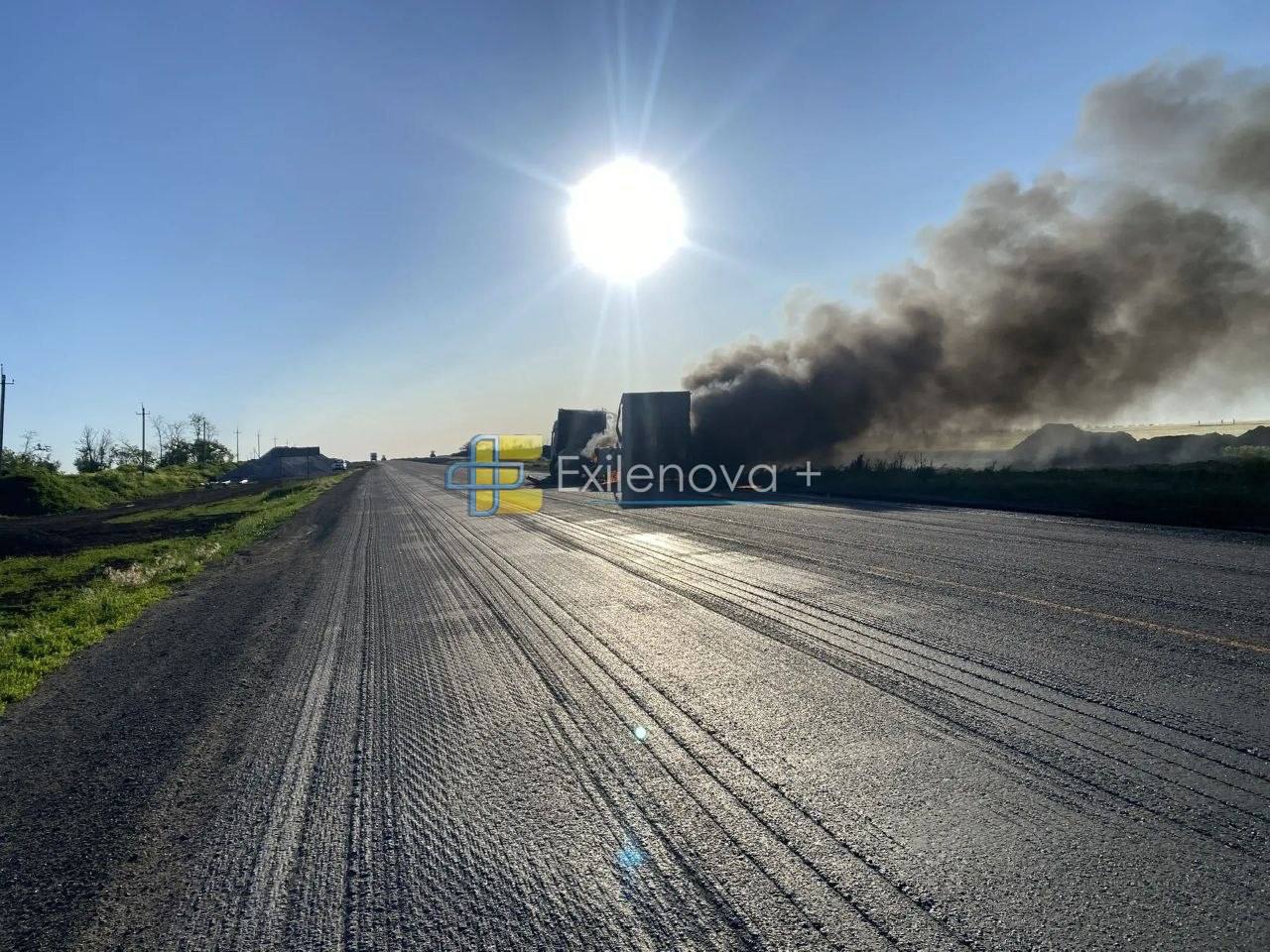
russian radar occupied crimea didn't see ukrainian drones coming became 28th air-defense asset wrecked · post supply trucks burning mariupol-melitopol highway main road russia's land corridor 29 2026 exilenova+ -
Explore further

“Supplying Crimea is turning into a nightmare”: Ukrainian drones hit Russian trucks 770 times in September, and winter will make it worse, analyst says

Close parking

Ramsay asked why the Su-34s were concentrated in one area, apparently so that ground crews could quickly service all of them with a single ground power unit, a mobile generator that starts an aircraft's systems before flight. "How is it that the APA, a utilitarian piece of equipment, has become so scarce that it forces an entire group of combat aircraft to be parked in a single area, making them an ideal target for attacks?"

The best defense is an active one, however, the Fighterbomber channel stressed. "Protecting aircraft by the usual method of moving them out of the line of fire at such ranges from long-range strike systems won’t work here; the only way to defend against them is with a full-scale, echeloned air defense system—both ground-based and airborne."

1/ Russian warbloggers are furious at the news that a Ukrainian missile has destroyed between 4 and 6 Su-34 jets on the ground at a Russian airfield. How is it possible, they ask, that the Russian air force is still parking aircraft close together without protection? ⬇ pic.twitter.com/BrTvfCMRfH

— ChrisO_wiki (@ChrisO_wiki) October 15, 2026

Ukrainian planners know this. Which is why, for more than a year now, they've been systematically striking Russian radars, surface-to-air missile batteries, and mobile air defense systems. By March, Ukrainian forces were “collaps[ing] the layered defensive architecture that the Russian integrated air defence doctrine depends upon to function,” according to an in-depth investigation by Tochnyi.info.

The strikes on Russian air defenses—at least 492 of them between June and early March—are part of a carefully scripted plan. Destroying the right air defenses faster than the Russians can replace them has the effect of “facilitating strikes on more critical targets deep within Russian territory,” Tochnyi.info explained.

The critical targets include air bases such as Borisoglebsk and the expensive warplanes parked on its tarmac.

❌